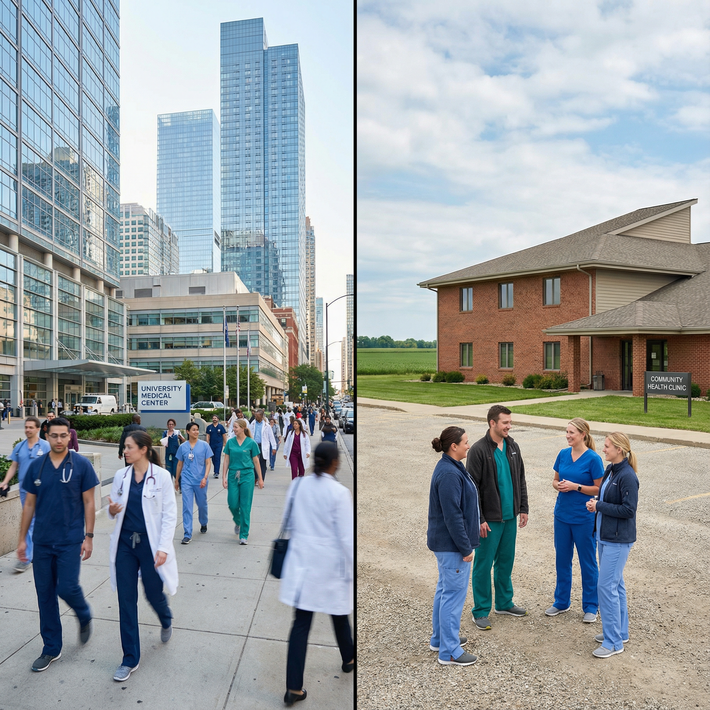
Understanding Geographic Flexibility as a Caribbean IMG
For Caribbean medical graduates, geographic flexibility is one of the most powerful tools you have in the residency match. Whether you are aiming for an SGU residency match or coming from another Caribbean medical school, widening where you are willing to train can dramatically improve your chances of matching.
Programs often receive thousands of applications for a few spots. Many U.S. graduates limit themselves to specific cities or regions. As a Caribbean IMG, you can stand out by being more open-minded about location—strategically open, not random.
In this guide, we’ll break down:
- Why geographic flexibility matters so much for Caribbean IMGs
- How to build a regional preference strategy that still respects your real-life priorities
- How to frame your geographic preference residency story in your application and interviews
- How to use tools like ERAS, NRMP, and FREIDA to identify IMG-friendly regions and programs
- Realistic examples and scripts you can adapt
If your priority is to match—even if not in your dream city at first—then mastering geographic flexibility can be the key difference between matching and going unmatched.
Why Geographic Flexibility Is a Competitive Advantage
1. The Reality for Caribbean IMGs
Caribbean medical school graduates face several structural challenges:
- Many programs prioritize U.S. MD and DO graduates
- Some university programs have limited or no history of taking IMGs
- Certain states and regions are saturated with applicants from nearby U.S. schools
- Some institutions still hold biases about Caribbean medical education
However, this picture is not uniform. There are:
- Regions with chronic physician shortages
- Community-based and safety-net hospitals that depend on IMGs
- States where Caribbean medical school residency alumni are well-established and respected
- Programs that regularly match SGU, AUC, Ross, and other Caribbean grads
The key is being flexible enough geographically to reach these programs where you are wanted.
2. How Flexibility Directly Improves Match Odds
Being flexible doesn’t mean you say “anywhere” without thought. It means:
- You are willing to apply to and rank multiple regions, not just one city
- You understand which regions are more IMG-friendly
- You are realistic about program competitiveness and filters
The NRMP data consistently show that:
- More applications to appropriate programs = more interview offers
- A greater number of interviews = a much higher chance of matching
For a Caribbean IMG, limiting yourself to only 1–2 states or one big metro (for example, only New York City or only Florida) can be risky. Those locations are often highly competitive and saturated.
When you expand your geographic preference residency options to include:
- Smaller cities
- Suburbs
- Less popular states
- Certain Midwest, South, or Rust Belt regions
…you increase your odds of finding programs that are:
- Less oversubscribed by U.S. grads
- More open to IMGs
- Truly in need of applicants
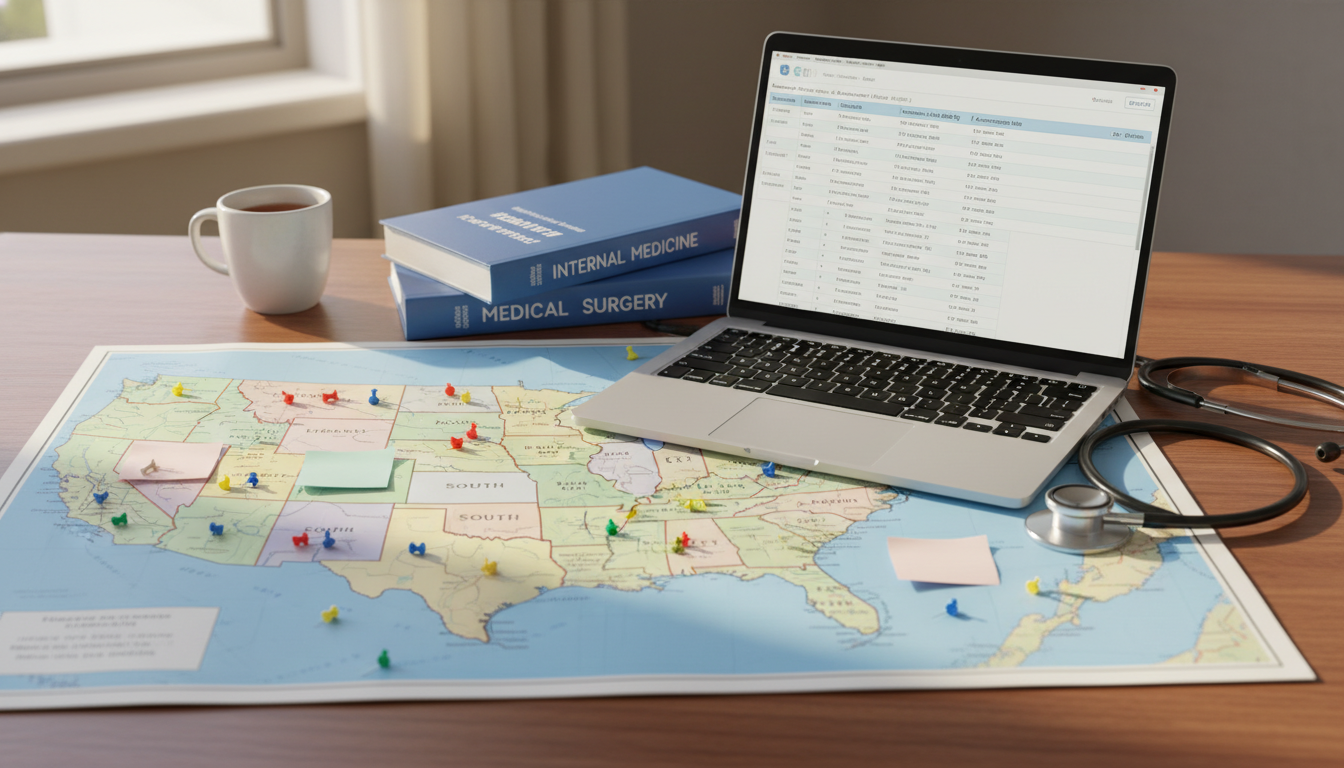
Building a Regional Preference Strategy (Not Just “Anywhere”)
Being strategic means you are flexible—but with a plan. You need to align three things:
- Your personal constraints
- Your professional goals
- Realistic opportunities for Caribbean IMGs
Step 1: Define Your Non-Negotiables vs Flexibles
Make a simple two-column list:
Non-Negotiables (must-haves):
- Visa requirement (e.g., must sponsor J-1 or H-1B)
- States that accept your school and credentials (check licensing rules)
- Major family/health issues that truly require proximity
Flexibles (nice-to-haves but not required):
- Big city vs mid-size vs small town
- Climate (cold vs warm)
- Distance from extended family
- Cultural diversity level of the area
- Proximity to ocean, mountains, etc.
Many Caribbean IMGs initially think “I can only live in a big coastal city.” Re-examining this belief is crucial. For 3 years of training, living in a less glamorous city with a supportive program may be far better than going unmatched or scrambling every year.
Step 2: Understand Common IMG-Friendly Regions
While specifics change over time, historically more IMG-friendly regions often include:
- Northeast (excluding some top-heavy metro programs)
- Pennsylvania, New Jersey, Connecticut, upstate New York
- Midwest and Rust Belt
- Ohio, Michigan, Indiana, Illinois (especially outside Chicago), Missouri
- Certain Southern states
- Georgia (outside Atlanta), Alabama, Mississippi, Louisiana, Arkansas
- Some parts of the West and Southwest
- Nevada, New Mexico, parts of Texas (varies by program)
By contrast, some areas are:
- Extremely competitive (e.g., San Francisco, Boston, some parts of California)
- Overcrowded with U.S. grads (dense clusters of medical schools)
- Home to many academic centers that rarely take Caribbean IMGs
Your regional preference strategy should favor regions that have:
- Multiple community-based programs
- Documented history of matching IMGs
- Physician shortages or underserved populations
Step 3: Align Region Choice with Specialty and Competitiveness
Your required level of geographic flexibility depends on:
- Your specialty
- Internal Medicine, Family Medicine, Psychiatry, Pediatrics: more spread across the country
- Competitive specialties (Derm, Ortho, Plastics, ENT, etc.): extremely difficult for Caribbean grads; massive flexibility usually still insufficient
- Your academic profile
- Step scores, number of attempts, gaps in training, U.S. clinical experience, LORs
Example:
- An SGU student with solid Step 2 score, strong U.S. clinicals, and good LORs applying for Internal Medicine can likely match if broadly flexible across multiple IMG-friendly regions.
- A Caribbean IMG with multiple attempts may need maximum geographic flexibility, focusing on the most IMG-welcoming programs anywhere in the U.S.
Practical Tools to Identify Programs Where Flexibility Pays Off
1. Use Data, Not Guesswork
To choose where to be flexible, use available data sources:
FREIDA (AMA) – Filter by:
- Specialty
- State
- IMG percentage (if listed)
- Program type (community vs university)
Program websites & past match lists
- Look for recent residents with IMG or international flags
- Check for Caribbean medical school residency representation (SGU, AUC, Ross, Saba, etc.)
Your own school’s match list (e.g., SGU residency match outcomes)
- Identify states and hospitals that consistently take Caribbean IMGs
- Make a table: State | Program | Specialty | Number of Caribbean grads in last 3 years
NRMP Charting Outcomes & Program Director surveys
- Understand national trends for IMGs in your specialty
- Note which states/program types seem more open
2. Create Region Tiers for Your Application Strategy
Once you’ve done your research, divide regions into tiers:
Tier 1 – Higher priority regions (good balance of opportunity and personal fit):
- Example: Northeast (excluding few highly competitive metro centers), Midwest states with higher IMG uptake
Tier 2 – Backup regions (less desirable personally but good for match odds):
- Example: Rural Midwest, some Southern states, smaller cities you’d accept for training
Tier 3 – Limited or no focus (hyper-competitive or poor IMG history):
- Example: Very high-cost coastal cities, academic-only programs with no IMG record
You will:
- Apply aggressively to Tier 1 and Tier 2
- Be selective or minimal in Tier 3 (or skip entirely if your budget is limited)
This structured approach ensures you are flexible without being random.
3. Consider Location Flexibility in the Match Itself
There’s a difference between:
- Application flexibility – where you send applications
- Ranking flexibility – where you are willing to actually train
You can apply widely but still think carefully about your Rank Order List (ROL). However, for a Caribbean IMG, it is dangerous to:
- Apply very broadly,
- Get only a few interviews in less-desired locations,
- Then refuse to rank them highly out of preference for “better” cities.
If matching is your priority, you must honestly commit to training in any program you rank. Location flexibility match strategy means:
- If you interview there, only rank them if you are truly willing to go.
- Don’t rank a program “just in case” if you would realistically not move there.

Communicating Geographic Flexibility in Your Application and Interviews
Your goal is to signal to programs:
“I am genuinely interested in training in your region, not just using you as a backup.”
1. ERAS Application and Personal Statement
Where to emphasize location:
- Personal Statement (if you customize by region or program type)
- Experiences section – Highlight any ties to similar regions (rural work, underserved areas, cold-weather living, etc.)
- Geographic Preferences (if ERAS/NRMP tools allow you to indicate this in a given year)
Example Personal Statement phrasing (region-focused):
“Having grown up in a small island community and completed clinical rotations in diverse U.S. settings, I have come to appreciate the value of strong community-based training. I am particularly drawn to programs in the Midwest and Northeast that serve underserved populations and offer a close-knit team environment. I am fully prepared to relocate to a smaller city or town where I can develop long-term relationships with patients and colleagues while receiving rigorous clinical training.”
2. Program-Specific or Region-Specific Statements
If feasible, you can create 2–3 versions of your personal statement:
- One for Northeast programs
- One for Midwest/South/rural programs
- One general statement
Each version should:
- Reflect an understanding of the region’s patient population and health system challenges
- Mention any personal readiness to adapt to climate, culture, or lifestyle differences
3. Interviews: Answering “Why This Area?” Effectively
Programs are wary of applicants who will be unhappy with the location and leave. As a Caribbean IMG practicing location flexibility match strategy, you must convincingly answer:
Common question: “Why are you interested in our program/our city/our region?”
Weak answer (avoid):
“I’m open to going anywhere and just want to train in the U.S.”
This suggests you may rank them low or leave later.
Stronger answer (adaptable template):
“There are a few reasons I’m particularly interested in this region. First, I’m drawn to community-based programs that serve diverse and often underserved populations, which is very consistent with my clinical experiences and long-term goals. Second, I’ve done careful research and noticed that many programs in this area value international graduates and offer strong hands-on training. I am very comfortable relocating for residency, and I see myself thriving in a city of this size, where I can focus on learning and building close relationships with colleagues and patients.”
If you have any ties, mention them:
- Friends or relatives nearby
- Prior rotations in the region
- Similar environments (e.g., rural clinics in another state)
4. Balancing Honesty and Strategy
Be honest about:
- Your willingness to move
- Your awareness of the region’s lifestyle and climate
Do not:
- Pretend to have deep ties you don’t have
- Disparage your current or previous locations
- Complain about cold weather, rural life, or cultural differences
If you are uncertain about a region, research it thoroughly before interviews so you can speak meaningfully about it.
Case Examples: Applying Geographic Flexibility as a Caribbean IMG
Case 1: SGU Graduate Targeting Internal Medicine
Profile:
- SGU graduate, no gaps, Step 2 in mid-230s
- Good U.S. clinical rotations, strong LORs
- Prefers East Coast but open to other regions
Initial mindset:
“New York or New Jersey only, maybe Florida if necessary.”
Revised regional preference strategy:
- Tier 1: NY (including upstate), NJ, PA, CT, MA (community programs)
- Tier 2: OH, MI, IL, IN, GA, NC, SC
- Tier 3: CA, hyper-competitive academic-only programs
Resulting approach:
- Applies to 120–140 programs across Tier 1 and Tier 2
- Customizes personal statement for Northeast vs Midwest/South
- Emphasizes willingness to relocate and interest in community medicine
This strategy aligns well with typical SGU residency match patterns and leverages both preference for East Coast and openness to IMG-friendly Midwest/South.
Case 2: Caribbean IMG with Step Challenges Applying to Family Medicine
Profile:
- Caribbean graduate with one Step 1 failure, passed on second attempt
- Strong Step 2 improvement
- Passion for primary care and underserved populations
- Needs J-1 visa sponsorship
Risky strategy:
Applying only to big coastal cities and limiting to a few dozen programs.
Better geographic flexibility strategy:
Focus on states with:
- Many community FM programs
- History of J-1 sponsorship
- High IMG representation
Regions:
- Midwest (OH, MI, MO, IN, IL-outside Chicago)
- South (AL, MS, LA, AR, OK)
- Some Northeast community programs
Application plan:
- 180–220 applications with emphasis on smaller cities and rural-leaning programs
- Strong emphasis in PS and interviews on underserved/rural care
- Genuine expression of willingness to build a life in a smaller community for residency
Case 3: IMG with Strong Profile but Limited Personal Flexibility
Profile:
- Caribbean IMG, high Step scores, robust research, great LORs
- Significant family obligations requiring them to stay near a specific metro area
Geographic constraint:
Cannot relocate far, but can commute across a wide radius (e.g., 2–3 hours).
Strategy:
- Identify every IMG-accepting program within feasible radius
- Expand to neighboring states if commuting still possible
- Apply extremely broadly within that radius and to multiple specialties if appropriate (e.g., IM + FM + Preliminary positions, depending on goals)
- Use personal statement and interviews to:
- Honestly explain the constraint if asked (family health, caregiving, etc.)
- Emphasize long-term commitment to staying in that area
Even here, the principle holds: maximize geographic flexibility within your real constraint.
Common Mistakes Caribbean IMGs Make With Location Strategy
Over-concentrating on “brand-name” cities
- New York, Miami, Los Angeles, Chicago, Boston, San Francisco
- These are attractive but saturated and often quite competitive
Ignoring rural and smaller city opportunities
- Many rural and smaller urban centers are eager for motivated IMGs
- Training can be hands-on, with high responsibility and procedural exposure
No research on IMG-friendliness by region/program
- Applying blindly leads to many wasted applications (and money)
Lacking a coherent story
- Saying “I’ll go anywhere” without showing a real understanding of what that means in daily life and practice
Inconsistency between application and interview
- Application suggests openness to Midwest/South, but in interviews the applicant expresses discomfort with rural life or cold weather
Avoiding these pitfalls will make your location flexibility match strategy much more convincing and effective.
FAQs: Geographic Flexibility for Caribbean IMGs
1. Do I have to be willing to go “anywhere” in the U.S. to match as a Caribbean IMG?
No. You do not need to accept every possible location. However, the more flexible you are, the better your odds. Instead of saying “anywhere,” build a targeted but broad strategy across multiple IMG-friendly regions where you would realistically be willing to live for at least 3 years.
2. How many regions or states should I include in my regional preference strategy?
Most Caribbean IMGs benefit from considering at least 4–6 states, often more, depending on their competitiveness and specialty. Think in terms of regions (Northeast, Midwest, South, etc.), then choose specific states and programs within each. Limit yourself only if you have strong, unavoidable personal constraints.
3. Should I tell programs that they are my “backup” or that I prefer another city?
No. Never. Even if a program is in a less-preferred location, if you accept an interview there, treat it as a genuine opportunity. In interviews, focus on the strengths of that program and region and your readiness to live there. You do not need to mention that another city is your top choice.
4. How can I research whether a program or region is good for Caribbean medical school residency applicants like me?
Use a combination of:
- Program websites and current resident profiles (see if they have IMGs or Caribbean grads)
- FREIDA and similar databases to check IMG percentages
- Your own school’s match lists (e.g., SGU residency match data) for patterns
- Speaking with alumni or upperclassmen who matched in that region
If you see multiple Caribbean IMGs in recent years, that’s a strong sign the program/region may be open and welcoming to your background.
By approaching geographic flexibility thoughtfully—using data, self-awareness, and a clear regional preference strategy—you significantly improve your chances of securing a strong Caribbean medical school residency placement. For many Caribbean IMGs, saying “yes” to a location you never initially imagined can be the critical step that launches a successful medical career in the U.S.