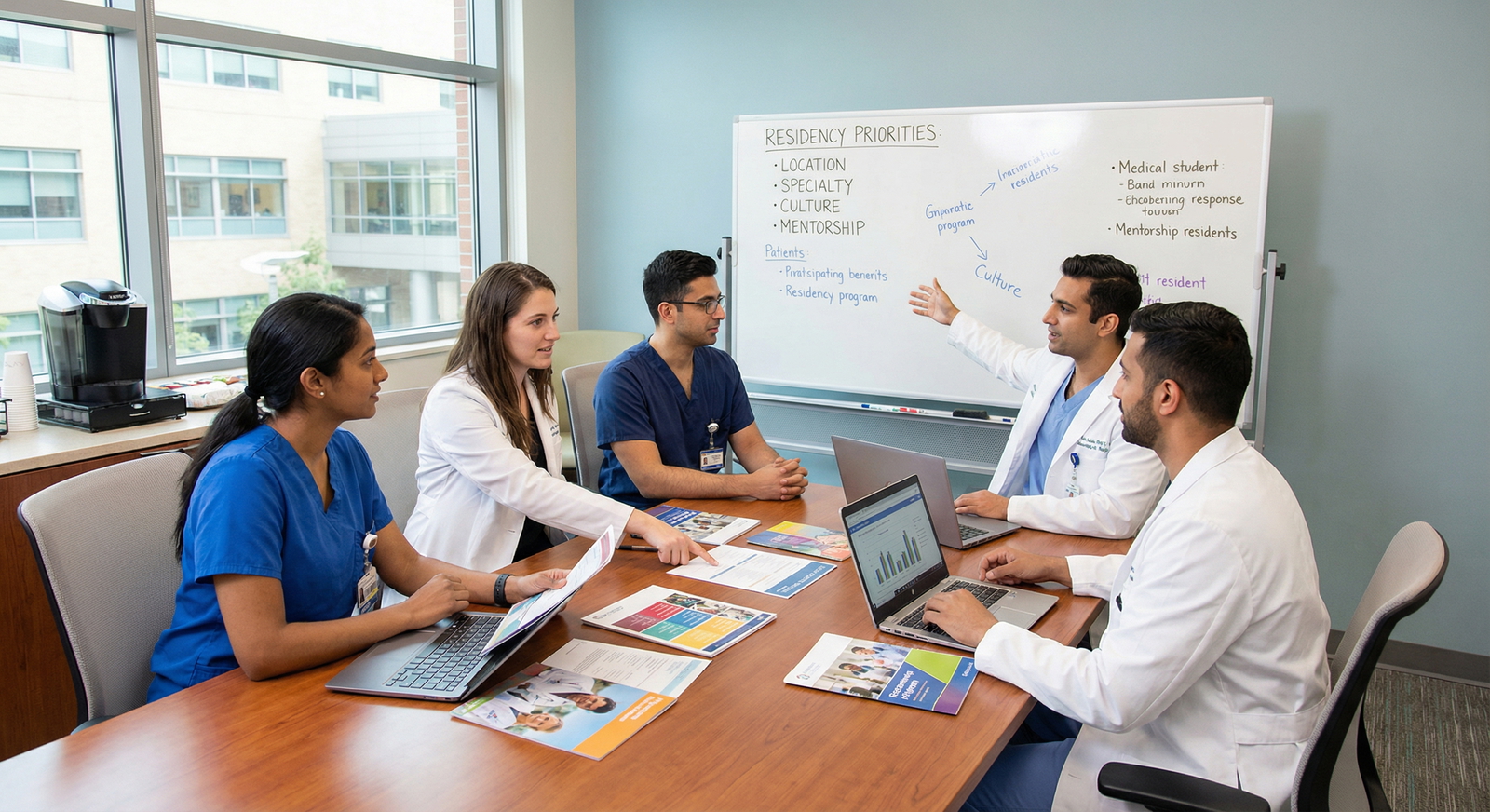
Understanding Geographic Flexibility as a US Citizen IMG in Atlanta
For a US citizen IMG (American studying abroad) with strong ties to Atlanta, balancing geographic preference with match strategy can be challenging. You may feel deeply connected to Atlanta residency programs and Georgia residency opportunities—family, support systems, or a desire to build your long-term career there. At the same time, being too rigid with geography can significantly reduce your chances of matching.
Geographic flexibility is the art of expanding your target locations in an intentional, strategic way—preserving your priorities while giving yourself enough options to actually match. As a US citizen IMG, understanding and using geographic flexibility wisely can transform your match prospects from “Atlanta-or-bust” to “Atlanta or a realistic, career-building plan.”
In this article, we’ll break down:
- Why geographic flexibility matters especially for US citizen IMGs
- How to build a smart regional preference strategy centered on Atlanta
- Ways to show geographic interest on ERAS without boxing yourself in
- How to use location flexibility in your application narrative, letters, and interviews
- Practical examples and step-by-step planning tips
Why Geographic Flexibility Matters So Much for US Citizen IMGs
The Reality: Competition in Atlanta and the Southeast
Atlanta residency programs are highly desirable across multiple specialties. As a growing metro area with major academic centers and strong community programs, Atlanta attracts:
- US MD and DO seniors
- US citizen IMGs (many with strong ties to the Southeast)
- Non-US IMGs with excellent scores and profiles
For an American studying abroad, Atlanta may feel like “home base,” but you’re competing with applicants who:
- Trained in US medical schools
- Have local US clinical experience
- Have direct connections to Atlanta programs (students, rotators, research)
This doesn’t mean you can’t match in Atlanta. It does mean that putting all your hopes into a single city is risky, especially for competitive specialties or with any red flags (gaps, prior attempts, lower scores, etc.).
Why Geographic Flexibility Is a Strategic Advantage
Geographic flexibility is not about giving up your dream location—it’s about increasing the number of realistic doors that can open for you. For a US citizen IMG, it offers several advantages:
More interview invitations
- Some regions or states are more IMG-friendly than others.
- Being open to a wider set of regions increases the pool of programs that might seriously consider you.
Risk management if Atlanta is competitive for your profile
- If you don’t secure enough Atlanta interviews, you’ll still have a viable match list.
- You can still ultimately return to Georgia later via fellowship, job search, or transfer.
Demonstrating maturity and professionalism
- Programs appreciate applicants who show flexibility and realistic expectations.
- It signals that you are committed to training and building skills, not just a city name.
Long-term career flexibility
- Once you match and complete residency—even outside Georgia—you will still be a US-trained, board-eligible/board-certified physician.
- Many physicians ultimately return to their preferred region after training with stronger CVs.
Building an Atlanta-Centered Regional Preference Strategy
A regional preference strategy is how you prioritize locations and present your geographic interests to programs. For a US citizen IMG with Atlanta ties, the goal is to anchor your plan around Georgia and the Southeast while having enough flexibility to match somewhere strong and supportive.
Step 1: Define Your Geographic “Tiers”
Create clear tiers that blend your preferences with match probability.
Tier 1: Core region – Atlanta and Georgia residency programs
For most US citizen IMGs from the region, Tier 1 will include:
- Major academic centers in Atlanta (e.g., large university programs, safety-net hospitals)
- Community programs in the Atlanta metro area
- Other Georgia residency programs outside Atlanta (e.g., Augusta, Macon, Savannah, Columbus, smaller cities)
This tier represents your top geographic preference, but not necessarily your only choices.
Tier 2: Broader Southeast and nearby IMG-favorable regions
Think about:
- Neighboring or culturally similar states: Alabama, South Carolina, North Carolina, Tennessee, Florida
- Regions with moderately similar climate, population, or practice style
- States with known IMG-friendly programs or mid-sized cities (e.g., Jacksonville, Birmingham, Charlotte, Chattanooga, etc.)
Tier 2 should still feel compatible with your life goals, but is more about realistic expansion beyond Atlanta.
Tier 3: Strategic expansion regions
These may include:
- States with historically high IMG acceptance (certain areas in the Midwest, Northeast, or parts of the Rust Belt)
- Communities that actively need physicians and are open to training IMGs
- Areas where you have secondary ties—college, extended family, friends, or research experiences
Tier 3 is where you intentionally prioritize match probability and opportunity over ideal location.
Actionable exercise:
Write down your Tier 1, 2, and 3 cities/states on a spreadsheet. Aim for:
- Tier 1: 5–15 programs (depending on specialty availability in GA)
- Tier 2: 15–30 programs
- Tier 3: 20–40+ programs (especially important if your application has weaknesses)
Step 2: Align Specialty Competitiveness with Geography
Geographic flexibility interacts strongly with specialty choice. For example:
- If you’re applying to Internal Medicine or Family Medicine, being open to a range of states can dramatically increase your interview count.
- If you’re targeting more competitive specialties (e.g., Dermatology, Orthopedics, Radiology), aiming only for Atlanta drastically lowers your odds and may require one or more backup specialties with broader geographic flexibility.
Practical approach:
- Competitive primary specialty:
- Apply broadly across regions (Tiers 1–3).
- Consider one or two backup specialties where you are more geographically flexible.
- Broad specialty (IM, FM, Psych, Peds):
- You can still prioritize Georgia residency programs and nearby states but should remain open to IMG-friendly regions far beyond Atlanta.
Step 3: Factor in Personal and Logistical Realities
List out factors that are truly non-negotiable versus nice-to-have:
Non-negotiable:
- Visa needs (less of an issue for US citizen IMG—an advantage for you)
- Major caregiving responsibilities (elderly parents, children)
- Partner’s career constraints
Nice-to-have:
- Specific city size
- Climate
- Proximity to certain airports or hobbies
Use this to refine your Tier 2 and Tier 3. You may discover you actually have more geographic flexibility than you initially thought.

How to Signal Geographic Interest Without Limiting Yourself
Programs often want to know: “Is this applicant likely to come here and stay?” Your goal is to show genuine interest in Atlanta and Georgia residency options while clearly signaling location flexibility match readiness.
Using ERAS: Geographic Preference Fields and Signaling
In many recent cycles, ERAS has allowed applicants to indicate geographic preferences and sometimes geographic flexibilities. The exact tools may change slightly year to year, but the principles remain consistent.
Key principles for US citizen IMGs:
If you strongly prefer Atlanta/Georgia, say so—but NOT exclusively.
- Indicate the Southeast or Georgia as a preferred region if ERAS allows.
- Avoid indicating that Atlanta is your only acceptable region, especially if your application is borderline for competitiveness.
Pair preference with flexibility.
Examples of language in supplemental essays or communications:- “While I have strong ties to Atlanta and hope to train in Georgia, I am fully open to opportunities across the Southeast and other regions where I can provide care in underserved communities.”
- “My family and support system are in Atlanta, but I recognize the importance of finding the right training environment and am geographically flexible for a strong, supportive residency program.”
Be honest—but strategic.
If you have no realistic intention of moving to a region, do not falsely claim interest. However, ask yourself critically:- “Would I go there if this were my only match option?”
If the answer is yes, that region belongs in your geographic flexibility strategy.
- “Would I go there if this were my only match option?”
Expressing Geographic Interest in Personal Statements
For an American studying abroad who wants to emphasize Atlanta:
Good approach:
Share genuine ties to Atlanta or Georgia:
- Grew up in the city or state
- Attended college in Georgia
- Family base in Atlanta
- Prior clinical or volunteer experience in Georgia
Then clearly express flexibility:
- Connect your values (serving diverse communities, working with underserved populations, interest in specific patient demographics) to multiple regions, not only Atlanta.
Example paragraph:
“Atlanta has been my home for most of my life. My parents live in DeKalb County, and I completed my undergraduate degree in Georgia before attending medical school overseas. Returning to Georgia for residency would allow me to serve the community that first inspired my interest in medicine and maintain a support system that will help me thrive during training. At the same time, I recognize that residency is an opportunity to grow in a variety of settings, and I am fully open to training across the Southeast and in other regions where there is a strong need for dedicated primary care physicians.”
This paragraph clearly states a geographic preference residency focus (Atlanta/Georgia) but also supports a location flexibility match mindset.
Requesting Letters of Recommendation That Support Your Regional Story
If you have attendings or mentors who know about your Atlanta connection, they can reinforce your story:
- Ask them to mention your familiarity with and commitment to the Southeast or Georgia.
- However, do not ask them to say you will “only train in Atlanta.” That sounds rigid and can conflict with your broader application strategy.
Example suggestion to a letter writer:
“If appropriate, you could mention that I have strong ties to Atlanta and an interest in practicing in the Southeast long-term, while also being open to training opportunities in other regions where I can grow as a physician.”
Applying to and Ranking Programs: Balancing Atlanta and Flexibility
Geographic flexibility becomes very concrete during program selection, interview season, and ranking.
Program Selection: How Many Should Be in and Beyond Georgia?
As a US citizen IMG, numbers matter. While every year is different, some general guidelines:
- If applying to Internal Medicine or Family Medicine:
- Aim for at least 60–80+ applications total (more if any red flags).
- Of these, it’s reasonable to have:
- 10–20 programs in Georgia (depending on your specialty) and nearby states
- 40–60 programs across other IMG-friendly states
- For more competitive specialties:
- Apply very broadly (often 80–120+ programs).
- Keep Atlanta in your top geographic preference, but heavily utilize Tier 2 and Tier 3 states.
Check each Atlanta and Georgia residency program’s website for:
- US citizen IMG friendliness (prior IMG residents listed)
- USMLE/COMLEX score expectations
- Requirement for US LORs
- Graduation year limits
If a program rarely or never takes IMGs, treat it as a reach in your list, not a core target.
Interviews: Demonstrating Preference Without Sounding Rigid
During interviews at Atlanta or Georgia residency programs:
- Emphasize:
- Family or community ties
- Long-term desire to practice in the region
- Knowledge of local health disparities or population needs
- Avoid saying:
- “This is the only place I’m really willing to go.”
- “I only applied to programs near Atlanta.” (especially if untrue)
At non-Georgia programs:
- Still be enthusiastic and specific:
- Show you’ve learned about their community.
- Connect their program strengths to your goals.
- You can be honest about your background:
- “I’m originally from Atlanta, but I am excited about the chance to train in [city/region] because of your strong curriculum in [X] and commitment to [Y].”
Programs do not want to feel like they are simply your “backup city.” Show genuine interest wherever you interview.
Rank List Strategy: Safety vs. Preference
When creating your rank order list:
Rank all programs where you could realistically be happy and succeed.
Never leave a program off your list just because it’s not in Atlanta if you would choose it over going unmatched.Place your Atlanta and Georgia programs at the top—if you truly prefer them.
This honors your geographic preference residency goals.Do not rank only a few Atlanta programs and then stop.
If you have other interviews in Tier 2 and Tier 3 regions, use them. Many IMGs go unmatched because they rank too few programs.Remember: Matching outside Atlanta is not failure.
It’s a strategic stepping stone that still allows you to:- Build a strong CV
- Pursue fellowship or jobs in Georgia later
- Return to Atlanta with more training and experience

Long-Term View: Returning to Atlanta After Training Elsewhere
For many US citizen IMGs, the fear is: “If I leave Atlanta for residency, I’ll never get back.” In reality, many physicians:
- Train outside their home state
- Return later for fellowships, hospitalist jobs, outpatient practice, or academic positions
Pathways Back to Georgia After an Out-of-State Residency
Fellowship in Atlanta or Georgia
- Internal Medicine graduates can apply for Cardiology, GI, Pulm/CC, etc. in Atlanta.
- Psychiatry, Pediatrics, EM, FM, and other specialties also have fellowship opportunities regionally.
Hospital or group recruitment
- Georgia has substantial needs in both urban and rural areas.
- Many health systems recruit aggressively for well-trained physicians, regardless of where they did residency.
Networking during residency
- Attend regional or national conferences where Atlanta or Georgia programs recruit.
- Contact Georgia-based mentors you had before medical school or during undergrad.
Keep your Georgia narrative alive
- If you leave the state for residency, continue:
- Research or QI projects related to issues affecting the Southeast
- Community outreach with similar populations (e.g., similar demographics)
- If you leave the state for residency, continue:
This way, even if your location flexibility match leads you outside Atlanta initially, your career trajectory can still arc back home.
Practical Planning Checklist for US Citizen IMGs Focused on Atlanta
Use this checklist as you build your strategy:
Clarify your priorities
- Why is Atlanta important to you (family, support, community, jobs)?
- Are you open to other Georgia cities?
- Are you willing to train out of state if needed to match?
Map your geographic tiers
- Tier 1: Atlanta and Georgia residency programs
- Tier 2: Southeast + nearby states you could see yourself living in
- Tier 3: Other IMG-friendly regions where you’d still accept a position
Research programs thoroughly
- Identify IMG-friendly programs in all tiers
- Track them in a spreadsheet (state, city, IMG history, notes)
Craft your narrative
- Personal statement: highlight Atlanta ties + geographic flexibility
- ERAS geographic preference (if available): list Southeast/Georgia + openness to other areas
Align your application with your strategy
- US clinical experience: try to get at least some in the Southeast or Atlanta if possible
- Letters: ask mentors to note your regional ties without making you sound inflexible
Apply broadly
- Don’t limit yourself to just Atlanta or Georgia
- Use your American studying abroad status (no visa issues) as a strength and apply countrywide
During interviews
- Tailor your talking points to each program’s region
- Be authentic about preferences, but emphasize commitment to training wherever you match
Rank intelligently
- Order programs by where you would actually want to train, not by speculation about your chances
- Include all programs where you’d rather match than go unmatched, even if they’re far from Atlanta
FAQs: Geographic Flexibility for US Citizen IMGs in Atlanta
1. As a US citizen IMG with strong ties to Atlanta, is it realistic to match only in Atlanta?
It’s possible but risky to focus only on Atlanta. Atlanta residency programs are popular and competitive, often prioritizing US MD and DO seniors and top IMGs. Even strong American studying abroad candidates may not receive enough Atlanta interviews to safely limit themselves to that area. For most US citizen IMGs, it is much safer to:
- Prioritize Atlanta and Georgia residency in your top preferences
- Apply and be open to a broader set of IMG-friendly regions to protect against going unmatched
2. Will indicating a geographic preference for the Southeast or Georgia hurt my chances in other regions?
Generally, no—especially if you also communicate flexibility. Many programs understand that applicants have regional ties but are still open to moving. Problems arise only if you:
- Signal a very narrow geographic preference (e.g., only one city)
- Sound reluctant or uninterested when interviewing outside your preferred region
Balance your messaging: emphasize your ties to Atlanta/Georgia while clearly stating you are prepared to move elsewhere for the right training environment.
3. How many programs should I apply to if I want to prioritize Atlanta but remain flexible?
Numbers vary by specialty and applicant strength, but for many US citizen IMGs in fields like Internal Medicine or Family Medicine:
- Aim for 60–80+ total applications at minimum.
- Make sure that only a small fraction of these are in Atlanta alone.
- Include:
- Atlanta and other Georgia programs
- Southeast programs (Tier 2)
- Other IMG-friendly regions across the US (Tier 3)
For more competitive specialties, you may need to apply to 80–120+ programs and be even more geographically flexible.
4. If I match outside Georgia, can I still come back to Atlanta to practice?
Yes. Many physicians train outside their home region and later return. Common pathways include:
- Applying for fellowship positions in Atlanta or other Georgia cities
- Seeking hospitalist or primary care roles in Georgia immediately after residency
- Using professional networks, conferences, and Georgia-based mentors to reconnect with the region
Training outside Georgia does not close doors; with strong performance and a clear long-term narrative, it can still support your goal of building a career in Atlanta or elsewhere in the state.
Geographic flexibility doesn’t mean abandoning your dream of practicing in Atlanta—it means building a smart, resilient route toward that dream. As a US citizen IMG, you bring advantages (citizenship, cultural familiarity, often strong English and US background) but also face real competition. By developing a clear regional preference strategy, centering Atlanta while remaining location-flexible for the match, you maximize both your chances of matching and your long-term ability to practice where you ultimately want to be.