
Geographic flexibility can quietly make or break a US citizen IMG’s chances in the Match—especially if you’re dreaming of Denver or other Colorado residency programs. As an American studying abroad, you’re competing not only on academic merit, but also on strategy. One of the most important strategic levers you control is where and how broadly you apply.
This article breaks down how to think about geographic flexibility as a US citizen IMG targeting Denver, how to balance genuine geographic preference with match probability, and how to build a smart regional preference strategy that keeps Colorado in play without compromising your overall chances.
Understanding Geographic Flexibility as a US Citizen IMG
For a US citizen IMG (American studying abroad in the Caribbean, Europe, Latin America, Asia, etc.), geography interacts with your application in several ways:
- Programs often have regional pipelines (local schools, local rotators, local ties).
- Some regions are more IMG‑friendly than others.
- Popular cities (like Denver) attract many applicants but offer relatively few positions.
- Your willingness to relocate widely—or not—directly affects your match odds.
What “Geographic Flexibility” Really Means
Geographic flexibility in the residency match isn’t just “I’ll go anywhere.”
More precisely, it includes:
Breadth of regions you apply to
- Single state vs. multiple states
- Single region vs. nationwide strategy
Type of locations you are willing to consider
- Large metro areas like Denver
- Mid‑size cities in the Mountain West or Midwest
- Suburban community programs
- Rural or smaller community hospitals
Consistency between your ERAS application and your behavior
- Where you request away rotations
- Where you get letters of recommendation
- The regions you prioritize on your preference signaling (if applicable)
- The way you answer “Where do you see yourself living?” in interviews
Why Geographic Flexibility Matters More for US Citizen IMGs
Compared with US MD and many US DO applicants, US citizen IMGs typically:
- Receive fewer interview invitations overall.
- May be screened out in “competitive” metros despite solid applications.
- Often need to cast a wider net on program type and location.
This means that being too rigid about geography—for example, “Denver or nothing”—can dramatically lower your match probability.
Instead, your goal should be:
“Denver and Colorado as a priority, within a broader, realistic, flexible strategy that maximizes my overall chance to match.”
Denver and Colorado: How Competitive Is This Region?
Denver has become a preferred city for many applicants: outdoor lifestyle, strong hospital systems, and growing population. But from a residency standpoint, it is:
- High-demand, because many applicants love the area.
- Limited‑supply, because Colorado has fewer residency programs than coastal or Midwestern states.
Snapshot of Colorado Residency Landscape (Conceptual)
Colorado residency options cluster mainly in:
- Denver metro area
- Large academic centers
- A handful of community and university‑affiliated programs
- Other Colorado cities
- Colorado Springs, Aurora, Fort Collins, Greeley, Pueblo, and a few smaller communities depending on specialty
Relative to other regions:
- Total number of positions: Lower than major coastal hubs or states like New York, Pennsylvania, or Texas.
- Applicant interest: High—Denver is perceived as a lifestyle destination for many US graduates.
- IMG friendliness: Variable by specialty and specific program.
As a US citizen IMG seeking Denver residency programs, you’re entering a market where:
- US MD/DOs strongly dominate at many central academic institutions.
- Some community or regional hospitals may be more open to IMGs, but they may be outside downtown Denver proper.
Realistic Expectations for an American Studying Abroad
It’s important to be honest with yourself:
- If you say, “I only want to match in Denver,” you are essentially competing for a small number of seats in a high‑demand location.
- If your USMLE scores, clinical experiences, and letters are mid‑range for an IMG, this is risky.
- Even with strong scores, limiting yourself geographically reduces your safety net.
That doesn’t mean you shouldn’t pursue Denver. It means you should build Denver into a broader geographic preference strategy, rather than pinning everything on one city.
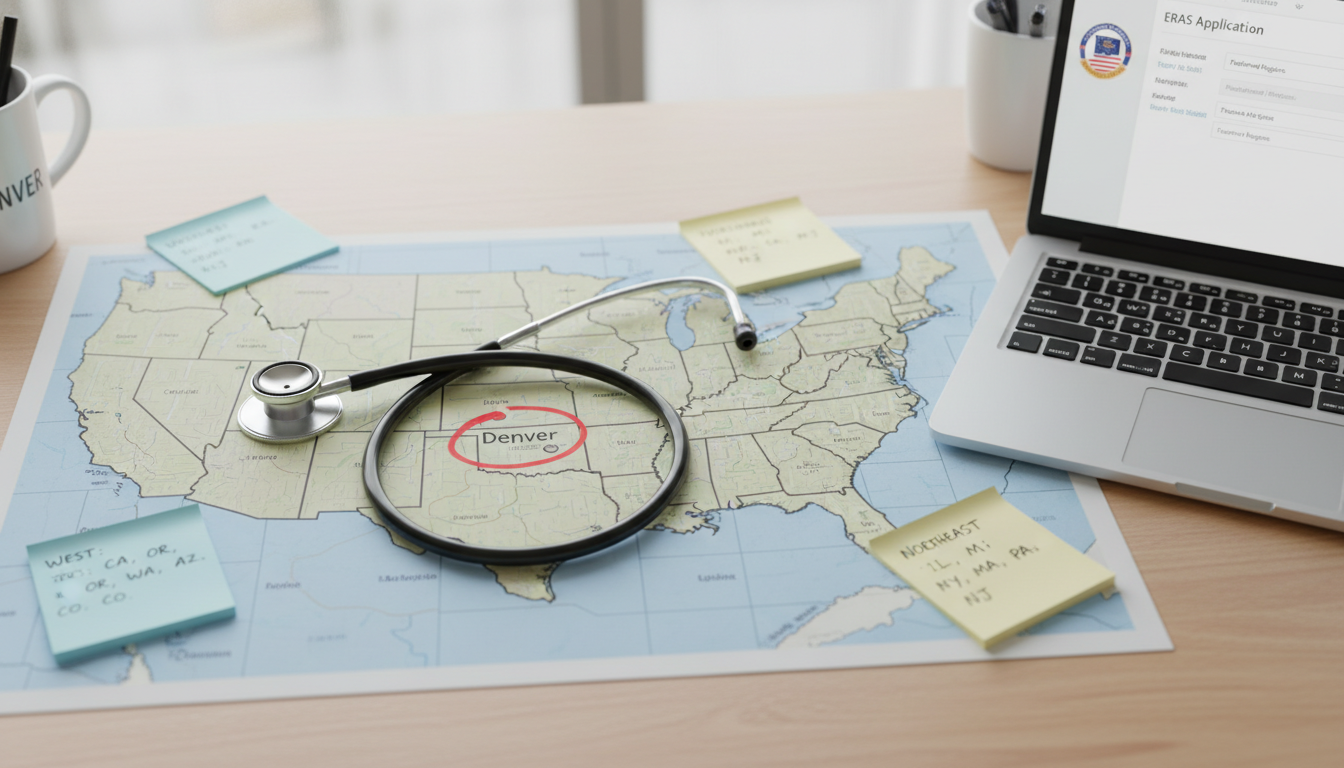
Building a Smart Regional Preference Strategy Around Denver
A regional preference strategy is the structured way you decide:
- Which regions are priority, secondary, and backup.
- How many applications you send to each region.
- How you explain these preferences to programs.
Step 1: Define Your True Priorities
Ask yourself:
Is Denver your:
- Absolute top preference?
- One of several favorite cities?
- Important mainly because of family/friends, lifestyle, or outdoor activities?
What matters more:
- Matching this year, even if not in Colorado?
- Or holding out for a particular region, accepting a higher risk of not matching?
Are there other regions that share key features you like in Denver?
- Mountain West (Utah, Idaho, Montana, Wyoming)
- Pacific Northwest (Oregon, Washington)
- Certain cities with similar lifestyle (e.g., Salt Lake City, Boise, Albuquerque)
Write your answers down. Then rank:
- Tier 1 (Priority): Denver / Colorado
- Tier 2 (Strong Interest): Comparable lifestyle or regional areas (e.g., Mountain West, Pacific Northwest)
- Tier 3 (Flexible / Backup): More IMG‑friendly regions and states with higher program density (e.g., Midwest, parts of the South, some East Coast areas)
Step 2: Understand Geographic Preference Tools in the Match
Recent NRMP processes include:
Geographic preference signals (in some specialties)
Some specialties allow you to indicate a regional preference or send signals to specific programs.Supplemental ERAS application (for certain specialties)
May include questions about:- Geographic preference
- Setting preference (urban, suburban, rural)
Use these tools strategically:
- If allowed, you can state Rocky Mountain / Mountain West or “West” as a preferred region while also indicating no absolute geographic restrictions.
- Avoid contradicting yourself. Don’t say “only want the West” in a supplement if you’re also applying broadly nationwide.
A good approach for a US citizen IMG:
“I have a strong interest in the Mountain West region, including Colorado and Denver, but I am also open to relocating elsewhere to pursue training and match this cycle.”
This frames Denver as a geographic preference residency target while maintaining location flexibility for the match overall.
Step 3: Balance Your Application Numbers
For many IMGs, recommended total applications are often:
- Primary care (IM, FM, Peds): 60–100+ programs
- More competitive specialties: Significantly more, with a strong backup specialty
Within that, you can structure by region:
Example for an Internal Medicine US citizen IMG with decent scores:
- Tier 1: Colorado residency / Denver residency programs
- Apply to every program in Colorado that suits your profile (academic and community).
- Tier 2: Nearby or similar regions
- Utah, New Mexico, Nevada, Idaho, Oregon, Washington, Arizona, maybe parts of California depending on IMG‑friendliness.
- Tier 3: High‑volume, IMG‑friendlier states
- States like New York, Pennsylvania, Michigan, Ohio, Florida, Texas (depending on visa needs, even though you are a US citizen, some patterns still matter), and some Southern states with strong IMG representation.
The key point: Denver is your core target, not your entire map.
How to Show Denver/Colorado Interest Without Over‑Restricting Yourself
You want programs in Denver and Colorado to believe:
- You are genuinely interested in the region, and
- You are likely to rank them highly if they rank you.
But you don’t want that interest to prevent you from matching elsewhere.
Demonstrating Genuine Colorado Residency Interest
Ways to show real interest:
Personal ties
- Family or close friends in Denver/Colorado
- Grew up in the region or previously lived in the Mountain West
- Partner’s job or school in Colorado
Educational or clinical ties
- US clinical experience in Denver or nearby states
- Electives or sub‑internships at Colorado hospitals (if accessible to IMGs)
- Research, QI projects or volunteer work connected to the region (rural health, mountain communities, etc.)
Long‑term professional goals
- Desire to practice in underserved Mountain West communities
- Interest in outdoor medicine, wilderness medicine, sports medicine, etc., if programs in Colorado offer strength in these areas
In your ERAS application:
- Use your personal statement to briefly highlight:
- Why Colorado (or Mountain West) resonates with your life and career goals.
- In the experiences section, emphasize:
- Any work, travel, or volunteer exposure to the West, rural areas, or similar populations.
In interviews for Denver residency programs:
- Articulate a clear plan:
- “I plan to build my career in the Mountain West region, ideally practicing in Colorado or neighboring states. Denver offers the combination of academic training and community need that fits my goals.”
Keeping Your Story Consistent Across Regions
At the same time, you should:
- Avoid implying that you will only be happy in Denver when interviewing elsewhere.
- Tailor, but don’t contradict, your narrative.
For example:
- At a Colorado program:
- Emphasize your strong desire to settle or train in Colorado/Mountain West.
- At a Midwestern program:
- Emphasize your commitment to training in a region with strong community needs and diverse pathology, and your full willingness to relocate to advance your education.
This still fits a location flexibility match strategy while allowing genuine Denver emphasis where appropriate.

Practical Steps to Maximize Your Match Chances While Targeting Denver
Here is a concrete, step‑by‑step approach tailored to a US citizen IMG aiming for Denver:
1. Research IMG‑Friendliness by Program
Create a spreadsheet with:
- All Denver residency programs in your specialty
- All Colorado residency programs outside Denver
- Key columns:
- % of current residents who are IMGs
- Any US citizen IMGs noted (via program websites or LinkedIn)
- Recent match lists showing IMGs
- Program type (university, university‑affiliated, community)
Interpretation:
- High IMG presence: Stronger chance as a US citizen IMG; these are top targets within Colorado.
- Minimal/no IMG presence: Apply if you have strong metrics or particular ties, but don’t rely on them.
2. Align Rotations and Letters With Your Geographic Strategy
If you still have time before applying:
- Try to get US clinical experience in:
- Colorado or neighboring states, or
- Regions known to be IMG‑friendly and high volume.
Even if you cannot rotate in Colorado directly:
- Rotating in the Mountain West (e.g., Utah, New Mexico, Arizona) can still help support your narrative that you’re serious about this part of the country.
- Strong letters from US attendings carry more weight than letters from abroad, regardless of exact state.
3. Craft a Personal Statement That Balances Preference and Flexibility
You might:
Write one primary personal statement that:
- Highlights your motivation to practice in underserved or diverse US communities, interest in particular patient populations, and openness to relocation.
- Mentions the Mountain West/Colorado interest in a natural, not overly exclusive, way.
Optionally write a Denver/Colorado‑specific statement version:
- Used for Colorado programs or a small set of Mountain West programs.
- Adds a paragraph about your Denver/Colorado ties, lifestyle fit, or long‑term goal to practice in the region.
Avoid:
- Statements that sound like: “I can only envision myself training in Denver.”
Programs outside Colorado may interpret this as low commitment to them.
4. Strategically Answer “Where Do You See Yourself Living?”
On ERAS supplemental or in interviews, you may be asked:
- “Where do you see yourself living long‑term?”
- “Do you have any geographic restrictions?”
Strong, flexible answer examples:
“My top priority is training at a program where I can grow clinically and contribute meaningfully to the community. I have a strong interest in the Mountain West, including Colorado, because of [family ties/outdoor lifestyle/previous time in the region], but I’m ultimately open to relocating wherever I fit best and can receive excellent training.”
Or:
“I see myself long‑term in a region with access to outdoor activities and a diverse patient population, which is why Denver and the Mountain West appeal to me. That said, matching this year and becoming a well‑trained physician is my primary goal, so I have applied broadly across regions.”
This preserves your geographic preference residency interest while reinforcing location flexibility in the match.
5. Plan Your Rank List With Realism
When it’s time to rank:
- Rank programs in the exact order you prefer them, no matter the geography, assuming you could see yourself living there.
- Do not move a non‑Denver program above a Denver program you truly prefer just to “play it safe.”
The algorithm already favors your genuine preferences.
Good approach:
- Place your preferred Denver residency programs and other Colorado programs where they honestly belong.
- Then place your next preferred regions (Mountain West or others).
- Fill out the list with all other programs you would be willing to attend.
Do not:
- Cut your list short because the bottom programs aren’t in your favorite cities. If you could live there for 3 years, they belong on your list.
Common Pitfalls in Geographic Strategy for US Citizen IMGs
Pitfall 1: “Denver or Bust” Mindset
Limiting applications to one region (or just a few cities) is high‑risk, especially as an IMG. Even very strong applicants can be unlucky in a small regional pool.
If Denver is important:
- Pursue it strongly, but within a large, diverse list of programs.
Pitfall 2: Confusing Programs With Mixed Signals
Avoid:
- Telling a Denver program:
- “I will only be happy in Colorado.”
- Then telling a Midwestern program:
- “I only see my future in the Midwest.”
Instead:
- Emphasize regionally relevant positives (family ties, lifestyle, interests) without making absolute statements that can’t be true for every region.
Pitfall 3: Not Applying to Enough Programs in IMG‑Friendly Areas
Some US citizen IMGs apply heavily to desired cities (Denver, Seattle, San Diego, Boston) but under‑apply to states and regions with:
- More open attitudes to IMGs
- Higher volume of residency spots
- Community‑based programs
You need these safety nets to keep your odds reasonable.
Pitfall 4: Underestimating the Importance of Flexibility in Couples Match
If you’re couples matching and one or both of you want Denver:
- It becomes even more important to:
- Apply broadly across multiple cities and states.
- Consider multiple cluster regions (e.g., Denver + Front Range cities + nearby states).
- Some couples succeed by:
- Targeting clusters of cities that are a few hours’ drive apart, rather than a single metro area.
Final Thoughts: Prioritize Match, Not Just Map
As a US citizen IMG, your ultimate objective is to become a trained, board‑eligible physician in the US. Geographic preference is important—for your quality of life, your family, your long‑term plans—but it must be balanced against the realities of the match.
A sound strategy for an American studying abroad who strongly prefers Denver might look like this:
- Apply to every reasonable Denver and Colorado residency program in your chosen specialty.
- Expand to the Mountain West and nearby states with similar lifestyle appeal.
- Add a robust set of IMG‑friendly regions and community programs nationwide.
- Use ERAS, supplemental questions, and interviews to present Denver/Colorado as a clear preference, but always within the frame:
“I am open to training where I am needed and where I can become the best physician possible.”
Handled well, geographic flexibility becomes a tool—not a compromise—that keeps your Denver dream alive while protecting your overall chance to match.
FAQ: Geographic Flexibility for US Citizen IMGs Targeting Denver
1. As a US citizen IMG, is it realistic to match into a Denver residency program?
Yes, it is possible, but it depends heavily on:
- Your USMLE scores and clinical performance
- The specialty (primary care vs. highly competitive)
- Whether the specific Denver program has a history of taking IMGs or US citizen IMGs
- Strength of your US clinical experience and letters
You should treat Denver as a strong geographic preference, not as your only target. Matching into Colorado is more realistic when you apply broadly and include IMG‑friendly programs nationwide.
2. How many programs should I apply to if Denver is my top choice?
The exact number depends on specialty and competitiveness, but for many US citizen IMGs:
- Internal Medicine / Family Medicine / Pediatrics: often 60–100+ programs
- Within those, apply to all suitable Colorado residency options and several dozen more across other regions.
Ensure that Denver is fully represented on your list, but do not limit yourself to only Colorado or the West. More applications in IMG‑friendly states and community hospitals improve your safety margin.
3. How do I express Denver as a geographic preference without hurting my chances elsewhere?
Use a consistent message:
- In ERAS and interviews, say that you have a strong interest in Denver/Colorado or the Mountain West, but your primary goal is to match and train well, and you are open to relocating.
- Tailor your explanation slightly for each region, but avoid absolute claims like “I can only live in Denver.”
This approach signals geographic preference residency to Colorado programs while preserving location flexibility for the match.
4. If I don’t match in Denver, can I still end up in Colorado later?
Yes. Many physicians:
- Train in one state.
- Later move to Colorado for fellowship or attending jobs.
Pathways include:
- Completing residency in another state, then applying for fellowships in Colorado.
- Gaining experience and then applying for attending positions in Denver or across Colorado.
Matching somewhere outside Denver now does not close the door on Colorado long‑term. Geographic flexibility during the match often expands your eventual career options, including the possibility of practicing in Denver later.