Understanding Geographic Flexibility as a US Citizen IMG in the Great Lakes
For a US citizen IMG (American studying abroad), “geographic flexibility” is one of the most powerful levers you have in the Match—especially in competitive and mid-range specialties. In the Great Lakes region, where there is a mix of large academic centers and numerous community and midwest residency programs, smart use of regional preference strategy can dramatically improve your chances.
Geographic flexibility does not mean randomly applying everywhere. It means:
- Understanding how location preferences affect interview offers and rank lists
- Strategically balancing your ideal locations with places where you’re more likely to match
- Being able to justify your interest in specific cities and states within the Great Lakes
- Knowing when to emphasize or downplay location flexibility in your application materials and interviews
This article focuses on how a US citizen IMG can position themselves for success in Great Lakes residency programs—especially if you’re an American studying abroad who wants to return to the US but isn’t tied to one exact city.
We’ll cover:
- Why the Great Lakes is a high-yield region for US citizen IMGs
- How program directors think about geographic preference and IMGs
- A step-by-step geographic preference strategy tailored to the region
- Practical examples and sample talking points for interviews and personal statements
- How to signal location flexibility without sounding desperate or unfocused
Why the Great Lakes Region Is Strategic for US Citizen IMGs
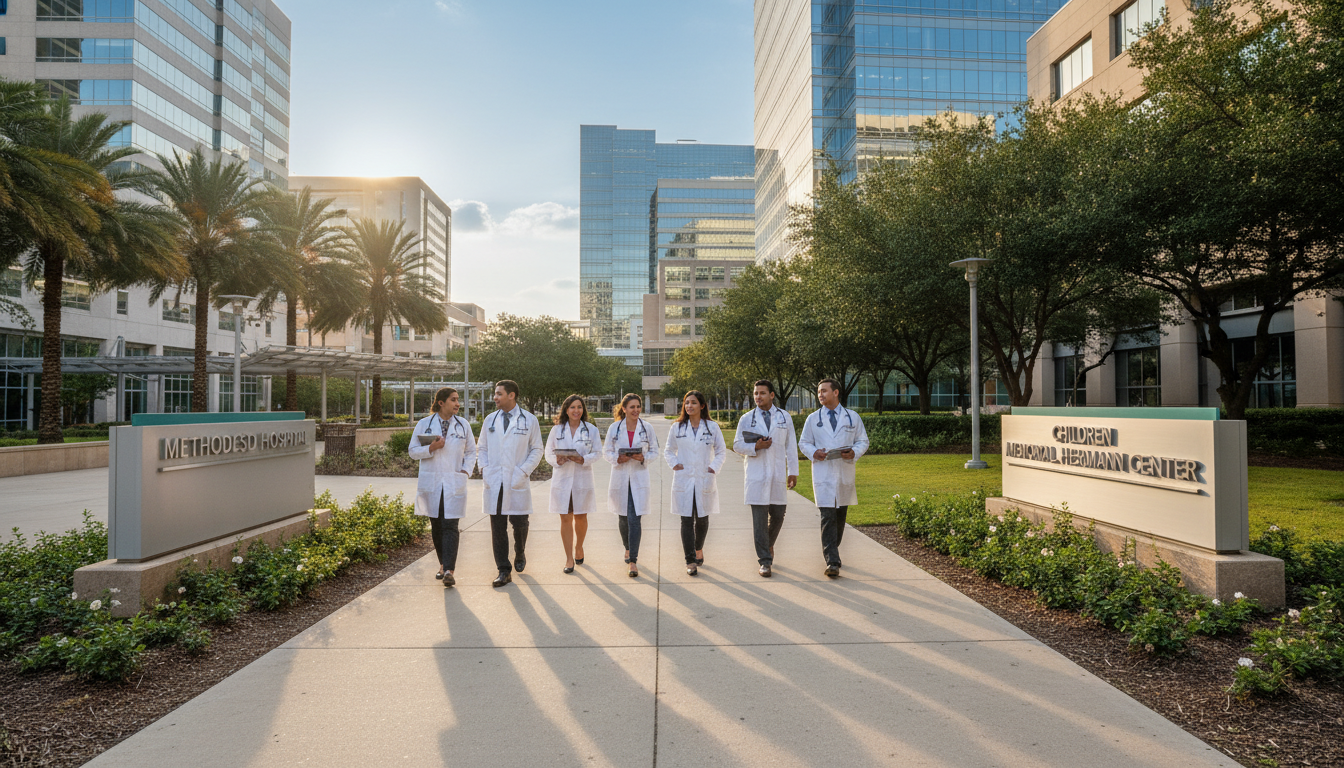
The Great Lakes region (Illinois, Indiana, Michigan, Minnesota, Ohio, Wisconsin, and often neighboring states like Pennsylvania) offers a distinctive blend of:
- Large academic medical centers
- Strong community and hybrid programs
- A wide range of urban, suburban, and smaller-city environments
For a US citizen IMG, this region is particularly attractive because it often balances training quality, cost of living, and match feasibility.
1. Diversity of Program Types
Within a relatively compact geography, you can target:
- Major academic centers (e.g., Chicago, Cleveland, Minneapolis–St. Paul, Ann Arbor, Madison)
- Community-based residency programs in mid-sized cities
- Hybrid academic–community programs with university affiliations spread across the Midwest
This variety allows you to tailor your application to your profile:
- Strong scores + strong CV:
- Apply broadly, including university and university-affiliated programs
- Average scores or attempts + solid clinical experience:
- Focus more on community and hybrid midwest residency programs that historically interview IMGs
- Gap years or red flags:
- Target smaller cities, community programs, and places with a history of taking US citizen IMGs
2. Lifestyle and Cost Advantages
The Great Lakes region generally offers:
- Lower cost of living compared to coastal cities
- Shorter commutes, less traffic, and often more affordable housing
- Plenty of outdoor activities (lakes, parks, trails) and strong local communities
For program directors, a candidate who understands—and genuinely appreciates—these lifestyle factors can appear more likely to stay in the region long term, which is a positive.
3. IMG-Friendlier Landscape (Program-Dependent)
While some academic flagships are highly competitive, many great lakes residency programs are IMG-friendly, especially in:
- Internal Medicine
- Family Medicine
- Pediatrics (selectively)
- Psychiatry (varies by institution)
- Transitional Year / Preliminary programs (especially in community settings)
As a US citizen IMG, you have an additional advantage over non-US citizen IMGs: no visa requirement. When combined with clear, authentic geographic interest, this can make you an attractive candidate even at moderately competitive programs.

How Program Directors View Geographic Preference and Flexibility
Understanding how geographic preference works behind the scenes can help you craft a smarter location flexibility match plan.
1. Program Concerns: Will You Actually Come Here and Stay?
Every residency program worries about:
- Recruitment: Will this applicant actually rank us?
- Retention: Will they complete training here or try to transfer?
- Fit: Do they understand our city, weather, and patient population?
For some Great Lakes locations—especially cold-weather or smaller cities—programs worry about applicants who seem to apply only as a backup, with no real intention of coming if they match.
This is where a US citizen IMG with strong geographic preference residency messaging can stand out:
- You can credibly frame the region as a homecoming to the US
- You can emphasize familiarity with the Midwest or Great Lakes culture (even if you didn’t grow up there)
- You can demonstrate that your priorities—training quality, cost of living, strong community—align with what the region offers
2. Reading Between the Lines of Your Application
Programs infer your geographic interest from:
- Your ERAS geographic preferences (if you choose to disclose)
- Your address, permanent residence, or where your family lives
- Your US clinical rotations (e.g., doing rotations in Ohio or Illinois signals real interest)
- Mention of specific states or types of communities in your personal statement
- How you answer interview questions about location flexibility and where you see yourself practicing
If you’re an American studying abroad and your application only shows connections to New York and California, but you apply heavily to great lakes residency programs, some PDs may perceive you as less likely to rank them highly—unless you explicitly address your flexibility.
3. The Balance: Specific Interest vs. Flexibility
You want to show:
- Enough specific interest that a program believes you might rank them highly
- Enough geographic flexibility that you are not seen as locked into only one metro area
For example, saying:
“I’m only interested in Chicago or I won’t go”
signals low flexibility and can be risky, especially for IMGs.
On the other hand:
“I’m open to any program anywhere in the US”
can sound unfocused and desperate, and doesn’t reassure Great Lakes programs that you’ll stay.
The sweet spot for a US citizen IMG in this region is:
“My top priority is to train in the Great Lakes and broader Midwest because I value X, Y, and Z about the region. Within that area, I am very flexible about city size and state, and I’m excited by both large academic centers and strong community-based programs.”
Building a Geographic Strategy for the Great Lakes: Step-by-Step
This section lays out a practical geographic preference strategy tailored to US citizen IMGs targeting Great Lakes residency programs.
Step 1: Clarify Your True Constraints and Flexibilities
Before you decide what to communicate to programs, privately list:
Non-negotiables
- Visa? (Not an issue for US citizen IMG – an advantage)
- Family you must stay close to?
- Partners’ job or school constraints?
- Health-related or support needs?
Preferences (but not absolute)
- Urban vs. suburban vs. smaller city
- Proximity to international airports (for family abroad)
- Specific states you’d enjoy but don’t require
If you have no strict geographic constraints, that’s powerful—but you should still define a core region (e.g., Great Lakes + broader Midwest) for messaging coherence.
Step 2: Group the Great Lakes Region into Tiers
Create 3 tiers to organize your application:
Tier A – Primary Target Region (Great Lakes core)
- Illinois, Indiana, Michigan, Minnesota, Ohio, Wisconsin
- These are the states you actively highlight in your narrative and ERAS
Tier B – Expanded Midwest and Adjacent Regions
- Nearby states (e.g., Iowa, Missouri, Kentucky, Western Pennsylvania)
- Similar patient populations, cost of living, and culture; you can talk about them as “broader Midwest”
Tier C – Backup or Specialty-Driven Areas
- Other regions of the US where you would be willing to go for the right program or specialty
- You can still show openness without overemphasizing them in your written materials
This structure supports a regional preference strategy where Great Lakes is clearly central, but you show enough flexibility to adapt to the Match realities.
Step 3: Use Your Personal Statement to Anchor Regional Interest
If you’re strongly focused on Great Lakes and Midwest residency programs, consider:
- Either one general personal statement with a paragraph that mentions the region
- Or a region-tailored version where the Great Lakes emphasis is even stronger
Example paragraph for a US citizen IMG:
“Although I grew up in the United States and completed my medical education abroad, I see my long-term future in the Great Lakes and broader Midwest region. I’m drawn to the patient diversity of cities like Chicago and Cleveland, the strong community ties in smaller towns across Ohio and Michigan, and the balance of affordable living with rigorous training that this region offers. I’m especially excited by programs that serve blue-collar and underserved communities similar to those I worked with during my clerkships.”
This explicitly signals: great lakes residency is not an afterthought; it’s your priority.
Step 4: Leverage US Clinical Experience in the Region
For an American studying abroad, USCE is crucial. To reinforce geographic preference:
- Prioritize rotations, observerships, or externships in:
- Ohio (Cleveland, Columbus, Toledo, Dayton)
- Michigan (Detroit, Grand Rapids, Ann Arbor)
- Illinois (Chicago, Peoria, Rockford)
- Wisconsin, Minnesota, Indiana communities
Then:
- Highlight these rotations prominently in ERAS Experience section
- Ask for LORs from attendings at Great Lakes institutions if possible
- During interviews, reference specific patient encounters or lessons from those rotations that connect to the region
This allows you to say, truthfully:
“My time working with patients in Detroit and Toledo strengthened my desire to build a career in the Great Lakes. I appreciated both the clinical complexity and the strong sense of community.”
Step 5: Plan Your Application List with Location Flexibility in Mind
For most US citizen IMGs (especially in primary care specialties), a safe approach might be:
- 50–70% of applications: Great Lakes + broader Midwest
- 20–30%: Adjacent or similar regions
- Remaining: Other regions where you’d genuinely consider living
When considering location flexibility match strategy:
- Do not apply to programs in cities or states where you would not be willing to live for 3+ years.
- Be realistic about competitiveness: apply to a mix (academic, community, IMG-friendly).
- Use tools like FREIDA, program websites, and alumni networks to identify programs that have previously matched US citizen IMGs.

Communicating Geographic Flexibility in Interviews and ERAS
Even with a strong strategy, your success depends on how clearly and convincingly you communicate your preferences.
How to Answer: “Where Do You See Yourself Practicing?”
For a US citizen IMG focused on Great Lakes residency:
Weak answer:
“I’m open to anywhere in the U.S.”
Stronger answer:
“My goal is to build a long-term career in the Great Lakes or broader Midwest region. I value the diversity of patients, the collaborative culture, and the practical benefits like cost of living and strong community life. That said, I’m flexible within this region regarding city size and state, and I’d be happy in either a large urban center or a smaller city as long as I have strong training and supportive colleagues.”
This shows clear preference plus location flexibility within the region.
How to Explain Why You’re Interested in a Specific State or City
Be concrete and honest. Examples:
Ohio / Michigan example:
“During my rotations in Detroit and Akron, I was struck by how closely the patient population matched my interests—chronic disease management, underserved communities, and complex social determinants of health. I can see myself not only completing residency here but also staying in the region to practice.”
Wisconsin / Minnesota example:
“I’m attracted to programs in Minnesota and Wisconsin because they combine strong academic training with a very livable environment. I enjoy outdoor activities and smaller-city life, and I appreciate that residents here have a strong sense of community outside the hospital as well.”
Addressing “Why the Midwest?” as an American Studying Abroad
As a US citizen IMG, you can bridge your international education and US roots:
“Studying medicine abroad broadened my perspective, but I’ve always planned to return to the US. The Great Lakes and Midwest appeal to me because they align with how I grew up—pragmatic, community-focused, and hard-working. I like that medicine here often involves long-term relationships with patients and communities, and the region’s cost of living and stability make it a good fit for the kind of life I want to build.”
How Much Flexibility to Show Outside the Great Lakes?
If asked directly:
“Would you consider practicing outside the Great Lakes or Midwest?”
A balanced response:
“My strongest preference is to train and eventually practice in the Great Lakes or Midwest because of the reasons we discussed—community focus, cost of living, and the patient populations I enjoy working with. That said, I recognize that training opportunities can shape where people end up. I’d be open to staying or exploring opportunities elsewhere if the right position and community fit came along, but my primary target remains this region.”
This preserves your credibility without sounding rigid.
Putting It All Together: Example Scenarios and Actionable Tips
Scenario 1: US Citizen IMG with No Strong Hometown Ties
Profile:
- American studying abroad in the Caribbean/Eastern Europe
- Parents live on the East Coast but are flexible
- No particular US city you must live in
Strategy:
- Make Great Lakes + Midwest your primary geographic identity in your narrative
- Get at least 1–2 rotations in the region if at all possible
- Use ERAS geographic preference to explicitly list Great Lakes / Midwest if available
- Apply broadly within the region: academic, community, and hybrid programs
Key phrase for interviews:
“I don’t have a single hometown that I must return to, which actually gives me a lot of geographic flexibility. I’ve chosen to focus my applications on the Great Lakes and Midwest because I feel the region is an excellent fit for my personality and long-term goals.”
Scenario 2: US Citizen IMG with East Coast Family but Great Lakes Interest
Profile:
- Family lives in New Jersey/New York
- You’ve done a rotation in Ohio
- You’re open to living farther from family for training
Strategy:
- Acknowledge family but emphasize that training quality and fit matter more right now
- Highlight your positive experience in the Great Lakes rotation
- Indicate that the region is realistic and attractive for long-term practice
Key phrase:
“My family is on the East Coast, but we’re used to being geographically spread out. For residency, my priority is strong training and a supportive program culture, which I’ve found in the Great Lakes and Midwest. I’d be very comfortable settling here during and potentially after residency.”
Scenario 3: Late Realization About the Region
Maybe you originally imagined yourself on the coasts, but through research you recognized the advantages of midwest residency programs and Great Lakes training.
How to frame it:
“Initially, like many students, I thought mostly about coastal cities. But as I researched programs and spoke with residents, I realized that the Great Lakes and Midwest offer exactly what I value: excellent training, diverse patient populations, and a sustainable lifestyle. That’s why I made a conscious decision to focus most of my applications here.”
FAQs: Geographic Flexibility for US Citizen IMGs in the Great Lakes Region
1. As a US citizen IMG, should I say I’m willing to go anywhere in the U.S. to improve my chances?
Not exactly. Saying “anywhere” can sound unfocused. It’s more effective to identify a primary region (e.g., Great Lakes and broader Midwest) and communicate a clear, positive rationale for that preference, while still indicating reasonable flexibility. Program directors prefer applicants with authentic regional interest over those who appear to be applying randomly.
2. Do Great Lakes residency programs favor local applicants over IMGs?
Many programs have some preference for applicants with regional ties or demonstrated interest, but US citizen IMGs can absolutely match in the Great Lakes. Your advantage is no visa requirement and the ability to credibly commit long term. By obtaining US clinical experience in the region and tailoring your application to highlight Great Lakes interest, you can offset the lack of a local hometown.
3. How many programs should I apply to in the Great Lakes versus other regions?
There’s no universal number, but a common approach for US citizen IMGs in primary care specialties is to allocate 50–70% of applications to Great Lakes and broader Midwest programs, then distribute the rest across adjacent or acceptable regions. The key is that every program on your list should be somewhere you’re genuinely willing to live for 3+ years.
4. Will ranking only Great Lakes programs hurt my chances in the Match?
Ranking only Great Lakes programs is reasonable if you’ve applied broadly within the region and would truly be unhappy elsewhere. However, if your profile is borderline for your specialty, consider including a few additional regions where you’d realistically live. The Match algorithm works in your favor—rank programs in true order of preference, but be honest with yourself about how much geographic restriction your competitiveness can support.
By approaching geographic flexibility intentionally—centering the Great Lakes region, demonstrating clear interest, and articulating a coherent regional preference strategy—you, as a US citizen IMG, can turn location from a potential liability into a major strength in your residency application.