Understanding Geographic Flexibility as a US Citizen IMG in Los Angeles
For a US citizen IMG (American studying abroad, or born in the US but trained overseas), Los Angeles can feel like both a dream destination and a strategic puzzle. LA residency programs are highly desirable, highly competitive, and saturated with applicants who have strong local ties. To maximize your chances of matching—whether into a Los Angeles residency or elsewhere—you need a clear, realistic approach to geographic flexibility.
Geographic flexibility means being honest with yourself about:
- How strongly you prefer Los Angeles vs. other regions
- How far you are willing to stretch your location preferences to improve your match odds
- How to communicate your geographic preference residency strategy clearly and credibly in ERAS, interviews, and rank lists
This article will walk you through a strategic framework to use LA as a focal point without letting geography sink your match. We’ll focus specifically on the US citizen IMG experience and practical steps to maintain location flexibility while still targeting Los Angeles residency programs.
Why Geographic Flexibility Matters So Much for US Citizen IMGs
For US MD seniors, geography is often a “nice-to-have” factor. For a US citizen IMG trying to enter competitive markets like Los Angeles, geographic flexibility becomes a core survival strategy in the residency match.
1. The LA Context: High Demand, Limited Spots
Los Angeles residency programs sit in a region with:
- High desirability (weather, lifestyle, family connections, entertainment industry, major airports)
- Multiple medical schools feeding local programs (UCLA, USC, Cedars-Sinai affiliations, UC Riverside nearby, etc.)
- Strong local pipelines (students from California schools, rotators from regional hospitals, local DO schools)
For a US citizen IMG, this means:
- You are often competing against US MD and DO graduates with local ties, home programs, and strong clinical networks
- IMGs may be considered, but often with a “prove it” bias: programs want evidence of clinical readiness, US experience, and commitment to underserved populations
If you treat Los Angeles as “LA or nowhere,” you substantially increase your risk of not matching at all.
2. Risk Management: One Region vs. Multiple Regions
The National Resident Matching Program (NRMP) data consistently show:
- IMGs (even US citizen IMGs) need a larger number of programs applied to and more interviews to achieve a safe chance of matching
- Over-concentrating applications in one high-demand region (like Los Angeles and broader Southern California) is associated with higher unmatched rates, particularly when step scores or application strength are mid-range
In other words:
- A regional preference strategy focused solely on Southern California is rarely safe
- A location flexibility match approach—with tiers of preferred regions—gives you more shots on goal
3. The Unique US Citizen IMG Position
As a US citizen IMG, you have some advantages over non-US IMGs:
- No visa sponsorship needed (a big plus for some community programs)
- Familiarity with American culture, communication style, and healthcare expectations
- Often, personal or family ties in the US that can support genuine geographic preference narratives
At the same time, you’re still competing as an IMG:
- Some academic LA residency programs may rarely take IMGs, no matter citizenship
- Program directors may prioritize US MD/DO candidates first, then consider IMGs
Geographic flexibility lets you use your advantages (no visa issues, openness to different regions) rather than getting boxed into one intensely competitive market.

Building a Geographic Strategy Around Los Angeles
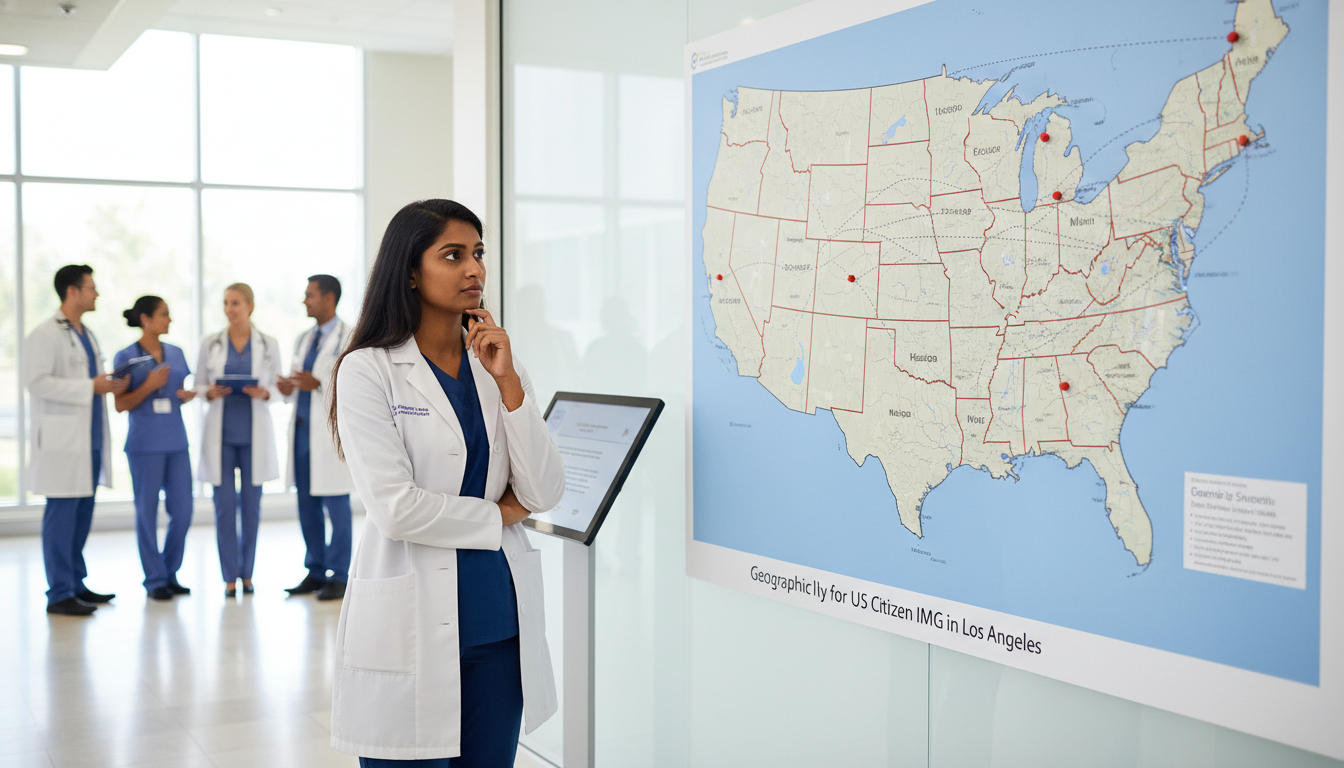
You don’t need to abandon LA; you need to place it correctly inside a broader geographic strategy. Think of your approach as building tiers and scenarios.
Step 1: Define Your Geographic Tiers
Create three tiers of locations based on preference and realism:
Tier 1 – Core Preference (Los Angeles + reasonable commuting regions)
- Central LA programs (e.g., large academic centers, county hospitals)
- Community hospitals in Greater Los Angeles (San Fernando Valley, South Bay, San Gabriel Valley, Inland Empire if you’re very LA-focused and can commute or relocate)
Tier 2 – Expanded West Coast / Regional Preference Strategy
Consider:
- Other Southern California cities (San Diego, Orange County, Riverside, San Bernardino)
- Northern California (Bay Area, Central Valley, Sacramento, Fresno)
- Nearby Western states (Nevada, Arizona, Oregon, Washington)
These regions still keep you on the West Coast, closer to LA, and often have programs that are somewhat less saturated than core LA.
Tier 3 – National Flexibility (Location Flexibility Match)
These are areas where:
- Programs are more IMG-friendly
- Competitiveness is lower than LA
- You’d still be willing to live for 3+ years
Examples:
- Midwest (Ohio, Michigan, Illinois outside Chicago, Missouri, Kansas, Indiana)
- South (Texas community programs, Louisiana, Alabama, Georgia, Carolinas)
- Northeast outside major metropolitan hubs (Pennsylvania outside Philly, upstate New York, smaller cities in New England)
Your goal: ensuring you have enough applications and interviews from all three tiers, especially Tier 2 and 3 as your safety net.
Step 2: Use Data to Balance LA vs. Other Regions
Before finalizing your list, consider:
Your Step scores and attempts
- Strong scores (Step 2: 240+ or strong pass if pass/fail) and no failures = more room to emphasize LA
- Borderline scores or attempts = you must lean heavier on Tier 2 and 3
US clinical experience (USCE)
- Robust USCE, especially in California or LA-area rotations = stronger case for LA
- Limited USCE = apply more broadly, and don’t overconcentrate in LA
Specialty competitiveness
- Internal medicine, family medicine, pediatrics, psychiatry = relatively more flexibility, but LA still competitive
- Competitive specialties (derm, ortho, ENT, plastics, integrated programs) = virtually no IMG-friendly options in LA; you must expand geographically or re-evaluate specialty
Take an honest look:
If your profile is average or below-average for your chosen specialty, LA should never be more than ~25–30% of your total applications.
Step 3: Plan a “Best Case” and “Safety Net” Path with LA in Mind
Think in scenarios:
Best Case Scenario
- You get several interviews in LA and Southern California
- You rank mostly LA + nearby West Coast programs, add a few national IMG-friendly programs as backup
- If you match in LA, you’ve met your geographic goal
Safety Net Scenario
- You get few or no LA interviews, but you have a good spread of interviews across Tier 2 and Tier 3 regions
- You prioritize matching somewhere over remaining in LA at all costs
- You tell yourself clearly: “Matching in a solid program in the Midwest is better than not matching trying for LA-only”
This mindset is critical—it’s easier to transfer later in your career than to recover from an unmatched cycle.
How to Communicate Geographic Preferences Without Boxing Yourself In
One of the trickiest parts for an American studying abroad targeting Los Angeles is how to talk about location in ERAS, personal statements, and interviews. You want to show you genuinely care about LA or another region without implying you won’t be happy elsewhere.
1. ERAS Geographic Preference Signaling (If Available)
In some match cycles, ERAS offers tools to indicate geographic preference. If active in your cycle:
- Use “West Coast” or “Pacific” as a broad region if LA is your top choice but you’re also open to nearby states
- Avoid signaling only Los Angeles or only California if your application isn’t very strong; that can suggest inflexibility
- If you select the West region, still apply to IMG-friendly programs in other parts of the country; signals are not the only thing programs consider
2. Personal Statement Strategy
You can tailor personal statements in two ways:
Generic statement for most programs
Focus on your story, clinical interests, and values. Include 1–2 lines about being open to serve diverse communities nationwide.Regionally tailored versions
- LA/SoCal version:
- Mention ties to LA (family, prior work, rotations, long-term commitment to SoCal underserved communities)
- Emphasize that you understand cost of living, traffic, and lifestyle—in other words, you know what you’re signing up for
- Non-LA version:
- Focus on why you value training in that region (community need, training style, patient population)
- Avoid saying or implying that your “real goal” is to eventually move to LA
- LA/SoCal version:
You can have 2–3 personal statement versions: LA-focused, West Coast-focused, broad national.
3. Interview Responses About Geographic Preference
You will almost certainly be asked, “Why this city/region?” or “Where else are you applying?”
Prepare answers that:
Show genuine interest in their region
Example for a Midwest program: “I’ve studied the patient demographics here and I value the chance to care for underserved rural and urban populations. I also appreciate the strong sense of community and mentoring you provide.”Do not hint that LA is “Plan A” and they are Plan B
Avoid: “I’m really trying for Los Angeles, but I’d also consider here.”Affirm your flexibility clearly
“I’m a US citizen IMG with my family in California, so training on the West Coast would be ideal. But my priority is to become the strongest physician I can, and I’m fully prepared to move where I’m needed and where I can get excellent training—even if that’s far from home.”
4. Program Signals and Preference Signaling (When Available)
If your specialty uses program signals (e.g., preference signals in some specialties):
- Allocate a portion of signals to LA or California programs that are realistic for IMGs
- Use the remainder on IMG-friendly or mid-tier programs in other regions where you would actually go if matched
- Do not send all signals to one city or state if your application is mid-range—this is a high-risk move.

Specific Considerations for LA Residency Programs
If you are centering your strategy on Los Angeles residency options, you need targeting and realism.
1. Understand the LA Program Landscape
Broadly, LA-area programs can be grouped as:
Large academic centers / university-affiliated
- Often very competitive
- IMG acceptance may be limited or rare
- Usually favor strong US MDs, top DOs, and perhaps a few exceptional IMGs
County and safety-net hospitals
- Strong focus on underserved populations
- Can be competitive but may have more openness to well-prepared IMGs, especially those with strong USCE in similar settings
Community-based programs
- Some are more reachable for US citizen IMGs
- Tend to value stability, commitment to community, and reliability over prestige alone
Research each LA program’s:
- Historical IMG match patterns (via program websites, discussion boards, alumni lists)
- Minimum score requirements, attempt policies
- GME office policies about IMGs (and US citizen IMG status)
2. Crafting an LA-Focused but Flexible Narrative
You want your application to show:
Credible reasons for LA
- Grew up in Southern California
- Family support in LA that helps with long shifts and stress
- Prior work, volunteering, or research in LA or similar urban populations
- Specific interest in LA’s patient demographics (immigrant health, Spanish-speaking populations, safety-net care, HIV care, etc.)
No “LA or nothing” attitude
In interviews outside LA, it should never sound like you’re using them as a backup. Instead:- Frame LA as “one of my preferred regions” rather than the only place you’ll be satisfied
- Communicate curiosity and openness about what each region offers personally and professionally
3. Letters of Recommendation and USCE Positioning
If you want a Los Angeles residency program to take you seriously as a US citizen IMG:
Prioritize US clinical rotations in:
- California (especially LA/SoCal if possible)
- Similar safety-net and urban settings elsewhere if LA rotations aren’t available
Seek strong letters from:
- US attendings familiar with residency training expectations
- Faculty who can comment on your readiness, reliability, communication, and ability to work in high-volume, diverse settings
When a program director in Los Angeles sees that you:
- Have functioned well in US hospitals
- Understand US documentation, EMR, and team-based culture
- Have positive evaluations from US faculty
They are more likely to see you as a lower-risk IMG candidate, regardless of where you went to medical school.
Practical Application Scenarios for US Citizen IMGs Targeting LA
To make these concepts concrete, here are three example profiles and how they might handle geographic flexibility and LA:
Scenario 1: Strong Applicant, Strong LA Ties
- US citizen IMG, Caribbean graduate
- Step 2: 245, no attempts
- 3 months USCE (2 in LA, 1 in San Diego)
- Family in Los Angeles, fluent in Spanish
Strategy:
- Apply broadly: 70–100 programs in internal medicine or family medicine
- LA + Southern California: maybe 20–25 programs if they exist for your specialty
- West Coast outside LA: 20–30 programs
- Midwest/South/Northeast: remaining slots, focusing on IMG-friendly programs
- Tailored LA personal statement emphasizing local ties and language skills
- In interviews: confidently mention LA roots, but stress openness to training wherever the best opportunity exists
Scenario 2: Moderate Applicant, Limited LA Connection
- US citizen IMG, Eastern European school
- Step 2: pass, one attempt on Step 1
- 2 months USCE in the Midwest, none in California
- No family in LA; just likes the city
Strategy:
- Do not overload applications into LA (no more than 10–15 programs)
- Heavily apply to IMG-friendly internal medicine and family medicine programs in the Midwest and South (50–80 programs)
- Smaller but meaningful West Coast set outside LA (10–20 programs)
- General personal statement; for LA programs, add a short paragraph about interest but avoid overclaiming ties
- In interviews: emphasize flexibility and eagerness to train anywhere; avoid implying LA is your main reason for pursuing residency
Scenario 3: Reapplicant Who Didn’t Match After LA-Only Strategy
- US citizen IMG, Caribbean school
- Previously applied mostly to LA/California, didn’t match
- Step scores average, no new attempts
- Now has an extra year of research and observerships, but still wants LA residency
Strategy:
- Radically expand geography: aim for a nationwide search with LA as a bonus, not the core
- Target community, safety-net, and IMG-friendly programs in multiple regions
- Address reapplication honestly in personal statement:
- Acknowledge prior narrow geographic focus
- Explain your new, broader, location flexibility match approach
- Use your year off to strengthen USCE and LORs; highlight maturity and readiness
- Accept that matching somewhere is the top priority; if that’s outside LA, it’s still progress and opens doors later
FAQs: Geographic Flexibility for US Citizen IMGs Targeting Los Angeles
1. If I grew up in LA, should I still apply broadly outside Los Angeles?
Yes. Even with strong LA ties, the market is crowded. Being a local helps, but it doesn’t guarantee interviews or a spot. Use LA as your primary target within a broader regional preference strategy that includes West Coast and national options. Your LA background can help, but don’t rely on it alone.
2. Will programs outside LA think I’m less committed because my family is in Los Angeles?
Not if you explain it well. Emphasize that your family support in LA is helpful but not essential. Tell programs you are ready to move where you can receive excellent training. Speak positively and specifically about what attracts you to their region: patient population, training style, cost of living, or opportunities in their health system.
3. How many LA programs should I apply to as a US citizen IMG?
It depends on your profile, but a reasonable range is:
- Strong applicant: up to ~20–25 LA/SoCal programs
- Average applicant: 10–15 LA programs, with most applications elsewhere
- Below-average or red flags: a small handful of LA applications only, focusing mostly on IMG-friendly areas outside California
The key is that LA should usually be a minority of your total applications, unless your profile is exceptional for your specialty.
4. Can I match outside LA first and later move back to Los Angeles for fellowship or practice?
Yes, and this is often the more realistic pathway for US citizen IMGs. Many physicians:
- Train in the Midwest or South
- Match into competitive fellowships later, sometimes back in California
- Eventually return to LA for attending positions or private practice
Training outside Los Angeles does not close doors; if anything, it demonstrates adaptability and broad clinical experience. Your long-term geographic goals can still center on LA, even if your residency doesn’t.
By approaching Los Angeles as an important part of a broader, well-designed geographic preference residency strategy—rather than the only acceptable option—you dramatically increase your chances of matching while still leaving the door open to training and eventually working in LA. As a US citizen IMG, your flexibility is one of your strongest assets; use it strategically, and let LA be a goal, not a gamble.