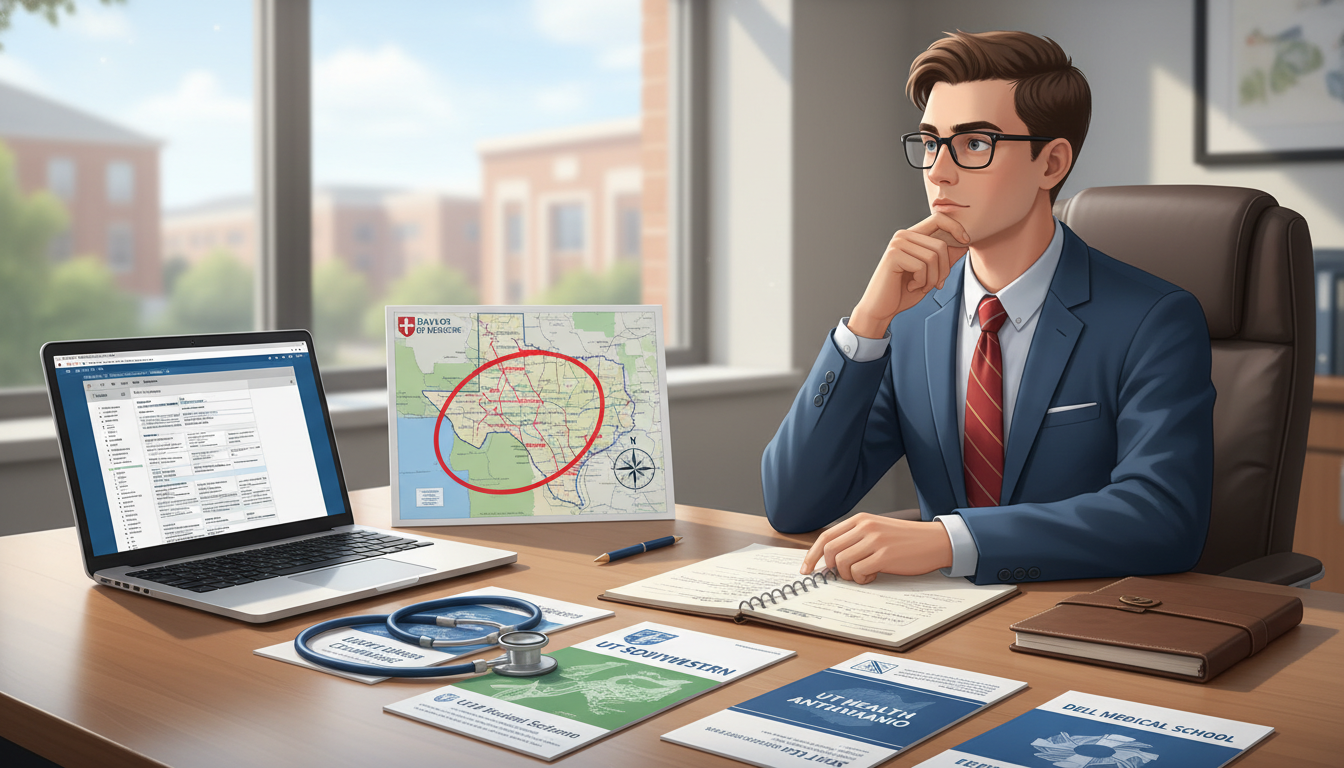
Geographic flexibility is one of the most powerful—yet misunderstood—tools US citizen IMGs can use to match into residency, especially if your dream is to live and train in Miami. Understanding how to balance a strong preference for South Florida residency with a realistic, flexible geographic strategy can dramatically improve your chances of matching.
This article is written specifically for the US citizen IMG or American studying abroad who loves Miami, wants to be near South Florida, and is wondering:
- “Do I have to be geographically flexible to match?”
- “Will strong geographic preference for Miami hurt my chances?”
- “How do I show interest in Miami residency programs without over-restricting myself?”
- “What’s the right regional preference strategy for me?”
Understanding Geographic Flexibility as a US Citizen IMG
Geographic flexibility means being open to training in multiple regions rather than focusing only on one city or state. For a US citizen IMG targeting Miami residency programs or broader South Florida residency (Miami, Fort Lauderdale, Palm Beach, etc.), this concept is crucial.
Why geographic flexibility matters more for IMGs
Program directors understand that US MD/DO students usually have more interviews and options; IMGs, including US citizen IMGs, typically:
- Receive fewer interview offers on average
- Face higher competition for “desirable” locations (coasts, major cities, Florida, California, NYC)
- Are more dependent on programs with a history of taking IMGs
Because of this, if you only rank a small number of Miami or South Florida programs, you sharply increase your risk of going unmatched—even if your application is strong.
Myth vs. reality: “If I apply widely, I’ll lose my chance in Miami”
Myth:
“If I say I’m open to other regions, Miami programs will think I’m not committed and won’t rank me highly.”
Reality:
Most programs do not penalize you for also applying elsewhere. What matters more is:
- Whether you show sincere interest in their program
- Your fit (scores, experiences, visas if relevant, communication skills)
- Whether you can articulate why their region makes sense for you (family, clinical exposure, long-term goals)
You can be strategically flexible—open to multiple regions—while still demonstrating a clear geographic preference for Miami and South Florida.
Miami and South Florida: Highly Competitive but Reachable
Miami and South Florida residencies are extremely attractive locations because of climate, lifestyle, diverse patient populations, and proximity to Latin America and the Caribbean. For a US citizen IMG, this brings both opportunity and competition.
Why Miami residency programs are competitive
Factors increasing demand:
- Major academic centers and community hospitals with strong reputations
- Desirable lifestyle: beaches, nightlife, cultural diversity, no state income tax
- Many bilingual or Spanish-speaking applicants see Miami as ideal
- Many IMGs (especially from Latin America and the Caribbean) target Florida heavily
For you as a US citizen IMG, Miami residencies can be friendly to IMGs—but not all are. Some programs in the region accept many IMGs each cycle, while others take very few or none.
How being a US citizen IMG helps (and doesn’t)
Being a US citizen IMG (or American studying abroad) comes with key advantages:
- No visa sponsorship needed, simplifying hiring
- Often better cultural familiarity with US healthcare and communication norms
- Sometimes more elective or observership experience in the US
However, program directors still evaluate you as an IMG, not as a US MD. You must still:
- Show strong USMLE performance (especially for competitive locations like Miami)
- Demonstrate US clinical experience (USCE)
- Provide strong letters of recommendation from US physicians
So while your US citizenship helps, it does not erase the competitiveness of South Florida residency programs.
Building a Geographic Preference Strategy: Miami First, Flexibility Second
To design an effective regional preference strategy, think in layers:
- Core goal region – where you would most like to train (Miami/South Florida)
- Adjacent or related regions – where you’d be happy training if Miami doesn’t work out
- Safety or expansion regions – where you’re willing to go if it significantly increases your chance of matching
Step 1: Define your Miami and South Florida priorities
Clarify how important these are to you:
- Proximity to family or support system
- Desire for a bilingual or Spanish-speaking patient population
- Long-term career plans in Florida or the Southeast
- Lifestyle factors (weather, cultural community, cost of living)
Then decide: Is Miami non-negotiable, or is it your top preference but not a dealbreaker?
- If non-negotiable: You must understand you’re accepting a significant risk of not matching if you restrict your rank list too much.
- If top preference, but flexible: You can prioritize Miami in applications and ranking while still building a broad enough list to protect yourself.
Step 2: Map your realistic options
For US citizen IMGs, a smart geographic strategy might look like this:
Primary target:
- Miami and broader South Florida residency programs (Miami-Dade, Broward, Palm Beach)
- Include both academic and community hospitals
- Apply to all programs that:
- Accept IMGs
- Sponsor or accept applicants with Caribbean/intl school backgrounds
- Have at least some history of IMGs in recent classes
Secondary regions with similar appeal:
Regions that share some features with Miami, such as:- Other parts of Florida (Orlando, Tampa, Jacksonville, Naples, Fort Myers)
- Southeast US with warm climate and diverse populations (Georgia, the Carolinas, Texas, Louisiana)
- Urban centers with strong Latino communities (Houston, San Antonio, parts of New York/New Jersey)
Safety/expansion regions:
- Areas where programs are historically more open to IMGs and slightly less location-competitive
- May include Midwest, some Northeast states, or smaller cities in various regions
This location flexibility match approach lets you heavily target Miami without putting your entire future at risk.

How to Show Genuine Miami Preference Without Over-Limiting Yourself
You want programs in Miami to feel that they are your top choice without broadcasting to the entire system that you will only go there. This is where a geographic preference residency strategy becomes nuanced.
1. Craft a Miami-focused but authentic personal narrative
Throughout your application, you can:
- Emphasize any personal or family connections to South Florida or Florida in general
- Highlight Spanish proficiency or experience with Latino, Caribbean, or immigrant populations
- Discuss long-term plans to practice in Florida or the Southeast
- Use specific language:
- “I am particularly drawn to the Miami and South Florida region because…”
- “My long-term goal is to practice primary care/EM/etc. in South Florida…”
Make sure the story is truthful and consistent across your personal statement, interviews, and supplemental application materials.
2. Tailor your personal statement and program communication
Consider using:
- One primary personal statement with more general language about urban, diverse, or coastal environments
- A Miami/South Florida–specific version for programs in that region, where you explicitly mention:
- Local community characteristics
- Reasons Miami supports your long-term goals
- Any clinical, research, or family ties to the area
For example, a targeted paragraph might say:
“As a US citizen IMG who grew up visiting family in South Florida, I have long aspired to return to this region to train and eventually practice. The Miami area’s bilingual populations, high prevalence of cardiometabolic disease, and diverse immigrant communities align closely with my clinical interests and my Spanish-language skills. I am committed to building a long-term career in this region.”
Use this version only for Miami and South Florida residency programs, and maybe a few other Florida sites with similar patient populations.
3. Use ERAS and supplemental tools effectively
In some years, ERAS and certain specialties use geographic preference signaling tools. When available:
- Mark Miami/South Florida or “Southeast” as a preferred region where appropriate
- Use program signals (if your specialty has them) on Miami or Florida programs that:
- Take IMGs
- Match your academic profile
Do not over-signal only Miami if it means ignoring slightly less competitive but still desirable Florida or Southeast options.
4. Be honest but strategic during interviews
When interviewing with Miami programs:
- You can say:
- “Miami is my top geographic preference.”
- “I have a strong desire to train and eventually practice in South Florida.”
- Avoid making binding-sounding promises unless you mean them.
When interviewing outside Florida:
- Express appreciation for that region’s specific strengths
- You can still acknowledge having family or roots in Miami, but emphasize:
- “I am open to training wherever I can get excellent training and contribute meaningfully to the program and community.”
This maintains authenticity while preserving your geographic flexibility.
Balancing Risk and Opportunity: How Many Miami vs. Non-Miami Programs?
A recurring question is: “If I’m an American studying abroad, how many Miami and South Florida programs can I reasonably target while still being safe?”
There is no exact formula, but some guiding principles help.
Think in proportions, not absolutes
Consider these factors:
- Your competitiveness (USMLE/COMLEX scores, gaps, repeated years, research, USCE)
- Specialty competitiveness (e.g., Internal Medicine vs. Dermatology)
- Program openness to IMGs in Miami and beyond
A rough framework for a moderately competitive US citizen IMG in Internal Medicine might look like:
- Total programs applied: 80–120
- Miami/South Florida programs: All that are:
- In your specialty
- Historically accept IMGs
- For which you meet at least the basic criteria
- Rest of Florida/Southeast: A substantial portion (e.g., 20–30+ programs)
- Other IMG-friendly regions: Enough to bring your total number into a safer range
For more competitive specialties, you’ll need even greater geographic spread. For less competitive ones, you might tilt a bit more heavily toward Miami, but still with strong backup regions.
Reality-check example
Imagine:
- You are a US citizen IMG with:
- Step 2: 232
- 1 year of US clinical experience in internal medicine
- Strong letters, no major red flags
You love Miami and want South Florida residency. A risky approach would be:
- Apply to only 8 programs in Miami/South Florida and 10 elsewhere
- Rank only those 18 programs
- Tell everyone Miami is the only place you’d be satisfied
A strategically flexible approach would be:
- Apply to:
- All feasible Miami/South Florida internal medicine programs that take IMGs (say, 8–12)
- Another 60–80 programs across Florida, Southeast, Midwest, and Northeast
- Rank:
- All programs that interview you where you could see yourself training
This second plan maximizes your location flexibility match without abandoning your regional preference strategy for Miami.

Practical Action Plan for the US Citizen IMG Targeting Miami
To translate all of this into a concrete roadmap, here’s a step-by-step plan.
1. Research Miami and South Florida residency programs thoroughly
Create a spreadsheet including:
- All residency programs in the Miami and South Florida region in your specialty
- Columns for:
- IMG friendliness (Y/N, approximate % of IMGs in recent classes)
- US citizen IMG presence (if you can determine)
- Required scores or filters
- Program type (academic vs community)
- Location specifics (Miami, Fort Lauderdale, Boca Raton, etc.)
Use:
- FREIDA
- Program websites
- NRMP data
- Alumni networks and social media (LinkedIn, Facebook groups for US citizen IMGs)
Identify:
- “Core targets”: Miami programs clearly open to IMGs
- “Stretch targets”: More competitive programs that rarely but occasionally take IMGs
2. Expand outward based on similarity and opportunity
After identifying Miami/South Florida programs:
- Add other Florida programs with IMG-friendly histories
- Add Southeast programs in states where you could imagine living
- Add a layer of safety-region programs (Midwest, smaller cities, etc.)
Prioritize programs where:
- IMGs are common
- US citizen IMGs have successfully matched
- Your profile clearly meets or exceeds published criteria
3. Plan US clinical experiences strategically
As a US citizen IMG targeting Miami:
- Try to arrange USCE in Florida or the Southeast if possible
- If not feasible, at least ensure your USCE reflects:
- Urban or diverse patient populations
- Continuity in your specialty of interest
Having USCE in Florida or nearby states can strengthen your argument that you understand—and are committed to—the region.
4. Tailor your application documents
- Personal Statement:
- Primary version: Broad, flexible narrative
- Miami/South Florida version: Explicitly links your goals to the region
- Experiences section:
- Emphasize work or volunteer experiences with relevant populations
- Highlight language skills (Spanish, Haitian Creole, Portuguese, etc.)
- Letters of Recommendation:
- US-based letters in your specialty
- If you can get a strong letter from a Florida-based physician, that’s a plus
5. Prepare specific talking points for Miami interviews
Before a Miami or South Florida residency interview, be ready to discuss:
- Why Miami specifically aligns with your professional and personal goals
- How your background as a US citizen IMG prepares you to serve this community
- Your ties to the region (family, past visits, cultural familiarity, language)
- Your long-term plan to stay in Florida or the Southeast as an attending
For non-Miami interviews:
- Prepare to describe:
- Why you’re genuinely interested in their location
- What aspects of their community appeal to you
- Your overall geographic flexibility and openness to relocating
6. Build a realistic rank list
When it’s time to rank:
- Place your favorite Miami and South Florida programs at the top, in honest order of preference.
- Then rank all other programs where:
- You could see yourself learning well and being reasonably happy
- You would rather match there than not match at all
Avoid the trap of ranking only a few Miami programs. Unless you are applying in a very non-competitive specialty with extremely strong credentials, this is dangerous.
FAQs: Geographic Flexibility for US Citizen IMGs in Miami
1. As a US citizen IMG, is it realistic to match into a Miami residency program?
Yes, it’s realistic—but not guaranteed. Many Miami and South Florida residency programs do accept IMGs, including US citizen IMGs and Americans studying abroad, particularly in specialties like Internal Medicine, Family Medicine, Pediatrics, and Psychiatry. However, Miami is a high-demand location, so you strengthen your chances by:
- Having solid scores and USCE
- Targeting IMG-friendly programs
- Applying widely, including outside Miami, to ensure you have enough interviews
2. Will applying broadly outside Miami hurt my chances with Miami programs?
Generally, no. Most programs will not know—or care—how many non-Miami programs you applied to. What matters more is:
- How well you fit their program
- Whether your application materials reflect genuine interest in Miami and South Florida
- How you communicate your geographic preferences in interviews
You can maintain a strong regional preference strategy for Miami while still preserving location flexibility to protect your chances of matching.
3. Should I tell Miami programs they are my “top choice” even if I’m not 100% sure?
You should never lie. However, if Miami truly is your top geographic preference, it’s reasonable to say:
- “Miami is my preferred region for residency.”
- “This program is one of my top choices in the country.”
If there is one specific program that truly is your first choice and you are certain, you may express sincere enthusiasm, but avoid promising things (like ranking them #1) that you’re not committed to honoring.
4. How many Miami or South Florida programs should I apply to versus elsewhere?
Apply to every suitable Miami and South Florida residency program in your specialty that:
- Accepts IMGs
- Does not screen you out based on clear score or graduation-year cutoffs
Then, add enough programs outside South Florida—in Florida, the Southeast, and other IMG-friendly regions—to reach a total that reflects your competitiveness and specialty. Many US citizen IMGs find themselves applying to 80–120 programs in moderately competitive specialties, with Miami as a focused but not exclusive target.
By combining a clear geographic preference for Miami with genuine geographic flexibility, you significantly increase your chances of successfully matching—ideally close to where you want to be, but with the security of knowing you’ve given yourself multiple pathways into residency.