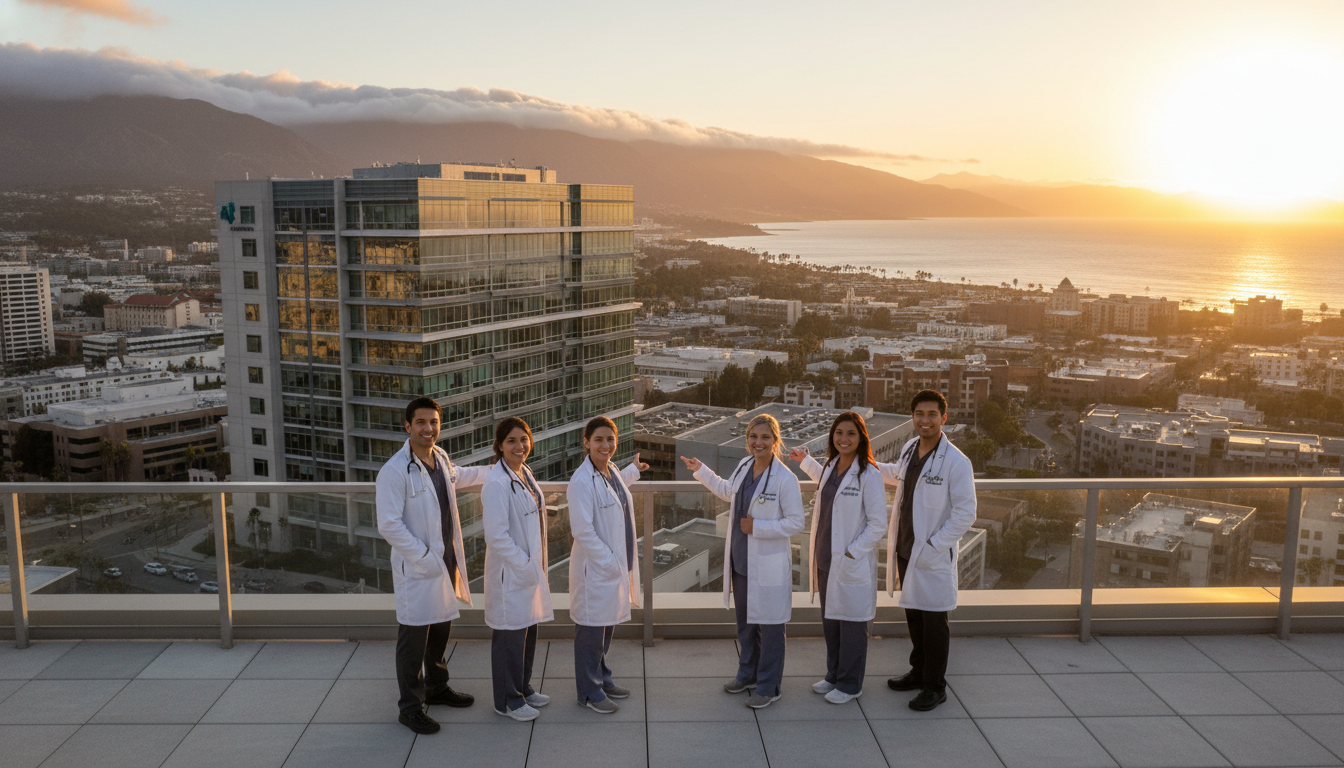
Understanding Geographic Flexibility in Pacific Coast Residency Programs
For many applicants, the Pacific Coast is a dream destination for residency: strong academic centers, thriving community programs, and vibrant cities from San Diego to Seattle. But when it comes to the Match, simply “liking the West Coast” is not a strategy. You need a clear, realistic plan for geographic preference residency decisions—especially if your goal is a west coast residency or specifically California residency programs.
Geographic flexibility means two things at once:
- Knowing your true regional priorities (e.g., Pacific Coast vs. nationwide)
- Maintaining enough flexibility so you still match safely, even if you don’t end up in your first-choice region
In the Pacific Coast context, this balance is particularly important because:
- West Coast locations are highly desirable and often more competitive
- Several large metro hubs (San Diego, Los Angeles, Bay Area, Portland, Seattle) attract heavy applicant interest
- Some specialties are markedly more competitive along the Pacific Coast than elsewhere
This article breaks down how to think about geographic flexibility for residency programs in the Pacific Coast, how to prioritize and signal your interests, and how to maintain realistic backup options while still pursuing your ideal location.
The Pacific Coast Landscape: How Region Shapes Your Options
Before deciding how flexible you can be, you need to understand what “Pacific Coast” really means in residency terms. It’s not just beaches and ocean views—there are distinct sub-regions and program types that affect competitiveness and lifestyle.
Key Pacific Coast Zones for Residency
You can think of the Pacific Coast region in three broad clusters:
Southern Pacific Coast
- Major areas: San Diego, Orange County, Los Angeles, Inland Empire, Central Coast (Santa Barbara, San Luis Obispo)
- Features:
- Large academic medical centers (e.g., UCSD, UCLA, USC, UCI)
- High cost of living, intense competition for many specialties
- Mix of urban, suburban, and some semi-rural programs inland
Northern Pacific Coast – California and Beyond
- Major areas: San Francisco Bay Area, Sacramento, Northern CA coastal communities
- Features:
- Prestigious academic institutions (e.g., UCSF, Stanford, UC Davis)
- Strong community and county hospitals
- Often even more competitive than SoCal for some specialties due to fewer positions and extremely desirable cities
Pacific Northwest
- Major areas: Portland, Seattle, Tacoma, Spokane, Eugene, smaller coastal towns
- Features:
- Combination of large academic centers (e.g., UW, OHSU) and strong community programs
- Not as numerically dense as California but regionally competitive
- Weather, outdoor lifestyle, and culture attract many “fit-conscious” applicants
Even within this region, a west coast residency in rural Northern California or coastal Oregon may have a very different application dynamic than a UCSF or UCLA program.
How Geography Interacts with Specialty Competitiveness
Your location flexibility match strategy must be tailored to your specialty:
- Highly competitive specialties (Dermatology, Plastic Surgery, ENT, Ortho, Neurosurgery, Ophthalmology, Radiation Oncology):
- Pacific Coast and urban California are often especially competitive
- Many applicants are geographically flexible, making coastal programs harder to match into
- Moderately competitive specialties (EM, Anesthesiology, Psychiatry, General Surgery, OB/GYN, PM&R):
- West Coast remains popular; strong academic programs and lifestyle cities raise the bar
- Being limited to a very narrow geographic region can significantly reduce your match odds
- Less competitive specialties (Internal Medicine categorical, Family Medicine, Pediatrics, Pathology, Neurology in some markets):
- More room to prioritize region, but top-tier coastal academic programs still attract national competition
- Community and smaller programs may give you more geographic leeway
If your heart is set on California residency programs in a highly competitive specialty, you will likely need either:
- Exceptional application strength + multiple geographic backup plans, or
- A willingness to accept very broad regional flexibility in your rank list

Clarifying Your Geographic Priorities (Without Hurting Your Chances)
A successful regional preference strategy for the Pacific Coast starts with self-assessment. Before you start adding programs to ERAS, answer three practical questions.
1. How “Pacific Coast or bust” are you?
Place yourself into one of these categories:
- Strictly Pacific Coast
- Willing to reapply if you don’t match there? Or do you absolutely need to match this cycle?
- More realistic in less competitive specialties or for very strong applicants
- Pacific Coast Strong Preference
- West Coast prioritized, but you’re open to strong programs elsewhere
- You would be disappointed but accepting if you matched in another region
- Flexible Nationwide with Pacific Coast Bias
- You’ll apply broadly but weight West Coast programs higher
- Sometimes the most pragmatic approach for moderate profiles and competitive specialties
Be honest with yourself. If you say “Pacific Coast only” but aren’t willing to risk not matching, your actions (number of programs, backup regions) must reflect that.
2. Are you focused on California, or the broader West Coast?
There’s a major difference between:
- “I want a west coast residency—California, Oregon, Washington, maybe Nevada or Arizona”
- “I specifically want California residency programs, ideally in LA or SF”
Ultra-narrow preferences (e.g., “Bay Area only”) are dangerous unless:
- You’re in a less competitive specialty, and
- You’re applying to a very large number of programs across Northern CA and surrounding areas, and
- Your application aligns strongly with those programs (e.g., strong research, connections, or home institution advantage)
3. What are your non-negotiables vs. preferences?
Separate your criteria:
- Non-negotiable (deal-breakers)
- Must live within X hours of family/spouse
- Cannot tolerate high cost-of-living beyond a certain limit
- Must avoid extreme climate or certain call structures for health reasons
- Strong preferences
- Prefer coastal vs. inland
- Prefer larger metropolitan area vs. smaller city
- Prefer academic center vs. community program
- Nice-to-haves
- Specific hobbies (surfing, skiing, particular outdoor activities)
- Specific neighborhoods or prestige factors
This clarity lets you design a geographic preference residency list that’s both ambitious and realistic.
Building a Smart Pacific Coast Application List
Once you know your goals, you need a plan for where and how many programs to apply to across the Pacific Coast and beyond.
Use a Tiered, Regional Application Framework
Think of your programs in three tiers within your geographic strategy:
Target Zone: Preferred Pacific Coast Regions
- Examples:
- SoCal academic centers + surrounding community programs
- Bay Area & Sacramento with some Central Valley backups
- Seattle/Portland metro with secondary cities in WA/OR
- Cover a range of program types (academic, county, community)
- Examples:
Adjacent or Semi-Flexible Regions
- Wider West: Nevada, Arizona, Utah, Colorado, Idaho, New Mexico
- Sometimes the Mountain West or Southwest
- Function as geographical “nearby” backups with some lifestyle similarities
Nationwide Flex Region (if applicable)
- Programs farther from the Pacific Coast but strong in training quality
- Regions where your application profile is competitive
Your location flexibility match success depends on how you balance these tiers:
- If Pacific Coast is absolutely top priority:
- Heavier weighting in Tier 1, but still include enough Tier 2 and possibly Tier 3 to protect against not matching
- If you’re open nationwide:
- Solid Pacific Coast representation plus a robust mix of programs across the country
How Many West Coast Programs Should You Apply To?
This varies by specialty and competitiveness, but as a rough guide for Pacific Coast–focused applicants:
- Highly competitive specialties
- If aiming primarily for the Pacific Coast:
- Apply extremely broadly nationwide (often 60–100+ programs)
- Include as many realistic West Coast options as you can, plus strong backups elsewhere
- If aiming primarily for the Pacific Coast:
- Moderately competitive specialties
- If Pacific Coast–focused:
- Many applicants apply 40–60+ programs, with a solid subset on the West Coast, and a meaningful number elsewhere
- If Pacific Coast–focused:
- Less competitive specialties
- You might be able to favor the Pacific Coast more heavily (e.g., 60–70% West Coast, 30–40% elsewhere), as long as you maintain adequate volume
Always cross-check with NRMP Charting Outcomes and specialty-specific guidance for updated numbers and your specific Step scores, clinical grades, and research profile.
Consider Program Type and Setting, Not Just City
If you’re committed to a west coast residency, broaden your definition of acceptable settings:
- Don’t limit yourself to only LA, SF, or Seattle
- Include:
- Smaller coastal cities (e.g., Santa Rosa, Ventura, Bellingham, Eugene)
- Inland metro areas within driving distance of the coast (e.g., Sacramento, Fresno, Inland Empire, Spokane)
- Community and county programs, not just big-name university hospitals
This expansion significantly improves your odds while still honoring your regional preference strategy for the Pacific Coast.

Signaling Interest and Managing Geographic Flexibility in the Match Process
Beyond where you apply, how you communicate your interests—without boxing yourself in—is key.
Using Geographic Preferences in ERAS (and Beware of Over-Specifying)
Some specialties/programs now allow or request geographic preference information (e.g., signaling regions in ERAS). Consider the trade-offs:
- Benefits of indicating Pacific Coast preference
- Signals authentic interest to West Coast programs
- May slightly increase your visibility among many applicants
- Risks of over-limiting
- If you exclusively list Pacific Coast and don’t get enough interviews there, you may regret narrowing your signals
- Some non–West Coast programs may deprioritize you if they think you will not rank them
Practical approach:
- If you have a strong Pacific Coast preference:
- Allocate some signals (if available in your specialty) to West Coast programs you are genuinely interested in
- Don’t declare yourself “West Coast only” unless that is truly your stance and your backup plan accounts for it
- If you are location flexible:
- Use signals to emphasize fit (academic focus, community health, specific patient populations) rather than only geography
Personal Statement and Interview Responses
You’ll often be asked: “Do you have any geographic preferences?” or “Why this city/region?”
Strategies:
If Pacific Coast is your top preference but not an absolute requirement:
- “I’m particularly drawn to the Pacific Coast for its patient diversity, public health focus, and family connections in California and the Pacific Northwest. That said, I’m primarily focused on finding a program that fits my training goals and where I can contribute meaningfully, and I’ve applied broadly with that in mind.”
If you’re tightly focused (e.g., family in LA):
- “My primary reason for focusing on Southern California programs is that my partner’s job and our extended family are here, which provides a stable support system. I’ve made sure that the programs I applied to in this region match my training goals, and I’m committed to staying and contributing to this community.”
If you need to demonstrate flexibility:
- Emphasize training quality, mentorship, and program culture ahead of geography. You can still mention Pacific Coast interest but frame it as one of several positives.
Avoid saying in a non–Pacific Coast interview, “I really want to be in California but…” unless you can convincingly explain why you would be genuinely happy and committed at that program too.
Couples Matching on the Pacific Coast
Couples Match complicates geographic decisions:
- Decide if your goal is:
- Same city (e.g., both in SF Bay Area)
- Same region (e.g., both within driving distance somewhere on the Pacific Coast)
- Same program or affiliated hospitals
For a couples Match aiming at California residency programs or broader Pacific Coast options:
- Apply very broadly to overlapping cities and nearby regions
- Consider secondary markets: Sacramento, Central Valley, Inland Empire, Tacoma, Spokane, Eugene, etc.
- Include some non–Pacific Coast options as a “safety net” block if your tolerance for not matching is low
Properly using the couples match algorithm (with coordinated rank lists including Pacific Coast and non-Pacific options) is a key location flexibility match tool.
Balancing Lifestyle, Training Quality, and Long-Term Goals
Many students are drawn to the Pacific Coast for lifestyle: ocean, mountains, tech hubs, progressive politics, outdoor activities. But residency is demanding no matter where you are, and trade-offs are real.
Cost of Living and Resident Salary
California and major Pacific Northwest cities often have:
- High rent and housing costs
- Higher income taxes (especially CA)
- Higher everyday expenses (transport, childcare, groceries)
Before committing to only California residency programs or similar high-cost coastal cities:
- Review resident salary and benefits for each program
- Ask residents candid questions:
- “How manageable is rent on a resident salary?”
- “Do most residents need roommates or long commutes?”
- “How does the program support residents with financial challenges?”
You might find that a slightly inland program with a lower cost of living offers a more sustainable lifestyle and better quality of life, even though it’s not directly on the coast.
Training Opportunities and Career Plans
Ask yourself:
- Do I plan to:
- Stay on the Pacific Coast long-term?
- Apply for fellowship (and if so, in what region)?
- Work in academic vs. community settings?
If you want to practice long-term on the Pacific Coast, doing residency there is beneficial, but not strictly necessary. However:
- Local residency often:
- Builds regional networking and mentors
- Connects you with local job markets
- Familiarizes you with state-specific systems (e.g., California Medi-Cal)
On the other hand, a strong residency anywhere can still get you back to the Pacific Coast later if you build a strategic fellowship plan, do away rotations, or maintain relationships in the region.
Flexibility Now vs. Flexibility Later
You’re deciding between:
- Maximizing your geographic preference now (residency location)
- Maximizing your match safety and training quality, leaving flexibility to relocate later (fellowship or attending job)
In some cases, expanding your geographic flexibility for residency (e.g., accepting a top program in the Midwest or East Coast) can:
- Strengthen your competitiveness for Pacific Coast fellowships
- Provide outstanding training and research opportunities
- Give you more choice for where and how you practice in the long run
Being strategic means recognizing when short-term compromise on geography improves long-term options.
Key Takeaways for Geographic Flexibility on the Pacific Coast
To build a smart regional preference strategy for the Pacific Coast:
Know your true priorities.
Decide if you’re “Pacific Coast strongly preferred” vs. “Pacific Coast only,” and be realistic about your risk tolerance.Understand the market.
West Coast (especially California residency programs and major metros) is popular and competitive, particularly in high-demand specialties.Diversify within the region.
Don’t limit yourself to just LA, SF, or Seattle. Include inland and smaller coastal cities and a mix of academic, county, and community programs.Use tiered applications.
Balance Pacific Coast programs with adjacent Western regions and, if needed, nationwide options to protect your location flexibility match.Signal interest thoughtfully.
Use geographic preferences, personal statements, and interviews to convey genuine interest without accidentally excluding good options.Remember long-term goals.
A residency off the Pacific Coast can still lead you back to the region later through fellowship or job moves—if the program sets you up well.
Geography matters—but it’s one variable among many. The best plan is one that respects your desire for a west coast residency while still maximizing your chances to match into a program where you’ll thrive professionally and personally.
Frequently Asked Questions (FAQ)
1. Can I realistically match into California residency programs if I didn’t train or grow up on the West Coast?
Yes. Many residents in California and across the Pacific Coast come from out-of-state schools. To strengthen your chances:
- Show sustained interest (e.g., away rotation, research, or experiences relevant to the region’s patient populations)
- Tailor personal statements or supplemental essays to explain why you want to train there
- Apply broadly within California and consider other West Coast and Western states as backups
Your competitiveness (scores, clinical performance, letters) still matters more than regional origin.
2. Is it risky to list Pacific Coast programs at the top of my rank list if I interviewed more broadly?
No—the Match algorithm favors your preferences. You should always rank programs in your true order of preference, even if that means clustering Pacific Coast programs at the top, followed by others. The risk comes not from ranking, but from:
- Applying too narrowly
- Not getting enough interviews on the Pacific Coast
- Underestimating competition for certain cities/specialties
As long as you applied and interviewed broadly, ranking Pacific Coast programs highly is appropriate.
3. Should I turn down interviews outside the Pacific Coast if I strongly prefer the region?
In most cases, no. Turning down interviews reduces your options and can increase your chance of not matching, especially in competitive specialties. Instead:
- Accept interviews broadly at first
- After you see how many Pacific Coast interviews you receive, you can reassess
- If you have many interviews and need to reduce travel, consider canceling least preferred programs last—but do so courteously and early
Holding onto flexibility usually serves you better than prematurely narrowing opportunities.
4. If I don’t match into a West Coast residency, is it harder to come back to the Pacific Coast later?
Not necessarily. Many physicians complete residency elsewhere and later move to the Pacific Coast for:
- Fellowship positions
- Attending jobs in academic or community settings
- Lifestyle and family reasons
To keep that door open:
- Choose a residency program with strong training and solid fellowship/job placement
- Maintain professional connections in the Pacific Coast region (mentors, conferences, research collaborations)
- Consider doing away rotations or electives in Pacific Coast institutions if your residency allows
Your long-term geographic options depend more on your skills, reputation, and networking than on where you trained, although local training can make the transition smoother.