Why Thoughtful Program Research Matters in Diagnostic Radiology
Diagnostic radiology is one of the most competitive and nuanced specialties. Choosing where to apply—and eventually where to train—has long‑term implications for your clinical skills, subspecialty options, academic opportunities, lifestyle, and career network.
Unlike some other fields, radiology programs can look similar on the surface: everyone has PACS, CT/MRI, call, and boards pass rates they’re proud of. The difference is in the details: case mix, educational culture, faculty engagement, fellow presence, call structure, and institutional reputation in different regions.
Thoughtful, structured program research helps you:
- Build a realistic and strategic application list
- Target programs that fit your career goals and learning style
- Ask sharper questions on interview day
- Avoid common regrets (e.g., “I didn’t realize how little procedural exposure they had”)
This guide walks you step‑by‑step through how to research residency programs in diagnostic radiology, from defining your priorities to validating details before rank lists are due. It’s written specifically for US diagnostic radiology applicants, but most principles apply broadly.
Step 1: Clarify Your Priorities Before You Search
Before opening a single database, start with yourself. Any solid program research strategy begins with clear, honest self‑assessment.
A. Map Your Career Goals
Ask yourself:
- Do I see myself in academics or private practice?
- Am I strongly interested in a subspecialty (e.g., IR, neuroradiology, MSK, pediatrics, breast, body imaging, nuclear medicine)?
- How important is research in my future career?
- Do I want to work in a large urban center, community setting, or something in between?
Your answers influence what you should prioritize:
- Academic career interest
- Look for: NIH funding, strong research output, structured research time, PhD/MPH pipelines, subspecialty fellowships in‑house, conference presentations (RSNA, ARRS, ASNR, etc.)
- Private practice focus
- Look for: strong general diagnostic exposure, high study volume, independent call, graduated autonomy, exposure to efficiency and workflow management
- Subspecialty‑leaning (e.g., IR)
- Look for: ESIR pathways, number of IR faculty, procedural volume, on‑service time, early exposure, match outcomes for that subspecialty
B. Know Your Competitiveness
Radiology is competitive, but there’s variation among programs. To build a realistic list, consider:
- USMLE/COMLEX scores
- Class rank/AOA
- Home institution reputation and radiology department strength
- Research and publications (especially imaging‑related)
- Honors in core clerkships and radiology electives
- Strength of letters of recommendation (from radiologists if possible)
Use this to stratify targets:
- “Reach” programs – top tier academics, highly competitive metros
- “Target” programs – solid academic/community hybrids where you’re well aligned
- “Safety” programs – places where your metrics and experiences are clearly above their historic averages
This self‑assessment frames your program research strategy so you don’t waste cycles on misaligned choices.
Step 2: Build a Broad Initial List Using Trusted Data Sources
Once you know your priorities and competitiveness, you can begin how to research residency programs in a structured way.
A. Core Databases and Tools
FREIDA (AMA Residency & Fellowship Database)
- Filter by:
- Specialty: Diagnostic Radiology
- Program type: University, Community, University‑affiliated
- Region/state
- Note: FREIDA offers high‑level data: program size, accreditation status, affiliated institutions.
- Filter by:
ERAS / AAMC Residency Explorer
- Residency Explorer (if still active in your cycle) allows you to compare your metrics with previously matched residents at each program.
- Helpful for calibrating which programs are realistic reaches vs targets.
Program Websites
- Your most detailed and program‑specific source (though sometimes outdated).
- Focus on curriculum, call schedules, resident list, facilities, and case volumes if available.
NRMP Data
- Check: NRMP “Charting Outcomes in the Match” and specialty‑specific data.
- See how your academic metrics compare with matched radiologists.
Department Social Media (X/Twitter, Instagram, LinkedIn)
- Many radiology departments showcase resident life, educational conferences, case highlights, and DEI initiatives.
- Great for getting a sense of culture and day‑to‑day life.
B. Casting a Wide Net Initially
For most US‑MD applicants applying in diagnostic radiology:
- Start with ~60–80 programs in your initial “research pool”
- For DO/IMG applicants, you may begin with more (e.g., 80–120), then trim based on fit and feasibility
You won’t apply to all of them, but you need options as you evaluate location, program characteristics, and competitiveness.
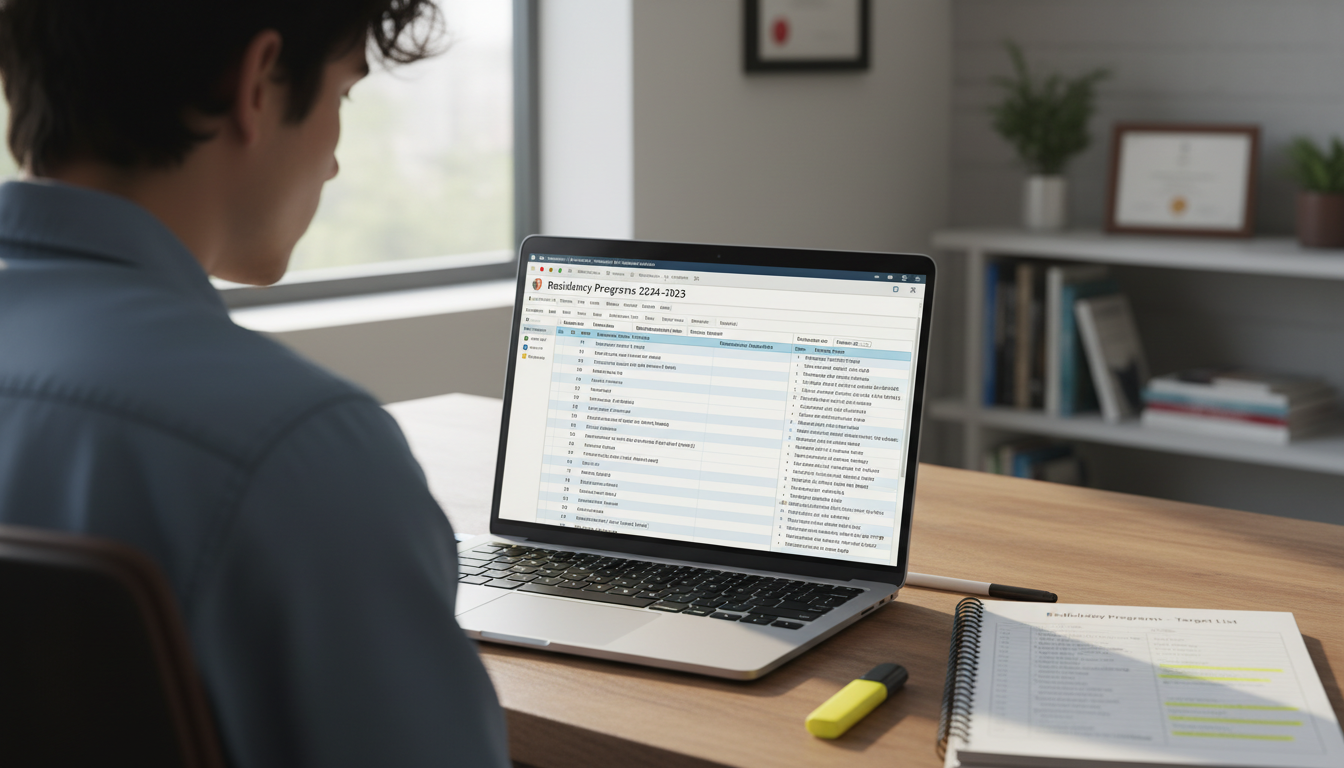
Create a master spreadsheet to track:
- Program name, city, state
- Program type (university, community, hybrid)
- Number of DR residents/year
- NRMP program code (for later)
- Notes column for first impressions
Step 3: Evaluate Key Features of Diagnostic Radiology Programs
Now comes the deeper work of evaluating residency programs for real fit. For each program on your list, look beyond reputation to concrete details.
A. Case Volume, Breadth, and Clinical Exposure
Radiology is an apprenticeship specialty—you learn by reading thousands of studies.
Questions to research:
- Total annual exam volume for the department
- Case mix:
- Neuro, MSK, body, chest, pediatrics, breast, IR, nuclear medicine
- Balance between inpatient, outpatient, trauma, emergency, ICU, oncology
- Trauma level of the primary hospital(s)
- Level 1 trauma centers typically give high‑acuity, diverse pathology
- Pediatric exposure
- Is there a dedicated children’s hospital? On‑site vs off‑site?
- Night float / call exposure
- Are residents taking independent call? From which year onward?
Interpreting this:
- High‑volume tertiary centers often provide:
- More complex and rare pathology
- Strong academic influence
- Community‑oriented programs can offer:
- Bread‑and‑butter general radiology skills
- Experience reading high volumes efficiently and independently
Both can produce excellent radiologists; choose based on your end‑goal.
B. Educational Structure and Curriculum
Radiology training is deeply influenced by how teaching is structured.
Look for:
- Daily conference schedule
- Are there protected teaching conferences?
- Mix of case conferences, didactics, physics, tumor boards, multidisciplinary meetings
- Involvement of residents vs purely faculty‑driven
- Curriculum organization
- Rotations by subspecialty?
- Clear structure for R1–R4 progression?
- Physics teaching
- Dedicated physics curriculum and board prep?
- On‑site physicist involvement?
Ask yourself:
- Does the program appear resident‑centric, or are residents mostly service extenders?
- Is there protected time for conference, or are residents always pulled away for clinical demands?
C. Board Performance and Fellowship Placement
Two critical outcomes:
ABR Core Exam Pass Rates
- Many programs publish their 1st‑time pass rates; if they don’t, you can ask during interviews.
- Consistently high pass rates indicate strong curriculum and support.
Fellowship Match Outcomes
- What kinds of fellowships do residents match into?
- Are they placing residents in competitive subspecialties and programs (e.g., top neuroradiology/IR/MSK fellowships)?
- Do many residents stay for fellowship at their home institution (suggests internal pipeline and satisfaction with training)?
For an academically inclined applicant, fellowship match data is especially important. For a private‑practice‑focused applicant, look at alumni placement in community and hybrid practices and in your desired geographic regions.
D. Faculty, Mentorship, and Subspecialty Depth
Faculty composition matters:
- Number of faculty in each subspecialty
- Presence of nationally known leaders (e.g., RSNA/ARRS speakers, textbook authors, society leaders)
- Accessibility and mentorship structure
- Is there a formal mentorship program?
- Are residents co‑authoring papers with faculty?
Subspecialty considerations:
- Strong interest in neuroradiology? Look for:
- Multiple neurorad faculty, advanced neuroimaging (fMRI, perfusion, tractography), neurointerventional collaboration
- Interested in IR? Check:
- IR/DR vs DR‑only program
- ESIR status
- Number of IR attendings, case mix (oncologic, trauma, peripheral vascular, dialysis access, etc.)
E. Program Culture, Wellness, and Resident Support
This is harder to quantify but critical.
Clues from your research:
- Resident bios – do they highlight interests, hobbies, and diverse backgrounds?
- Social media – do posts show only work, or also community, wellness, and team activities?
- Wellness initiatives – protected wellness days, retreats, mental health resources
- Diversity and inclusion – DEI statements, affinity groups, visible representation across faculty and residents
While website content is curated, patterns emerge: some programs strongly emphasize culture and wellness; others emphasize prestige and productivity. Consider what environment you’ll thrive in.
Step 4: Use Location, Lifestyle, and Logistics Intentionally
Location is not a trivial factor; it shapes your support system, cost of living, and overall residency experience.
A. Geographic Priorities
Ask yourself:
- Do I need or strongly want to be in a certain region (family/partner reasons)?
- Am I open to moving away for 4–5 years?
- What type of environment suits me: major city, mid‑size, suburban, or more rural?
Use this to:
- Assign a “location priority” score (e.g., 1–5) for each program.
- Consider weather, commute, traffic, safety, and access to outdoor activities or hobbies that matter to you.
B. Cost of Living and Salary
Diagnostic radiology residencies vary widely in salary vs local cost:
- Compare resident salary and benefits (health insurance, meal stipends, parking)
- Cross‑check with cost‑of‑living indices for the city
- High‑COL cities (e.g., San Francisco, NYC, Boston) might offer less disposable income despite prestige
This matters if you have:
- Family or dependents
- Significant educational loans
- Preference against working extra moonlighting shifts
C. Program Logistics
Subtle but important considerations:
- Number of main training sites – one hospital vs multiple across a city
- Commute time between sites
- Parking arrangements (free vs paid, proximity to reading rooms)
- Call location – in‑house vs home call; which sites?
For programs with multiple hospitals, ask whether residents are constantly traveling during the day, which can add stress and reduce learning time.
Step 5: Assess Research, Academics, and Career Development
For many diagnostic radiology applicants, academic development is a major consideration in evaluating residency programs.
A. Research Infrastructure
Look for:
- Dedicated research faculty and a research director
- Ongoing clinical trials and funded projects
- Access to biostatistics and imaging informatics support
- Availability of protected research time for residents (especially for those pursuing academics)
On websites and PubMed, check:
- How often residents are authors on papers or conference abstracts
- Whether residents present at major meetings (RSNA, ARRS, ASNR, SIR, etc.)
- Presence of resident research tracks or scholarly concentration programs
If your career goals are research‑heavy, prioritize programs with:
- Structured time carved out for research
- Clear track record of trainee productivity
- Support for advanced degrees (MPH, MS, PhD) or certificates in data science/AI if important to you
B. Teaching and Feedback Culture
High‑quality programs articulate their teaching philosophy:
- Regular one‑on‑one case review with attendings
- Structured 360‑degree feedback (faculty → resident, resident → faculty)
- Formal resident teaching roles, such as teaching medical students or juniors
- Simulation labs (e.g., for procedures, contrast reaction management)
Programs that invest in education tend to:
- Publish structured curricula on their sites
- Highlight educational awards earned by faculty and residents
- Emphasize board preparation resources (question banks, physics review, mock exams)
C. Professional Development and Networking
Investigate:
- Support to attend conferences (travel funding, days off)
- Departmental or institutional career development seminars
- Alumni network strength and involvement
- Opportunities for leadership roles (chief residents, organization liaisons, committees)
For a diagnostic radiology match that sets you up for long‑term success, these elements can be as important as case volume.
Step 6: Strategically Narrow Your List and Prepare to Engage
After collecting data, you’ll need to refine your list into one that is targeted but robust enough for the diagnostic radiology match.
A. Create a Scoring System
Use your spreadsheet to create a simple scoring framework, for example:
- Academic strength (1–5)
- Clinical volume/diversity (1–5)
- Subspecialty fit (1–5)
- Location desirability (1–5)
- Culture/wellness (1–5)
- Research opportunities (1–5)
- Competitiveness vs your profile (1–5)
You don’t need a perfect algorithm—the goal is to force yourself to make relative judgments and identify clear favorites and programs that consistently fall to the bottom.
Then:
- Sort by total score
- Flag 3 categories:
- High‑priority (must‑apply)
- Medium‑priority (apply if budget allows)
- Low‑priority (likely remove)
Aim for a final application list that balances:
- Your competitiveness
- Geographic spread
- Mixture of program types (academic, community, hybrid)
- Safety/target/reach categories
B. Engage with Programs Before Interview Season (When Appropriate)
Thoughtful early engagement can help you refine your choices and ask better questions later. Options:
- Virtual open houses / webinars
- Many radiology departments host these; watch for announcements via social media or school advisors
- Student–resident Q&A panels
- Ask practical questions about call, culture, and daily life
- Emailing residents or coordinators
- Clarify factual uncertainties (e.g., night float schedule, ESIR availability, new rotation sites)
When reaching out, be professional and concise. Your goal is information gathering and clarifying fit—not trying to “game” the match.
Step 7: Verify and Update During Interview Season
Your pre‑interview research gives you a strong baseline, but you’ll refine your view during interviews.
A. Ask Targeted, Informed Questions
Use what you’ve already learned to ask specific questions:
- “I saw your residents present frequently at RSNA—how is research time structured to support that?”
- “Can you walk me through a typical night float shift and volume?”
- “How has the curriculum changed in the last few years to support Core exam prep?”
- “What percentage of residents pursue fellowship versus going straight into practice?”
Program directors and residents notice when you understand their program and ask thoughtful follow‑ups.
B. Compare What You Heard with What You Researched
After each interview, update your spreadsheet:
- Culture impressions
- Strengths/weaknesses that emerged
- Surprises vs website data
- How honestly residents answered hard questions
This iterative process prevents you from over‑valuing a single strong interview day without checking it against your earlier research.
C. Watch for Red Flags
Common red flags in diagnostic radiology programs:
- Residents hint at or state chronic understaffing or heavy scut work
- Lack of transparency about board pass rates
- Minimal resident involvement in conferences or decision‑making
- High resident turnover or many unfilled spots in recent years
- Negative or vague responses to questions about wellness and support after adverse events or burnout
If multiple concerning signals appear—especially from residents—consider lowering that program on your rank list, even if its name is prestigious.
Putting It All Together: A Sample Program Research Workflow
Here’s an example of a practical program research strategy for a diagnostic radiology applicant:
Self‑assessment (week 1)
- Clarify academic vs private practice goals, subspecialty interests, location preferences, competitiveness.
Initial list creation (weeks 1–2)
- Use FREIDA and Residency Explorer to assemble 60–80 diagnostic radiology programs of interest.
- Enter into a spreadsheet with basic data.
Deep dive (weeks 2–4)
- Spend 20–30 minutes per program:
- Review program website, curriculum, fellowship outcomes
- Skim faculty lists and case mix
- Check social media for culture clues
- Score each program on key dimensions.
- Spend 20–30 minutes per program:
List refinement (week 4)
- Sort programs by scores and fit.
- Narrow to a realistic number to apply to (e.g., 40–60 for many applicants; more if DO/IMG).
Targeted engagement (months before ERAS opens/closes)
- Attend virtual open houses for top‑choice programs.
- Reach out with clarifying questions if necessary.
Interview season updates
- After each invitation and interview, log new data: culture, resident satisfaction, leadership transparency.
- Adjust your personal ranking accordingly.
This method turns an overwhelming process into a series of manageable, data‑driven steps, helping you identify where you’ll thrive in diagnostic radiology.
FAQs: Researching Diagnostic Radiology Residency Programs
1. How many diagnostic radiology programs should I apply to?
It depends on your profile:
- US‑MD with strong metrics and some radiology exposure: often 30–50 programs is reasonable.
- US‑DO or IMG applicants, or those with weaker metrics: may benefit from applying more broadly, sometimes 60–80+ programs.
Your research will help you exclude obvious poor fits (geography, culture, program type) so you’re not applying blindly.
2. How do I judge a program’s reputation if I’m not from a radiology‑heavy school?
Use multiple proxies:
- Fellowship match lists (where do residents go, and in what subspecialties?)
- Faculty CVs and national involvement (e.g., society leadership, major publications)
- Presence of competitive fellowships in‑house (e.g., neurorad, MSK, body, IR)
- Feedback from mentors and attendings who practice radiology, even if not at that institution
Remember that regional reputation matters a lot for private practice jobs; a program highly regarded in one region may be less known elsewhere.
3. How important is having an integrated IR/DR pathway when researching DR programs?
It depends on your IR interest:
- Strong IR focus: prioritize IR/DR or programs with ESIR designation and robust IR volume.
- Uncertain or not IR‑focused: a traditional DR program with good diagnostic training and broad procedural exposure is often sufficient.
In any case, ensure the program still offers comprehensive diagnostic exposure; even interventional radiologists need strong diagnostic skills.
4. Should I rule out programs that don’t have a big research presence?
Not necessarily. If your goal is high‑quality clinical training for general or subspecialty practice, a clinically oriented program may be ideal, even if research output is modest. However, if you are strongly academically inclined, prioritize programs with demonstrated resident research productivity and structured support.
The key is alignment: your research should identify programs whose strengths match your own goals—whether academic, clinical, or a mix of both—so that your diagnostic radiology residency sets you up for the career you want.