
Understanding Geographic Flexibility as an IMG in the California Central Valley
For an international medical graduate (IMG), “geographic flexibility” is much more than saying you are open to going anywhere. It is a deliberate strategy that balances your personal needs, immigration realities, and match competitiveness with the unique characteristics of regions like the California Central Valley.
In the context of the Central Valley—Fresno, Bakersfield, Modesto, Visalia, Merced, Stockton, and surrounding communities—geographic flexibility often means:
- Being willing to train in a less “famous” region in exchange for better match chances
- Clearly articulating your interest in specific areas (e.g., “Central Valley residency” or “Fresno residency”)
- Aligning your application materials with regional priorities: underserved care, primary care, community health, and continuity
This IMG residency guide will help you use geographic flexibility as a strength rather than a fallback.
Why the California Central Valley Is Strategically Important for IMGs
The California Central Valley is one of the most medically underserved regions in the state—and that has major implications for an international medical graduate seeking a U.S. residency.
Central Valley Snapshot
The Central Valley stretches from roughly Stockton in the north down through Fresno to Bakersfield in the south. Key characteristics:
- High need for physicians: Persistent shortages in primary care, psychiatry, general surgery, OB/GYN, and certain subspecialties
- Diverse patient populations: Large Spanish-speaking communities, migrant/agricultural workers, rural populations, and medically underserved urban neighborhoods
- Community-based training: Many programs are community hospital–based, university-affiliated community programs, or safety-net systems
Because of this, programs in the Central Valley often:
- Are more open to IMGs than some large coastal academic centers
- Value applicants seriously committed to underserved and community health
- Appreciate geographic preference residency applicants who choose the region rather than treating it as a backup
Why IMGs Should Pay Attention to This Region
Several advantages stand out:
- Higher acceptance of IMGs in certain programs, compared with big-name coastal academic hospitals
- Hands-on clinical experience: Many programs offer strong procedural exposure and broad-spectrum clinical training
- Professional growth opportunities: Leadership, QI projects, and community outreach can be more accessible in smaller, service-intensive programs
- Immigration and visa experience: Some Central Valley residency programs have established patterns of sponsoring J-1 or H-1B visas
In other words, the Central Valley can be a realistic, high-yield region for an IMG who demonstrates genuine geographic flexibility and clear alignment with the area’s mission.
Geographic Preference vs. Geographic Flexibility: What Program Directors See
Geographic preference residency strategies are increasingly important with ERAS and NRMP data signaling how much programs pay attention to location.
Geographic Preference: Stating Where You Want to Be
When you indicate a geographic preference (in ERAS or your personal statement), you are signaling:
- Primary interest in a broad region (e.g., “California,” “West Coast”)
- Specific focus on an area like the “California Central Valley” or “Fresno residency”
- Personal or professional reasons tying you to that region
Programs appreciate clarity. Saying “I want to train in the California Central Valley to work with underserved communities, particularly Spanish-speaking patients” is more powerful than a generic “I am open to anywhere.”
Geographic Flexibility: Showing You Can Thrive in Multiple Regions
Location flexibility match strategy means:
- You are open to multiple regions while still providing a logical narrative
- You can convincingly explain interest in each region where you apply
- You do not contradict yourself; your story stays coherent
For example:
- You might highlight a primary preference for the Central Valley due to underserved care and language skills
- You also apply to other underserved regions in the U.S. with similar demographics and needs
- Your personal statement and regional supplemental essays are adjusted accordingly
Program directors understand that IMGs often need wider geographic flexibility. What they want is:
- A believable, non-generic reason you are interested in their region
- Confidence that you will actually come and stay if matched
- Evidence that you understand their patient population and clinical environment

Building a Regional Preference Strategy for the Central Valley
To create a strong regional preference strategy focused on the California Central Valley, you need to integrate three things: personal narrative, academic/clinical profile, and genuine knowledge of the area.
Step 1: Clarify Your Personal and Professional Reasons
Reflect on what makes the Central Valley a good fit. Some meaningful, authentic reasons could include:
Underserved/community health focus:
- Prior experience with underserved populations, community clinics, or rural communities
- Interest in social determinants of health, migrant health, or public health interventions
Language and cultural alignment:
- Fluency in Spanish or another language common among Central Valley populations
- Cultural familiarity with agricultural or migrant communities
Lifestyle and long-term goals:
- Preference for a more affordable, less crowded region than coastal cities
- Desire to eventually practice in California with potential to remain in the area
- Family or personal support systems in or near the Central Valley (relatives in Fresno, Bakersfield, Stockton, etc.)
Make a short, clear list of 3–5 Central Valley–specific reasons. These will anchor your essays and interviews.
Step 2: Research Central Valley and Fresno Residency Programs in Detail
Go beyond the names of institutions. Look for:
- Mission statements focused on underserved populations or rural health
- Percentage of IMG residents and prior visa sponsorship practices
- Program size, call structure, and hospital types: county hospital, community hospital, VA, FQHC affiliations
- Curriculum emphasis:
- Outpatient continuity clinics in Fresno or nearby towns
- Rotations in rural or agricultural communities
- Opportunities for leadership, QI, research, or teaching
Create a simple spreadsheet with columns for:
- Program name
- City (Fresno, Bakersfield, Modesto, etc.)
- IMG-friendliness
- Visa type supported
- Strengths (e.g., strong inpatient, OB exposure, rural health)
- Specific reason it matches your profile
This document is the backbone of your geographic preference residency planning.
Step 3: Segment Your Applications by “Priority Regions”
Instead of scattering applications randomly, design tiers:
Tier 1 – Primary Target: California Central Valley
- Programs in Fresno, Bakersfield, Visalia, Modesto, Merced, Stockton, etc.
- You dedicate tailored personal statements and region-specific content here
Tier 2 – Similar Regions
- Other underserved or rural-leaning areas in California or nearby states
- Regions with similar patient demographics or healthcare challenges
Tier 3 – Broader Flexibility
- Programs anywhere in the U.S. that are IMG-friendly and fit your competitiveness level
- Still require basic alignment, but with less intense regional focus
This structure allows you to be geographically flexible and intentional, especially around the Central Valley.
Presenting Geographic Flexibility in Your Application Materials
How you articulate location flexibility and geographic preference matters as much as where you apply.
Personal Statement: Balancing Flexibility and Focus
For IMGs targeting a Central Valley residency, consider one of these approaches:
- Single universal personal statement with carefully framed Central Valley emphasis
- Slightly tailored versions for:
- Central Valley/California
- Other underserved regions
In your statement:
Explicitly mention California Central Valley and characteristics that attract you:
- Caring for diverse, often Spanish-speaking or underserved populations
- Interest in community-based, high-volume hospitals
- Long-term goal to work in similar environments
Link past experiences to the Central Valley’s profile:
- Rotations in rural or semi-rural communities
- Volunteer work in free clinics or migrant health centers
- Public health or community outreach projects
Example paragraph (adapted to your own story):
“My clinical experiences in community clinics serving low-income and migrant families have shaped my commitment to underserved care. The California Central Valley—with its agricultural communities, health workforce shortages, and diverse, often Spanish-speaking population—mirrors many of the settings in which I have already worked. Training in a Central Valley residency would allow me to deepen this commitment while preparing to practice long term in similar communities.”
ERAS Geographic Preferences and Supplemental Information
If ERAS offers mechanisms to express geographic preferences or interests:
- Indicate California and, where possible, highlight Central Valley explicitly
- Avoid claiming too many preferred regions; choose a limited, coherent set
- In free-text sections, describe:
- Your interest in Central Valley residency specifically
- How your background supports your success in that environment
Make sure your ERAS entries do not conflict with your personal statement. Consistency builds credibility.
Letters of Recommendation (LoRs) Supporting Your Regional Fit
Encourage your letter writers to comment on your suitability for community or underserved settings, especially if they know your interest in the Central Valley.
They might mention:
- Your effectiveness with limited resources or high-volume clinics
- Work with Spanish-speaking or low-income populations
- Cultural sensitivity and adaptability
This reinforces your geographic preference residency narrative from an external perspective.
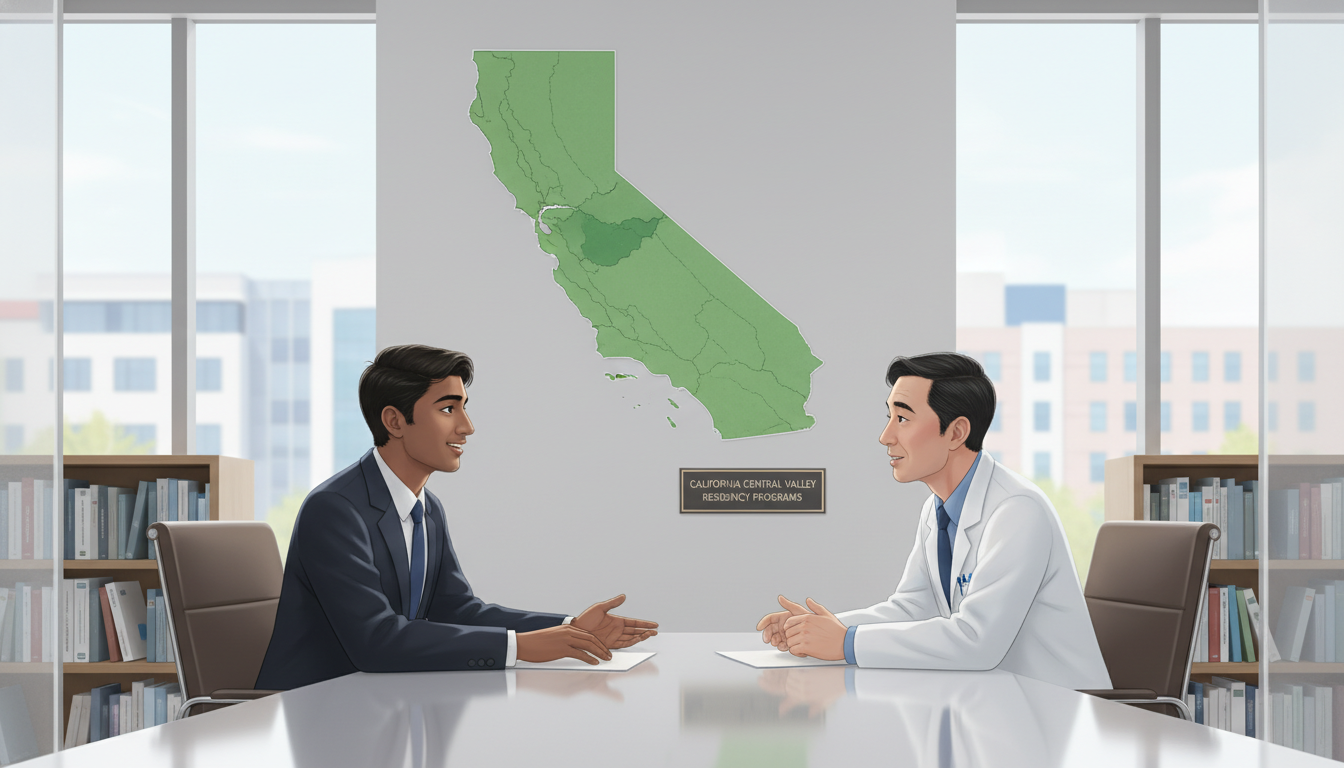
Communicating Geographic Flexibility During Interviews
Interviews are where your regional preference strategy becomes real. Programs in the Central Valley will often test whether your interest is genuine or purely opportunistic.
Anticipating Common Location-Related Questions
You should be prepared for variations of these questions:
- “Why are you interested in a Fresno residency (or Central Valley residency)?”
- “How do you feel about living and working in a semi-rural or underserved region?”
- “You have no prior experience in California; why here?”
- “Would you consider staying in this area after finishing residency?”
Strong responses:
- Are specific to their community (Fresno, Bakersfield, Modesto, etc.)
- Connect your past experiences to their setting
- Balance honesty about flexibility with a clear signal that you will be happy there
Example answer framework:
Acknowledge awareness of the region’s character:
- “I understand the Central Valley is a largely agricultural region with significant health disparities and a large Spanish-speaking population.”
Link to your background:
- “In my home country, I worked in clinics serving rural, low-income communities, which taught me to manage high patient volumes and limited resources.”
State your commitment:
- “I am specifically looking for a program where I can continue caring for underserved patients and develop strong primary care skills. That is exactly why I am drawn to a Central Valley residency, and I would seriously consider staying in this region long-term.”
Showing Both Preference and Flexibility
If asked about other regions:
- Avoid sounding like the Central Valley is your last option
- Position your strategy as theme-based, not random
For instance:
“I am primarily drawn to regions where there is a strong need for physicians and where I can serve underserved populations. The California Central Valley is my top focus for that reason, but I have also applied to a few other regions that share similar demographic and clinical challenges. My goal is to find a program whose mission aligns with that commitment, rather than a specific big city name.”
This demonstrates location flexibility match thinking while clearly prioritizing their region.
Immigration and Stability Concerns
Programs may worry, especially with IMGs on visas, that you will move away quickly. Reassure them:
- Talk about your stability and adaptability in previous transitions
- Emphasize your intention to complete the program and ideally remain in similar communities
- If appropriate and true, mention:
- Interest in J-1 waiver jobs in underserved areas
- Long-term plans in California’s underserved regions
This makes you aligned with their broader workforce goals, not just a temporary trainee.
Practical Tips for Maximizing Your Chances in Central Valley Programs
To turn geographic flexibility into a competitive advantage, focus on concrete steps.
1. Align Your Experiences with Community Health
Whenever possible, emphasize:
- Rotations in rural or underserved settings
- Work with limited-resource clinics or hospitals
- Quality improvement or research on:
- Access to care
- Chronic disease in low-income populations
- Social determinants of health
If you lack these, pursue:
- Observerships or externships in community-based settings
- Volunteer roles in free clinics or screening events
- Online or short-courses in public/community health
2. Use Language Skills Strategically
If you speak Spanish or another language common to Central Valley communities:
- Highlight it in your CV, personal statement, and interviews
- Provide examples of using that language in clinical contexts
- Be realistic; do not overstate proficiency if you cannot hold a medical-level conversation
Language skills are heavily valued in Central Valley residency programs and can differentiate you from other IMGs.
3. Be Transparent About Location Constraints
Geographic flexibility does not mean ignoring real constraints:
- Family obligations
- Visa limitations
- Financial or support system needs
Present these honestly but constructively:
“Because of my family support in California, I am prioritizing programs within the state, especially the Central Valley. Staying in this region will help me remain stable and focused, which will make me a better resident.”
Programs often appreciate that sort of clear, reasonable limitation more than a vague claim of “open to anywhere” that is obviously not true.
4. Create a Coherent Story Across All Regions
Even if you apply widely, your story should remain unified:
- “I want to train in an underserved, community-focused program where I can work with diverse, often low-income populations and develop strong generalist skills.”
Then explain how the Central Valley is a primary example of that environment. Other regions you apply to should have at least partial overlap with this mission.
Frequently Asked Questions (FAQ)
1. As an IMG, should I limit myself to the California Central Valley or apply nationwide?
For most IMGs, a hybrid strategy works best:
- Prioritize the Central Valley if you have clear reasons (family, language skills, underserved interest, desire for California practice).
- Also apply to other IMG-friendly regions with similar community or underserved profiles, unless you have strong constraints keeping you in California.
Over-concentrating on one region can be risky, but ignoring a strong regional fit like the Central Valley can also reduce your chances.
2. How can I show genuine interest in a Fresno residency or other Central Valley programs without any prior California experience?
Focus on:
- Your experience with similar populations (rural, low-income, migrant, Spanish-speaking, etc.)
- Knowledge of Central Valley health challenges from program websites, local public health data, and academic articles
- A clear narrative about why you want to serve in an underserved region long term
You do not need to be from California to convincingly argue that Fresno or another Central Valley community is a good match for your goals.
3. Do Central Valley residency programs commonly take IMGs and sponsor visas?
Many Central Valley programs are more welcoming to IMGs than some urban academic centers, but policies vary by institution and year. Steps to take:
- Check program websites explicitly for IMG and visa information
- Look at current residents’ profiles for IMG representation
- Email coordinators politely if visa details are unclear
Use this data to refine your IMG residency guide and target programs that historically support J-1 or H-1B visas.
4. How do I balance stating a strong regional preference with not limiting my options?
Express a clear primary preference (e.g., “California Central Valley and similar underserved regions”) rather than claiming you want to be in just one city. In your materials:
- Make your Central Valley focus explicit
- Still discuss how your skills are transferable to other underserved communities
- Keep your broader application list diverse enough to protect your match chances
This approach preserves location flexibility match advantages while signaling to Central Valley residency programs that you are truly invested in their region.
By taking a deliberate, honest, and well-researched approach to geographic flexibility, you can transform your interest in the California Central Valley from a vague idea into a powerful, coherent strategy that resonates with program directors and strengthens your chances of matching as an international medical graduate.