
Understanding Geographic Flexibility as an IMG in County Hospital Programs
Geographic flexibility is one of the most powerful tools an international medical graduate (IMG) can use to increase their chances of matching—especially into county hospital residency and safety net hospital residency programs. Yet many applicants underestimate how much their regional and location preferences influence their overall competitiveness.
For IMGs applying to county hospital programs, geographic flexibility is not simply about being willing to move; it is about strategically using geography to widen opportunities, align with your profile, and ultimately secure a strong training environment.
In this IMG residency guide, we will focus on:
- How geography affects your match chances as an international medical graduate
- Why county and safety net hospitals are a unique opportunity for IMGs
- How to design a regional preference strategy without over-restricting yourself
- Practical steps to communicate location flexibility in your application
- Common pitfalls IMGs face when choosing locations—and how to avoid them
Why Geography Matters More for IMGs Than You Think
Geography impacts all residency applicants, but its effects are amplified for international medical graduates.
1. Program Directors Weigh Location in Risk–Benefit Calculations
Program directors evaluate IMGs through multiple risk lenses—visa needs, educational background, communication skills, and likelihood to stay in the area after training. Geography ties into all of these.
If you limit yourself to only a few popular, competitive cities or states, you compete with:
- Top US MD and DO graduates
- IMGs with exceptionally strong profiles (high scores, US clinical experience, strong US letters)
By showing location flexibility—especially toward less saturated markets—you:
- Signal you are serious about training in the U.S., not just about a specific city
- Reduce the perceived risk that you will leave or be unhappy
- Increase the number of realistic programs that might consider you
2. County and Safety Net Hospitals Often Serve Underserved Regions
Many county hospital residency and safety net hospital residency programs are situated in areas that:
- Have higher healthcare needs and fewer clinicians
- Experience chronic recruitment challenges
- Are more open to considering well-prepared IMGs
These programs may be:
- Outside major metropolitan centers
- In mid-sized cities or semi-rural regions
- In states that are less popular with US graduates
This creates a target opportunity zone especially suited for an IMG with geographic flexibility.
3. Popular vs. Underserved Regions: An Example
Consider two Family Medicine IMG applicants with similar profiles:
- USMLE Step 2 CK: 235
- 1 year of US clinical experience
- 3 US letters of recommendation
Candidate A (Location Restricted)
- Applies only to New York City, Boston, Chicago, and Los Angeles
- Limits to ~70 total programs, mostly highly competitive, many university-based
Candidate B (Geographically Flexible)
- Applies to a mix of East Coast, Midwest, South, and Pacific Northwest
- Includes urban, suburban, and some rural county hospital residency programs
- Applies to ~140 programs, many in areas with historically higher IMG match rates
Even with the same credentials, Candidate B has twice as many realistic shots at a residency position, simply by adopting a broader location strategy.
County Hospital Programs: Why They Are High-Value Targets for IMGs
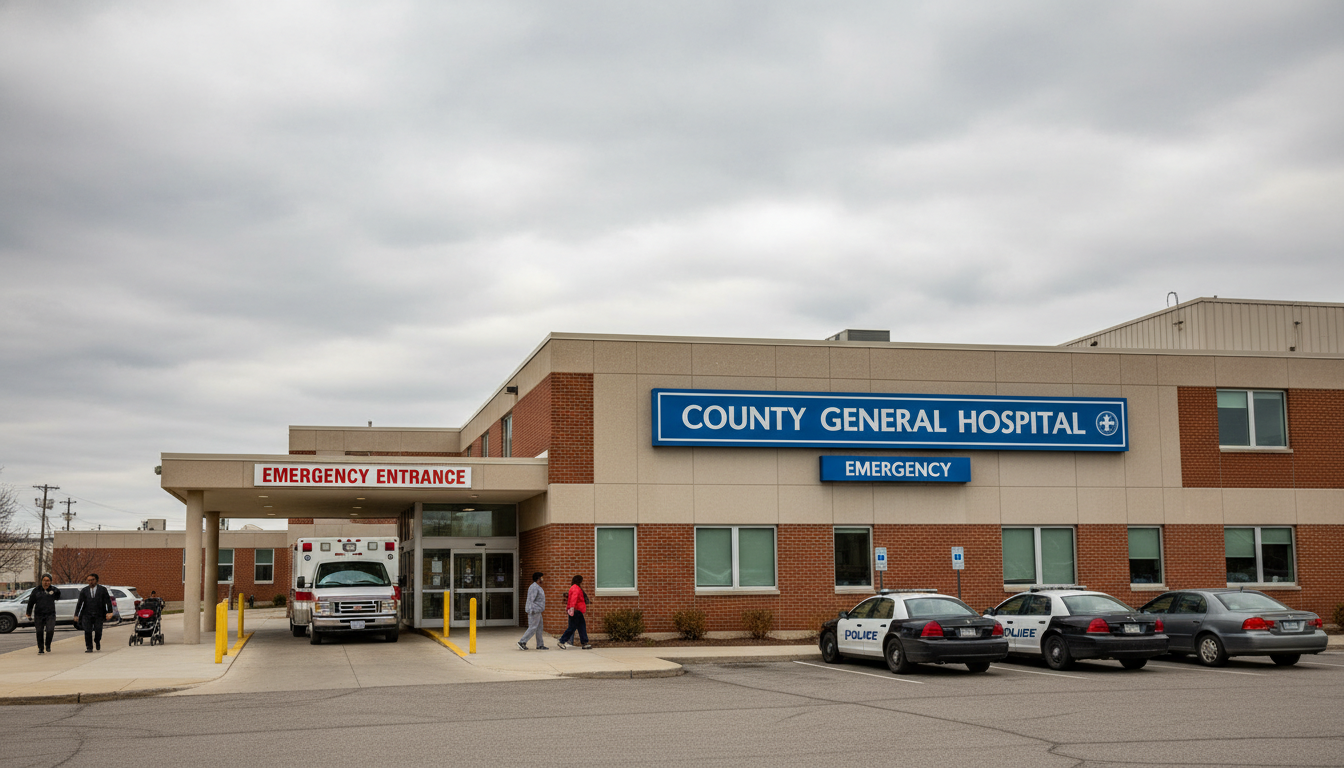
County hospitals and safety net hospitals are often mission-driven institutions that care for uninsured, underinsured, and marginalized populations. This environment can align extremely well with the strengths and experiences many IMGs bring.
Key Features of County Hospital Residency Programs
Diverse, complex pathology
- High volume of advanced and late-presenting conditions
- Significant exposure to social determinants of health
- Excellent training for clinical decision-making and resource stewardship
Exposure to underserved communities
- Strong emphasis on community medicine, public health, and advocacy
- Opportunities to work with immigrant populations and limited English proficiency patients
- Cultural competency and language skills are assets where IMGs often excel
Educational environment often welcoming to IMGs
- Many such programs already have international medical graduates in their resident cohorts
- Faculty may be more experienced in onboarding IMGs and supporting visa processes
- Programs may value your global perspective, prior training, and resilience
Potential for greater interview openness
- Less applicant saturation than high-profile academic centers in major coastal cities
- Some county or safety net hospital residency programs are particularly IMG-friendly and regularly publish this in their website or program brochures
How County Hospital Programs Intersect with Geographic Flexibility
The key connection is this: many county hospitals are not located in “top-choice” cities for most US graduates. They may be:
- Inland rather than coastal
- In secondary or tertiary cities rather than top 10 metro areas
- In states with colder winters, fewer amenities, or less “brand-name” recognition
But from a training perspective, they may offer:
- High patient volume
- Significant responsibility for residents
- Strong procedural experience (especially in Internal Medicine, Surgery, Emergency Medicine, and OB/GYN)
If you are willing to expand beyond the traditional big-city targets, you position yourself to be a very attractive candidate to many of these programs.
Designing a Regional Preference Strategy as an IMG
Geographic flexibility does not mean “apply everywhere blindly.” Instead, it involves a structured regional preference strategy that balances:
- Your competitiveness
- Program characteristics (IMG-friendliness, county/safety net mission, case mix)
- Lifestyle and long-term career goals
Step 1: Understand Your Competitiveness
Before planning where to apply, honestly assess:
- USMLE/COMLEX scores and number of attempts
- Gaps in training and graduation year
- Amount and quality of US clinical experience
- Visa requirements (J-1 vs H-1B vs green card/citizen)
- Strength of your letters and personal statement
If you are a moderately competitive IMG (e.g., Step 2 CK between ~220–240, recent graduate, some USCE, no major red flags), geographic flexibility can move you from “borderline” in many programs to “strongly considered” in a wider pool of locations.
If you are a less competitive IMG (older YOG, lower scores, multiple attempts, limited USCE), being willing to go to less popular geographic areas is often critical for success.
Step 2: Categorize Regions into Tiers
Think about the United States (or country you are targeting) in terms of three tiers from an IMG perspective:
Tier 1: Highly saturated, highly competitive regions
- Examples: New York City, Boston, San Francisco Bay Area, Los Angeles, Miami, Chicago core
- Many applicants, including US MD/DOs and top IMGs
- Strong county hospitals exist, but competition is intense
Tier 2: Moderately competitive regions
- Examples: Mid-sized cities in the Midwest, South, and Southwest; secondary metro areas (e.g., Cleveland, Kansas City, Charlotte, San Antonio, Phoenix suburbs)
- Solid mix of academic, community, and county hospital residency programs
- Often have a healthy percentage of IMGs
Tier 3: Underserved or less popular regions
- Examples: Smaller cities, some rural or semi-rural areas, certain Midwest/Plains states, parts of the Deep South or Mountain West
- Fewer total programs but also less competition
- Multiple safety net hospital residency programs may be interested in committed IMGs
Your regional preference strategy should deliberately include Tier 2 and Tier 3, not only Tier 1.
Step 3: Align Geography with Program Type
Because you are specifically interested in county hospital programs, look for:
- Public or county-affiliated hospitals
- Safety net hospitals with a stated mission to serve underserved populations
- Programs affiliated with state universities or regional academic centers
Use filters on FREIDA, program websites, and state hospital association pages. Then map these programs onto your geographic tiers.
Example structure for an IMG applying to Internal Medicine:
- 25–30% applications: Tier 1 regions (selectively targeted, especially county hospitals known to take IMGs)
- 40–50% applications: Tier 2 regions (mix of county, community, and university-affiliated programs)
- 25–35% applications: Tier 3 regions (county and safety net hospitals, smaller cities, IMG-friendly states)
Step 4: Integrate Geographic Preference Residency Signals (When Applicable)
Some specialties now offer preference signaling or allow you to indicate “geographic preference residency” information through ERAS or specialty-specific supplements (e.g., the ERAS Supplemental Application in prior cycles).
Use this thoughtfully:
- If allowed to select preferred regions, choose broader areas (e.g., “Midwest,” “Southeast”) rather than a single state or city, unless you have a very strong reason.
- When asked about “location flexibility match” or willingness to train in multiple areas, answer honestly but avoid appearing overly restrictive.
- Make sure your geographic preferences in the application are consistent with your personal statement, experiences, and any ties you mention.
Communicating Location Flexibility in Your Application and Interviews
Being flexible geographically is only helpful if programs can see that flexibility clearly.
1. Personal Statement
For county hospital–focused IMGs, your personal statement can subtly highlight both your interest in the safety net mission and your openness to various regions.
Elements to include:
- A clear commitment to work with underserved populations, not just in one city but as a core professional value
- Experiences in community hospitals, free clinics, or public health settings that show you can thrive in resource-variable environments
- A sentence or two (not the main focus) indicating you are open to relocating to areas of need to train in a strong county hospital residency environment
Example language:
“Coming from a healthcare system where limited resources are the norm, I value institutions that serve as safety nets for vulnerable populations. I am eager to train in a county or public hospital environment, and I am open to relocating to regions where my skills and commitment to underserved care are most needed.”
2. ERAS Application: Experiences and Geography
Design your experience descriptions to reinforce your adaptability:
- If you have rotated in different cities or countries, emphasize how you adjusted quickly to new systems.
- If you volunteered with immigrant or underserved communities, highlight your comfort with diverse patient populations.
This backs up your claim of geographic flexibility with concrete evidence.
3. Interview Answers About Location
You will almost certainly be asked some version of:
- “Why this region?”
- “Do you have any ties to this area?”
- “Would you be comfortable moving here long-term?”
As an IMG with a geographic flexibility match mindset, your response should:
- Show some understanding of the region
- Connect your interests to the program’s mission
- Reassure them you would be content staying for 3–5 years
Example answer for a Midwestern county hospital:
“I understand this region serves a large rural and underserved population, which is very similar to where I trained before. I appreciate the strong sense of community and the opportunity to have significant responsibility in patient care. My priority is strong clinical training in a county hospital setting, and I am very comfortable making this region my home during residency.”
Avoid saying:
- “I will go anywhere just to get a spot.” (Desperate tone, no connection to program)
- “I prefer big coastal cities, but I’m applying here as backup.” (Signals lack of commitment)
Instead, be purposefully flexible and genuinely interested.
4. Letters of Recommendation
If possible, ask letter writers—especially US attendings—to comment on:
- Your adaptability to new cultural and clinical environments
- Your professionalism in diverse work settings
- Your willingness to take on underserved or challenging rotations
This indirectly supports your regional flexibility and your fit for a safety net hospital residency.

Balancing Real-Life Constraints with Geographic Flexibility
Many IMGs face genuine constraints—family, finances, immigration, or cultural adaptation. Geographic flexibility does not mean ignoring these realities; it means structuring them wisely.
1. Family and Support Systems
If you have close family in one region, that can be a strong support resource. But over-restricting yourself to just that area may significantly reduce your match probability.
Practical compromise:
- Make your family region one of your primary target regions, not the only one.
- Apply broadly, but perhaps apply more programs in your family’s area, while still including Tier 2 and Tier 3 regions elsewhere.
2. Visa Considerations
Some states and institutions are more experienced with J-1 or H-1B visas. County hospitals sometimes prefer J-1 due to funding models, but many are flexible.
Steps to take:
- Check each program’s historical stance on sponsoring J-1 and/or H-1B.
- Don’t limit yourself only to “big-name” visa-sponsoring centers; many mid-sized county or safety net hospitals also sponsor J-1.
- For H-1B, you may need to be more selective, but still consider multiple regions that traditionally support H-1B in your specialty.
3. Cultural and Lifestyle Fit
If you come from a major metropolitan background, you may worry about adapting to a smaller city or rural region. Ask yourself:
- Is it more important to train in a very busy, hands-on county hospital with excellent pathology, even if the city is smaller?
- Or is your quality of life inexorably tied to a certain type of metropolis?
Many IMGs find that mid-sized cities offer a balanced lifestyle:
- Lower cost of living
- Easier commuting
- Tight-knit resident communities
- Less distraction, more focus on training
If you remain open-minded, you may thrive in regions you never originally considered.
Action Plan: How to Implement Geographic Flexibility in Your IMG Residency Strategy
To translate all of this into action, here is a step-by-step plan tailored to an international medical graduate targeting county hospital programs.
Step 1: Create Your Personal Competitiveness Profile
- List your scores, attempts, YOG, USCE, visas, and major strengths/weaknesses.
- Honestly rate your competitiveness as high, moderate, or lower for your specialty.
Step 2: Decide on 3–5 Broad Regions
For example:
- Northeast (excluding only the most saturated urban cores)
- Midwest (multiple states)
- South/Southeast (multiple states)
- Mountain West or Pacific Northwest
Include at least one region outside the most popular coastal metropolitan areas.
Step 3: Identify County and Safety Net Programs in Each Region
Use:
- FREIDA (filter by hospital type and public institutions)
- Program websites to see phrases like “county hospital,” “safety net,” or “serves underserved populations”
- NRMP and program alumni pages to see the proportion of IMGs
Create a spreadsheet with columns such as:
- Program name
- City/state
- Hospital type (county / public / private / academic affiliate)
- Visa sponsorship
- Past IMG acceptance (Yes/No/Unknown)
- Tier (1/2/3)
Step 4: Allocate Applications Across Regions and Tiers
Aim for a diversified mix that:
- Uses your geographic preference residency strategy rationally
- Does not cluster 80–90% of your applications in just two famous cities
- Includes a meaningful number of Tier 2 and Tier 3 locations with safety net hospital residency options
Step 5: Tailor Your Personal Statement and Interview Messaging
- Emphasize your commitment to underserved populations and safety net care.
- Indicate genuine openness to training in different regions.
- Research each region you apply to, so you can speak intelligently about it during interviews.
Step 6: Track Interviews and Adjust
As interview offers start (or don’t start) arriving:
- If you are getting few interviews in Tier 1, be prepared to signal more interest and send emails to Tier 2 and Tier 3 programs.
- For SOAP (if needed), prioritize county and safety net programs in less competitive regions—as your geographic flexibility can be a major asset there.
FAQs: Geographic Flexibility for IMGs in County Hospital Programs
1. Does being geographically flexible really improve my match chances as an IMG?
Yes. For an international medical graduate, restricting applications to only a few popular cities significantly lowers your chances. By adopting a location flexibility match approach and considering a wider set of regions—including mid-sized cities and underserved areas—you increase the number of programs where your profile is competitive, especially among county hospital residency and safety net hospital residency programs.
2. Can I still have a geographic preference and be flexible?
You can. A regional preference strategy allows you to:
- Prioritize 1–2 regions where you have ties or strong preference
- Still apply to additional regions where training opportunities are strong but less saturated
The key is not to let a single city or state define your entire application list. Think in terms of regions, not only specific ZIP codes.
3. Are county hospital programs good for long-term career prospects?
County and safety net hospital residency programs often provide:
- Intense clinical exposure and strong procedural experience
- Training with complex pathology and underserved populations
- Opportunities to develop leadership and advocacy skills
Graduates can go on to:
- Fellowships (especially if they built a strong academic record and mentorship)
- Hospitalist or primary care positions
- Public health, community leadership, or global health roles
For many IMGs, these programs are excellent springboards, especially when combined with research or scholarly activity during residency.
4. How do I know if a program is IMG-friendly and open to geographic flexibility?
Look for:
- Current residents’ profiles on the program website—are there multiple IMGs?
- Program descriptions that highlight diversity or international backgrounds
- Statements about serving immigrant or underserved populations
- Visa sponsorship information and history
You can also email current residents (especially IMGs) with polite, specific questions about:
- How IMGs are supported in the program
- Whether the institution is accustomed to residents coming from outside the region
- The overall culture of inclusion and support
By deliberately embracing geographic flexibility, you—as an international medical graduate—can dramatically expand your opportunities, especially within county and safety net hospital residency programs. Combining a thoughtful regional preference strategy with clearly communicated openness to different locations will not only improve your chances of matching, but also position you to train in high-impact environments that align with your values and long-term career goals.