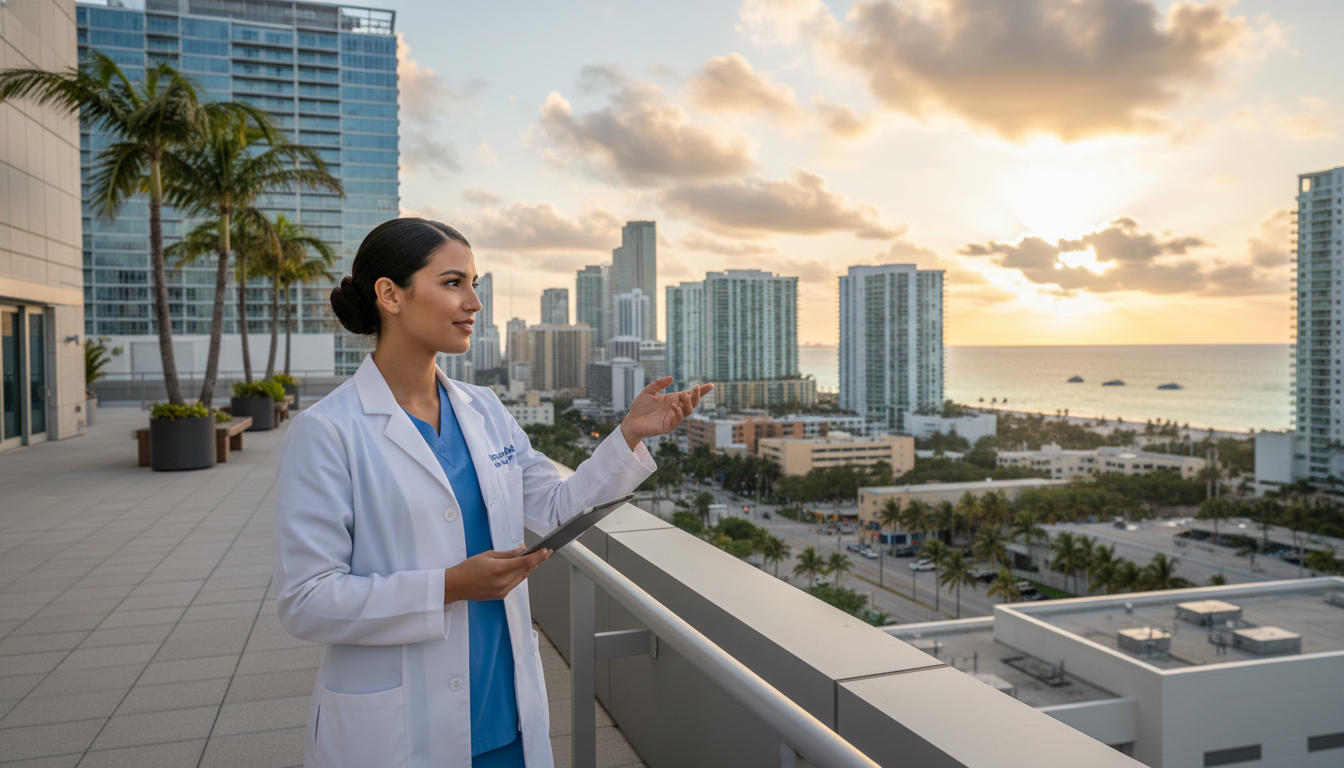
Understanding Geographic Flexibility as an IMG in Miami
For an international medical graduate in Miami, “geographic flexibility” is more than a buzzword—it is one of your most powerful tools for matching successfully. While your heart may be set on Miami residency programs or broader South Florida residency options, the way you present your geographic preferences can dramatically affect your chances in the Match.
This IMG residency guide will walk you through:
- What geographic flexibility really means in the residency Match
- How program directors interpret geographic preference residency signals
- How to balance a strong interest in South Florida with a realistic, regionally flexible strategy
- How to use location flexibility to strengthen your overall application
By the end, you should have a clear, actionable geographic plan tailored to an international medical graduate in Miami.
Why Geographic Flexibility Matters for IMGs
How Program Directors Think About Location
Program directors (PDs) care deeply about whether an applicant is likely to:
- Accept their program if ranked
- Stay for the full length of training
- Adapt well to the location and patient population
When PDs evaluate an IMG, they look for “geographic signals” such as:
- Medical school location
- Current address (e.g., Miami or elsewhere in Florida)
- US clinical experience locations
- Family or personal ties to a region
- Previous long-term residence in the area
- Stated geographic preference in ERAS, signals, or personal statements
If you appear interested in only Miami or only South Florida, some programs outside the region may assume you are unlikely to rank them highly. That can hurt your interview chances—especially as an international medical graduate who already faces more scrutiny.
The Risk of Over-Focusing on Miami Alone
Living in Miami as an IMG (or simply loving the city) makes it tempting to apply only to South Florida residency programs. However, this approach carries risks:
- Higher competition: Miami and South Florida residencies are popular among both US graduates and IMGs.
- Limited positions: There are fewer spots than in many other regions of the country.
- Regional saturation: Some specialties are particularly saturated in Florida (e.g., certain primary care programs in popular urban areas).
If you restrict yourself to a narrow region, even a strong applicant can go unmatched. Geographic flexibility—even if it’s targeted and strategic—protects you.
Why Geographic Flexibility Helps IMGs Specifically
For international medical graduates, being open to a broader range of locations offers several advantages:
- More interview invitations: More regions = more programs realistically willing to consider you.
- Less competition in some areas: Certain regions (Midwest, some Southern states, smaller cities) have fewer applicants but stable training quality.
- Perception of commitment: Programs see that you are willing to relocate for training and aren’t anchored to a single city.
In short, location flexibility match strategies can significantly increase your odds—without forcing you to abandon Miami entirely as a goal.
Mapping Your Personal and Geographic Priorities
Before building a strategy, you need clarity on your own priorities as an international medical graduate in Miami.
Step 1: Define Your “Core” Region vs “Expandable” Regions
Think of your geographic strategy in two concentric circles:
Core Region (High Priority)
- Example: Miami and broader South Florida residency programs (Miami-Dade, Broward, Palm Beach)
- These might be areas where you:
- Currently live or have long-term residence
- Have close family or a spouse/partner
- Have completed clinical rotations or observerships
Expandable Regions (Flexible but Acceptable)
- Examples:
- Other parts of Florida (Orlando, Tampa, Jacksonville, Gainesville)
- Nearby states in the Southeast (Georgia, Alabama, the Carolinas)
- IMGs with strong location flexibility match strategies may extend further to the Midwest or Northeast
- Examples:
Write these down clearly. This is your geographic preference residency framework.
Step 2: Rank What Matters Most to You (Beyond Miami Itself)
For each potential region, consider:
- Training quality in your specialty
- Visa sponsorship trends (if applicable)
- IMG friendliness (historic match data)
- Cost of living and lifestyle
- Support systems (friends, family, cultural communities)
- Language and patient population (e.g., Spanish-speaking communities)
Use Miami as your reference point:
If maintaining a Spanish-speaking patient population is key, look for similar demographics in:
- Other parts of Florida
- Texas cities (Houston, San Antonio)
- Some Northeast cities (New York, New Jersey)
If warm climate matters greatly, your expandable list might emphasize:
- Southeast
- Gulf Coast
- Some Southwest regions
This way, you build a rational regional preference strategy rather than an emotional “Miami or nothing” approach.
Step 3: Identify Deal-Breakers vs Negotiables
As an IMG, it is important to limit your true “deal-breakers.” Too many rigid conditions can undermine your Match chances.
Possible deal-breakers (limited list):
- Must have J-1 or H-1B visa sponsorship
- Cannot live in extremely rural areas due to family constraints
- Must be in a certain time zone for significant caregiving responsibilities
Negotiable factors (be flexible when possible):
- City size (medium vs major metro)
- Weather preferences (cold vs warm)
- Distance from Miami (within a flight vs driving distance)
Clarifying this early will help you make realistic decisions when building your ERAS list.

Building a Smart Geographic List: Miami-Centered but Flexible
Now we translate your personal preferences into a structured application plan.
Tiered Application Strategy
Use a tiered approach to blend your Miami goals with a broad location flexibility match plan.
Tier 1: Miami & South Florida Residency Programs
Include all realistically reachable programs in your specialty within:
- Miami
- Fort Lauderdale
- Hollywood
- West Palm Beach
- Surrounding South Florida cities with academic or community hospitals
Tactics for Tier 1:
- Emphasize your ties to South Florida:
- Current address in Miami
- Local work or research
- Clinical electives or observerships in the area
- Family or long-term connections
- Utilize personal statements (or paragraphs) tailored to Miami residency programs where appropriate.
- Network through:
- Local hospitals
- Medical associations (e.g., local chapter of ACP, AAFP)
- Community physicians who trained at Miami-area programs
Tier 2: Rest of Florida
Do not ignore strong programs in other Florida cities:
- Tampa, Orlando, Jacksonville, Gainesville, Tallahassee, Pensacola
- Smaller communities with solid ACGME-accredited residency programs
Advantages for an IMG:
- Florida is generally familiar culturally and geographically if you already live in Miami.
- Many Florida programs are accustomed to working with IMGs.
- You can still maintain some geographic continuity and possibly visit Miami during time off.
Tell programs honestly that while you live in Miami, you are open to training anywhere in Florida and are committed to staying in the state long-term, if true.
Tier 3: Regional Preference Strategy (Broader Southeast and Beyond)
Choose 2–4 additional regions where you would realistically train. For example:
- Southeast: Georgia, Alabama, Mississippi, the Carolinas
- Midwest: Ohio, Michigan, Indiana, Illinois, Missouri
- Northeast: New York, New Jersey, Pennsylvania, Connecticut
- Southwest/Texas: Especially if Spanish-speaking communities matter to you
Balancing your IMG residency guide with these broader options gives you more program choices and reduces the risk associated with a Miami-only strategy.
How Many Programs to Apply To, by Region
Numbers depend on specialty competitiveness and your profile, but as a general IM primary-care example for an IMG:
- 15–25 programs in Miami + South Florida
- 20–30 elsewhere in Florida
- 25–40 across other chosen regions (Southeast, Midwest, etc.)
More competitive specialties may require an even broader net, while less competitive ones may allow slightly more concentration in your preferred regions.
Communicating Geographic Flexibility in Your Application
Geographic flexibility helps only if programs can clearly see it. You must intentionally send the right signals.
ERAS Application: Address and Experience Locations
- Current address: If you live in Miami, list your true address; it establishes your South Florida connection.
- Experience locations: Highlight any clinical or research activities outside Miami or outside Florida to show mobility and adaptability.
- CV descriptions: When relevant, mention that you relocated for training or research opportunities in the past—this reinforces your openness to moving again.
Personal Statements: Balancing Local Ties and Flexibility
If you write region-specific personal statements, follow these principles:
For Miami/South Florida residency programs:
- Emphasize:
- Your roots or current life in Miami
- Understanding of the local patient population (e.g., Hispanic/Latino, Caribbean communities)
- Long-term intent to serve South Florida, if genuine
- Avoid phrases that sound exclusive, like:
- “I am only interested in training in Miami.”
- Instead, use:
- “My strong preference is to train in South Florida, where I have already built clinical and community connections.”
- Emphasize:
For non-Florida regions:
- Explain why you are open to that region:
- Family in the area
- Familiarity from previous education/work
- Genuine interest in the patient population or training environment
- Signal commitment:
- “I would be pleased to relocate to [City/State] and plan to engage fully with this community throughout my training.”
- Explain why you are open to that region:
Geographic Preference Sections and Signaling
When ERAS or NRMP allows you to express geographic preferences or signals:
- Do not mark multiple regions as “only” acceptables unless you truly mean it.
- Do show a realistic balance:
- Prioritize “South Atlantic” or “South” regions if Miami and Florida are your top choices.
- But also include at least one additional acceptable region if you are genuinely open to training there.
Remember, expressing some location flexibility reassures programs that you are not solely focused on a single city.

How to Answer Geographic Questions in Interviews
You will almost certainly get questions such as:
- “What attracts you to Miami?”
- “Are you considering other regions?”
- “Would you really move here from Florida?”
Good answer structure:
- Acknowledge your ties to Miami/South Florida (if relevant)
- Emphasize your priority: finding the right training environment
- Confirm your serious interest in their location
Example for a non-Florida program:
“I currently live in Miami and have strong ties there, but for residency my priority is excellent training and a supportive learning environment. I applied here because I believe your patient population, emphasis on [X], and program culture align well with my goals. I would be fully committed to relocating and engaging with the community here.”
This reassures programs that:
- You are not using them as backup only
- You understand what their region offers
- You are prepared to move and stay for the full residency
Special Considerations for IMGs in Miami
Visa Sponsorship and Geographic Flexibility
As an international medical graduate, visa issues are a major part of your geographic preference residency strategy.
J-1 visa:
- Many programs across the US sponsor J-1.
- Geographic flexibility allows you to apply widely to J-1–sponsoring programs while still prioritizing Miami.
H-1B visa:
- Fewer programs sponsor H-1B, and they’re often region-dependent.
- If you need or strongly prefer H-1B, you must be even more geographically flexible to capture enough sponsoring programs.
Action steps:
- Create a spreadsheet:
- Column for program name
- City/State
- Visa type(s) sponsored
- IMG-friendliness (based on past match lists and websites)
- Use this data to refine your regional preference strategy. For example, if South Florida options for H-1B are limited, broaden to other states that sponsor it more frequently.
Using Miami-Based Experiences to Support a Broader Plan
Living or working in Miami gives you valuable credibility that can be applied anywhere:
- US clinical experience (USCE) in Miami
- Shows familiarity with US health systems and diverse populations
- Language skills (often Spanish or Creole)
- Highly valued across much of the US, not just in Florida
- Community involvement in Miami’s multicultural setting
- Demonstrates cultural competence, which is transferable
When applying to non-Florida programs, highlight how your Miami experiences prepare you to care for diverse or underserved populations in their region.
Example:
“Working with underserved Latin American and Caribbean populations in Miami has strengthened my ability to navigate language barriers, cultural differences, and complex social determinants of health. I look forward to applying these skills with your diverse patient population.”
Planning for Life After Residency: Does Miami Need to Be the End Point?
Sometimes IMGs are focused on Miami not only for residency, but also for long-term life and practice. That is understandable, but keep this in perspective:
- Completing residency elsewhere does not prevent you from working in Miami later.
- Strong training and good board pass rates can be more valuable than initial geography.
- Many physicians return to Florida after training in other states, especially in high-demand primary care and some specialties.
If you broaden your geographic flexibility during residency, you might:
- Get better training in a less saturated market
- Become more competitive for South Florida jobs later
- Still return to Miami, potentially with stronger credentials
Think of Miami as your long-term anchor, but not necessarily your only possible training site.
Putting It All Together: A Sample Geographic Strategy for an IMG in Miami
To illustrate, here’s how an international medical graduate in Miami interested in Internal Medicine might structure their plan.
Applicant Profile (Example)
- Current residence: Miami
- USCE: 2 observerships in Miami, 1 externship in Tampa
- Visa: Requires J-1
- Specialty: Internal Medicine (categorical)
Geographic Strategy
Core Region (Tier 1)
- All ACGME IM programs in:
- Miami, Hollywood, Fort Lauderdale, West Palm Beach
- Emphasis:
- Tailored personal statements referencing South Florida connections
- Networking with local faculty and attendings
- All ACGME IM programs in:
Expandable Florida (Tier 2)
- Additional IM programs in:
- Tampa, Orlando, Jacksonville, Gainesville, Tallahassee, Pensacola
- Application messaging:
- “Committed to training in Florida, where I hope to continue serving diverse communities, including Spanish-speaking patients.”
- Additional IM programs in:
Broader Regions (Tier 3)
- 15–20 programs across:
- Southeast (Georgia, Alabama, the Carolinas)
- Select Midwest programs with strong IMG history
- 15–20 programs across:
Interview Communication
- Miami & Florida programs:
- Emphasize desire to remain in Florida long-term.
- Non-Florida programs:
- Emphasize training quality, willingness to relocate, and specific reasons for interest in each region.
- Miami & Florida programs:
Outcome Mindset
- Primary hope: Match in Miami or elsewhere in Florida.
- Acceptable outcome: Match in another region with strong training and later consider returning to Miami for practice.
This approach preserves your Miami ambitions while using geographic flexibility to safeguard your overall Match success.
Frequently Asked Questions (FAQ)
1. As an IMG in Miami, is it realistic to apply only to South Florida residency programs?
It is possible but usually not advisable. South Florida is highly competitive and has a limited number of positions relative to demand. Even strong international medical graduates can go unmatched if they restrict themselves too much geographically. You can prioritize Miami and South Florida but should still apply to a broader set of programs in Florida and at least one or two additional regions to maintain a safe location flexibility match strategy.
2. Will programs outside Florida think I’m not serious because I live in Miami?
They might, if you do not clearly communicate your willingness to relocate. In your personal statements and interviews, you must explicitly explain:
- Why you chose their region or program
- That you are prepared to move and commit to training there
- How your background (including Miami experience) prepares you to contribute to their community
When you do this well, many programs accept that applicants move across states for residency.
3. How do I show interest in Miami residency programs without hurting my chances elsewhere?
Use a two-level message:
To Miami/South Florida programs:
- Emphasize your strong connection and preference for the region, but avoid saying you are “only” interested in Miami.
To other regions:
- Emphasize that while you have ties to Miami, your priority is strong training, and you are genuinely considering relocating to their area.
This balanced approach keeps your options open while still signaling sincere interest in Miami residency programs.
4. As an IMG who needs a visa, how should I factor that into my geographic preference strategy?
Visa needs should be one of your first filters. For example:
- If you require J-1, you have broader options, but some programs still may not sponsor it—verify on each program’s website.
- If you require or strongly prefer H-1B, geographic flexibility becomes especially important, because relatively fewer programs sponsor H-1B and they may cluster in certain regions.
Build a spreadsheet of programs by city, state, and visa type. Then, design your regional preference strategy around where your visa is actually supported, layering your Miami/South Florida goals on top of that realistic foundation.
Geographic flexibility does not mean giving up your dream of training in Miami—it means increasing the probability that you match somewhere you can grow, thrive, and ultimately build your long-term career. As an international medical graduate in Miami, a thoughtful, regionally nuanced approach is one of the most effective ways to turn your residency goals into reality.