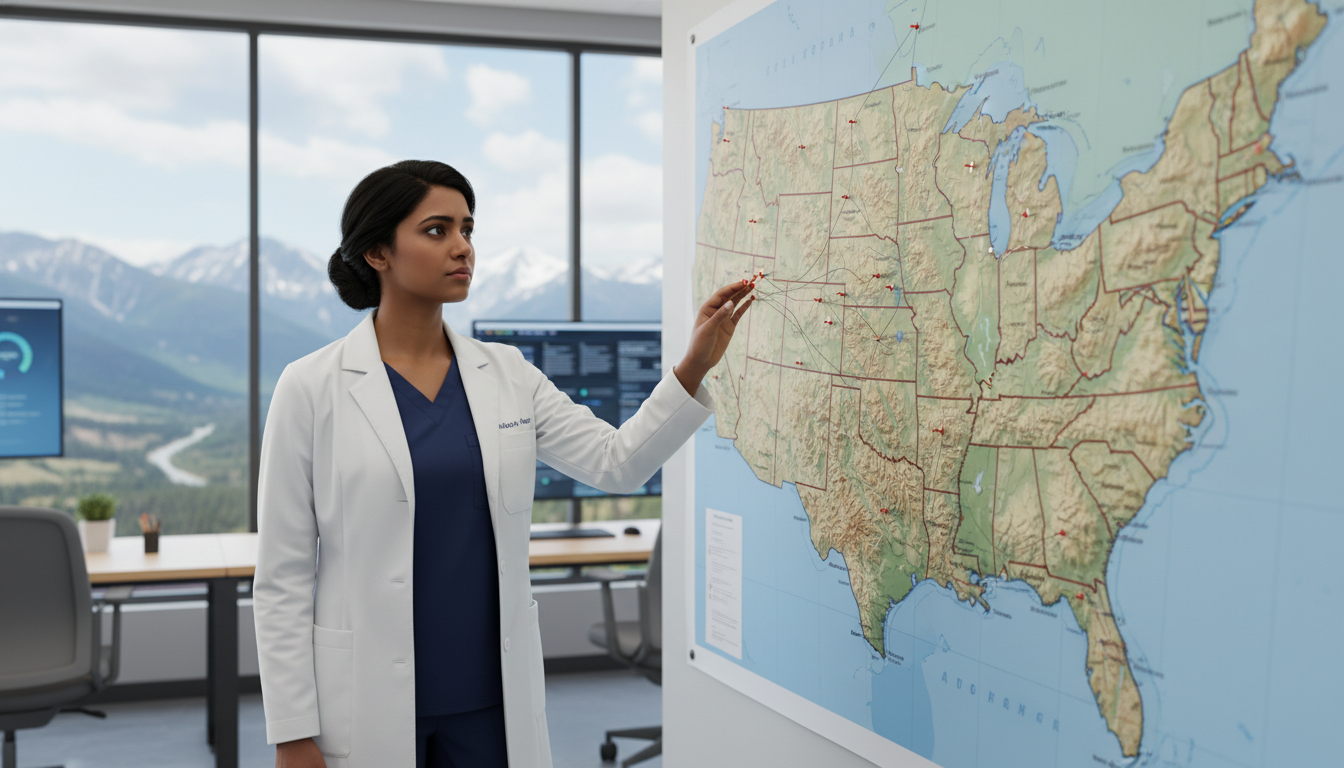
Understanding Geographic Flexibility as an IMG in the Mountain West
Geographic flexibility can be a major strategic advantage for an international medical graduate (IMG) applying to residency in the United States—especially in the Mountain West. This region (typically including Colorado, Utah, Wyoming, Montana, Idaho, Nevada, and New Mexico) offers a mix of academic centers, strong community programs, and underserved rural opportunities. For an IMG, learning how to use location flexibility wisely can significantly improve your chances of matching.
In the context of residency applications, geographic flexibility means:
- You are open to multiple states or cities rather than one narrow area
- You can adapt your preferences based on program strength, visa policies, and IMG-friendliness
- You know how to communicate realistic geographic preference residency choices in ERAS and interviews without closing doors
This IMG residency guide will walk you through how to balance:
- Your genuine personal needs (family, community, lifestyle)
- Program realities (visa sponsorship, IMG history, competitiveness)
- Strategic use of geographic preference and regional preference strategy to optimize your match chances in the Mountain West.
The Mountain West Landscape: What IMGs Should Know
The Mountain West is diverse in terrain—and in residency opportunities. Understanding the landscape helps you decide where to be firm and where to be flexible.
1. States and Major Training Hubs
Key states and some important hubs for residency in the Mountain West include:
Colorado
- Major centers: Denver, Aurora, Colorado Springs, Fort Collins
- Home to large academic institutions and multiple community programs
- Popular for lifestyle, outdoor opportunities, and a growing healthcare system
- Competitive for many specialties (especially in Denver metro)
Utah
- Hub: Salt Lake City
- Strong academic center plus community hospitals
- Attractive lifestyle; relatively high competition for limited spots
Nevada
- Hubs: Las Vegas, Reno
- Growing GME presence, newer programs in some specialties
- Historically more open to IMGs in certain programs, but varies by specialty
New Mexico
- Hubs: Albuquerque, Las Cruces, smaller teaching sites
- Significant focus on rural and underserved populations
- Often more welcoming to IMGs in primary care and hospital-based specialties
Idaho, Wyoming, Montana
- Fewer programs overall, often linked to regional consortia or university partnerships
- Strong rural and community medicine focus; some family medicine, internal medicine, and transitional year positions
2. Why the Mountain West Can Be Favorable for IMGs
For an international medical graduate, the Mountain West can offer benefits compared to only targeting large coastal cities:
- Less saturation of applicants in some locations or specialties
- Programs with strong service needs and underserved populations, often more open to IMGs
- Opportunities to build a life with a lower cost of living compared with large coastal metros
- Outdoor lifestyle and smaller cities that may be ideal for some applicants and families
However:
- Some states have very few programs or positions, so you must broaden your search within the region or add other regions to your application list.
- A few high-demand cities (like Denver or Salt Lake City) can be almost as competitive as more famous coastal hubs.
This is where true geographic flexibility becomes your strength.
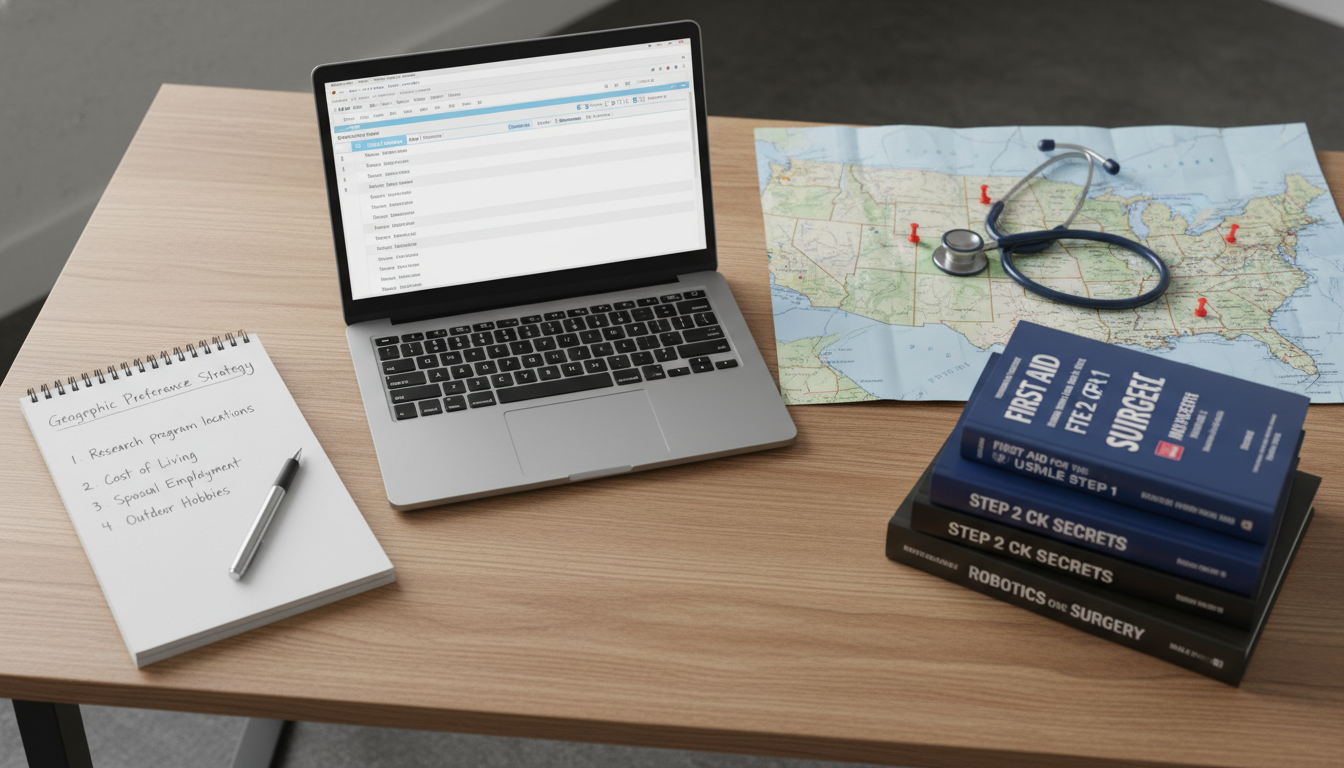
Balancing Preference, Flexibility, and Strategy
To use geographic flexibility wisely, you must balance three things:
- True personal preferences
- Objective program characteristics
- Match strategy and risk management
A. Clarify Your Non-Negotiables vs. Flexibles
Start with honest self-reflection:
Non-negotiables might include:
- Visa type requirements (e.g., must have J-1 or need H-1B sponsorship)
- Being within reasonable distance to a spouse’s job, child’s school, or extended family
- Severe climate or altitude limitations due to personal health
- Specific religious or cultural community needs that you know you require for support
Flexibles might include:
- Size of the city (big city vs mid-sized city vs smaller town)
- Specific state (Colorado vs Utah vs New Mexico)
- Drive time to major airport
- Exact terrain or outdoor opportunities (skiing vs hiking vs none)
- Preferences like “I’d like Denver,” but you could be equally happy in Albuquerque or Reno
Write these out. This simple exercise will make your geographic preference residency choices more grounded and consistent across your ERAS application, personal statements, and interviews.
B. Understanding Program Realities in the Mountain West
In the Mountain West, several program factors intersect with geography:
Program Size and Availability
- Colorado and Utah have more positions and broad specialty options.
- States like Wyoming or Montana may offer only a handful of programs, usually in primary care or generalist fields.
IMG-Friendliness
- Some Colorado residency and New Mexico programs have a consistent record of accepting IMGs, especially in internal medicine, family medicine, pediatrics, and psychiatry.
- Smaller states may be open to IMGs but have very few positions, making them mathematically difficult to rely on.
- Check:
- Program websites (often list international medical graduate policies)
- NRMP and FREIDA data on IMG percentages
- Alumni lists (do they include international medical schools?)
Visa Sponsorship
- Never assume a program sponsors your visa.
- In this region, some university-based programs will sponsor J-1 but not H-1B.
- Community-based or smaller programs may or may not sponsor visas, often depending on institutional policies.
- For each program on your list, verify:
- Do they accept IMGs?
- Do they sponsor J-1? H-1B? Both?
- Are there deadlines or restrictions (e.g., USMLE Step 3 required for H-1B)?
C. Strategic Use of Location Flexibility in Your Application
Your location flexibility match strategy should work at three levels:
In Your Overall ERAS List
- Don’t rely solely on one or two states in the Mountain West.
- Consider adding programs from nearby regions (e.g., Midwest or Southwest) that share similar practice environments or visa policies.
- For a competitive specialty, geographic flexibility is often critical to secure enough interviews.
Within the Mountain West Region
- Rank academic centers, community programs, and rural tracks across multiple states:
- Example: A mix of Denver + Aurora + Colorado Springs (Colorado), Albuquerque (New Mexico), Reno (Nevada), and Boise (Idaho) depending on your specialty.
- Consider a range of city sizes and hospital types. A strong regional preference strategy is about patterns, not one city.
- Rank academic centers, community programs, and rural tracks across multiple states:
In ERAS Geographic Preference Signaling (if applicable that year)
- If the application cycle uses geographic preference questions, be honest but not overly restrictive.
- If you state only “Mountain West” and you are not competitive for some major hubs, consider also including another compatible region as a secondary preference (e.g., Midwest).
- Your answers should align with your application behavior: if you say you prefer the Mountain West but apply to only two programs there, it seems inconsistent.
Colorado Residency and Broader Mountain West Opportunities
Because Colorado is often the most visible state in the region for IMGs, it deserves special attention as part of a broader Mountain West strategy.
A. Colorado Residency: Opportunities and Realities
Key characteristics:
- Major teaching hospitals linked to large universities
- Numerous community-based residency programs, especially in internal medicine, family medicine, and emergency medicine
- Desirable lifestyle: mountains, outdoor sports, strong economy
Implications for IMGs:
- Competitive for popular specialties and big-city locations (e.g., Denver metro, Boulder area)
- Some programs have a defined track record of taking IMGs—these should be your priority targets
- Many programs sponsor J-1 and some H-1B, but policies vary
If you are an international medical graduate who strongly wants a Colorado residency, protect yourself by also:
- Applying to multiple programs in neighboring Mountain West states
- Considering additional regions that resemble Colorado in culture and landscape (e.g., Pacific Northwest, certain Midwest locales)
- Remaining open to mid-sized or smaller Colorado cities, not just Denver
B. Mountain West Beyond Colorado: Hidden Strengths
New Mexico:
- University-affiliated and community programs with strong emphasis on rural and underserved care
- Historically more IMGs in internal medicine and family medicine
- Good fit if you’re open to culturally rich, diverse, and somewhat less urban settings
Nevada:
- Growing number of programs, especially in Las Vegas and Reno
- Some programs relatively new and still shaping their IMG policies—this can be a mixed opportunity but worth researching
Idaho, Montana, Wyoming:
- Limited but meaningful opportunities, mostly primary care and generalist programs
- Very attractive if you have interest in rural medicine, broad-scope practice, and outdoor lifestyles
- Geographic flexibility is crucial here: do not rely exclusively on these states; pair them with more program-dense states
Utah:
- Strong academic system in Salt Lake City
- Fewer slots overall, moderate-to-high competition
- Great target if you are a strong candidate with geographic interest in the region and willingness to live in a somewhat homogeneous cultural environment

How to Communicate Geographic Flexibility to Programs
Being flexible is not enough—you must signal and explain that flexibility to programs clearly and credibly.
1. In Your Personal Statement
If you are aiming for the Mountain West:
- Explain your interest in the region specifically, not only in vague terms like “I love nature.”
- Mention concrete reasons:
- Interest in rural or frontier medicine
- Commitment to underserved populations, including Native American or Hispanic communities
- Academic interest in wilderness medicine, sports medicine, or high-altitude physiology (if relevant)
- Clarify that you are also geographically flexible within the region:
- Example sentence: “While I am particularly drawn to the Mountain West, I am open to training in a variety of settings—from large academic centers in cities like Denver or Salt Lake City to smaller community-based programs in neighboring states.”
Avoid promising that you will only train in one city (e.g., “Denver or nowhere”), unless it’s truly non-negotiable and you understand the risk.
2. During Interviews
Programs in the Mountain West often want to know:
- Why here, specifically?
- Will you be happy living in this city or rural town for 3–5 years?
- Do you understand the climate, culture, and lifestyle?
Practice concise, honest answers:
Connect personal values to the region:
“I grew up in a smaller community and feel comfortable in settings where physicians know their patients and families well. The combination of smaller cities, outdoor access, and a strong focus on underserved care in the Mountain West really matches my long-term goals.”Demonstrate flexibility without sounding desperate:
“I’m primarily drawn to the Mountain West because of its patient population and practice environment, but I’m open within the region to different city sizes and program types.”Acknowledge any family or personal considerations honestly:
“My spouse’s job search is focused on this general region, so we’re looking at several Mountain West states, not only one city.”
3. In Emails and Thank You Notes
Use post-interview communication to reinforce genuine interest without making promises you cannot keep:
- “Your program’s strong emphasis on rural outreach and the community you serve reinforced my desire to train in the Mountain West. I can clearly see myself thriving in [city/state] and am very interested in joining your team.”
Avoid sending multiple programs in the same region identical emails claiming each one is your “first choice.” Be sincere and consistent.
Building a Regional Preference Strategy as an IMG
To convert geographic flexibility into a real regional preference strategy, especially for the Mountain West, approach this systematically.
Step 1: Categorize Programs by Region and Priority
Create a spreadsheet with columns such as:
- State and city
- Program type (academic, community, hybrid, rural track)
- Visa sponsorship policy
- Percentage of IMGs in recent classes
- Your interest level (High, Medium, Low)
- Lifestyle/community notes (size of city, climate, support systems)
Within the Mountain West:
- List all Colorado residency programs in your specialty
- Add Utah, New Mexico, Nevada, Idaho, Montana, Wyoming
- Note which programs you’d be genuinely enthusiastic to attend versus those you’d consider primarily for match security
Step 2: Combine Mountain West with 1–2 Additional Regions
If you are an IMG with average or slightly above-average competitiveness, relying solely on one region can be risky. Consider pairing the Mountain West with:
The Midwest:
- Often more IMG-friendly
- Similar mix of urban and rural programs
- Cultural and clinical environments can resemble parts of the Mountain West
The Southwest or South Central:
- For example, Texas, Arizona, Oklahoma, or Kansas
- Some states are very IMG-friendly and have large GME networks
Your application list might look like:
- 40–50% Mountain West programs (if this is your top region)
- 50–60% programs in other IMG-friendly regions that you could genuinely see yourself living in
Step 3: Calibrate by Specialty and Competitiveness
For competitive specialties (e.g., dermatology, plastic surgery, some surgical subspecialties):
- Geographic flexibility is almost mandatory.
- The Mountain West alone will not have enough positions; you must be open across multiple regions.
For moderately competitive specialties (e.g., internal medicine, pediatrics, EM, anesthesiology):
- A balanced strategy with strong representation in the Mountain West plus additional regions works well.
- If you have strong scores and robust CV, you can be somewhat more selective, but not overly so.
For primary care specialties (e.g., family medicine, psychiatry in some areas):
- Mountain West can be very promising, especially in rural and underserved sites.
- Still, broaden your list to avoid overconcentration in a few smaller states with limited slots.
Practical Examples of Geographic Flexibility in Action
Example 1: Strong IMG Aiming for Colorado but Staying Flexible
- Graduate of a recognized international school, Step 1 and Step 2 scores above average, US clinical experience, and strong letters
- Desires Denver or Colorado Springs due to family and lifestyle preferences
Strategy:
- Applies to all relevant IMG-friendly Colorado residency programs in internal medicine and family medicine
- Adds New Mexico and Nevada programs with similar patient populations and visa policies
- Adds selective Utah and Idaho programs, emphasizing interest in Mountain West culture and outdoor life
- Also applies to a curated set of Midwest programs as a safety net
- In interviews, communicates clear enthusiasm for the Mountain West but does not limit themselves to Colorado alone
Example 2: Average IMG Needing J-1 Visa, Broadly Interested in the Region
- Solid but not outstanding scores, some USCE, requires J-1 sponsorship
- Open to a wide range of living environments
Strategy:
- Conducts detailed research on which Mountain West programs sponsor J-1 and have a history of taking IMGs
- Applies to a wide spread: Colorado, New Mexico, Nevada, Utah, Idaho, and selected programs in Montana/Wyoming
- Adds a large number of programs in the Midwest and South where J-1 IMG presence is strong
- In ERAS, lists Mountain West and Midwest as geographic preferences if asked, emphasizing flexibility
Example 3: IMG with Family Ties in the Mountain West but Willing to Broaden if Needed
- Spouse has extended family in Colorado and Utah, but both are open to other regions
- Specialty: Pediatrics
Strategy:
- Applies robustly to pediatric programs in the Mountain West, focusing on Colorado and Utah first but not exclusively
- Adds nearby or similar regions (e.g., Midwest, West Coast inland states)
- Emphasizes in personal statement their long-term plan to practice in a Mountain West or similar community, showing genuine regional commitment while remaining open to training elsewhere
FAQs: Geographic Flexibility for IMGs in the Mountain West
1. Should I list only the Mountain West as my geographic preference in ERAS if it’s my top choice?
If the application cycle asks for geographic preference, it’s acceptable to list the Mountain West as a priority if it truly is. However, if you are not highly competitive or are in a competitive specialty, it’s safer to include at least one additional region where you’re also willing to train. Your selections should align with your actual application behavior (where you apply) and interview attendance.
2. Is a Colorado residency realistic for an IMG, or is it too competitive?
A Colorado residency is realistic for many IMGs, especially in internal medicine, family medicine, pediatrics, and psychiatry, but competition is strong in Denver and certain specialties. Focus on programs with a documented history of training international medical graduates, confirm visa sponsorship policies, and apply broadly within Colorado and across the Mountain West and other regions.
3. Will saying I prefer the Mountain West limit my chances in other regions?
Not necessarily. Programs in other regions understand that applicants may have multiple preferences. The key is consistency: your stated preferences should make sense alongside your application list. If you say you only want the Mountain West but most of your applications are in the Midwest and South, that contradiction may confuse programs.
4. How many programs should I apply to in the Mountain West as an IMG?
There is no single number, but consider:
- If the Mountain West is your top region, it should represent a substantial portion of your applications within the limits of available programs.
- Because some states have few positions, you should supplement with other IMG-friendly regions.
- Many IMGs apply to 80–150 programs total depending on specialty and competitiveness; of these, you might target 20–40 in the Mountain West if available and relevant, then fill the rest from other regions aligned with your goals and visa needs.
Used thoughtfully, geographic flexibility can transform the Mountain West from a “maybe” option into a powerful anchor for your residency match strategy as an international medical graduate. By understanding the region, researching programs carefully, and communicating genuine but flexible preferences, you position yourself to succeed—whether your journey leads to Colorado, New Mexico, Utah, Nevada, or beyond.