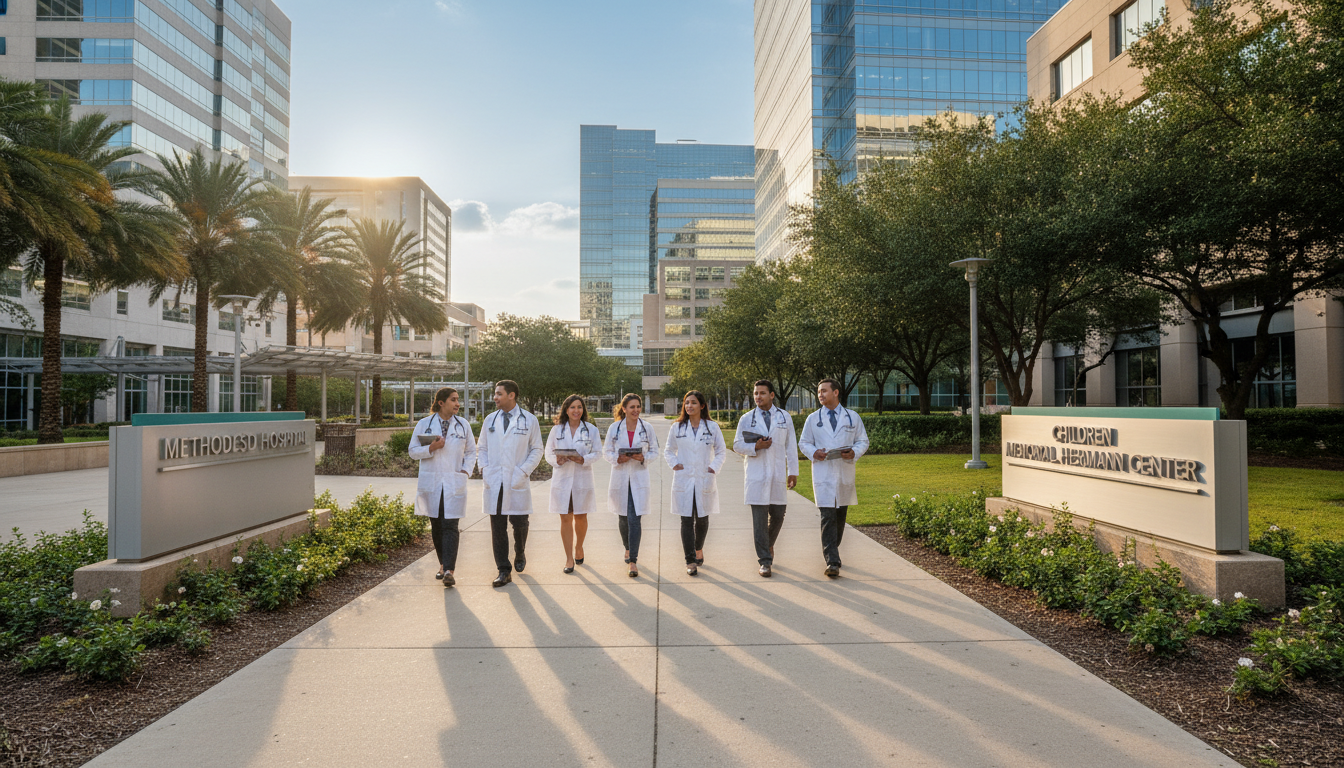
Understanding Geographic Flexibility as an IMG in New York City
Geographic flexibility is one of the most overlooked yet powerful tools an international medical graduate can use in the residency Match—especially in a highly competitive region like New York City. As many IMGs focus narrowly on “NYC or nothing,” they may unintentionally limit their overall chances of matching.
For an IMG who loves New York City, geographic flexibility does not mean giving up on NYC. Instead, it means designing a smart, layered strategy that:
- Maximizes your odds of matching somewhere in the U.S.
- Keeps NYC residency programs strongly in play
- Uses regional and location preference signals wisely
- Reduces risk of going unmatched, while still targeting your dream environment
This IMG residency guide focuses on how international medical graduates can think strategically about New York City residency opportunities while balancing geographic preference residency choices and location flexibility match strategies.
Why New York City Is Competitive but Still IMG-Friendly
New York City is simultaneously high yield and high risk for IMGs:
Why NYC is attractive to IMGs
- Large number of residency positions across multiple specialties
- Many programs historically open and friendly to IMGs
- Diverse patient populations and pathology
- Strong academic and community hospital mix
- Established immigrant communities and cultural familiarity
- Access to research, networking, and subspecialty training
For many international medical graduates, NYC feels like a natural home—linguistically, culturally, and professionally.
Why NYC is also risky
Despite its IMG-friendliness, NYC is still intensely competitive:
- Thousands of applicants target NYC programs every year
- U.S. graduates increasingly apply broadly, including NYC
- Many IMGs cluster their applications only in NY/NJ, oversaturating programs
- Visa sponsorship limitations at some hospitals
- Some specialties have far more applicants than positions
If your strategy is “apply mostly or only in NYC,” you are competing in one of the most crowded markets in the country. This is where geographic flexibility becomes your greatest advantage.
Core Concepts: Geographic Flexibility & Preference Signaling
Before getting into tactics, it’s essential to understand how geographic preferences are perceived in the Match.
1. Geographic Flexibility
Geographic flexibility means you are willing to train in more than one region (or even many regions) if that increases your overall chance of matching.
For an IMG interested in NYC, that may translate into:
- Primary focus: NYC + surrounding metro area (Long Island, Westchester, northern NJ)
- Secondary regions: Other East Coast cities (Philadelphia, Boston, Baltimore, DC), or other IMG-friendly states
- Backup regions: Less competitive or less popular locations where your application becomes more competitive (Midwest, South, some community programs)
This does not dilute your commitment to NYC; it diversifies your safety net.
2. Geographic Preference Residency Signaling
With ERAS and some specialties now allowing “geographic preference” or “regional preference” indications, programs can see:
- If you’ve indicated interest in their region
- Sometimes, if you’ve listed them as a top program (in specialties with program signals)
- How wide or narrow your targeted region seems
This regional preference strategy must be used carefully as an IMG. Overly narrow preferences (e.g., “NYC only”) can:
- Make some non-NYC programs assume you will rank them low
- Reduce interview offers outside your primary region
- Increase your risk of going unmatched if NYC interviews are limited
3. Location Flexibility and the Match Algorithm
The Match algorithm favors your true ranking, not what you “think programs want.” However, your interview opportunities are heavily influenced by where you apply and how open you appear.
- If you never apply to a region, that region can never rank you.
- If you signal only NYC, other regions may assume they are your backup and may be less likely to interview you.
- If you present as reasonably flexible, programs outside NYC may see you as a realistic candidate who might genuinely rank them.
Balancing honesty about your NYC preference with openness to other areas is one of the core skills in geographic flexibility.

Building a Geographic Strategy Centered on New York City
This section walks through how to prioritize NYC while still preserving flexibility.
Step 1: Define Your New York City “Core”
Start by clearly outlining your NYC core—the programs and locations you are most committed to.
This usually includes:
- NYC boroughs: Manhattan, Brooklyn, Queens, the Bronx, Staten Island
- Immediate surrounding areas you’d realistically live and commute from:
- Long Island (e.g., Nassau County)
- Lower/central Westchester
- Parts of northern New Jersey with direct transit to NYC
For your own planning, treat these as Tier 1 locations.
Within this core:
- Identify academic vs community hospitals
- Note which programs consistently interview and match IMGs
- Review visa policies (J-1 only vs J-1 + H-1B vs no visa)
- Check program size and number of IMG residents in current rosters
This research helps you understand where you’re truly competitive in NYC and which NYC residency programs to prioritize.
Step 2: Add “Metro-Adjacent” Options
A common mistake is defining NYC too narrowly. Geographic flexibility begins with expanding from “NYC only” to “NYC plus metro-adjacent” areas—places still close to NYC by train or car, but outside the city proper.
Examples:
- Central and northern New Jersey programs (Newark, Jersey City, etc.)
- Hartford or New Haven (CT) and certain parts of upstate New York (White Plains, New Rochelle, Yonkers, and then further: Albany, Syracuse, Rochester, Buffalo)
- Long Island farther east than your original boundary
For many IMGs, this keeps you within a New York–centric life while opening dozens of additional training opportunities.
Practical tip:
Ask yourself: “Would I be okay living here for 3 years if I could still visit NYC frequently?” If the answer is yes, include it in your Tier 2 list.
Step 3: Layer in High-Yield, IMG-Friendly Regions Outside NY
Once your NY/Metro core is set, build out broader options:
- Other major Eastern cities: Philadelphia, Baltimore, DC, Pittsburgh
- Some New England cities: Providence, Springfield, Worcester
- States known to take IMGs in primary care and internal medicine (parts of the Midwest, South, and some community hospital systems)
This becomes your Tier 3: good, realistic options that might not be your dream location but significantly improve your overall Match odds.
For an international medical graduate, the ideal balance often looks like:
- 30–40% applications: NYC + immediately surrounding metro
- 25–35% applications: Broader Northeast and East Coast (IMG-friendly states)
- 25–35% applications: High-acceptance regions and community programs across the U.S.
The exact percentages depend on your profile (USMLE scores, clinical experience, gaps, visa needs), but the principle is constant: NYC first, not NYC only.
Using Geographic Preferences and Program Lists Strategically
Many IMGs struggle with how to communicate geographic preference in personal statements, ERAS, and interviews. This section addresses how to send a clear message without boxing yourself in.
1. Personal Statement Strategy for an NYC-Focused but Flexible IMG
If you are targeting New York City residency programs heavily, you may be tempted to mention “New York City” repeatedly in your main personal statement. However, that same statement goes to all programs unless you create separate versions.
A more strategic approach:
Primary personal statement
- Emphasize the value of training in an urban, diverse, high-acuity environment.
- Mention your comfort with multicultural populations, complex social determinants of health, and limited-resource scenarios—features common in NYC and many other cities.
- You may mention NYC once or twice in a way that doesn’t exclude other areas (e.g., “I am particularly drawn to large, diverse urban centers such as New York City and other major metropolitan areas.”).
Optional NYC-focused variation
- For a small subset of programs in New York City that allow or encourage program-specific statements, you can create a version that speaks more directly to NYC-specific reasons (family ties, community connections, prior rotations).
This ensures your application does not scream “NYC only,” which could scare off programs in other cities.
2. ERAS Geographic Preferences (If Available in Your Specialty/Year)
If your specialty uses geographic signaling:
- List Northeast or Mid-Atlantic region if those buckets exist, not “New York only,” unless that is truly an explicit option.
- Show a cluster of interest (e.g., Northeast + Mid-Atlantic) rather than a single city.
- Avoid signaling that you are unwilling to move beyond NYC unless your situation absolutely requires that (e.g., strict family constraints, immigration or spousal issues).
Programs understand that many IMGs have location preferences, but they also value applicants who are realistically open to training where positions are available.
3. Talking About Geographic Preference in Interviews
When interviewing at NYC residency programs:
- Be very clear and authentic about why NYC is a strong fit:
- Family or social support systems
- Language and cultural familiarity
- Long-standing academic or professional ties to New York
- Comfort with density, cost of living, and pace of work
- Show that you have done program-specific research and understand their patient population and system.
When interviewing outside NYC (e.g., Pennsylvania, Ohio, or the South):
- Acknowledge that NYC is a place you value, but emphasize what draws you to that specific community:
- Opportunities for hands-on autonomy
- Strong mentorship and close-knit programs
- Lower cost of living and easier lifestyle during residency
- Unique patient demographics (rural, suburban, refugee communities, etc.)
An honest and effective line might be:
“New York City is a place I know well and appreciate, but my priority is to become the strongest physician I can be. Your program’s training environment, patient population, and emphasis on [X] match my goals, and I would be proud to train here.”
This shows location flexibility without pretending you don’t care about NYC at all.

Practical Application Tactics for IMGs Targeting NYC and Beyond
Now let’s turn concepts into concrete steps you can take during the residency application cycle.
1. Program List Construction: A Worked Example
Imagine you are an IMG applying to Internal Medicine with:
- Step 2 CK: 232
- Passed Step 1 (pass/fail era)
- 1 year of U.S. clinical experience (NYC observership + research)
- No major gaps
- J-1 visa needed
A balanced program list might look like:
- 40–60 programs in NYC and immediate metro area
- Mix of academic-affiliated and community hospitals
- Focus on institutions known to sponsor J-1 and with a history of IMGs
- 25–35 programs in broader NY state + NJ + CT + PA
- Upstate NY (Buffalo, Rochester, Syracuse, Albany)
- NJ community programs with prior IMG residents
- Pennsylvania teaching hospitals in mid-size cities
- 20–30 programs across IMG-friendly states (Midwest/South)
- Community and university-affiliated programs with ≥20–30% IMG residents
- Prior visa sponsorship documented on program or institution websites
Total: 85–125 applications, with roughly 40–50% NYC/metro but a solid remainder across other high-yield regions. This is much safer than applying to 80–90 NYC programs and only 10 elsewhere.
2. Using Data Resources to Guide Geographic Choices
To refine your geographic plan:
- NRMP Charting Outcomes & Program Director Surveys
- Understand how competitive your specialty and your profile are.
- FREIDA, program websites, and residency explorer tools (where available)
- Check % of IMGs and visa sponsorship patterns
- Filter by region and city size
- Current residents’ LinkedIn or program pages
- See how many current residents are international medical graduates
- Note whether they are from your country or similar backgrounds (may indicate program openness)
Your goal is to identify IMG-friendly pockets within and beyond NYC so your geographic flexibility is not random—it is targeted.
3. Balancing Couples Match or Family Considerations
If you are in a couples Match, or have spouse/children in NYC:
- Be realistic: you may need greater location flexibility within the broader New York and Northeast region to optimize both partners’ chances.
- Consider commuter-possible pairs (e.g., one partner in Manhattan, the other in New Jersey or Westchester).
- Rank lists can be constructed to keep you within train/bus distance of NYC even if both of you do not match in the same hospital.
For family reasons (elderly parents, young children, or other dependencies), it is legitimate to emphasize New York City residency or nearby programs—just recognize that this tends to increase competition and reduce overall safety. To compensate, you may:
- Apply more heavily in NYC and surroundings (larger total application count)
- Apply broadly across multiple NYC specialties if your long-term goals are flexible (e.g., IM vs Family Medicine)
- Strengthen your NYC ties (rotations, research, volunteer work, letters from New York physicians)
4. Visas and How They Affect Geographic Flexibility
As an IMG, visa needs are a major geographic variable:
- J-1 visa
- Most commonly sponsored, including in many NYC residency programs.
- But J-1 waiver jobs after residency may be geographically limited (often rural or underserved areas).
- H-1B visa
- Fewer programs sponsor this, especially in New York City.
- If you require H-1B only, your geographic flexibility is inherently narrower—you must identify and apply to programs known to sponsor H-1B and may need to extend beyond NYC to find enough of them.
Practical advice:
- Start a spreadsheet of programs with explicit visa policies.
- Color-code NYC vs non-NYC, J-1 vs H-1B.
- Make sure your total H-1B-sponsoring program count is large enough if H-1B is a must-have.
Long-Term Perspective: Training Outside NYC but Returning Later
Some IMGs worry that if they train outside New York City, they’ll never be able to return. In practice, many physicians:
- Train in another state
- Build strong clinical skills and obtain board certification
- Later move to NYC for fellowship or attending jobs
Pathways to Return to NYC After Training Elsewhere
Fellowship in NYC
- Competitive but realistic if you have strong research, letters, and performance in residency.
- Many NYC fellowships welcome applicants from solid community and university programs nationwide.
Hospitalist or Attending Positions
- NYC hospitals often recruit board-certified internists from all over the country.
- Experience in high-volume, diverse centers (even outside NYC) is respected.
Networking During Residency
- Attend national conferences in NYC.
- Collaborate on research projects with New York–based mentors if possible.
- Maintain relationships from earlier NYC observerships or electives.
In other words, you do not have to train in NYC to eventually work in NYC, especially in broad specialties like Internal Medicine, Pediatrics, Family Medicine, and Psychiatry. Recognizing this can help you be more flexible geographically during the Match without feeling that you are closing the door on your long-term dream.
FAQs: Geographic Flexibility for IMGs in New York City
1. If NYC is my top choice, should I still apply broadly across the U.S.?
Yes. Wanting New York City residency as your top choice does not conflict with applying broadly. Applying only to NYC and a few nearby programs is extremely risky, especially for an IMG. A wiser approach is:
- Rank NYC programs highest if you prefer them,
- But apply widely enough so that you still match somewhere if NYC opportunities are limited.
The Match algorithm will always try to place you in your highest-ranked program where mutual preference exists.
2. Will programs outside NYC think I’m not serious about them if I mention New York in my application?
If your personal statement is overwhelmingly “NYC or nothing,” some non-NYC programs may assume you’ll rank them low. However, if you focus on urban diversity, high-need populations, or broader regional interest (e.g., Northeast/Mid-Atlantic), you can honestly express your interest in NYC without alienating other regions. Tailoring statements for a few key programs is helpful but not always necessary.
3. How many NYC residency programs should an IMG apply to?
There is no single correct number, but most IMGs aiming for NYC should:
- Apply to a wide mix of NYC academic and community programs that are historically IMG-friendly and sponsor visas.
- Avoid applying almost exclusively to a small cluster of highly competitive Manhattan programs.
- Situate NYC programs within a broader national list—a common total is 80–120 programs for IM, with maybe 30–60 of them in NYC/metro, depending on your competitiveness.
4. If I match outside NYC, is it harder to come back later?
It may require planning, but it is absolutely possible. Many physicians train outside New York and later:
- Return for fellowship in NYC
- Join hospitalist or attending positions in New York City hospitals
- Relocate to the region once board-certified and more experienced
What matters most is the quality of your training, your performance in residency, your references, and your long-term networking—not just where you initially matched.
Geographic flexibility is not about abandoning your dream of New York City; it is about protecting that dream by ensuring you first become a well-trained, board-certified physician. By understanding NYC’s unique dynamics, being honest but strategic about your geographic preferences, and applying broadly with intention, you can significantly improve your chances of matching—while keeping the door to New York City wide open for your future.