Understanding Geographic Flexibility as an IMG in Southern California
Geographic flexibility is one of the most powerful—but often underused—tools an international medical graduate can bring to the residency match, especially in a highly competitive region like Southern California. For IMGs, the dream of training in Southern California is common: outstanding academic centers, large and diverse patient populations, strong fellowship opportunities, and proximity to major cities and communities.
However, this dream comes with a reality check: Southern California residency spots are limited, competitive, and heavily sought by US graduates. In this context, showing thoughtful geographic flexibility—in how you target Southern California, where within SoCal you apply, and what you’re willing to consider if SoCal doesn’t work out—can significantly improve your chances of matching.
This IMG residency guide will walk you step-by-step through what geographic flexibility really means, how Southern California programs think about geographic preference residency factors, and how you can build a strategic, realistic, and flexible plan that still prioritizes SoCal medical training.
The Southern California Landscape for IMGs
Before you can decide how flexible to be, you need to understand the terrain: what “Southern California residency” actually looks like, and where IMGs realistically fit.
Key Sub-Regions in Southern California
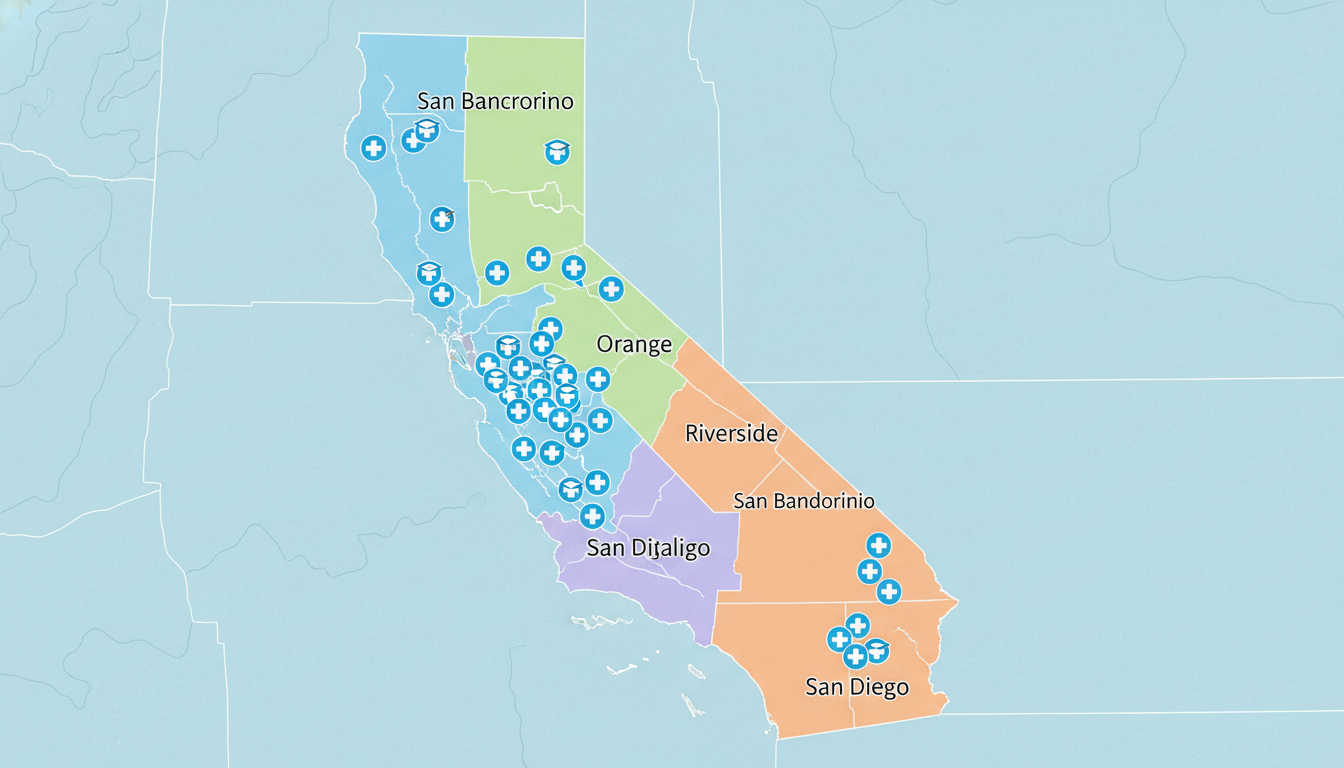
When programs think about geographic preference, they often break down Southern California into several functional regions. As an IMG, think in the same structure:
Los Angeles County
- Major academic centers and large community programs
- Extremely popular with US grads and IMGs alike
- Mix of university-affiliated and community-based programs
Orange County
- A few major teaching institutions and growing community programs
- Suburban environment; competitive, but slightly fewer total spots than LA
San Diego County
- Limited number of teaching hospitals
- Highly desirable for lifestyle and fellowships
Inland Empire (Riverside, San Bernardino)
- Expanding healthcare systems and residency positions
- Often slightly more IMG-friendly than coastal counties
- More underserved populations, heavier clinical workload
Central Coast / Lower Central Valley (borderline SoCal for some applicants)
- Not always “mentally” categorized as Southern California, but functionally close
- Some programs have more room for IMGs and less competition
Understanding this breakdown helps you decide where you can be strict (for example, LA + OC only) versus where it’s strategic to be more open (Inland Empire or adjacent regions).
How Competitive Is Southern California for IMGs?
In broad terms:
Coastal, urban centers (LA, San Diego, OC)
- High competition from US MD and DO graduates
- More academic/research-heavy programs
- IMG spots exist, but are limited and often require strong applications
Inland Empire and nearby regions
- More likely to have IMG representation
- Greater focus on service to underserved populations
- Some programs more holistic in their review
If you are an international medical graduate whose top priority is Southern California residency, you need to recognize that your chances are improved by:
- Expanding beyond just the most famous LA or San Diego teaching hospitals
- Including community and safety-net programs
- Considering Inland Empire and nearby regional programs as part of your SoCal medical training strategy
What Geographic Flexibility Really Means in the Match
Geographic flexibility is not “give up your dreams and go anywhere.” It’s a structured way of aligning your preferences with reality so you can still match and, ideally, land close to your desired region.
For an IMG targeting Southern California, geographic flexibility has three layers:
- Within Southern California
- Within the broader Western US or neighboring states
- Nationwide or multicentric flexibility
1. Flexibility Within Southern California
At this level, your goal is still clear: SoCal. Flexibility here involves:
Program Type Flexibility
- Including both academic and community programs
- Considering county and safety-net hospitals
- Being open to newer programs (within reason)
Sub-Region Flexibility
- Willingness to consider:
- Inland Empire (Riverside, San Bernardino)
- Smaller cities vs major metros
- Programs that are 1–2 hours outside LA or San Diego proper
- Willingness to consider:
Specialty Flexibility (within your realistic range)
- Applying to a mix of specialties if your academic metrics are borderline
(e.g., mix of Internal Medicine + Family Medicine; or less competitive programs if you’re not highly competitive)
- Applying to a mix of specialties if your academic metrics are borderline
Example:
Instead of applying only to prestigious Internal Medicine programs in LA and San Diego, you apply to:
- Academic and community Internal Medicine programs across LA, OC, San Diego, and Inland Empire
- Family Medicine programs in Inland Empire and adjacent regions
- A few prelim medicine or transitional year programs that position you in SoCal, while planning long-term
2. Flexibility in the Western Region
This is where regional preference strategy becomes critical. Many IMGs want to present a clear preference for Southern California, but programs can see if you also applied to other states.
Location flexibility match strategy:
- Consider West Coast states with similar patient populations or lifestyle:
- Northern/Central California
- Nevada, Arizona
- Pacific Northwest (Washington, Oregon)
- Frame this in your application as:
- Commitment to the Western US
- Focus on serving diverse, immigrant, or underserved communities
- Interest in training in similar health systems or populations
This maintains a Western geographic preference residency narrative without limiting you to a small number of SoCal spots.
3. Nationwide Flexibility
For some IMGs (especially with weaker applications or visa constraints), geographic flexibility may need to expand even further:
- Including Midwest or East Coast programs known for IMG-friendly attitudes
- Targeting community-based programs that historically take IMGs
- Balancing SoCal applications with multiple “safety net” regions
Key principle:
You can still state a clear interest in Southern California while demonstrating realistic openness elsewhere. Program directors know that applicants can have more than one acceptable region.
Building a Strategic SoCal-Focused Application as an IMG
To make your geographic flexibility work for you, you must present a coherent, believable story in your application.
Step 1: Define Your Core Preference and Acceptable Alternatives
Write this down for yourself:
Core preference: “I strongly prefer to train in Southern California, ideally in Internal Medicine, with emphasis on diverse and underserved populations.”
Acceptable alternatives (tiered):
- Tier 2: Other parts of California and Western states with similar populations
- Tier 3: IMG-friendly programs nationwide, especially in Internal Medicine or Family Medicine
This becomes the basis of your personal strategy—and prevents panic or random last-minute applications.
Step 2: Align Your Application Narrative with Southern California
As an international medical graduate aiming for Southern California residency, your documents should make your goals credible, not just aspirational.
Personal Statement:
- Mention Southern California only if it is sincere and you can justify it:
- Family or support system in SoCal
- Prior clinical experience or research in SoCal
- Long-term plan to serve communities that are especially prevalent in SoCal (e.g., large Spanish-speaking populations, refugee communities, etc.)
- Avoid sounding too narrow:
- Instead of “I will only consider training in Southern California,” try:
- “I have a strong preference for training in Southern California or the broader Western US, where I can care for diverse, immigrant, and underserved communities similar to those in which I grew up and trained.”
Experience and Activities:
- Seek electives or observerships in Southern California if possible
- Highlight work with populations that mirror SoCal demographics:
- Spanish-speaking patients
- Immigrant, refugee, or low-resource communities
- Urban underserved or rural underserved, depending on target programs
Step 3: Construct a Realistic List of Programs
As part of an IMG residency guide for Southern California, a practical heuristic might look like this (numbers adjusted to your competitiveness):
For a typical IMG applying primarily to Internal Medicine and Family Medicine:
- Total programs: 120–180 (depending on budget and competitiveness)
- Southern California: 25–40
- Rest of California + Western region: 30–60
- Other IMG-friendly states nationwide: 60–80
Within Southern California:
- 30–50% LA County (mix of academic/community)
- 20–30% Inland Empire (high priority for IMG friendliness)
- 10–20% Orange County
- 10–20% San Diego and surrounding areas
You adjust these ranges based on your:
- Step scores / OET/IELTS performance
- Visa needs (J-1 vs H-1B)
- Years since graduation
- Extent and recency of US clinical experience

Communicating Geographic Preference Without Limiting Yourself
One of the biggest concerns for IMGs is: “If I say I prefer Southern California, will other regions reject me? If I don’t say it, will SoCal think I’m not committed?” You can handle this with nuanced, honest communication.
In ERAS and Supplemental Applications
Some application cycles include explicit regional preference questions (for example, in supplemental ERAS applications for certain specialties). Use a layered approach:
- Primary region of interest: Western US / California
- Secondary regions: Other specific regions where you are genuinely willing to train
- Free-text answers:
- Emphasize:
- Cultural and linguistic competence with SoCal-like populations
- Family or professional ties to California when present
- Openness to other regions with similar patient demographics
- Emphasize:
Example answer (adapted):
I have a strong geographic preference for training in Southern California and the broader Western United States. My extended family resides in Riverside County, and I have completed observerships in Los Angeles that exposed me to care for diverse, immigrant, and underserved patients. I am also open to training in other regions where I can serve similar communities and continue growing as a general internist.
This creates a clear but flexible geographic preference residency narrative.
In Interviews
When interviewing at Southern California programs:
- Emphasize:
- Long-term intention to stay in the region
- Realistic appreciation of cost of living and lifestyle challenges
- Genuine connection to the communities served by that specific program
When interviewing outside Southern California:
- Be honest but balanced:
- “Southern California is where many of my family live and where I first gained exposure to US healthcare, but my priority is strong training, supportive mentorship, and opportunities to care for underserved populations. Your program offers many of these opportunities, and I would be proud to train here.”
Most program directors value honesty; they also know many applicants have more than one “good” region.
Practical Tips for IMGs Balancing SoCal Goals and Flexibility
1. Use Data, Not Just Desire
- Look up:
- IMG match rates by state and specialty
- Individual program’s past NUMBERS of IMGs (via websites, alumni lists, or networking)
- Southern California may be your first choice, but grounding expectations in data will guide how far your location flexibility match strategy needs to extend.
2. Strengthen Your Application Before Banking on SoCal
Because SoCal is competitive, improve your odds before you over-concentrate applications there:
- Maximize Step performance (especially Step 2 CK)
- Obtain strong US clinical experience—ideally in California if feasible
- Secure letters of recommendation from US-trained faculty
- Address any gaps, low scores, or “red flags” directly and professionally in your application
The stronger you are on paper, the more “selective” you can afford to be geographically.
3. Embrace Inland Empire and Underserved Regions as True Opportunities
Many IMGs initially overlook Inland Empire and nearby regions because they’re less well-known than LA or San Diego. In reality, these can provide:
- High clinical volume and autonomy
- Strong community medicine and underserved-care exposure
- Reasonable cost of living compared with coastal cities
- Solid preparation for fellowship or community practice
For an international medical graduate seeking SoCal medical training, placing Inland Empire as a high-priority target is often a key regional preference strategy.
4. Plan for the Long Game: SoCal Now vs SoCal Later
Geographic flexibility doesn’t end when you match. Some IMGs use a stepwise approach:
- Step 1: Match somewhere IMG-friendly, even if it is not Southern California
- Step 2: Build a strong track record during residency:
- Research, leadership, strong evaluations
- Networking with mentors who have connections to SoCal
- Step 3: Apply to Southern California for fellowship or attending positions
This path is especially common for IMGs in Internal Medicine and Pediatrics, who later move to SoCal for fellowships (e.g., Cardiology, GI, Pulm/Crit) or hospitalist roles. Geographic flexibility early can be a bridge to your long-term SoCal goal.
Common Pitfalls for IMGs Targeting Southern California
Over-Concentrating Applications in LA/San Diego Only
Applying to only 20–30 popular programs in LA or San Diego is a frequent mistake. If you:
- Require a visa
- Graduated more than 3–5 years ago
- Have borderline scores or attempts
limiting yourself this narrowly is extremely risky.
Ignoring Community and Smaller Programs
Many international medical graduates equate “good training” with big name academic centers. Community and county programs in Southern California often offer:
- Excellent hands-on experience
- Closer attending supervision and mentorship
- Strong records of fellowship placement from motivated graduates
Sending Mixed Messages in Your Application
For instance:
- One personal statement customized only for one city (“Los Angeles or nothing”)
- Saying you prefer California but applying heavily to the East Coast with no explanation
- Mentioning SoCal as your only goal, but having no experience or connection that supports that claim
Programs notice these inconsistencies. A clear, honest, and consistent narrative matters more than trying to “game” the system.
FAQs: Geographic Flexibility for IMGs in Southern California
1. If I really want Southern California, is it bad to say that in my personal statement?
Not necessarily. What matters is how you say it and whether it’s believable.
- Good:
- “I have a strong interest in training in Southern California or the broader Western US, where I have personal ties and prior clinical experience.”
- Risky:
- “I will only consider programs in Los Angeles.”
You can state a preference for Southern California while maintaining enough flexibility for programs in adjacent regions to feel you would genuinely consider them.
2. How many Southern California programs should I include as an IMG?
It depends on competitiveness, but for many IMGs:
- 25–40 SoCal applications is a reasonable range within a larger, balanced list.
- These should include:
- A mix of academic and community programs
- At least several programs from Inland Empire and less central areas
- Backup specialties (like Family Medicine) if your primary specialty is competitive
Your SoCal applications should be a significant, but not exclusive, portion of your overall strategy.
3. Will applying to other regions make Southern California programs think I’m not serious?
In most cases, no. Program directors understand that IMGs must be realistic to match. What matters is:
- Your communication of preference during interviews
- The coherence of your story:
- Family and experiences in SoCal + similar interests in other Western regions
- Clear explanation if asked why you applied broadly
As long as you express genuine interest in each program and region during interviews, applying widely will not usually harm you.
4. I matched outside Southern California. Is it still possible to end up in SoCal later?
Yes. Many physicians end up in Southern California after residency:
- Through fellowship training in SoCal
- By applying for hospitalist or outpatient attending positions after residency
- By leveraging connections and research developed during residency
Your first match doesn’t lock you out of Southern California forever. Geographic flexibility early can create opportunities to move to SoCal later with a stronger CV and more options.
Geographic flexibility, when used thoughtfully, allows you as an international medical graduate to pursue Southern California residency goals without sacrificing your ultimate chance to match. By understanding the SoCal landscape, presenting a clear but flexible geographic preference residency narrative, and strategically widening your options in a structured way, you can balance ambition with realism—and move closer to both your training and long-term career goals.