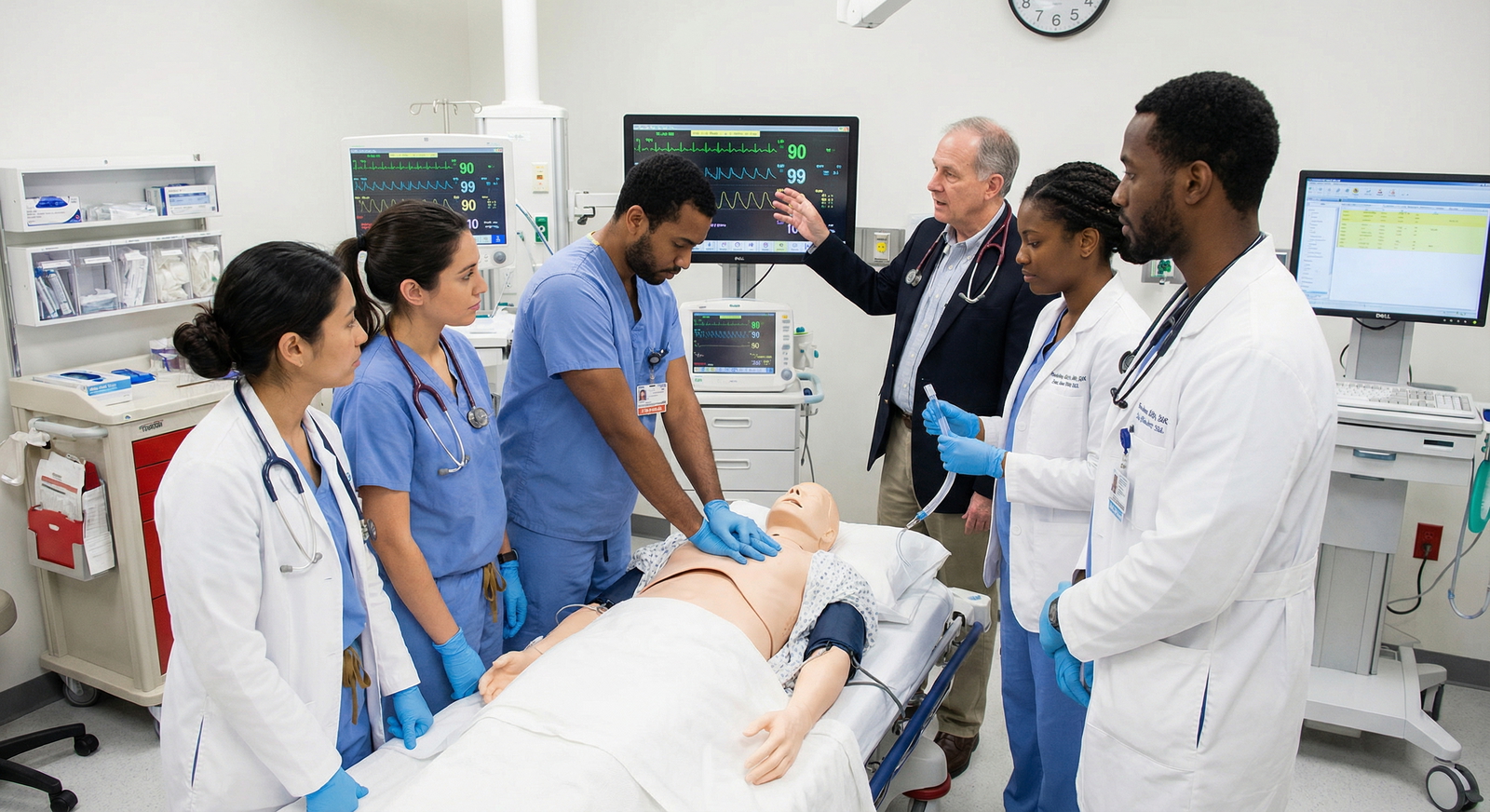
Understanding the Unique Landscape of Preliminary Medicine for IMGs
Preliminary Medicine (often called prelim IM) is a one-year, non-categorical internal medicine position. It is typically used as:
- The required clinical year before an advanced specialty (e.g., Neurology, Anesthesiology, Radiology, PM&R, Dermatology)
- A “foot in the door” for IMGs seeking U.S. clinical experience to strengthen applications for categorical Internal Medicine or other specialties
- A transitional bridge year while improving USMLE scores, research output, or networking
For an international medical graduate, the challenge is not just getting a prelim IM spot, but choosing programs that align with:
- Visa needs (J-1 vs H-1B)
- Long-term specialty plans (advanced match vs future categorical IM)
- Adaptation to U.S. hospital culture and documentation
- Realistic competitiveness and match chances
This IMG residency guide focuses specifically on how to research residency programs in Preliminary Medicine with a structured, stepwise program research strategy, so you avoid a random, emotional, or purely “brand name–driven” selection process.
Step 1: Clarify Your Goals Before You Start Researching
Before you type a single program name into Google or FREIDA, be explicit about why you’re pursuing a preliminary medicine year. This will shape everything about how you evaluate residency programs.
1. Are You Committed to an Advanced Specialty?
Common scenario: You have (or are actively seeking) an advanced position in:
- Neurology
- Anesthesiology
- Radiology (Diagnostic or Interventional)
- Physical Medicine & Rehabilitation (PM&R)
- Radiation Oncology
- Dermatology
- Ophthalmology
In this case, your prelim IM year should:
- Provide sufficient clinical foundation and responsibility
- Be compatible with your advanced program’s requirements (some want specific types of rotations)
- Not be so toxic or overworked that your learning and well-being suffer before your advanced training starts
Your priorities: workload, support, schedule flexibility, procedural exposure, and a healthy environment.
2. Are You Using Prelim IM as a Gateway to Categorical Internal Medicine?
Other IMGs aim to:
- Gain U.S. clinical experience
- Build relationships for strong letters
- Demonstrate performance in a U.S. ACGME program, then reapply to categorical IM or subspecialties
Your priorities:
- Programs with a history of converting prelims to categorical spots (either in their own program or others)
- Collegial culture where faculty advocate for strong performers
- Research or QI opportunities and good mentorship
- Reasonable call schedules that allow time to study and network
3. What Are Your Immigration and Personal Constraints?
As an international medical graduate, immigration issues are central:
- Visa sponsorship: J-1 vs H-1B (only some prelim programs offer H-1B, and many offer only J-1)
- Geographic obligations: family in a specific city or region, financial constraints, spouse/partner’s job, etc.
- State licensure rules: some states have limits related to attempt numbers or USMLE Step/COMLEX scores
Clarifying this early narrows your search and prevents you from spending hours on programs that can never rank you.
Step 2: Build Your Initial Program List Strategically
You should combine top-down tools (databases) with bottom-up intelligence (program-specific digging).
1. Use Databases to Generate a Broad List
Key tools for IMGs:
FREIDA (AMA Residency & Fellowship Database):
- Filter by:
- Specialty: Internal Medicine – Preliminary
- Visa sponsorship (J-1, H-1B)
- Program size and location
- Check program type: University, Community, or University-affiliated
- Filter by:
ERAS Program Search (when available):
- Confirms whether they participate in ERAS and NRMP
- Often lists basic requirements: USMLE scores, time since graduation, visa info
NRMP Data and Charting Outcomes:
- Helps you understand:
- Average scores for matched vs unmatched IMGs in Internal Medicine
- Number of programs applied to and interviews received
- Use this to gauge how competitive you are and how wide your net should be
- Helps you understand:
Create an Excel or Google Sheet to track:
- Program name
- Type (university/community)
- City & state
- Visa types accepted
- IMG percentage / diversity
- Minimum/average Step scores (if stated)
- Graduation year cutoffs (e.g., within 5 years)
- Application deadline
- Notes / pros / cons
This becomes your central program research strategy hub.
2. Narrow Using IMG-Focused Filters
Look for:
- Programs that explicitly state they accept and match IMGs
- A visible track record of international medical graduate residents on their website
- No rigid barriers such as:
- “No visa sponsorship”
- “USMLE attempts >1 not accepted”
- “Graduation > 5 years ago NOT considered”
As an IMG, targeting programs with historical IMG inclusion is much more efficient than shooting blindly at IMG-naïve institutions.

Step 3: Deep-Dive Into Each Program’s Website and Official Data
Once you have a broad list, you need to evaluate residency programs much more closely. This is where most IMGs either do extremely well or waste effort.
1. Confirm Core Practical Details
On each program’s website and FREIDA/ERAS listing, verify:
- Visa policy:
- Does the program state “J-1 only”? “J-1 and H-1B”? “No visas”?
- Does the institution (GME office) have explicit H-1B policies?
- USMLE/COMLEX requirements:
- Minimum scores (e.g., 220+ for Step 2 CK)
- Attempts allowed per step
- Required at the time of application (e.g., Step 2 CK mandatory)
- ECFMG certification timing:
- Some require certification by the rank list deadline
- Others by residency start date only
- Recent medical graduate status:
- Many limit to ≤5 or ≤7 years since graduation
- Note exceptions for candidates with new clinical/research experience
If any of these are incompatible with your profile, mark the program as “No” or “Reach/Unlikely” in your spreadsheet.
2. Assess Training Environment and Structure of the Preliminary Year
Unlike categorical IM, prelim IM residents are usually in the program for one year only. You need to understand:
- Rotation schedule:
- Number of ICU months
- Number of inpatient ward months
- Any elective time for your advanced specialty or research
- Call schedule and workload:
- Night float vs traditional call
- How many patients per intern on average
- Support systems: NP/PA, hospitalists, senior residents
Programs differ widely. Some prelim residents:
- Have very similar experiences to categorical interns
- Get strong procedural and critical care exposure
- Are integrated into teaching rounds and conferences
Others:
- Function mainly as service coverage
- Get minimal support or teaching
- Are overlooked compared to categorical track residents
Study the program’s “Curriculum” or “Preliminary Year” page carefully.
3. Look Closely at the Residents Page
The Residents or “Current Housestaff” section is especially valuable for IMGs:
Check for:
- Number of prelim vs categorical IM residents
- Countries of origin and medical schools
- Are there multiple international medical graduates, or only U.S. grads?
- Career paths of previous prelims:
- Some programs proudly share where their prelims matched for advanced specialties or categorical IM
- Look for evidence that alumni progressed to strong programs and specialties
Patterns to look for:
- A mix of DOs, IMGs, and MDs generally signals openness and diversity
- If all current residents are U.S. MDs from highly ranked schools, it may be highly competitive or less IMG-friendly
4. Understand Academic and Support Resources
For IMGs, structured support is crucial:
Identify:
- Formal orientation and onboarding: EHR training, communication workshops, simulation labs
- Educational structure: morning reports, noon conferences, grand rounds
- Mentorship and advising system: assigned faculty mentor, program director accessibility
- Research and QI opportunities: publications, posters, quality improvement projects
Even during a one-year prelim medicine year, these resources can significantly influence:
- How well you adapt to U.S. training
- The strength of future letters of recommendation
- Your ability to match into an advanced or categorical spot later
Step 4: Assess IMG Friendliness and Long-Term Value
Being an international medical graduate adds specific layers to program research. You want programs where IMGs thrive, not just “are tolerated.”
1. Identify Objective Markers of IMG-Friendliness
Strong indicators:
- Clear mention of visa sponsorship on the website or FREIDA
- Resident lists showing multiple IMGs from a variety of countries
- Success stories of IMGs in alumni pages
- Faculty with international backgrounds (often more understanding of your challenges)
Caution signs:
- Website highlights “IMGs welcome,” but residents are all U.S. MDs
- No mention of visa or IMGs in resident profiles
- Rigid USMLE cutoffs combined with no visa sponsorship
2. Evaluate Opportunities to Transition to Categorical or Advanced Positions
If your goal is to leverage a prelim year into something longer-term, research:
- Does the program historically offer categorical spots to strong prelim residents if positions become available?
- Does the program have affiliated:
- Neurology, Anesthesiology, Radiology, PM&R, or other advanced programs?
- A track record of taking their own prelims for these specialties?
This can sometimes be found under:
- “Where our graduates go”
- “Career outcomes”
- Program director messages or FAQs
If not listed, you may get these insights later by emailing residents or asking on interview day.
3. Assess Location, Cost of Living, and Support Systems
As an IMG, relocation may be international and expensive. Research:
- Cost of living in the city or town
- Neighborhoods where residents typically live
- Public transport vs car required
- Presence of cultural or community networks (especially for specific language or ethnic groups)
Websites, forums (e.g., Reddit, Student Doctor Network), and even Google Maps reviews of nearby areas can give a sense of safety and convenience.
Remember: a slightly less “famous” program in a supportive, affordable city may offer better quality of life, learning, and networking than a big-name, high-stress center.

Step 5: Go Beyond Websites – Use Networks, Social Media, and Direct Outreach
Program websites are curated. To truly evaluate residency programs, you must gather information from multiple real-world sources.
1. Use Social Media Strategically
Look up:
- Program’s official Instagram, Twitter/X, LinkedIn, or Facebook pages
- Photos and posts about residents, wellness events, conferences, and achievements
- Department or GME office accounts
- Give you a sense of institutional culture and priorities
What to look for:
- Do prelim residents appear in posts, or only categorical and fellows?
- Are wellness and diversity initiatives visible?
- Is the environment collaborative or hyper-competitive?
2. Leverage Alumni and Personal Networks
As an IMG, your strongest resource is often fellow graduates from your own medical school.
Steps:
Ask your dean’s office or alumni networks if any graduates:
- Matched to that specific prelim IM program
- Are in related programs at the same institution
Reach out via:
- WhatsApp or other alumni networks
Specific questions to ask:
- How are prelims treated compared to categoricals?
- Did they feel supported in getting strong letters and future positions?
- What is the workload really like vs what’s advertised?
- How fair and approachable are the program leadership?
Always be polite, concise, and respectful of their time.
3. Thoughtful, Targeted Emails to Programs
It is acceptable to email a program coordinator or chief resident after you have done basic research.
Examples of appropriate reasons to email:
- Clarifying visa sponsorship or H-1B availability for prelim residents
- Asking if older graduates or those with gaps are considered, if not clearly stated
- Confirming whether prelim residents can rotate in your future advanced specialty at that institution
Tips:
- Keep your email short and specific
- Mention that you have reviewed their website and FREIDA
- Do not ask questions easily answered online (this can reflect poorly)
Step 6: Compare and Prioritize Programs with a Structured Approach
With information collected, you must now prioritize which programs to apply to and, later, rank.
1. Create a Scoring System
In your spreadsheet, add columns to rate each program on a 1–5 scale (or similar) for factors important to you:
- Visa compatibility (J-1/H-1B)
- IMG-friendliness (resident composition, alumni stories)
- Geographic preference
- Workload/lifestyle balance
- Opportunities for future advancement (categorical, advanced specialties, research)
- Teaching quality and support
- Cost of living
You can then calculate:
- A total score
- Separate “Academic/Career Score” and “Lifestyle/Support Score”
This gives you an objective framework instead of relying on feelings about the name or reputation.
2. Balance Reach, Target, and Safety Programs
Based on your USMLE scores, CV, gaps, and graduation year, categorize programs as:
- Reach: Historically higher scores, mostly U.S. grads, or very competitive locations
- Target: Reasonable match for your academic profile, with some IMGs
- Safety: Programs with clear IMG inclusion, lower score thresholds, possibly in less popular locations
For most IMGs, an application spread could look like:
- 20–30% Reach
- 40–50% Target
- 20–30% Safety
Exact numbers will depend on your budget and competitiveness, but diversification reduces the risk of not matching.
3. Integrate Feedback from Interviews
As you progress to interview season:
- Add notes on:
- How interviewers treated you
- How honestly they discussed workload and culture
- What residents said “off-script”
- Update:
- “Perceived fit”
- “Supportiveness”
- “Likelihood to rank highly”
Your rank list should reflect not only what you thought before an interview but also what you learned during the visit.
Special Considerations for IMGs Pursuing a Preliminary Medicine Year
1. If You Already Have (or Expect) an Advanced Match
If you are already matched to an advanced program (e.g., Neurology starting PGY-2):
- Confirm that the prelim year meets the advanced program’s requirements:
- Number of internal medicine months
- ICU or emergency rotations
- Ask advanced program leadership if they recommend or avoid specific prelim programs locally
- Many institutions have an “integrated” or preferred prelim medicine year; those are often the smoothest path
2. If You Are Using Prelim IM as a Step Toward Categorical IM
In this case, your criteria shift:
- Focus on programs where:
- Faculty write strong, personalized letters
- Residents are allowed and encouraged to attend conferences, research, and interviews
- Ask current or past prelim residents:
- Did they feel supported in re-applying?
- Did attendings help them network or contact colleagues at other institutions?
A prelim year can be a powerful launchpad if used wisely and in the right environment.
3. Red Flags That Should Make You Cautious
Be cautious of programs where:
- Prelim residents:
- Are not listed on the website at all
- Report feeling like “cheap labor” with minimal teaching
- There is:
- Extremely high attrition or non-renewal rates
- Little resident independence or excessive micromanagement
- No formal feedback or mentoring process
Use forums and alumni networks to cross-check any concerns.
Putting It All Together: A Sample Program Research Strategy Timeline
To make this IMG residency guide practical, here’s a rough workflow starting 12–18 months before the Match.
12–15 Months Before Match
- Clarify your goals: advanced specialty vs gateway to categorical IM
- Review NRMP and specialty-specific data
- Start your base spreadsheet
- Generate a broad list from FREIDA/ERAS
10–12 Months Before Match
- Deep-review program websites in batches (e.g., 10–15 per week)
- Filter out programs incompatible with your visa, score, or graduation year
- Flag IMG-friendly programs
8–10 Months Before Match
- Start light outreach:
- Contact alumni/upper-year residents in attractive programs
- Follow programs on social media for cultural insights
- Refine your list into tentative:
- Reach
- Target
- Safety programs
Application Season (ERAS Opens)
- Finalize your program list using your scoring system
- Craft program-specific notes in your spreadsheet to help later with:
- Interview responses
- Thank-you emails
- Rank list decisions
Interview Season
- Take detailed notes after each interview:
- Culture
- Treatment of prelims
- Resident satisfaction
- Update scores and re-rank programs accordingly
By following this organized approach, you maximize your chances of choosing a prelim IM program that supports your clinical growth, visa needs, and long-term career objectives.
FAQs: Researching Preliminary Medicine Programs as an IMG
1. How many Preliminary Medicine programs should an IMG apply to?
The number depends on your competitiveness (USMLE scores, YOG, gaps, U.S. experience) and budget. Many IMGs apply to 30–60+ prelim IM programs, especially if they do not already hold an advanced position. If you already matched to an advanced specialty, you may focus on 10–25 carefully selected prelim programs, especially around the location of your advanced program. Use NRMP data and advice from mentors to calibrate your numbers.
2. How can I tell if a program is truly IMG-friendly?
Look at resident lists and photos more than website slogans. True IMG-friendly programs:
- Have multiple IMGs in current or recent classes
- Clearly state visa sponsorship policies
- Share success stories of IMGs in alumni or graduate outcomes
- Have faculty or leadership with international backgrounds
If IMGs are absent from residents pages and visa policies are vague or restrictive, the program is likely less IMG-friendly.
3. Should I prioritize big-name academic centers or community programs?
It depends on your goals and competitiveness:
- Academic centers:
- Often provide more research and subspecialty exposure
- Can be more competitive and may favor U.S. grads
- Community or university-affiliated programs:
- Often more accessible for IMGs
- May offer closer mentorship, better lifestyle, and more responsibility
For many IMGs in prelim IM, a supportive, teaching-oriented community or affiliated program can be more beneficial than a brand-name center with limited support.
4. Is it worth emailing programs to ask about my chances?
You should not email to ask “What are my chances?” or “Will you interview me?” Instead, email only when you have specific, professional questions not clearly answered online, such as:
- Visa sponsorship details
- Whether they consider older graduates with recent U.S. experience
- Clarification about prelim-specific curriculum
Always be concise, respectful, and show that you have already done your basic research. The purpose is to clarify fit, not to seek informal pre-screening.
By following this structured, evidence-based approach to how to research residency programs, you can make informed, strategic decisions about where to apply and ultimately where to train in your Preliminary Medicine year as an international medical graduate.