Understanding the Landscape: Vascular Surgery Training Pathways in the US
For an international medical graduate (IMG), vascular surgery in the United States is both highly rewarding and highly competitive. Before building your program research strategy, you need a clear understanding of what you are actually applying to.
Two main paths to becoming a vascular surgeon
Integrated Vascular Surgery Residency (0+5 Program)
- You match directly into vascular surgery from medical school (or equivalent).
- Duration: 5 years total (no separate general surgery residency).
- You become board-eligible in vascular surgery only.
- Typically offers very early and intensive exposure to vascular procedures, endovascular training, and imaging.
- These are often called “integrated vascular programs.”
Independent/Fellowship Pathway (5+2 Program)
- You first complete a 5-year general surgery residency, then apply for a 2-year vascular surgery fellowship.
- Total training: 7 years.
- Still a common path, but the number of positions is gradually shifting toward integrated spots.
This article focuses on how to research vascular surgery residency programs (0+5 integrated), but many of the strategies and tools apply equally to evaluating general surgery programs strategically if you plan to pursue the 5+2 pathway.
Why program research matters even more for IMGs
As an international medical graduate, you face additional hurdles:
- Visa sponsorship (J-1 vs H-1B)
- State licensing barriers for some schools
- Less familiarity with US clinical expectations and culture
- Possible bias and higher competition for limited spots
Because there are relatively few integrated vascular surgery residency positions nationwide, blind or superficial applications are a recipe for wasted effort and cost. A deliberate, targeted research approach is essential.
A strong IMG residency guide for vascular surgery starts with three core principles:
- Know yourself (profile, strengths, constraints).
- Know the programs (culture, training quality, IMG-friendliness).
- Match them intentionally (build a realistic, strategic list).
The rest of this article walks you step-by-step through a practical and detailed program research strategy tailored to IMGs targeting vascular surgery.
Step 1: Clarify Your Profile and Constraints Before You Start Searching
Before you type a single program name into Google, you must understand your own starting point. This will determine which programs are realistic and how you prioritize them.
Key elements of your profile
Examination performance
- USMLE Step 1: Now pass/fail, but some programs still use pass date and attempt history as a filter.
- USMLE Step 2 CK: One of the most important numeric data points.
- Attempts: Any failures must be considered when choosing programs; many competitive surgical programs avoid candidates with multiple attempts.
Medical school background
- Country and reputation of your medical school.
- Year of graduation (YOG). Many programs prefer more recent graduates (e.g., within 5 years).
- Clinical exposure: Strong surgery/vascular rotations, procedure-oriented experiences.
Clinical experience in the US
- US clinical experience (USCE) is particularly important for surgical fields.
- Types of experience:
- Observerships vs hands-on electives (sub-internships, externships)
- Duration: 3–6 months of relevant USCE is often beneficial.
- Quality: Rotations in academic vascular surgery divisions or tertiary surgical centers carry more weight.
Research and scholarly activity
- Publications (especially in vascular surgery, surgery, or related fields).
- Presentations at vascular or surgical conferences (SVS, AVF, etc.).
- Participation in quality improvement, database studies (e.g., VQI, NSQIP), or imaging research.
Language and communication
- Step 2 CS is discontinued, so letters of recommendation and clinical evaluations serve as evidence of communication skills.
- Strong, specific letters from US vascular or general surgeons are particularly valuable.
Non-academic constraints
These often shape where you can realistically train, even if you are competitive.
- Visa requirements
- Most IMGs require J-1 or H-1B visa sponsorship.
- Some vascular surgery programs do not sponsor any visas; others sponsor only J-1.
- Geographic limitations
- Family in a specific region?
- Preference for certain climates or cost-of-living levels.
- Personal resilience
- Are you ready for very intense training in a high-volume tertiary center?
- Or would you thrive better in a smaller, more supportive community-based setting with academic affiliation?
Actionable task
Create a one-page “Applicant Profile Summary” that includes:
- USMLE scores and attempts
- YOG and medical school
- USCE: type, location, duration
- Research: number and type of publications, presentations
- Visa needs
- Geographic preferences (must-have vs nice-to-have)
You’ll use this document as your reference point for all later steps in evaluating residency programs.
Step 2: Build Your Initial List — Where to Find Vascular Surgery Programs
Now that you understand your profile, it’s time to identify which programs exist and which might fit you. For an international medical graduate targeting an integrated vascular program, you must be systematic.
Core databases and tools
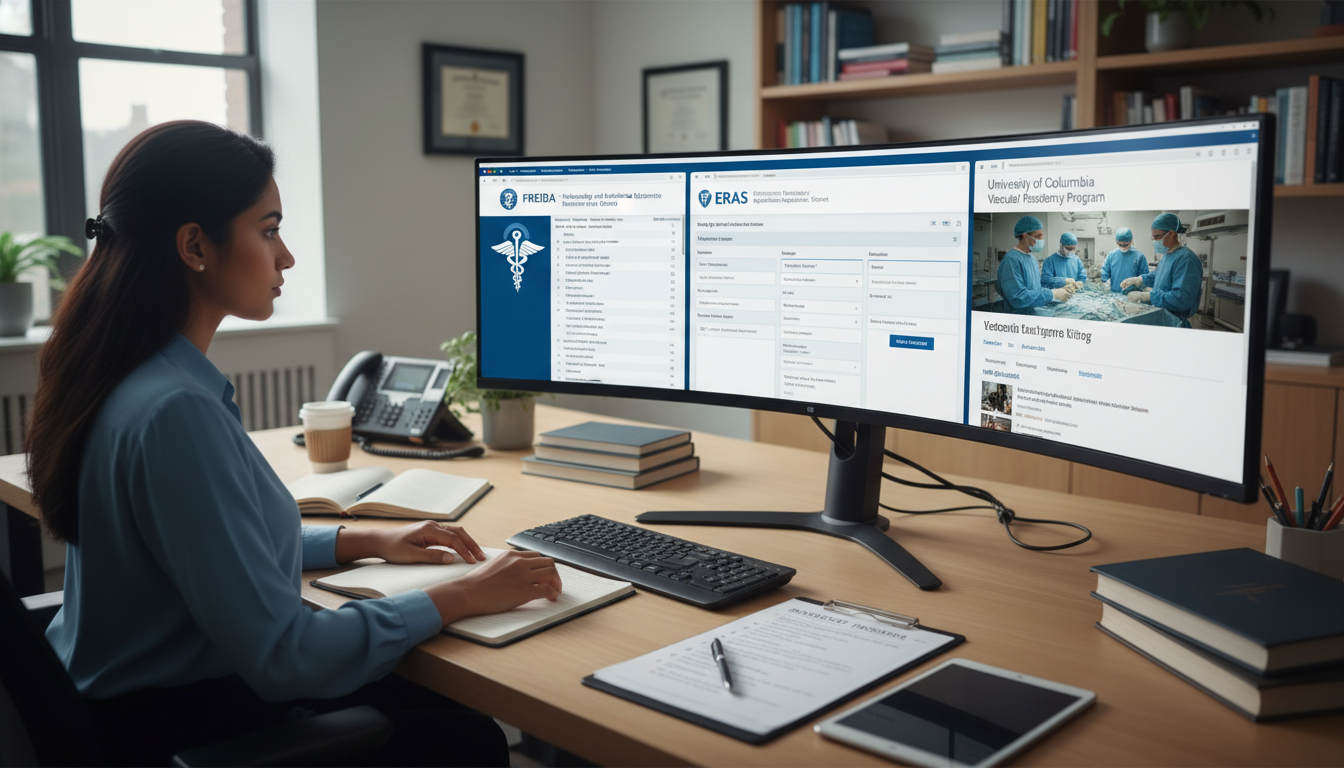
Freida (AMA Residency & Fellowship Database)
- Filter by:
- Specialty: “Vascular Surgery – Integrated (0+5)”
- Training type: ACGME-accredited programs only
- Visa sponsorship (J-1, H-1B) if available
- Freida gives:
- Program size and PGY distribution
- Program director name
- Basic contact and website information
- Filter by:
ERAS / AAMC Program Directory
- During application season, integrated vascular programs update their ERAS profiles.
- Check:
- Required documents (minimum number of LoRs, specific letters from vascular surgeons)
- Additional testing (e.g., TOEFL)
- Statements about IMGs, visas, or minimum score cutoffs
ACGME Public List
- Confirm that the program is currently accredited and identify:
- Program ID
- Accrediting status (continued accreditation vs initial accreditation)
- Confirm that the program is currently accredited and identify:
Program websites
- Many vascular surgery programs have dedicated web pages within a department of surgery or division of vascular surgery.
- Look for:
- “Vascular Surgery Integrated Residency” or “0+5 Vascular Surgery Residency”
- Rotations, operative experience, research structure
- Resident profiles and alumni
Society for Vascular Surgery (SVS)
- SVS often maintains a list of accredited training programs.
- May link to additional educational resources, research collaborations, and fellowships.
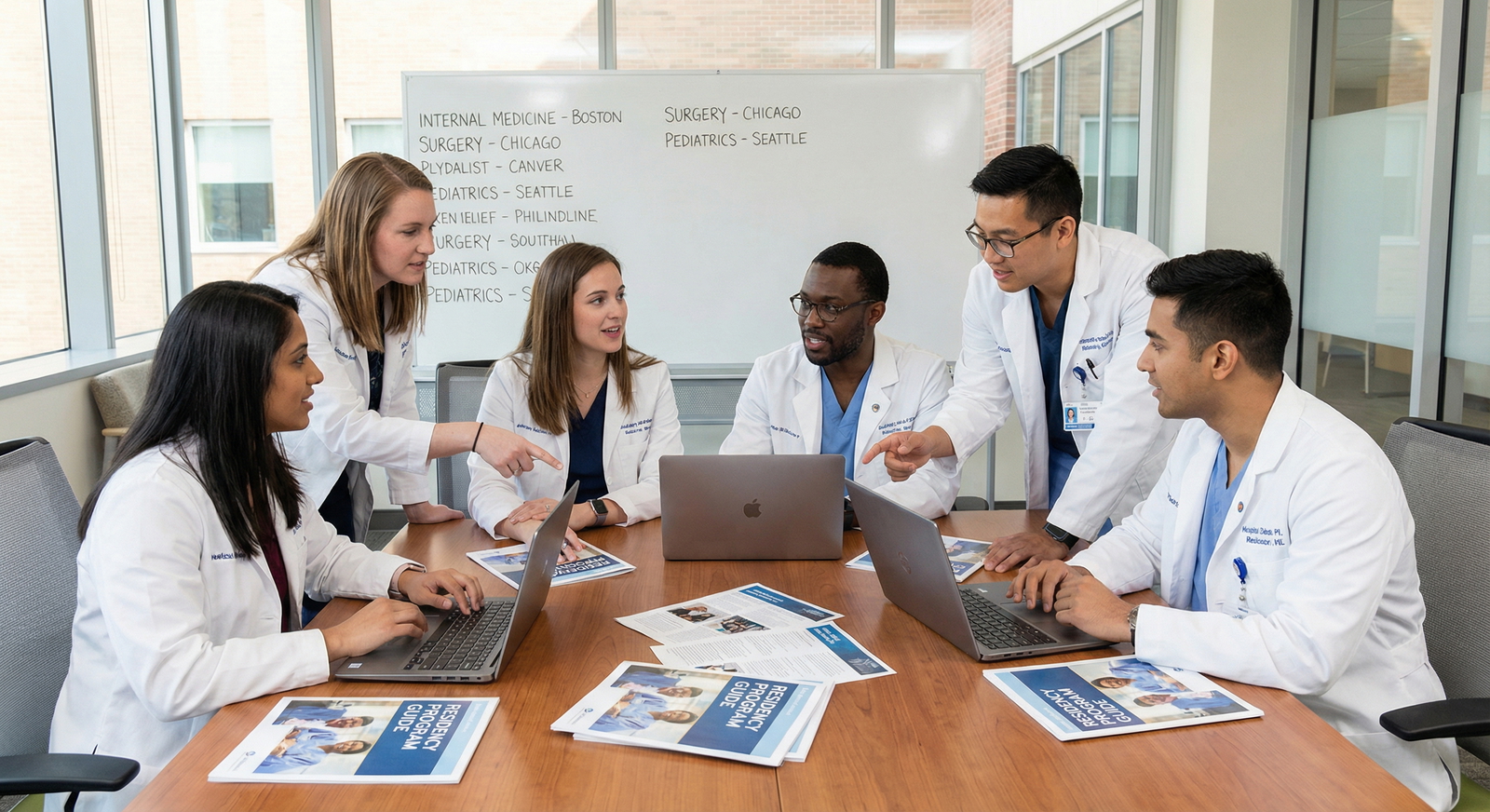
How to create your master program list
- Extract all integrated vascular surgery programs from Freida or SVS.
- Add them to a spreadsheet with columns such as:
- Program name and institution
- City, state, region
- Program website URL
- Visa sponsorship (J-1, H-1B, none)
- IMG presence (past or current)
- Contact email
- Notes about impression (e.g., strong research, community program, high-volume aortic center)
- Mark clearly which programs:
- Definitely accept IMGs and sponsor your visa type
- Possibly accept IMGs but unclear
- Explicitly do not accept IMGs or do not sponsor visas (eliminate these early)
At this stage, don’t over-filter based on competitiveness. The goal is to capture a comprehensive list and then evaluate and prioritize in more detail.
Step 3: Deep-Dive: How to Research Residency Programs in Detail
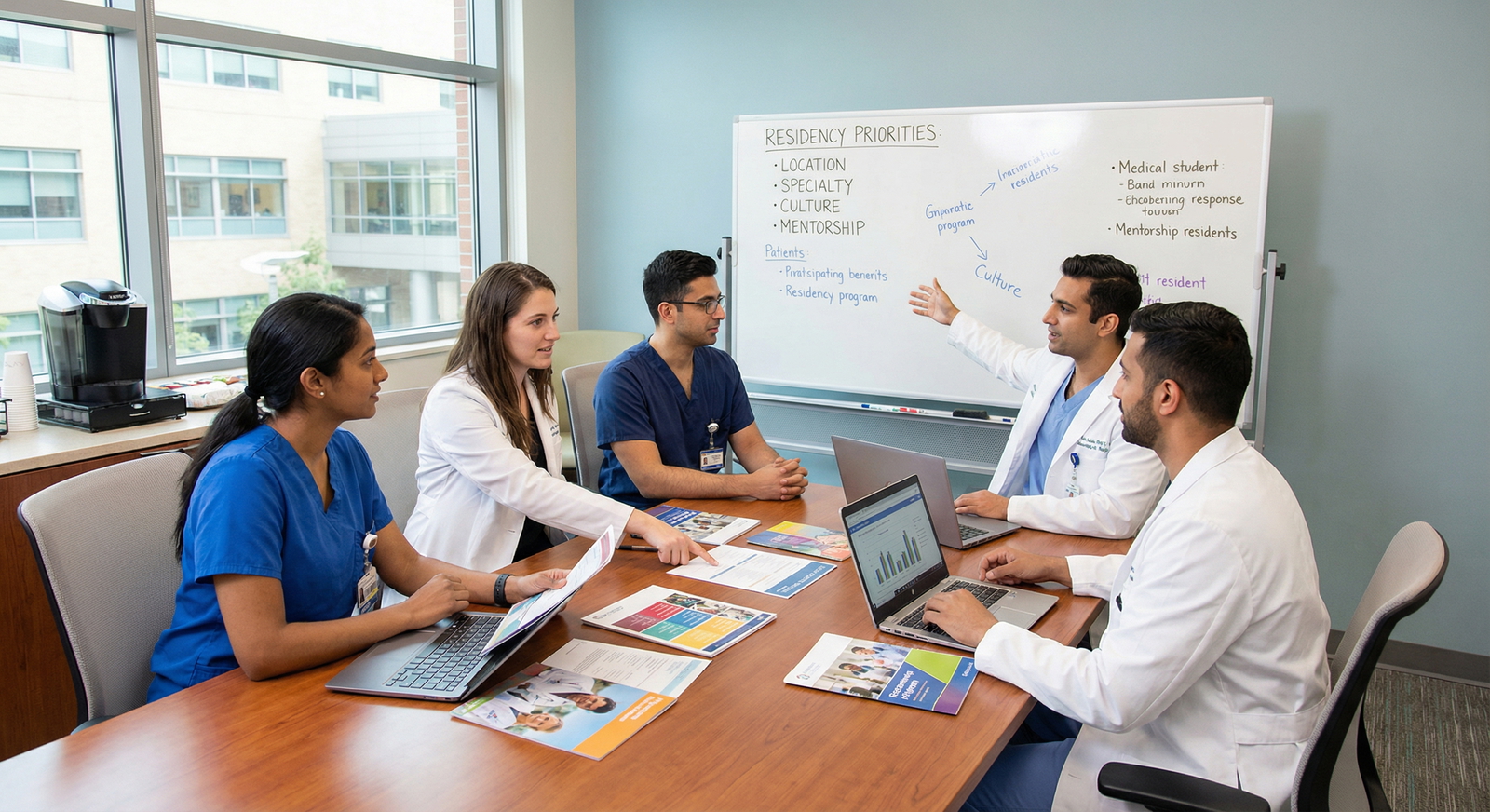
Once you have your master list, shift from “What programs exist?” to “Which programs are a good fit for me, as an IMG aiming for vascular surgery?” The key is to evaluate each program across several domains.
1. IMG-friendliness and visa policies
For an international medical graduate, this is non-negotiable.
Where to look:
- Program website “Eligibility” or “Applicant Information” page
- ERAS listing (often indicates whether IMGs are considered)
- Contacting the program coordinator via email (if unclear online)
Questions to answer:
- Does the integrated vascular program (or surgical department) currently have or recently had IMGs?
- Check resident bios and alumni lists.
- Look for names, medical schools, and countries.
- What visas are sponsored?
- J-1 only? J-1 and H-1B? None?
- Are there minimum USMLE score requirements?
- Some programs state: “We require Step 2 CK ≥ 235” or “No Step failures.”
Red flag phrases for IMGs:
- “We do not sponsor visas.”
- “We currently do not accept international medical graduates.”
- “Applicants must be graduates of LCME-accredited schools.” (Usually excludes IMGs.)
Eliminate programs that clearly do not work for your status. This alone can significantly narrow your list.
2. Clinical training environment and case volume
Vascular surgery is a highly technical field. You want robust exposure to:
- Open aortic surgery
- Endovascular interventions
- Carotid, peripheral, dialysis access, and venous procedures
- Vascular imaging and ultrasound
Sources:
- Program case logs, when posted
- Program curriculum page
- Resident or graduate testimonials
- Institutional annual reports or division of vascular surgery summaries
Key indicators:
- Affiliation with:
- Level 1 trauma centers
- Comprehensive stroke centers
- Tertiary/quaternary hospitals
- Use of hybrid ORs and advanced endovascular technology
- Presence of specialized services:
- Complex aortic center (thoracoabdominal, branched/fenestrated EVAR)
- Limb salvage programs
- Dialysis access programs
Describe in your spreadsheet whether each program appears to be high-volume tertiary, balanced academic-community, or small community-based.
3. Research opportunities and academic culture
Even if you are primarily clinically oriented, academic engagement strengthens your application and career development.
Research-related factors to evaluate:
- Does the integrated vascular program include dedicated research time (e.g., 6–12 months)?
- Are faculty actively publishing?
- Quick PubMed search of faculty names to gauge output and topics.
- Are residents presenting at national meetings (SVS, VESS, AVF)?
- Many program sites highlight resident awards and presentations.
- Is there access to:
- Vascular Quality Initiative (VQI) or similar databases
- NIH-funded or industry-sponsored trials
- Collaborative research with interventional radiology, cardiology, or neurology
For an IMG with research strengths, this can be a major differentiator and help offset limitations like older YOG or moderate scores.
4. Program culture, mentorship, and support
This is harder to quantify, but vital for your well-being and performance.
How to assess:
- Resident bios and profiles
- Do residents come from a mix of backgrounds (including IMGs)?
- Are there testimonials or “a day in the life” descriptions?
- Social media (Twitter/X, Instagram, LinkedIn)
- Many vascular programs showcase resident life, OR photos, and educational conferences.
- Look for signs of collegiality, inclusivity, and mentorship.
- Virtual open houses and information sessions
- These became common during and after COVID and often continue annually.
- Take notes on:
- How program leadership interacts with residents
- Opportunities for faculty-resident interaction
- Attitudes toward diversity and inclusion, including IMGs
Make a note for each program: e.g., “Strong mentorship vibe,” “Limited information about residents,” or “Leadership seems very research-focused but supportive.”
Step 4: Evaluate Programs Systematically — Creating a Scoring Framework
To avoid emotional or biased decision-making, develop a structured way of evaluating residency programs.
Build a simple scoring system
Create categories and assign points (e.g., 1–5). Tailor these to your priorities.
Example categories for an IMG vascular surgery applicant:
IMG-Friendliness (Weight: High)
- 1: No IMGs, no visa sponsorship.
- 3: Limited history with IMGs, J-1 only.
- 5: Multiple current or recent IMGs, clearly supportive policies.
Visa Support
- 1: No visa sponsorship.
- 3: J-1 only.
- 5: J-1 and H-1B, or explicitly flexible.
Clinical Volume & Case Diversity
- 1: Limited information; appears low-volume.
- 3: Standard case mix; general vascular exposure.
- 5: High-volume tertiary center with robust open and endovascular exposure.
Research and Academic Environment
- 1: Minimal publications, no structured resident research.
- 3: Some projects, optional research.
- 5: Dedicated research time, strong faculty publication record, regular national presentations.
Program Culture & Support
- 1: No visible resident presence; negative online comments.
- 3: Neutral; standard environment.
- 5: Emphasis on mentoring, team cohesion, diversity; positive resident quotes.
Geographic & Personal Fit
- 1: Undesirable or impractical for personal reasons.
- 3: Neutral.
- 5: Highly desirable region or location.
You can adjust weights—e.g., multiply IMG-friendliness and visa support by 2 if those are absolutely critical.
Example of program comparison
Imagine you are an IMG needing a J-1 visa with strong research but moderate Step 2 CK.
Program A
- No IMGs, no visa info, high-volume center, strong research.
- Score: IMG-friendliness 1, Visa 2, Volume 5, Research 5, Culture 3, Geography 3.
- Weighted total: moderately low because of IMG concerns.
Program B
- Two current IMGs, clearly states J-1 sponsorship, mid-volume, some research, supportive culture.
- Slightly less prestigious, but accessible.
- Score: IMG-friendliness 5, Visa 5, Volume 3, Research 3, Culture 4, Geography 4.
- Weighted total: high, strong target.
This framework helps you decide where to invest effort—writing tailored personal statements, attending open houses, or reaching out for research or observerships.

Step 5: Using Networking and Direct Communication to Refine Your List
Numbers and websites only tell part of the story. For an IMG in particular, direct communication can reveal crucial details that are not public.
Attend open houses and informational webinars
Integrated vascular programs often hold:
- Virtual open houses
- Q&A sessions with residents and faculty
- Specialty-focused sessions through SVS or institutional events
How to benefit:
- Prepare questions such as:
- “Do you currently have any international medical graduates in your program?”
- “Does your institution sponsor J-1 or H-1B visas for integrated vascular residents?”
- “What types of research are available to residents, and how are IMGs integrated into that work?”
- Take notes on:
- How transparent they are about IMGs and visas
- Whether they mention past successes with international graduates
Contact program coordinators (strategically)
If the website is unclear, send a polite, concise email to the program coordinator:
- Introduce yourself briefly (name, current position, country/medical school).
- State that you are an IMG interested in their integrated vascular program.
- Ask 1–2 specific questions only, for example:
- “Does your program consider applications from international medical graduates?”
- “Does your institution sponsor J-1 or H-1B visas for integrated vascular residents?”
Avoid sending your full CV or asking them to evaluate your chances—they cannot do that.
Leverage mentors and alumni
- Ask your US rotation attendings and home-country mentors if they:
- Know vascular surgeons or program directors in the US.
- Can introduce you for informational conversations.
- If there are alumni from your school in US surgical specialties, contact them:
- Ask about how to research residency programs specifically from an IMG perspective.
- Seek insight on which programs were receptive to their profiles.
These conversations can add unique, qualitative data that complements your more formal evaluation criteria.
Step 6: Constructing a Balanced, Strategic Application List
After thorough research, you should be ready to categorize programs and design a program research strategy that flows into your application plan.
Tier your programs
For vascular surgery, a heavily competitive field, you should have a mix of:
Reach programs
- Very strong academic centers, top case volume, highly competitive.
- May accept IMGs but historically few.
- You apply if you have standout metrics (high scores, strong US research, multiple vascular publications).
Target programs
- Solid academic-community mix.
- Clear history of accepting IMGs and sponsoring visas.
- Where your profile matches or slightly exceeds their average resident profile.
Safety or “realistic” programs
- Programs clearly open to IMGs, possibly in less popular locations.
- Moderate volume but solid training.
- Where your metrics exceed their minimums.
For integrated vascular surgery, total program numbers are relatively small, so “safety” is a relative concept—you’re managing probabilities, not guarantees.
Consider dual-path strategies
Because integrated vascular surgery spots are limited, many IMGs pursue parallel or staged strategies, such as:
- Applying to general surgery residency with the long-term goal of a vascular fellowship (5+2 pathway), while applying to a smaller set of integrated vascular programs that appear IMG-friendly.
- Doing a 1–2-year research fellowship in vascular surgery at a US institution to strengthen your application before applying.
Your program research helps you identify institutions where you might:
- Do research now.
- Later rotate as a visiting trainee.
- Eventually apply for residency or fellowship.
Frequently Asked Questions (FAQ)
1. How many integrated vascular surgery programs should an IMG apply to?
The exact number depends on your budget and profile, but given the small total number of integrated vascular programs, many applicants apply to nearly all programs that:
- Consider IMGs,
- Sponsor their required visa, and
- Match their minimum academic standards.
For some IMGs this might mean 10–20 programs; for others, fewer if visa or eligibility restrictions are limiting. The key is quality of fit, not only quantity—use your scoring framework to prioritize programs where you have a realistic chance and a good training fit.
2. Is it realistic for an IMG to match directly into an integrated vascular surgery residency?
It is difficult but not impossible. The number of IMG positions in integrated vascular programs is small, and competition is intense. IMGs who successfully match often have:
- Strong Step 2 CK scores
- Significant US clinical experience, ideally in surgery/vascular
- Vascular-focused research or publications
- Outstanding letters from US vascular or general surgeons
If your profile is not yet at that level, consider:
- Building a year or two of vascular research or clinical experience in the US.
- Targeting general surgery first with the goal of a vascular fellowship (5+2 pathway).
3. How can I tell if a vascular surgery program truly supports IMGs, beyond just saying they “accept them”?
Look for concrete evidence:
- Current or recent residents who are IMGs (check bios and alumni lists).
- Statements about visa sponsorship and IMGs on the website.
- Program leaders discussing IMGs positively in open houses.
- Feedback from IMGs who trained or rotated there (ask your network or online communities).
If possible, talk to a current resident or recent graduate who is an IMG. Their perspective will be more honest and practical than official statements alone.
4. Should I prioritize high-prestige academic centers over smaller, more IMG-friendly programs?
Prestige is valuable but should not overshadow fit, training quality, and visa/IMG policies. For many international medical graduates, a smaller but supportive program that:
- Actively mentors residents
- Provides solid operative experience and research opportunities
- Clearly supports IMGs and visas
may be a better realistic pathway than an elite center with minimal IMG presence. Ideally, apply to a mix of both, using your evaluation system to balance ambition with practicality.
By combining a clear understanding of your own profile, systematic data gathering, and thoughtful evaluation of each integrated vascular program, you can construct an informed, targeted application strategy. For an IMG, this deliberate approach turns an overwhelming process into a structured, manageable plan—and gives you the best possible chance to find a vascular surgery residency that fits both your professional goals and personal needs.