
Understanding Geographic Flexibility in the Los Angeles Residency Landscape
Geographic flexibility is one of the most underrated yet powerful levers you can use in the residency Match—especially in a hyper-competitive region like Los Angeles. When applicants say, “I really want to be in LA,” that statement can either help or hurt them depending on how clearly they define and communicate their geographic preferences.
In the context of LA residency programs, geographic flexibility means how willing you are to:
- Consider different neighborhoods and sub-regions within Greater Los Angeles
- Expand beyond a single metro area to surrounding counties or nearby cities
- Balance personal needs (family, cost of living, lifestyle) with training quality and career goals
This is tightly connected to:
- Geographic preference residency signaling (through ERAS, supplemental applications, and personal statements)
- Location flexibility match strategies (ranking programs and building your list)
- Making smart decisions among LA residency programs without over-concentrating all your options in one expensive, saturated market
Los Angeles is not a single monolithic place from a training standpoint. It’s an enormous, fragmented region with:
- Academic powerhouses (e.g., UCLA, USC-affiliated, Cedars-Sinai)
- Large county and safety-net systems (e.g., LAC+USC, Harbor-UCLA)
- Community-based and community-academic hybrids across LA County, Orange County, Inland Empire, and Ventura
Understanding how to be strategically flexible in this environment can significantly improve your odds of both matching in Los Angeles and being happy there.
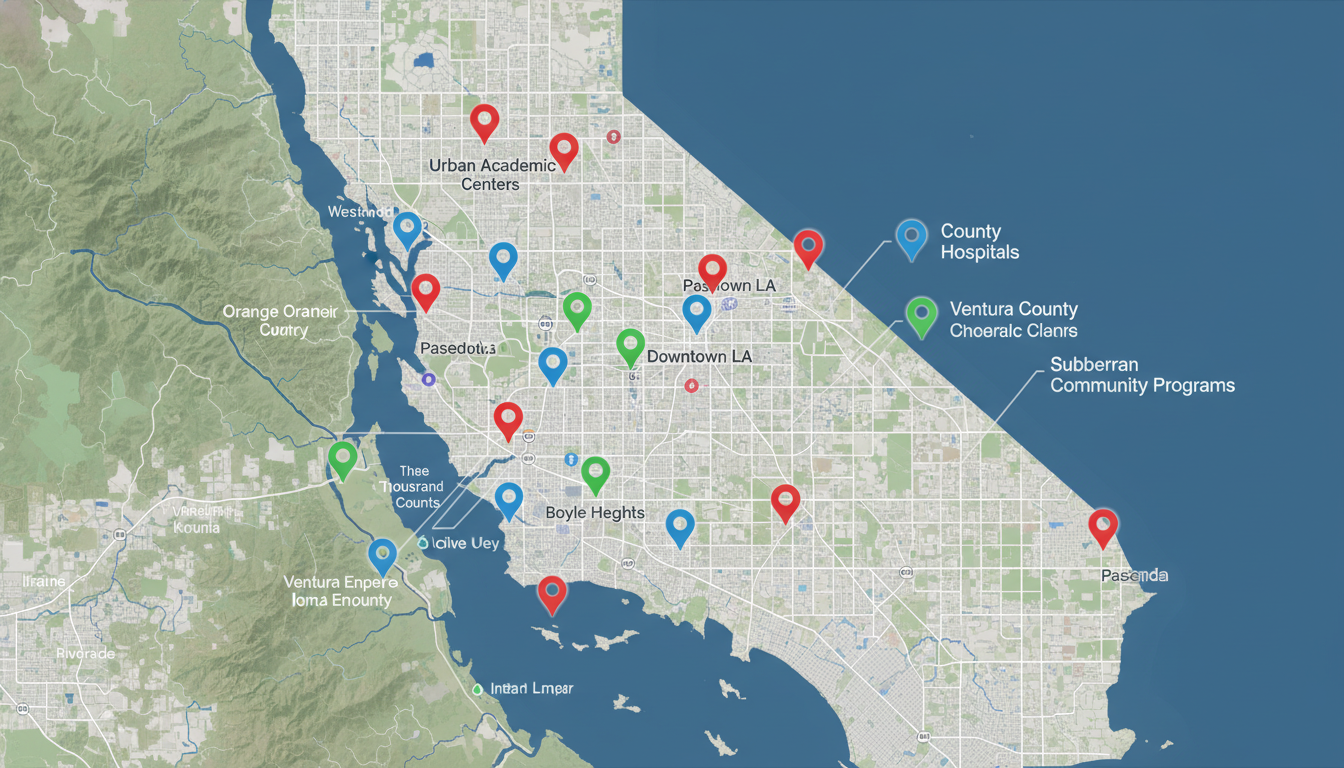
Mapping the Los Angeles Residency Ecosystem
Before you can be “geographically flexible,” you need to understand what “Los Angeles residency” actually includes. Think in layers of geography rather than a single dot on a map.
1. Core LA Urban Academic Hubs
These are the programs many applicants picture when they think of LA residency programs. Typically:
- Located near central LA, West LA, or close to major academic centers
- High-visibility names, often research-heavy
- Highly competitive for many specialties
Pros:
- Strong academic reputation
- Subspecialty exposure
- Networking and fellowship pathways
Cons:
- Very high cost of living (rent, parking, daily expenses)
- Intense competition for positions
- High traffic and longer commutes if you don’t live nearby
2. County and Safety-Net Systems
Large county hospitals and safety-net health systems are a cornerstone of training in Southern California. They often:
- Serve highly diverse, underserved populations
- Provide intense, hands-on clinical experience
- Have a strong mission-driven culture
Pros:
- Broad exposure to pathology and acuity
- Strong training in resource-limited settings
- Often robust camaraderie among residents
Cons:
- Often heavier workloads
- Infrastructure may be more variable (older facilities, limited resources)
- Commute and parking (large campuses, limited housing immediately adjacent)
3. Suburban and Regional Community Programs
Beyond “classic LA,” there are many high-quality community or hybrid community-academic programs in:
- San Fernando Valley
- San Gabriel Valley
- South Bay
- Orange County
- Inland Empire (Riverside, San Bernardino)
- Ventura County
Pros:
- Often better affordability (relatively)
- Shorter commutes if you live near the hospital
- Close-knit residency communities and strong generalist training
Cons:
- Less “name-brand” prestige (depending on your goals)
- Variable fellowship placement resources (specialty-dependent)
- Might require more explicit networking if you want academic careers later
The key shift in mindset:
Instead of “I want a Los Angeles residency,” think:
“I’m targeting the broader Southern California region, with defined preferences inside LA County and nearby counties.”
This framing is the foundation of an effective regional preference strategy for matching in or near Los Angeles.
Building a Geographic Preference Strategy for LA
Effective geographic planning for the Match has two parts:
- Internal clarity – knowing what you genuinely want and can live with
- External communication – signaling preferences honestly yet strategically to programs
Step 1: Define Your “Must-Haves” vs “Nice-to-Haves”
When thinking about LA residency programs, list out:
Must-haves (non-negotiables):
- Proximity to a partner, children, or caregiving responsibilities
- Specific visa or employment constraints
- Access to particular health systems (VA, county, etc.)
- Certain specialty resources (e.g., must have an accredited fellowship in-house)
Nice-to-haves (flexible factors):
- Specific neighborhood or side of town
- Exact prestige tier of the program
- Ocean vs inland location
- Having multiple sites vs single hospital
If “I refuse to commute more than 20 minutes” is truly non-negotiable, recognize that will greatly limit your LA options. If it’s a preference, explore programs a bit further out where you might get stronger training and a more realistic chance of matching.
Step 2: Expand Your Definition of “Los Angeles”
A practical regional preference strategy for LA often looks like concentric circles:
- Circle 1 – Core LA: West LA, Downtown LA, Hollywood, Koreatown, Mid-City
- Circle 2 – Greater LA County: Valley, South Bay, East LA, Pasadena area, Long Beach
- Circle 3 – Adjacent Counties: Orange County, Inland Empire, Ventura
A flexible applicant will:
- Apply broadly across Circles 1–3
- Communicate that LA County is a strong preference but is also open to adjacent regions
- Highlight reasons Southern California as a whole fits their long-term personal or professional goals
Step 3: Align Your Application Narrative
Your “Los Angeles residency” narrative should be:
- Specific enough to feel genuine
- Broad enough to keep doors open
Examples of balanced framing in your personal statement or interviews:
Overly narrow (risky):
“I must be in West LA because I can’t imagine living anywhere else.”
More flexible (better):
“My long-term goal is to establish my career and family life in Southern California. I have strong ties to the Los Angeles area, where my partner works, but I’m also very interested in programs throughout Greater LA and nearby regions that serve diverse communities.”
That communicates a geographic preference residency for LA and SoCal, but not a rigid demand for one ZIP code.
Signaling Location Flexibility in the Match
Programs in competitive regions pay close attention to your location flexibility match signals. They worry about:
- Applicants who say “LA or bust” but may not rank them realistically
- Overly narrow geographic preferences that increase risk of not matching
- Applicants who use LA as a “name” but have no real ties or rationale
Your job is to reassure them that:
- You have a real, sustainable reason to be in their region
- You understand the trade-offs (cost, commute, patient population)
- You’re genuinely open to variations within the LA and Southern California area
ERAS and Supplemental Application: How to Reflect Geographic Preference
If your specialty uses supplemental ERAS questions about geography or program signals, consider:
- Primary target region: Los Angeles and Southern California
- Secondary regions: Other West Coast or Sunbelt locations you’d consider
- Honest but flexible language: Don’t claim “nationally flexible” if you’ll only rank 3 cities
In geographic preference questions, samples of appropriate phrasing:
- “Primary preference: West Coast, with strong interest in Southern California, particularly the Los Angeles region.”
- “I am particularly interested in LA residency programs because of my family ties and long-term goal to practice in Southern California, but I remain open to other West Coast cities that serve similar patient populations.”
Avoid:
- Declaring LA as your only region if you are also heavily applying elsewhere (programs sometimes compare notes informally).
- Giving a contradictory narrative in different parts of your application.
Interviews: How to Talk about LA Flexibly and Honestly
During interviews, you will often be asked:
“Where else are you applying?” or
“How important is Los Angeles to you?”
You can answer in a way that preserves both honesty and flexibility:
Example response:
“My priority is Southern California because my partner’s work and our extended family are based here. Within that, Greater Los Angeles is my ideal location, but I’m also applying to programs in Orange County and the Inland Empire. I’m looking for strong training in [specialty] in a setting that serves diverse communities, which I’ve found across several programs in this region.”
This conveys:
- A clear geographic preference residency concentration
- Flexibility across multiple overlapping markets
- Alignment with mission and patient population, not just “I like LA weather”
Practical Trade-Offs: Cost of Living, Commute, and Lifestyle
Geographic flexibility in Los Angeles isn’t just about where you’ll train; it’s about whether you can function and thrive in that environment for 3–7 years.
Cost of Living: Being Realistic About LA
Residency salaries are relatively standardized. Housing costs are not. Core LA neighborhoods can consume a large proportion of your income.
Actionable steps:
- Research typical rents within 5–10 miles of each program you’re applying to
- Consider shared housing vs solo apartment, especially in central LA
- Compare “second tier” locations (e.g., further east or south) where housing is more accessible
Sometimes a slightly less famous program in a more affordable sub-region may give you:
- More financial stability
- Better work-life balance
- Less burnout from long commutes and financial stress
Commute and Traffic: Hidden Geographic Costs
In LA, 15 miles can mean 20 minutes at 2 a.m. and 90 minutes during rush hour. For residency, consider:
- Where do most current residents live? Ask during interviews or second looks.
- Is there resident parking on site? Paid vs free?
- Are night float or call shifts compatible with your transportation situation?
Example of flexibility in commute strategy:
- Willing to live in a less “trendy” but closer neighborhood to cut commute
- Choosing a program slightly farther from the coast but much closer to home
- Using public transit where feasible (rare but possible in some corridors)
Lifestyle and Support Systems
Ask yourself:
- Where are your support systems (family, partner, close friends) located relative to each program?
- How important is access to certain cultural or community spaces (religious centers, language-specific communities, etc.)?
- Will your non-medical partner find viable work options within a reasonable commute?
Sometimes, you might choose a program slightly outside central LA because:
- Your partner can find more job opportunities or a better commute
- You can live closer to extended family or childcare
- Your cultural community is more concentrated in a certain valley or suburb
This is all part of geographic flexibility—not just “where is the hospital,” but “where is my life going to work best?”

Crafting Your Rank List with Location Flexibility in Mind
By Match season, you’ll have interview impressions, updated priorities, and more clarity about where you might realistically end up. Now you need to translate your regional preference strategy into a real rank list.
Tiering Your Programs by Geography and Fit
A structured approach:
Tier 1: Ideal Combination (location + training)
- LA residency programs that fit your specialty goals
- Reasonable commute/housing plans
- Strong personal/family alignment
Tier 2: Training First, Broader Geography
- Programs in Greater LA and nearby counties (Orange, Ventura, Inland Empire)
- May require more flexibility on commute or neighborhood
- Strong clinical training and culture even if location is not perfect
Tier 3: High Flexibility Zone
- Programs either slightly beyond your initial geographic target or in less familiar areas
- Still acceptable if your primary goal is to match and train well
- Good to include if your application is mid-range or you’re in a competitive specialty
Within each tier, rank according to:
- Training quality and culture
- Your realistic day-to-day life (housing, commute, support)
- Long-term career goals (fellowship, academic vs community practice, regional job market)
Avoiding Common LA Geography Pitfalls in the Match
Over-concentrating on a few “name” LA programs
- For competitive specialties, this can be risky.
- Balance your list with a mix of academic, county, and community sites across the region.
Ranking based only on neighborhood prestige
- A “cool” ZIP code doesn’t offset weak training or toxic culture.
- Consider where current residents seem genuinely satisfied and supported.
Ignoring backup regions altogether
- If you truly must be in LA for non-negotiable reasons, accept a higher risk profile.
- If you can be somewhat flexible, adding a few non-LA programs can greatly increase your overall match safety.
Example: A Thoughtful LA-Focused Rank Strategy
For an internal medicine applicant with strong ties to LA but moderate competitiveness:
- Rank 1–4: Core LA academic programs where interviewed and felt strong fit
- Rank 5–10: LA County-based and community-academic hybrids in Valley and South Bay
- Rank 11–15: Orange County, Ventura, and Inland Empire programs with solid training
- Rank 16–18: A few non-SoCal programs in cities where they have secondary ties or long-term interest
This preserves:
- A real chance at an LA residency
- A high probability of matching somewhere with good training
- Geographic flexibility while honoring primary regional preferences
FAQs: Geographic Flexibility for LA Residency Programs
1. If my top choice is Los Angeles, should I say that in every interview, even outside LA?
No. Be honest and contextual. Outside of LA, you can say you have strong ties or preferences for Southern California but are seriously considering any program where you interview. For non-LA programs you would genuinely rank, explain what draws you there specifically (training model, patient population, mentors), rather than pretending they’re your “top” if that isn’t true.
2. Do LA residency programs prefer applicants who say they will only live in Los Angeles?
Not necessarily. Programs want residents who:
- Will actually rank them highly
- Understand LA’s challenges (cost, traffic)
- Have realistic, sustainable plans to live there
Stating “LA or nothing” without ties or a clear rationale can worry programs that you might not be prepared for the sacrifices involved or that you’ll leave if things get hard.
3. Is it better to apply to only LA residency programs if that’s where I want to end up long term?
For most applicants, no. Unless you have extremely strong metrics and a flexible specialty, applying exclusively to LA is risky because of competition and limited spots. A safer strategy is:
- Concentrate your applications in LA and Southern California
- Add a reasonable number of programs in other cities or regions that you’d accept
This preserves your chance of matching while still centering your geographic preference residency on Los Angeles.
4. How can I show regional commitment to Los Angeles if I didn’t grow up or study there?
You can still build a credible regional preference strategy by:
- Highlighting any West Coast or California connections (family, prior jobs, mentors)
- Discussing specific aspects of LA’s patient populations or health systems that interest you
- Attending virtual open houses and connecting with residents/faculty at LA programs
- Demonstrating knowledge of the realities of living in LA (cost, commute), not just the beaches and weather
Over time, your application should tell a coherent story: why Los Angeles, why Southern California, and how you’ll stay flexible within that region to find the best fit for your training and your life.