Introduction: Why Networking Matters in Residency Selection
Choosing where to train is one of the highest‑stakes decisions in your medical career. Your residency program will shape your clinical skills, professional identity, future job prospects, and even your long‑term work–life balance. While board scores, grades, and personal statements matter, they don’t tell the full story—and they don’t tell you what it’s actually like to live and work in a specific program.
Strategic networking bridges that gap.
Thoughtful, authentic connections with residents, attendings, alumni, and mentors give you access to insights you will never find in a brochure, on a program’s website, or in a virtual info session. Leveraging networking in your Residency Selection process helps you:
- Understand the true culture of programs
- Learn which programs actually support your goals (and which only claim to)
- Discover hidden opportunities and research positions
- Refine your Medical Career trajectory with clearer information and stronger Mentorship
This guide expands beyond basic tips to show you concrete Networking Strategies you can begin using today—no matter your school, specialty interest, or geographic constraints.
How Networking Strengthens Your Residency Selection Decisions
Networking is not about “schmoozing” or asking for favors. In the residency context, effective networking is about gathering high‑quality information, building genuine relationships, and aligning your career decisions with reality—not marketing.
Here’s how meaningful connections can transform your Residency Selection process.
1. Personal Recommendations That Go Beyond Brochures
Program websites tell you their goals. Residents and alumni tell you their realities.
Speaking directly with:
- Current residents
- Recent graduates
- Faculty or program leadership
- Attendings who have worked with multiple programs
gives you nuanced, practical information, such as:
- How call schedules work in practice vs. on paper
- How supportive attendings are when you struggle
- Whether feedback is timely, honest, and constructive
- How often residents feel burned out—and what the program does about it
- How easily residents find jobs or fellowships afterward
These personal recommendations can help you distinguish between two programs that look similar on paper but are very different in day‑to‑day experience.
Actionable tip:
When talking to someone from a program, ask specific, comparably framed questions, such as:
- “On a typical ward month, about how many hours a week do you work?”
- “What happens when a resident is struggling—academically or personally?”
- “If you had to choose again, would you still pick this program? Why or why not?”
2. Alumni Insights Into Long‑Term Career Impact
Alumni are uniquely positioned to reflect on how their residency prepared them for life after training. These Alumni Insights can reveal:
- How competitive graduates are for fellowships
- Whether graduates feel clinically confident in community vs. academic settings
- How well the program supported academic productivity (publications, presentations)
- How the program’s “name” plays out in specific regions or subspecialties
For example, you may discover that a mid‑tier academic program consistently sends graduates to top fellowships because of strong faculty advocacy and Mentorship—information that rarely appears in rankings.
Questions to ask alumni:
- “How did your residency shape your career options and confidence?”
- “Were there any limitations of your program that only became obvious after graduation?”
- “How did your program’s reputation actually matter when you applied for jobs or fellowships?”
3. Understanding True Program Culture
Culture is one of the most important—and most invisible—factors in Residency Selection. It affects:
- How comfortable you feel asking for help
- Whether mistakes are treated as learning opportunities or failures
- How residents interact with each other (collaboration vs. competition)
- The program’s actual stance on wellness and time off
Networking helps you triangulate culture by hearing from multiple voices at different levels (interns, seniors, chiefs, faculty). Look for consistency—or red flags—in their stories.
Culture‑focused questions:
- “How do residents support each other on hard days?”
- “Can you describe a situation where the program leadership really showed up for residents?”
- “Is there anyone people are afraid to work with, and why?”
- “How does the program respond to feedback from residents?”
4. Gaining Access to Hidden or Informal Opportunities
Not all opportunities are formally advertised. Through networking, you may learn about:
- Research projects needing a dedicated student
- Sub‑internship (away rotation) spots that are flexible or underutilized
- Quality improvement or education initiatives that strengthen your CV
- Informal mentorship relationships that later translate into strong letters
Some programs also develop impressions of applicants long before ERAS opens—through rotations, research collaborations, or introductions from trusted faculty. Networking can strategically place you on their radar earlier.
Important note:
Networking should never be used to circumvent fair selection or violate match rules. The goal is to show genuine interest, demonstrate professionalism, and align yourself with opportunities that are appropriate and ethical.
5. Personalized Guidance and Targeted Feedback
Experienced mentors and residents can offer tailored advice on:
- Which programs are realistic “reach,” “target,” and “safety” choices
- How to highlight your unique strengths in your personal statement and interviews
- How to address perceived weaknesses (e.g., Step scores, gaps, career changes)
- How to refine your specialty choice if you’re uncertain
A resident from a program you’re targeting may even:
- Review your personal statement for fit with their program’s values
- Suggest specific faculty to mention or meet during your rotation/interview
- Explain how their program evaluates applicants beyond scores
This individualized feedback is invaluable in a highly competitive environment.

Core Networking Strategies for Residency Selection Success
Once you recognize the value of networking, the next step is learning how to do it effectively and authentically. Below are practical strategies you can start implementing immediately.
1. Mastering Informational Interviews
Informational interviews are one of the most powerful Networking Strategies for residency.
What an Informational Interview Is (and Isn’t)
- Is: A structured conversation to learn about someone’s career path, their residency experience, and their perspective on programs or specialties
- Is not: A casual way to ask directly for a spot, a letter, or a favor
How to Set One Up
Identify potential contacts:
- Residents at programs you’re interested in
- Alumni from your medical school
- Faculty or attendings in your specialty of interest
- Physicians you’ve met at conferences or rotations
Reach out with a concise, respectful message. For example:
Dear Dr. Lopez,
I am a third‑year medical student at [Your School] interested in emergency medicine and exploring residency options. I’ve been impressed by your work at [Hospital/Program] and would be grateful for 15–20 minutes of your time to learn about your experience and any advice you have for applicants.
Thank you for considering,
[Your Name]Prepare 5–7 thoughtful questions in advance (and research their background so you don’t waste time asking things that are easily found online).
Making the Most of the Conversation
- Be on time and keep to the agreed duration
- Start with genuine curiosity, not an agenda
- Take brief notes (with permission)
- Ask if there is anyone else they recommend you speak with
- Always end with appreciation and a clear thank‑you
Then, follow up with a short email:
- Thank them for their time
- Mention 1–2 specific insights you found helpful
- Optionally update them later when you apply, rotate, or match
This is how you build authentic, professional relationships—not one‑off transactions.
2. Leveraging Medical Associations and Specialty Societies
Professional organizations are underestimated networking goldmines.
Why They Matter for Your Medical Career
National and regional organizations (e.g., AMA, ACP, AAFP, ACOG, ACEP, etc.) often offer:
- Student membership rates
- Mentoring programs pairing students with residents or faculty
- Conferences with residency program booths, specialty sessions, and alumni gatherings
- Committees or interest groups where you can become active and visible
These settings are ideal places to talk with people from multiple programs in a friendly, low‑pressure environment.
How to Use Associations Strategically
- Join at least one general and one specialty‑specific organization
- Attend annual or regional meetings when possible
- Introduce yourself to speakers after sessions
- Participate in poster presentations to showcase your interests
- Volunteer for a committee or student section—great for long‑term networking and leadership experience
Over time, these contacts can become mentors, letter‑writers, or advocates.
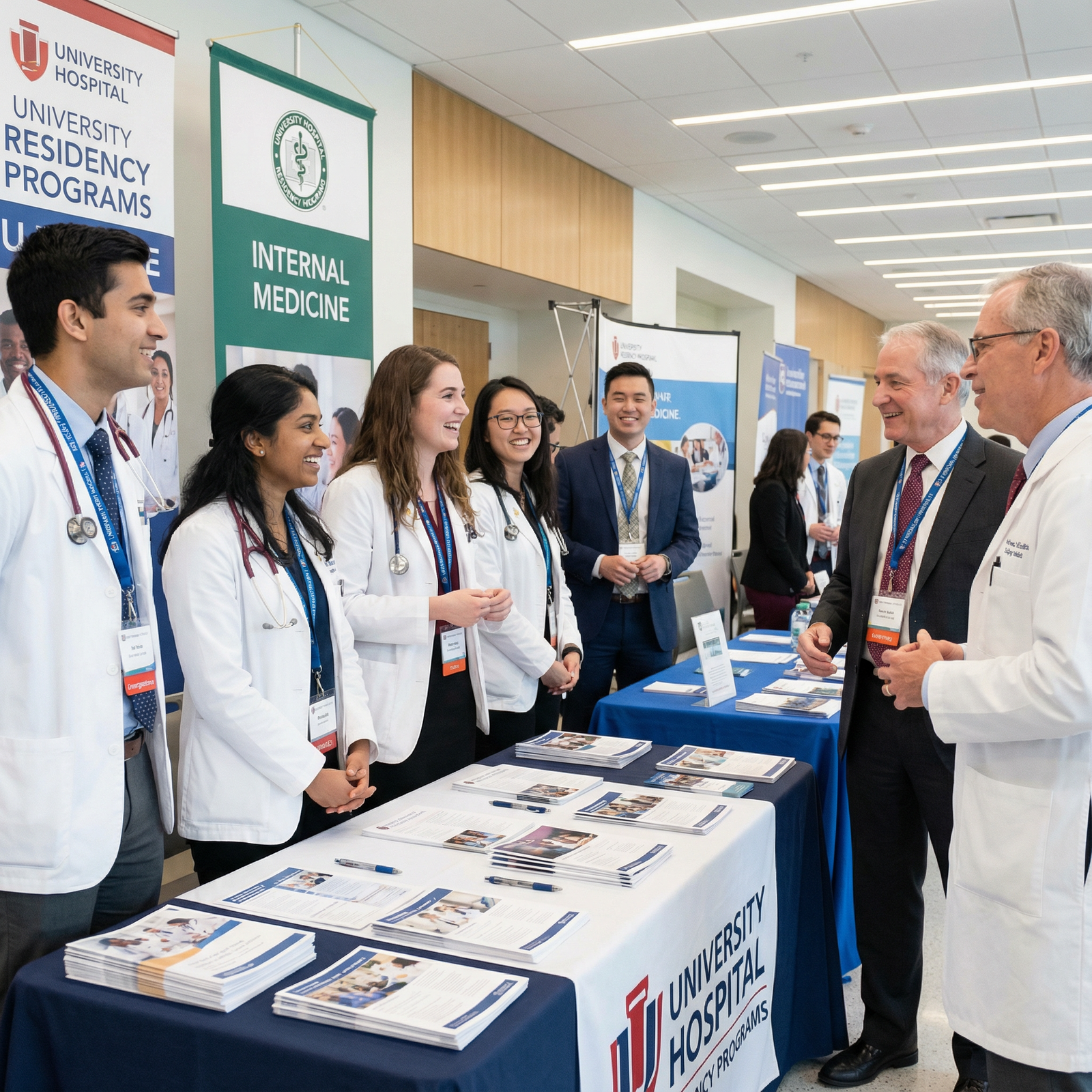
3. Using Conferences, Workshops, and Residency Fairs Effectively
Conferences and residency fairs condense a year’s worth of networking into a few days—if you go in with a plan.
Before the Event
- Review the list of participating programs or speakers
- Highlight your top 5–10 targets
- Prepare a brief introduction (the classic “elevator pitch”) that covers:
- Who you are
- Your level (e.g., MS3)
- Your specialty interest
- One or two areas of particular interest (e.g., global health, ultrasound, medical education)
During the Event
At residency fairs or booths:
- Ask focused questions, such as:
- “What type of resident tends to thrive in your program?”
- “How does your program support resident wellness and mental health?”
- “What do recent graduates typically go on to do?”
- Collect contact information (or ask if you may follow up via email)
- Write a brief note on each card or in your phone about what you discussed
After the Event
- Within 3–7 days, send a short, personalized email:
- Thank them
- Mention something specific from your conversation
- Express ongoing interest and possibly ask one follow‑up question
Consistent, professional follow‑up is what transforms a brief interaction into a relationship.
4. Building a Strategic Online Presence
In the digital era, your online profile is part of your networking toolkit.
Platforms to Prioritize
- LinkedIn: Best for professional networking, alumni connection, and showcasing your experiences
- Twitter/X: Useful for following thought leaders in your specialty, learning about new research, and engaging in professional conversations
- Specialized forums: Specialty‑specific groups, alumni communities, or curated Facebook/Slack groups for medical trainees
How to Optimize Your Online Presence
- Use a professional headshot and clear headline (e.g., “MS3 interested in Internal Medicine and Medical Education”)
- Write a concise summary highlighting your interests and goals
- List experiences relevant to your desired specialty (research, leadership, advocacy, QI)
- Engage thoughtfully with others’ content—commenting, asking questions, or sharing relevant articles
If you reach out to a resident or faculty member online, keep messages professional, brief, and purpose‑driven. Always assume screenshots last forever—maintain professionalism at all times.
5. Maximizing Mentorship and Faculty Relationships
Mentorship is one of the most powerful forces in your Medical Career trajectory. A strong mentor can:
- Offer honest, personalized guidance about your competitiveness
- Help you refine your program list and interview strategy
- Connect you with colleagues at other institutions
- Advocate for you with letters and behind‑the‑scenes conversations
Finding and Working with Mentors
- Start with attendings or residents you naturally connect with during rotations
- Ask explicitly: “Would you be willing to serve as a mentor as I navigate residency applications?”
- Come prepared to meetings with questions and updates
- Respect their time and follow through on their advice whenever feasible
Over time, these Mentorship relationships often expand your network exponentially, as mentors introduce you to their colleagues, co‑authors, and alumni contacts.
6. Tapping Into Your School’s Alumni Network
Most medical schools have formal or semi‑formal alumni structures, from searchable databases to informal lists. This is an underused but powerful source of Alumni Insights.
How to Use the Alumni Network
Ask your career office or alumni office how to access residency alumni data
Filter for alumni in your specialty of interest and/or at programs you’re considering
Reach out with a respectful introduction as a fellow alum, e.g.:
Dear Dr. Chen,
I’m a fourth‑year student at [Your School] applying in pediatrics and very interested in learning more about [Program Name], where you trained. As a fellow [School] alum, I’d greatly appreciate 15 minutes of your time for advice about the program and the application process.
Sincerely,
[Your Name]
Alumni often feel a sense of loyalty to their school and are genuinely happy to help.
7. Informal Resident Connections: The Insider View
Some of your most candid, high‑yield insights will come from honest conversations with current residents.
Ways to Connect Informally
- During clinical rotations (especially at teaching hospitals)
- Through friends a year or two ahead of you
- During away rotations or sub‑internships
- Via introductions from mentors or faculty
Invite a resident for coffee or a quick lunch and frame the conversation clearly:
- “I’d love to hear what you think are the best and hardest parts of your program.”
- “If you were advising a student applying here, what would you tell them to pay attention to on interview day?”
Residents are often refreshingly honest about:
- Which rotations are toughest
- How approachable the program director is
- Whether the program is improving, stagnating, or declining
- How residents are treated during crises (illness, pregnancy, family emergencies)
8. Following Up and Maintaining Relationships Over Time
Networking is less about single interactions and more about longitudinal relationships.
Simple Ways to Maintain Connections
- Send an occasional brief update:
- After Step exams
- When you decide on a specialty
- After submitting your applications
- Post‑Match (to share where you ended up and thank them)
- Share good news and specific ways their advice helped you
- Be respectful of boundaries—no spamming, and keep emails concise
Later in your career, you’ll be able to pay this forward to future students and residents, continuing the cycle of professional support.
Case Example: Networking Shaping a Successful Match
Consider Alex, a third‑year medical student initially torn between internal medicine and anesthesiology. Rather than relying solely on online resources, Alex used networking strategically:
Mentorship:
Alex met with an internal medicine attending who had trained at a well‑regarded academic program. That mentor introduced Alex to a recent alum now at a top fellowship, who shared candid Alumni Insights about the strengths and limitations of that residency.Informational Interviews:
Alex scheduled brief Zoom meetings with residents from three different anesthesiology programs, asking about call schedules, OR autonomy, and fellowship prospects. One resident mentioned a lesser‑known program that was very strong in regional anesthesia and teaching—perfectly aligned with Alex’s interests.Conferences and Associations:
By attending a regional specialty conference and presenting a poster, Alex met faculty from several programs. Those conversations clarified which environments felt collaborative and resident‑focused.Refined Program List:
Combining all of these insights, Alex built a more targeted program list—prioritizing places with strong Mentorship, supportive culture, and proven fellowship placement.Outcome:
On interview day, Alex could ask precise, well‑informed questions and articulate fit convincingly. That depth of understanding came through. Alex matched into a top‑choice program where the culture and training environment matched what had been described through networking—not just what was promised online.
Networking did not “get” Alex a spot; it helped Alex make smarter decisions, present a more authentic application, and find the program where success was most likely.

FAQs: Networking and Choosing the Right Residency Program
1. When should I start networking for residency selection?
Ideally, begin in your third year (or earlier if you already have a strong specialty interest). However, it’s never “too late”:
- Pre‑clinical years: Explore specialties, attend interest groups, and meet mentors.
- Third year: Talk to residents on rotations, request informational interviews, join specialty societies.
- Fourth year: Deepen connections at programs you’re targeting, especially during sub‑internships and away rotations.
The earlier you start, the more organic and less rushed your relationships will feel.
2. I’m introverted—how can I network without feeling inauthentic?
You don’t need to be outgoing or “salesy” to network effectively. Focus on:
- One‑on‑one conversations rather than big group events
- Thoughtful, well‑researched questions instead of small talk
- Written follow‑ups (email, LinkedIn) where you may feel more comfortable
- Quality over quantity—five genuine connections beat 50 superficial ones
Remember, most physicians enjoy helping students; asking for honest advice is not bothersome when done respectfully.
3. Can networking really influence whether I match at a particular program?
Networking alone will not override core selection factors like exam performance, letters, and evaluations. However, it can positively influence your outcome by:
- Helping you choose programs where you are truly a good fit
- Allowing you to speak more convincingly about why you belong there
- Making you a familiar, professional name to residents or faculty before application season
- Ensuring your application highlights qualities that specific programs value
Think of networking as improving fit and clarity, not as a way to bypass fair selection.
4. How do I avoid crossing ethical lines while networking?
Stay well within match and professionalism boundaries by:
- Never directly asking someone to “get you into” their program
- Not requesting confidential information about selection processes or applicants
- Avoiding any suggestion of quid‑pro‑quo (e.g., “If you do X, I’ll do Y”)
- Being honest about your credentials, scores, and experiences
Focus on learning, mentorship, and insight—not manipulation or favoritism.
5. How do I keep track of all the people I meet and the programs I learn about?
Treat networking like any other important project:
- Create a simple spreadsheet or note with:
- Name, role, and institution
- Date and context of interaction
- Key takeaways (program strengths/concerns, culture notes)
- Whether and when you followed up
- After each conversation, jot down 3–5 quick bullets while details are fresh
- When building your rank list, review these notes to ground your decisions in real conversations, not vague impressions
By integrating intentional networking into your Residency Selection strategy, you move beyond glossy brochures and generic online reviews. You gain nuanced, firsthand insight into program culture, long‑term outcomes, and daily realities—while simultaneously building a supportive professional network that will follow you throughout your Medical Career.
Start small, be genuine, and stay organized. The relationships you build now can guide you not only to the right residency program, but also toward a career defined by purpose, mentorship, and sustainable success.