Understanding the Landscape: Clinical Informatics Pathways for MD Graduates
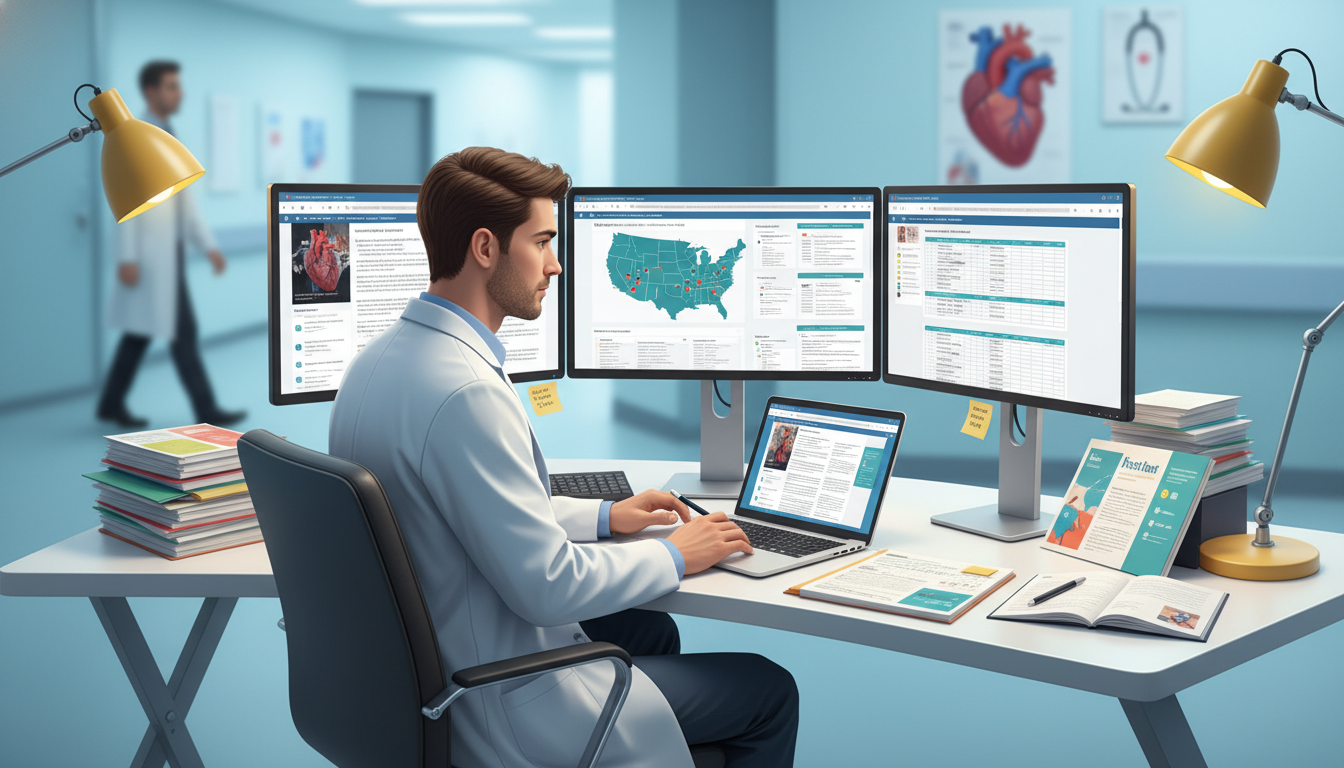
For an MD graduate interested in Clinical Informatics, “how to research residency programs” is more complex than in many other specialties. Clinical Informatics is still an emerging, highly specialized field that sits at the intersection of medicine, data science, and health IT training. Before you even begin building a program research strategy, you need to understand the training pathways and where informatics fits into the allopathic medical school match.
Core Pathways into Clinical Informatics
Traditional Residency → Practice + Board Certification (Pathway A)
- Complete an ACGME-accredited residency (e.g., Internal Medicine, Pediatrics, EM, Pathology, Family Medicine).
- Practice clinically and gain informatics experience (e.g., EHR optimization, quality improvement, data analytics).
- Sit for the Clinical Informatics board exam (if eligible; rules evolving and time-limited practice pathways are phasing out).
Traditional Residency → Clinical Informatics Fellowship (Pathway B)
- Complete a core residency and become board-eligible/board-certified in that specialty.
- Apply to a 2-year ACGME-accredited Clinical Informatics fellowship.
- After fellowship, sit for the Clinical Informatics sub-specialty boards.
Integrated or Dual-Focus Training (Pathway C)
- Less common and evolving.
- Some programs strongly integrate informatics into residency or offer combined tracks (e.g., IM + informatics scholarly concentration, informatics chief resident roles).
- Still, you must match into a core residency first; Clinical Informatics is not a standalone NRMP residency specialty.
For an MD graduate residency applicant, the allopathic medical school match will almost always be into a core clinical specialty, not Clinical Informatics itself. However, your program research strategy should prioritize residencies and institutions that:
- Have robust health IT infrastructures (Epic, Cerner, custom EMR, advanced analytics).
- Offer exposure to informatics projects or rotations.
- Host a Clinical Informatics fellowship, or are strongly connected to one.
- Maintain formal or informal tracks, certificates, or degree programs (e.g., MS in Biomedical Informatics, MPH with data science focus).
In other words, you’re not just choosing a residency—you’re choosing a platform from which you can build a future in Clinical Informatics.
Step 1: Clarify Your Informatics Goals and Training Priorities
Before you dive into evaluating residency programs and fellowships, you need a clear internal roadmap. The “best” program will depend on what kind of informatician you want to become.
Reflect on Your Informatics Identity
Ask yourself:
Do you see yourself primarily as:
- A clinician-leader in health IT (e.g., CMIO, CNIO, Chief Digital Officer)?
- A data scientist / clinical AI developer in health care?
- A workflow and quality improvement expert focused on EHR usability and safety?
- An academic researcher in informatics, decision support, or digital health?
How much time do you want to spend:
- Seeing patients clinically?
- Working on EHR tools, dashboards, or decision support?
- Conducting clinical or translational research?
- Teaching or training others in health IT?
Do you want formal degrees or certificates in addition to residency/fellowship?
- MS in Biomedical Informatics
- MPH with concentration in informatics or epidemiology
- MBA with focus on healthcare management and digital health
Your answers will guide how to research residency programs and institutions that align with your desired mix of:
- Clinical volume
- Protected time for projects
- Access to mentors and data
- Degrees and formal educational infrastructure
Define Your Time Horizon
Consider your likely path:
- Short term (Residency years 1–3 or 1–4):
- Seek programs with early exposure to informatics—committees, EHR optimization, QI projects, analytics teams.
- Mid term (Post-residency 2–5 years):
- Plan for a Clinical Informatics fellowship or alternative structured informatics training (e.g., a funded research fellowship).
- Long term (5–10+ years):
- Aim for leadership roles (CMIO, medical director of informatics) or academic positions.
Once you’ve articulated your priorities, you’re ready to build a targeted program research strategy.
Step 2: Build a Target List of Informatics-Friendly Institutions
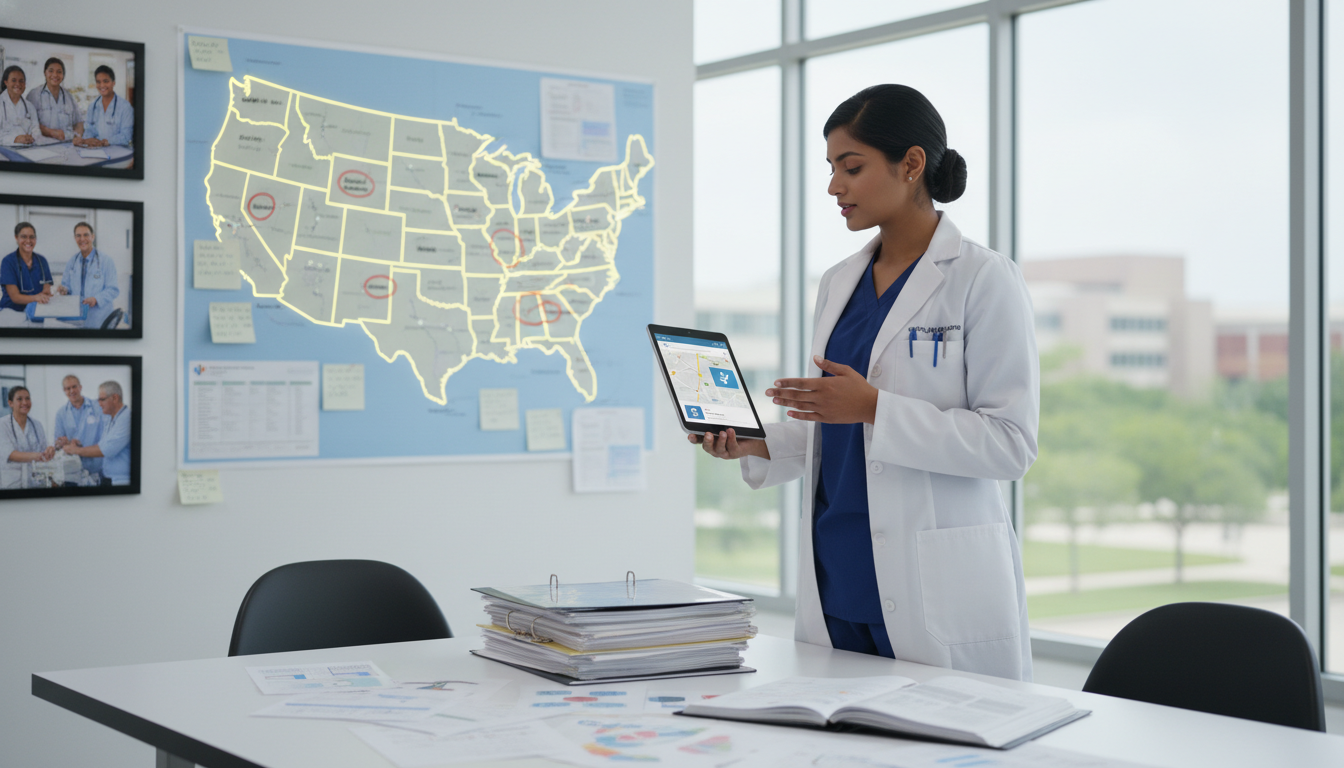
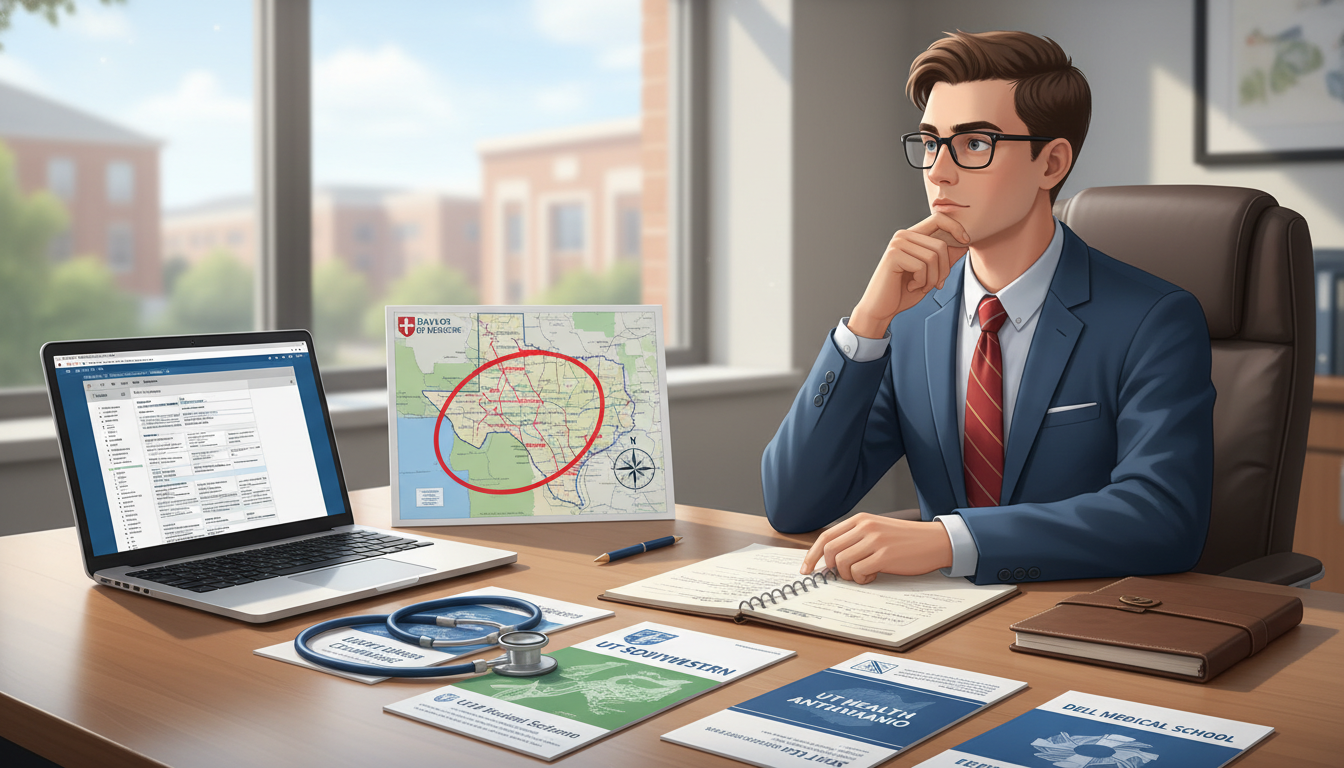
Your next task is to assemble a broad initial list of residency programs and institutions where Clinical Informatics is active and valued. This list will later be narrowed based on fit.
Start with Clinical Informatics Fellowships
Even though you’re entering through residency, Clinical Informatics fellowship locations are one of the best proxies for informatics-rich environments.
Actions:
Search ACGME and specialty society lists
- Use the ACGME public list of Clinical Informatics fellowships.
- Check AMIA (American Medical Informatics Association) for recognized programs and academic biomedical informatics departments.
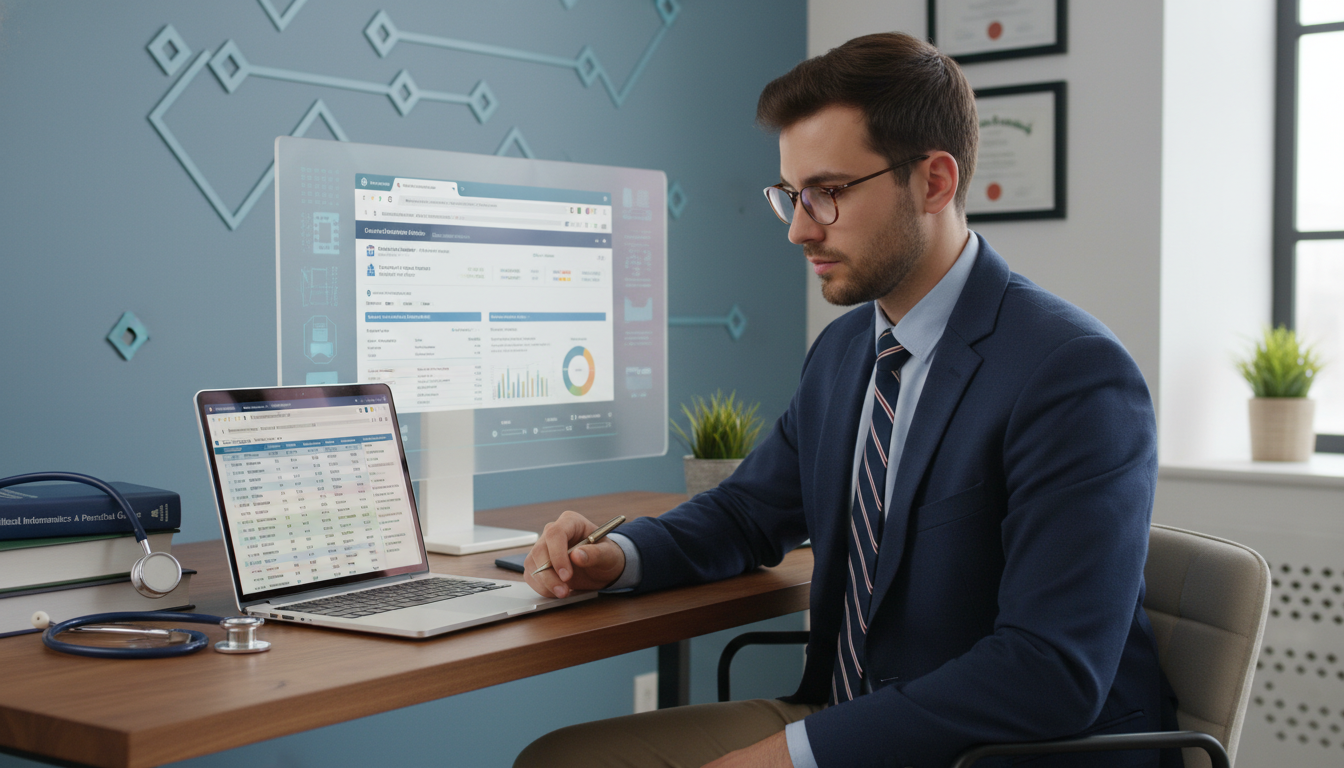
Create a spreadsheet with:
- Institution name
- Clinical Informatics fellowship specialty base (often IM, Pediatrics, Pathology, EM, Anesthesiology, Family Medicine)
- Associated residency programs at that institution (e.g., Internal Medicine, Pediatrics, EM).
- Key teaching hospitals and health system EMRs used.
Prioritize institutions that:
- Have an established or large Clinical Informatics division.
- Are known for digital innovation (telehealth, AI tools, analytics).
- Act as regional or national leaders in health IT (e.g., Epic “showcase” sites, AMIA leadership involvement).
Mine Institutional Websites for Informatics Keywords
Once you’ve identified institutions, you’ll refine your MD graduate residency list using detailed website research.
On each residency program’s website, look for:
Curriculum pages:
- “Informatics,” “Quality Improvement,” “Population Health,” “Data Analytics,” “EHR optimization,” “Digital Health,” “Telemedicine.”
Tracks and pathways:
- “Health Systems and Informatics track,”
- “Clinical Informatics scholarly concentration,”
- “Digital Health and Innovation pathway.”
Faculty bios:
- Look for titles like:
- Chief Medical Information Officer (CMIO)
- Associate CMIO
- Medical Director of Clinical Informatics
- Director of Health IT training or digital innovation lab
- Faculty with joint appointments in departments of Biomedical Informatics, Computer Science, Data Science, or Public Health.
- Look for titles like:
Create columns in your spreadsheet for:
- Presence of Clinical Informatics fellowship (Y/N)
- Number of informatics faculty (approximate)
- Presence of informatics track or concentration (Y/N; description)
- Access to dual degrees (MS, MPH, MBA)
This becomes the foundation of your program research strategy.

Step 3: Evaluate Residency Programs Systematically for Informatics Fit
Now that you have a long list, you need a structured way of evaluating residency programs through a Clinical Informatics lens. You’re not only asking, “Will this make me a good clinician?” but also, “Will this set me up competitively for a future clinical informatics fellowship or career?”
A. Clinical Environment and Health IT Infrastructure
Your health IT training is only as good as the system you train in.
Key questions:
EHR Platform and Sophistication
- What major EHR system do they use (Epic, Cerner, custom, others)?
- Is it a single integrated enterprise system, or are there fragmented systems across hospitals?
- Do residents participate meaningfully in:
- Order set design
- Clinical decision support (CDS) governance
- EHR optimization committees
- Physician advisory groups for IT implementation
Data Access and Analytics
- Is there a clinical data warehouse or research data mart accessible to residents?
- Are there tools like REDCap, Tableau, Power BI, or in-house dashboards for residents’ QI or research?
- Are there data analysts or informaticians who partner with residents on projects?
Red flags:
- No mention of resident involvement in any IT or EHR decision-making.
- Outdated or heavily locked-down systems with no pathways for innovation.
B. Formal Informatics and Health Systems Curriculum
Review the curriculum for structured learning:
Didactic content:
- Courses or lecture series in:
- Health informatics fundamentals
- Clinical decision support
- Data standards and interoperability (HL7, FHIR, SNOMED, LOINC, etc.)
- Clinical quality measures and patient safety
- Telehealth and remote monitoring
- AI/ML basics in healthcare
- Courses or lecture series in:
Rotations and electives:
- Informatics elective rotations with:
- IT departments
- Data analytics teams
- Population health management offices
- Innovation labs or digital health incubators
- Informatics elective rotations with:
Scholar tracks:
- Formal “Health Systems and Informatics” or “Digital Health” tracks with:
- Longitudinal projects
- Mentors in informatics
- Required scholarly output (poster, paper, dashboard, or tool).
- Formal “Health Systems and Informatics” or “Digital Health” tracks with:
Programs that describe these elements concretely, with examples of resident projects, deserve higher weight in your evaluation.
C. Mentorship and Culture of Innovation
Clinical Informatics is mentor-intensive. A residency with one informatics champion is different from an institution with a team of informatics leaders.
Assess:
- Are there multiple faculty with formal informatics roles?
- Are any faculty board-certified in Clinical Informatics?
- Do these faculty actively mentor residents, not just fellows or faculty peers?
Look for tangible outputs:
- Recent publications or conference presentations involving residents and informatics.
- Residents presenting at AMIA, HIMSS, Epic UGM, or specialty informatics conferences.
- Stories on the website about residents leading digital health or EHR-related projects.
During interviews or virtual events, ask:
- “Can you describe recent resident-led informatics or digital health projects?”
- “How do residents typically get connected with mentors in Clinical Informatics?”
- “Have any recent graduates gone on to clinical informatics fellowship or informatics leadership roles?”
D. Protected Time and Support for Projects
Ambitious informatics work requires time and tools:
Does the program provide:
- Scholarly half-days?
- Dedicated research or quality improvement time?
- Support staff (statisticians, analysts, project managers)?
For residents on an informatics track:
- Is there defined, longitudinal project time over multiple years?
- Are there funding mechanisms (e.g., resident research grants, innovation grants)?
Programs that provide structure and protected time will enable you to produce portfolio-worthy output that will be invaluable when applying to a Clinical Informatics fellowship.
Step 4: Use Data, Networks, and Direct Contact to Refine Your List
After reviewing websites, you’ll still have gaps. This is where you move from passive to active research: leveraging databases, alumni, and direct communication.
A. Use Match and Outcomes Data Strategically
Some programs publish where their graduates go for:
- Fellowships (including Clinical Informatics fellowship).
- Health IT, analytics, or digital health industry roles.
- Graduate degrees (e.g., MS in Informatics, MPH, MBA).
This information is gold when evaluating residency programs:
- If multiple graduates have matched to Clinical Informatics fellowships, it signals a robust culture and strong mentorship.
- If graduates have become CMIOs, medical directors of informatics, or digital health entrepreneurs, that shows institutional support for non-traditional career trajectories.
If this isn’t clearly listed, ask directly during:
- Virtual open houses
- Interview days
- Follow-up emails
B. Leverage Alumni and Faculty Networks
As an MD graduate, your medical school alumni network is a powerful research tool.
Steps:
Ask your dean’s office or alumni affairs for contacts:
- Alumni in Clinical Informatics fellowship.
- Alumni serving as CMIOs or informatics directors.
- Alumni in residency programs known for strong informatics.
Reach out with a concise email:
- Introduce your interest in Clinical Informatics.
- Ask about:
- How their residency supported their informatics development.
- What they wish they’d known when researching programs.
- Any programs they recommend especially for informatics-minded MD graduates.
Attend virtual events from AMIA or local informatics interest groups:
- Networking there can reveal “hidden gem” programs not obvious from websites alone.
C. Contact Programs Directly with Targeted Questions
Once you have a moderately narrowed list, send professional emails to:
- Program directors
- Associate program directors for research/innovation
- Designated informatics faculty or CMIOs
Sample targeted questions:
- “Does your residency offer formal opportunities in Clinical Informatics, such as electives, tracks, or longitudinal projects?”
- “Do you have residents currently engaged in health IT or data analytics projects I could speak with?”
- “Have any recent graduates entered Clinical Informatics fellowship or informatics-related leadership roles?”
How programs respond is itself data:
- Detailed, enthusiastic answers suggest a supportive environment.
- Vague or dismissive responses may be a sign to de-prioritize the program.

Step 5: Align Your Application Strategy with Informatics Goals
As you finalize your list and prepare to apply, your research should flow directly into how you present yourself in the allopathic medical school match and beyond.
A. Tailor Your Personal Statement and CV
Emphasize:
Specific examples of your informatics-related experiences:
- EHR optimization projects
- Data analysis for QI or research
- Developing clinical decision support tools
- Building registries, dashboards, or predictive models (even at a basic level)
Concrete outcomes:
- Posters, presentations, or papers
- Measurable improvements (e.g., reduced alert fatigue, improved documentation quality)
- Tools that changed workflows or patient outcomes
Your future goals:
- Intention to pursue a Clinical Informatics fellowship
- Interest in health system leadership, digital health transformation, or AI in medicine
Programs with health IT training or informatics tracks will recognize this as a positive fit.
B. Ask Informatics-Focused Questions During Interviews
Prepare 3–5 questions you can rotate depending on what’s already been covered:
- “Can you describe how residents participate in EHR optimization or digital health initiatives?”
- “Is there a structured pathway for residents interested in Clinical Informatics or health systems leadership?”
- “What kinds of informatics or data-focused projects have residents completed in the last few years?”
- “How do residents interested in Clinical Informatics connect with the fellowship or with informatics faculty?”
These questions do two things:
- Give you practical information to further evaluate the program.
- Signal to the program that you have a deliberate, forward-looking career plan.
C. Balance Informatics with Bread-and-Butter Clinical Training
You still need to become an excellent clinician. When evaluating residency programs, don’t let the informatics “shiny objects” overshadow fundamentals:
- Clinical volume and case mix
- Breadth of pathology
- Faculty engagement in bedside teaching
- Board pass rates and resident wellness
For Clinical Informatics, a strong clinical base is non-negotiable; it gives you credibility when you later participate in health IT decisions and leadership.
D. Think Ahead to Clinical Informatics Fellowship Applications
Your residency research and choices should make you competitive for fellowship later.
Fellowship directors often look for:
- Clear longitudinal interest in informatics (not just a last-minute pivot).
- Scholarly output in related domains (informatics projects, QI, data-driven research).
- Letters from informatics mentors or CMIOs who can attest to your trajectory.
- Demonstrated understanding of informatics principles, not just enthusiasm for “tech.”
Choosing a residency with built-in informatics infrastructure makes this much easier.
Step 6: Creating a Practical Decision Framework
By this point, you may have 10–20 programs where you could reasonably thrive. To finalize where to apply and ultimately how to rank them, build a simple weighted scoring or ranking system.
Sample Scoring Template
Create a table with rows for programs and columns such as:
- Strength of Clinical Informatics presence (0–5)
- Existence and quality of informatics track or elective (0–5)
- Informatics mentorship and faculty depth (0–5)
- Access to data and analytics tools (0–5)
- Resident outcomes in informatics/fellowships (0–5)
- Overall clinical training quality (0–5)
- Location/lifestyle fit (0–5)
- Gut feeling / culture fit (0–5)
Assign weights if desired; for example, if Clinical Informatics is your top priority, you might double-weight those columns.
Example
Imagine three Internal Medicine programs:
Program A:
- Has a Clinical Informatics fellowship, two board-certified faculty, a formal Health Systems & Informatics track, and multiple residents who’ve gone on to informatics roles.
- Strong EHR integration with an accessible data warehouse.
Program B:
- Excellent traditional clinical training, minimal mention of informatics, one faculty informatics champion, no fellowship on-site.
Program C:
- Mid-range clinical training but very strong digital health incubator, residents have completed app development projects, but no formal fellowship.
Depending on your weighting:
- If future fellowship is critical, Program A likely scores highest.
- If you’re more entrepreneurially oriented and want startup exposure, Program C could be appealing.
- Program B might drop on your list unless its clinical reputation is truly stellar and you plan to build informatics largely on your own.
Using a semi-quantitative framework guards against being overly swayed by a charismatic interview day and keeps your underlying goals at the center.
FAQs: Researching Programs for an MD Graduate in Clinical Informatics
1. Should I choose my residency specialty based on Clinical Informatics?
Not exclusively. Clinical Informatics is a multi-specialty subspecialty; you can come from Internal Medicine, Pediatrics, EM, Pathology, Family Medicine, and others. Choose a specialty you genuinely enjoy and can see yourself practicing clinically for the long term. Within that, prioritize programs and institutions with strong informatics ecosystems.
2. Is it essential to train at a program that already has a Clinical Informatics fellowship?
It’s not absolutely essential, but it is highly advantageous. Programs with a Clinical Informatics fellowship:
- Usually have deeper informatics faculty benches.
- Offer more formal curricula and projects.
- Understand how to launch residents into informatics careers.
If you don’t match at such a place, you can still succeed by:
- Identifying local or regional informatics mentors.
- Engaging in EHR/QI projects.
- Attending AMIA or similar conferences.
- Applying to fellowships at other institutions later.
3. How can I stand out as a residency applicant with an interest in Clinical Informatics?
Focus on demonstrating your interest, not just declaring it:
- Complete informatics-related research or QI projects and list them clearly on your CV.
- Learn basic data tools (e.g., SQL, Python, R, Excel for analytics) and mention their use in your projects.
- Write a personal statement that tells a coherent story: what sparked your interest, what you’ve done, and how residency at their program fits into your long-term goal, possibly including a Clinical Informatics fellowship.
Programs are looking for evidence of follow-through and depth, not just buzzwords.
4. When should I begin seriously researching informatics-friendly residency programs?
Ideally, start during your third year of medical school:
- As you form your specialty choice, simultaneously research how that specialty intersects with informatics at different institutions.
- Identify potential away rotations or sub-internships at informatics-strong sites.
- Begin building relationships with informatics mentors early; their guidance can significantly sharpen your program research strategy.
Even if you’re closer to application season, it’s not too late—use a systematic approach as described above, and prioritize depth over breadth in your program research.
By combining a clear vision of your informatics goals with a structured approach to how to research residency programs, you can select training environments that will develop you both as a strong clinician and a future leader in Clinical Informatics. Your MD graduate residency choice is the foundation; if you choose thoughtfully, you’ll be well positioned for a competitive Clinical Informatics fellowship and a meaningful career at the forefront of health IT.