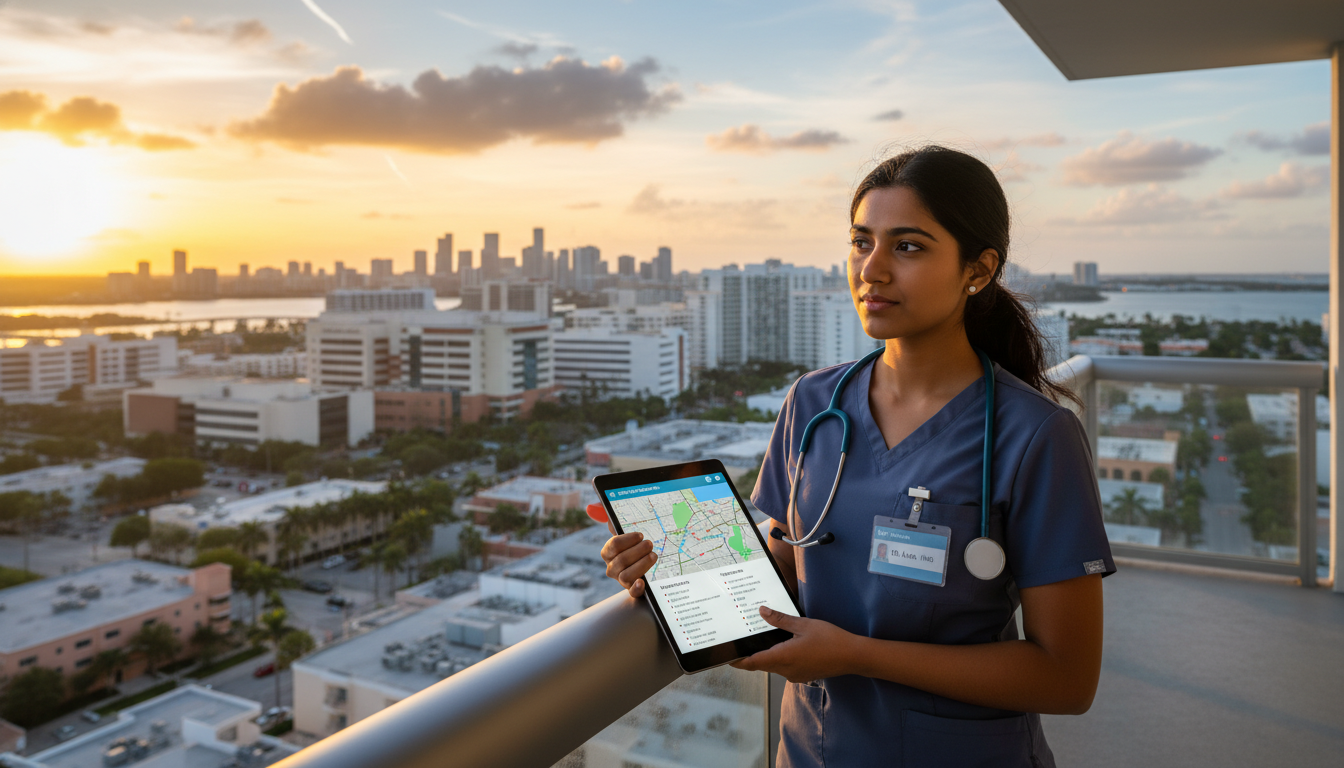
Miami is a dream destination for many international medical graduates. The combination of large academic centers, a diverse and underserved population, and vibrant South Florida life makes it especially attractive. But for a non-US citizen IMG, being too focused on one city—especially somewhere as competitive as Miami—can quietly undermine your Match chances.
This is where geographic flexibility becomes one of your most powerful tools.
Below is a detailed guide on how to balance your desire for Miami residency programs with a smart regional preference strategy that protects your chances of matching as a foreign national medical graduate.
Understanding Geographic Flexibility as a Non-US Citizen IMG
Geographic flexibility is your willingness to train in more than one specific city, state, or region. For many applicants, that means choosing:
- Not just Miami, but broader South Florida residency options
- Not only Florida, but perhaps Southeast US or East Coast
- Sometimes even nationwide flexibility when necessary
For a non-US citizen IMG, geographic flexibility is tightly linked with:
- Visa sponsorship opportunities
- Program competitiveness and IMG-friendliness
- Total number of interview invitations you can realistically secure
If you insist on Miami only, you are effectively limiting your options to a small number of highly competitive programs that are popular with US grads, US-IMGs, and non-US IMGs alike.
Why this matters more for foreign national medical graduates
Compared with US citizens (even US-IMGs), a foreign national medical graduate faces extra constraints:
Visa needs (J-1 or H-1B)
- Not all programs sponsor visas.
- Many that do will prioritize strong US graduates first.
Licensing and institutional rules
- Some hospitals are restricted by institutional limits on non-citizen hires.
- Some states have additional licensing and documentation hurdles.
Perception of risk by programs
- Programs may worry about delays in credentialing, visas, or long-term retention.
- Strong candidates can overcome this, but it adds friction.
Because of this, being geographically rigid—especially in a competitive area like Miami—can sharply reduce the number of viable programs you can include on your list.
How Competitive Are Miami Residency Programs for Non-US Citizen IMGs?
Miami and the greater South Florida area (Miami, Fort Lauderdale, West Palm Beach, and surrounding communities) have:
- Several large academic centers (e.g., university-affiliated hospitals)
- Multiple community-based programs
- Strong primary care demand (Internal Medicine, Family Medicine, Pediatrics)
- Very diverse, largely Hispanic and Caribbean populations, often underserved
This sounds ideal for IMGs—and it often is—but the region is also:
- Highly desirable among US MD and DO graduates for lifestyle reasons
- Attractive for US-IMGs who trained in Caribbean schools nearby
- Competitive for specialties like Internal Medicine, Pediatrics, Emergency Medicine, and certain surgical fields
As a non-US citizen IMG, you are competing in a crowded field. That means:
- Miami-only applications are often a high-risk strategy.
- Choosing South Florida residency beyond just the city proper (e.g., Broward, Palm Beach, Treasure Coast) provides more realistic options.
- Extending to other Florida regions (Tampa, Orlando, Jacksonville, Gainesville, Tallahassee) increases your interview pool even more.
Balancing “Miami Dream” vs. Match Security
Think of your preference and flexibility in three concentric circles:
Core Circle: Miami-focused programs
- Your top-choice environment: Miami and immediate surroundings.
- High competition but strong personal pull (family, culture, language, lifestyle).
Middle Circle: South Florida and broader Florida
- Programs within driving distance or a short flight.
- Similar patient populations and climate.
- Less saturated than central Miami.
Outer Circle: Broader regional or national choices
- Southeast US, East Coast, or nationwide depending on your flexibility.
- Broader spread of IMG-friendly, visa-sponsoring programs.
- Often where you maximize your chance of any Match.
Your geographic preference residency strategy should integrate all three circles unless you have extremely strong credentials and visa-independent status.
Example: Two contrasting strategies
Applicant A – Very Rigid
- Non-US citizen IMG, requires J-1
- Applies to 35 programs, all in Miami and nearby
- Only half of these reliably sponsor visas
- Receives 3 interviews → risk of not matching is high
Applicant B – Strategically Flexible
- Same profile, requires J-1
- Applies to:
- 18 programs in Miami / South Florida
- 22 programs across Florida
- 40 more IMG-friendly programs across the Southeast and East Coast
- Receives 11–15 interviews from a variety of regions
- Has multiple realistic paths to Match, with some Miami options still on the table
Both applicants want Miami, but only Applicant B uses location flexibility match strategy to protect their overall outcome.

Step-by-Step: Building a Smart Geographic Strategy Centered on Miami
Step 1: Clarify your non-negotiables vs. preferences
Before deciding where to apply, separate:
Non-negotiables (must-haves):
- Willingness to train in the US regardless of city
- Visa sponsorship (J-1 / H-1B)
- Certain specialty (e.g., only Internal Medicine, or IM + FM)
- Basic safety and training standards
Preferences (nice-to-haves, not essentials):
- Miami or South Florida specifically
- Warm climate
- Large Hispanic or Caribbean patient population
- Proximity to family or friends
- Coastal city lifestyle
As a foreign national medical graduate, if you treat “Miami only” as a non-negotiable, you may be unintentionally choosing “risk of not matching” over “strong chance of matching elsewhere.”
Step 2: Research Miami and South Florida residency programs deeply
Use tools like:
- FREIDA (AMA)
- Residency Explorer
- Program websites
- NRMP Charting Outcomes data
- Alumni or senior IMG networks
Look for:
- Visa policies (do they sponsor J-1, H-1B, or both?)
- Historical IMG intake (do they regularly accept IMGs? Non-US citizen IMGs?)
- US-IMG vs non-US IMG proportions
- Program size (bigger programs can sometimes take more IMGs)
- Past resident lists and their medical schools
Create a Miami/South Florida shortlist that includes:
- University-based programs
- Large community programs
- Newer or smaller programs (which may be more IMG-friendly, though variable)
Step 3: Expand outward intelligently
Once you have your Miami residency programs list, build your South Florida residency and Florida-wide list:
- Include programs in:
- Fort Lauderdale, Hollywood, Miramar
- West Palm Beach, Boca Raton, Delray Beach
- Naples, Fort Myers, Port St. Lucie
- Orlando, Tampa, Jacksonville, Gainesville, Tallahassee, Pensacola
Then expand further to:
- Southeast region (Georgia, Alabama, the Carolinas, Mississippi, Louisiana)
- Broader East Coast (New York, New Jersey, Pennsylvania, Massachusetts, etc.), especially areas with high IMG presence.
This wider net doesn’t negate your desire for Miami; it builds a safety margin around it.
Step 4: Determine your target number of applications
As a non-US citizen IMG:
- For Internal Medicine / Family Medicine / Pediatrics:
- Many advisors recommend 60–100+ applications depending on your profile.
- For more competitive specialties:
- Often 80–120+ plus a strong parallel plan (e.g., applying to IM if aiming for Neurology or EM).
A practical allocation for a Miami-centered strategy might look like:
- 15–25 programs: Miami and immediate South Florida
- 15–25 programs: Rest of Florida
- 30–60 programs: Other states/regions (prioritizing IMG-friendly, visa-sponsoring sites)
Adjust upward if you have red flags (low scores, attempts, major gaps, older graduation year).
Using Program Signals & Preference Sections Without Closing Doors
As signaling and preference systems evolve (e.g., ERAS signaling, geographic preference essays, supplemental applications in some specialties), your regional preference strategy becomes even more important.
How to show Miami preference without limiting yourself
Preference signals (if available in your specialty)
- Use a minority of your signals on top Miami programs you genuinely love.
- Reserve others for strong non-Miami programs where you are a realistic fit.
Geographic preference essays or checkboxes
- If asked, you can state:
- “Strong preference for the Southeast, including South Florida, due to language, cultural fit, and family support.”
- This is broad enough to include Miami but not so narrow that other Southeast programs dismiss you.
- If asked, you can state:
Personal statement customization
- For Miami/South Florida programs:
- Emphasize Spanish or Portuguese fluency (if applicable), familiarity with immigrant communities, and comfort with high-volume urban care.
- For non-Florida programs:
- Focus on adaptability, service to underserved populations, and openness to different settings.
- For Miami/South Florida programs:
Avoid writing statements that say or imply:
“I only want to be in Miami, and nowhere else”
for programs outside Miami. It signals inflexibility and reduces your attractiveness.

Practical Advice: Crafting Your Application as a Miami-Focused but Flexible IMG
Highlight why Miami and South Florida make sense for you
Programs are more receptive when your preference is logical and evidence-based, not just “I like the beach.”
If you are a non-US citizen IMG with ties to Miami or South Florida, emphasize:
- Language skills: fluent in Spanish, Haitian Creole, or Portuguese
- Cultural familiarity: Caribbean, Latin American, or immigrant background
- Family/Support network: close relatives in South Florida
- Prior US experience in the region: observerships, externships, volunteer work in Miami or nearby
Explain how this background helps you care for South Florida’s unique patient population.
Simultaneously present yourself as geographically adaptable
Especially for non-Miami programs, show:
- History of adapting to new environments (e.g., studied in a different country, moved cities for rotations)
- Openness to serving any community in need, urban or rural
- A focus on training quality, mentorship, and patient exposure over location alone
Sample language for a broader-focused personal statement:
“While I have strong ties to South Florida and greatly value the opportunity to work within diverse, multilingual communities like those in Miami, my primary goal is to train in a program where I can provide excellent care to underserved patients, regardless of geography. My experiences moving between countries and health systems have taught me to adapt quickly and integrate into new communities.”
This framing maintains your Miami interest but reassures other programs that you are serious about them too.
Common Mistakes Non-US Citizen IMGs Make with Geographic Preference
1. Over-concentrating applications in Miami alone
Applying to only 20–30 programs, 90–100% of them in Miami, is a high-risk strategy for most foreign national graduates, unless your profile is outstanding (top scores, extensive US experience, research, no visa needs).
2. Ignoring visa policies in non-Miami programs
Some applicants open their geography but forget to check:
- Does the program actually sponsor J-1 or H-1B visas?
- Do they have a history of taking non-US citizen IMGs, not just US-IMGs?
Your location flexibility match strategy fails if you expand geographically to many programs that would never consider you due to visa constraints.
3. Sending mixed signals in the application
Examples:
- Telling a North Carolina program in the interview that you’re “only really happy if you end up in Miami.”
- Writing a generic personal statement that names Miami but not other regions you’re applying to.
- Ranking only Miami programs and a few others you never really considered seriously.
These behaviors can hurt you because programs want residents who will:
- Show up
- Stay
- Engage with their community
4. Neglecting backup specialties or tracks
If your specialty choice is very competitive (e.g., EM, Radiology, certain surgical fields), and you are a non-US citizen IMG with visa needs, geographic flexibility alone may not be enough. You may also need:
- A backup specialty (e.g., Internal Medicine)
- A mix of categorical and preliminary positions where appropriate
- Willingness to apply to community-based and smaller or newer programs outside of Miami
Putting It All Together: A Sample Strategy for a Non-US Citizen IMG Targeting Miami
Imagine you are:
- A 28-year-old foreign national medical graduate from Latin America
- Step 1/Step 2 CK around average competitive scores for IMGs
- 2–3 months of US clinical experience, some of it in South Florida
- Fluent in Spanish and English
- Requires J-1 visa
A robust geographic plan could look like:
Application distribution
20 programs in Miami / immediate South Florida
- Mix of academic and community IM programs
- All confirmed J-1 sponsors
- Historically take some non-US citizen IMGs
20 programs in rest of Florida
- Orlando, Tampa, Jacksonville, Gainesville, Fort Myers, etc.
- Again, focused on J-1–sponsoring programs with IMG presence
40–60 programs across the Southeast and East Coast
- Prioritize areas with similar patient populations or large immigrant communities
- Include both academic and community programs with IMG-friendly histories
Signaling and messaging
- Use a few application signals on top Miami or South Florida programs that are realistic and a good fit.
- Use remaining signals on strong non-Florida programs likely to interview you.
- Prepare two personal statement versions:
- Miami/South Florida version: heavier emphasis on regional ties and language skills.
- Broad US version: heavier emphasis on adaptability and service to underserved patients.
Interview ranking & mindset
- During interviews:
- Be honest about your enthusiasm for Miami and South Florida.
- But also genuinely engage with each program’s strengths and local community.
- Rank:
- Miami and South Florida programs highly where you had good interviews and felt a fit.
- Strong non-Florida programs next, based on training quality, IMG support, and lifestyle.
Your goal: maximize your total chances of matching while still giving yourself a meaningful shot at Miami.
FAQs: Geographic Flexibility for Non-US Citizen IMGs in Miami
1. If Miami is my top choice, is it wrong to tell programs that?
Not at all. You can absolutely say Miami (or South Florida) is your top region, especially when interviewing there. The key is not to dismiss other locations outright. For non-Miami programs, frame your answer as: “I have strong ties to South Florida, but my main goal is to train in a supportive, high-quality program where I can care for underserved populations, and I see that here as well.”
2. How many Miami programs should I realistically include as a non-US citizen IMG?
It depends on your specialty and competitiveness, but for most IMGs, Miami and immediate South Florida should be a minority of your total list, not the majority. Something in the range of 15–25 programs in Miami/South Florida combined, embedded in a larger national or regional strategy (60–100+ total applications), is more realistic than focusing almost entirely on Miami.
3. Does stating “Southeast preference” hurt my chances in other regions?
Usually not, especially if programs allow multiple geographic preferences or understand that many IMGs have some regional priorities. If you’re truly open nationwide, you can choose “no strong geographic preference” when appropriate. When you do indicate a preference, keep it somewhat broad (e.g., Southeast / East Coast) rather than “Miami only,” so that you don’t unintentionally signal inflexibility.
4. Should I rank only Miami programs if that’s where I want to end up?
If you rank only Miami programs and do not match there, you will go unmatched, even if other programs elsewhere want you. For a foreign national medical graduate, being too rigid at the ranking stage is risky. A safer approach is to rank all programs where you would be willing and able to train, in genuine preference order, with Miami programs at the top if they are truly your first choices. This keeps your options open while still honoring your priorities.
By approaching your geographic preference residency strategy with deliberate flexibility—centered on Miami but open to the broader region—you dramatically improve your odds of matching as a non-US citizen IMG. Miami can remain your priority, but it should be anchored within a thoughtful, expansive plan that recognizes both your dreams and the realities of the Match.