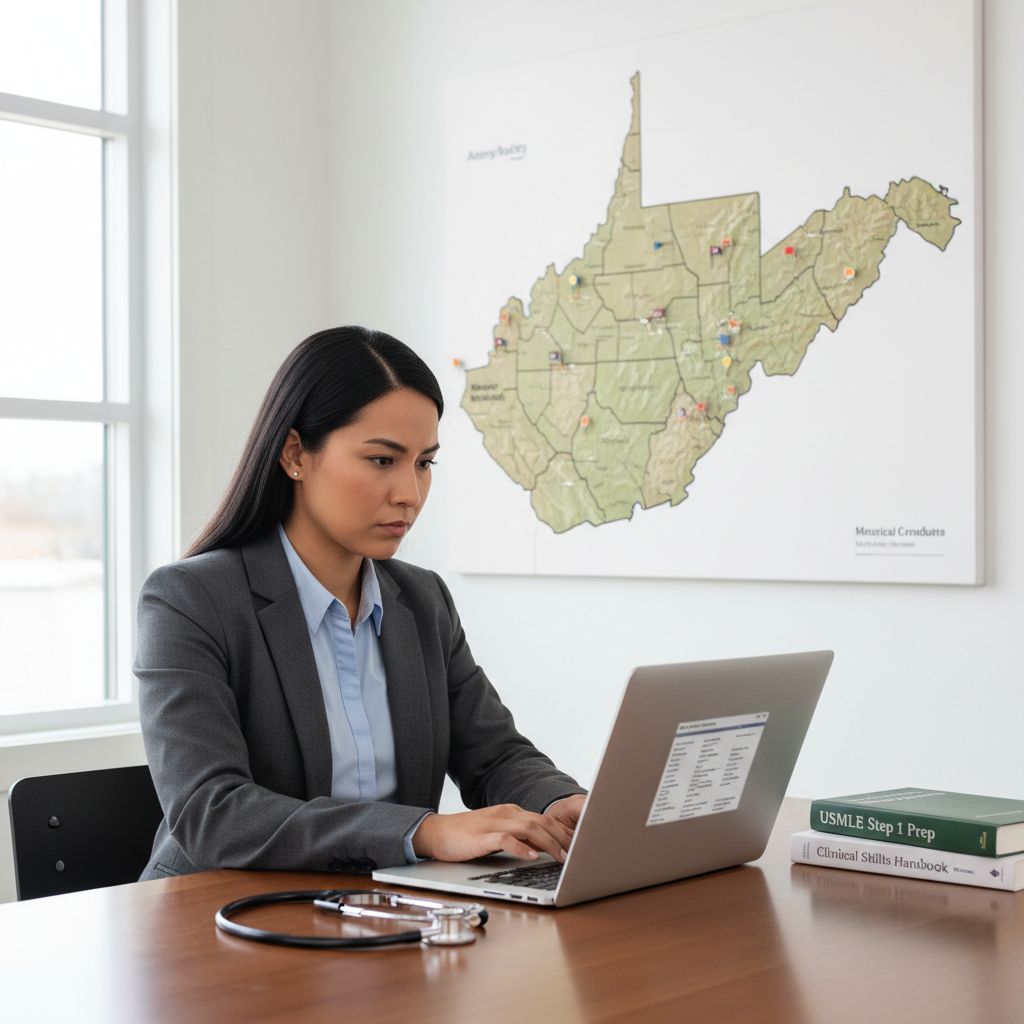
International medical graduates who are non-US citizens often feel they must choose between two competing goals: maximizing their chances of matching and pursuing a specific geographic region they’re interested in. When the region is Appalachia—especially states like West Virginia and Kentucky—this decision can feel even more complex because of visa issues, smaller program numbers, and unique community needs.
This article focuses on geographic flexibility for the non-US citizen IMG who is considering or prioritizing an Appalachian residency. You’ll learn how to balance preference and practicality, build a regional preference strategy, and communicate your location flexibility in a way that actually strengthens your application rather than confuses programs.
Understanding Geographic Flexibility as a Non-US Citizen IMG
Before you can use geographic flexibility strategically, you need to understand what it actually means for a foreign national medical graduate.
What is “Geographic Flexibility” in the Match?
Geographic flexibility means:
- You can genuinely see yourself training in more than one region of the US
- You’re willing to rank programs in locations that are not your top personal preference
- Your application materials (and interview answers) do not over-commit to a single city or state in a way that conflicts with your rank list strategy
For a non-US citizen IMG, geographic flexibility also includes flexibility regarding:
- Size of the city or town (urban vs rural vs small city)
- Distance from major airports or international travel hubs
- Climate and lifestyle differences (e.g., Appalachian mountains vs coastal cities)
- Access to specific community types (e.g., underserved rural Appalachian communities vs more suburban populations)
Why Geographic Flexibility Matters More for Non-US Citizen IMGs
As a foreign national medical graduate, you face additional constraints:
- Visa sponsorship limitations
- Some programs do not sponsor any visas
- Some sponsor only J-1, some only H-1B, some both
- Smaller or rural programs may have limited institutional support for visa processing
- Fewer “IMG-friendly” programs in some specialties and regions
- Perceived risk from programs unfamiliar with non-US citizen IMGs
Because of this, if you restrict yourself purely to a very narrow region (for example, “only West Virginia and Kentucky and nowhere else”), you might:
- Dramatically reduce your total number of viable programs
- Compromise your overall match probability
- Miss strong programs in neighboring Appalachian or near-Appalachian states
Thoughtful geographic flexibility, especially in and around Appalachia, can help you:
- Expand your interview opportunities
- Still maintain a coherent story about your Appalachian residency interest
- Show programs that you’re committed but not rigid
Appalachia as a Target Region: What Makes It Unique?
If you’re considering West Virginia Kentucky residency or other Appalachian programs, understanding the regional context will clarify how much flexibility you should allow.
What Counts as “Appalachia”?
The Appalachian region, as defined by the Appalachian Regional Commission (ARC), includes parts of:
- Core states: West Virginia (entire state), Kentucky (eastern and south-central), Tennessee, North Carolina, Virginia
- Also portions of: Pennsylvania, Ohio, New York, Maryland, Alabama, Georgia, South Carolina, Mississippi
For residency planning, think in terms of:
- Core rural and small-city Appalachia (e.g., Charleston WV, Huntington WV, Pikeville KY, Johnson City TN)
- Adjacent metro areas with Appalachian catchment (e.g., Lexington KY, Morgantown WV, Knoxville TN, Roanoke VA, Pittsburgh PA)
These cities often serve Appalachian communities even if the hospital is in a mid-sized or larger city.
Why Appalachia Can Be Attractive for Non-US Citizen IMGs
High need for primary care and certain specialties
- Family medicine, internal medicine, psychiatry, general surgery, OB/GYN often have strong demand
- Programs frequently emphasize service to underserved and rural populations
Potentially more openness to IMGs in some programs
- Some Appalachian hospitals host multiple IMGs and have experience with visa sponsorship
- They value residents who are committed to staying in the region or similar underserved areas
Rich clinical exposure
- High prevalence of chronic disease (diabetes, COPD, cardiovascular disease, substance use disorders)
- Complex social determinants of health, giving you a deep, real-world learning environment
Quality of life and cost of living
- Generally lower cost of living than coastal metro areas
- Short commutes, close-knit communities, and outdoor recreation (hiking, mountains, national parks)
Challenges Specific to Appalachia
- Limited number of programs compared to major urban centers
- Some hospitals may not sponsor visas or may be inconsistent year to year
- Fewer fellowships at smaller community programs (if long-term subspecialty training in the US is your goal)
- Transportation and travel complexity (smaller airports, more connections, driving between cities)
Understanding these pros and cons helps you craft a realistic geographic preference residency strategy centered on Appalachia but not trapped by it.

Building a Regional Preference Strategy: Appalachia at the Core, Not the Boundary
A regional preference strategy means you:
- Identify a primary region of interest (e.g., Appalachia)
- Add secondary and tertiary regions that make sense logically and personally
- Communicate this in a way that is believable and consistent
Step 1: Define Your “Core Region” Clearly
If your core interest is Appalachian residency, be specific:
- Core states: West Virginia, Kentucky, Tennessee, Virginia, North Carolina, Ohio, Pennsylvania (Appalachian portions)
- City types: Are you comfortable with very small towns, or do you prefer small/mid-size cities like Lexington or Morgantown?
Write a short personal statement for yourself, such as:
“My primary geographic priority is training in a residency that serves Appalachian or similar underserved rural populations. I am especially interested in West Virginia and eastern Kentucky, but I am also open to programs in nearby states that care for Appalachian communities.”
This becomes the “anchor” for your narrative across your application.
Step 2: Decide on Logical Secondary Regions
For a location flexibility match strategy, choose regions that:
- Are realistically accessible from Appalachia
- Share some cultural, clinical, or lifestyle similarities
- Make sense given your background (education, family, or prior US clinical experience)
Logical secondary regions might include:
- Midwest: Ohio (beyond Appalachian counties), Indiana, Michigan
- Southeast: Georgia (non-urban), Alabama, South Carolina
- Mid-Atlantic: Western Maryland, parts of Virginia and Pennsylvania
You can frame this as:
“My broader goal is to train in a program that emphasizes care for underserved and rural populations, particularly in Appalachia and the surrounding regions of the Midwest and Southeast.”
This way, you’re not randomly applying everywhere; your geographic flexibility has a theme.
Step 3: Match Your Strategy to Visa Realities
For a non-US citizen IMG, regional choice is inseparable from visa type.
Research visa habits by region and program
- Use FREIDA, program websites, and alumni lists to identify:
- Do they sponsor J-1? H-1B? Both?
- Do they currently have IMGs, especially foreign nationals?
- Pay particular attention to West Virginia Kentucky residency programs and see if they have a track record with visas.
- Use FREIDA, program websites, and alumni lists to identify:
Decide your acceptable visa types
- If you’re open to J-1: more options in rural and community hospitals, including many Appalachian sites
- If you strongly prefer H-1B: your list narrows; you may need broader geography outside Appalachia to compensate
Overlay visa data with geography
- Core: Appalachian programs that sponsor your visa type
- Secondary: Non-Appalachian but rural/underserved programs that also sponsor your visa type
- Tertiary: More urban or different-region programs that are IMG- and visa-friendly
This integrated approach prevents you from building a beautiful geographic plan that is impossible visa-wise.
How to Show Geographic Flexibility Without Looking Inconsistent
Program directors worry about two things:
- Applicants who will not actually come if matched (rank manipulation risk)
- Applicants who are so geographically limited that they may have difficulty adapting or staying long-term
Your goal is to show that:
- You have clear, logical preferences
- You are also genuinely open to a range of locations that fit your values and training goals
Personal Statement: Balancing Specificity and Flexibility
Use your personal statement to:
Highlight your interest in Appalachia
- Mention experiences that connect you to rural or underserved populations
- Describe why the Appalachian region’s patient population and challenges appeal to you
Connect Appalachia to broader themes
- Commitment to underserved care
- Interest in managing complex chronic diseases
- Comfort with smaller communities and close doctor-patient relationships
Avoid “only this state or nothing” language
- Instead of: “I am only interested in West Virginia and plan to remain there forever,”
- Say:
“I am particularly drawn to Appalachia, including states such as West Virginia and Kentucky, and to similar underserved rural communities in surrounding regions.”
This keeps your geographic preference residency narrative strong but not overly rigid.
ERAS Geographic Preferences: How to Use Them Smartly
If ERAS (or the specialty application) allows you to indicate geographic preferences:
- Primary preference: Select the regions that align with Appalachia (e.g., “Mid-Atlantic” and “Southeast”)
- Secondary preference: Include nearby regions consistent with your narrative (e.g., “Midwest”)
- Avoid contradictions:
- Don’t mark “West Coast only” if all your essays emphasize Appalachia and rural medicine
- If you truly have no restriction, you can choose “no preference,” but then make sure your essays emphasize values instead of geography
Programs may see this information, so it must complement—not contradict—your stated motivations.
Interview Answers About Location and Staying Long-Term
During interviews, you will likely be asked:
- “Why this region?”
- “Can you see yourself living here for three or more years?”
- “Do you have any geographic constraints?”
For an Appalachian residency while maintaining location flexibility, you might say:
“I am particularly drawn to Appalachia and similar rural regions because of my interest in serving underserved communities and managing complex chronic diseases. I’m very comfortable with smaller cities and rural settings. While programs in West Virginia and Kentucky are especially appealing due to their strong Appalachian identity, I am open to other regions that share these characteristics, and I would fully commit to any program where I match.”
This answer:
- Signals real regional interest
- Confirms you are not “applying just for the visa”
- Reassures them you’re not going to be unhappy with the location

Practical Application Strategy: How Many Programs and Where?
Translating theory into an actual application list is where most non-US citizen IMGs struggle.
Step 1: Define Your Numeric Targets
Common, broad guidance (adjust based on competitiveness):
- Less competitive applicant (average scores, minimal US experience, non-US citizen):
- 120–150 programs for IM, FM, or Psych
- Moderately competitive:
- 80–120 programs
- More competitive:
- 60–80 programs
Use advisors or past matched graduates as references for your specific profile.
Step 2: Allocate by Region with Appalachia at the Center
Example allocation for an internal medicine applicant focused on Appalachia:
- 40–50%: Core Appalachian states
- West Virginia, Kentucky, Tennessee, Virginia, North Carolina, Ohio (Appalachian areas), Pennsylvania (western)
- 30–40%: Surrounding or similar rural states
- Indiana, Michigan, Alabama, Georgia, South Carolina, Mississippi
- 10–20%: Other IMG-friendly or visa-friendly regions
- Texas, New York (upstate), parts of the Midwest or other states where your mentors or network recommend
This structure supports a clear regional preference strategy without dangerously narrowing your options.
Step 3: Screen Each Program for Three Dimensions
For every program, evaluate:
Visa and IMG-friendliness
- Visa type(s) sponsored
- Current or recent foreign national residents
- Any explicit statements about IMGs on their website
Geographic and lifestyle fit
- Size of community
- Distance to nearest midsize city or airport
- Weather, cost of living, family needs (if applicable)
Training quality and alignment with goals
- Inpatient vs outpatient balance
- Fellowship opportunities (if important)
- Exposure to underserved and rural populations
Drop programs that fail visa requirements, even if they are in your top geographic area. It is better to apply to a visa-friendly program in an adjacent state than a visa-incompatible program in your dream Appalachian city.
Step 4: Plan for a “Location Flexibility” Rank List
Once you receive interview offers:
- Rank based on training and fit first, not only location
- Within similar tiers of training quality and visa certainty, use geography as a tiebreaker
- Example: If two programs are equivalent overall but one is a West Virginia Kentucky residency with strong Appalachian exposure, and you care deeply about that, rank it higher
- Do not artificially lower a program solely because it is slightly outside your core region, especially if:
- It is more visa-secure
- It offers better training or support
- It still aligns with your broader theme of underserved/rural medicine
This is what location flexibility match strategy practically looks like.
Common Pitfalls and How to Avoid Them
Pitfall 1: Overly Narrow Geographic Restriction
Example: Applying only to 30 programs in West Virginia and Kentucky because “I only want Appalachia.”
Risk: Very high chance of not matching, especially as a non-US citizen IMG with visa needs.
Solution:
- Keep Appalachia as your core preference but include similar regions across multiple states
- Expand to at least 80+ programs (more if your profile is less competitive)
Pitfall 2: Inconsistent Messaging
Example:
- Personal statement: strongly Appalachian-focused
- ERAS geographic preferences: “Pacific Northwest” and “West Coast” only
- Interview answers: “I will go anywhere, I have no preference”
Programs may see this as confusion or lack of sincerity.
Solution:
- Choose 1–3 themes that tie your preferences together (rural medicine, underserved populations, specific clinical interests)
- Ensure personal statement, geographic selections, and interview answers all align with those themes
Pitfall 3: Ignoring Visa Sponsorship Patterns
Example: Filling your list with prestigious university programs in Appalachia that do not sponsor H-1B or J-1 visas.
Solution:
- Make visa an early filter, not a last-minute check
- Use FREIDA, program websites, and email programs only when information is unclear
- Ask current or former residents (via LinkedIn or alumni networks) about recent visa trends
Pitfall 4: Under-preparing for Cultural and Lifestyle Differences
Appalachia can be:
- More homogenous in race/ethnicity in some areas
- Politically and culturally distinct from large coastal cities
- Less familiar with international communities in smaller towns
Solution:
- Research local culture, patient demographics, and lifestyle
- Talk to current or past IMGs in Appalachian or similar rural programs
- Be honest with yourself: can you thrive in a small town for 3+ years? If yes, emphasize that clearly in interviews.
FAQs: Geographic Flexibility for Non-US Citizen IMGs in Appalachia
1. As a non-US citizen IMG, is it realistic to focus mainly on Appalachia?
Yes, it can be realistic—if you remain flexible within and around the region and pay close attention to visa sponsorship. Make Appalachia your core, not your entire world:
- Apply broadly within Appalachian states (West Virginia, Kentucky, Tennessee, Virginia, North Carolina, Ohio, Pennsylvania)
- Include surrounding rural-friendly regions (Midwest/Southeast) that share similar patient populations
- Filter by visa sponsorship first, then prioritize Appalachian programs among those that meet your needs
2. How do I communicate that I prefer West Virginia and Kentucky without limiting myself?
Use layered language in your personal statement and interviews:
- “I am especially interested in West Virginia and Kentucky due to their strong connection to Appalachian communities and the opportunity to serve underserved populations.”
- “At the same time, I am also open to other regions and programs that share these values and patient populations, even if they are outside the core Appalachian states.”
This shows a clear West Virginia Kentucky residency preference while still signaling location flexibility.
3. Will programs outside Appalachia question my strong Appalachian narrative?
Not if your narrative is based on values and clinical interests, not strict geography. If you explain that:
- You are committed to rural and underserved populations
- Appalachia is one excellent example of such a region
- You are also open to similar communities elsewhere
Then non-Appalachian programs that serve comparable populations (e.g., rural Midwest or Deep South) will still see you as a strong, mission-aligned applicant.
4. Should I mention visa needs when explaining my geographic flexibility?
You do not need to emphasize visa limitations when talking about geography, but you should never hide your visa status. Programs will know from your application that you are a foreign national medical graduate.
In interviews, you can focus on:
- Your commitment to underserved regions
- Your flexibility across several states and regions
- Your long-term goals (e.g., possibly staying in rural or community practice)
If a program asks directly about visas, answer clearly and concisely. Let your geographic preference strategy be driven by training and mission, with visa considerations handled factually and separately.
By anchoring your application in a coherent, value-driven interest in Appalachian and similar communities—while maintaining genuine openness to multiple states and practice settings—you can turn geographic flexibility into a strength rather than a compromise. For a non-US citizen IMG, this approach maximizes your match chances without forcing you to abandon your interest in an Appalachian residency or your long-term commitment to caring for underserved populations.