
Navigating geographic flexibility is one of the most strategic—and misunderstood—parts of the residency match for any international graduate, but it is especially critical if you are a non-US citizen IMG aiming for Houston residency programs. You must balance immigration realities, visa sponsorship, personal priorities, and program competitiveness, all while signaling enough flexibility to be rankable without looking unfocused.
This article will walk you through how to think about geographic flexibility in a smart, structured way as a foreign national medical graduate targeting the Houston area, particularly the Texas Medical Center residency ecosystem and surrounding community programs.
Understanding Geographic Flexibility as a Non-US Citizen IMG
Geographic flexibility in the Match is not only about where you are willing to train; it’s also about how programs perceive your intentions and how that perception affects your chances.
What “Geographic Flexibility” Really Means
For the purposes of residency applications, geographic flexibility includes:
- Where you apply
- Single city (e.g., Houston only)
- Single state or region (e.g., Texas or Gulf/South)
- Multiple regions, but with a coherent story
- How you express location preferences
- In ERAS geographic preferences section
- In your personal statement and supplemental essays
- During interviews and emails
- How you rank programs
- Whether you only rank one region
- Whether you mix highly competitive and safer locations
- Your visa and immigration constraints
- Whether you need a specific region for personal or legal reasons
- Whether you can be more open because you have more flexibility
For a non-US citizen IMG, geographic flexibility is closely tied to:
- Visa sponsorship policies (J-1 vs H-1B)
- State-level IMG friendliness
- Proximity to support systems (family, diaspora communities)
- Matching probability vs. personal comfort and security
Why Geographic Flexibility Matters More for Non-US Citizen IMG
As a foreign national medical graduate, you face:
More limited program lists
Many programs:- Do not sponsor visas at all
- Sponsor only J-1, not H-1B
- Only rarely interview IMGs
Higher competition for IMG-friendly spots
Houston and the broader Texas region have:- Several IMG-friendly community programs
- Some university programs that consider strong IMGs
- A large number of US graduates also competing for the same positions
Immigration/visa urgency
You cannot just “wait another year” easily without implications for status, exams validity, and finances.
Because of these realities, extreme geographic restriction (e.g., “Houston or nowhere”) significantly increases your risk of not matching at all.
A more effective mindset is:
“Houston-focused, nationally strategic”
instead of “Houston-only”.
Houston and the Texas Medical Center: Opportunities and Constraints
Houston is an attractive hub for IMGs—especially non-US citizen IMGs—but understanding its structure and limitations will help you decide how much flexibility to build into your strategy.
The Houston Residency Landscape
Houston’s residency ecosystem includes:
- Major academic institutions (within or near the Texas Medical Center):
- Baylor College of Medicine–affiliated programs
- McGovern Medical School at UTHealth Houston
- University of Texas MD Anderson Cancer Center (for some specialties/fellowships)
- Large health systems and community-based programs:
- HCA-affiliated hospitals in the Houston area
- Methodist, Memorial Hermann, St. Luke’s, and others
- VA hospitals and county hospitals (e.g., Harris Health System)
Broadly, there are:
- Competitive academic programs in the heart of the Texas Medical Center residency environment
- Moderately competitive community programs in the Houston metro area
- A small number of newer or expanding programs that may be more IMG-friendly
How IMG-Friendly Is Houston?
Houston has significant IMG representation, particularly in:
- Internal Medicine
- Family Medicine
- Pediatrics
- Some preliminary surgery and transitional year programs
However:
- Not all Houston programs sponsor visas
- Among those that do sponsor, some limit to J-1 only
- Several competitive specialties (e.g., Dermatology, Radiation Oncology, some Surgical subspecialties) are extremely difficult for a foreign national medical graduate without exceptional credentials and US experience
Visa Sponsorship Patterns in Houston and Texas
General patterns (always verify program-by-program):
- Many large Texas institutions prefer J-1 sponsorship via ECFMG
- H-1B sponsorship:
- More commonly found in certain Internal Medicine, Neurology, and some subspecialty-friendly institutions
- Less predictable at smaller or newer programs due to cost and complexity
- Some community sites:
- Are very welcoming to J-1 IMGs
- Rarely sponsor H-1B due to administrative and financial burden
For a non-US citizen IMG, this means:
- If you are open to J-1, your realistic Houston program list expands
- If you are H-1B only, your Houston options narrow, and geographic flexibility elsewhere becomes critical
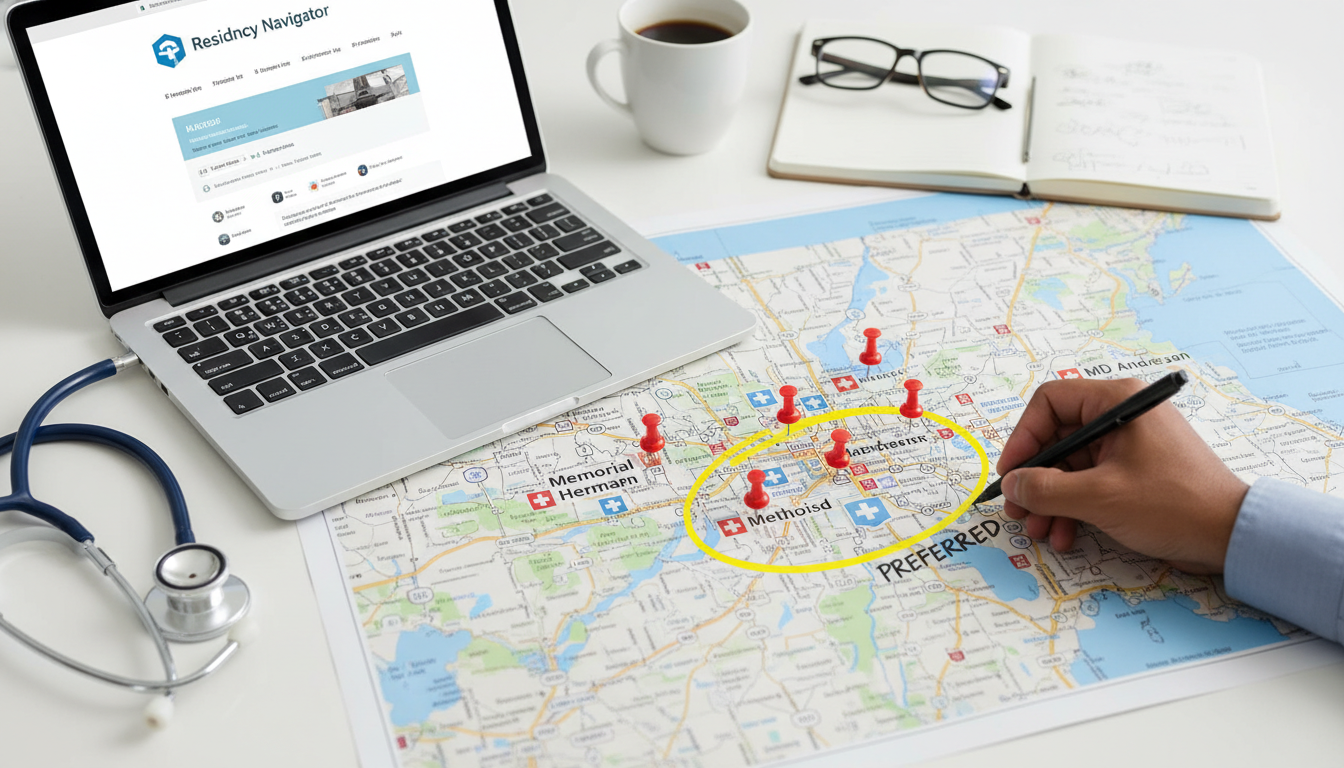
Geographic Preference in ERAS: How to Signal Without Limiting Yourself
The ERAS supplemental application has increasingly incorporated geographic preference residency questions or fields in recent cycles (exact format can change slightly each year). Many IMGs worry: “If I pick Houston or Texas, will I be ignored by other regions—or vice versa?”
How Programs Use Geographic Preference Signals
Most programs look at geographic signals to answer:
- “Is this applicant likely to come here and stay?”
- “Is this applicant just blanketing the entire country?”
- “Does this applicant understand our region and setting?”
They do not usually treat geographic preference as a binding commitment. Instead, it is one data point combined with:
- Your personal statement
- Your experiences (rotations, work, family ties)
- Your interview conversation
- Your rank list if they see patterns post-Match (for institutional planning)
Strategic Use of the ERAS Geographic Preference Section
As a non-US citizen IMG aiming for Houston residency programs, consider these principles:
1. Align Preference With a Defensible Story
If you select “Texas” or “South” or “Gulf region” as a preferred region, your application should make that believable. Examples of supportive factors:
- Clinical electives or observerships in Houston or Texas
- Research positions at Baylor, UTHealth, MD Anderson, or other Houston institutions
- Family living in Houston or nearby cities
- Cultural or linguistic ties (e.g., Spanish, Vietnamese, or South Asian languages widely spoken in Houston communities)
- Long-term goals involving Texas practice (for J-1 waiver or community service)
2. Avoid Overly Narrow Single-City Preferences Unless Strongly Justified
If you write or strongly imply: “I only want Houston,” programs may worry that:
- You will not rank them if they are outside central Houston
- You are prioritizing personal reasons over professional fit
- If you don’t get Houston, you might not match at all—making them hesitate to invest scarce interview slots
Instead, a more flexible structure could be:
- “Prefer the South with a strong emphasis on Texas, especially the Houston area, due to [family, prior work, etc.], but open to training in other regions that provide strong IMG support and diverse patient populations.”
This shows regional preference strategy: a clear interest in the South/Texas while preserving location flexibility match.
3. Do Not Contradict Yourself Across Application Components
Take care that your:
- ERAS geographic preferences
- Personal statement
- LoRs referencing your plans
- Interview answers
all feel consistent. For instance, do not:
- Tell one program “I’m deeply committed to staying in the Midwest long-term”
- Then write your personal statement as if “Houston is the only place I can imagine living”
Programs may not see everything, but inconsistencies can be noticed—especially if faculty talk across institutions.
Building a Houston-Focused Yet Flexible Application Strategy
You can be Houston-focused without being Houston-locked. Here’s how to architect a pragmatic application plan around the Texas Medical Center residency ecosystem while preserving safety.
Step 1: Define Your “Core Region” and “Flex Regions”
For a non-US citizen IMG targeting Houston:
- Core Region:
- Houston metro and greater Texas (including cities like San Antonio, Dallas, Austin, El Paso, and smaller Texas communities)
- Flex Regions (choose 1–3 based on your profile and ties):
- Other Southern states (Louisiana, Oklahoma, Arkansas, Mississippi, Alabama, Georgia, Florida)
- Midwest states that are IMG-friendly and visa-friendly
- Select East Coast or West regions if you have meaningful ties (family, prior work, language communities)
This results in a layered approach:
- Apply broadly in Houston + Texas
- Add similar-structure regions where:
- Visa sponsorship is known
- IMGs are common
- Patient populations and hospital systems resemble what you seek
- Adjust application numbers based on your competitiveness (scores, attempts, YOG, USCE)
Step 2: Categorize Programs by Realistic Viability
For each program (Houston and beyond), classify into:
High Reach:
- Highly academic institutions, elite programs, or oversubscribed specialties
- Example: Prestigious Internal Medicine program in the heart of the Texas Medical Center with limited IMG intake
Target:
- Programs that regularly accept non-US citizen IMGs
- Offer visa sponsorship and have IMG faculty or senior residents
- Solid but not elite academic hospitals or strong community programs
Safety:
- Newer programs, smaller community hospitals, or locations less popular among US grads (rural or smaller cities)
- A consistent pattern of interviewing and matching IMGs
For Houston, many non-US citizen IMGs over-apply to:
- High-reach Texas Medical Center programs
- A few popular community programs in central Houston
…but under-apply to:
- Smaller community-based programs in surrounding areas or smaller Texas cities
- Programs in nearby states that are very IMG-friendly and visa-supportive
Don’t let prestige overshadow your primary goal: matching into a solid program with good training and visa support.
Step 3: Integrate Visa Considerations Into Geographic Flexibility
Your visa stance will heavily shape your location flexibility match decisions:
If You Are Open to J-1
- Houston and Texas:
- Many more options become available
- County and safety-net hospitals may be J-1 friendly
- Beyond Texas:
- Consider states with:
- Many underserved areas (more future J-1 waiver job opportunities)
- A track record of hiring J-1 waiver physicians
- Consider states with:
Geographically flexible strategy:
- Strong Texas focus + a wide belt of other Southern and Midwestern states with J-1-friendly programs
If You Strongly Prefer or Require H-1B
- Your Houston list will be narrower
- Some academic programs may support H-1B; many community programs will not
- You must:
- Meticulously verify H-1B policies by program and by year
- Consider adding more H-1B-friendly regions elsewhere, such as certain Northeast or Midwest institutions known to sponsor H-1B for strong IMGs
In this case, geographic flexibility is not optional—it is essential. Restricting yourself to Houston for H-1B sponsorship alone may be too risky.

Communicating Houston Focus and Geographic Flexibility in Your Application
How you speak about location is as important as how you choose it. You want programs to understand that you:
- Genuinely value Houston and Texas
- Are realistic and open enough to secure training somewhere
- Have thought about how geography affects your personal and professional life
Personal Statement: Balancing Preference and Openness
If Houston or Texas is your top preference, you can mention it, but frame it thoughtfully.
Less effective:
“My dream is to match in Houston, and I am only applying to programs in this city.”
This sounds rigid and may worry programs about your overall match risk.
More effective:
“Having completed observerships in Houston and developed strong connections with mentors in the Texas Medical Center, I am particularly attracted to residency programs in Houston and the broader Texas region. The city’s diverse patient population, substantial immigrant communities, and robust hospital systems align with my long-term goal of practicing in an urban, multicultural environment. At the same time, I am open to training in other regions that offer similar opportunities to serve diverse, underserved populations and support international graduates.”
This signals:
- Clear, reasoned preference
- Respect for Houston’s environment
- Real geographic flexibility
Interviews: How to Answer “Where Else Are You Applying?” as a Non-US Citizen IMG
Programs may ask where else you’re applying or what regions you’re considering.
Good structure for an answer:
- Start with honesty about your Houston/Texas interest:
- “Houston and Texas are my strongest areas of interest because…”
- Connect to professional reasons:
- “I’m especially drawn to the patient diversity and established support for IMGs here…”
- Then show broader flexibility:
- “In addition, I have applied to programs in [X and Y regions] that share similar characteristics—diverse patient populations, visa sponsorship, and a track record of successful non-US citizen IMG training…”
Avoid:
- Overstating that you would “100% definitely” stay in Houston forever, especially if not clearly true
- Suggesting that every program you interview at is your “number one” (faculty quickly recognize this)
Email Communication and Thank-You Notes
If you choose to send post-interview emails (where allowed by NRMP and institutional policy):
- You can reaffirm your appreciation for Houston or the region
- Emphasize specific aspects of that program (not just the city) that match your goals
- Avoid making explicit ranking promises unless you are absolutely certain and within guidelines
Example phrase:
“As a non-US citizen IMG, I particularly value how your program has historically supported international graduates, including visa sponsorship and mentorship in adapting to practice in the US. Combined with your location in Houston’s diverse medical community, I feel your program would be an excellent environment for me to grow as a resident.”
Practical Action Plan: Applying With Smart Geographic Flexibility
Here is a concrete, step-by-step plan that a non-US citizen IMG targeting Houston residency programs can follow.
1. Clarify Your Constraints and Priorities
Write down:
- Visa type(s) you will accept: J-1 only, H-1B only, or both
- Minimum acceptable program characteristics:
- ACGME accreditation, board pass rates, supervision quality
- Presence of IMGs in current residents
- Specific training features (e.g., ICU exposure, research, subspecialty clinics)
- Personal anchors:
- Family/friends in Houston or Texas
- Financial constraints that make certain cities hard or easier to live in
- Cultural or language communities important to you
2. Research Houston and Texas Programs Thoroughly
For each program in Houston and around Texas:
Check:
- Visa policy (J-1, H-1B, both, or none)
- Percentage of IMGs in recent classes
- Requirements for US clinical experience or USMLE attempts
- Any explicit statements about non-US citizen IMG consideration
Use:
- FREIDA
- Program websites
- Social media (resident-run accounts)
- Alumni or mentor guidance
Create a spreadsheet with columns for:
- Program name
- City and state
- Academic vs community
- Visa sponsorship (year-specific if possible)
- IMG representation
- Personal pros/cons
- Category: Reach / Target / Safety
3. Build an Application List by Category
For a typical non-US citizen IMG applying to Internal Medicine or Family Medicine (example numbers; adjust by specialty competitiveness):
- Total programs: 80–120
- Houston + Texas: 25–40
- Other Southern and Midwestern states: 40–70
- Additional regions with ties: 10–20
Aim for a mix of:
- 15–25% Reach
- 45–60% Target
- 25–35% Safety
Ensure you have:
- Multiple safety options outside Houston and even outside Texas
- Enough target programs in Texas and neighboring states that reliably take IMGs
4. Craft a Coherent Narrative
Throughout your application, convey that:
- You are serious about training in Houston/Texas
- You understand the unique strengths of Houston (diversity, Texas Medical Center, large hospital systems)
- Your regional preference strategy is structured: Houston/Texas first, but not only
- Your goals (serving diverse populations, future J-1 waiver roles, academic interests, etc.) are compatible with Houston and also with similar regions
5. After Interviews: Optimize Your Rank List With Both Preference and Realism
When ranking:
- Rank programs in your sincere order of preference, regardless of how you think they will rank you
- Consider:
- Training quality vs. geography
- Visa support reliability
- IMG support culture
- Long-term goals (e.g., J-1 waiver jobs often in underserved or rural areas—how will your residency geography affect those opportunities?)
You might end up with a rank list that is:
- Top-heavy with Houston and Texas programs
- Followed by similar programs in other Southern or Midwestern states
- Rounded out by strong safety programs where you would still be happy to train
FAQ: Geographic Flexibility for Non-US Citizen IMGs in Houston
1. Is it too risky to apply only to Houston residency programs as a non-US citizen IMG?
Yes, it is generally too risky. Even if you are a strong applicant, the combination of:
- Limited visa-sponsoring institutions
- Variable IMG-friendliness
- High local competition
means that a Houston-only strategy significantly increases your risk of not matching. Instead, be Houston-centered but apply to other IMG-friendly regions with similar characteristics.
2. How can I show preference for Houston without hurting my chances elsewhere?
Use a regional preference strategy:
- Emphasize in your personal statement and interviews that:
- Houston and Texas are particularly attractive due to [specific reasons]
- You are also open to other regions that share similar values (diverse patients, IMG support, underserved care)
- In ERAS, if there is a geographic preference residency section, you can choose Texas/South while avoiding language that implies exclusivity. Always maintain consistency across all components.
3. Should I focus only on Texas if I want a future J-1 waiver job?
Training in Texas may help you build regional connections, but you do not need to train in Texas to secure a J-1 waiver job there. Many physicians:
- Train in one state
- Secure a J-1 waiver position in another state with shortages
The critical factor is finding a solid residency program that supports your growth and visa needs. Geographic flexibility during residency can expand your options for later waiver positions, not limit them.
4. Do Houston programs prefer US citizens or permanent residents over non-US citizen IMGs?
Many programs do find it administratively easier to train US citizens or permanent residents, but a significant number of Houston and Texas programs welcome non-US citizen IMGs—especially those who:
- Have strong exam scores and solid US clinical experience
- Demonstrate commitment to underserved and diverse populations
- Are clear and realistic about visa sponsorship (J-1 vs H-1B)
Your goal is to identify those programs and apply with a geographically flexible, well-researched strategy so that Houston is a major focus—but not your only option.