
Understanding Geographic Flexibility as a Non‑US Citizen IMG
Geographic flexibility is one of the most powerful tools you have as a non-US citizen IMG applying for residency in the US-Mexico border region. It can significantly increase your chances of matching—especially if you are a foreign national medical graduate with visa needs, an older graduation year, or mid-range exam scores.
For IMGs, “geographic flexibility” means more than being open to different cities. It involves a strategic willingness to:
- Consider multiple states and border areas (not only the major Texas border residency hubs you already know)
- Apply to a range of program types (community, university-affiliated, smaller border region residency programs)
- Adapt your geographic preference residency statements to align with realistic match opportunities
- Understand how location flexibility match strategies interact with visa sponsorship and immigration considerations
In the US-Mexico border context, geographic flexibility also means recognizing that:
- Some border regions are more IMG‑friendly than others
- Hospitals near the border may have particular patient populations, language expectations (often Spanish), and social determinants of health factors you must be ready to embrace
- The border region is not limited to Texas; New Mexico, Arizona, and California also matter
This article focuses on how a non-US citizen IMG can use geographic flexibility intelligently—without sacrificing safety, training quality, or long‑term career goals.
The US-Mexico Border Region: What It Really Includes
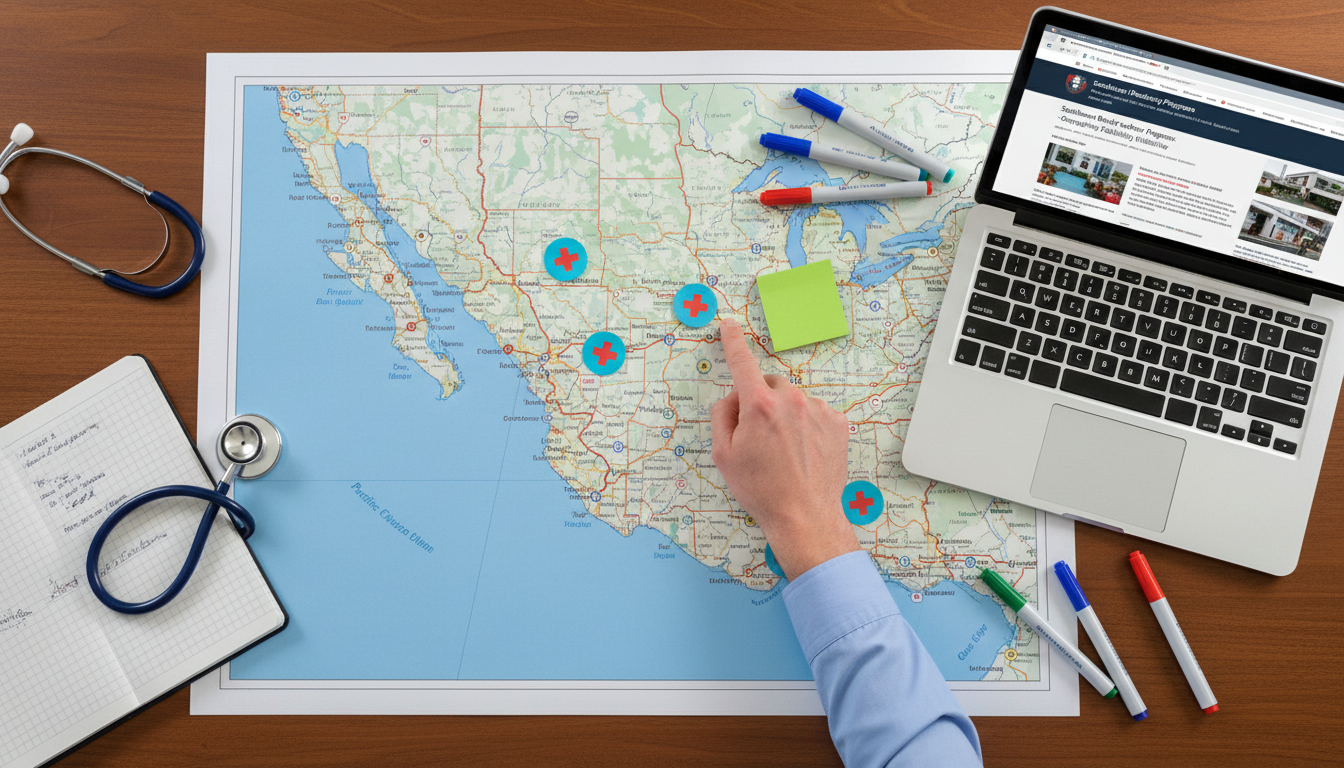
Many applicants hear “Texas border residency” and think exclusively of a few well-known cities. However, the US-Mexico border stretches nearly 2,000 miles across four states:
- Texas – Brownsville, McAllen, Harlingen, Laredo, Eagle Pass, Del Rio, El Paso, and surrounding communities
- New Mexico – Las Cruces, Deming, smaller communities near the border
- Arizona – Tucson, Nogales, Douglas, Yuma, Sierra Vista
- California – San Diego, Chula Vista, El Centro, Calexico, and the Imperial Valley region
Each segment has distinct:
- Training environments – Level I trauma centers vs. community hospitals; academic vs. community-based
- Visa traditions – Some hospital systems are very familiar with J‑1 and H‑1B; others are not
- IMG density – Certain institutions have long histories of recruiting foreign national medical graduates
Border Region vs. Border Identity
Not all programs “near” the border advertise themselves as border hospitals, yet they often serve border communities and have similar patient demographics. When planning a regional preference strategy:
- Include direct border cities (e.g., El Paso, Laredo, Nogales)
- Also include secondary cities within ~2–4 hours’ drive of the border (e.g., San Antonio, Tucson, Las Cruces, Yuma, Imperial County)
This broader definition gives you more options while still aligning with your interest in the border region.
Why Geographic Flexibility Matters More for Non‑US Citizen IMGs
For a US graduate, location preference is often a lifestyle decision. For a non‑US citizen IMG, it is a survival strategy.
1. Visa Sponsorship Is Not Uniform
As a foreign national medical graduate, you must balance geographic preference with visa realities:
- Some programs only offer J‑1 visas via ECFMG
- A smaller subset offers H‑1B sponsorship for residency
- Some institutions do not sponsor any visas at all
If you limit yourself to a narrow geographic band—say, “only Texas border residency programs in large cities that sponsor H‑1B”—you may cut your realistic options to a very small number. Geographic flexibility allows you to:
- Apply to more J‑1‑friendly programs across the entire border region
- Target the limited H‑1B‑sponsoring institutions without relying entirely on them
- Identify “hidden gem” community programs that consistently support non‑US citizen IMG residents
2. IMGs Face Stiffer Competition in Popular Cities
Major cities near the border (San Diego, Tucson, El Paso, San Antonio, and larger Texas metros) attract large numbers of applicants, including many US graduates. Programs in these areas may:
- Prefer US graduates when applicant volume is high
- Have the flexibility to be more selective with exam scores, attempts, and graduation year
- Be less dependent on IMGs to fill their class
By being geographically flexible, you can:
- Apply to less competitive border or near‑border communities
- Avoid over‑concentration in one or two popular cities
- Discover programs where IMGs constitute a core part of the workforce and cultural fabric
3. Regional Preference Strategy Signals Commitment
Programs in the US-Mexico border region want residents who will:
- Genuinely embrace border health challenges
- Likely remain in the region to practice after residency
- Engage with bilingual and bicultural patient populations sustainably
If your application shows that you:
- Applied only to one or two programs in their area, or
- Listed multiple distant regions as “top preferences” without a clear story
…you risk appearing uncommitted. A well‑designed geographic preference residency narrative can instead highlight that:
- The border region is your primary geographic anchor, even if you are also open to other underserved areas
- Your location flexibility match strategy is purposeful, not random
Designing Your Geographic Flexibility Strategy
You do not need to apply “everywhere” to be flexible. Instead, build a structured plan that keeps the US-Mexico border as a central focus while protecting your match chances.
Step 1: Define Your Core Geographic Anchor
For this article, your anchor is the US-Mexico border region. Make this explicit in your application:
- Personal statement: brief paragraph on your interest in border health
- ERAS geographic preference section: indicate your preference for this region and similar underserved areas
- Interviews: consistently articulate why this region aligns with your background and goals
Within the border region, consider:
- Texas border residency clusters (Rio Grande Valley, Laredo, El Paso corridor)
- Arizona and New Mexico border programs that treat large Spanish-speaking populations
- California border communities such as Imperial Valley and South Bay near San Diego
Step 2: Add “Adjacent” Regions to Expand Your Options
To maintain location flexibility match coverage while still being coherent, add one or two adjacent categories:
- Other Southwest states with high Hispanic/Latino populations
- Underserved rural or semi‑rural communities with similar socioeconomic and public health challenges
- Safety‑net hospitals in medium-sized cities
In your application narrative, you can say:
“My primary geographic interest is the US-Mexico border region, particularly programs that serve large Spanish-speaking and immigrant communities. I am also open to other underserved regions in the Southwest and across the US where I can apply similar skills in cross-cultural, high-need settings.”
This shows geographic flexibility without diluting your main story.
Step 3: Balance Your Program List (Border vs. Non‑Border)
A practical approach for a non-US citizen IMG might be:
- 40–50% of applications: US-Mexico border and near‑border programs
- 50–60% of applications: other IMG‑friendly programs nationwide that:
- Consistently sponsor your required visa type
- Have a meaningful history of interviewing and matching IMGs
- Align with your step scores, graduation year, and clinical profile
This balance prevents over‑reliance on one region while still highlighting your border interest.
Step 4: Account for Your Individual Risk Profile
Your needed level of geographic flexibility depends on your profile:
Strong profile (high scores, recent graduate, US experience)
- You may be able to be mildly more selective within the border region
- Still maintain openness to multiple states and community programs
Moderate profile (average scores, some gaps, older YOG)
- Increase flexibility in both location and program type
- Consider smaller cities and less well‑known hospitals
High‑risk profile (low scores, attempts, long YOG)
- Geographic flexibility is crucial—multiple states, including rural and community-heavy regions
- Still keep some applications in your preferred border area, but expect to cast a wide net
How to Express Geographic Preference Without Closing Doors
The ERAS geographic preferences section and your personal statement can help or hurt you, depending on how you use them.
Using the ERAS Geographic Preference Section Strategically
ERAS allows you to indicate:
- No preference
- Broad regional preferences (e.g., Southwest)
- Willingness to go “anywhere”
As a non-US citizen IMG targeting the US-Mexico border region:
- Consider choosing a regional preference that includes the border (e.g., “Southwest” if available) rather than naming one single state
- If asked about “willingness to go anywhere,” you might:
- Accept it if your priority is maximum match chance
- Or select “no preference” but highlight border interest in your documents
This avoids over‑limiting you while still signaling some focus.
Personal Statement: Focused Yet Flexible
Your personal statement can mention the border region without sounding rigid:
Do:
- Explain your interest in border health (language skills, cultural familiarity, previous work in similar settings)
- Clarify that you are committed to serving underserved, immigrant, and bilingual communities
Do Not:
- State that you will only accept training in one specific city
- Sound as though matching outside the border would be a failure
Sample wording:
“I am particularly drawn to the US-Mexico border region because of its unique blend of clinical complexity, cross-border health issues, and the opportunity to serve large Spanish-speaking communities. At the same time, I am open to any program where I can work with underserved and immigrant populations and contribute my language skills and cross-cultural experience.”
This approach maintains a regional preference strategy while preserving geographic flexibility.
During Interviews: Aligning Honesty and Strategy
When asked, “Do you have a geographic preference?”:
- Start by affirming your genuine interest in their region
- Then broaden to highlight your flexibility and mission-driven focus
Example:
“Yes, I do. My main interest is in regions like the US-Mexico border where there is a strong need for bilingual physicians and where social determinants of health are a major part of daily practice. That said, my priority is training in a program that serves underserved communities, whether at the border or in similar settings elsewhere.”
This shows clear commitment without sounding location‑rigid.

Practical Tips and Examples: Applying Geographic Flexibility to Your Match Plan
1. Build a Target List by Clusters, Not Just States
Instead of thinking “Texas only,” think in border clusters:
Rio Grande Valley Cluster (South Texas)
- Programs around Brownsville, Harlingen, McAllen, Edinburg
- Often high Spanish-speaking population, community-focused care
Laredo / Eagle Pass / Del Rio Corridor
- Smaller communities, high border health workload
- Community or hybrid community–academic environments
El Paso / West Texas / Southern New Mexico
- El Paso plus nearby New Mexico towns like Las Cruces
- Some academic presence, strong cross-border dynamics
Arizona Border Corridor
- Tucson, Nogales, Douglas, Yuma
- Mix of university-affiliated and community hospitals
California South Border / Imperial Valley
- Imperial County (e.g., El Centro), South Bay near San Diego
- Heavy migrant worker population, agricultural medicine issues
Then expand outward to near‑border cities that regularly treat border-related health issues.
2. Check Visa and IMG History for Each Program
For every program in your border-focused list:
- Verify current visa policies (J‑1 vs. H‑1B, or none) via:
- Program websites
- FREIDA
- Direct email if information is unclear
- Look at resident roster photos and bios:
- How many are IMGs?
- Are there other non-US citizen IMG residents?
- Are graduates from your region or similar backgrounds represented?
This will help distinguish true IMG‑friendly border programs from those that are geographically in the right place but rarely support IMGs.
3. Combine Location Flexibility with Specialty Flexibility (If Appropriate)
If you are highly determined to live and work in the border region long term, one strategy is:
- Prioritize geographic location over ultra-competitive specialties
- Consider applying in slightly less competitive fields (e.g., Internal Medicine, Family Medicine, Pediatrics, sometimes Psychiatry) in the border area
Once trained and licensed in the US, you can seek:
- Fellowships in more specialized fields (often in other locations)
- Job opportunities back in the border region where your experience is valued
However, this is a deeply personal decision and should align with your genuine professional interests.
4. Create a Plan A / Plan B / Plan C
For many non-US citizen IMGs targeting the US-Mexico border region, a tiered strategy is useful:
Plan A – Ideal Scenario
- Border or near-border residency in your preferred specialty
- Accepting J‑1 or H‑1B (depending on your situation)
Plan B – Broader but Related
- Residency in a similar underserved or high-immigration region anywhere in the US
- Still with focus on bilingual or cross-cultural care
Plan C – Safety Net
- Broader national search in more IMG‑friendly locations and specialties
- Aimed at securing any solid residency that advances your career
By consciously designing these layers, you reduce stress and avoid last-minute rushed decisions.
5. Prepare for Post‑Match Immigration Considerations
As you plan geographic flexibility now, remember that:
- A J‑1 visa requires a 2‑year home-country physical presence after training, unless you obtain a waiver (often based on working in underserved US areas)
- Many J‑1 waiver jobs are in rural or underserved regions, including but not limited to the US-Mexico border
- If your ultimate goal is to practice in the border region long term, being geographically flexible now—especially with J‑1 and underserved jobs later—may actually increase your chances of returning to the border as an attending physician
In your long-term strategy, think of geography across three phases:
- Residency – Maximize match chances while aligning as much as possible with border/underserved interest
- J‑1 Waiver or First Job – Possibly in rural or semi‑rural underserved areas (border or non-border)
- Attending Practice – With US experience and visa stability, re-target your ideal location, including the border region
FAQs: Geographic Flexibility for Non‑US Citizen IMGs in the US-Mexico Border Region
1. If I say I prefer the US-Mexico border region, will programs outside the border not consider me?
Not necessarily. If you express your interest carefully—emphasizing border and similar underserved communities—many programs outside the border will still view you as a strong candidate. Avoid rigid wording like “I only want the border.” Instead, frame it as your primary interest within a broader commitment to underserved populations.
2. As a non-US citizen IMG, should I prioritize visa sponsorship over geographic location?
Visa sponsorship is a non‑negotiable requirement, so it must be your first filter. There is no benefit to applying to programs that cannot sponsor your needed visa type. Once you identify visa‑capable programs, you can use geography to prioritize your list—giving preference to border and near‑border residency programs that fit your goals.
3. Are Texas border residency programs more IMG‑friendly than other states’ border programs?
Some Texas border residency programs are very IMG‑friendly, but this is not universal. Arizona, New Mexico, and California border programs may also have strong IMG representation. You must research each program individually—look at resident rosters, historical match lists, and current visa policies—rather than assuming an entire state is IMG-friendly.
4. How many programs in the border region should I apply to as a non-US citizen IMG?
There is no universal number, but for most non-US citizen IMGs, the border region alone is not large enough to carry the entire match strategy. Apply to as many realistic, visa‑sponsoring border and near‑border programs as you can identify, then supplement with a significant number of IMG‑friendly programs nationwide. For many IMGs, that might mean dozens of total applications, with a substantial but not exclusive focus on the border.
By approaching geographic flexibility as a structured, strategic tool rather than a vague “I’ll go anywhere,” you can significantly improve your match prospects while still honoring your genuine interest in the US-Mexico border region and its communities.