Understanding Your Unique Position as a Non‑US Citizen IMG
As a non-US citizen IMG (international medical graduate) applying to diagnostic radiology, your program research strategy must be more deliberate and data-driven than that of a US graduate. You’re not only aiming for a competitive specialty; you must also navigate immigration constraints, institutional policies toward foreign national medical graduates, and often limited face-to-face exposure to US training environments.
Before you start searching for individual programs, clarify three foundational points:
1. Your Visa and Legal Status
Most non-US citizen IMGs enter residency on one of two visas:
J-1 visa (ECFMG-sponsored)
- Most common for foreign national medical graduates
- Generally limited duration (usually 7 years total for GME)
- Typically requires a 2-year home-country physical presence after training (unless waived)
H-1B visa (employer-sponsored)
- Less common, but still used by many radiology programs
- Requires passing USMLE Step 3 before H-1B filing
- Often preferred by applicants planning long-term US practice without J-1 waiver obligations
Many radiology programs only sponsor J-1, some sponsor J-1 and H-1B, and some do not sponsor visas at all. This must be a primary filter in your program research.
2. Your Diagnostic Radiology Competitiveness Profile
Be realistic and specific about your profile:
- Exams: USMLE/COMLEX scores, number of attempts, Step 3 status
- Education: Medical school reputation, recency of graduation, class rank
- Radiology Exposure: US clinical experience, radiology electives, observerships, home-country radiology experience
- Research: Radiology-related publications, abstracts, posters, QI projects
- Communication: English fluency, letters that comment on teamwork, communication, and professionalism
Radiology is competitive even for US grads. As a non-US citizen IMG, you’ll strengthen your chances by:
- Targeting programs with a track record of matching IMGs
- Aligning your applications with tiers of competitiveness (reach, realistic, and safety programs)
- Favoring programs where your strengths (research, language, procedural skills, etc.) are valued
3. Your Personal and Career Goals
Your program research should also reflect your life priorities and long-term goals:
- Academic career vs. private practice focus
- Desire for subspecialty fellowship (e.g., neuroradiology, IR, MSK, body imaging)
- Geographic preferences (visa waiver possibilities, family, cost of living, climate)
- Tolerance for workload intensity and call frequency
- Interest in teaching, leadership, or research
Clarifying these gives you criteria to evaluate residency programs instead of just chasing name recognition.
Step-by-Step Program Research Strategy for Diagnostic Radiology
The core of how to research residency programs is to move from broad lists to highly curated options that fit you academically, logistically, and personally. The process below is optimized for the non-US citizen IMG.
Step 1: Start with Official Data Sources
These should be your first stops before social media or word-of-mouth.
A. FREIDA (AMA Residency & Fellowship Database)
FREIDA is one of the most useful tools for evaluating residency programs systematically:
- Filter by specialty: Diagnostic Radiology
- Apply initial filters:
- Program type: ACGME-accredited
- Visa sponsorship: J-1, H-1B, or “accepts international graduates” (if available)
- Program size: Larger programs may offer more IMG positions and support
For each program, collect:
- Number of residents per year (larger vs. smaller programs)
- Program type: university, university-affiliated, or community
- Contact details and website
- Program duration and structure
- Any mention of visa or IMG policies
Create a spreadsheet and log baseline information for every program that might be an option.
B. NRMP and ERAS Resources
Use:
NRMP “Charting Outcomes in the Match” and Program Director Survey
- Look for data specific to IMGs in diagnostic radiology
- Understand average scores, research output, interview/ ranking factors
ERAS program filters and program lists
- Confirm which programs participate in ERAS for diagnostic radiology each year
Focus on:
- How often diagnostic radiology matches non-US citizen IMGs overall
- Factors PDs cite as “very important” for interview offers (e.g., USMLE scores, letters, MSPE, professionalism, communication)
This informs how selective you must be and where your profile is more competitive.
Step 2: Systematically Check Visa and IMG-Friendliness
Your next filter is non-negotiable: Does the program realistically train foreign national medical graduates?
A. Check Program Websites for Visa Policies
On each diagnostic radiology residency site, look specifically for:
- “International Medical Graduates” or “Eligibility” page
- “Visa sponsorship” language:
- “We sponsor J-1 visas only”
- “We can sponsor J-1 or H-1B visas”
- “We do not sponsor visas” or “Only US citizens/green card holders”
- USMLE requirements: minimum scores, number of attempts, Step 3 requirement (often needed for H-1B)
If not clearly stated:
- Check FAQs, “Applicants” section, or GME office pages
- Look at current residents—are any IMGs or foreign-trained?
B. Look at Current and Past Residents
This is one of the strongest indicators of how IMG-friendly a radiology program is in practice.
Study:
- Current residents list: Do names/schools indicate IMG representation, especially non-US citizen IMG?
- Resident biographies: Many programs list medical schools—look for international schools
- Alumni lists: Who matched in prior years and where they trained?
If a program has multiple recent non-US citizen IMGs, that’s a positive sign:
- They understand visa processes
- They likely have institutional support and experience with foreign graduates
- The environment may be more welcoming and structured for international residents
Conversely, if a program has only US MD/DOs for many years, treat it as a long-shot unless your profile is extremely strong.
C. Email or Call the Program or GME Office (When Needed)
If information is unclear:
- Send a concise, professional email to the program coordinator or GME office:
- Ask specifically: “Do you sponsor J-1 and/or H-1B visas for diagnostic radiology residents?”
- Don’t write your life story; keep it short and focused.
This prevents wasting ERAS applications on programs that will not rank non-US citizen IMGs.

How to Evaluate Radiology Residency Programs Beyond the Basics
Once you’ve filtered for visa and IMG-friendliness, the next step in how to research residency programs is comparing quality, fit, and training environment. For diagnostic radiology, several factors are especially important.
1. Case Volume and Diversity
Your goal is to graduate as a confident, independent radiologist. For that, you need:
- High overall case volume: CT, MRI, ultrasound, plain films, nuclear medicine
- Balanced exposure: Neuroradiology, MSK, chest, abdominal, pediatric, breast, emergency radiology
- Diversity of pathology: Tertiary care centers and trauma centers often offer more complex cases
Where to find this:
- Program websites (often highlight “X,000 exams per year” for the department)
- Affiliated hospitals (level I trauma, cancer centers, children’s hospitals)
- Virtual open houses and recorded webinars
If numbers aren’t listed, infer from:
- Size and type of hospital system (large academic vs community)
- Presence of specialized centers (cancer, cardiac, children’s, transplant)
2. Subspecialty Training and Fellowship Outcomes
Most modern radiologists pursue fellowship. For a diagnostic radiology residency, investigate:
- On-site fellowships: neuroradiology, MSK, IR, breast, body, pediatric radiology, etc.
- Fellowship placement: Where do graduates go? Top academic centers? Competitive subspecialties?
- Department expertise: Are there nationally known faculty in key areas?
Programs with strong in-house or affiliated fellowships often have:
- Better teaching in that subspecialty
- Research opportunities
- Strong letters of recommendation from recognized faculty
As a non-US citizen IMG, strong fellowship placement is also important for:
- Long-term visa options (J-1 waiver jobs often value subspecialty training)
- Competitiveness for both academic and private practice positions
3. Curriculum Structure and Call System
Study:
- Rotation schedule:
- How early do residents get into cross-sectional imaging (CT/MRI)?
- Are there dedicated rotations in emergency radiology, night float, and procedures?
- Call structure:
- Night float vs. traditional home call
- How early does independent call begin? (Often PGY-3/second year DR)
- Presence of on-site attending backup
For a non-US citizen IMG, a well-structured curriculum:
- Provides clear milestones and expectations
- Reduces the stress of adapting to a new health system
- Ensures adequate teaching during nights (where language and new workflows can be challenging)
4. Educational Culture and Support for IMGs
Look for explicit or implicit signs that the program invests in international trainees:
Examples:
- Mentions of “supportive learning environment,” “resident wellness,” “mentoring”
- Structured board review sessions
- ESL or communication support through the institution (if available)
- Testimonials or profiles of past IMGs on the website
- Participation in resident wellness initiatives or diversity and inclusion efforts
As a foreign national medical graduate adapting to US training:
- You benefit from programs that are patient with the learning curve (documentation, systems, communication styles)
- Strong mentorship from senior residents and faculty is crucial
When attending virtual open houses, listen for:
- How they describe feedback and remediation
- Attitudes toward diversity, equity, and inclusion
- Whether former or current IMGs are invited to speak
5. Geographic, Lifestyle, and Financial Considerations
Your program choice also affects your day-to-day life:
- Cost of living: Big coastal cities vs smaller midwestern or southern cities
- Transportation: Need for car vs public transport around the hospital
- Climate: Extremes of heat, cold, or snow if unfamiliar
- IMG/immigrant community presence: Cultural communities, language groups, religious centers
For non-US citizen IMGs, geography intersects with immigration:
- States with more J-1 waiver job opportunities after training (if you plan to stay in the US)
- Regions where radiologists are in high demand may have better long-term job prospects
- Some rural/underserved areas—often in the Midwest or South—are more open to hiring J-1 waiver and H-1B candidates
Balance prestige with practicality. A slightly less famous program in a region friendly to international physicians can sometimes be a better long-term move.
Building a Practical Program Research Workflow
Good research is systematic. Here is a structured plan you can implement over 2–4 weeks.
Step 1: Create a Master Spreadsheet
Include columns such as:
- Program name
- City, State, Program type (academic/community/hybrid)
- Visa sponsorship (J-1 / H-1B / none / unclear)
- IMG presence (strong / some / minimal / none visible)
- USMLE requirements and attempts allowed
- Case volume and trauma level (if known)
- Subspecialty fellowships or fellowship placement
- Educational features (board review, structured teaching, simulation)
- Lifestyle (cost of living, location pros/cons)
- Subjective impression (Strong interest / Neutral / Low interest)
- Notes (from open houses, emails, or alum feedback)
This becomes the core of your program research strategy.
Step 2: Do Tiered Review Rather Than Program-by-Program Deep Dives
To avoid burnout:
Initial scan (low depth, wide scope)
- Go through all possible diagnostic radiology programs
- Exclude those with:
- No visa sponsorship
- Explicit preference for US grads only
- Strict requirements you do not meet (e.g., USMLE cutoffs, time since graduation)
Second pass (moderate depth)
- Among remaining programs, quickly assess:
- Current residents/alumni for IMGs
- Location, hospital type, and size
- Website clarity and educational approach
- Mark as:
- High priority: clear visa support + IMG-friendly + good training features
- Medium priority: unclear IMG friendliness but no red flags
- Low priority: minimal IMG presence or poor fit
- Among remaining programs, quickly assess:
Focused deep research on high/medium priority
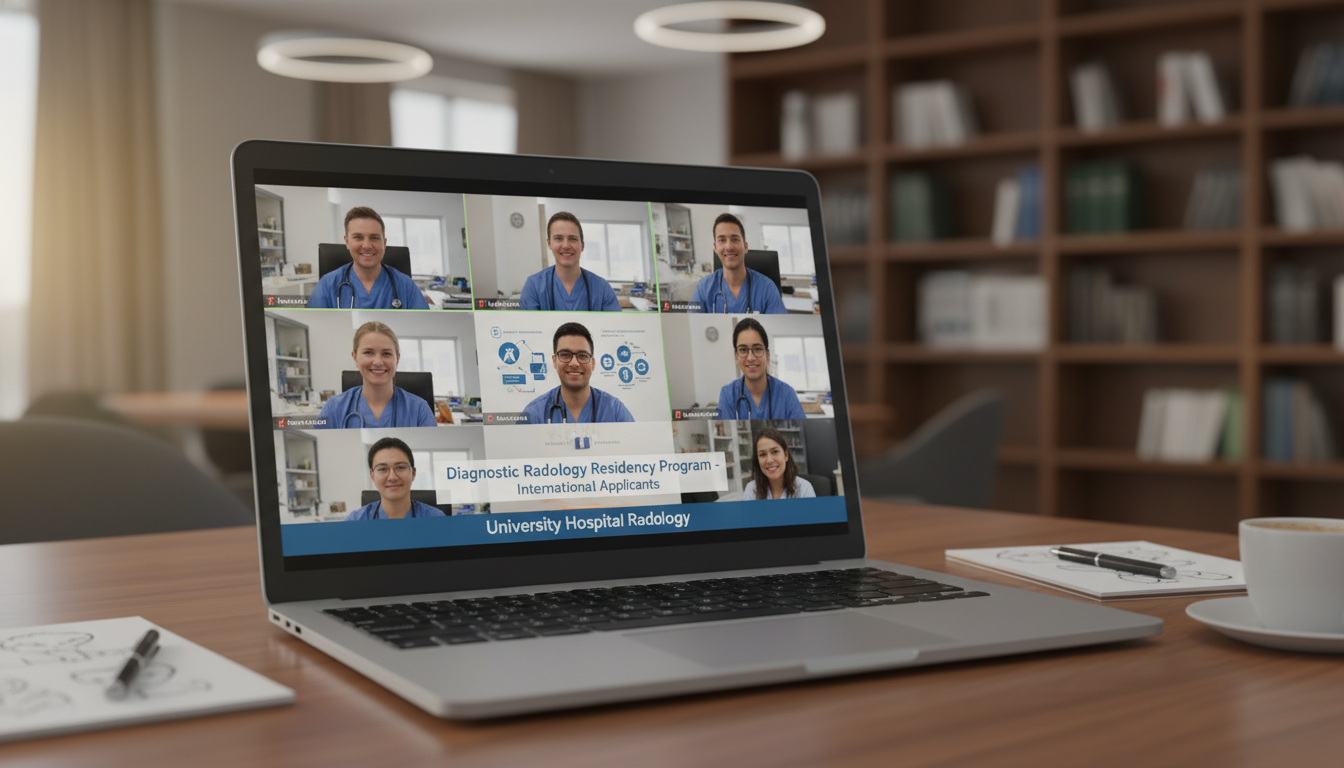
- Watch any recorded open houses or webinars
- Attend current cycle virtual info sessions
- Reach out to alumni or contacts (see next section)
This layered approach ensures you don’t waste time deeply researching places that likely will not interview you.
Using Networks, Social Media, and Alumni Wisely
Beyond official data, much of your best information will come from people and informal channels.
1. Leverage Alumni from Your Medical School
As a non-US citizen IMG, your strongest allies may be:
- Seniors from your school now in US radiology or other specialties
- Faculty who trained in the US
- Alumni networks organized by your school or region
Ask them:
- Which diagnostic radiology programs are realistically IMG-friendly?
- Where have graduates from your region matched recently?
- Any programs to avoid because of poor culture, lack of support, or visa issues?
Often, you will identify a hidden group of programs that consistently take IMGs from your country or similar contexts.
2. Use Social Media and Online Communities, But Critically
Useful platforms can include:
- Twitter/X, LinkedIn (radiology educators and PDs are active)
- Specialty interest groups (e.g., RSNA, ACR trainee sections)
- IMG-oriented forums and Facebook groups
Use them to:
- Learn about virtual open houses and Q&A sessions
- Get insights on program culture and workload
- Connect with current residents who share your background
Avoid:
- Over-trusting anonymous ranking lists or “tier lists”
- Making decisions based solely on one person’s negative or positive story
- Violating confidentiality (never share internal documents or gossip)
3. Contact Current Residents (Especially IMGs)
When appropriate, reach out politely to current residents in programs you’re strongly considering—especially if they are non-US citizen IMGs.
Keep your message:
- Short and respectful
- Focused on specific questions, for example:
- “How supportive is the program toward international residents?”
- “How is the learning environment for someone new to the US health system?”
- “Does the program genuinely support research and fellowships?”
- “How easy or hard was the visa process?”
Do not:
- Ask for them to “put in a good word” initially
- Send long CVs or multiple large attachments unsolicited
- Be pushy or demanding; many residents are extremely busy
Their honest impressions can significantly refine your ranking of programs.
Turning Research into a Smart Application and Rank List Strategy
After researching, you must convert information into decisions: where to apply and how to rank programs.
1. Build a Balanced Application List
For diagnostic radiology as a non-US citizen IMG, application numbers are often higher than for US grads, but quality still matters.
Typical ranges (adapt to your competitiveness):
- Reach programs: 20–30%
- University programs with strong reputations that also show IMG presence
- Realistic programs: 50–60%
- Academic-community hybrids or mid-tier universities
- Clear history of accepting IMGs and stable visa sponsorship
- Safety programs: 10–20%
- Smaller or community-based programs
- Often outside major metro areas but IMG-friendly
Focus on programs that:
- Explicitly mention welcoming IMGs
- Have current foreign national residents (ideally in radiology)
- Train residents who consistently pass boards and obtain fellowships
2. Evaluate Programs for Ranking: What Really Matters
During and after interview season, revisit your research with deeper insight. When ranking, consider:
- Training quality (case volume, teaching, board pass rates)
- Support and culture (how you felt during interview day, interactions with residents)
- Visa reliability (no last-minute surprises)
- Life outside work (cost of living, safety, ability to build a support network)
- Career alignment (fellowship prospects, academic vs private-practice orientation)
As a non-US citizen IMG, put extra weight on:
- Programs with proven long-term support for international trainees
- Environments where communication barriers are understood and addressed
- Locations that support your immigration and family plans
Remember: a “less famous” program that deeply invests in you can be far better than a at a big-name institution where you struggle unsupported.
Frequently Asked Questions (FAQ)
1. How many diagnostic radiology programs should a non-US citizen IMG apply to?
There is no universal number, but many non-US citizen IMGs aiming for diagnostic radiology apply to 40–80 programs, adjusting up or down based on competitiveness:
- If you have strong scores, US clinical experience, and some research: ~40–60 well-chosen programs may suffice.
- If your profile has weaknesses (older graduation year, score attempts, limited US experience): consider up to ~70–80, but make sure they’re filtered and realistic, not random.
Quality of program research is more important than raw number of applications.
2. How can I tell if a radiology residency program is truly IMG-friendly?
Look for multiple converging signals:
- Current or recent non-US citizen IMGs among residents
- Website or GME pages explicitly welcoming IMGs and listing visa options
- No language excluding international graduates
- Positive feedback from IMGs who trained there
- Reasonable requirements (not demanding USMD-only or extremely high cutoffs with no prior IMG matches)
If a program’s resident roster is 100% US MD/DO for many years, and there’s no mention of visas, it’s likely not genuinely IMG-friendly.
3. Should I prioritize programs that offer H-1B over J-1?
Not always. Consider:
- Many excellent radiology programs only sponsor J-1 and have outstanding fellowship and job outcomes.
- H-1B can be advantageous if:
- You already passed USMLE Step 3
- You wish to avoid the J-1 two-year home residency requirement
- J-1 is often easier to obtain and more common in GME.
A strong J-1 program that trains you well is usually better than a mediocre H-1B program. Focus first on training quality and long-term support.
4. I can’t attend in-person visits. How can I still evaluate program culture?
Use virtual tools strategically:
- Attend virtual open houses, Q&A sessions, and recorded webinars.
- Ask specific questions about teaching, feedback, and support for IMGs.
- Speak to current residents (especially IMGs) in brief, focused calls or emails.
- Observe how faculty and residents interact on virtual platforms—respectful and engaged vs. rushed or dismissive.
- Review any resident handbooks or policies you receive for clarity and transparency.
You can still form accurate impressions of culture with careful listening and multiple data points.
By approaching your diagnostic radiology residency search with a structured, data-driven program research strategy, you turn a stressful, uncertain process into a series of manageable decisions. As a non-US citizen IMG and foreign national medical graduate, your challenge is real—but with focused research on visa policies, IMG-friendliness, training quality, and long-term career fit, you can identify programs where you will not only match, but truly thrive.