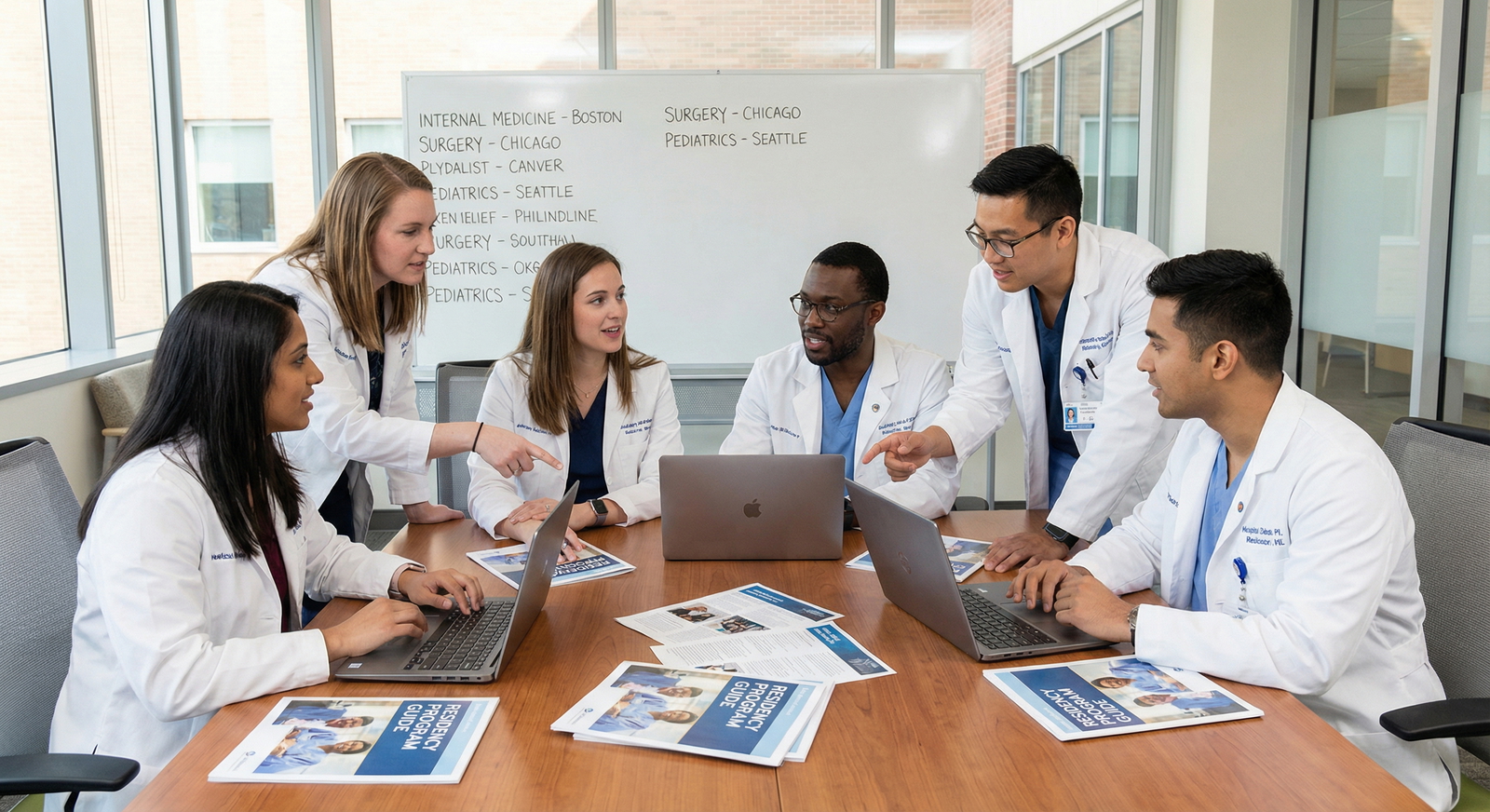
Understanding Geographic Flexibility as a Non-US Citizen IMG
For a non-US citizen IMG, “geographic flexibility” is much more than being open to living in different places. It’s a strategic tool that can significantly increase your chances of matching—especially in competitive areas like the Northeast Corridor.
Geographic flexibility means:
- Being open to a wider range of cities, hospital types, and community settings
- Understanding how geographic preference residency signals work (especially in ERAS and NRMP)
- Knowing when to emphasize regional interest and when to show broader location flexibility for the Match
- Balancing visa needs, support systems, and career goals with realistic match opportunities
For the foreign national medical graduate targeting northeast residency programs, the challenge is unique:
- The Northeast (Boston–New York–Philadelphia–DC corridor) is highly desirable and competitive
- Many programs are IMG-friendly but also inundated with applications
- Visa sponsorship (particularly J-1 and H-1B) adds complexity
- Program directors often try to gauge whether you are truly committed to their region
Your job is to build a regional preference strategy that uses geographic flexibility intelligently—not randomly—to open more doors without undermining your credibility.
The Northeast Corridor Landscape: What Non-US Citizen IMGs Need to Know
The “Northeast Corridor” typically includes major urban hubs and their surrounding areas:
- Boston and New England (MA, CT, RI, parts of NH)
- New York City and Upstate New York
- New Jersey (especially the NYC–Philadelphia corridor)
- Philadelphia and Eastern Pennsylvania
- Baltimore, Washington DC, and Northern Virginia
Each has different implications for a foreign national medical graduate.
1. Competitiveness and IMG-Friendliness Vary Widely
Not all northeast residency programs are equally open to IMGs. General patterns:
More competitive / fewer IMGs on average
- Major academic “name-brand” centers in Boston, Manhattan, central Philly, and DC
- Certain specialties (e.g., Dermatology, Plastic Surgery, Radiation Oncology)
Moderate to high IMG representation
- Large community programs affiliated with universities
- Safety-net hospitals in major cities (Newark, the Bronx, parts of Brooklyn, North Philly, Baltimore)
Often more IMG-friendly but less well-known
- Programs in smaller cities and semi-rural areas:
- Upstate New York (Buffalo, Syracuse, Rochester, Albany)
- Western Massachusetts, smaller cities in Connecticut and New Jersey
- Parts of Pennsylvania (Scranton, Reading, Allentown, Erie, Lancaster, York, Harrisburg)
- Maryland outside Baltimore and DC suburbs
- Programs in smaller cities and semi-rural areas:
Actionable tip:
Before you build your application list, create three columns:
- High prestige / low IMG proportion
- Mid-tier academic or strong community with moderate IMG presence
- Smaller city / community programs with strong IMG representation
Aim for a thoughtful mix of all three—weighted toward 2 and 3 if your profile is average or below-average for your specialty.
2. Visa Sponsorship Patterns in the East Coast Residency Market
As a non-US citizen IMG, visa sponsorship is non-negotiable. The Northeast Corridor has many visa-sponsoring programs, but policies differ:
J-1 Visa
- Sponsored by ECFMG; very common
- Many IM/FM/psych/neurology programs sponsor J-1 as standard
- Most likely to be available across a broad range of east coast residency sites
H-1B Visa
- Fewer programs offer this due to cost, legal complexity, and institutional policies
- More often seen in Internal Medicine, some specialty programs, and certain university hospitals
- Some states or institutions have blanket restrictions (J-1 only)
Key advice:
In your program spreadsheet, add explicit columns:
- “J-1: Yes/No”
- “H-1B: Yes/No”
- “Sponsor any visas? Yes/No”
Do not assume all Northeast programs sponsor visas just because they are academic or in big cities. Check program websites, FREIDA, or email coordinators.
3. Cost of Living and Lifestyle Trade-Offs
The Northeast Corridor is expensive in its major hubs:
- Highest cost zones: Manhattan, central/northern Brooklyn, downtown Boston, DC proper
- Moderately high: Suburbs around Boston/NYC/DC, central Philadelphia, popular NJ commuter towns
- More affordable: Upstate NY, smaller Pennsylvania cities, parts of Maryland and Connecticut away from coast or major metros
Geographic flexibility here means honestly asking:
- Am I willing to trade prestige and city life for financial breathing room and possibly better training hands-on opportunities?
- Can I thrive in a smaller city or more suburban setting for 3+ years?
For many foreign national medical graduates, the answer is “yes”—and that openness can be a powerful advantage.

Building a Smart Regional Preference Strategy for the Northeast
“Geographic preference” in residency isn’t just about liking a city; it’s about how you signal interest and how you build your application list.
1. Defining Your Geographic Tiers
Start by defining clear tiers for yourself:
Tier A: Must-consider regions
- Places that best align with your support system, visa opportunities, or career goals
- Example: “Anywhere within train distance of NYC and Philadelphia”
Tier B: Would happily go
- Places where you could see yourself living and training, even if they are less familiar or glamorous
- Example: Upstate NY, central/western Pennsylvania, Western Massachusetts, smaller cities in New Jersey
Tier C: Only if necessary
- Areas with serious constraints for you (family, cost, safety concerns, etc.)
Be honest with yourself. Then align:
- 80–90% of your applications in Tier A and Tier B
- 10–20% in truly competitive Tier A “reach” locations (Manhattan academic, central Boston, etc.)
This structure keeps you competitive while still realistic.
2. Matching Your CV to the Region
Programs in the Northeast Corridor often look for evidence of regional commitment, especially when you’re a non-US citizen IMG without US roots.
You can show this by:
- Clinical experience: USCE in the Northeast (observerships, externships, electives)
- Address history: If you studied, worked, or lived anywhere in the East Coast
- Personal statement: Anchoring your narrative to the region—healthcare disparities, population diversity, or specific local issues
- Letters of recommendation: From faculty in the Northeast, ideally linked to regional institutions
Example for your personal statement:
“During my months at a community hospital in New Jersey and a safety-net clinic in North Philadelphia, I came to appreciate the unique mix of high-acuity medicine and complex social determinants of health in the Northeast Corridor. I am particularly eager to continue my training in this region, where I can serve diverse immigrant communities similar to my own background.”
This helps programs trust that if they invest an interview spot in a foreign national medical graduate, you are genuinely likely to rank them and come.
3. Using ERAS Geographic Preferences Carefully (If Available in Your Cycle)
In recent cycles, ERAS has experimented with geographic preference signals (though these tools can change).
Key principles if such tools are in place:
- Don’t over-concentrate all your signals in Manhattan/Boston unless you have an exceptional profile
- If you strongly want the east coast residency experience, you might prioritize:
- “Northeast” as a region overall rather than only one state
- A mix of big city and smaller city signals
- Make sure your list of actual applications matches your stated geography; otherwise, it looks inconsistent
Remember: geographic signals do not guarantee interviews. They simply help programs identify who is more likely to come if invited.
Strategically Demonstrating Geographic Flexibility (Without Looking Desperate)
Geographic flexibility is attractive to programs—but needs to be communicated strategically and professionally.
1. In Your Personal Statement
Your statement can show both regional preference and openness:
- Express a clear primary interest in the Northeast Corridor
- Pair this with thoughtful flexibility about different types of communities in that region
Example phrasing:
“Having trained and volunteered in urban settings similar to New York and Philadelphia, I am particularly drawn to northeast residency programs that serve diverse, underserved populations. At the same time, I am very open to smaller cities and community-based training environments within the Northeast, where I can gain broad clinical exposure and build close relationships with mentors.”
This conveys that you are not fixated on one glamorous city but still consistent about wanting the Northeast.
2. In Emails to Programs
If you reach out (sparingly and respectfully) to programs, geographic flexibility can be a key talking point.
Better email content:
- Confirm your sincere interest in their specific location and patient population
- Show awareness of their region’s characteristics
- Reassure them you are seriously considering living and training there
Example:
“As a foreign national medical graduate with clinical experience in New Jersey and Pennsylvania, I am very interested in continuing my training within the Northeast Corridor. Your program’s strong emphasis on community-based care in [City] is particularly appealing to me. Although I am not from the area originally, I have found the Northeast’s diversity and patient complexity a strong fit for my goals, and I would be excited to make [City] my home during residency.”
Avoid phrases that sound like you are willing to go “anywhere in the US” without a coherent rationale; that can feel unfocused.
3. During Interviews: Balancing Honesty and Strategy
You may be asked:
- “Where else are you applying?”
- “How important is it for you to be in this region?”
- “Would you be comfortable living in a smaller city?”
Effective responses:
- Emphasize the Northeast/East Coast broadly, not just one city
- Show genuine enthusiasm about their specific location
- Express openness to different city sizes as long as training quality and patients align with your goals
For example:
“I have focused my applications largely on the Northeast Corridor—New York, Pennsylvania, New Jersey, and parts of New England and Maryland—because I’m familiar with the patient population and healthcare systems here. Within that region, I’m open to both large academic centers and smaller cities, as long as I can work with diverse patients and gain strong clinical training. I could see myself very happy living in [their city], and I appreciate its balance of [specific cultural/clinical/lifestyle features].”
You’re showing location flexibility in the Match while keeping a coherent story.

Application List Design: Turning Flexibility Into Match Power
For a non-US citizen IMG, strategic list design is where geographic flexibility becomes most powerful.
1. How Many Programs, and Where?
Numbers depend on specialty and competitiveness, but for a typical IMG-friendly specialty like Internal Medicine, Family Medicine, or Psychiatry:
- Strong applicant (solid USMLEs, some USCE, strong English, no major red flags):
- 40–60 programs total, with ~70–80% in the Northeast Corridor if that’s your priority
- Average IMG applicant:
- 60–80 programs, mixing Northeast with other more IMG-friendly regions
- Red flags / lower scores:
- 80–120 programs, strongly diversifying both geography and program competitiveness
Even if you want the Northeast most, it can be risky to only apply to that region, especially as a foreign national medical graduate. Consider adding:
- Some programs in the Mid-Atlantic or Midwest that are known to be IMG-friendly and sponsor visas
- A few backup regions where you would still accept living and training if the Northeast doesn’t work out
This is what true geographic flexibility looks like: a clear preference, but enough alternatives to keep your match odds reasonable.
2. Mixing Urban, Suburban, and Smaller Cities
Within the Northeast:
Urban academic centers (NYC, Boston, DC, central Philly):
- Apply if your scores and CV are competitive for them
- But treat many of these as “reach” programs if you’re an average IMG
Urban community / safety-net hospitals:
- Often a sweet spot for non-US citizen IMGs
- High patient volume, strong clinical exposure, greater openness to visa issues
Smaller city or semi-rural programs (Upstate NY, inland PA, parts of New England):
- Often less competitive but excellent training
- Program directors may value IMGs who genuinely want to live there
If you are serious about matching in the Northeast but not fixated on only 3–4 famous cities, include a significant number of smaller-city and community-based programs.
3. Tracking and Reviewing Your List
Use a spreadsheet with columns like:
- Program Name / City / State
- Type: Academic vs community vs hybrid
- IMG % (estimate from resident list)
- Visas: J-1? H-1B?
- Your interest level (High/Medium/Low)
- Cost of living (High/Medium/Low)
- Notes: “Strong immigrant population,” “Upstate NY—cold climate but low cost,” etc.
This helps you maintain rational, data-driven geographic flexibility, not last-minute panic decisions.
Practical Challenges and Mindset Shifts for Non-US Citizen IMGs
Even with the best strategy, there are emotional and practical barriers.
1. Addressing Fear of Smaller or Less Famous Locations
Many IMGs strongly prefer NYC, Boston, or similar hubs due to:
- Existing diaspora communities
- Perceived prestige
- Familiarity from media and social networks
However, programs in smaller cities may:
- Offer more hands-on responsibility earlier
- Have stronger IMG networks and mentorship
- Provide better work-life balance and financial stability
Mindset shift: Residency is temporary (3–7 years). You can always move to bigger cities after training for fellowship or employment. Don’t underestimate what a great smaller-city program can do for your career.
2. Balancing Family, Culture, and Support Systems
As a foreign national medical graduate, your support system might be limited in the US. When choosing a location, consider:
- Nearby relatives or friends in the region
- Size and presence of your cultural or language community
- Availability of international groceries, places of worship, schools (if you have children)
Geographic flexibility does not mean ignoring these factors; it means weighing them thoughtfully without completely eliminating all less familiar options.
3. Planning for Long-Term Immigration and Career Goals
Your regional strategy should also account for:
- Post-residency fellowship opportunities in the Northeast
- State-level J-1 waiver opportunities (if you anticipate a J-1 visa path)
- Whether you eventually want to stay in the Northeast or are open to moving elsewhere
For example, if your long-term dream is an academic job in a big Northeast city, you might:
- Match into a solid, IMG-friendly community program in a smaller Northeast city
- Excel there, build strong research or clinical credentials
- Then apply competitively for fellowship or hospitalist jobs in Boston/NYC/Philly/DC
Geographic flexibility early can create more geographic freedom later.
FAQs: Geographic Flexibility for Non-US Citizen IMGs in the Northeast
1. As a non-US citizen IMG, is it realistic to limit myself only to northeast residency programs?
It depends on your profile. If you have strong scores, no gaps, solid US clinical experience in the Northeast, and good letters, focusing mostly on the Northeast can be realistic—if you include a wide range of programs (big city, smaller city, academic, community). If your profile is average or weaker, restricting exclusively to the Northeast is risky. Consider keeping the Northeast as your primary region but adding backup programs in other IMG-friendly areas to protect your match chances.
2. How do I show strong regional interest without sounding like I only care about one city (e.g., NYC)?
Frame your interest around the Northeast Corridor as a whole—its diverse immigrant populations, complex social determinants of health, and integrated health systems. Mention multiple cities or states in your narrative where appropriate. In interviews, highlight specific reasons you’re drawn to their city (even if it’s smaller), such as patient population, proximity to other hubs, or local community features. This balances clear regional preference with believable flexibility.
3. Will being too flexible about location make programs think I’m not committed to them?
Not if you communicate correctly. Programs mainly want to know:
- Are you serious about their location?
- Will you rank them highly if they invest in you?
You can say, for example, “I’ve focused on the Northeast because of the patient population and healthcare structure here, and I’ve prioritized programs like yours where I can work with diverse, underserved communities. Within this region, I’m open to both large and smaller cities as long as I can receive strong clinical training.” That shows focus plus flexibility, not desperation.
4. Should I send ‘love letters’ to programs explaining my geographic interest?
Use caution. Many programs (and NRMP) discourage letters that imply ranking promises. However, a single, concise, professional email to a few top-choice programs can be appropriate if:
- You have a genuine, specific reason to be in that city/region
- You have not over-contacted them previously
- You avoid any direct or implied ranking commitments
Focus your message on why their specific program and location align with your background and goals as a foreign national medical graduate targeting the Northeast, rather than general flattery.
By approaching the Northeast Corridor with a clear regional preference strategy, thoughtful location flexibility, and honest self-assessment, you can significantly improve your match prospects as a non-US citizen IMG—while still moving toward the career and life you want on the East Coast.