
Understanding Geographic Flexibility as a Caribbean IMG
For a Caribbean international medical graduate (IMG) targeting residency in Philadelphia, geographic flexibility can be the difference between matching and not matching. You may dream of a Philadelphia residency or even specific Penn residency programs, but the way you handle your geographic preference residency strategy will directly influence your odds.
Geographic flexibility means:
- Being willing to apply to and rank programs in multiple cities, states, and regions
- Having a clear regional preference strategy rather than a single-city mindset
- Communicating your interest in a region (like the Mid-Atlantic or Northeast) effectively without over-restricting your application
- Adapting your expectations between “ideal” locations (e.g., Center City Philadelphia) and “practical” locations (e.g., community hospitals in surrounding suburbs or nearby states)
For Caribbean IMGs, especially those from schools like St. George’s University (SGU), Ross, or AUC, geographic flexibility is a top match determinant. Even applicants with strong profiles who are overly rigid about location can struggle, while slightly weaker applicants with broader location flexibility match strategies often succeed.
In this article, we’ll focus on how Caribbean IMGs can smartly position themselves for Philadelphia residency opportunities while maintaining enough geographic flexibility to protect their overall chances of matching.
Why Geographic Flexibility Matters So Much for Caribbean IMGs
1. The Reality of Competitive Markets like Philadelphia
The greater Philadelphia area — with major academic centers like the University of Pennsylvania (Penn), Jefferson, Temple, Cooper, and Main Line Health — is a high-demand training region. Programs here attract:
- US MD and DO graduates with strong academic metrics
- Caribbean IMGs with ties to the region
- International IMGs from across the world
This creates a crowded applicant pool. If you restrict yourself strictly to the city of Philadelphia or only to a few well-known academic centers, you’re competing with the most competitive subsets of candidates.
Even for strong Caribbean graduates (for example, an SGU residency match candidate with solid USMLE scores and US clinical experience), limited geographic flexibility can:
- Decrease total interview numbers
- Increase risk of going unmatched
- Force a SOAP outcome instead of a standard Match placement
2. Caribbean IMG Status and Perceived Risk
Programs often see Caribbean IMGs as slightly higher-risk applicants because:
- Training environments and grading systems may differ from US schools
- There is wide variation in preparation across Caribbean medical schools
- Some programs are under institutional pressure to prioritize US graduates
The best way to counteract that risk perception is to increase the number of realistic shots you take. That usually means:
- Applying broadly beyond one city or state
- Including a mix of academic, community, and hybrid programs
- Clarifying your willingness to relocate for training
In other words, geographic flexibility is a practical tool to compensate for the structural disadvantages you face as a Caribbean IMG.
3. Supply, Demand, and the Math of Matching
Philadelphia alone cannot absorb the high number of Caribbean IMGs who want to train there. Expanding to the broader Mid-Atlantic and Northeast region changes the math in your favor:
- More programs (internal medicine, family medicine, pediatrics, psychiatry, transitional year, preliminary medicine, etc.)
- More community and hybrid programs that may be more IMG-friendly
- More interview opportunities, which are the currency of a successful match
When you’re a Caribbean IMG, your mindset should be:
“My priority region is Philadelphia, but my match strategy covers multiple regions.”
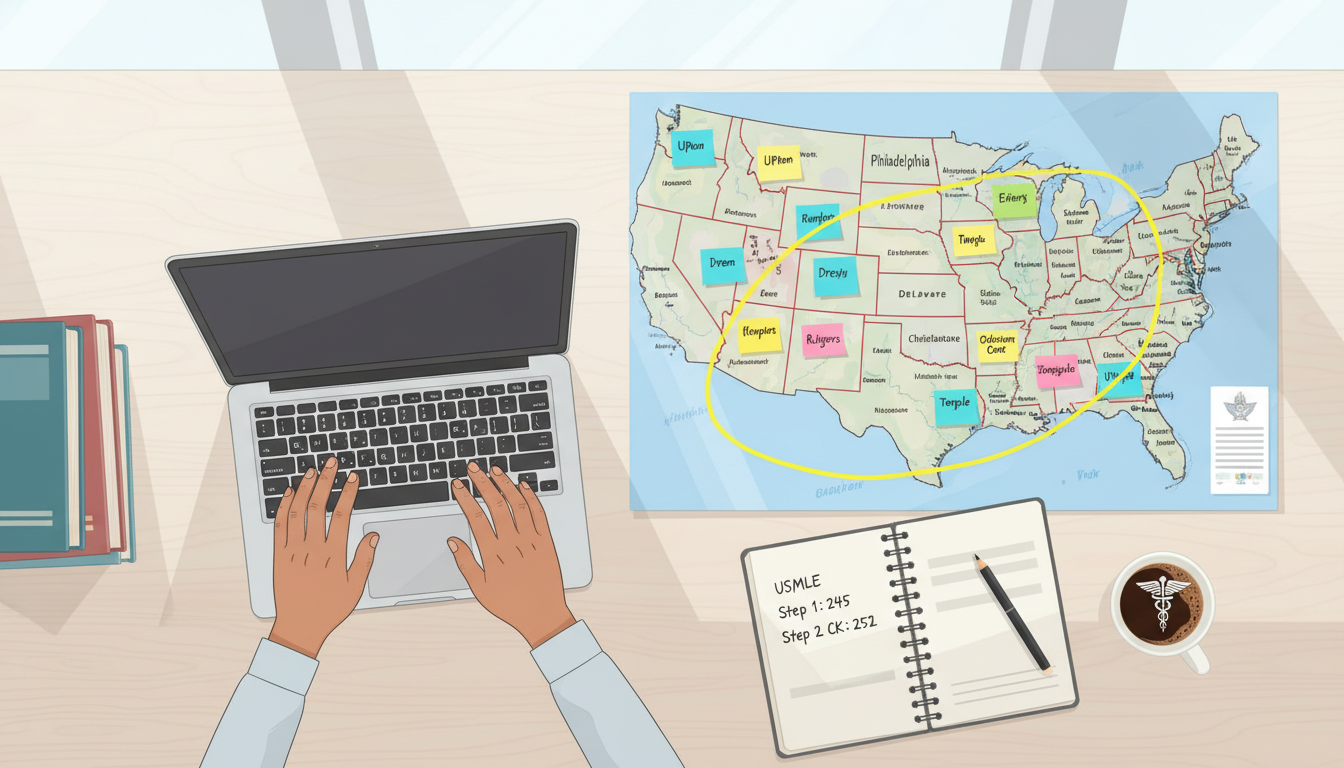
Building a Smart Regional Preference Strategy Centered on Philadelphia
To align your interest in Philadelphia with a realistic geographic preference residency approach, think in concentric circles: a core region, a primary region, and an extended region.
1. Define Your Core Region: Greater Philadelphia
Your core region includes:
- Philadelphia city (academic and community programs)
- Nearby suburbs (Main Line, Northeast Philadelphia, South Jersey, Bucks, Montgomery, Delaware counties)
- Bordering regions within commuting distance, such as:
- Camden, NJ (e.g., Cooper)
- Wilmington, DE
- Some South Jersey community hospitals
For a Caribbean IMG, especially one with strong local ties (family in Philly, prior schooling in Pennsylvania, or US clinical rotations in the area), the core region is where you:
- Emphasize your personal connection (“I grew up in South Jersey,” “My family lives in Northeast Philly”)
- Highlight long-term commitment to the area in your personal statement or geographic preference sections
- Lean into continuity: “I see myself living and practicing in this region after residency.”
However, your core region should not be your only region if you want a high match probability.
2. Primary Region: Mid-Atlantic and Northeast Cluster
Your primary region should expand beyond Philadelphia to include:
- Pennsylvania (outside Philadelphia):
- Lehigh Valley, Reading, Lancaster, Scranton/Wilkes-Barre, Erie, Pittsburgh, etc.
- New Jersey:
- North, Central, and South Jersey community and university-affiliated programs
- Delaware and Maryland
- New York state (especially upstate and Long Island)
- Possibly parts of Connecticut and northern Virginia
These locations:
- Share some cultural and geographic similarities with Philadelphia
- Are reachable by car, bus, or train from Philly
- Often have more IMG-friendly programs than large academic hubs alone
In your application, this looks like:
- Program-specific personal statement variations citing your interest in the broader Mid-Atlantic/Northeast
- ERAS geographic preferences set to reflect regional openness, not one city
- Interview responses that highlight your willingness to relocate for strong training while still explaining why the East Coast or Mid-Atlantic is your preferred overall region
3. Extended Region: Strategic Safety Net
Your extended region should be based on:
- Your clinical interests (e.g., strong community IM programs in the Midwest)
- Relative IMG-friendliness (some southern or Midwestern states may welcome more IMGs)
- Personal constraints (visa considerations, cost of living, family or support concerns)
For instance, a Caribbean IMG whose primary goal is to match in any solid internal medicine or family medicine program might extend applications to:
- Midwest: Ohio, Michigan, Indiana, Illinois outside major metropolitan epicenters
- Southeast: Certain Georgia, Florida (non-competitive regions), or Carolinas community programs
- Other Northeastern states with community hospitals (e.g., Maine, Vermont, New Hampshire)
The extended region exists to protect your match if Philadelphia and nearby markets don’t yield enough interviews. You don’t have to rank all these programs above Philly-area ones, but their presence increases your safety margin.
Connecting Your Background to Philadelphia Without Over-Constraining
Many Caribbean IMGs think:
“If I want to match in Philadelphia, I should say I’m only interested in Philadelphia.”
That can backfire. Programs may worry you won’t come if you’re interviewing elsewhere in the country or that you’re being disingenuous if your ERAS preferences and interview answers don’t match your application pattern.
The goal is to authentically connect your background to Philadelphia while still signaling regional and national flexibility.
1. Leverage Concrete Ties to the Area
If you have ties to Philadelphia or the region, be explicit:
- Family living in Philadelphia or nearby New Jersey/Delaware
- Undergraduate or graduate school in Pennsylvania/New Jersey
- Prior employment or significant medical work in the region
- US clinical rotations around Philadelphia or the Mid-Atlantic
Examples of how to phrase this in your personal statement or supplemental essays:
- “My parents settled in Northeast Philadelphia after immigrating to the US, and I have spent most holidays and breaks with them there.”
- “I completed several core rotations in the greater Philadelphia region, which exposed me to the local patient population and healthcare systems.”
- “Having family in Camden and Wilmington will provide a support network during the demanding years of residency.”
Keep it specific and concrete; vague “I like the city” statements are less persuasive.
2. Show Long-Term Commitment Without Sounding Rigid
Residency programs want to know:
“If we invest in this resident, will they stay for the full program? Are they a potential long-term physician in our community?”
You can show this while preserving flexibility:
Emphasize regional longevity:
“I hope to build a long-term career as a primary care physician in the Mid-Atlantic region, ideally near the Philadelphia area, where my family is rooted.”Clarify priority vs. exclusivity:
“While the Philadelphia region is my ideal location due to family ties and familiarity with the population, I am equally committed to obtaining excellent training wherever I match and am open to relocating to a program that will best prepare me for community-based internal medicine.”
This tells programs:
- You are serious about Philly
- You will not be unhappy if you match elsewhere
- You understand the primary goal is training, not geography
3. Align ERAS Geographic Preferences with Your Actual Strategy
When filling out ERAS geographic preference residency sections or responding to program surveys:
- Avoid listing only one city (Philadelphia) unless explicitly asked about city-level preference
- Prefer broader regions: “Northeast,” “Mid-Atlantic,” or “East Coast”
- If you choose a specific region, reinforce that you remain open to other areas in your personal statement and interviews
For Caribbean IMGs, a balanced approach might be:
- Primary preference: Northeast and Mid-Atlantic
- Secondary mention: Willingness to relocate anywhere in the US for the right training opportunity
This prepares you to credibly talk about a location flexibility match strategy during interviews without sounding inconsistent.

Tactical Application & Interview Strategies for Caribbean IMGs
1. Applying Broadly While Prioritizing Philadelphia
As a Caribbean IMG, a reasonable structure for internal medicine or family medicine might be:
- 15–25 programs in the Greater Philadelphia and immediate region
- 20–40 programs in the broader Northeast/Mid-Atlantic
- 10–20 programs in other IMG-friendly states/regions
The exact numbers depend on:
- Your USMLE Step/Level scores
- Clinical performance and letters of recommendation
- Visa status (IMGs requiring visas may need to apply more broadly)
For example, an SGU residency match candidate with:
- Step 1: Pass
- Step 2 CK: 235
- Strong US letters, multiple US clinical rotations, no gaps
Might apply to:
- Philadelphia academic programs (including Penn residency programs as aspirational)
- Philadelphia-area community/hybrid programs
- New Jersey, Delaware, Pennsylvania community hospitals statewide
- Selected New York state, Maryland, and Ohio programs
Meanwhile, a candidate with weaker scores or gaps would expand even further geographically.
2. Tailoring Personal Statements by Region
Consider preparing slight variations of your personal statement:
Philadelphia-focused version:
Emphasize connections to the city or surrounding area, prior exposure to patient populations, and long-term regional plans.Northeast/Mid-Atlantic version:
Broaden the story to include your ties to East Coast living, comfort with regional cultures and weather, and your desire to remain within driving distance of major East Coast hubs.National/flexible version:
Highlight that your primary goal is high-quality training and that you are open to building a life in any community that aligns with your values.
Keep 80–90% of the content identical; change the geographic framing and examples.
3. Interview Answers That Balance Preference and Flexibility
You will almost certainly be asked:
- “What brings you to our region?”
- “Do you have ties to this area?”
- “Where do you see yourself practicing long-term?”
Respond with a consistent framework:
- Acknowledge your preference (e.g., Philadelphia or East Coast)
- Tie it to your personal and professional goals
- Reinforce your adaptability
Example answer for a Philadelphia interview:
“My family has been in Northeast Philadelphia for the past ten years, so I know the area and its communities well. I’ve done rotations in this region and would love to train and eventually practice here, especially in primary care. At the same time, I understand that quality of training is paramount, so I applied broadly across the Northeast and Mid-Atlantic. If I match here, I’d be particularly excited because it aligns both with my training goals and my personal roots.”
Example answer for a program outside Philadelphia:
“I’m originally drawn to the Mid-Atlantic and East Coast because of family and familiarity with the diverse patient populations. However, I applied here because I believe your program offers excellent training in community-based internal medicine, which is ultimately my main priority. I’m fully prepared to relocate and commit to this area if I match here.”
This shows honesty, maturity, and flexibility without diminishing your genuine Philadelphia interest.
4. Visa Considerations and Geographic Flexibility
If you require a visa (J-1 or H-1B), geographic flexibility becomes even more critical:
- Not all Philadelphia residency programs sponsor visas
- Many community and smaller programs across the country are more open to sponsoring visas
- Limiting yourself geographically drastically cuts the number of sponsoring institutions
Actionable steps:
- Use FREIDA and program websites to pre-screen for visa sponsorship
- Consider making a list of visa-friendly programs in your extended region
- Be ready to discuss your visa needs openly and professionally during interviews
Your messaging can be:
“I’m seeking a program that is comfortable sponsoring a J-1/H-1B visa and where I can both contribute meaningfully and grow into a strong internist or family physician, regardless of the city.”
Common Mistakes Caribbean IMGs Make with Geographic Preferences
Mistake 1: “Philadelphia or Nothing” Approach
Limiting applications to only:
- Penn residency programs
- A few large university hospitals in central Philadelphia
…ignores reality:
- These programs are extremely competitive
- They often prioritize US MD and DO applicants
- Even strong Caribbean IMGs may not receive interviews based on volume alone
Solution: Treat such programs as aspirational adds, not your entire strategy.
Mistake 2: Not Matching Application Behavior to Stated Preferences
If your ERAS indicates you prefer the Northeast, but:
- 60% of your applications are in the Midwest and South
- Your personal statement says you will “only be happy” in Philadelphia
Programs may question your consistency.
Solution: Align your ERAS geographic selections, personal statement framing, and actual application distribution.
Mistake 3: Undervaluing Community Programs Near Philadelphia
Some Caribbean IMGs only look at big-name academic centers in and around Philadelphia. They overlook:
- Community hospitals in the suburbs of Philly
- Smaller teaching programs in Pennsylvania, New Jersey, or Delaware
- Hybrid community-university affiliates with strong training but less “brand prestige”
Many Caribbean IMGs successfully train at these institutions, then go on to:
- Fellowship training (especially in IM)
- Hospitalist or primary care roles in the same region
- Long-term practice in the Philadelphia area
Solution: Include a healthy number of community and hybrid programs practically near Philadelphia in your core and primary regions.
Mistake 4: Oversharing Inflexibility in Interviews
Saying things like:
- “I would only be happy in Philadelphia.”
- “I don’t want to move far from my friends in Center City.”
…can be red flags. Programs worry you may be dissatisfied, uncommitted, or unwilling to adapt.
Solution: Be honest about preferences but always emphasize training quality and professional growth as the priority.
FAQs: Geographic Flexibility for Caribbean IMGs Targeting Philadelphia
1. Can I still match in a Philadelphia residency program if I’m a Caribbean IMG?
Yes, Caribbean IMGs do match into Philadelphia residency programs every year, including some SGU residency match successes at well-known hospitals. Your chances improve if you:
- Have solid USMLE Step 2 CK scores and strong clinical evaluations
- Obtain high-quality US letters of recommendation
- Apply to a range of academic, community, and hybrid programs in and around Philadelphia
- Maintain broader geographic flexibility so that you are not solely dependent on a few highly competitive programs
2. How should I list geographic preferences in ERAS if Philadelphia is my top choice?
You can:
- Select the Northeast or Mid-Atlantic region as your preference
- Mention Philadelphia or the greater Philadelphia area in your personal statement or program-specific essays
- Still communicate that you’re open to other regions to obtain excellent training
Avoid restricting yourself to a single city in official forms. Instead, show that Philadelphia is your priority within a broader regional openness.
3. If I match outside Philadelphia, will it be hard to come back there to practice later?
Not necessarily. Many physicians:
- Train in another state (e.g., Ohio, Michigan, or upstate New York)
- Then return to the Philadelphia region for jobs or fellowship training
What matters most is:
- The quality of your training
- Strength of your clinical skills and reputation
- Networking and connections (which you can maintain through family, mentors, or conferences)
Being flexible during residency does not close doors; it often gives you more experience and leverage for future positions, including in the Philadelphia area.
4. Should I rank only Philadelphia programs higher even if I have more interviews elsewhere?
You should rank programs based on:
- Training quality and fit
- Your realistic career goals
- Location as one of several factors
If you have strong interviews and good vibes from programs outside Philadelphia that seem more supportive or IMG-friendly than your Philadelphia interviews, it may be wise to rank those higher. You can still structure your list to prioritize Philadelphia-area programs among comparable options, but avoid sacrificing match probability purely for geography.
A well-planned regional preference strategy allows you, as a Caribbean IMG, to pursue your goal of training in or near Philadelphia without risking your entire match on one city. By combining clear priority (Philadelphia and the Mid-Atlantic) with genuine location flexibility, you maximize both your chance of matching and your long-term ability to live and practice where you ultimately want to be.