The Role of Location: Choosing a Residency Program That Fits Your Lifestyle
Choosing where to train is one of the most consequential decisions in your medical career. Residency Selection is not just about prestige, case volume, or board pass rates—it is also about where you will live, who you will be surrounded by, and what your day-to-day life will feel like for three to seven years.
Location is often treated as a secondary concern compared to program reputation or specialty match, but it quietly shapes your well-being, your relationships, your Work-Life Balance, and even your long-term career trajectory in medicine. A location that aligns with your values and lifestyle can transform residency from “survival mode” into a period of meaningful growth.
This guide walks through how to systematically factor location into your Healthcare Training decisions so you can choose a residency program that fits both your professional goals and your real life.
Understanding Your Personal and Professional Needs
Before you compare cities, coasts, or Urban vs Rural programs, start with a clear understanding of what you actually need and want. This self-assessment will anchor your decisions and help you see past the noise of name-brand institutions or glossy program websites.
Clarifying Your Non-Negotiables vs. Preferences
Break your priorities into two categories:
- Non-negotiables: Factors that, if absent, would make it very difficult for you to thrive (e.g., being within a short flight of an aging parent, access to certain healthcare services for you or a partner, a minimum level of safety).
- Preferences: Things that would significantly improve your quality of life but aren’t absolutely essential (e.g., proximity to the ocean, access to a large arts scene, ability to ski on weekends).
Write these down before you start building your rank list. When you later feel torn between two programs, this list becomes your reference point.
Key Personal Factors to Consider
Family and Social Connections
- Are you moving with a partner, spouse, or children?
- Do you or your partner have strong geographic ties or obligations (e.g., co-parenting arrangements, elder care)?
- How important is proximity to close friends and extended family?
During residency, emotional support can be as critical as academic support. Being near loved ones can:
- Provide backup for childcare
- Offer a place to decompress on days off
- Help buffer the stress and isolation that often accompany residency
On the other hand, some trainees intentionally choose a new location to gain independence or explore a different environment. What matters is that you make this choice consciously.
Work-Life Balance and Daily Living
Work-Life Balance is heavily influenced by where you live, not just by duty hours.
Consider:
- Commute time (door-to-door, at the hours you’ll actually commute)
- Traffic patterns and availability of public transportation
- Safety of neighborhoods you could realistically afford
- Access to groceries, gyms, green spaces, places of worship, or other essential parts of your routine
Example: A program with slightly longer call hours but a 10-minute walk from your apartment may provide better overall life satisfaction than one with shorter shifts but a 60–90-minute commute each way.
Career Goals and Specialty-Specific Considerations
Certain specialties—and subspecialties—are concentrated in specific types of environments:
- Surgery, interventional specialties, subspecialty internal medicine: Often have more robust training options at large academic centers in urban or regional hubs.
- Family medicine, pediatrics, psychiatry, emergency medicine: Strong training options exist in both Urban vs Rural settings, but the patient mix and scope of practice can vary widely.
- Public health, health policy, academic research: More easily integrated with programs in cities housing major universities, government agencies, NGOs, or think tanks.
Think about:
- Do you want to subspecialize or pursue fellowship?
- Are you interested in academic medicine, community practice, or global health?
- Would you like to stay and work in the same region after residency?
Choosing a residency in a location where your future career is viable can set you up for networking, mentorship, and post-residency job opportunities.
Cultural, Political, and Community Fit
You are not just joining a hospital—you are joining a community.
Ask yourself:
- Do you feel comfortable with the dominant cultural and political climate of the region?
- Is there visible diversity in race, religion, gender identity, sexual orientation, and background?
- Are there established communities you identify with (e.g., religious communities, LGBTQ+ networks, cultural organizations)?
Feeling out of place in the surrounding community can compound residency stress. Conversely, a strong cultural fit can make even a demanding program feel sustainable.
Financial Considerations and Cost of Living
A higher nominal salary in a large city can be overshadowed by:
- High rent and housing costs
- Higher childcare expenses
- Parking or transportation costs
- State and local taxes
When comparing programs:
- Use a cost-of-living calculator to estimate real-world spending.
- Look into average rent near the hospital.
- Ask residents about hidden costs (parking fees, mandatory meal plans, licensing fees, etc.).
Aim to understand what your take-home quality of life will look like, not just the stipend number on paper.
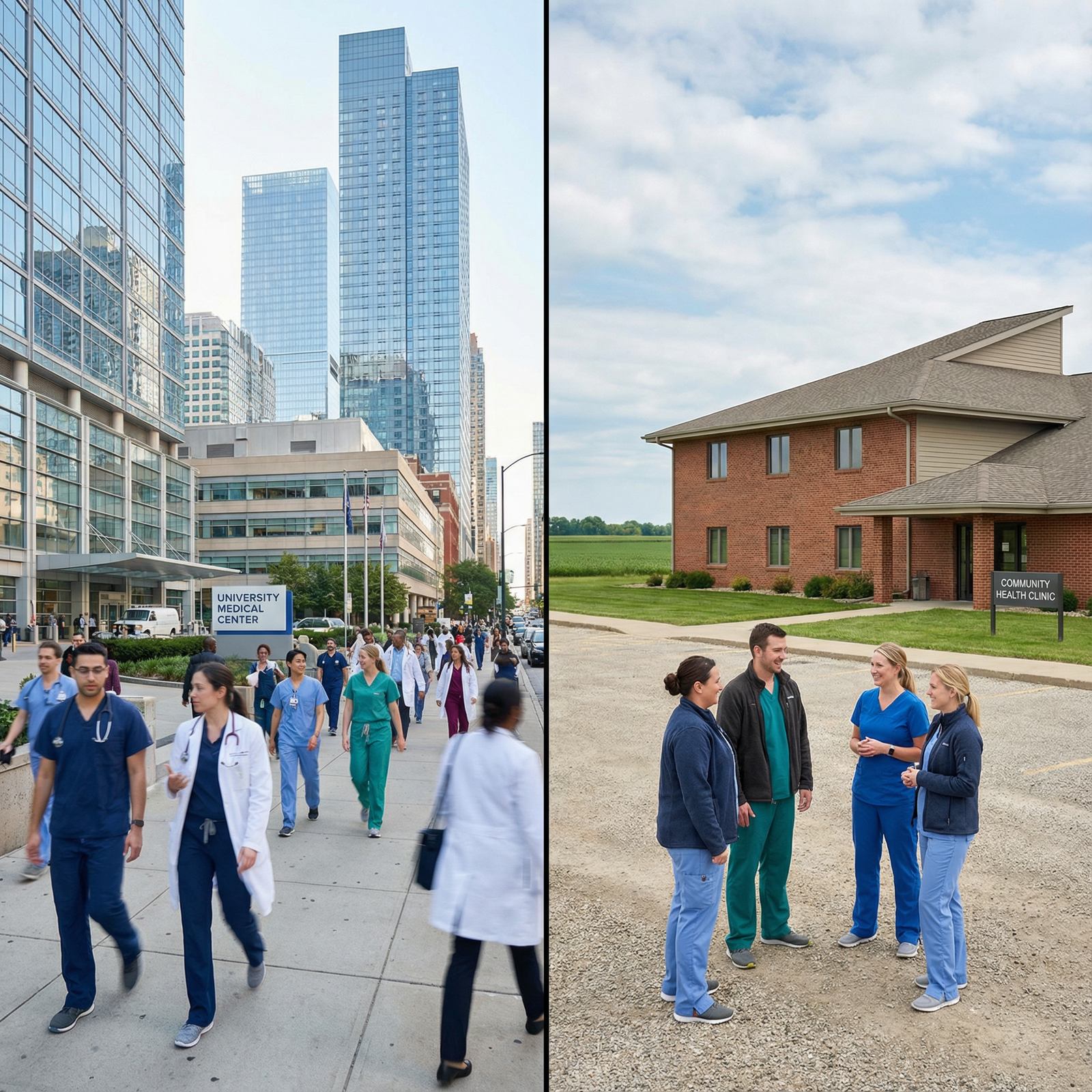
Urban vs. Rural Residency Programs: What to Expect
One of the biggest location-related decisions in Residency Selection is whether you prefer an urban, suburban, or rural environment. Each comes with distinct training experiences and lifestyle implications.
Urban Residency Programs
Urban programs are typically based in large academic medical centers or major community hospitals in metropolitan areas.
Advantages of Urban Programs
Diverse Patient Population
- High volume of complex cases, often including rare diseases and advanced pathology.
- Patients from multiple cultural, ethnic, and socioeconomic backgrounds.
- Exposure to global health issues in a domestic setting (e.g., refugee health, underserved urban populations).
This breadth of experience can be invaluable if you’re considering subspecialty training or academic medicine.
Robust Research and Academic Opportunities
Large urban teaching hospitals often offer:
- Extensive ongoing clinical and translational research
- Opportunities to participate in trials, quality improvement projects, or educational scholarship
- Nationally recognized mentors and subspecialists
This can be a major advantage if you plan to compete for highly selective fellowships or academic positions.
Networking and Professional Visibility
Urban centers frequently host:
- Regional and national conferences
- Visiting professors and guest lectures
- Interinstitutional collaborations
This allows you to build a broad professional network early in your medical career, which can help with future job searches, collaborations, or fellowships.
Access to Specialized Services and Technology
- Level I trauma centers
- Tertiary and quaternary referral centers
- Cutting-edge imaging, minimally invasive technologies, and novel treatments
Training with these resources can expand your procedural skills and comfort with managing highly complex patients.
Disadvantages of Urban Programs
High Cost of Living
- Significant strain on a resident salary
- Possible need for roommates or long commutes to find affordable housing
- Less disposable income for travel, hobbies, or paying down loans
Lifestyle and Work-Life Challenges
- Longer commute times because of traffic or limited affordable housing near the hospital
- Crowded public spaces and noise
- Higher baseline stress level from the pace of city life
For some, the energy of the city is invigorating; for others, it can be draining.
Competition for Opportunities
- More learners (students, residents, fellows) can mean more competition for certain cases, procedures, or research spots.
- You may need to advocate more actively for the experiences you want.
Rural and Smaller Community Residency Programs
Rural or smaller community-based programs are often located in smaller cities, towns, or regional health centers.
Advantages of Rural/Community Programs
Lower Cost of Living and Financial Breathing Room
- More affordable housing, often with larger living spaces
- Lower general cost of goods and services
- Potential to save more or pay down debt faster
Your stipend may go significantly further, reducing financial stress during training.
Strong Sense of Community and Continuity
- Closer relationships with patients and families; you may follow them over years and across settings.
- Tight-knit medical teams where attendings, nurses, and residents know each other well.
- More direct responsibility, which can accelerate your growth as an independent clinician.
Broad Scope of Practice
In many rural settings:
- Physicians practice more broadly, sometimes covering multiple disciplines.
- You may learn to manage conditions that would be referred out in urban settings.
- Residents often take on greater autonomy in clinical decision-making.
This is especially valuable if you plan to work in community practice or in underserved areas after training.
Lifestyle Benefits
- Short commutes, often under 15 minutes
- Easier access to nature, hiking, fishing, skiing, or outdoor hobbies
- Slower pace of life that some trainees find protective against burnout
Disadvantages of Rural/Community Programs
Limited Subspecialty Exposure and Resources
- Fewer subspecialists on site; complex cases may be transferred out.
- Less access to cutting-edge technologies or rare disease management.
- Fewer on-site research opportunities, depending on the program.
If you’re strongly oriented toward a highly specialized academic career, this may be a limiting factor—though many residents still match into competitive fellowships from strong community programs.
Geographic and Social Isolation
- Fewer entertainment, dining, and cultural options.
- Smaller peer pool of young professionals outside the hospital.
- Greater travel time to visit family, attend conferences, or get to major airports.
Fit and Personal Comfort
- You may stand out more if you are from a very different cultural, racial, or religious background than the local population.
- Depending on the region, political or social climates may feel less welcoming to certain groups.
Lifestyle Fit: Community, Leisure, and Well-Being Outside the Hospital
Your life as a resident is not confined to the wards and call rooms. The community you live in profoundly affects your mental health, resilience, and happiness.
Evaluating Local Amenities and Daily Experience
When researching locations, think beyond tourist highlights and consider your actual weekly routine:
Recreation and Wellness
- Are there parks, trails, gyms, yoga studios, or sports leagues nearby?
- Is there safe, convenient access to outdoor spaces where you can decompress?
- Are there year-round activities that fit your interests (e.g., skiing, surfing, climbing, cycling)?
Regular movement and time outdoors can significantly mitigate burnout during demanding rotations.
Cultural and Social Opportunities
Ask:
- Are there theaters, museums, live music venues, libraries, or community centers?
- Are there meetups or organizations for young professionals, physicians, or your specific hobbies?
- Are there active resident or hospital social committees that organize events?
Even a small town with a vibrant community center or active resident cohort can be more fulfilling than a major city where you feel anonymous and disconnected.
Food, Nightlife, and Daily Conveniences
- Does the local food scene appeal to you (e.g., dietary preferences, cultural cuisine)?
- Are there coffee shops or cafés where you’d enjoy spending a day off?
- Is the nightlife energetic, quiet, or somewhere in between—and what do you prefer?
These details may seem minor compared to program metrics, but over several years, they shape your overall experience.
Community Engagement and Belonging
Opportunities to Serve and Connect
As a physician-in-training, you may want to contribute to:
- Free clinics or community health fairs
- School health education programs
- Public health initiatives targeting local needs
Ask programs:
- What community partnerships do they have?
- Are residents supported in community outreach or advocacy projects?
Building a Social Network
Inquire about:
- How close-knit the resident cohort is—do people socialize outside of work?
- Whether residents live near each other or are scattered widely.
- Presence of interest groups (e.g., Women in Medicine, LGBTQ+ in Medicine, minority physician groups, wellness committees).
Feeling integrated into a supportive community can make an intense 80-hour week feel survivable—and even meaningful.
How to Systematically Evaluate Residency Programs Through the Lens of Location
Once you have a clear sense of your needs and you understand the pros and cons of different environments, you can approach Residency Selection more strategically.
Step 1: Create a Location Priorities Checklist
Rank each factor on a scale (e.g., 1–5) for importance to you:
- Proximity to family/partner/friends
- Cost of living and housing
- Commute time and transportation
- Patient population diversity
- Urban vs Rural preference
- Access to outdoor activities
- Cultural and social life
- Safety and neighborhood feel
- Academic/research opportunities
- Climate (winters, summers, natural disasters)
Use this checklist while researching and after interviews to keep your decision anchored in your values rather than short-term impressions.
Step 2: Do Deep-Dive Research Before Interviews
For each city or region:
- Look up cost of living estimates and rental listings near the hospital.
- Use maps to estimate real commute times during rush hour.
- Search for local community groups, religious institutions, gyms, or organizations you might join.
- Check crime maps (if available) and local news to understand safety and community issues.
This preparation allows you to ask targeted questions on interview day, showing programs that you’re genuinely interested and informed.
Step 3: Maximize Site Visits and Virtual Tours
If you have in-person interviews or second looks:
- Walk or drive around likely residential neighborhoods at different times of day.
- Visit grocery stores, cafés, parks, and local spots residents mention.
- Pay attention to how you feel in the space—could you imagine coming home here after a 28-hour call?
If interviews are virtual:
- Ask for virtual tours of resident lounge areas, call rooms, and nearby neighborhoods.
- Request to speak with residents who live in different types of housing (city center vs suburbs, with vs without families).
Questions to ask current residents:
- Where do most residents live?
- What’s your actual commute time?
- What do you do on a typical post-call day off?
- How is the safety in the area where most residents live?
- What do you wish you had known about living here before you matched?
Step 4: Talk to Alumni and Fellows
Alumni who have completed the program and moved on can offer a broader perspective:
Ask them:
- How did the location support or limit your career goals?
- Did the geographic region affect your fellowship or job opportunities?
- Would you choose the same location again, knowing what you know now?
Alumni can also provide realistic expectations of how living in that area feels after the “honeymoon period” and once the reality of residency sets in.
Step 5: Integrate Location into Your Rank List Strategy
When it comes time to rank programs:
- Place your location checklist side-by-side with program-specific factors (curriculum, board pass rates, culture, fellowship match list).
- If two programs feel similar academically, let location be the tiebreaker.
- If a program offers stellar training but a location that conflicts with your non-negotiables, reflect honestly on whether that tradeoff is sustainable for 3–7 years.
Sometimes, choosing a “slightly less prestigious” program in a location where you can be grounded, supported, and healthier leads to a stronger overall Medical Career.

Putting It All Together: Balancing Training Quality and Lifestyle
No residency program—and no city—is perfect. You will be making tradeoffs no matter where you match. The key is to make intentional, informed tradeoffs that align with your values, rather than defaulting to name recognition alone.
When evaluating how location fits into your Healthcare Training decision:
- Recognize that burnout risk is real, and that supportive environments, social connections, and accessible leisure activities are protective.
- Remember that your personal life continues during residency—people age, relationships evolve, and your own health may need attention.
- Understand that where you train often influences where you eventually practice, due to networking, local licensure, and personal roots you develop.
A location that supports your well-being can make you not only a happier person but also a better, more present physician for your patients.
Frequently Asked Questions About Residency Location and Lifestyle
1. How important is location compared to program reputation in Residency Selection?
Location and reputation are both important, but their relative weight depends on your goals and circumstances. A top-tier academic program in a city where you’re deeply unhappy may lead to burnout, strained relationships, or even mental health issues. Conversely, a solid, well-respected program in a location that supports your lifestyle, values, and family needs can set you up for a sustainable, satisfying Medical Career. Most advisors recommend aiming for the best combination of training quality, culture, and location fit—not any single one in isolation.
2. How can I tell if an Urban vs Rural program is right for me?
Reflect on:
- The type of patient care you enjoy (high-acuity subspecialty vs broad-spectrum community care)
- Your comfort with slower-paced vs high-intensity environments
- Your interest in academic careers and research vs community practice
- Your need for certain lifestyle amenities or cultural communities
Make a pros and cons list for each environment, then talk to current residents in both settings. If possible, complete away rotations or sub-internships in different types of locations to experience the differences firsthand.
3. What practical tools can I use to compare cost of living between residency locations?
Use a combination of:
- Online cost-of-living calculators comparing target cities
- Rental websites filtered by the neighborhoods residents commonly live in
- State and local tax calculators
- Program-specific information on resident salaries and benefits
Then ask current residents for:
- Typical rent ranges
- Average monthly spending estimates
- Hidden or unexpected expenses (parking, licensing, commuting costs)
This will help you estimate how far your stipend will actually go in daily life.
4. How do I factor my partner’s or family’s needs into my rank list?
Involve them early and transparently. Together, discuss:
- Career opportunities for your partner in each location (job market, remote work options)
- School quality and childcare availability if you have or plan to have children
- Proximity to extended family for support
- Their own preferences for climate, culture, and community
Many couples create a shared priority list, then rank programs by how well they meet both partners’ needs, not just the resident’s. For couples matching, consider both the training quality and the feasibility of two careers in each location.
5. Can I still get a competitive fellowship if I choose a smaller or rural program?
Yes—many residents from community and rural programs match into competitive fellowships every year. Key factors will include:
- The strength and reputation of your core clinical training
- Mentorship and advocacy from faculty
- Your research or scholarly output (which you can often pursue locally or through collaborations)
- Strong letters of recommendation and board scores
If fellowship is a priority, ask programs:
- Where recent graduates have matched
- How they support residents in research and fellowship applications
- Whether there are faculty with strong connections in your field of interest
Choosing a residency program is about more than a name on your white coat. It’s about choosing where—and how—you want to live during some of the most formative years of your Medical Career. When you thoughtfully consider location alongside curriculum, culture, and clinical exposure, you give yourself the best chance to grow into the kind of physician—and person—you hope to become, with a Work-Life Balance and lifestyle that truly fit who you are.