
Choosing the right residency program is one of the most consequential decisions of your medical career. Your choice will shape how you practice medicine, the mentors who guide you, your day-to-day work-life balance, and your long-term career advancement opportunities.
This expanded guide walks through the top 10 attributes of a great residency program—and how to evaluate them intelligently as you go through the residency match and application process. Use it as a practical checklist and reflection tool as you research Residency Programs, attend interviews, and create your rank list.
1. Accreditation and Reputation: The Non-Negotiable Foundation
ACGME Accreditation and Program Stability
Accreditation is the entry ticket for any serious residency option. In the United States, this means Accreditation Council for Graduate Medical Education (ACGME) approval.
Why it matters:
- Ensures the program meets national standards for patient care, education, supervision, duty hours, and resident safety
- Is typically required for:
- Board eligibility
- Many fellowships
- Most hospital credentialing and insurance panels
- Signals that the institution has sufficient clinical volume, faculty, and educational infrastructure
Action steps:
- Confirm ACGME status on:
- FREIDA
- The ACGME public program search
- Ask on interview day:
- “Have there been any recent ACGME citations or areas of concern?”
- “Have there been any major changes in program leadership in the last 3–5 years?”
Programs with persistent citations or leadership churn may indicate underlying instability that could affect your training.
Reputation in the Medical and Local Community
Reputation isn’t everything—but it often reflects consistent quality over time.
Key dimensions of reputation:
- Regional vs. national name recognition
- A strong regional program may be ideal if you plan to practice locally.
- A nationally recognized academic center may open more doors for competitive fellowships or academic careers.
- Outcomes and board pass rates
- Look for consistent board pass rates at or above national averages.
- Resident and alumni sentiment
- Are alumni proud of their training?
- Do current residents recommend the program?
Where to research:
- FREIDA program descriptions and resident comments
- Program websites (look for board pass rates, fellowship placement lists)
- Specialty-specific forums and Reddit threads (take anecdotal posts with caution, but look for consistent patterns)
- Informational interviews with alumni from your medical school
Ask yourself: Would I be confident telling future employers or fellowship directors I trained here? If the answer is no, move on.
2. Comprehensive Training Curriculum and Educational Structure
A great residency program doesn’t just keep you busy—it intentionally trains you to become an independent, competent, and thoughtful physician.
Balanced and Well-Structured Curriculum
Look for a curriculum that is:
- Aligned with your specialty’s requirements
- Check how the program meets ACGME and board requirements for core rotations.
- Balanced between inpatient and outpatient training, when relevant
- For Internal Medicine, Family Medicine, Pediatrics, etc., both matter greatly.
- Progressive in responsibility
- PGY-1: More supervised, foundational experiences
- PGY-2/3+: Leader roles, higher-level decision-making, senior calls
Questions to ask:
- “What does a typical year look like for each PGY level?”
- “How much night float vs. 24-hour call is there?”
- “How are didactics protected from clinical interruptions?”
Also evaluate the formal educational program:
- Regular morning reports, noon conferences, grand rounds
- Simulation sessions, morbidity and mortality conferences
- Subspecialty lectures and board review sessions
Flexibility for Personal Interests and Specialization
Even early in training, your program should allow some customization based on your interests.
Look for:
- Elective time that can be used for:
- Subspecialty rotations
- Away rotations at other institutions
- Research, global health, or quality improvement
- Structured pathways or “tracks”:
- Research tracks
- Primary care or hospitalist tracks
- Global health, medical education, advocacy, or leadership tracks
Action steps:
- Ask residents: “How easy is it to create or tailor electives?”
- Review the rotation schedule on the program website and note:
- Total elective time available
- Timing of electives (early vs. late in training)
- Availability of niche experiences (e.g., ultrasound, palliative care, addiction medicine)
If your career goals involve subspecialty training, academic medicine, or a unique practice setting, flexibility in the curriculum becomes a major differentiator between programs.
3. Hands-On Clinical Experience and Procedural Exposure
You are not just choosing a brand name—you are choosing where you will learn to actually practice medicine.
Clinical Rotations and Responsibility
High-quality residency programs provide:
- High clinical volume with diverse pathology
- Graduated responsibility:
- Interns focus on data gathering, initial assessments, and basic management.
- Seniors lead teams, supervise juniors, and handle complex decisions.
- Exposure to different practice settings:
- Academic hospital
- Community hospitals
- Outpatient clinics
- Possibly rural or underserved sites
Evaluate:
- Patient volumes (average patient load per resident)
- Degree of autonomy vs. supervision
- Mix of tertiary referral center cases and “bread-and-butter” medicine
Red flags:
- Chronic understaffing leading to unsafe workloads
- Residents describing themselves as “service, not education”
- Attendings rarely present or too busy to teach
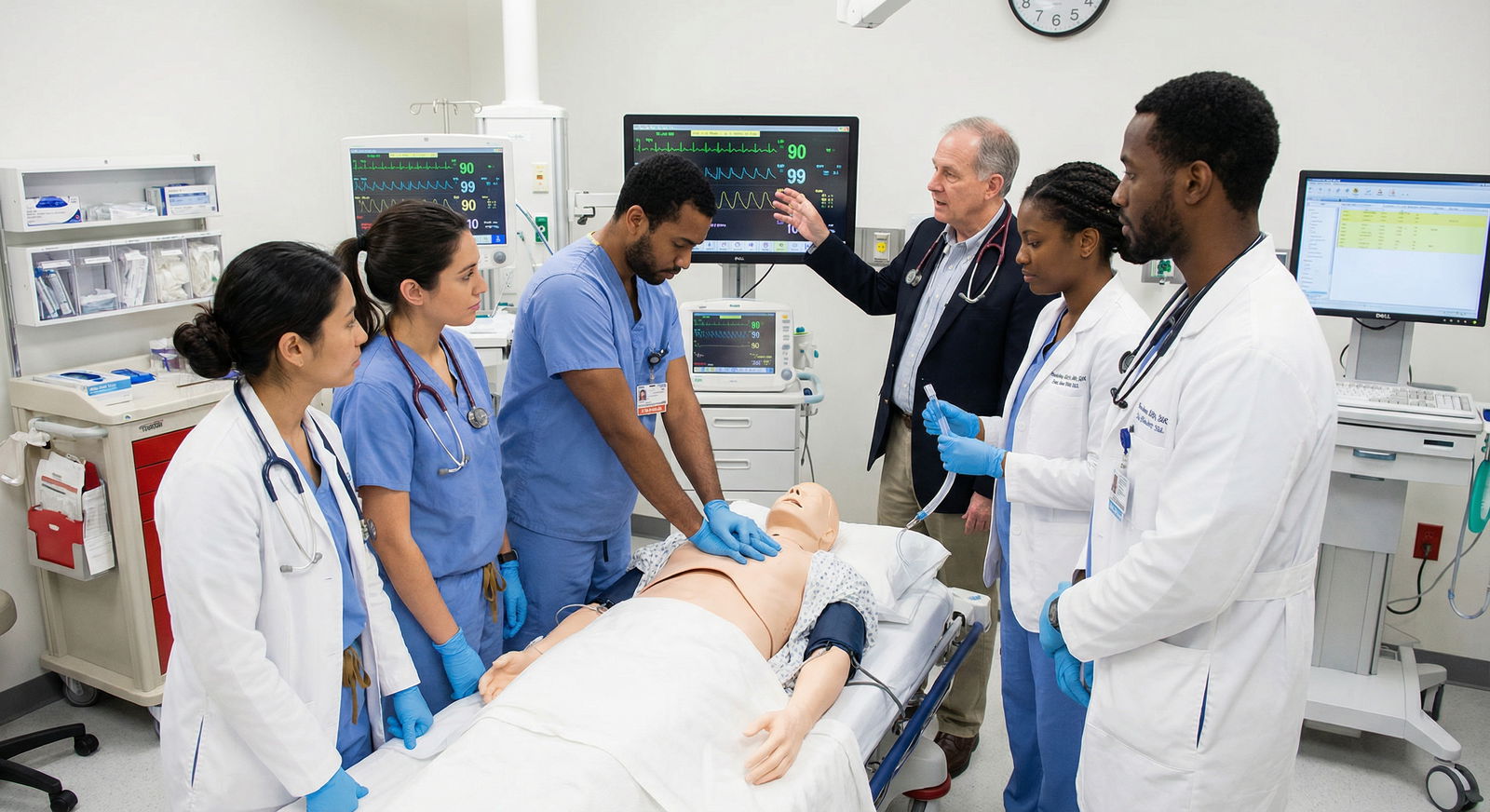
Simulation Labs, Workshops, and Procedural Training
Simulation is now a core part of modern Medical Education and a marker of program quality.
Look for:
- High-fidelity simulation labs for:
- Codes and resuscitation
- Airway management
- Central lines, lumbar punctures, and other procedures
- Regular skills workshops:
- Point-of-care ultrasound
- Basic and advanced procedures
- Communication skills (breaking bad news, goals-of-care discussions)
Ask:
- “How are procedures taught and tracked?”
- “Is there a minimum procedural log expectation?”
- “Do seniors still get opportunities to do procedures, or are they done mainly by other services?”
A program should graduate you with enough hands-on experience and clinical confidence that you feel comfortable practicing independently or moving into fellowship.
4. Meaningful Mentorship and Supportive Faculty Relationships
Mentorship is one of the most powerful drivers of career advancement and personal development during residency.
Formal and Informal Mentorship Structures
Effective residency programs:
- Assign each resident a faculty advisor early in training
- Offer subspecialty mentors for those considering particular fellowships
- Encourage near-peer mentorship among residents (e.g., PGY-3s mentoring PGY-1s)
- Provide access to career coaches or program leadership for major decisions
Questions to explore:
- “How are mentors assigned? Can residents change mentors if needed?”
- “How often do you meet with your mentor?”
- “Do mentors help with fellowship/job applications, research, or personal challenges?”
A culture where faculty genuinely invest in residents—as people and future colleagues—is a key marker of a strong program.
Mentorship for Career Planning and Advancement
Mentors should help you:
- Clarify your long-term career goals:
- Academic vs. community practice
- Subspecialty vs. generalist careers
- Clinical, research, education, or leadership-focused roles
- Build a competitive CV:
- Research and quality improvement
- Teaching experiences
- Leadership positions and committees
- Strategize for:
- Fellowship applications
- Job searches
- Geographic relocation
Ask on interview day:
- “How does the program support residents applying to competitive fellowships?”
- “Are there structured mock interviews or CV review sessions?”
Great mentorship is one of the strongest predictors of post-graduation success and career satisfaction.
5. Work-Life Balance, Wellness, and Program Culture
Residency is intense—but it should not destroy your mental or physical health. A program’s approach to work-life balance and wellness is fundamental.
Resident Well-Being and Burnout Prevention
What to look for:
- Respect for ACGME duty-hour rules
- Reasonable call schedules and backup systems when residents are ill
- Protected vacation time that is actually honored
- Formal wellness initiatives:
- Confidential mental health services
- Wellness days or retreats
- Peer support groups
- Access to counseling or coaching
Ask residents candidly:
- “What does your typical week look like on wards vs. clinic?”
- “Do you have time for family, hobbies, and rest?”
- “How does leadership respond when residents raise burnout concerns?”
Watch for:
- Body language and tone when residents talk about work-life balance
- Whether they feel comfortable being honest when faculty are nearby
Culture, Psychological Safety, and Support Systems
Work culture can make or break your residency experience.
Signs of a healthy culture:
- Residents support, not sabotage, each other
- Attendings are approachable and respectful
- Mistakes are treated as learning opportunities, not occasions for shame
- Diversity, equity, and inclusion are lived values—not just slogans
Ask:
- “When something goes wrong clinically, how is it handled?”
- “Do you feel comfortable speaking up about safety or concern?”
- “How does the program handle conflicts or toxic behavior?”
A program that truly values resident well-being will see you as a developing professional, not just labor to fill service needs.
6. Diversity, Inclusion, and Cultural Competence
Your training environment should prepare you to care for a diverse patient population and work in collaborative, inclusive teams.
Value of Diversity in Residency Programs
Strong programs intentionally build:
- Diversity among residents and faculty:
- Race and ethnicity
- Gender and sexual orientation
- Socioeconomic background
- International and nontraditional backgrounds
- Exposure to diverse patient populations:
- Urban, suburban, and/or rural
- Different languages and cultures
- Under-resourced and vulnerable communities
Why it matters:
- Enhances cultural competence and communication
- Improves understanding of health disparities and structural determinants of health
- Supports residents from underrepresented or marginalized groups
Practical Inclusivity and Support
Look for evidence of:
- Active DEI committees or offices
- Efforts to recruit and support underrepresented in medicine (URM) residents
- Policies and resources for:
- Parental leave
- Lactation rooms and schedules
- Religious observance accommodations
- Regular teaching on:
- Health equity
- Bias and structural racism
- LGBTQ+ health
- Language access and interpreter use
Ask:
- “How does the program support residents from diverse backgrounds?”
- “Are there active affinity groups (e.g., for women in medicine, URM residents, LGBTQ+ physicians)?”
A program committed to diversity and inclusion typically provides a richer educational experience—and a safer space to grow.
7. Research, Scholarship, and Academic Growth
Even if you don’t plan a research-heavy career, exposure to scholarship reinforces critical thinking and can significantly boost career advancement options.
Research Infrastructure and Opportunities
Assess whether the program offers:
- Access to research mentors in clinical, translational, or basic sciences
- Support staff:
- Biostatisticians
- Research coordinators
- IRB and grants office
- Protected time for research, especially in research tracks
- Clear pathways to:
- Present at regional/national conferences
- Publish in peer-reviewed journals
Indicators of strong research culture:
- Regular resident presentations at national meetings
- Resident-authored publications listed on the program website
- External funding, including NIH grants or foundation support
Alignment With Your Career Goals
If you plan to:
- Pursue a competitive fellowship
- Work at an academic medical center
- Lead quality improvement or patient safety initiatives
- Engage in medical education scholarship
…then a research-friendly environment is especially important.
Questions to ask:
- “What percentage of residents participate in research or QI projects?”
- “Are there structured research mentors or a research director?”
- “Have residents matched into top fellowships, and what helped them stand out?”
Even community-oriented programs should offer at least basic opportunities for QI projects, case reports, and scholarly presentations.
8. Location, Lifestyle, and Community Engagement
You are not just choosing a hospital—you are choosing where you will live for 3–7 years, often with family or partners.
Location, Cost of Living, and Lifestyle Fit
Consider:
- Geographic preferences:
- Do you want to settle in this region long-term?
- Are there family or partner considerations?
- Cost of living:
- Salary vs. housing, transportation, childcare, and other expenses
- Urban centers may pay more but have higher costs
- Lifestyle and interests:
- Access to outdoor activities, cultural events, religious communities, or schools
- Commute times and traffic patterns
Action step:
During interview travel (or virtual tours), pay attention to:
- Neighborhoods where residents live
- Safety and accessibility
- Availability of co-resident community outside of work
Your work-life balance depends not just on the program, but also on whether you can build a sustainable life in that city.
Community Engagement and Service
Community engagement is both an educational opportunity and a window into the program’s values.
Look for:
- Resident involvement in:
- Free or mobile clinics
- Public health projects
- Local outreach, advocacy, or school health programs
- Training in:
- Social determinants of health
- Community resources and partnerships
- Opportunities to lead initiatives:
- Quality improvement at community sites
- Health fairs or educational events
Ask:
- “How does the program engage with the surrounding community?”
- “Do residents have the option to work in underserved or rural settings?”
Programs rooted in their communities often produce physicians who are both clinically strong and socially conscious.
9. Feedback, Evaluation, and Growth-Oriented Learning
A great residency program treats you as a learner first and builds systems that help you grow.
Structured, Consistent Evaluation
Look for programs that provide:
- Regular, transparent evaluations:
- After each rotation
- Semi-annual or annual summative reviews
- Multiple feedback sources:
- Attendings
- Peers
- Nurses and interprofessional staff (in some programs)
- Clear expectations around:
- ACGME Milestones
- Procedural competencies
- Professionalism and communication
Ask:
- “How often do you receive formal feedback?”
- “Do you see your evaluation reports?”
- “Are there clear remediation processes if someone struggles?”
Constructive Feedback and Self-Reflection
The quality of feedback matters as much as the quantity.
Strong programs promote:
- Specific, actionable feedback rather than vague comments
- Encouragement of resident self-assessment and reflection
- Use of individual learning plans to track growth
- A culture that separates performance feedback from personal judgment
Questions for residents:
- “Do you feel evaluations are fair and helpful?”
- “Are your strengths and areas for improvement clearly communicated?”
- “Have you seen the program help someone who was struggling?”
Feedback should feel like a partnership in your professional development, not a one-way, punitive process.
10. Career Advancement, Networking, and Post-Graduation Success
Residency is the launching pad for your long-term career. A strong program will position you for success—no matter your chosen path.

Networking and Professional Connections
You are joining not only a program, but also a professional network.
Evaluate:
- Alumni network strength:
- Where do graduates practice?
- What fellowships have they matched into?
- Are they in leadership roles, academic positions, or major health systems?
- Opportunities to:
- Attend and present at conferences
- Join specialty societies as resident members
- Connect with community physicians and hospital leaders
Ask:
- “Does the program support travel to conferences if we present research?”
- “How do alumni stay involved with current residents?”
These networks often translate into job leads, fellowship recommendations, and long-term mentorship relationships.
Post-Graduation Outcomes and Career Support
Post-residency outcomes are one of the most tangible signs of program quality.
Look for:
- Published data on:
- Fellowship match lists (if applicable)
- Job placement and first practice locations
- Graduates in academic or leadership roles
- Career development resources:
- CV and cover letter workshops
- Interview preparation
- Financial literacy and contract negotiation seminars
Ask current residents:
- “Do you feel supported in planning your next steps?”
- “How involved are faculty in helping you find fellowships or jobs?”
- “Do graduates typically get the positions they want?”
Your residency should not only train you clinically but also help you successfully transition into the next phase of your career.
Frequently Asked Questions (FAQ)
1. What is the single most important attribute to consider when choosing a residency program?
There is no universal “best” attribute because needs vary, but ACGME accreditation and program stability are non-negotiable. Beyond that, the most important factor is the fit between the program’s strengths and your career goals—for example, research for fellowship aspirations, strong outpatient training for primary care, or work-life balance and a supportive culture for long-term sustainability.
2. How can I realistically assess work-life balance during interviews?
Use multiple data points:
- Ask residents privately:
- “What does a typical week look like?”
- “Do you actually have time off on days off?”
- Pay attention to:
- Their energy levels and overall demeanor
- Whether they feel comfortable speaking honestly
- Review:
- Call schedules and duty hour policies
- Wellness initiatives and mental health resources on the website
Compare what you hear from different residents, and prioritize your own values regarding family, hobbies, geography, and personal time.
3. Do I need a research-heavy residency if I’m not sure about fellowship?
Not necessarily. If you are undecided:
- Choose a program that offers at least moderate research and QI opportunities, so you have the option to build a scholarly portfolio.
- Focus on programs with:
- Good clinical training
- Some infrastructure for projects (mentors, IRB support)
- Remember: even if you pursue community practice, research and QI skills can be valuable for leadership roles and system improvement.
4. How do I get honest feedback about a program’s culture and mentorship?
- Talk to multiple residents at different levels (PGY-1 through seniors).
- Ask specific, open-ended questions:
- “What has been the hardest part of training here?”
- “If you could change one thing about this program, what would it be?”
- “Do you feel supported when you struggle?”
- Reach out to alumni or residents from your medical school who matched there.
- Pay attention to consistency—if several people independently mention the same issues (good or bad), that’s meaningful.
5. How often should I re-evaluate programs as I move through the residency application and match process?
Revisit your priorities at each major stage:
- Before submitting ERAS: Decide where to apply based on broad filters (location, program type, career goals).
- Before interviews: Refine your questions based on what you learn from websites and advisors.
- After each interview: Take notes within 24 hours on:
- Culture and resident happiness
- Curriculum and flexibility
- Work-life balance and mentorship
- Before rank list certification: Compare programs side-by-side using the 10 attributes in this guide and your personal priorities.
Your perspective may evolve as you learn more about what truly matters to you—reassessing is normal and healthy.
A great residency program is not just a prestigious name or a high case volume—it is an environment where you will grow as a clinician, teammate, and person, supported by mentorship, balanced workloads, and real opportunities for Career Advancement. By carefully evaluating these ten attributes—accreditation and reputation, curriculum, hands-on experience, mentorship, work-life balance, diversity, research, location and community engagement, feedback systems, and post-graduation success—you can choose a residency that aligns with your values and sets the foundation for a fulfilling, sustainable medical career.