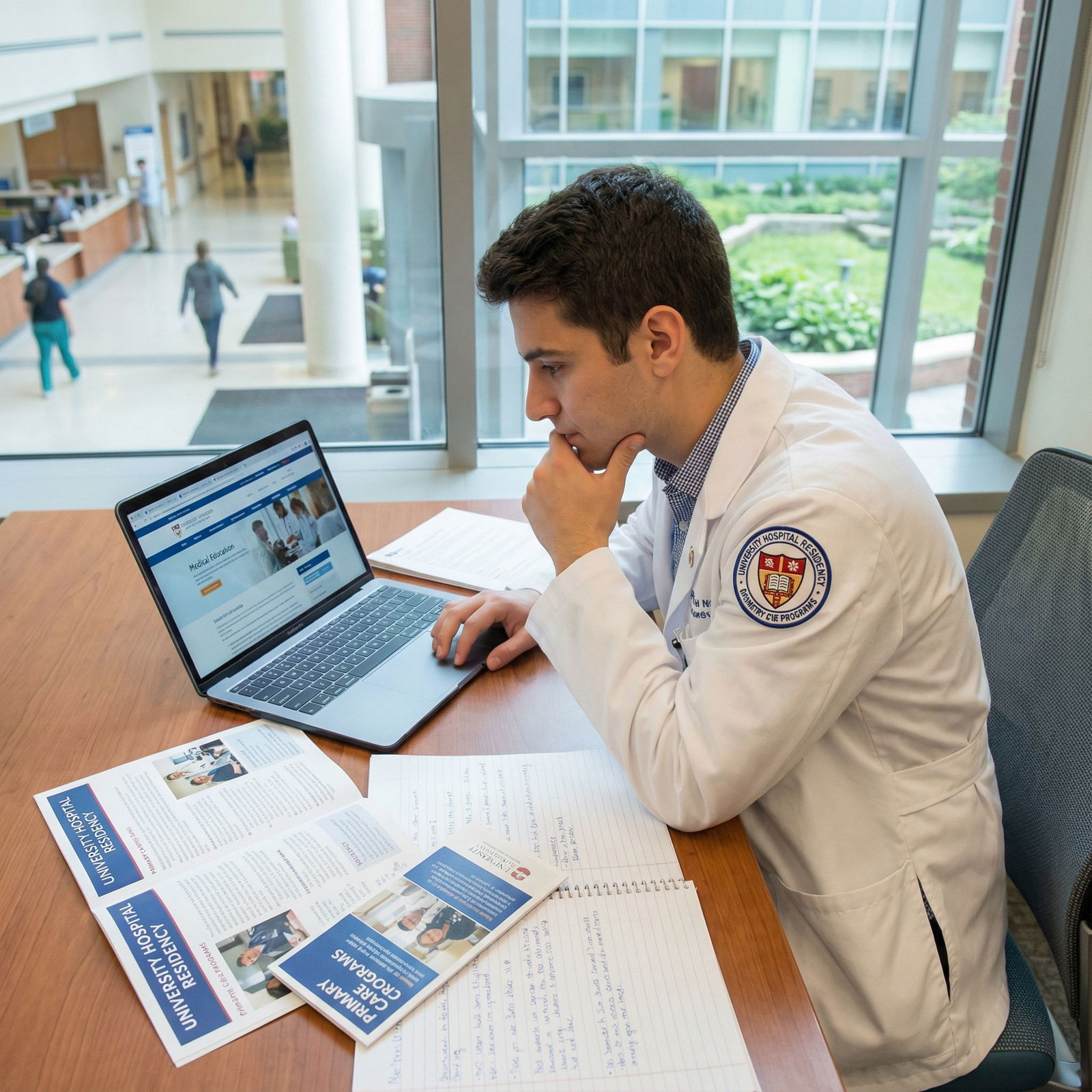
Choosing a residency program is one of the most influential decisions in your medical career. It’s the point where your years of healthcare education transition into intensive physician training, shaping not only your clinical skills but also your professional identity, network, and lifestyle for years to come.
This expanded guide will walk you step by step through a structured process—starting with deep self-assessment, then moving into targeted research, systematic program evaluation, strategic interviewing, and, finally, confident decision-making. The goal is not just to “match somewhere,” but to find Residency Programs that fit who you are now and who you aim to become as a physician.
Understanding Why Your Residency Program Choice Matters
Your residency is far more than just your “first job.” It’s the bridge between medical school and independent practice, and it will influence almost every aspect of your future medical career.
How Residency Programs Shape Your Future
A residency program impacts:
Specialization and career trajectory
Your chosen specialty and program will affect:- Types of patients you see
- Practice settings available to you (hospital, clinic, academic center, rural practice)
- Opportunities for fellowships and subspecialty training
- Long-term income and lifestyle patterns
Clinical skill and confidence
High-quality physician training builds:- Strong diagnostic reasoning and procedural skills
- Comfort managing complex and critically ill patients
- Efficient clinical workflows and time management
- Professional judgment and autonomy
Mentorship and networking
Your attendings, program leadership, and co-residents often become:- Lifelong mentors and sponsors
- Future colleagues and collaborators
- Sources of letters, references, and fellowship connections
Well-being and sustainability
The culture, call schedules, and wellness structures of a program directly affect:- Your risk of burnout
- Your ability to maintain relationships and personal interests
- Your long-term satisfaction with medicine as a career
Given how profoundly your residency shapes your professional and personal life, treating this choice thoughtfully is essential—not just in terms of prestige or name recognition, but fit and alignment with your values.
Step 1: Deep Self-Assessment and Defining Your Priorities
Before you look outward at Residency Programs, you need to look inward. Effective self-assessment is the foundation of choosing the right environment for your physician training.
1.1 Clarify Your Interests and Specialty Preferences
Start by examining which parts of your healthcare education energized you the most.
Ask yourself:
- Which rotations made time fly by?
- What kind of patient problems did you find most engaging?
- Did you prefer acute, high-stakes situations or longitudinal, relationship-based care?
- Do you enjoy procedural work, cognitive problem-solving, or a mix?
Examples:
- You loved the fast-paced environment of the ED, enjoyed managing multiple patients at once, and liked teamwork under pressure → Emergency Medicine may be a good fit.
- You found meaning in long-term relationships with patients and families, teaching about prevention and chronic disease → Family Medicine, Internal Medicine, or Pediatrics might align better.
Use:
- Rotation evaluations
- Feedback from attendings and residents
- Reflections or journals from clerkships to identify patterns rather than relying on a single experience.
1.2 Define Long-Term Career Goals
Think about where you hope your medical career will be 5–10 years after residency:
Consider:
- Practice type
- Academic vs. community practice
- Urban, suburban, or rural settings
- Role focus
- Clinician-educator
- Physician-scientist
- Primary care provider
- Hospitalist
- Subspecialist or proceduralist
- Future training
- Are you planning on a fellowship (e.g., cardiology, GI, critical care)?
- Do you want a program with strong fellowship match rates?
For example:
- If you want to be a physician-scientist, prioritize programs with:
- Protected research time
- Strong NIH funding
- Formal research tracks or pathways
- If your goal is community practice, you may value programs that:
- Emphasize broad clinical exposure
- Train you to be fully independent on day one after residency
You don’t need every detail figured out now, but general direction will help you assess whether a program can support your trajectory.
1.3 Assess Your Lifestyle Preferences and Boundaries
Residency is demanding in any specialty, but there is real variation in lifestyle and work intensity.
Reflect honestly on:
- Your tolerance for long stretches of overnight call or 24-hour shifts
- How important predictable weekends or evenings are to you
- Your need for proximity to:
- Family or partner
- Childcare or schools
- Specific religious or community resources
- Financial realities:
- Cost of living
- Student loan burden
You might realize:
- You’re willing to sacrifice some predictability in training (e.g., in surgical fields) for the long-term satisfaction of that specialty, or
- You place a high premium on work-life integration and would rather choose a specialty and program that support that more reliably.
No answer is “wrong”—but clarity is crucial.
1.4 Understand Your Learning Style and Support Needs
Residency programs differ significantly in educational philosophy and structure.
Ask yourself:
- Do you learn best through structured didactics or independent reading and self-directed learning?
- Do you thrive with high responsibility early or prefer more gradual autonomy?
- How much feedback and coaching do you need to feel supported?
Example program contrasts:
- Program A: “Sink-or-swim” with early autonomy, high expectations, and minimal hand-holding
- Program B: Strong scaffolding, frequent feedback, and very supportive senior residents and attendings
Neither is inherently better, but one may fit you better. If you know you benefit from mentorship and structured guidance, you should explicitly ask about these elements during your research and interviews.
Step 2: Strategic Research on Potential Residency Programs
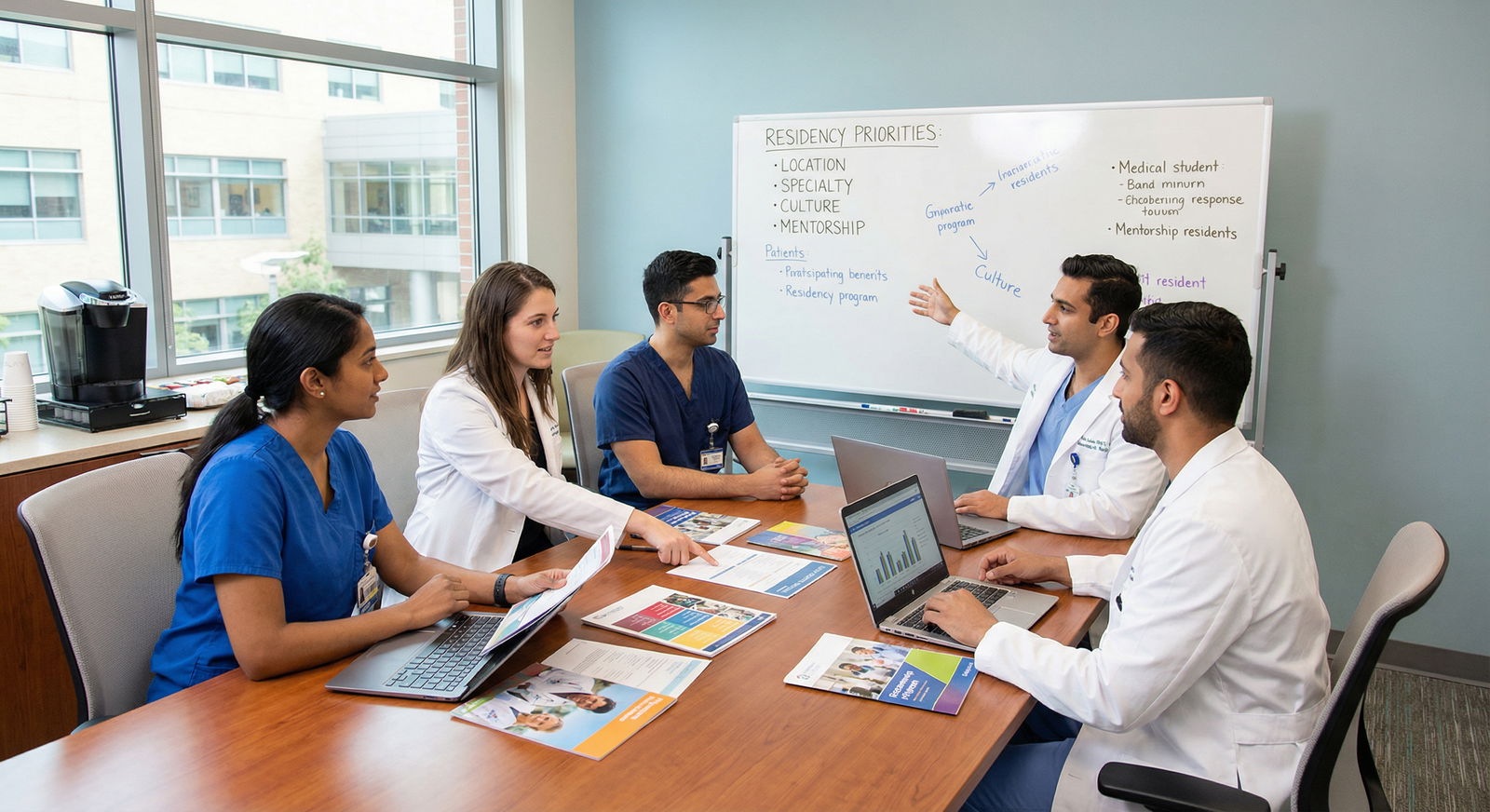
Once your self-assessment is clear, move into targeted research. Your goal is to build a realistic, well-matched list of programs—not just “top ranked,” but right for you.
2.1 Use Official and Centralized Resources
Start with authoritative sources:
ACGME (Accreditation Council for Graduate Medical Education)
- Verify that a program is accredited
- Review program specifics and requirements
- Note any citations or areas for improvement from recent reviews
ERAS (Electronic Residency Application Service) and NRMP
- Explore list of programs in your specialty
- Check application requirements and deadlines
- Understand participation in the Match
Specialty-specific organizations (e.g., AAIM, ACEP, AAFP, AAP)
- Often provide lists of Residency Programs
- Sometimes publish guidance or applicant roadmaps for physician training
Create a spreadsheet or tracking tool including:
- Program name and location
- Program size and type (academic, community, hybrid)
- Accreditation status
- Contact information and application requirements
2.2 Leverage Current Residents, Alumni, and Faculty
First-hand experiences are invaluable.
Ways to connect:
- Ask faculty mentors where they trained and what they know about other programs.
- Reach out to recent graduates from your medical school who matched into your specialty.
- Use alumni networks, LinkedIn, or specialty interest groups to connect with current residents at programs of interest.
Questions to ask residents:
- “What do you actually like most and least about your program?”
- “How approachable are attendings? Do you feel supported?”
- “How does your program handle struggling residents or remediation?”
- “What changes has your program made in the last few years? Are they responsive to feedback?”
Red flags might include:
- Consistent reports of mistrustful or punitive culture
- Frequent schedule changes without notice
- Lack of support for wellness or mental health
Positive signs:
- Residents are candid but overall satisfied
- They feel their voices are heard and concerns addressed
- Graduates match well into fellowships or obtain strong jobs
2.3 Attend Residency Fairs, Open Houses, and Virtual Sessions
Many programs now offer hybrid or fully virtual engagement opportunities.
Use these events to:
- Meet program directors and coordinators
- Ask targeted questions about curriculum, culture, and expectations
- Observe how residents and faculty interact in real time
Pay attention to:
- Whether residents appear engaged and comfortable speaking in front of leadership
- How program leaders talk about wellness, diversity, and inclusion
- How transparent they are about challenges and ongoing improvements
2.4 Critically Review Online Information, Rankings, and Outcomes
Online platforms can be helpful but must be interpreted with caution:
Program websites
- Look for:
- Rotation schedules and curriculum layout
- Didactic structure, conferences, simulation training
- Research opportunities, tracks (e.g., global health, QI, leadership)
- Fellowship match lists or job placement data
- Look for:
Rankings (e.g., Doximity, U.S. News & World Report)
- Use them as one small data point, not your primary decision driver
- Recognize that they may emphasize research reputation over resident experience
Social media (Instagram, X/Twitter, YouTube)
- Can reveal program culture, resident camaraderie, and day-to-day life
- Look for actual resident-generated content, not only polished marketing posts
Your research goal is a holistic picture of each program, not a quick “top 10” list.
Step 3: Systematically Evaluate Programs Against Your Criteria
With a preliminary list in hand, it’s time to evaluate each program in a structured way. This helps you move beyond vague impressions to concrete comparisons.
3.1 Curriculum Design, Rotations, and Training Model
Ask:
Breadth of exposure
- Do you see diverse patient populations (age, socioeconomic status, pathology)?
- Are there both community and tertiary care experiences?
Depth of hands-on experience
- Are residents the primary operators for procedures in your specialty?
- Is there competition with fellows for cases?
Educational structure
- Are there regular didactics, morning reports, journal clubs, simulation labs?
- Is there protected educational time that is respected?
Subspecialty or track options
- Are there structured pathways (research, global health, medical education, informatics)?
- Can residents tailor electives to their future goals?
Example: If you’re interested in critical care, look for:
- Multiple ICU rotations
- Optional extra ICU electives
- Simulation training in resuscitation and procedures
3.2 Program Culture, Wellness, and Support
Culture frequently determines whether a program is sustainable for you.
Consider:
Interpersonal dynamics
- Do residents support each other or compete?
- Are senior residents accessible and willing to teach?
Leadership style
- Are program leadership and faculty approachable?
- Do residents feel comfortable providing feedback?
Wellness efforts
- Are there scheduled wellness days or retreats?
- How does the program handle medical leave, parental leave, or crises?
- Are mental health resources promoted and truly accessible?
Red flags:
- Residents avoiding eye contact with leadership
- Jokes that normalize chronic burnout or unsafe workloads
- Reports of unaddressed bullying or harassment
Positive signs:
- Residents describe their colleagues as “family”
- Clear, transparent processes for dealing with concerns
- Visible actions taken in response to resident feedback
3.3 Location, Lifestyle, and Cost of Living
Even the best program can be unsustainable if everything outside work is misaligned with your life.
Evaluate:
Geography
- Climate preferences (winters, summers)
- Distance from your support system
- Urban vs. rural vs. suburban preferences
Cost of living
- Rent and transportation
- Childcare costs if relevant
- State income taxes and financial considerations
Community and life outside the hospital
- Access to hobbies (outdoor sports, arts, religious communities)
- Safety and commute times
Ask during interviews:
- “Where do most residents live?”
- “What’s your typical commute?”
- “What do residents do for fun here?”
3.4 Program Size, Structure, and Diversity
The size and composition of your residency cohort also matter.
Program size
- Large programs: more peers, possibly more subspecialty exposure, but risk of feeling like “just a number”
- Small programs: closer-knit teams and more individualized attention, but sometimes fewer resources
Diversity and inclusion
- Are there residents and faculty from a wide variety of backgrounds?
- Are there affinity groups, DEI initiatives, and structural support for underrepresented groups?
Align this with your own needs for community, mentorship, and belonging.
Step 4: Crafting a Strong Application and Excelling in Interviews
Once you’ve identified your target Residency Programs, you need to present a compelling, authentic application that demonstrates your fit.
4.1 Build a Cohesive, Specialty-Targeted Application
Your materials should tell a clear story of your path through healthcare education into focused physician training.
Key elements:
Personal Statement
- Articulate why this specialty and what you bring to it
- Include specific clinical experiences that shaped your choice
- Demonstrate insight, reflection, and growth rather than clichés
Curriculum Vitae (CV)
- Highlight:
- Clinical experiences and sub-internships
- Research and quality improvement projects
- Leadership roles, teaching, and community service
- Emphasize items that show genuine interest in the specialty
- Highlight:
Letters of Recommendation
- Prioritize letters from attendings within your specialty who:
- Know you well clinically
- Can comment on work ethic, teamwork, and growth
- Understand the expectations of the programs you’re applying to
- Ask early, provide your CV and talking points, and give writers ample time
- Prioritize letters from attendings within your specialty who:
USMLE/COMLEX and Transcript
- Be prepared to address any anomalies or gaps honestly and thoughtfully
- If you have a failure or low score, focus on:
- What you learned
- Concrete steps you took to improve
- How you’ve demonstrated resilience and growth
4.2 Prepare Thoroughly for Residency Interviews
Interviews are your opportunity to both present yourself and evaluate programs in real time.
Preparation strategies:
- Practice answering:
- “Why this specialty?”
- “Why our program?”
- “Tell me about a challenge and how you handled it.”
- “What are your strengths and areas for growth?”
- Use behavioral interviewing techniques (STAR: Situation, Task, Action, Result) for concrete, structured answers.
- Prepare concise, honest responses to any potential concerns in your application.
During interviews, aim to:
- Be professional, engaged, and curious
- Demonstrate insight into the specialty and program-specific features
- Show that you are collegial and teachable, not just accomplished
4.3 Ask Insightful Questions That Reveal Fit
Your questions signal engagement and help you gather essential information.
High-yield questions:
- Training and education
- “How is feedback delivered and how often?”
- “What changes have residents helped implement recently?”
- Workload and wellness
- “What does a typical day and week look like for an intern?”
- “How does the program support residents during difficult rotations?”
- Outcomes
- “What are common career paths for your graduates?”
- “How successful are residents in matching into fellowships they desire?”
Avoid questions easily answered on the website; use your time to dig deeper into culture and reality.
Step 5: Reflecting, Ranking, and Making Your Final Decision
After interview season, you’ll have impressions, notes, and emotional reactions. Now you must synthesize all of it into a rank list that truly reflects your priorities.
5.1 Organize Your Impressions Systematically
Immediately after each interview day:
- Write down:
- Pros and cons
- Memorable interactions
- How you felt at the end of the day
- Rate each program (for yourself) on key dimensions:
- Training quality
- Culture and support
- Location and lifestyle
- Fit with long-term goals
Later, compare across programs rather than relying on memory alone.
5.2 Weigh Data, Values, and Intuition Together
When building your rank list, consider:
Objective factors
- Case volume, board pass rates, fellowship match data
- Location, cost of living, program stability
Subjective impressions
- Did residents seem like people you’d want to work nights with?
- Did you feel respected and welcome?
Personal constraints
- Partner’s career, family health needs, immigration or visa logistics
Intuition matters, but anchor it in the reality of your priorities. Ask yourself:
- “If this program were not as ‘well-known,’ would I still want to train here?”
- “Does this program support the kind of physician and person I want to become?”
5.3 Trust the Match Process—and Your Preparation
Once you’ve built a thoughtful rank list:
- Rank programs in true order of preference, not where you “think” you’re more likely to match—this aligns with how the NRMP algorithm works.
- Talk with trusted mentors if you feel torn, but remember: it is your medical career and your life.
Your extensive self-assessment, careful research, and honest reflection place you in a strong position to choose a residency that will set you up for a fulfilling, sustainable path in medicine.

Frequently Asked Questions About Choosing a Residency Program
1. How do I know if a residency program is truly the right fit for me?
Look for alignment across three major domains:
- Training and opportunities: Does the curriculum, case mix, and academic environment support your career goals (e.g., fellowship, research, community practice)?
- Culture and wellness: Do residents appear supported? Is there a culture of teaching, respect, and psychological safety?
- Lifestyle and location: Can you realistically live, commute, and maintain relationships and well-being in that location?
If a program consistently scores well on your top priorities and you felt comfortable and respected on interview day, it’s likely a strong fit.
2. What are the best resources for researching and comparing residency programs?
Combine multiple sources for a balanced view:
- ACGME and specialty societies: For accreditation and basic program features
- Program websites and official materials: For curriculum, faculty, rotations, and outcomes
- Current residents and alumni: For honest perspectives on culture and day-to-day life
- Residency fairs and virtual open houses: For direct interaction with leadership and residents
- Online platforms and ranking sites: For additional data—but use them cautiously and never as your sole deciding factor
3. How important are letters of recommendation in the residency application process?
Letters of recommendation are critical. They:
- Provide programs with an external, trusted evaluation of your clinical abilities, professionalism, and teamwork
- Offer evidence of your readiness for physician training in a specific specialty
- Help differentiate you from applicants with similar scores and grades
Choose writers who:
- Know you well clinically
- Practice in or understand your target specialty
- Can describe specific examples of your strengths and growth
4. How much should location influence my residency decision?
Location should be a significant factor, but not the only one. Consider:
- Support systems: proximity to family, partner, or close friends
- Cost of living and financial considerations
- Climate, safety, commute, and access to activities that sustain you
However, if a slightly less ideal location offers clearly superior training and mentorship for your goals, it may still be the better choice for your long-term medical career. Balance your immediate life needs with your future aspirations.
5. What key questions should I ask during residency interviews to get an honest picture of programs?
Target questions that go beyond the brochure:
- To residents:
- “What would you change about the program if you could?”
- “How does leadership respond to resident feedback?”
- “How manageable is the workload on your most demanding rotation?”
- To program leadership:
- “How have you adapted training to address resident wellness and burnout?”
- “What are your graduates typically doing 3–5 years after residency?”
- “What are some recent challenges the program faced, and how were they addressed?”
The content and tone of the responses—and whether they’re candid—will tell you a great deal about the reality of training there.
Choosing a residency is both exciting and daunting, but you don’t have to approach it blindly. By grounding your decision in thoughtful self-assessment, intentional research, and honest reflection, you can identify Residency Programs that not only advance your physician training, but also support the kind of life and medical career you want to build.