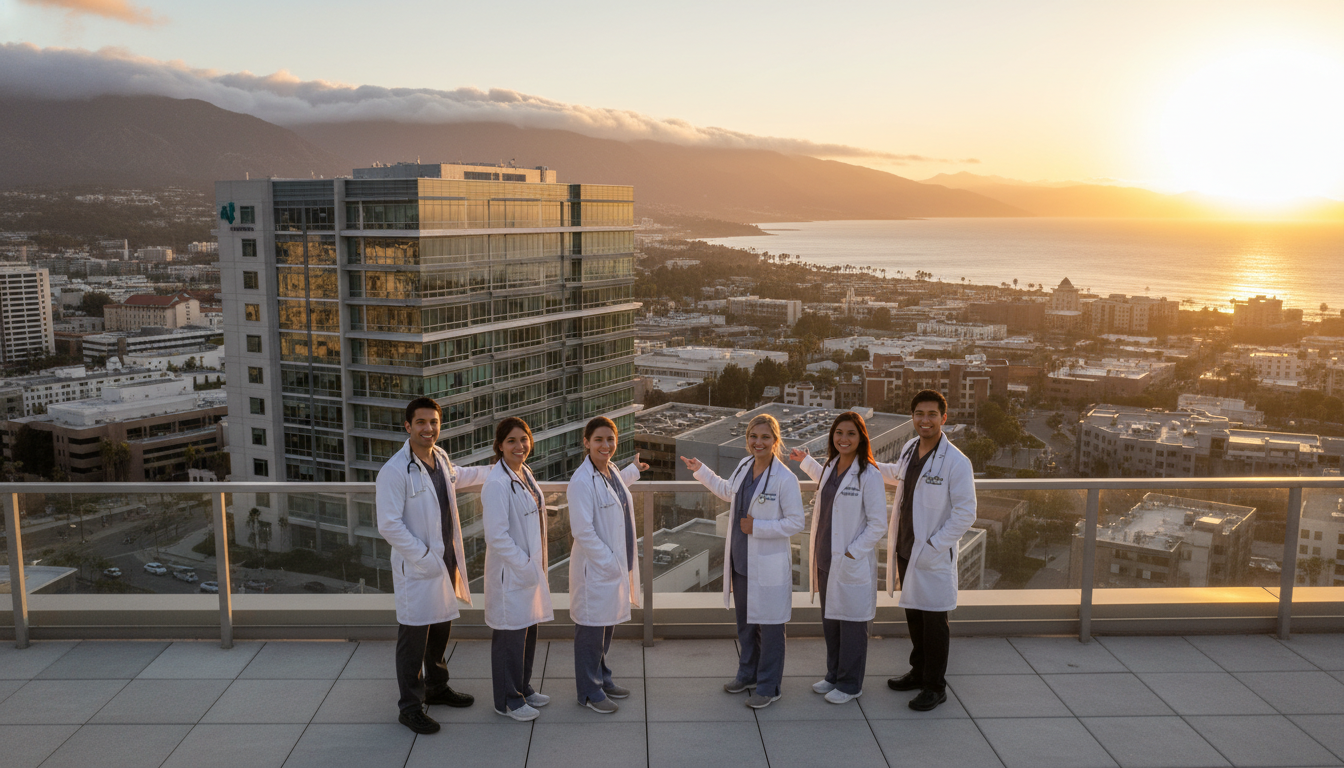
Understanding Geographic Flexibility as a US Citizen IMG
For a US citizen IMG (American studying abroad) with their heart set on a San Francisco residency or a Bay Area residency, “geographic flexibility” can feel like a threat to your dream location. In reality, it’s one of the most powerful tools you have to actually end up in the San Francisco Bay Area long term.
Geographic flexibility is not about “giving up” your preferred region. It’s about:
- Choosing where to be rigid (your top-priority region, like SF/Bay Area)
- Choosing where to be flexible (other regions and program types)
- Using that mix strategically to maximize your chance of matching at all and to build a path back to the Bay Area if you don’t match there immediately.
As a US citizen IMG, you face two parallel challenges:
- Getting into US graduate medical education at all (IMG disadvantage)
- Competing in one of the country’s most competitive regions (SF and Bay Area)
This article breaks down how to approach geographic flexibility specifically for US citizen IMGs targeting the San Francisco Bay Area, and how to develop a realistic regional preference strategy that keeps the Bay Area in play—either now or later.
Why the San Francisco Bay Area Is Extra Challenging for IMGs
Before you decide how flexible to be, you need to clearly understand what you’re up against in this region.
1. High Density of Competitive Programs
The Bay Area includes:
- UCSF (and its affiliated hospitals)
- Stanford
- Kaiser Permanente programs (San Francisco, Oakland, Santa Clara, etc.)
- County and safety-net systems (e.g., Zuckerberg San Francisco General)
- Community-based and hybrid academic-community programs in the broader Bay Area
These programs are known for:
- High US MD and US DO proportions
- Strong research emphasis (especially at UCSF/Stanford and several Kaiser sites)
- Preference for applicants with strong clinical, research, and sometimes tech/innovation backgrounds
For a US citizen IMG, this means that even if you’re from California or grew up in the Bay Area, your application is still competing with:
- Local US MDs from UCSF, Stanford, UC Davis, and other California schools
- Highly competitive out-of-state and international applicants
- Often a limited number of IMG-friendly spots, depending on specialty and program
2. Specialty Competitiveness in the Bay Area
IMG-friendliness varies dramatically by specialty. In the SF Bay Area, some patterns are common:
More IMG-friendly (relatively speaking, but still competitive here):
- Internal medicine (particularly community-focused or county-based tracks)
- Family medicine
- Pediatrics (select programs)
- Psychiatry (varies year to year, but still competitive in SF)
Much less IMG-friendly or highly competitive:
- Dermatology, orthopedics, neurosurgery, plastic surgery
- Radiology, radiation oncology
- Anesthesiology at top academic centers
- Surgical subspecialties overall
If you’re a US citizen IMG aiming for a San Francisco residency in a highly competitive specialty, you should assume:
- Your probability of matching into that specialty specifically in the Bay Area is low, unless you have exceptional differentiators (significant US-based research, strong connections, or unique background).
- Your geographic flexibility and specialty flexibility will matter even more.
3. Limited Slots and Local Preference
Many Bay Area programs have:
- Limited class sizes (e.g., 6–20 residents per year, depending on program)
- Strong local pipelines: students from UCSF, Stanford, nearby DO schools, and regional programs
- Institutional or informal preference for applicants with prior Bay Area or California connection (which is a plus if you grew up there, but still not enough on its own for an IMG)
For an American studying abroad who is originally from the Bay Area, this is both an asset and a trap:
- Asset: You can make a genuine case for long-term commitment to the region.
- Trap: Relying solely on that connection while only applying to SF/Bay Area can lead to not matching at all.
Designing a Realistic Regional Preference Strategy
The key to geographic preference residency planning is to be intentional. Instead of asking “Where do I want to live?” you should be asking:
“How can I use geography to give myself the best chance of matching, and keep the door open to the Bay Area long-term?”
Here’s a structured way to do that.
Step 1: Define Your Priority Tiers
Create three geographic tiers for your own planning:
Tier 1 – Dream Region (High Priority)
- San Francisco city
- Core Bay Area: Oakland, Berkeley, San Mateo, Daly City, San Jose, Santa Clara, Walnut Creek, etc.
Tier 2 – Acceptable and Strategic Regions (Medium Priority)
Regions that are:- More IMG-friendly
- Have programs with good track records of graduates later matching into fellowships or jobs in California
- Possibly lower cost of living than SF
Examples might include: - Other parts of California: Central Valley (Fresno, Modesto, Bakersfield), Sacramento region, Inland Empire
- Pacific Northwest (Oregon, Washington)
- Mountain states or Midwest cities with strong community programs
Tier 3 – Backup but Acceptable Regions (Safety Net)
Regions where:- You may not have personal ties, but
- Programs have higher IMG acceptance
- You would be willing to live temporarily if it allowed you to complete residency and eventually return to the Bay Area
This personal tier system will act as your guide for how you distribute your applications and rank list.
Step 2: Research IMG-Friendliness and Outcomes
For each region and program, look specifically at:
- Percentage of IMGs currently in the residency program (check websites or program presentations)
- US citizen IMG presence versus non–US citizen IMG
- Fellowship or job placement after residency, especially whether graduates move to California or large metro areas
- History of matching US citizen IMGs into those programs (ask residents, advisors, or use online forums cautiously)
This will help you differentiate between:
- A dream San Francisco residency that rarely takes IMGs
- A Central Valley or out-of-state program that routinely welcomes IMGs and whose graduates successfully practice in California later
That second type of program might be your real “doorway” back to the Bay Area, even if it’s not where you initially want to be.
Step 3: Balance Your Application Numbers by Region
As a US citizen IMG, you should usually over-apply rather than under-apply, especially if you are targeting competitive regions like the Bay Area.
A common structure (adapt to your situation) might look like:
- 20–30% of applications to Tier 1 (San Francisco and broader Bay Area)
- 40–50% of applications to Tier 2 (other parts of California + IMG-friendly states/regions)
- 20–40% of applications to Tier 3 (high-IMG programs anywhere you’d genuinely be okay living)
If your metrics are weaker (e.g., multiple attempts at USMLE, long gap after graduation), you may need:
- More programs overall
- A larger proportion in Tier 2 and Tier 3
If your metrics are strong (solid scores, strong US clinical experience, good letters, research), you can afford a slightly higher proportion of Tier 1 applications—but still should not go “Bay Area only.”

How to Use Geographic Preference Signals Strategically
The NRMP and ERAS sometimes allow programs to see explicit or implicit geographic preference signals, either through program signaling, supplemental applications, or location-specific questions. Even where formal “signals” don’t exist, your behavior and narrative communicate your geographic priorities.
1. Emphasize—but Don’t Overplay—Your Bay Area Ties
If you are:
- Born or raised in the Bay Area
- A graduate of a Bay Area high school or college
- Someone with close family still living in or near San Francisco
You should absolutely highlight this in:
- Your ERAS application (Experience and Personal Statement)
- Any supplemental application questions about “Why this region?”
- Interviews with Bay Area programs
However, you must avoid sending the message that you are only willing to live in the Bay Area. Programs sometimes worry that:
- Applicants with rigid geographic preferences may rank them unrealistically (too high or too low)
- You may not be committed if you have other priorities (partner’s job, housing, etc.)
Frame your Bay Area connection as:
- A strong, long-term preference
- But also show you understand the realities of the match and are prepared to be fully committed wherever you train.
Example interview phrasing:
“The Bay Area is home for me—I grew up in San Jose and my family is still there. Long-term, I’d love to practice in the region. At the same time, I understand residency is about training quality and opportunity, so I’ve applied broadly to programs where I know I can grow and contribute. If I’m fortunate to train here, I’d be thrilled, but I will be fully committed wherever I match.”
2. Use Program Signals Wisely (If Available)
If your specialty allows program signaling (for example, some internal medicine and family medicine tracks), think of your signals as high-value currency.
A reasonable approach for a US citizen IMG with strong Bay Area interest:
- Use a small number of signals on top-priority Bay Area programs where:
- They take at least some IMGs
- You have a realistic profile match (scores, experiences, language skills, etc.)
- Use remaining signals on IMG-friendly programs in Tier 2 regions that would be excellent training sites and realistic matches.
Avoid using all your signals in the Bay Area if:
- Most of those programs have no history of taking IMGs in the last few years
- Your metrics are below their common ranges
3. Answer “Geographic Preference” Questions Honestly and Strategically
If a supplemental application or ERAS question asks directly about:
- Geographic preference residency
- Regions where you are most interested in training
- Location flexibility match considerations
You can balance honesty with strategy by:
- Listing “West Coast” or “California” as a top preference
- Not restricting yourself to “San Francisco only”
- Indicating additional regions where you have either personal ties or professional reasons (e.g., interest in underserved communities, specific patient populations)
You want to communicate:
- Clear interest in the Bay Area and West Coast
- Realistic willingness to train elsewhere
Building a Path Back to the Bay Area If You Train Elsewhere
Geographic flexibility doesn’t mean giving up on your long-term goal of living and working in the San Francisco Bay Area. Many physicians in the Bay Area did their residency in completely different regions and then returned later.
For a US citizen IMG, thinking in two phases is often the best strategy:
- Phase 1: Get into a solid residency anywhere (maximize your chance of matching)
- Phase 2: Use that residency to pivot back to the Bay Area (jobs, fellowship, or advanced training)
1. Choosing Programs That Keep California in Reach
When considering non–Bay Area programs, factor in:
- Reputation within your specialty: Programs with a strong name and good board pass rates can make it easier to later secure California jobs or fellowships.
- Existing California alumni network: Some residencies may have a history of graduates working in California, even if they’re out-of-state.
- Fellowship opportunities: If you’re considering a subspecialty, training at a program with recognized fellowships may be a stepping stone to UCSF, Stanford, or Kaiser fellowships later.
2. Maintain Ties to the Bay Area During Residency
Even if you’re training in another region, you can keep yourself on the radar in the Bay Area:
- Attend national conferences where Bay Area programs send faculty and fellows.
- If allowed by your residency, pursue away electives or visiting rotations in the Bay Area during later years (especially for fellowship interest).
- Network with mentors who have connections to California health systems.
- Stay in contact with any prior mentors from the Bay Area (college advisors, physicians you shadowed, etc.).
3. Plan for Fellowship or Job Applications in the Bay Area
For some specialties, fellowship is your best re-entry point:
- Internal medicine → cardiology, GI, heme/onc, pulmonary/critical care, etc.
- Pediatrics → NICU, PICU, subspecialties
- Psychiatry → addictions, child & adolescent, forensics, etc.
You can:
- Target Bay Area fellowships in your final year or two of residency
- Apply to Bay Area attending jobs that value your training and experience, especially in community or safety-net settings
Residency outside the Bay Area does not close the door; it often just shifts the timeline.

Practical Application and Ranking Strategies for US Citizen IMGs
Turning all of this into real-world decisions is where many applicants struggle. Here are concrete, actionable ways to structure your application and ranking strategy.
1. Application Distribution Example
Imagine you are:
- A US citizen IMG
- With solid but not top-tier metrics (e.g., pass on first attempt, decent scores, 1–2 US rotations, decent letters)
- Interested in internal medicine with a strong preference for San Francisco residency or Bay Area residency
You might:
- Apply to 80–120 internal medicine programs total (exact number depends on your profile and advisor guidance).
- Of these:
- ~20–25 programs in California (including SF/Bay Area and more IMG-friendly Central Valley or other regions)
- ~30–50 programs in IMG-friendly states (Midwest, South, Northeast)
- 10–20 programs in more competitive cities, but only where you have some realistic shot
Within California:
- Apply to all Bay Area programs where IMGs have matched in the last 3–5 years
- Add less competitive but more IMG-friendly locations such as:
- Fresno, Bakersfield, Modesto, Stockton, etc.
- Some community or county-based programs in LA or inland regions
2. Interview Acceptance and Travel
When you receive interviews:
- Give priority to Bay Area and California interviews, but
- Still attend a strong mix of interviews in other regions
- Avoid declining interviews early “just because they’re not in the Bay Area”—they may become crucial when ranking
If finances are an issue (for in-person interviews, if applicable), consider:
- Prioritizing interviews where you have the highest chance of ranking programs highly
- Talking honestly with mentors about cost-benefit decisions for travel
3. Rank List Strategy: Commitment + Flexibility
On your rank list, your geographic preference strategy should show:
- Top ranks: Your most desired Bay Area programs where you interviewed and genuinely want to train.
- Next tiers: Strong programs in California or your Tier 2 regions where you can imagine being happy.
- Later ranks: Your Tier 3 programs that may be less desirable geographically, but still provide solid training and a path to completing residency.
Never:
- Exclude a program from your rank list just because it isn’t in your favorite region, if you would rather match there than not match at all.
- Rank a Bay Area program higher than a non-Bay Area program only for location, if the training quality or fit is clearly worse for you.
Remember:
Matching into any solid residency is far better than going unmatched while holding out for a specific city—even one as personally meaningful as the San Francisco Bay Area.
FAQs: Geographic Flexibility for US Citizen IMGs in the Bay Area
1. As a US citizen IMG, is it realistic to match directly into a Bay Area residency?
It can be realistic, but it depends heavily on:
- Your specialty (internal medicine or family medicine is more feasible than highly competitive surgical fields)
- Your USMLE scores and attempts
- Strength and recency of US clinical experience
- Quality of your letters of recommendation
- Prior ties to the Bay Area or California
Many US citizen IMGs do not match directly into a San Francisco or Bay Area residency, but some do each year, especially in more IMG-friendly fields and at certain community or county-focused programs. You should treat a direct Bay Area match as possible but not guaranteed, and build a backup plan using geographic flexibility.
2. If I really only want to live in San Francisco, should I still apply broadly?
Yes. Only applying to the San Francisco Bay Area is extremely risky, even for strong US MD applicants, and even more so for US citizen IMGs. If you go unmatched, you lose time, momentum, and sometimes sponsorship or visa support (for non-US citizens, though you are a US citizen). Applying broadly doesn’t mean you have to give up on San Francisco; it just means you’re prioritizing matching somewhere as your first critical step.
Once in residency, you can:
- Reassess your priorities
- Explore fellowship options in the Bay Area
- Look for attending jobs in the region after graduation
3. Will ranking Bay Area programs high hurt my chances of matching elsewhere?
No. The Match algorithm is applicant-favoring. It tries to place you at your highest-ranked program where there is mutual interest. Ranking Bay Area programs high will not reduce your chances of matching to lower-ranked programs in other regions. What can hurt you is ranking too few programs overall, or excluding safety programs in more IMG-friendly regions.
4. How can I show strong interest in Bay Area programs without seeming inflexible?
You can:
- Emphasize genuine connections to the Bay Area (family, prior living there, long-term plans)
- Express long-term interest in serving Bay Area communities
- Simultaneously mention that you applied broadly and value training quality wherever you match
In interviews, or in program-specific communications if appropriate, you can say something like:
“I have deep ties to the Bay Area and would be thrilled to train here, but I’ve applied widely because I recognize the competitive nature of the Match and want to ensure I find a program where I can grow into an excellent physician, wherever that may be.”
This shows commitment without inflexibility, and aligns with a thoughtful location flexibility match strategy.
By approaching geographic flexibility deliberately—especially as a US citizen IMG with strong interest in the San Francisco Bay Area—you can protect your ultimate goal of living and working in the region, without sacrificing your chance to match into residency at all. Your strategy should blend clear regional preference with wide-enough flexibility, so that the Match gives you both a training opportunity now and a realistic pathway back to the Bay Area in the future.