
Understanding Geographic Flexibility as a US Citizen IMG in the Sun Belt
For a US citizen IMG or American studying abroad, “geographic flexibility” is one of the most powerful levers you have in the Match—especially if you are interested in sun belt residency opportunities. Yet, many applicants either misunderstand it or underuse it.
Geographic flexibility is your willingness to train in multiple regions, city sizes, and institutional types rather than limiting yourself to a narrow slice of programs. For an American studying abroad, this is often a key way to offset relative disadvantages (less US-based networking, fewer home programs, variable school reputation) and still match into a strong training environment.
At the same time, you may feel a strong pull toward southern residency programs—for cultural fit, family, cost of living, or lifestyle (sunny weather, outdoor activities, less winter). Balancing that preference with a smart location flexibility match strategy is what this article is about.
This guide will help you:
- Understand how program directors think about geography for IMGs
- Use geographic flexibility without losing your Sun Belt focus
- Build a realistic regional preference strategy
- Apply and rank wisely to maximize your chances of matching
Why Geography Matters More for US Citizen IMG in the Match
For US allopathic seniors, geography strongly influences where they apply, but they often have more margin for error. For a US citizen IMG, geography can be the difference between matching and not matching.
How Program Directors Think About Geography
Program directors often ask:
- “Does this applicant have any connection to our region?”
- “Is there a realistic chance they will accept our interview and rank us?”
- “Have we had success with similar applicants from this region or school?”
If you are targeting southern residency programs, you are competing not only with other US citizen IMGs, but also with:
- Local US MD and DO students
- Regional applicants with strong ties (family, undergrad, previous jobs)
- International medical graduates with prior US work or training in the region
Without clear geographic ties, some programs may worry you will rank them low or not show up if they match you. That makes them cautious about offering interviews to an American studying abroad who appears to have no connection to the South.
This is where geographic flexibility—paired with a thoughtful narrative about your interest—can help.
Why IMG Status Amplifies the Impact of Location
US citizen IMGs generally face:
- Fewer automatic interview offers
- More skepticism about clinical preparation (fair or not)
- Tighter filters on USMLE scores and visa issues (even as a citizen, schools sometimes mix data with non-citizen IMGs)
Because of this, small factors like:
- Stating a geographic preference
- Documented regional experience (rotations, work, family)
- Expressing location flexibility
carry more weight and can open doors in unexpected places. If you insist on a narrow set of cities or states, you reduce your opportunities before PDs even review your full application.
The Sun Belt: Pros, Cons, and Realities for US Citizen IMG
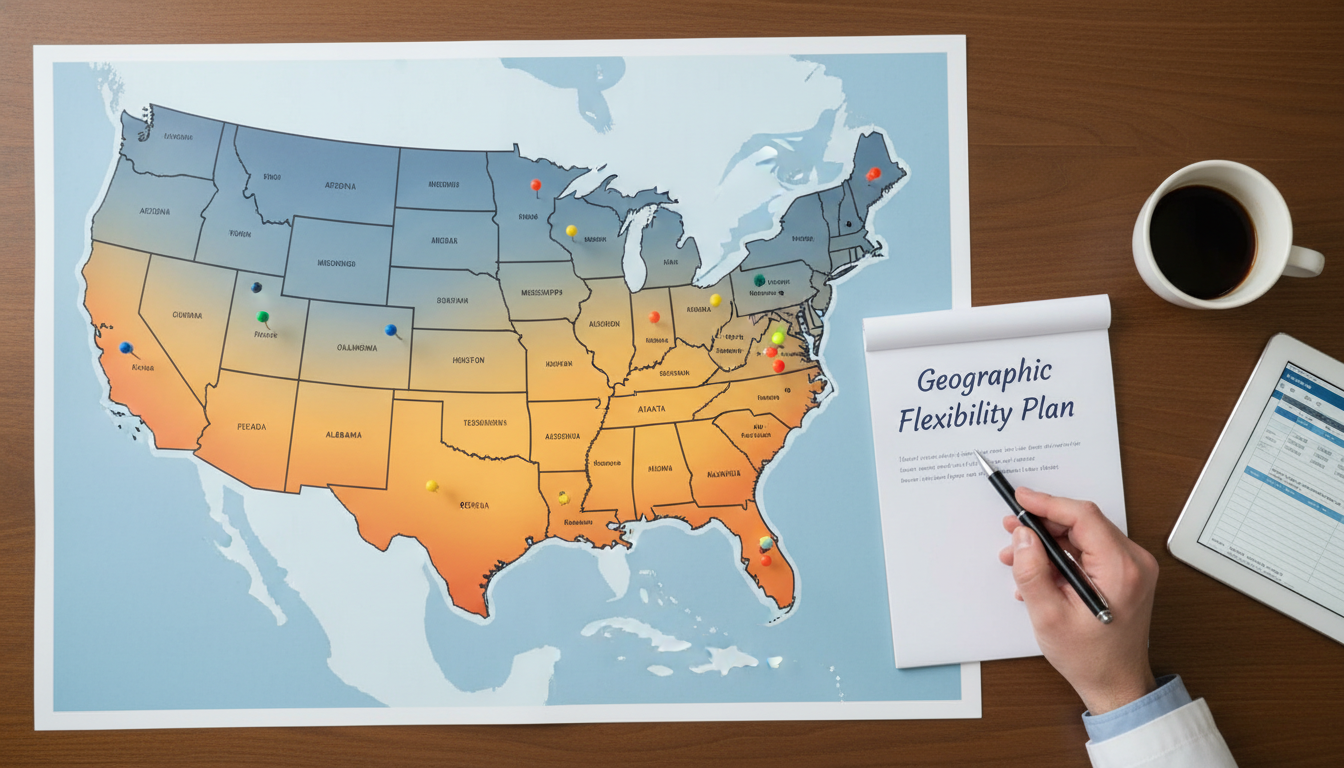
The “Sun Belt” generally includes the southern tier of the US: roughly from California and Arizona across to Texas, the Gulf Coast, and southeastern states like Georgia, the Carolinas, Alabama, and Florida. It’s a popular target for US citizen IMGs seeking sun belt residency training.
Why Sun Belt Residency Programs Are Attractive
Common reasons US citizen IMGs are drawn here:
- Lifestyle: Warm weather, outdoor activities, less snow and ice
- Cost of living: Many southern cities are more affordable than major coastal metros
- Diversity of patients: High prevalence of chronic disease, diverse cultural backgrounds, large immigrant and underserved populations
- Growing healthcare markets: Rapid population growth in many Sun Belt cities, with expanding hospital systems
These factors make southern residency programs appealing, but they also drive competition—especially in major metro areas.
Realistic Competitiveness Across the Sun Belt
Competitiveness varies widely within the Sun Belt:
- Highly competitive areas:
- South Florida (Miami/Ft. Lauderdale, some Tampa/St. Pete programs)
- Major Texas metros (Houston Medical Center, Dallas, Austin)
- Popular coastal cities (San Diego, parts of LA/Orange County, Charleston, some North Carolina academic centers)
- Moderately competitive areas:
- Mid-sized cities (San Antonio, Jacksonville, Baton Rouge, Birmingham, Greenville, Greensboro, Tucson)
- Strong community programs with good reputations
- More IMG-friendly pockets:
- Some community or safety-net hospitals in Texas, Florida, Georgia, Alabama, Mississippi, Arkansas, New Mexico, inland Carolinas
- Rural and semi-rural programs, especially in primary care specialties
For an American studying abroad, this means:
- You can absolutely match in the Sun Belt, but
- You likely need to broaden your specific locations and program types within the region, and
- In some cases, remain open to programs outside the South to maximize your chances.
Building a Geographic Preference Strategy as a US Citizen IMG
You don’t have to choose between “only Sun Belt” and “apply everywhere.” Instead, build a layered regional preference strategy that matches your competitiveness and priorities.
Step 1: Honestly Assess Your Application
Before deciding how narrow your Sun Belt focus can be, evaluate your profile:
Key factors:
- USMLE/COMLEX scores (and any attempts)
- Core clinical grades and class ranking
- US clinical experience (USCE) quantity and quality
- Letters of recommendation from US physicians
- Specialty competitiveness (e.g., internal medicine vs. dermatology)
- Red flags (gaps, failures, professionalism issues)
Rule of thumb for geographic flexibility:
- Stronger application (good scores, no failures, solid USCE, less competitive specialty):
You can be somewhat more selective geographically within the Sun Belt while still maintaining a safe number of programs. - Moderate to weaker application or more competitive specialty:
You should broaden geography—not only across the Sun Belt, but also to other regions and less saturated markets.
Step 2: Define Your Sun Belt “Core” and “Expansion” Zones
Think in layers:
Core Sun Belt Preference
- The states/areas you most want (e.g., Texas + Georgia + North Carolina)
- These get priority for audition rotations, targeted networking, and tailored personal statements.
Expansion Sun Belt Region
- Neighboring or related states/cities you’re willing to go to but may know less well (e.g., adding Alabama, Mississippi, Arkansas, New Mexico).
- These significantly increase your program count while still fulfilling your desire for a southern residency program.
Outside-Region Safety Net (If Needed)
- Programs outside the Sun Belt that are IMG-friendly, maybe in the Midwest, Rust Belt, or certain Northeastern community hospitals.
- These are valuable especially if your metrics are borderline or your specialty is more competitive.
This three-tier system preserves your geographic preference residency focus without making your application fragile.
Step 3: Demonstrate Genuine Sun Belt Interest
For programs to take your Sun Belt interest seriously, especially as an American studying abroad, you need tangible evidence:
- Rotations: At least one or two clerkships or electives in the South if possible
- Family or personal ties:
- Mention parents, siblings, partner, or long-time residence in your application
- Include this concisely in your ERAS experiences or personal statement
- Pre-med or prior work: Undergrad, previous careers, or volunteer work in the region
- Research or projects: Collaborations with institutions or faculty in the Sun Belt
- Long-term plans: Intention to practice in the region, interest in regional health issues (e.g., diabetes in the Deep South, border health in Texas/Arizona)
Document these in:
- Your personal statement(s)
- The ERAS geographic preferences section (if available that year)
- Program-specific messages or update letters, if allowed
- Interview answers when asked “Why our city/region?”
Practical Tactics to Use Geographic Flexibility Wisely
Once you’ve built your regional preference strategy, you need to apply it to concrete decisions: where to rotate, how to apply, how to talk about preferences, and how to rank.
1. Choosing US Clinical Rotations (USCE) Strategically
For a US citizen IMG, USCE is non-negotiable. Use it to support your geographic goals:
- Priority 1 – Core Sun Belt states:
Try to secure at least one core rotation (e.g., Internal Medicine at a Texas, Florida, or Georgia hospital if those are your target states). - Priority 2 – IMG-friendly southern hospitals:
Look for sites known to accept IMGs and with evidence of matching IMGs into their residency or nearby programs. - Priority 3 – Affordable or accessible rotations outside the South:
If Sun Belt options are limited, still get quality USCE anywhere, but mention your interest in the South to faculty who may have networks there.
Tip: Even if your rotation is outside the Sun Belt, you can still gather letters and then use your personal statement to articulate why you want to move south.
2. Using ERAS Geographic Preferences and Program Signaling
ERAS has experimented with geographic preferences and signaling tools. If these are available in your cycle:
- Be honest but not overly restrictive:
- Mark your top regions (e.g., “South” and “Central” instead of just “South”).
- Avoid selecting only one micro-region unless your application is very strong.
- Align signals with your core Sun Belt states:
- If specialty signaling is available, prioritize programs in your top Sun Belt areas where you genuinely would go if matched.
- Do not waste signals on “reach” programs in hyper-competitive cities unless your profile justifies it.
This tells PDs not only where you want to be, but also that you are realistic and flexible enough to be reliable if they rank you.
3. Application Spread: How Many Programs and Where
As a US citizen IMG, your application volume generally needs to be higher than US MDs. Tailor your numbers based on specialty and competitiveness, but as a broad example (for a moderately competitive profile in a core-IM specialty like internal medicine):
- Total programs: 80–120 (varies with scores and red flags)
- Distribution example:
- 50–70% in the Sun Belt (both core and expansion states)
- 30–50% in other IMG-friendly regions
Within the Sun Belt portion:
- A mixture of:
- University-affiliated community programs
- Community hospitals with strong teaching culture
- A smaller number of academic centers matching your statistics
Avoid a list that is:
- 80%+ concentrated in just one metro area (e.g., nearly all in South Florida or Houston)
- Dominated by highly competitive academic programs unless your metrics clearly support it
4. Crafting Your Personal Statement and Regional Story
You can use one general personal statement or multiple region-tailored versions:
General statement with a Sun Belt emphasis:
- Mention your interest in health disparities and population needs common in the South.
- Reference prior time in the region, if any.
- Keep wording broad enough that it doesn’t sound odd to programs in other regions.
Region-specific variations (optional but powerful):
- A version that explicitly mentions the Sun Belt or “southern residency programs” if you’ll use it only for those applications.
- Another neutral version for non-Sun Belt programs.
Always connect your geographic preference to professional reasons, not just weather or lifestyle:
- Example: “Growing up in rural Georgia, I saw firsthand the impact of limited access to primary care and high rates of uncontrolled diabetes. I hope to train in a southern residency program where I can develop the skills to serve similar communities long-term.”

Interview Season and Rank List: Applying Location Flexibility in Practice
Geographic flexibility doesn’t end once you submit ERAS. It continues during interviews and when building your rank list.
During Interviews: Consistent but Flexible Messaging
At every interview—whether in the Sun Belt or elsewhere—be ready for:
- “Why our program?”
- “Why this city/region?”
- “Where else are you applying?”
For southern residency programs:
- Emphasize your specific interest in the region: cultural fit, patient population, long-term plans.
- Bring up tangible ties or previous time spent there.
- Show you understand the community (e.g., rural health needs in Alabama, border health in south Texas, aging populations in Florida).
For non-Sun Belt programs:
- Do not dismiss their location.
- Explain that while you have a regional preference, you are committed to excellent training wherever you match.
- Example: “Most of my applications are focused on the South, where my family lives, but I applied here because of your strong teaching culture and track record with IMGs. If I match here, I know I will receive excellent training, and that’s my top priority.”
This reinforces that you are honest about your preferences yet still truly location flexible.
Building a Rank List That Matches Your Goals and Reality
When ranking:
- Always rank in your true order of preference—not where you think you are most likely to match. The algorithm works in your favor.
- Include all programs you would be willing to train at, even if they’re not in your ideal region, as long as you truly can see yourself there.
- Group your list mentally:
- Top tier: Preferred Sun Belt programs you loved on interview day
- Middle tier: Solid Sun Belt and non-Sun Belt programs you’d be happy with
- Safety tier: Programs (anywhere) that are less ideal location-wise but still acceptable for training
A location flexibility match mindset means:
- You don’t delete programs from your rank list solely because they’re outside the Sun Belt, unless you genuinely would not go if matched.
- You keep enough options to protect yourself from going unmatched, especially as a US citizen IMG.
Common Pitfalls and How to Avoid Them
1. Overconcentration in a Single Hotspot
Problem: Applying to 40 programs in one metro (e.g., Miami or Houston) with limited applications elsewhere.
Risk: Higher chance of not matching because:
- Many programs have overlapping applicant pools
- Some may filter IMGs at higher rates
- PDs may doubt your sincerity if you claim “strong ties” to multiple widely separated cities without explanation
Solution: Diversify within the Sun Belt and add some non-Sun-Belt safety programs.
2. Ignoring Less Popular States
Many US citizen IMGs overlook:
- Alabama, Mississippi, Arkansas
- Rural Texas or Georgia
- Inland Carolinas
- New Mexico and parts of inland Florida
These regions may:
- Be more IMG-friendly
- Offer robust clinical exposure
- Have less competition from US MDs who prefer big-name coastal centers
If your primary goal is to match, including these in your regional preference strategy is wise.
3. Sending Mixed or Confusing Messages
If you say:
- To one program: “I absolutely must be in Texas to be near family.”
- To another in North Carolina: “I’m completely committed to staying in the Carolinas long-term.”
Faculty talk, and notes in your file can seem inconsistent. Instead, use a layered explanation:
- “My family is in Texas, so I have a strong pull toward the South in general, but I am open to and excited about training anywhere that offers high-quality internal medicine education and supports IMGs.”
Final Thoughts: Balancing Dreams and Strategy
As a US citizen IMG or American studying abroad, you are not locked out of the Sun Belt. Many US citizen IMGs match into excellent sun belt residency programs each year. The key is to:
- Maintain a core geographic preference for the South
- Expand to include a range of states, cities, and program types
- Stay honest but flexible about your willingness to train outside the region
- Use your personal story to show why this region makes sense for you clinically and personally
Geographic flexibility is not giving up on your dream; it’s increasing the number of doors that can lead you there—whether immediately or via a training path that starts in another region and circles back to the Sun Belt after residency.
Frequently Asked Questions (FAQ)
1. As a US citizen IMG, is it realistic to match into a Sun Belt residency program?
Yes. Many US citizen IMGs match into southern residency programs every year, particularly in internal medicine, family medicine, pediatrics, and psychiatry. Your chances improve if you:
- Apply broadly within the Sun Belt, not just to major coastal or big-city centers
- Include IMG-friendly community and university-affiliated programs
- Demonstrate genuine ties or interest in the region
- Maintain some location flexibility beyond the Sun Belt as a safety net
2. Should I limit my applications only to the South if that’s where I want to live long-term?
Generally no, especially if your scores are average or you have any red flags. A purely southern-only strategy can work for very strong applicants, but for many US citizen IMGs it increases the risk of going unmatched. A better strategy is:
- Prioritize the Sun Belt
- Add some programs in other IMG-friendly regions
- Rank all programs in your true order of preference
This preserves your geographic preference residency goals while protecting your overall Match chances.
3. How do I show geographic preference for the Sun Belt without hurting my chances elsewhere?
You can:
- Mention your primary interest in the South in your personal statement in a way that emphasizes professional reasons (patient populations, health disparities) and not just weather.
- When interviewing outside the South, explain that while the Sun Belt is your preference, you value training quality first and are fully prepared to relocate.
- Use any ERAS geographic preference tools thoughtfully—selecting the South as a priority but not excluding other regions you genuinely would attend.
Consistency and sincerity in your answers will reassure non-Sun-Belt programs that you are still a serious candidate.
4. If I don’t match in the Sun Belt initially, can I still end up there later?
Yes. Many physicians ultimately practice in a different region from where they trained. Pathways include:
- Completing residency in another region, then applying for fellowship or attending jobs in the Sun Belt
- Doing a chief year or additional training that connects you to southern institutions
- Leveraging professional networks built during residency to move south later
While training in the region where you plan to practice can be helpful, it is not mandatory. Geographic flexibility during the Match can still lead you back to the Sun Belt in the long run.