Understanding the Landscape: Nuclear Medicine for the US Citizen IMG
Choosing where to apply for nuclear medicine residency as a US citizen IMG (American studying abroad) is much more than making a list of well-known hospitals. It’s a strategic process that demands structured research, careful self-assessment, and targeted outreach. Because nuclear medicine is a small, highly specialized field—with a limited number of positions—how you research programs can meaningfully influence your nuclear medicine match chances.
For a US citizen IMG, there are additional layers: visa considerations are easier (you’re a citizen), but some programs still have preferences or implicit biases favoring US MD/DO graduates. That means you must be especially deliberate and data-driven in how you research residency programs and build your program research strategy.
This article walks through a comprehensive, step-by-step approach to:
- Understand what nuclear medicine programs actually want
- Build and refine a realistic program list
- Use multiple data sources effectively
- Evaluate residency programs beyond their “name”
- Strategize outreach and networking as a US citizen IMG
Throughout, the focus is practical and actionable, with examples and concrete steps.
Step 1: Clarify Your Profile and Nuclear Medicine Goals
Before opening FREIDA or the NRMP data, start by understanding yourself and your goals. Effective program research starts with a clear baseline.
1.1 Know Your Academic and Exam Profile
List key metrics and attributes:
- Medical school: country, language of instruction, clinical exposure (US vs non-US)
- USMLE/COMLEX: Step 1, Step 2 CK (and Step 3 if taken)
- Clinical experience:
- Number and type of US clinical experiences (USCE)
- Any nuclear medicine or radiology electives or observerships
- Letters of recommendation in nuclear medicine or radiology
- Research and scholarly work:
- Nuclear medicine–specific projects (PET/CT, theranostics, radiopharmaceuticals)
- Presentations/posters at SNMMI or similar
- Publications or quality improvement projects
- Red flags:
- Exam failures, gap years, leaves of absence
- Limited USCE
Honest self-assessment will directly inform how broad or targeted your list should be and how to prioritize programs.
1.2 Clarify Career Direction Within Nuclear Medicine
Nuclear medicine is evolving rapidly—with growing emphasis on hybrid imaging (PET/CT, PET/MRI), theranostics, and molecular imaging research.
Reflect on your interests:
- Do you see yourself in academic medicine (major university hospitals, research) or community practice (more clinical focus, possibly mixed imaging)?
- Are you especially interested in:
- PET/CT oncology, neurology, or cardiology?
- Theranostics (Lu-177, I-131, etc.)?
- Translational molecular imaging research?
Your answers help define what you’re looking for in a training environment and will guide how to research residency programs that genuinely fit your goals.
Step 2: Build a Solid Information Base on Nuclear Medicine Programs
Before you evaluate individual programs, you need a big-picture understanding of the specialty’s training pathways and data sources.
2.1 Understand the Nuclear Medicine Training Pathways
There are two main categories to be aware of:
Dedicated Nuclear Medicine Residency (ACGME-accredited)
- Typically 2–3 years, often after some preliminary clinical training.
- Some accept residents after an intern year or after diagnostic radiology training.
- Graduates are eligible for the ABNM (American Board of Nuclear Medicine) exam.
Integrated or Hybrid Diagnostic Radiology + Nuclear Medicine or Radiology Residents with Heavy Nuclear Exposure
- Some diagnostic radiology programs offer substantial nuclear medicine training or dual pathways.
- For this article, focus is on dedicated nuclear medicine residency spots where you match through NRMP or similar processes.
Because program structures differ, when you research the nuclear medicine match, always verify:
- Entry pathway (direct from medical school + PGY-1 vs after DR vs other)
- Length of training
- Board eligibility (ABNM vs combined pathways)
2.2 Key Data Sources for Program Research
Here is how to research residency programs efficiently using different platforms:
FREIDA (AMA Residency & Fellowship Database)
- Filter by: “Nuclear Medicine” or related subspecialties
- Note:
- Program type and length
- Number of positions
- Contact info and website link
- Tip for US citizen IMG: look for whether they list IMGs historically or are IMG-friendly in notes or filters, but verify with other sources.
NRMP Data and Program Descriptions
- NRMP’s “Results and Data” for recent years:
- Number of positions offered/filled in nuclear medicine
- Match rates and IMG match statistics
- Program-specific information:
- Whether they participate in the Match or use another process
- Past fill rates (a chronically unfilled program may be more accessible but warrants careful quality evaluation).
- NRMP’s “Results and Data” for recent years:
Program Websites
- Curriculum and rotation structure
- Faculty list and their interests (PET/CT, theranostics, cardiology, neuro, research)
- Current and recent residents:
- Background (US vs international schools)
- Trajectories (fellowships, jobs)
- Stated eligibility:
- US citizen vs visa support
- Whether they accept IMGs or have specific IMG criteria (for you, no visa issue, but still relevant culturally).
SNMMI (Society of Nuclear Medicine and Molecular Imaging)
- Training program listings or links
- Educational resources that highlight academic centers and leaders in the field.
Doximity, SDN, and Other Forums (With Caution)
- Use only as supplemental: to get anecdotal information about culture, workload, or leadership changes.
- Do not rely solely on reputation scores—especially for small fields where ranking algorithms can be misleading.
Networking and Human Sources
- Previous US citizen IMGs who matched into nuclear medicine
- Faculty mentors in radiology or nuclear medicine
- SNMMI interest groups, student or trainee sections.
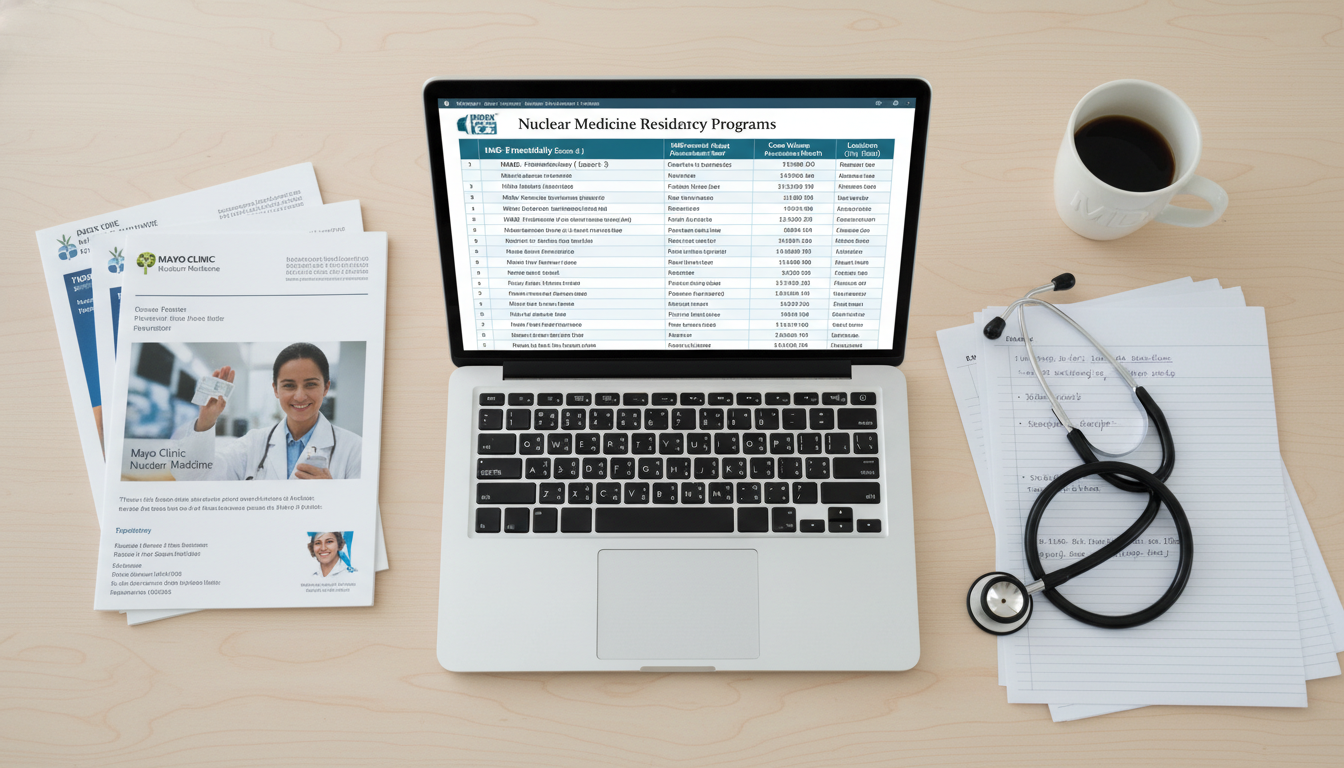
Set up a simple spreadsheet or database early; as you gather data, this becomes your central tool for evaluating residency programs.
Step 3: Constructing and Refining Your Program List
This is the heart of your program research strategy. As a US citizen IMG, you want a list that is broad enough for safety but curated enough to be manageable and aligned with your goals.
3.1 Start Wide: Identify All Potential Nuclear Medicine Programs
Using FREIDA, SNMMI, and NRMP, create a master list including:
- Program name and institution
- City and state
- Number of positions per year
- Program director contact
- Program website link
At this point, do not eliminate programs yet—just gather.
3.2 Screen for Eligibility and Structural Fit
For each program on your master list, answer:
- Does this program explicitly accept IMGs?
- Is a specific PGY-1 type required (e.g., internal medicine, transitional year, radiology)?
- Do they require USMLE scores above specific thresholds?
- Do they require US clinical experience?
As a US citizen IMG, visa support is not a barrier, which is a major advantage. But you still need to know whether:
- The program historically has taken US citizen IMGs or non-US IMGs.
- The clinical system is comfortable training graduates from international schools.
Programs that clearly do not accept IMGs (rare in nuclear medicine, but possible) can be removed. Mark programs as:
- Green: clearly IMG-friendly or with recent IMGs on the roster
- Yellow: neutral/unclear
- Red: explicit no-IMG policies (if any)
3.3 Evaluate Program Academic and Clinical Strengths
Next, begin evaluating residency programs on their substance. Consider ranking or scoring programs across 4–6 dimensions:
Clinical Volume and Case Mix
- Do they list PET/CT, SPECT/CT, cardiac, neuro, pediatric nuclear medicine?
- Are there dedicated theranostics services?
- Do they cover a large tertiary care population?
Technology and Infrastructure
- Modern PET/CT scanners, SPECT/CT, possibly PET/MR
- On-site cyclotron or radiopharmacy
- Integration with diagnostic radiology and oncology departments
Research Opportunities
- Are faculty publishing in nuclear medicine, molecular imaging, or theranostics?
- Is there a track for residents to do dedicated research time?
- Are residents presenting at SNMMI, RSNA, or other meetings?
Educational Structure and Support
- Regular didactics, case conferences, tumor boards
- Board review sessions for the ABNM
- Feedback and mentorship structure
Resident Outcomes
- Board pass rates
- Graduates’ careers: academic positions, fellowships (e.g., theranostics, PET, or hybrid radiology-nuclear roles), or community practice jobs.
Location, Lifestyle, and Personal Priorities
- Geographic preference (family, cost of living, climate)
- Workload and call expectations
- Work-life balance culture
Create simple scores (e.g., 1–5) or qualitative notes for each.
3.4 Special Focus: US Citizen IMG Considerations
Being an American studying abroad places you in a somewhat hybrid category:
Advantages:
- No visa sponsorship needed (removes a major barrier).
- Cultural and language familiarity with US healthcare.
- Often, you can explain your path as an intentional decision (cost, family, opportunity) rather than a limitation.
Challenges:
- Some programs may still implicitly favor US MD/DO over IMGs.
- You need to demonstrate readiness for US healthcare systems (with USCE, strong Step scores, and clear communication skills).
When you look at program rosters:
- Note how many residents are FMGs or US citizen IMGs.
- If they have taken IMGs consistently, that program likely knows how to evaluate and integrate non-US grads. This is a high-yield target for your nuclear medicine match plan.
Step 4: Deep Dive – How to Research Residency Programs in Detail
Once you have a refined list of 20–40 programs (number will vary by competitiveness and your profile), deepen your research.
4.1 Systematic Website Review
For each program:
Curriculum Page
- Look for explicit nuclear medicine rotations, hybrid imaging, and theranostics exposure.
- Identify how much time is spent with PET/CT vs planar/SPECT vs other modalities.
- Check if there is required exposure to diagnostic radiology or cross-sectional imaging.
Faculty Page
- Identify mentors whose research or clinical interests match yours. Example: a faculty member focusing on PET/CT in lymphoma or neurodegenerative disease.
- Note potential letter writers or mentors you might want to mention in your personal statement or during interviews.
Resident Profiles or Alumni
- Count how many current or past residents are from international medical schools.
- Track any US citizen IMG examples (even if not labeled, you may see US-sounding backgrounds or LinkedIn profiles).
Program Director’s Message
- Assess the tone: do they emphasize education, research, community service, or service-intensive work?
- Look for signals of being supportive and learner-centered (e.g., “We tailor training to your career goals,” “Strong mentorship culture”).
4.2 Publicly Available Data and Publications
Search:
- PubMed/Google Scholar for the institution + “nuclear medicine,” “PET/CT,” “theranostics,” “molecular imaging.”
- SNMMI annual meeting abstracts from that institution.
- Institution’s radiology/nuclear medicine department research pages.
Ask:
- Does this program genuinely participate in the cutting edge of nuclear medicine, or is it mainly a clinical service?
- Does that align with your goals?
If you aim for academic nuclear medicine, prioritize programs with visible research output. If you are more clinically inclined and want to work in a community setting, a high-volume clinical program might be more valuable than a heavily research-focused one.
4.3 Networking as a Research Tool
Human contact is a powerful component of your program research strategy, especially in a small field like nuclear medicine.
Email current residents or recent alumni
- Politely request a short conversation about their experience.
- Prepare specific, respectful questions (e.g., “How is the balance between PET/CT and other modalities?” “How supportive is the program for US citizen IMGs?”).
Connect via SNMMI or other professional societies
- Attend virtual or in-person meetings.
- Introduce yourself to faculty from programs of interest after sessions.
- Join trainee or student groups—these often have informal mentorship.
Leverage your school’s alumni network
- Many US citizen IMGs have upper-year peers or alumni who matched into radiology or nuclear medicine.
- Ask for honest impressions of programs they interviewed at.
4.4 Distinguishing “Name Brand” from Actual Training Quality
In nuclear medicine, some institutions have big names in radiology broadly but may offer relatively modest nuclear medicine exposure, while smaller or less famous institutions might excel in molecular imaging and theranostics.
When evaluating residency programs, consider:
- Is the nuclear medicine division a strong, visible presence within the radiology department?
- Do residents get meaningful hands-on experience with cutting-edge therapies and imaging?
- Are they “reading out” PET/CT extensively, or just observing?
You are training for a highly specialized career; the “brand” of the hospital is only one piece of the picture.

Step 5: Prioritizing and Finalizing Your Nuclear Medicine Program List
Once you’ve gathered data and done deeper research, it’s time to organize and prioritize.
5.1 Tier Your Programs Strategically
As a US citizen IMG applying for nuclear medicine residency, consider creating 3 tiers:
Tier 1 (Reach)
- Highly academic, research-intensive programs with strong reputations and possibly fewer IMGs historically.
- Apply if you have strong USMLE scores, research, and USCE.
Tier 2 (Target)
- Solid programs (academic or high-volume clinical) with a track record of training IMGs.
- You match well with their typical resident profile.
Tier 3 (Safety)
- Programs with more positions, possibly less competition or lower fill rates.
- May be in less popular locations or smaller institutions.
- Still must meet minimum quality standards and align with your career goals.
Be honest about where your application likely falls. Nuclear medicine is relatively small, so safety programs should still be carefully evaluated—but they can significantly increase your chances of matching.
5.2 Check Application Requirements and Deadlines
For each program, note:
- ERAS application deadline
- Specific requirements:
- Number and type of recommendation letters (any required from nuclear medicine or radiology?)
- Minimum score or attempt policies
- Required PGY-1 type (and how it fits your plan)
Create a checklist to track completion of:
- Personal statement (ideally tailored toward nuclear medicine and possibly adjusted slightly for specific programs)
- Letters of recommendation (at least one from nuclear medicine or radiology if possible)
- USMLE transcript release
- Dean’s letter and transcripts
5.3 Use Your Research to Personalize Your Application
The deeper your program research, the more convincingly you can explain “why this program?” in your:
- Personal statements (if you subtly customize paragraphs for certain programs)
- Interview responses (e.g., “I’m particularly interested in your theranostics program and the opportunity to work with Dr. X on Y project”).
- Emails to program directors or coordinators (brief, targeted, professional outreach).
Specific details drawn from your research—like their case mix, PET/CT volume, or research focus—demonstrate genuine interest and preparation.
Step 6: Common Pitfalls and How to Avoid Them
6.1 Overemphasis on Prestige Alone
As an American studying abroad, it’s natural to aim for big-name institutions to “offset” being an IMG. However:
- Over-concentrating your applications on very competitive programs can lead to a thinner, riskier list.
- Remember the primary goal: matching into a program that will make you a capable, employable nuclear medicine specialist.
A balanced nuclear medicine match strategy mixes aspirational programs with realistic and safe options.
6.2 Ignoring Culture and Support
A program might be technically strong but have a poor learning culture or lack support for IMGs. Look for:
- Evidence of mentorship and wellness initiatives
- Feedback about work environment (through residents or trusted mentors)
- Programs that acknowledge diversity of training backgrounds in their materials or resident bios.
For a US citizen IMG, programs that openly value different training paths may be especially supportive environments.
6.3 Underutilizing Networking
Many US citizen IMGs rely solely on online data. In a small specialty like nuclear medicine:
- A well-timed conversation at SNMMI with a faculty member,
- A thoughtful email to a program director,
- Or a strong impression during an elective/observership
can meaningfully influence how your application is perceived. Your program research strategy should integrate planned, respectful networking.
6.4 Not Updating Your List as You Learn More
Program landscapes change:
- New program directors
- Faculty departures or additions
- New theranostics services opening
Revisit your research periodically. Adjust your program preferences and application emphasis as you gather more information during the application season (and even on the interview trail).
FAQs: Researching Nuclear Medicine Programs as a US Citizen IMG
1. As a US citizen IMG, do I still need to worry about programs accepting IMGs?
Yes, but less so than non-citizen IMGs. While you do not need visa sponsorship, some programs may still prefer US MD/DO graduates. That said, many nuclear medicine programs value strong candidates regardless of school location—especially if you have good scores, US clinical experience, and clear interest in the field. Look for programs with current or former IMGs and interpret that as a positive sign, even if you are a US citizen IMG.
2. How many nuclear medicine programs should I apply to as a US citizen IMG?
There is no single number, but many US citizen IMGs in small specialties aim for a broad-yet-strategic list. For nuclear medicine, that might mean around 20–30 programs, adjusted based on your competitiveness. If your scores and CV are strong and you have specialty-specific research, you might go a bit leaner. If there are red flags or limited nuclear medicine exposure, lean more broadly while maintaining quality standards.
3. What are the most important factors when evaluating nuclear medicine residency programs?
Key factors include:
- Clinical case volume and diversity (especially PET/CT and theranostics)
- Technology and infrastructure (modern scanners, radiopharmacy)
- Faculty expertise and mentorship
- Research and academic opportunities (if you’re academically inclined)
- Track record with IMGs and supportiveness of the training environment
- Geographic and lifestyle considerations that matter personally to you
Your priorities may shift depending on whether you aim for academic vs community practice after graduation.
4. How can I show programs that I am serious about nuclear medicine as an American studying abroad?
Demonstrate sustained interest through:
- Nuclear medicine electives, observerships, or rotations (especially in the US)
- Research or scholarly work in nuclear medicine, PET/CT, or theranostics
- Participation in SNMMI events, webinars, or student/trainee sections
- A focused personal statement detailing why nuclear medicine and how you’ve prepared for it
- Thoughtful, specific comments about the program’s features during interviews, reflecting your detailed program research
All of this signals that you are not using nuclear medicine as a “backup,” but are genuinely committed to the specialty.
By approaching your program research in a structured, data-driven way—while leveraging the strengths of being a US citizen IMG—you can build a nuclear medicine residency application strategy that is realistic, targeted, and aligned with your long-term career goals.