
Understanding Geographic Flexibility as a US Citizen IMG in the Texas Triangle
If you are a US citizen IMG—an American studying abroad who completed medical school outside the United States—you’re in a unique but increasingly common position. Many US citizen IMGs are drawn to Texas for residency because of its large health systems, diverse patient populations, and relatively IMG-friendly programs. Within Texas, the “Texas Triangle” (Houston–Dallas–San Antonio–Austin corridor) is especially attractive.
However, focusing too narrowly on one city or one specific area can hurt your chances. This is where geographic flexibility becomes a powerful strategy. For a US citizen IMG, especially one targeting Texas residency programs in the Triangle, balancing geographic preference with flexibility can directly influence whether you match—and where.
This article will walk you through what geographic flexibility really means, how it intersects with geographic preference residency signaling strategies, and how to use location flexibility to strengthen your application to Houston, Dallas, and San Antonio residency programs while still protecting your personal and professional priorities.
Why Geographic Flexibility Matters More for US Citizen IMGs
The special situation of the US citizen IMG
As a US citizen IMG or American studying abroad, you often have:
- No visa barrier (a major plus for programs)
- A non-US medical school (which can raise questions about clinical training and familiarity with US healthcare)
- Variable access to US clinical experience and letters of recommendation
- Possible gaps due to exam timing or transition from abroad back to the US
Because of these factors, program directors often view US citizen IMGs as “safer” than non–US citizen IMGs (visa-wise), but still more uncertain compared with US MD/DO grads. That means you generally need:
- A wider net of applications
- Strategic use of geographic and program-type flexibility
- A realistic view of competitiveness within your chosen specialty and region
In a state like Texas—with many desirable academic centers and strong community programs—this becomes especially relevant.
Why the Texas Triangle is attractive—but also competitive
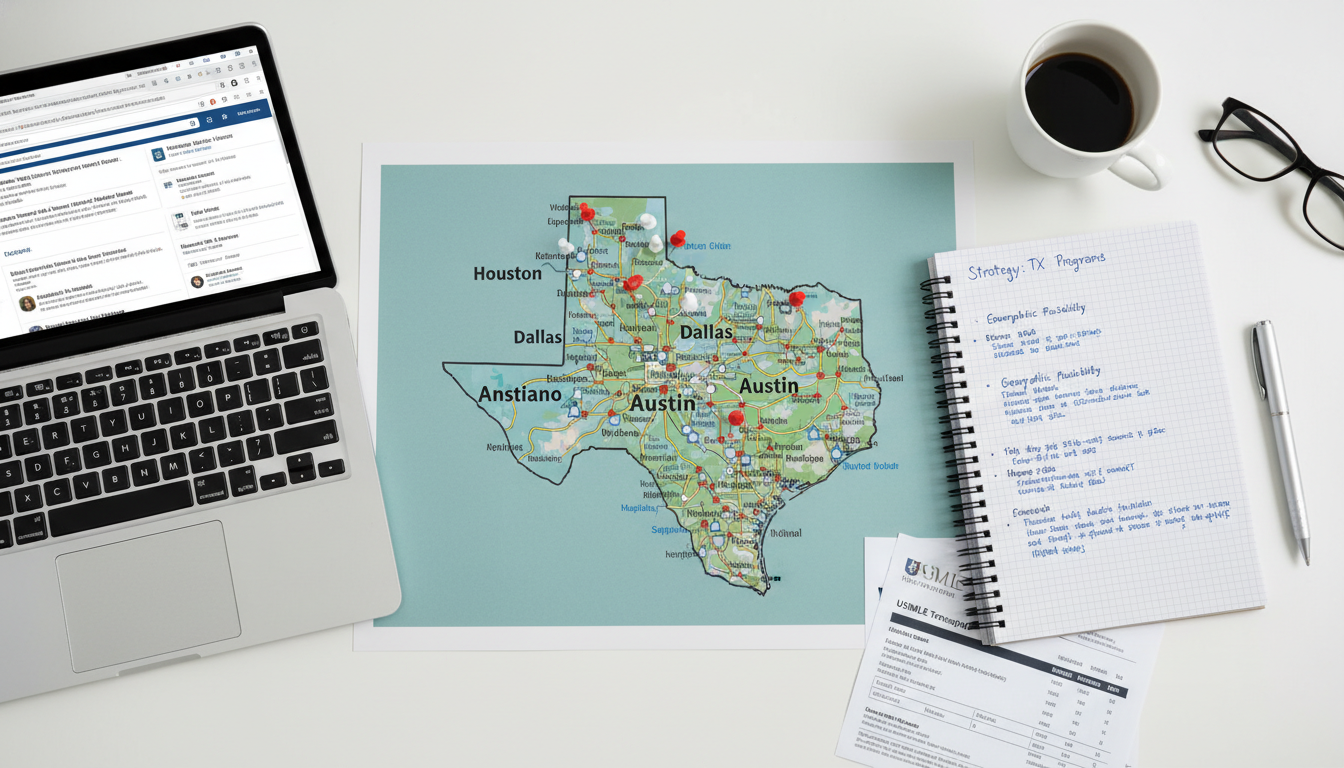
The Texas Triangle includes major metropolitan hubs:
- Houston – Massive Texas Medical Center, many academic institutions, large safety-net and VA systems.
- Dallas–Fort Worth – Several academic centers, suburban community hospitals, and growing residency footprints.
- San Antonio – Military-affiliated institutions, large county systems, diverse patient populations.
- Austin (often considered part of the Triangle corridor) – Growing academic and community programs in a highly desirable city.
US citizen IMGs are often drawn here because:
- The cost of living is generally lower than coastal metros.
- Texas has no state income tax.
- The patient population is diverse (urban, suburban, rural referrals, border health issues).
- Several programs have a historic openness to IMGs.
But that also means:
- Many applicants, including US MD/DOs, want to train there.
- The well-known academic Texas residency programs can be extremely competitive.
- Applicants with strong regional ties compete intensely for limited spots.
In this environment, strict geographic rigidity—for example, “Houston only” or “Dallas only”—can significantly lower your overall match chances, especially in competitive specialties.
Balancing Regional Preference with Flexibility in the Texas Triangle
Geographic preference vs. geographic rigidity
Program directors understand that applicants have regional preferences—family, significant others, cost of living, or long-term career goals all matter. It’s okay (and often smart) to have a:
- Regional preference strategy: e.g., “I am mainly targeting programs in the Texas Triangle.”
- Tiered flexibility plan within and beyond Texas.
The problem arises when your approach shows rigidity:
- Only applying to 5–10 programs in a single city (e.g., Houston only)
- Declining interviews in nearby cities because they are “not perfect”
- Communicating to programs in one city that you would never leave that city (which inadvertently signals that other interviews in the state are lower priority)
For a US citizen IMG, this kind of rigidity can be dangerous. By contrast, a strong location flexibility match strategy looks more like:
- Having a primary regional focus (Texas Triangle).
- Being genuinely open to all four major cities (Houston, Dallas, San Antonio, Austin) and nearby mid-sized areas.
- Supplementing the Triangle with other Texas residency programs outside of it (e.g., El Paso, Lubbock, Tyler, Corpus Christi) and selected programs in neighboring states, if needed for safety.
How many Triangle programs vs. outside programs?
Numbers will vary by specialty and competitiveness, but a general pattern for a US citizen IMG might look like:
- 50–70% of your applications: Texas Triangle and remainder of Texas (if Texas is your primary region).
- 30–50% of your applications: Other IMG-friendly regions (Midwest, Southeast, smaller cities in other states).
If you are absolutely committed to practice in Texas long-term, you can weight more heavily toward Texas programs—but it is still safer (especially in competitive fields) to include a meaningful segment of programs outside the state.
Building a Smart Texas Triangle Strategy as a US Citizen IMG
Step 1: Understand IMG-friendliness in Houston, Dallas, and San Antonio
Not all programs in the Texas Triangle are equally open to IMGs. Some are extremely competitive academic centers with limited IMG matches; others are mid-sized community programs that consistently rank IMGs. As a US citizen IMG, you should:
- Review past match lists and program rosters to see:
- What percentage of residents were IMGs?
- How many are US citizen IMGs vs. non–US citizen IMGs?
- Check program websites, social media, FREIDA, and NRMP data when possible.
Programs in the Triangle generally fall into three categories:
Highly competitive academic centers
- Often dominated by US MD/DOs.
- May accept a small number of IMGs, often with exceptional scores, research, or US clinical experience.
- Examples: large university hospitals and flagship academic centers in Houston, Dallas, San Antonio, and Austin.
Hybrid academic–community programs
- Affiliated with a university but with substantial community hospital or county hospital exposure.
- More likely to consider strong US citizen IMGs, especially in core specialties like Internal Medicine, Family Medicine, Pediatrics, Psychiatry.
Community-focused or safety-net programs
- County hospitals, community health systems, or smaller academic affiliates.
- Often more IMG-inclusive and excellent training.
Your geographic flexibility should prioritize:
- Applying broadly across all three categories, not just the top prestige names.
- Understanding that Houston, Dallas, and San Antonio residency options include more than just the biggest flagship programs.
Step 2: Rank-order cities within the Texas Triangle—but keep them all
You may naturally prefer one city over another—for example:
- You grew up in Houston and have family there.
- You did clinical rotations in Dallas.
- You like the cost-of-living and feel of San Antonio.
It’s helpful to privately rank your own city preferences:
- Most desired city in the Triangle
- Second choice
- Third choice
- Austin/nearby Texas areas
But then commit to the following:
- Apply to all reasonable programs across each of these cities, not just your #1.
- Do not exclude an entire city unless you have a compelling personal reason (e.g., spouse’s job constraints or medical issues).
- Treat interview invitations from “lower-preference” cities as serious opportunities, not backups to be casually declined.
Step 3: Blend your Texas Triangle focus with broader Texas and nearby states
For a robust location flexibility match strategy in Texas:
Start with the Texas Triangle
- Apply broadly to your specialty in Houston, Dallas, San Antonio, and Austin, including both large academic and smaller community programs.
Add other Texas regions
- West and South Texas (El Paso, Lubbock, McAllen, Brownsville, Corpus Christi, etc.) often have excellent, IMG-friendly programs.
- These can be your safety net if the Triangle programs skew more competitive.
Include selected out-of-state programs
- Surrounding states (Oklahoma, Louisiana, Arkansas, New Mexico) and other IMG-friendly parts of the US.
- If your main goal is to match somewhere in the US and eventually return to Texas for practice, these non-Texas programs provide critical additional chances.
This layered approach lets you honor your geographic preference residency for the Texas Triangle while maintaining realistic odds.
Communicating Geographic Preference Without Limiting Yourself
Using preference signaling and geographic questions strategically
Many programs and application systems now ask about geographic preference. As a US citizen IMG targeting Texas, you may:
- Be able to send formal or informal signals to a limited number of programs.
- Receive questionnaires asking: “Do you have a geographic preference?” or “Do you have ties to our region?”
To use a regional preference strategy wisely:
Be honest but broad
- Example: “I have a strong preference for training in Texas, particularly the Texas Triangle region, where I have family and long-term career interests. However, I remain open to high-quality programs elsewhere.”
Highlight regional ties
- If you grew up in Texas, went to undergrad in Texas, or have family in Houston/Dallas/San Antonio, mention it explicitly.
- For programs outside the Triangle (or outside Texas), frame your preference as: “Texas is home, but I value strong training environments anywhere and am fully committed to relocating.”
Avoid implying that you will only rank one city or one program
- Don’t say, “Your program is the only place I want to be in Texas.” Programs know most applicants are applying broadly; overselling can sound insincere or may backfire if they assume you are not open to other offers.
How to answer: “Why Texas?” or “Why our city?”
Programs in Texas will often test how genuine your interest is. Strong responses from a US citizen IMG might include:
Personal ties
- “My immediate family lives in Houston, and I hope to settle in Texas long-term.”
- “I grew up in Dallas and want to serve the communities I know best.”
Career and patient population fit
- “I’m particularly drawn to the diversity of patient populations in the Texas Triangle—urban, suburban, and underserved communities.”
- “The mix of border health, rural referrals, and complex tertiary care in Texas aligns with my goal to practice general internal medicine in a high-need region.”
Long-term commitment
- “I see myself practicing in Texas after residency, ideally in a setting similar to your institution’s patient population and mission.”
These answers support your regional preference strategy without closing off other markets.

Practical Steps to Increase Flexibility and Match Odds
Step 1: Start planning early (at least 12–18 months before applying)
For geographic flexibility to pay off, you need time:
US Clinical Experience (USCE)
- Aim for rotations in multiple Texas cities, if possible (e.g., an observership in Houston and an elective in Dallas).
- Alternatively, mix Texas with another region to show broader adaptability.
Letters of Recommendation (LoRs)
- Collect at least one strong letter from a Texas-based physician if you can.
- If you cannot secure Texas-specific LoRs, prioritize reputable US academic hospitals anywhere in the US.
Step 2: Build a program list with tiers
Create a spreadsheet for Texas residency programs in your specialty and categorize:
Reach programs
- Competitive academic sites in Houston/Dallas/San Antonio/Austin.
- IMG acceptance historically low or inconsistent.
- Apply if your scores, research, or unique strengths are strong.
Target programs
- Hybrid academic–community, mid-competitive programs.
- Regularly match US citizen IMGs.
- Make up a large portion of your Texas applications.
Safety programs
- Smaller cities in Texas and reputable programs in other states that consistently match IMGs.
- Important because even strong applicants can face random variability in interview offers.
Then map these tiers onto locations:
- Include each city in the Triangle in all three tiers, if possible.
- Do not rely solely on “Reach–Houston,” “Target–Dallas,” etc. Spread risk across regions and tiers.
Step 3: Be realistic about specialty competitiveness
Your geographic flexibility needs to be proportional to your specialty’s competitiveness and your profile:
For more IMG-friendly specialties (e.g., Internal Medicine, Family Medicine, Psychiatry, Pediatrics):
- You can more safely focus a majority of your applications in Texas, including the Triangle, as long as you add a reasonable number of out-of-state programs.
For more competitive specialties (e.g., Dermatology, Plastic Surgery, Neurosurgery, or even relatively competitive ones like Radiology, Anesthesiology, EM depending on your scores):
- You may need much broader geographic flexibility.
- Consider a parallel plan (e.g., IM as backup) if your primary specialty and location preferences are narrow.
Step 4: Use interview invitations to maximize options
When interview season starts:
Accept Texas Triangle invitations promptly
- These are your top regional targets; don’t delay acceptance and risk losing slots.
Treat other Texas and out-of-state invitations seriously
- Even if they are in your “backup” locations, they are real opportunities to match.
- You can always adjust your rank list later, but you cannot retroactively gain interviews you declined.
Schedule higher-priority interviews when you will be at your best
- Mid-season, once you have warmed up with earlier interviews.
- Protect time for the most important cities or programs.
Step 5: Build a logically consistent rank list
When ranking:
Avoid ranking based solely on prestige if the location is unbearable for you long-term.
But also avoid artificially pushing a single city to the top if the training is significantly weaker.
A balanced approach:
- Group programs by both training quality and location.
- Rank the highest training-quality programs first among the locations you can genuinely live in.
- Then move down the list, preserving match safety by ranking all acceptable programs you interviewed at, including those outside Texas or outside the Triangle.
A common mistake: US citizen IMGs sometimes under-rank good safety programs in smaller cities because they are emotionally attached to Houston or Dallas. This can lead to not matching at all, when they could have trained somewhere very good and later moved back to Texas for practice.
Examples of Smart Geographic Flexibility for US Citizen IMGs
Example 1: Internal Medicine applicant focused on Texas
- US citizen IMG with solid (but not stellar) USMLE scores and 3 months of USCE.
- Strong personal ties to Houston.
Geographic plan:
- Apply to:
- 8–12 IM programs in Houston (all tiers).
- 8–12 in Dallas.
- 6–8 in San Antonio and Austin combined.
- 10–15 in other Texas locations (El Paso, Lubbock, McAllen, etc.).
- 10–15 out-of-state programs in IMG-friendly areas (Midwest, Southeast).
Resulting flexibility:
- If Houston interviews are fewer than expected, Dallas/San Antonio plus out-of-state programs keep match chances high.
- If many Texas Triangle interviews come in, the applicant can still rank them highly while keeping others as safety.
Example 2: Family Medicine applicant open to rural and border regions
- US citizen IMG with average scores, strong commitment to underserved care.
- Some preference for Dallas but no strict city requirement.
Geographic plan:
- Apply broadly across:
- All Family Medicine programs in the Texas Triangle.
- Many smaller or rural Texas programs known to be IMG-friendly.
- Select out-of-state programs with similar underserved missions.
Resulting flexibility:
- By not limiting to the Triangle, this applicant significantly increases the likelihood of matching in Texas overall, which aligns with long-term goals.
- Triangle programs will view this applicant favorably due to their interest in underserved care and broader flexibility.
FAQs: Geographic Flexibility for US Citizen IMGs in the Texas Triangle
1. As a US citizen IMG, can I focus only on Houston, Dallas, and San Antonio residency programs and still match?
You can, but it’s risky—especially in more competitive specialties or if your scores are average. Limiting yourself only to Houston, Dallas, and San Antonio reduces the total number of programs and interviews available. A safer plan is to:
- Prioritize the Texas Triangle.
- Add other Texas residency programs outside the Triangle (and possibly nearby states).
- Maintain enough geographic flexibility to reach a healthy interview count (often 10–12+ interviews for many IMG-friendly specialties).
2. How important is having Texas ties for matching in the Texas Triangle?
Regional ties help but are not mandatory. Strong Texas ties (family, schooling, long-term residence, previous work or rotations) can strengthen your geographic preference residency narrative. However:
- Many IMGs match in Texas without prior ties.
- You can compensate with strong USCE, solid scores, and a clear explanation of why Texas aligns with your long-term goals.
- If you lack ties, emphasize your commitment to relocating and staying in the region after training.
3. Should I tell each program in the Texas Triangle that they are my number-one choice?
Use caution. It’s reasonable to express strong interest in multiple programs and cities, but:
- Avoid telling multiple programs that they’re your “absolute #1” if it’s not true; programs know applicants apply broadly.
- Instead, say: “Your program is one of my top choices because…” and give specific reasons.
- Be consistent: if programs sense that your enthusiasm is generic or contradictory, your credibility suffers.
4. If my goal is to practice in Texas, is it okay to match outside Texas for residency?
Yes. Many physicians build successful Texas careers after training out-of-state. For US citizen IMGs:
- Matching in a strong, supportive program anywhere in the US is often better than not matching in Texas at all.
- You can later apply for Texas fellowships, jobs, or licenses and move back.
- Having location flexibility now can give you the training and board certification needed to realize your long-term goal of practicing in Texas, even if your residency is elsewhere.
Geographic flexibility does not mean giving up your dream of the Texas Triangle—it means protecting that dream by widening your pathways to success. As a US citizen IMG targeting Houston, Dallas, San Antonio, and the broader Texas Triangle, a thoughtful blend of regional preference strategy and location flexibility can transform your chances of matching into a strong, sustainable medical career in the region you ultimately want to call home.