
Picture This: The Moment They Say "Not Ready" (Why You Feel Deskilled, and Why That's Not the Whole Story)
You're 45 minutes into your audition day. You tied fine. You draped fine. Then the senior says, "Okay, show me how we do it," and points at a setup you've never seen. Your brain whites out.
That's it. That's the nightmare, right? What if I get deskilled? What if they all see that I'm the one applicant who doesn't actually know how to do this? What if I freeze and they write me off?
I've lived that moment in my head a hundred times before I ever walked into the OR. Heart hammering so loud I swear the scrub nurse can hear it. Hands that were steady at home suddenly feel clumsy and thick.
Here's the truth nobody tells you when you're spiraling at 2 a.m.: auditions are not designed to expose you. I know it feels like a trap. It's not. They're trying to answer one question fast, can this person be safe and teachable here, with our people, under pressure?
A performance dip doesn't mean you lost your skills. Everyone dips. The best sub-Is I knew still bobbled when they switched hospitals. One awful moment is not a permanent label. It's a snapshot. And snapshots can be retaken.
What "Deskilled" Really Means in Auditions (and How It Can Happen)
Let's define it, because my brain loves to catastrophize. Deskilled doesn't mean you forgot surgery forever. It's not some irreversible brain wipe.
It's temporary. It's your performance dropping below your baseline because the context changed. That's all.
You know how to do a clean two-handed tie. Then you're handed a different needle driver, the table height is wrong, the attending calls instruments by a nickname you've never heard, and you've got 90 seconds while three residents watch. Of course you're worse. Anyone would be.
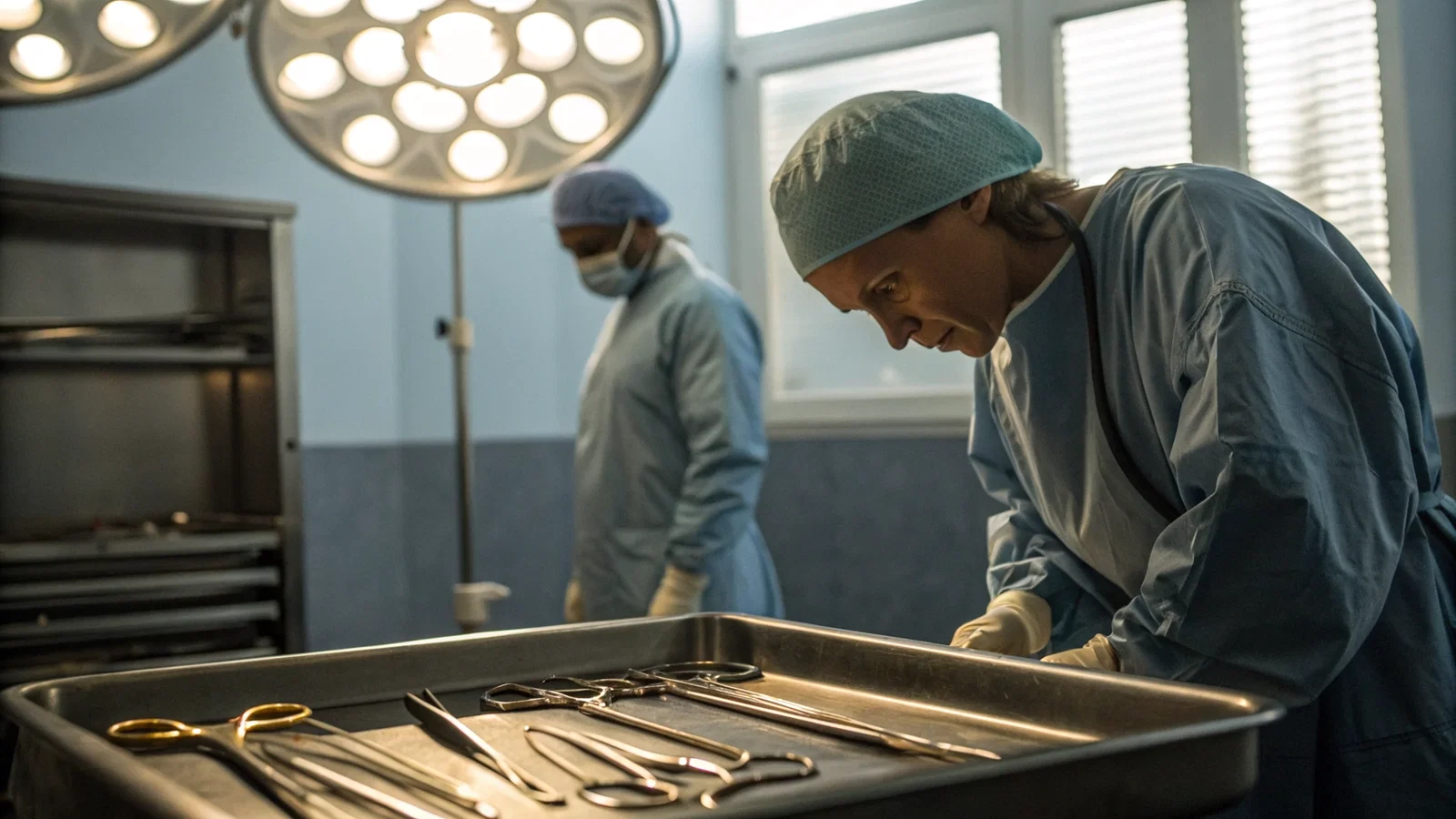
The common traps I keep seeing:
Unfamiliar fields and instruments. You practiced on your home kits. They use something slightly different. Different expectations. At home they wanted quiet efficiency. Here they want you to narrate every step. Time pressure plus being watched. Your brain literally prioritizes threat detection over fine motor control. You're scanning their faces instead of your hands. Communication mismatch. You think you're being respectful by being quiet. They think you're lost.
Worst-case brain says, "I'm doomed, I'll never recover." Reset: this is reversible. You fix it with structured reps and clearer feedback loops, not by magically becoming a better surgeon overnight. Auditions feel high-stakes because they are short and subjective. Your nervous system is doing its job. It's just not helping your hands.
The #1 Reason Applicants Think They'll Be Deskilled: You're Training for "Your Version" of Surgery, Not Their Version
This is the one that hit me hardest. I was training so hard. Like, hours of knot tying, suture practice, YouTube videos. But I was training for my version. My home program's way.
Every program has a dialect. Sterile field setup. How they want you to stand. Whether they want you to cut sutures this short or that short. What they call the Adson. How much talking is "too much" versus "not enough."
So you walk in with perfect muscle memory for the wrong dialect. And then you look, and feel, deskilled.
Your muscle memory isn't bad. It's mismatched.
The fix I wish someone gave me on day one: interview the task in the first 30 seconds.
Pause. Ask out loud what good looks like there. "How do you like the field set up here? Do you want me to verbalize as I go?" Then mirror them.
I know, I know, what if asking makes me look incompetent? It doesn't. Silence when you're unsure looks incompetent. Asking looks safe.
Performing slightly differently than at home, but safely and clearly, is a strength. It tells them you can adapt. That's what they actually want.
Risk Factors for Getting Deskilled (So You Can Counter Them Before Audition Day)
If you're like me, you want a list of everything that could go wrong so you can obsess over it. Let's make that useful.
Personal risk factors. Mine were all of these. Low baseline confidence, I went in already convinced I was behind. Not enough reps with actual OR setup, just tying at my desk. Almost zero practice talking out loud while doing tasks. And perfectionism. The need to be flawless makes you slower and shakier.
Situational risk factors. Unfamiliar case mix, you prepped for lap chole and they throw you into a vascular setup day. New teams who don't know you. Time compression, you get 10 minutes for a 15-minute task. Last-minute changes to the schedule. All normal. All designed to wobble you.
So what do we do with risk? Use it. That anxious energy is information.
Countermeasures that actually worked for me: Write two communication scripts and rehearse them out loud until they sound dumb and automatic. Book 30 minutes to just handle instruments, not to "practice surgery" but to get familiar. No, really, just pick them up. And stress inoculation, do your practice cold, no warm-up, someone watching, phone timer beeping. Make your practice feel worse than the audition.
Risk doesn't mean doom. Risk means you know where to put the sandbags before the storm.
What They're Actually Evaluating (It's Not Just Hands, It's Thinking, Safety, and Teachingability)
I used to think they were scoring my hands like a YouTube skills competition. Perfect knots or fail. That thought kept me up.
They're not. I've asked. I've watched attendings debrief after auditions. Hands are maybe a quarter of it.
What they're really watching: Are you safe? Do you maintain sterile technique even when flustered? Do you keep the field clean? Do you notice when something's off? That's non-negotiable.
And communication. This is huge. Do you close the loop? Do you speak up early when you're unsure instead of powering through silently? Do you respond to coaching without getting defensive or shutting down?
If I make a small mistake, am I disqualified? No. Not unless it's a safety breach you ignore. A crooked suture that you notice, verbalize, and correct? That's coachable. That's what they want to see. A perfect suture with no communication when the plan changed? That scares them.
Think of it like this: calm competence beats perfect performance. Every time. Calm, safe, teachable residents are the ones who don't keep attendings awake at night. You don't have to be fearless. You have to be responsive.
How to Prevent Deskilling: Your 7-Day Pre-Audition Plan (Practical, Not Motivational)
Okay, actionable stuff. Because motivational quotes don't fix shaky hands. Reps do.
This isn't about learning new surgery in a week. You can't. Goal is resilience. Make what you already know hold up under stress.
Day 1: Baseline + checklist review. No heroics. Film yourself doing basic setup and one tie. Watch it. Write exactly what you do. That's your baseline.
Day 2: Field and sterile discipline reps. Just setup. Over and over. Open, drape, maintain. Check yourself out loud. "Edges, sterile field clear, hands in view." Boring? Good. You need boring to be automatic.
Day 3: Instrument handling + economy of motion. Forget speed. Focus on no wasted moves. Can you pick up, pass, and place without regripping three times?
Day 4: Verbalization script. I used two sentences on loop: "My next step is ___, does that align with how you like it?" and "I'm pausing here to confirm positioning before I proceed." Say it until you don't hate your own voice.
Day 5: Mock scenario with interruptions. Have a friend interrupt you mid-task. Questions, corrections, weird instrument name. Practice stopping, listening, adjusting.
Day 6: Feedback loop. Ask for one specific change. Repeat immediately. Narrate the adjustment. "Got it, shorter tails, I'll adjust, like this?"
Day 7: Cold-start practice + calm routine. No warm-up coffee tied knots. Just get in, cold, and execute. Then build your 20-second calm routine for pre-task.
You don't need to be the best that day. You need to be the most consistent under weirdness.
During the Audition: The "If I Blank" Protocol (Because Your Brain Will)
You will blank. I guarantee it. Even if for two seconds. Your brain will do that white static thing mid-task. That's not failure. That's being human in an OR with five people watching.
You need a protocol before that happens, so your body knows what to do when your mind goes offline.
Stop. Literally put the instrument down in a safe neutral position. One breath in through the nose, out through the mouth. Takes four seconds.
Re-state the next safe step out loud. "My next safe step is to confirm the field and maintain sterility."
Confirm understanding. Use this exact line that saved me: "I want to make sure I'm aligned, can you confirm the goal for the next step?" It buys time, it shows judgment, and it closes the loop.
Then continue. Slowly.
If they correct you, don't explain. Don't defend. Don't over-apologize. I did all three and it looked worse. Instead: listen once, repeat the corrected step verbatim, do it, summarize what changed. "Thank you, you prefer tails at 3mm, I cut at 3mm this time."
For the spiral: grounding that takes under 20 seconds. Press your feet into the floor hard. Notice the pressure. Name two things you see that are sterile blue. One thing you hear. Then back to task. No one will notice you did it.

After the Audition: Turn "Deskilling Fear" into Evidence (So Next Time You Improve)
The post-audition shame spiral is real. You leave and your brain edits the entire day into a disaster reel. Don't let it.
Do this within 30 minutes while memory is fresh: separate facts from feelings.
Facts: "I was asked to set up differently. I paused. I asked for clarification. My tie was loose once, I redid it." Feelings: "I was terrible. They hated me. I'm not cut out for surgery."
Facts you can fix. Feelings you can't argue with when you're exhausted.
Then make a quick mistake taxonomy. It makes the fear specific instead of global:
Setup / sterile slip? Fix = checklist + reps. Communication slip, went quiet, didn't close loop? Fix = script. Judgment / hesitation, froze instead of speaking up? Fix = decision tree + 'speak up early' rule. Fine motor, fumbled tie under pressure? Fix = specific slow drill, not more fast reps.
Then, and only from one trusted person, not five anxious peers, ask for targeted feedback: one thing to stop, one thing to start, one thing to continue. That's it.
One audition doesn't define you. I know it feels like it does. It feels like a verdict. It's not. It's iteration. Programs remember trajectory and coachability way more than one wobbly knot.
A Final Reassurance: You're Not Getting Deskilled, You're Getting Tested Under Uncertainty
Remember that moment from the opening? Senior says, "Show me how we do it," and your mind goes blank.
Let's replay it with what you have now.
You pause. You breathe. "Got it, I want to make sure I'm aligned. How do you like the field oriented and where do you want tails cut?" You mirror. You verbalize. You do it safely, even if slower. You thank them for the correction.
That moment isn't you being exposed as not ready. That moment is information. It tells everyone you can operate under uncertainty. Which, spoiler, is surgery.
Audition performance is a snapshot. I know snapshots feel permanent when you're anxious. They're not. Programs are looking at trajectory. Are you safer on attempt two than attempt one? Do you take coaching without flinching?
If you prepare for communication, safety, and adaptation, you cut your deskilling risk dramatically. You don't need to be fearless. You don't need to be the most technical person in the room.
You need to be responsive. Safe. Teachable. Human.
You've already done the hard part, you know surgery. Now we're just making it resilient.
CTA: Build Your Audition Shield Tonight (Checklist Included)
Okay, you're spiraling a little less? Good. Let's make that mean something tonight, not "tomorrow."
Pick ONE task. Just one. Not five. The tie, the drape, the two-handed instrument handling, which one makes your stomach tighten most? That's the one you drill tomorrow for 20 minutes.
And pick ONE sentence you'll use when you're unsure. Say it out loud right now. "I want to make sure I'm aligned, can you confirm the goal for the next step?" Make it automatic.
Your audition shield checklist for tonight:
Sterile checklist, write your three non-negotiables. Verbal script, those two lines written on a card. If I Blank protocol, stop, breathe, re-state safe step, confirm, continue. Feedback request, "One thing to stop, start, continue?"
Ask a peer for one mock tomorrow. Ten minutes. Cold start. One interruption. That's it.
You're not behind. I promise you're not. Every other worried applicant is sitting in the same hallway feeling their heart pound. You're just the one choosing to prepare for the uncertainty instead of pretending it won't happen.
You've got this. Not because you'll be perfect. Because you'll be ready to adapt.