The fantasy that every applicant is judged purely on “holistic review” collapses the moment your file hits the PD meeting and someone says, “So… what are we doing with this one?”
This is what happens when that “one” is you — the borderline surgical applicant.
I’m going to walk you through what actually goes down in that room. The comments. The side‑eyes. The quiet decisions that never make it into polite emails about “the competitiveness of this year’s cycle.”
You will not hear this from official webinars or away rotation debriefs. But you need to understand it, because if you sit on the fence statistically, the meeting is where you live or die.
First: How You Ended Up a “Borderline” Applicant
Forget the brochure language. Programs mentally sort applicants into three bins before that meeting even starts: automatic rank, automatic cut, and “talk about.” Borderline = “talk about.”
In most surgical programs, that borderline pile looks something like this:
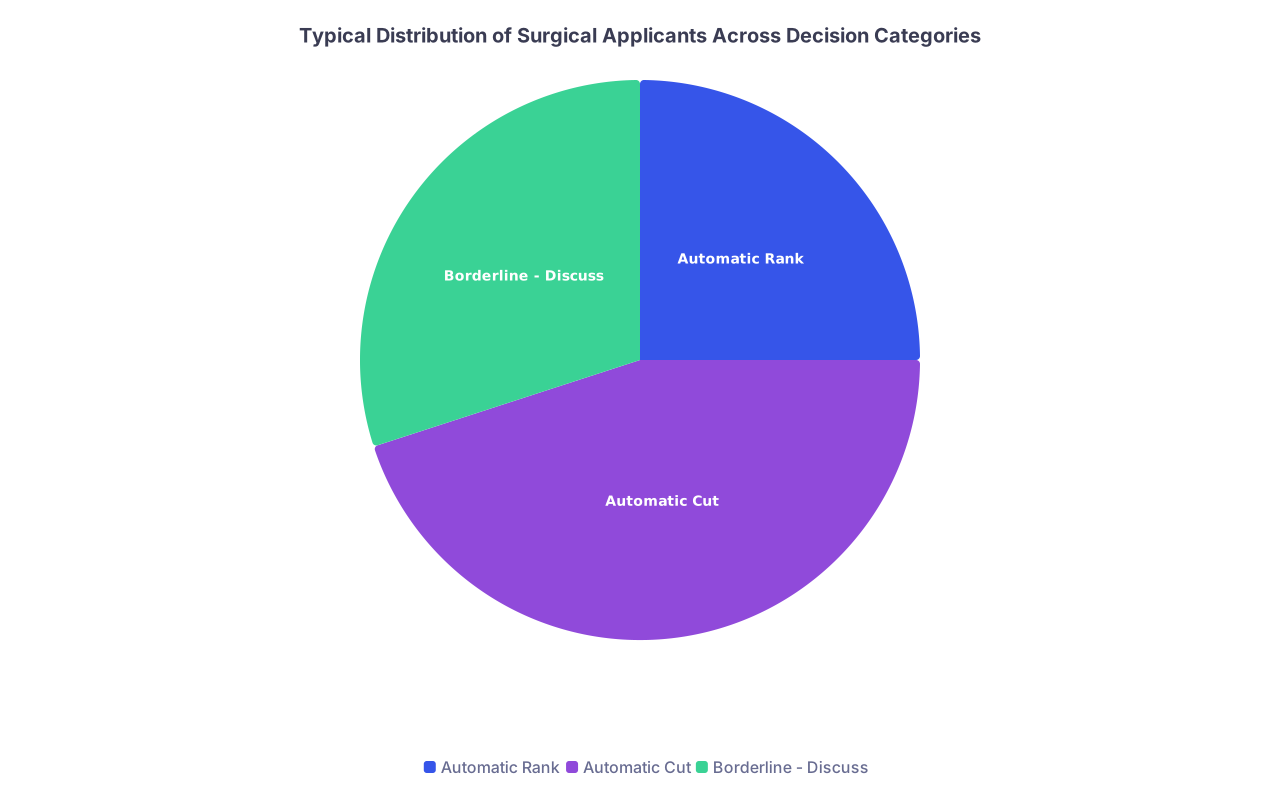
| Category | Value |
|---|---|
| Automatic Rank | 25 |
| Automatic Cut | 45 |
| Borderline - Discuss | 30 |
You land in that 30% discussion zone when you have some of these:
- Mid‑range Step 2 (let’s say 230–245 for a mid‑tier gen surg program; add or subtract depending on program level).
- Class rank not stellar, maybe 2nd or 3rd quartile.
- Mixed narrative in MSPE: “hard‑working” and “good team member,” but not “top student I’ve worked with.”
- One strong letter, one bland letter, one that’s clearly a template.
- Solid, but not eye‑popping surgical exposure or research.
- Maybe a misstep: a remediation, a leave of absence, or a mediocre away rotation.
You are not obviously bad. You are not obviously great. You require time to discuss.
That’s your first problem.
Programs are drowning in applications. The meeting is where they try to turn a spreadsheet of human beings into a rank list before everyone loses patience. Borderline applicants cost time. So when you’re borderline, you’d better give someone in that room a reason to fight for that time.
Who’s Actually in the Room — And Who Matters
Let me strip away the titles and tell you whose voice really carries.
Typical voting room for a general surgery residency might include:
| Role | Real Influence Level |
|---|---|
| Program Director (PD) | Very High |
| Associate PD(s) | High |
| Chair/Vice Chair | High (selective) |
| Core Faculty (few) | Moderate–High |
| Chief Residents | Moderate |
| Program Coordinator | Low (but critical info) |
Nobody’s going through your application line‑by‑line from scratch. That happened (sort of) before this. The PD meeting is about sorting, arguing, and moving names up or down.
Three players matter most for you as a borderline:
- The PD – ultimate shot‑caller. If the PD says, “I’m not comfortable ranking this one,” you are done. Full stop.
- The faculty or chief who knows you – especially from an away or home rotation.
- The coordinator – the person who remembers if you were late, rude, or weird on email. You’d be amazed how often the coordinator’s one‑sentence comment shifts the room.
The Script When Your Name Comes Up
Let me walk you through a very real scenario.
We’re midway through the list. People are tired. Coffee is cold. The PD has your slide up:
Name. School. Step 2 = 237. Class rank: middle third. AOA: no. Honors in Surgery, High Pass in Medicine and Ob/Gyn. One away rotation with “solid” comments but nothing glowing. Research: two posters, one middle‑author paper.
PD: “Next — [Your Name]. Thoughts?”
Silence for three seconds. That silence is lethal.
If no one jumps in, you’re already in trouble. Because now you’re just a file.
If someone does know you, here’s what you’ll hear:
Associate PD: “I worked with them on service for a week. Good worker, took feedback, stayed late. Not flashy. Not a star, but they’d be fine.”
Or:
Chief: “They were on my night float. Reliable, asked appropriate questions, never disappeared. I’d be okay having them here.”
That phrase — “I’d be okay having them here” — is exactly how borderline people get ranked. The room isn’t falling in love with you. They’re answering one question:
“Will this person be safe to have in our call room for five years?”
If instead someone says:
Chief: “Honestly, kind of slow. Needed a lot of direction. Nice, but I’m not sure they’re ready for a place like this.”
That’s usually enough to slide you down or off.
Your entire fate sometimes hangs on a ten‑second gut summary like that.
What Metrics Actually Get Quoted Out Loud
Nobody is reading your personal statement in that meeting. That died months ago.
Here’s what people actually say when discussing a borderline surgical applicant:
- “Step 2 was 232, right? That’s a little soft for us.”
- “How many honors in clerkships?”
- “What did the chair letter say?”
- “Any red flags in the MSPE?”
- “What did we think after interview day? Any weird vibes?”
- “Any ties to the region? Will they stay?”
For context, here’s roughly how one mid‑tier gen surg program I know secretly weights categories when arguing about borderline applicants. They’d never admit this publicly, but this is how the conversation plays out:
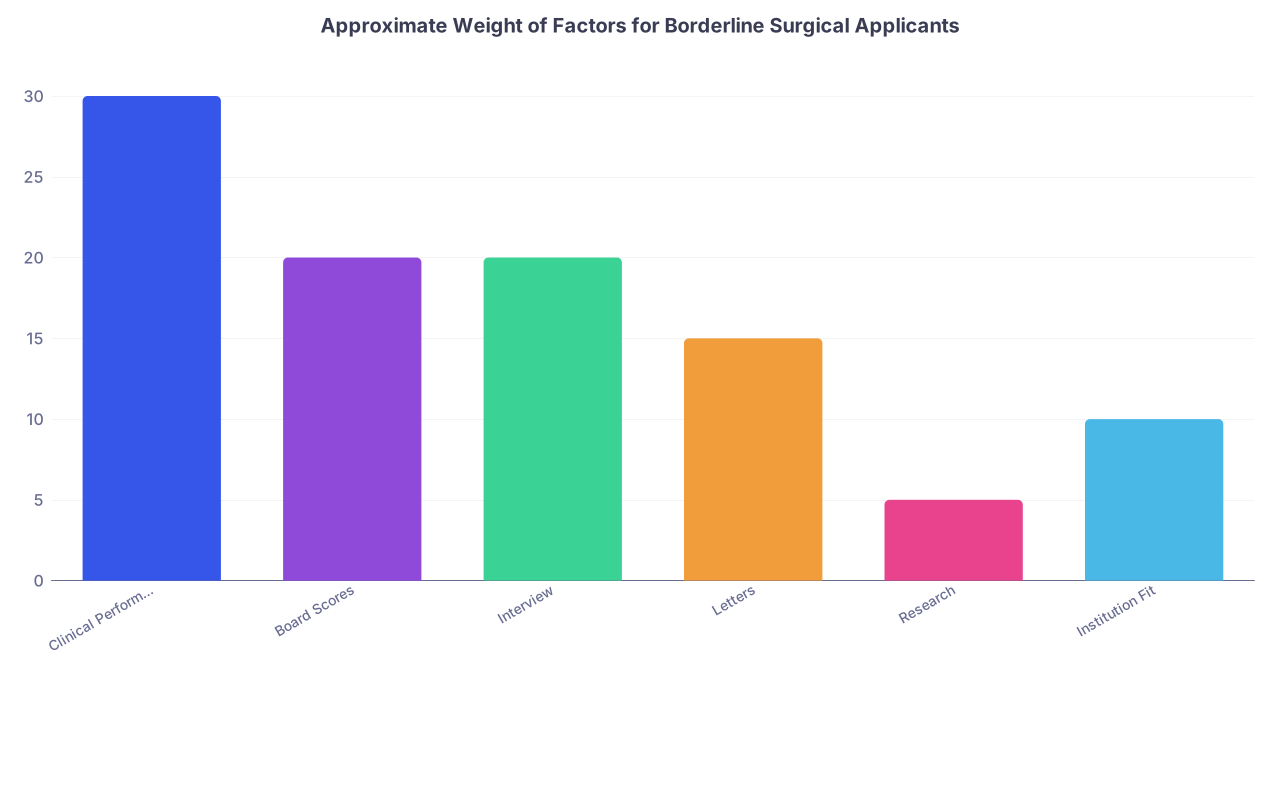
| Category | Value |
|---|---|
| Clinical Performance | 30 |
| Board Scores | 20 |
| Interview | 20 |
| Letters | 15 |
| Research | 5 |
| Institution Fit | 10 |
Clinical performance and on‑site behavior crush everything else for borderline people. If you rotated there and showed you could be a workhorse without drama, you get buffer on scores. If you didn’t rotate and your scores are mediocre, now you’re just an average PDF with no advocates.
The Different Types of Borderline — And How the Room Talks About You
“Borderline” is not one group. There are several flavors. The language shifts depending on which type you are.
1. The Low‑Score, Strong‑Workhorse
Step 2: below the program’s comfort zone, but away rotation or home rotation was great.
What they say:
- “Scores are low, but they crushed their sub‑I.”
- “Everyone liked working with them.”
- “We can teach them; they’ll work hard.”
These applicants live and die by someone pounding the table for them. When a faculty member says, “I will take them on my service any day,” you get ranked. Often higher than your scores would predict.
2. The Great Scores, Lukewarm Human
You have a 250+ Step 2, high class rank, but your interview was flat and your letters are bland.
What they say:
- “On paper they’re outstanding, but the interview was… fine.”
- “Did anyone feel excited about them?”
- “Do we really want to spend five years with this person?”
In surgery, personality and work ethic beat raw IQ for borderline cases. If you came off as arrogant, aloof, or disinterested, the room will remember that. And they don’t forget bad vibes.
3. The Red‑Flag‑But‑Explained Applicant
Maybe a leave of absence, failed shelf, remediation, or professionalism blip.
What they say:
- “What’s the story with the leave of absence?”
- “Did they own the failure, or blame everyone else?”
- “Are we taking on a project here?”
There’s a difference between, “I struggled and then fixed it,” and, “The system screwed me.” Programs will take the first if everything else is strong. They avoid the second like a lawsuit.
4. The Non‑Traditional / Off‑Cycle / Switching Specialty
The room is trying to decide if you’re running to surgery or away from something else.
What they say:
- “Why the switch from anesthesia to surgery?”
- “Do they really understand what residency here is like?”
- “Is this going to be a regret PGY‑2 who quits?”
If you want surgery late, you need someone in that room able to say, “They know exactly what they’re signing up for. I asked them.”
The Hidden Power of Away Rotations in That Meeting
Away rotations are not scored on a rubric in any meaningful way. They are used as ammunition in that meeting.
If you rotated there, there are only three narratives they use for you:
- “We loved them.”
- “They were fine.”
- “We would not take them.”
“I loved them” gets you pulled up the list, sometimes past people with better numbers.
“Fine” keeps you exactly where your metrics put you. Borderline stays borderline.
“Would not take them” kills your chances almost everywhere at that program.
And yes, attendings absolutely say some version of: “They were lazy,” “They disappeared post‑call,” or “They thought they were too good for scut.” That will be said out loud.
How Rank Movement Actually Happens in the Room
Your name doesn’t appear in a neat place on the list and just stay there. The meeting is constant re‑sorting. Picture something like this:

| Step | Description |
|---|---|
| Step 1 | Initial Spreadsheet Rank |
| Step 2 | Move Up Tier |
| Step 3 | Stay in Borderline Band |
| Step 4 | Move Down or Off List |
| Step 5 | Raise 5-10 Spots |
| Step 6 | Do Not Rank |
| Step 7 | Discuss Applicant |
| Step 8 | Space Above? |
| Step 9 | Any Counter Advocate? |
The borderline band is where most of the movement happens. People slide up or down 10–30 spots based on:
- A single strong advocate who’s respected.
- A single negative story that lands hard.
- Group fatigue late in the meeting (this is real).
Face a harsh truth: the order in which you’re discussed changes your fate. Early in the meeting, people are energetic and careful. By hour three, they’re ruthless. Abstract “maybe” candidates get pushed down just to get the list done.
If your last name throws you into the back half of the alphabet and they’re going in order? Yes, that sometimes matters.
The PD’s Private Red Lines (That You Never Hear About)
Every PD has unspoken rules. They won’t tell you these on a Zoom info session. But they absolutely steer the conversation.
Things I’ve heard PDs say in real meetings:
- “Anything below 220 Step 2, I’m just not comfortable, unless our faculty beg for them.”
- “We’ve had issues with that med school’s grading; I’m cautious with their ‘honors.’”
- “I’m not taking anyone with a history of professionalism violations again. Last time was a disaster.”
- “We need at least three residents a year who are research‑capable for our lab pipeline. Where are those on the list?”
So even if someone likes you, if you trip one of those red lines, the PD will say, “We can’t take that risk this year.”
That’s how you go from “borderline but maybe” to “do not rank” in thirty seconds.
How Fit and Vibes Actually Get Converted Into Decisions
Programs pretend it’s all objective. It is not.
Here’s how “fit” shows up in the meeting:
- “They were great with the residents at the pre‑interview dinner.”
- “Quiet on interview day, hard to read.”
- “Came off as very East Coast aggressive; not sure they fit our culture.”
- “They really want academics. This is mostly community — will they be happy?”
They are not just ranking how good you are. They’re ranking how likely you are to thrive here without causing problems.
Borderline applicants are where fit matters most. Stars can be a little weird and still get ranked. Weak applicants are out no matter what. You, in the middle, can be tipped either way by a comment like, “I really liked them — they’d mesh with our group.”
That’s why resident feedback sessions after your interview matter more than you think. Senior residents will absolutely say, “I loved talking to them; I’d take call with them any night,” and that carries weight.
What You Can Do Before the Meeting to Tilt It in Your Favor
You cannot sit at that table. But you can load the room with ammunition in your favor long before the meeting happens.
Here’s how borderline applicants quietly win:
They create at least one vocal advocate in that room.
Not a generic “good student” letter. A person who will, unprompted, speak up when your slide appears and say:
“I worked with them. We should rank them.”
That comes from:
- Showing up early and staying late on rotations, without performative exaggeration.
- Making your intern’s life easier. Residents remember who made their lives better.
- Owning mistakes without drama.
- Asking for specific feedback and then actually changing.
- Being the student who never complains on a brutal call night.
Letters that help you in the meeting are specific and personal. Phrases like:
- “Top 10% of students I’ve worked with in the last five years.”
- “I trust them with a high volume, high acuity service.”
- “Our residency would be fortunate to have them.”
Those get quoted out loud.
What hurts you? Letters that say version of:
- “Hard‑working and dependable.”
- “Enthusiastic learner.”
- “Pleasure to work with.”
That is damning with faint praise. It says, “I had nothing bad to say, but nothing that made me remember them either.”
The Awkward Truth: Sometimes It’s Just Bad Luck
Here is the part nobody tells you because it sounds cruel: there is randomness in this.
Two different years, same application, same interview, same everything — you might match one year and not the next, just because of:
- Who happened to be at the meeting.
- How many strong applicants were in your region that year.
- The program’s priorities shifting (need more research, fewer “projects,” etc.).
- A bad recent experience with a similar‑profile resident.
I’ve seen PDs say, “We took a chance last year on someone with low scores and great letters, and it didn’t go well. We can’t do that again this year.”
That decision has nothing to do with you and everything to do with someone who came before you.
Is it fair? No. But pretending it doesn’t happen is delusional.
How This Plays Out on Your Rank List vs. Theirs
One last dirty little secret: many borderline applicants get ranked much lower than they think, even at “great” interviews.
You walk away thinking, “That went really well, they liked me.”
In the meeting, you end up in that massive middle band — spots 30–80 on their list — because:
- No one hated you.
- No one loved you.
- They had to rank a full list.
If the program typically matches its top 20–25, you never had a realistic shot there.
But here’s the twist: borderline applicants who manage to create that one vocal advocate? They get pulled from 60 up to 25. Or from 30 up to 12.
And that is the difference between “no match” and “I matched my #2.”
The Takeaway You Actually Need
If your stats or narrative put you on the edge, stop obsessing over online averages and the illusion of holistic review. Your fate lives in that closed‑door PD meeting.
Your job — starting now — is to become the applicant someone in that room is genuinely willing to go to bat for.
That means, on your home and away rotations, you are quietly shaping the ten seconds that will be spoken over your name months later.
Because when your slide comes up and the room goes quiet, you do not want to depend on luck. You want someone to say, without hesitation:
“Rank them. We’ll be glad we did.”
With that mental model, you’re no longer just chasing scores. You’re playing the actual game. And once you understand how the meeting works, the next step is learning how to choose which surgical programs to target so that your borderline profile becomes a realistic match, not a long‑shot fantasy. But that is a conversation for another day.