
Applicants love simple rankings. Wards must be better than clinic. Hospital must look more serious than outpatient. More monitors, more chaos, more prestige. That's the story people tell each other in WhatsApp groups, Telegram chats, and late-night IMG forums.
Here's what really happens.
Program directors are not sitting in committee saying, "Ah yes, six months inpatient, very impressive, automatic bump." They're asking a much less flattering question: What did this person actually do? Did you carry patients in any meaningful way? Did you present clearly? Did you understand why the plan changed at 2 p.m.? Did you deal with uncertainty, call the nurse back, follow up on labs, talk to families, and function on a team without becoming a liability?
That's the truth most applicants miss. The label is not the signal. The role is the signal.
For IMGs, this matters even more. A glamorous-sounding hospital attachment that was basically shadowing can lose to a "less prestigious" clinic experience where you actually interviewed patients, wrote notes, discussed assessments, and showed some ownership. I've seen that exact comparison play out in application review. The fancy title got attention for ten seconds. The substance carried the file.
This article will show you what PDs really mean by clinical experience, why wards often do carry extra weight, when clinic can outperform them, and how to present either one so it actually counts.
What Program Directors Really Mean by "Clinical Experience"
Most applicants think clinical experience is a mileage contest. More months. More institutions. More departments. Bigger hospital names. That's not how experienced faculty read an application.
They're looking for depth and authenticity.
When PDs say they value clinical experience, they usually mean five things.
First, direct patient contact. Not standing in the corner. Not following a resident around like a polite ghost. Real interaction. Taking histories. Doing focused exams. Explaining next steps. Seeing how patients respond when they're confused, angry, scared, or noncompliant.
Second, communication. Can you present a case in a way that makes sense? Not a dramatic TED Talk. Just clean, organized thinking. Chief concern, key findings, your impression, your plan. Faculty notice this fast. If you can't explain a patient clearly, they assume your thinking is muddy too.
Third, comfort with uncertainty. Real medicine is not a multiple-choice exam. It's a diabetic patient with vague abdominal pain, a family demanding answers now, and incomplete data. Did your experience expose you to that? Or were you watching pre-packaged teaching cases where everything was already solved by the time you arrived?
Fourth, teamwork. U.S. residency is not solo medicine. It is systems medicine. Nurses, case managers, social workers, pharmacists, consultants, attendings, interns. PDs want evidence that you understand how care actually gets delivered.
Fifth, progression toward independent thinking. Not independent practice. Let's not pretend. But independent thinking. Could you start to form an assessment? Could you justify a differential? Could you anticipate what the attending was worried about before they said it?
This is where IMGs get filtered hard. Not because PDs are obsessed with whether your experience happened in a ward or clinic, but because they're trying to judge whether your clinical habits transfer to a U.S. training environment. A passive observership with a famous logo often looks weaker than applicants think. And yes, reviewers can usually tell. The descriptions are vague, the letters are generic, and the interview answers sound borrowed.
Inpatient Wards: Why They Often Carry More Weight
Let me tell you the politically incorrect truth: inpatient experience does get a prestige bump.
Why? Because it usually suggests sick patients, time pressure, team structure, and constant reassessment. And that maps directly onto what residency feels like, especially in internal medicine, surgery, pediatrics, neurology, and other hospital-heavy training paths.
On the wards, the rhythm itself teaches residency-relevant behavior. Morning pre-rounds. Overnight events. Labs you didn't expect. A patient who was "fine" yesterday and now looks terrible. Bedside rounds where you have to summarize quickly while three people interrupt you. Afternoon discharges. Cross-cover questions. Handoffs that matter because bad handoffs hurt people. That's real training oxygen.
PDs like ward experience because it tends to produce visible behaviors they trust. Daily presentations. Escalation of care. Calling consults. Updating the plan after imaging. Watching how attendings balance ideal medicine against bed availability, family dynamics, and system constraints. You learn that medicine in the hospital is not just diagnosis. It's prioritization.
That's a big deal.
If I'm a PD reviewing two IMG applications for an inpatient-heavy specialty, and one has meaningful ward exposure with active team participation while the other has mostly clinic shadowing, the ward experience usually feels more immediately relevant. Not because clinic is useless. Because the applicant has already lived in an environment closer to residency reality.
But here's the trap. A lot of applicants overrate the word "inpatient."
If your ward experience was mostly standing behind the team, nodding, and occasionally holding a chart, it is not strong just because there were IV poles nearby. I've seen CV entries that sound heroic, "inpatient internal medicine rotation at tertiary care center", and then the letter reveals the person observed rounds and attended teaching conferences. That's not worthless. But it's not the same thing as carrying responsibility within a supervised role.
That distinction matters more than applicants realize.
The strongest inpatient experiences show that you were integrated into workflow. You knew your patients. You presented them. You followed trends. You understood why the attending changed the antibiotics or delayed discharge. You participated in handoffs or at least saw how they were built. That tells PDs you won't be shocked by the pace, hierarchy, and ambiguity of residency.
And yes, there is a little snobbery in medicine. Let's not pretend otherwise. "Inpatient" sounds tougher. Faculty know that too. So if the experience was real, you should absolutely leverage it. Just don't confuse title inflation with evidence.
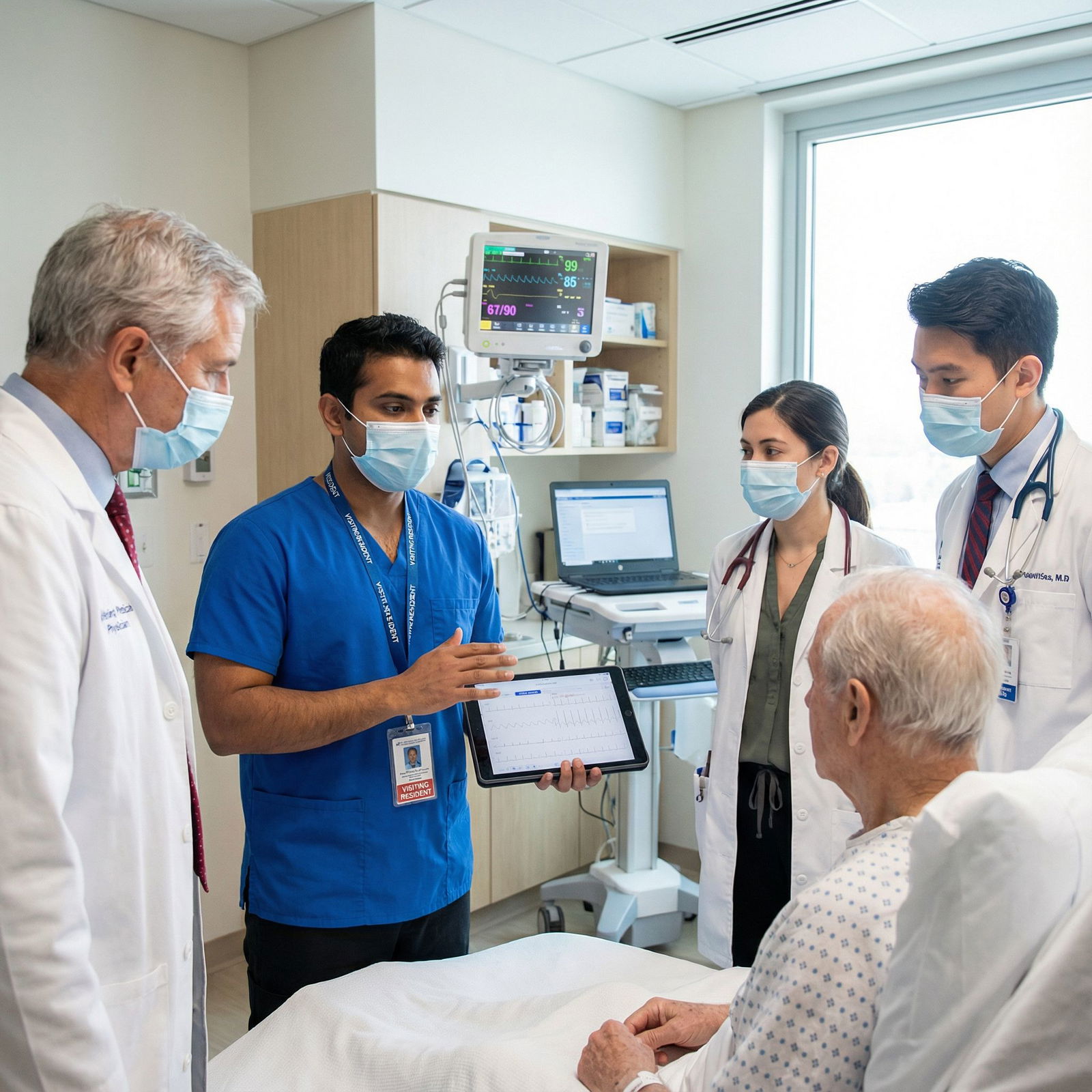
Outpatient Clinics: The Underrated Experience PDs Still Respect
Clinic gets underestimated because it looks calmer from the outside. Fewer alarms. Fewer dramatic saves. Less theater. Applicants mistake lower spectacle for lower value. That's a rookie mistake.
Good outpatient experience shows things wards often can't.
Continuity. Efficiency. Counseling. Longitudinal reasoning. Reliability.
In clinic, you see whether someone can build rapport fast, ask focused questions without rambling, and create a plan a patient will actually follow. You watch blood pressure management over time. Diabetes counseling that has to be repeated three ways because the first two didn't land. Depression that reveals itself slowly. A parent who brings a child back because the "viral illness" isn't resolving the way it should. That is medicine too. Hard medicine. Quiet medicine.
For IMGs, outpatient experience can be extremely strong if it was hands-on and specific. Interviewing patients yourself. Presenting the case. Drafting notes. Discussing plans with a preceptor. Following up when the patient returns. Seeing what happened after your recommendation. That longitudinal loop is powerful because it shows judgment over time, not just a one-day snapshot.
And here's a behind-the-scenes preference many applicants miss: for primary care-oriented fields, outpatient experience can be more persuasive than glamorous hospital exposure if it proves communication skill and dependability. Family medicine notices this. Pediatrics notices it. Psychiatry notices it. Even internal medicine programs with a strong ambulatory culture notice it. A resident who can talk to patients, manage follow-up, and stay organized in clinic is not "less prepared." Often they're easier to train than the applicant who only knows how to sound impressive on rounds.
There are cases where clinic beats wards outright. If your ward experience was passive but your clinic role gave you real autonomy and generated a detailed letter from someone who trusted your judgment, I'd rather have the clinic on the application. Every time.
That's the secret. PDs don't reward scenery. They reward credible function.
What PDs Value More for IMGs: The Real Decision Framework
So what do PDs value more?
The honest answer is this: they value the setting that gives them the strongest proof you can function like a resident-in-training. Not the setting with the most prestige. Not the setting your classmates brag about. Proof. That's the currency.
Specialty matters. A lot.
If you're applying to an inpatient-heavy specialty, wards often get more traction because they mirror the work. Internal medicine inpatient services. Surgical floors. Neurology admissions. ICU-adjacent thinking. Those environments reassure reviewers that you've at least been exposed to the tempo and complexity of hospital care.
If you're applying to family medicine, pediatrics, psychiatry, or programs with a major ambulatory identity, strong clinic experience can carry serious weight. In some cases it fits better. A PD who runs a resident clinic every week wants to know whether you can interview efficiently, educate patients, and handle follow-up without dropping the ball.
Now let's talk about the red flag that quietly sinks IMG files: experience that looks observational only. This is where people get into trouble. They stack observerships, write inflated descriptions, and hope no one notices. People notice. Program leadership has read thousands of applications. They know the difference between "participated in inpatient management" and "followed the team during rounds."
If an IMG has only observership-style exposure, reviewers worry about three things. First, whether the applicant has enough real patient contact to adapt quickly. Second, whether they truly understand U.S. workflow. Third, whether their letters are based on actual performance or just attendance.
On the other hand, strong clinic participation can absolutely remain competitive when documented well. I've seen applicants with mostly outpatient U.S. experience match because they could explain exactly what they did, had believable responsibilities, and had attendings willing to say, "I would trust this person on my team." That line, stated plainly in a letter, carries far more force than applicants realize.
Behind closed doors, PDs are silently asking three questions:
Did you work with patients?
Did you think like a clinician?
Can you function on a U.S. residency team?
Everything else is decoration.
That's the real framework. If your inpatient experience answers those questions, it wins. If your outpatient experience answers them better, clinic wins. If neither answers them because both were passive, then the debate is pointless. You're arguing over packaging while the substance is missing.
How IMGs Should Present Their Experience So It Actually Counts
This is where many good applicants sabotage themselves. They list locations instead of responsibilities.
Don't write: "Internal Medicine Rotation, University Hospital."
That tells me almost nothing.
Write what you actually did. "Interviewed and presented admitted patients during morning rounds, followed daily lab trends, discussed differential diagnoses with residents, observed discharge planning and consultant communication." Now I can picture your role. Now it feels real.
Same with clinic. Don't just say, "Outpatient Family Medicine Experience." That's dead language. Show the mechanics: "Conducted supervised patient interviews, presented assessment and plan, participated in follow-up visits for chronic disease management, and observed counseling on medication adherence and preventive care." That signals function.
The trick is precision without exaggeration. PDs hate inflation because it makes them distrust the whole file. If you observed, say observed. If you presented under supervision, say that. If you drafted notes but did not sign them, say that. Credibility is everything.
Letters of recommendation often settle the debate between a modest setting and a flashy one. A strong letter from a clinician who worked closely with you can transform outpatient experience into high-value evidence. Why? Because it confirms what your bullet points only claim. If the attending says you were dependable, organized, teachable, and clinically engaged, that setting becomes believable.
Match the narrative to the specialty too. If you're applying to internal medicine, emphasize presentations, transitions of care, and clinical reasoning. If you're applying to family medicine, stress continuity, counseling, preventive care, and breadth. If you're applying to psychiatry, show communication, rapport, and longitudinal observation. Stop sending the same generic story to every specialty and wondering why it lands flat.

Closing Reminder: Don't Chase Prestige, Chase Proof
Here's the final truth. Wards often look more impressive. Sometimes they are more relevant. But clinic is not second-class experience, and smart PDs know that. They're not rewarding the loudest setting. They're rewarding evidence that you can think, communicate, adapt, and care for patients without needing to be dragged through every step.
That's what IMGs need to understand.
Don't chase the shiny label if the role is empty. Chase the experience where you can actually do medicine, then describe it honestly and sharply. Proof beats prestige. Every time.