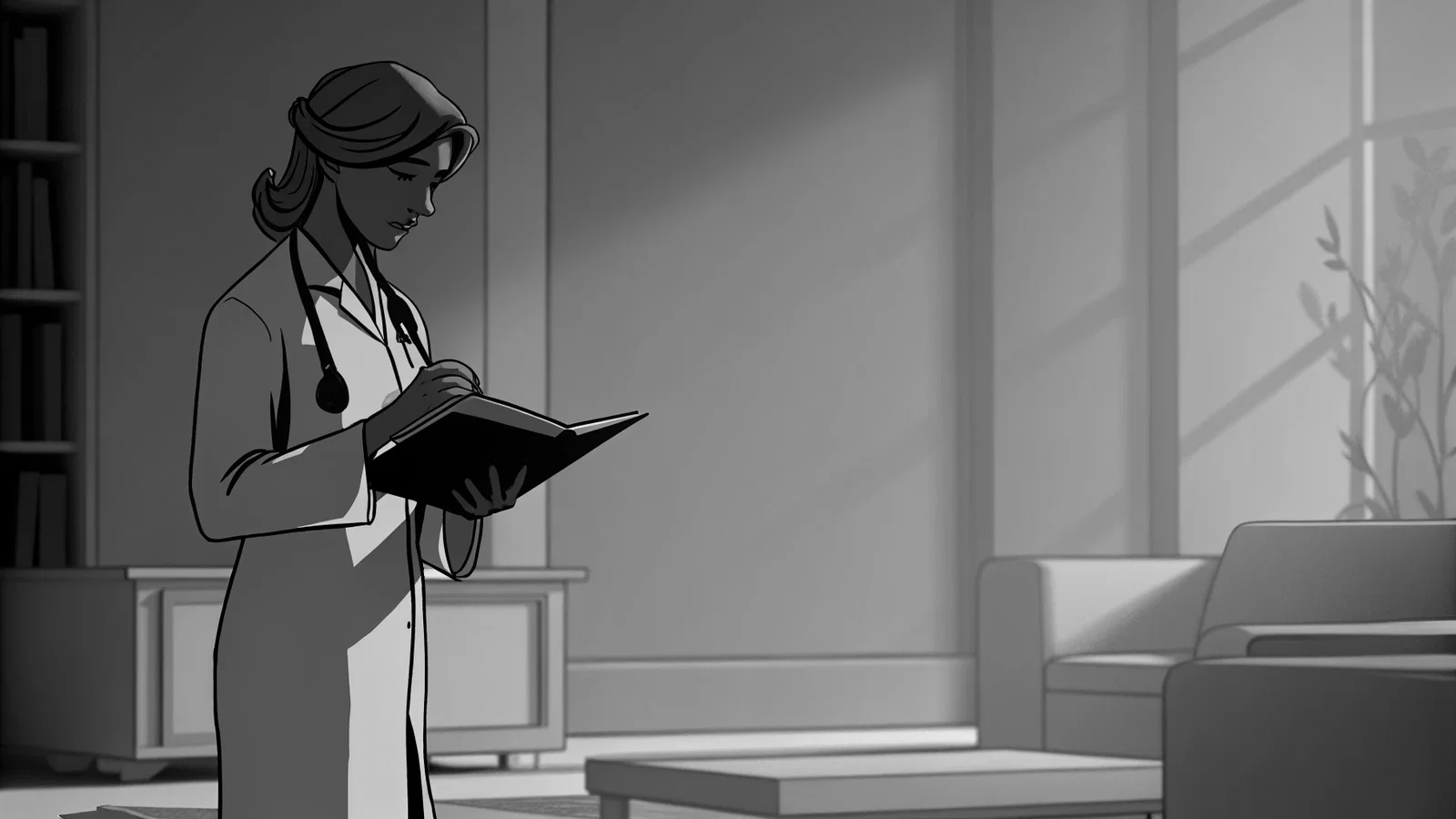
You get the certificate from a small outpatient clinic in the US, and instead of feeling relieved, you panic.
Was this even worth it?
I've heard that spiral from applicants over and over. The clinic wasn't attached to a famous university. The name won't make anyone gasp. Maybe the patient volume felt lower than you imagined. Maybe you saw mostly hypertension, diabetes, follow-ups, and refill visits instead of dramatic academic-center complexity. And then the worst thought lands: what if residency programs look at it and think, that's it?
That's the myth that does real damage. The idea that if your US clinical experience didn't happen under a giant academic logo, it barely counts. That is wrong. Not a little wrong. Deeply misleading.
Yes, prestige exists. I'm not going to insult you with fake optimism and pretend a tiny outpatient clinic carries the exact same weight as a flagship university hospital elective. It doesn't. But applicants make a huge mistake when they jump from "not elite" to "useless." Those are not the same thing. Not even close.
A small US clinic rotation can still matter. A lot, actually. Especially for IMGs who need to prove they've stepped into the US system, functioned professionally, and learned how medicine feels on the ground here. Real clinic. Real workflow. Real English communication. Real supervision. That counts.
Why a Small US Clinic Rotation Feels Like It Might Not Count
This fear is incredibly common because applicants compare their own experience to some fantasy version of the "perfect" US rotation. You picture another IMG saying they rotated at a big-name teaching hospital in Chicago or Boston, and suddenly your outpatient clinic in a suburban building with beige walls and six exam rooms feels microscopic. Like a footnote. Like something you should hide in the middle of the application and pray nobody notices.
I get why that happens. No famous name. Fewer physicians. Maybe fewer patients than you expected. Maybe less inpatient acuity, less dramatic pathology, less prestige. It can feel obscure. And IMGs are already primed to think every small flaw will destroy the application. One average score? Catastrophe. One gap? Disaster. One modest rotation? Apparently worthless. That's how anxiety talks.
But the core myth here is simple: only big academic hospitals or well-known US rotations are worth listing. That's the lie. Program directors aren't blind to prestige, but they also aren't stupid. They know there is a major difference between no US exposure at all and a real, supervised experience in a functioning US clinic. One shows you actually stepped into the system. The other doesn't.
Myth vs Reality: What Program Directors Actually Value
Here's the myth: only rotations at large academic centers matter.
Reality? Program directors care whether you can function in the US clinical environment. Can you communicate with patients appropriately? Do you understand documentation norms? Have you seen how outpatient workflow moves? Can you work with attendings, nurses, MAs, front-desk staff, and patients without seeming confused or rigid? That's not glamorous, but it's useful. And useful wins more often than applicants want to admit.
The second myth is even worse: a small clinic rotation is automatically weak. No. A weak rotation is one you can't explain, can't verify, or clearly learned nothing from. A small clinic can still be strong if it gave you meaningful observation, patient exposure, feedback, and a credible supervisor who can describe your professionalism.
I've seen applicants hurt themselves by obsessing over the clinic's size while ignoring what actually matters. They'll say, "It was only a private internal medicine clinic," as if that alone ruins it. Meanwhile, they spent four weeks seeing diabetes management, preventive counseling, medication reconciliation, referrals, chart review, and patient communication in English. That's not nothing. That's real outpatient medicine. That's the US system in miniature.
Programs may look at even modest experiences as evidence of initiative. You made the effort to come, observe, adapt, and learn. That matters for IMGs. It shows persistence. It shows seriousness. It shows you didn't just say you wanted US training, you actually stepped into the environment and tested yourself inside it.
And frankly, compared with no US clinical experience, a small clinic rotation often looks a lot better than anxious applicants assume. Not magical. Not elite. Just plainly better.
How a Small Rotation Can Still Strengthen an IMG Application
This is where people undersell the experience. A small rotation can strengthen your application in ways that are less flashy but very practical.
First, it gives you real US patient interaction or at least real patient-facing exposure. Even if you weren't independently doing hands-on tasks, you saw how physicians introduced themselves, how they structured visits, how they explained risk and follow-up, how patients asked questions, how consent and privacy were handled, how social issues shaped care. Those details matter. In interviews, applicants who have actually watched this can speak differently. More naturally. Less like they're reciting theory.
Second, you learn workflow. Not glamorous. Still important. You start noticing clinic pace, schedule pressure, chart review before the visit, medication lists that are never clean, insurance barriers, referrals, preventive care reminders, and the endless tiny systems that make outpatient medicine function. That's the kind of knowledge that makes your "Why US training?" answer sound credible instead of borrowed from the internet.
Third, you get practice with English in clinical settings. Not textbook English. Real English. The patient who talks fast. The patient who goes off-topic. The attending who summarizes in shorthand. The nurse who needs something now, not after you translate the sentence in your head. That adjustment is hard, and programs know it's hard. US experience helps prove you've started making it.
Fourth, a small rotation gives you material. Actual stories. Actual moments. Maybe you observed a physician calm an angry patient worried about delayed lab results. Maybe you watched careful hypertension counseling in a patient who couldn't afford three medications. Maybe you saw how one attending balanced evidence-based care with a patient's job, transportation, and insurance limits. Those examples are gold in personal statements and interviews because they sound lived-in, not manufactured.
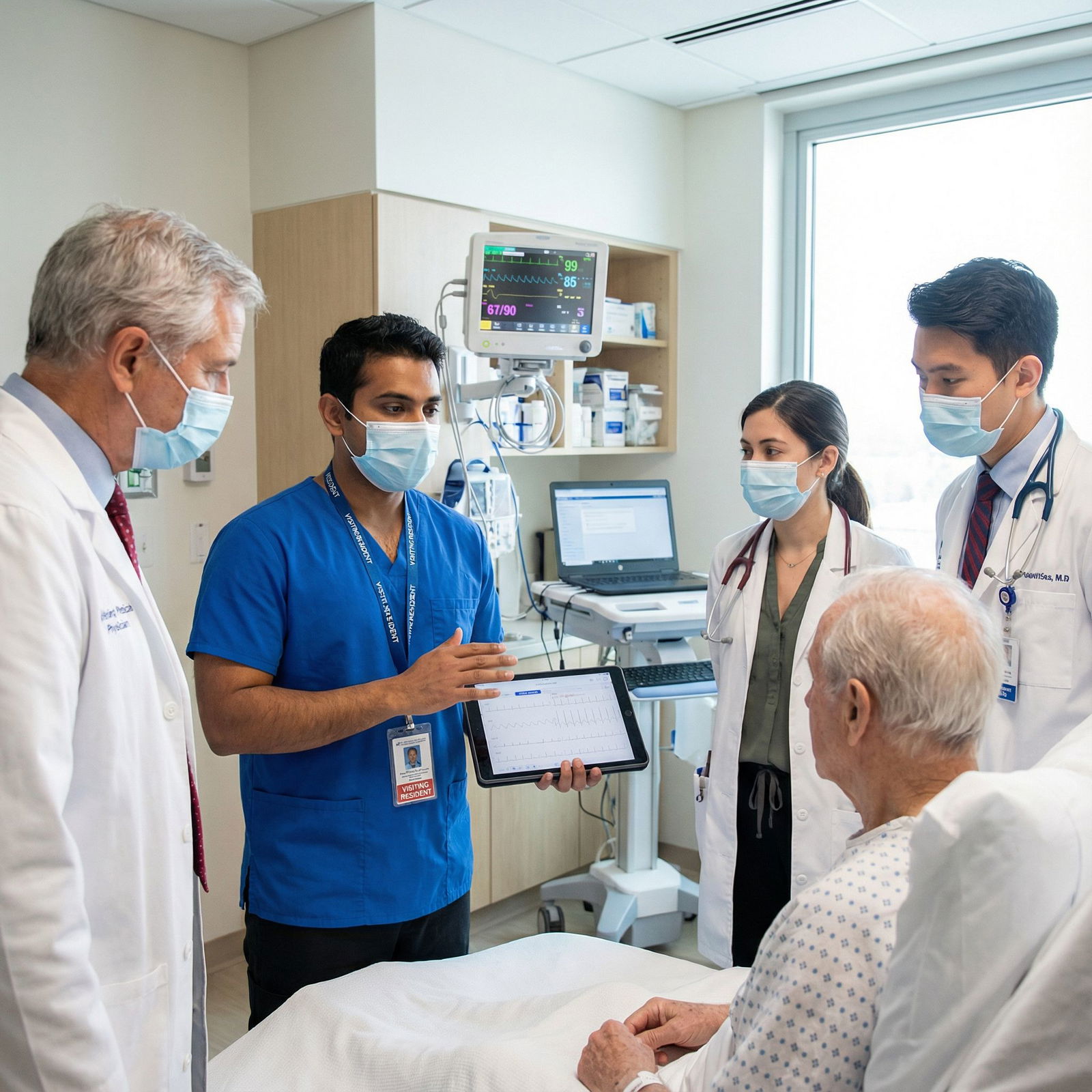
And no, one rotation probably won't transform a weak application into an unstoppable one. Let's be adults about this. If your scores are poor, your application has major red flags, or your experiences are thin overall, a small clinic rotation won't erase all that. But that's not the standard. The standard is whether it helps. It usually does. It reduces uncertainty. It shows commitment. It gives you one more honest piece of proof that you're not applying from a distance with zero feel for the system.
That's valuable. Even if it's not glamorous.
When a Small Clinic Rotation Helps Most, and When It Helps Less
A small clinic rotation helps the most when it's your first real US exposure. In that case, it can be genuinely important. It gives you a foundation, a frame of reference, and something concrete to build on. It also helps a lot if your application otherwise has limited US experience. One credible outpatient rotation is still stronger than a blank section and vague claims about "interest in American healthcare."
It can also matter if you need a US letter of recommendation. Not every small clinic produces a powerful letter, obviously. Some letters are bland and forgettable. But a thoughtful attending who actually knows you can still write a useful one, especially if they can comment on reliability, communication, curiosity, punctuality, and professionalism. A specific letter from a real supervisor beats a generic letter from someone with a bigger title who barely remembers you.
This kind of rotation may also help if you're worried about recent graduation issues or a gap in clinical activity. If it shows you stayed engaged, continued learning, and remained clinically oriented, that's meaningful. Again, not a miracle. But meaningful.
Now the limitations. A small clinic rotation helps less if it was undocumented, poorly supervised, impossible to verify, or so passive that you can barely describe your role. If all you can say is, "I observed doctors in a clinic," with no specifics about specialty, patient population, workflow, or learning, then yes, the value drops. A lot. Programs can smell inflated emptiness.
Use a simple standard. Ask yourself: was it real, supervised, relevant, and discussable? If yes, highlight it. If it was real but limited, include it carefully and factually. If it was barely clinical and you're tempted to dress it up with heroic language, don't. That's where applicants get into trouble.
That's the judgment call. Not "Was it famous?" but "Was it real and can I explain it honestly?"
How to Present a Small Rotation So It Actually Sounds Credible
This is where a decent experience either gains value or gets wrecked.
Do not lean on the clinic name and hope prestige will do the work. If it's a small clinic, pretending otherwise looks awkward. Just say what it was. Internal medicine outpatient clinic in New Jersey. Family medicine practice in Houston. Endocrinology clinic in Michigan. Fine. Clear. Honest.
Then describe responsibilities and learning. What did you observe? What kind of patients? What workflow did you participate in? Did you review charts, present cases informally, observe counseling, follow chronic disease management, watch referrals and follow-up planning, or receive feedback on communication and professionalism? Those details make the experience believable.
Avoid vague fluff. "Enhanced my medical knowledge" says nothing. "Observed diabetes follow-up visits, medication reconciliation, preventive counseling, and EMR-based outpatient workflow in a community internal medicine clinic" is much better. Specific wins.
And please, don't exaggerate your hands-on role. This is one of the dumbest ways applicants sabotage themselves. If you observed, say you observed. If you assisted in limited, permitted ways, describe that accurately. If you imply you independently examined patients, documented official notes, or performed tasks you weren't authorized to do, you're creating a credibility problem you do not need. Interviewers push on details. They should.

What should you emphasize? Professionalism. Adaptability. Communication. What feedback you got. How the experience sharpened your understanding of US care. Those are credible strengths. They sound mature because they are mature.
What to Remember Before You Dismiss the Experience
A small US clinic rotation is not a magic fix. I won't lie to you about that. But it is still real US clinical experience, and that matters.
Modest does not mean useless. Small does not mean invisible. Applicants talk themselves into these extreme conclusions because anxiety loves prestige and hates nuance. But applications aren't built only on big names. They're built on evidence. Honest, explainable, defensible evidence.
If your rotation was real, supervised, and educational, don't dismiss it just because it happened in a smaller setting. Use it well. Describe it clearly. Learn from it deeply. Let it support your story without trying to make it into something it wasn't.
You do not need a perfect rotation to make progress. You need a truthful one you can explain without flinching.