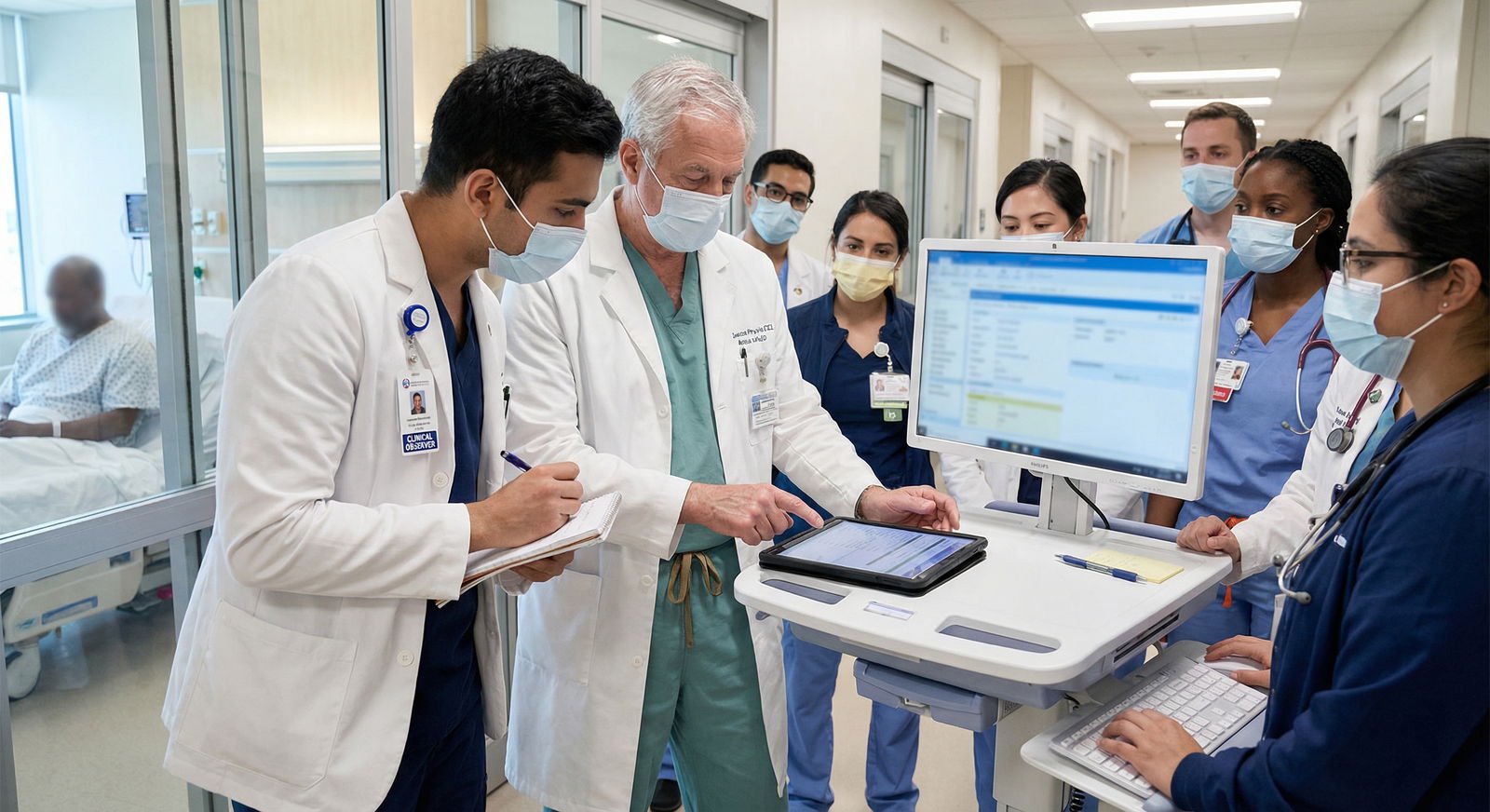
In the complex world of medical education and residency training, International Medical Graduates (IMGs) face a distinctive set of hurdles when pursuing a career in the United States. Beyond exams and paperwork, one factor consistently stands out as a game‑changer: meaningful US Clinical Experience (USCE).
For many IMGs, USCE becomes the bridge between strong theoretical training abroad and successful integration into the U.S. healthcare system. It influences how program directors view your residency application, how well you adapt to American clinical practice, and ultimately how confidently you launch your long‑term healthcare career in the United States.
This article explores the importance of US Clinical Experience for IMGs, the main pathways to obtain it, how it strengthens residency applications, and practical strategies to overcome common barriers.
What Is US Clinical Experience and Why It Matters
Defining US Clinical Experience (USCE)
US Clinical Experience (USCE) refers to any structured, clinically oriented exposure to the U.S. healthcare system that is relevant to residency training. At its core, USCE allows you to:
- Observe or participate in patient care in U.S. hospitals, clinics, or outpatient practices
- Work under the supervision of U.S.-licensed physicians
- Learn how medicine is practiced, documented, and delivered in American settings
Common formats of USCE for International Medical Graduates include:
- Observerships
- Externships
- Clinical rotations (electives/sub‑internships)
- Certain structured volunteer roles within clinical environments
Not all experience in a hospital qualifies as USCE. For residency applications, program directors typically prioritize activities that:
- Are clearly clinical (not purely research or administrative)
- Are supervised by U.S.-licensed attending physicians
- Can generate credible clinical evaluation and/or letters of recommendation (LoRs)
Why USCE Is Especially Important for International Graduates
USCE is not just a checkbox for residency applications; it shapes your readiness to function in a new medical, cultural, and regulatory environment. For IMGs, there are five major reasons US Clinical Experience is so valuable.
1. Gaining Real Familiarity With the U.S. Healthcare System
The U.S. healthcare system differs significantly from many international systems in:
- Clinical workflows (rounds structure, handoffs, interprofessional teams)
- Documentation standards and heavy use of electronic health records (EHRs)
- Insurance-based care and prior authorization processes
- Patient autonomy, consent, and privacy regulations (e.g., HIPAA)
- Quality and safety metrics, including checklists, order sets, and protocols
Through USCE, you learn:
- How to document in an EHR progress note that meets U.S. expectations
- How to navigate multidisciplinary care with nurses, pharmacists, social workers, and case managers
- How discharge planning and follow‑up care are coordinated
- How U.S. hospitals balance patient care with billing, insurance, and compliance
This familiarity reassures residency programs that you can step into an intern role with less onboarding friction and a stronger understanding of daily operations.
2. Strengthening Competitiveness in Residency Applications
Residency applications are judged holistically, but for IMGs, USCE is often one of the most scrutinized components.
Program directors frequently look for:
- Recent USCE (ideally within the last 1–2 years)
- Experience in the same specialty you’re applying to (e.g., Internal Medicine electives for an IM application)
- Performance-based letters of recommendation from U.S. physicians who directly observed your clinical work
USCE helps programs assess:
- Whether you can adapt to the pace and complexity of U.S. clinical practice
- How you communicate with patients and colleagues
- Your professionalism, reliability, and teamwork
- How you compare with U.S. graduates in a similar clinical environment
From an application standpoint, strong USCE can:
- Offset some weaknesses (e.g., older Year of Graduation or non‑traditional path)
- Reinforce your specialty choice and career trajectory
- Provide rich content for your personal statement, ERAS experiences, and interview discussions
Put simply, USCE signals to residency programs: “I have already functioned in your system, in your language, under your standards—and I can do it again as a resident.”
3. Building Professional Networks and Securing Strong Letters
In the U.S., networking is an essential part of medical education and healthcare careers. USCE puts you in direct contact with:
- Attending physicians
- Residents and fellows
- Program coordinators
- Nurses and allied health professionals
- Academic mentors and researchers
These connections can lead to:
- Mentorship on exam preparation, specialty choice, and application strategy
- Letters of recommendation (US LoRs) that carry significant weight with program directors
- Tips on which residency programs may be IMG‑friendly or aligned with your goals
- Opportunities for research, quality improvement projects, or case reports
A well-written US LoR from an attending who has seen you interact with patients and function in a team can be a deciding factor in interview offers and Match success.
4. Enhancing Clinical Skills, Communication, and Cultural Competence
USCE helps you move beyond theory to real‑world practice in a culturally diverse environment.
You will refine:
- Clinical reasoning in the context of U.S. guidelines and practice patterns
- History‑taking and physical examination tailored to American patients
- Patient counseling on diagnoses, treatments, and preventive care
- Cultural sensitivity when working with patients of different backgrounds, languages, and health beliefs
You also get to observe how experienced physicians:
- Navigate difficult conversations (prognosis, non‑adherence, end‑of‑life discussions)
- Use interpreters appropriately
- Incorporate patient preferences and shared decision‑making
These are critical competencies residency programs expect on Day 1.
5. Demonstrating Commitment, Resilience, and Professionalism
Securing USCE as an IMG requires planning, persistence, and often financial sacrifice. Completing it successfully sends clear messages to program directors:
- You are deeply committed to building your career in U.S. healthcare
- You are willing to adapt, learn, and step outside your comfort zone
- You can handle the stress of relocation, cultural adjustment, and a new system
In a highly competitive residency environment, those intangible qualities—initiative, motivation, resilience—often differentiate successful applicants.

Main Pathways to Gain US Clinical Experience
There is no single “correct” way to obtain USCE. Most IMGs build a portfolio of experiences that fit their stage of training, visa status, and long‑term goals. The most common options are observerships, externships, clinical rotations, and clinical volunteering.
1. Observerships
Definition:
Observerships are structured opportunities for IMGs to shadow U.S. physicians without direct, independent patient care. You observe exams, procedures, rounds, and discussions, but do not usually write orders or notes that go into the official record.
Key features:
- Non‑hands‑on; largely observational
- No independent patient care responsibilities
- Often do not require ECFMG certification or a U.S. license
- Offered by academic centers, teaching hospitals, and private practices
Benefits for IMGs:
- Low barrier to entry, especially for recent graduates or those waiting on exams
- Exposure to real workflows, EHR use, and team dynamics
- Opportunity to demonstrate professionalism, punctuality, clinical knowledge, and communication skills
- Often can lead to letters of recommendation, especially if you are active, engaged, and demonstrate strong clinical judgment through case discussions
Ideal for:
- IMGs just beginning their journey toward U.S. residency
- Those seeking specialty exposure before committing to a field
- Applicants who are between exams and want to start building U.S. experience
2. Externships
Definition:
Externships are hands‑on clinical training experiences designed to simulate the role of a U.S. medical student or early trainee. You may:
- Take histories and perform physical exams
- Present cases to attendings and residents
- Write progress notes or draft orders (under supervision)
- Participate in procedures depending on site policies
Key features:
- Direct patient contact under supervision
- Documentation and presentations that mirror residency tasks
- Often require:
- Completion of core clerkships in home country
- Passing USMLE Step 1 or Step 2 CK (in many cases)
- Malpractice coverage and specific immunizations
Benefits for IMGs:
- Strongest type of USCE from a residency perspective
- Gives programs a realistic sense of your readiness for intern‑level responsibilities
- Can result in highly specific, performance‑based LoRs
- Provides excellent content for interviews (e.g., challenging cases you managed)
Ideal for:
- IMGs who have completed core medical training and are close to applying for residency
- Applicants aiming at more competitive specialties or locations
- Those seeking to demonstrate advanced clinical skills and independence under supervision
3. Clinical Rotations and Electives
Definition:
Clinical rotations (including electives and sub‑internships) are structured, time‑limited placements in hospital or outpatient services that often mirror U.S. medical student clerkships.
For IMGs, these can occur:
- During final years of medical school (as “away” electives)
- After graduation, via programs that accept international graduates
Key features:
- Formal curriculum, schedules, and evaluation forms
- Clear role expectations (e.g., acting intern, sub‑I, or student level)
- Often available through medical schools that have established IMG pathways
Benefits for IMGs:
- Highly credible USCE, especially if done at academic teaching hospitals
- Direct evaluation comparable to that of U.S. medical students
- Strong potential for clinical performance evaluations and LoRs
- Immersive exposure to a specialty (e.g., an Internal Medicine sub‑I, Pediatrics elective, etc.)
Ideal for:
- Current international medical students in senior years
- Recent graduates seeking structured academic experiences
- IMGs aiming for academic residency programs
4. Volunteering in Clinical Settings
Definition:
Clinical volunteering involves unpaid roles that support patient care settings, often with limited or no independent clinical decision‑making. Roles may include:
- Helping with patient flow, education, or non‑clinical tasks
- Assisting in free clinics or community health centers
- Serving as medical interpreters or patient navigators (if qualified)
Key features:
- Variable level of patient interaction (often non‑procedural)
- Not always considered “formal” USCE, but can be highly valuable
- May not generate traditional LoRs, but can demonstrate commitment and service
Benefits for IMGs:
- Builds community engagement and demonstrates dedication to U.S. healthcare
- Provides insight into health disparities, social determinants of health, and public health systems
- Networking opportunities with physicians and clinic staff, sometimes leading to observerships or externships
Ideal for:
- IMGs facing visa, licensing, or timing barriers to formal USCE
- Those seeking to strengthen their profile with service‑oriented experience
- Applicants interested in primary care, community medicine, or public health
Real-World Impact: USCE and IMG Success Stories
While every IMG’s path is unique, common themes emerge among those who match successfully.
Consider the example of Dr. Maria Aria, an IMG from Brazil, who aspired to Family Medicine in the United States. Initially, she struggled with:
- Lack of U.S. references
- Uncertainty about how her prior training translated to U.S. expectations
- Limited understanding of the residency selection process
By strategically pursuing:
- Multiple observerships in community clinics and academic centers
- A hands‑on externship in Family Medicine
- A small quality improvement project on diabetes management in underserved patients
she accomplished the following:
- Built strong relationships with supervising attendings
- Earned detailed letters that highlighted her clinical reasoning, empathy, and teamwork
- Demonstrated consistent interest in primary care and community health
These experiences transformed her residency application profile, ultimately helping her match into her first‑choice Family Medicine program. Her story reflects what many International Medical Graduates experience: USCE can turn a distant goal into a realistic, achievable path in U.S. healthcare careers.
Common Challenges in Securing US Clinical Experience
Despite its importance, obtaining meaningful USCE can be difficult. Understanding common barriers helps you plan proactively.
1. Limited Awareness and Information Gaps
Many IMGs are unaware of:
- Which hospitals or clinics accept IMGs for USCE
- Eligibility requirements (e.g., ECFMG certification, exam scores, language proficiency)
- Application timelines and documentation needed
As a result, some candidates start searching too late or focus only on highly competitive institutions with low acceptance rates.
2. High Competition for Limited Positions
Desirable USCE sites—especially major academic hospitals or programs in large cities—receive far more applications than available spots. Challenges include:
- Application caps per year
- Preference for graduates from affiliated medical schools
- Prioritization of U.S. citizens or permanent residents for certain roles
This competition can be particularly intense in specialties like Internal Medicine, Surgery, or Pediatrics.
3. Financial and Logistical Barriers
USCE often involves:
- Application fees and tuition/rotation fees
- Travel, housing, and living expenses in the U.S.
- Visa costs and associated documentation (e.g., B‑1/B‑2, J‑1, or F‑1 issues)
Additionally, different states and institutions may have their own requirements for:
- Vaccination records
- Background checks
- Health insurance
- Malpractice coverage
These factors can make planning complex and financially demanding.
4. Time Constraints and Timing With Exams
Many IMGs try to balance:
- USMLE Step preparation
- Ongoing clinical duties in their home country
- Family obligations
- Application and interview seasons
If USCE is scheduled too early (years before applying), it may be viewed as outdated. If too late, it might not be completed in time to impact the next application cycle.
Practical Strategies and Tips to Secure USCE
Despite these challenges, many IMGs successfully obtain high‑quality US Clinical Experience through deliberate planning and strategy.
1. Start Early and Build a Targeted Plan
Ideally, begin exploring USCE options 12–24 months before your intended residency application cycle.
Create a simple action plan:
- Identify your target specialty (or narrow options)
- Research institutions known to accept IMGs in that specialty
- Map which experiences you aim for: observerships → externships → electives
- Align timing with your USMLE exams and ECFMG certification plans
2. Research Opportunities Thoroughly
Use multiple sources to find USCE:
- Official websites of U.S. medical schools and teaching hospitals
- Dedicated IMG or USCE program pages
- Professional organizations (e.g., ACP, AAFP, APA) that may list educational opportunities
- Alumni networks from your home medical school
- Online IMG forums and social media groups (verify information carefully)
Consider smaller community hospitals or less saturated regions, which may be more open to IMGs and offer more hands‑on exposure.
3. Tailor Your Application Materials
Even for observerships, treat your application like a professional job or residency application.
Prepare:
- A focused, one‑page CV/resume highlighting clinical training, exam scores, research, and language skills
- A concise personal statement or cover letter:
- Clarify your goals (e.g., Internal Medicine residency with interest in cardiology)
- Explain why you are interested in that institution or physician
- Emphasize how you will contribute (e.g., strong work ethic, prior research, cultural competence)
- Letters or emails that are polite, professional, and free of errors
Customizing your message to each institution or preceptor demonstrates genuine interest and maturity.
4. Leverage Networking and Mentorship
Networking is especially powerful for IMGs seeking USCE.
You can:
- Contact alumni from your medical school who are in U.S. residency or practice
- Attend virtual or in‑person conferences and introduce yourself to faculty in your target specialty
- Join professional societies that have IMG sections or mentorship programs
- Reach out to physicians from your home country now working in the U.S.
When networking, be respectful of time, specific in your requests, and open to guidance—even if it doesn’t immediately lead to a formal position.
5. Be Persistent and Flexible
Rejection or non‑responses are common, especially at high‑demand institutions. Consider:
- Applying broadly to a range of hospitals, clinics, and geographic areas
- Being open to specialties adjacent to your first choice, as long as they align with your long‑term interests
- Using shorter observerships as stepping stones toward longer externships or rotations
Persistence—combined with a professional attitude—often pays off over time.
6. Maximize Every USCE Opportunity
Once you secure USCE, focus on making it count:
- Show up early, be prepared, and stay engaged
- Ask thoughtful, clinically relevant questions
- Offer to help with small tasks and team responsibilities
- Request feedback and act on it
- When appropriate, express your interest in obtaining a letter of recommendation and provide your CV
Residency programs value not just that you have USCE, but how you performed during that experience.
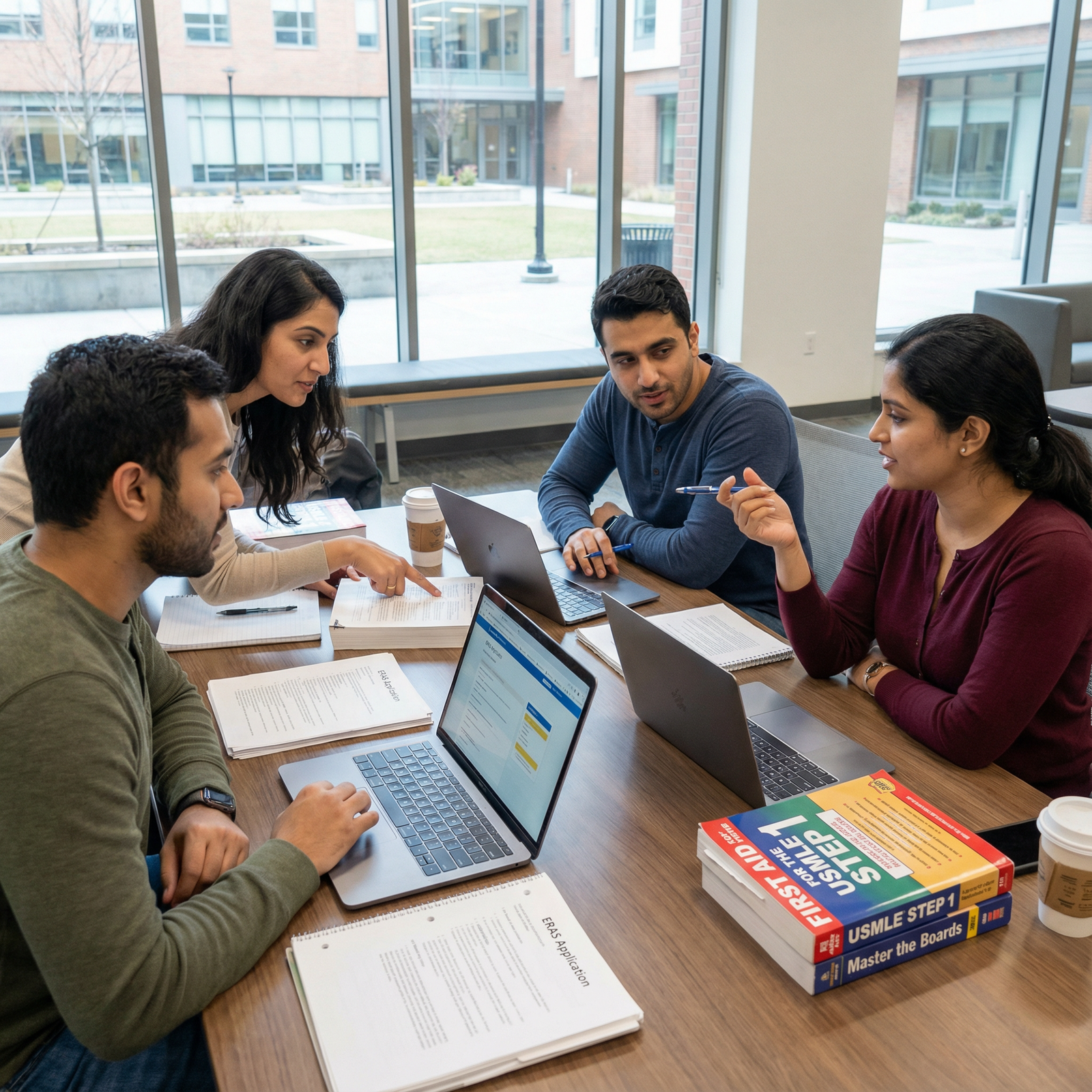
Frequently Asked Questions (FAQs) About US Clinical Experience for IMGs
1. What types of US Clinical Experience are most valued by residency programs?
Residency programs generally value hands‑on, supervised clinical experiences the most—such as externships and formal clinical rotations/electives—because they closely simulate residency duties. However, well‑structured observerships at reputable institutions also carry significant value, particularly when they result in strong, detailed letters of recommendation. Clinical volunteering is a useful supplement that demonstrates commitment to U.S. healthcare, but it usually cannot replace formal USCE.
2. How does USCE actually improve my chances of matching into a residency program?
USCE strengthens residency applications in several concrete ways:
- Provides evidence of adaptability to the U.S. healthcare system and culture
- Generates U.S.-based letters of recommendation, often a key requirement for interviews
- Validates your specialty choice by showing sustained interest and exposure
- Gives you rich experiences to discuss in your personal statement and interviews
- Helps program directors compare you directly with U.S. graduates in similar settings
Many program directors explicitly list “recent US clinical experience” as a preference or requirement for IMG applicants.
3. Can I get US Clinical Experience without a medical license or ECFMG certification?
Yes. Many observerships, some volunteer roles, and certain student electives are open to IMGs without a U.S. medical license or full ECFMG certification. Requirements vary by program, but common prerequisites may include:
- Proof of enrollment or graduation from a recognized medical school
- Immunization records and health clearance
- Basic background checks and health insurance
- Sometimes passage of USMLE Step 1 and/or Step 2 CK for more hands‑on roles
Hands‑on externships and post‑graduate clinical roles often have more stringent requirements, so always verify with each institution.
4. How recent should my USCE be for residency applications?
Most residency programs prefer recent USCE, ideally within the last 1–2 years before the application cycle. Older experiences can still be valuable, but they may carry less weight if you have significant gaps in clinical activity. If your USCE is more than two or three years old, consider pursuing at least one updated experience to demonstrate that your clinical skills and system familiarity are current.
5. How can I find USCE opportunities in my preferred specialty and location?
To identify specialty‑ and location‑specific USCE:
- Start with teaching hospitals and medical schools in your target region and review their websites for IMG observership or elective programs
- Search for “[specialty] observership program for international medical graduates” or similar phrases
- Ask mentors, alumni, or IMG networks about institutions known to be IMG‑friendly
- Use professional societies (e.g., the American College of Physicians for Internal Medicine) to find educational or mentorship resources
- Contact community hospitals and private practices directly, especially in less saturated areas, to inquire about potential shadowing or observership structures
Keep a spreadsheet to track opportunities, requirements, deadlines, and your application status to stay organized.
US Clinical Experience is one of the most powerful tools that International Medical Graduates can use to bridge the gap between medical education abroad and a successful residency in the United States. By understanding the different types of USCE, planning strategically, and making the most of every opportunity, you dramatically improve your readiness for residency, your competitiveness in the Match, and your long‑term prospects in U.S. healthcare careers.