
Do you think having "OR exposure" automatically boosts your IMG application?
It usually doesn't. That's the myth. And it's a stubborn one.
I've read too many IMG application descriptions that say some version of: observed multiple surgeries, gained valuable OR exposure, learned a lot. That sounds impressive if you don't look closely. Programs do look closely. And once they do, the magic disappears. Fast.
Here's what the data actually shows: residency applications reward legible, verifiable, comparable signals. Not vibes. Not proximity to an operating table. Not the fact that you wore scrubs and stood under bright lights for six hours.
"OR exposure" is often treated like a shortcut marker for competence. It isn't. Most of the time, it measures one thing only: you were physically in the room. That's not nothing. But it's nowhere near enough.
What counts for IMGs is much less glamorous and much more useful: structured responsibility, documented supervision, task-based performance, patient-facing work, and evaluator comments that tell a program what you actually did well.
That's the contrarian truth. The boost doesn't come from the OR door you walked through. It comes from what you can prove you learned, did, and improved.
What "OR exposure" really measures (and what it usually doesn't)
Let's kill the fantasy first.
OR exposure is not a standardized metric. It sounds concrete, but it's mush. One applicant's "OR experience" means quietly standing in the corner during laparoscopic cases. Another's means scrubbing in, assisting with exposure, helping with closure, presenting the patient pre-op, and seeing them again on post-op day one. Those are not remotely the same experience. Yet applicants often write them as if they are interchangeable.
That's the core measurement problem.
Time in the OR correlates weakly with actual clinical competence because it doesn't capture:
- how difficult the case was,
- what role you played,
- whether you made any decisions,
- whether you received feedback,
- whether you understood indications and complications,
- whether you followed the patient afterward.
Watching ten surgeries can teach less than managing two patients properly before and after surgery. That's not theory. I've seen it. The observer remembers the instruments. The involved trainee remembers the patient, the risk discussion, the post-op fever, the wound concern, the medication reconciliation, the attending's correction. Guess which one sounds credible in an application?
Competence needs a feedback loop. You do something. Someone supervises it. You get corrected. You try again. You improve. That cycle matters far more than passive witnessing.
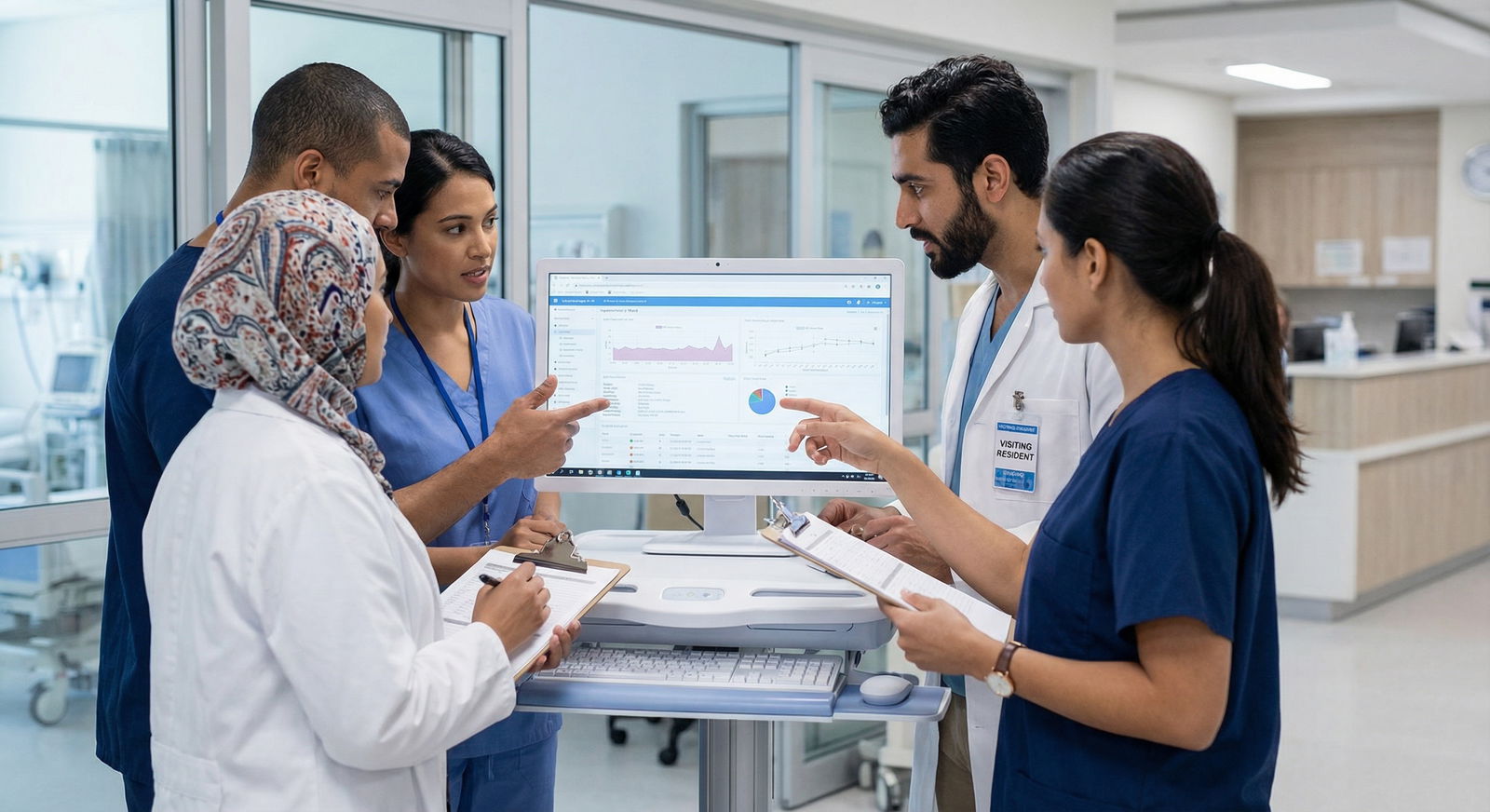
So when people brag about OR exposure without specifying the level of participation, they're not strengthening their case. They're advertising ambiguity.
The data-backed reason the OR narrative underperforms: applications reward documented competence
Residency selection is brutally practical. Programs screen hundreds or thousands of applications. They cannot decode every dramatic personal story or infer competence from broad claims. They rely on signals they can compare.
That means documented performance wins.
A vague OR narrative has low discriminative value because plenty of applicants can claim they observed surgeries. It doesn't separate you from the pack. In fact, it can make you blend in. Everyone "learned a lot." Everyone was "exposed to complex procedures." Everyone says the team was "multidisciplinary." That language is wallpaper.
What actually rises above the noise?
- defined responsibilities,
- supervisor comments,
- evidence of progression,
- continuity with patients,
- concrete examples of judgment or follow-through.
For IMGs, this matters even more. Programs often know less about your school, your grading context, and your clinical environment. So they lean hard on whatever they can verify. Structured experiences create stronger letters. Stronger letters create believable stories. Believable stories create interviews.
That's why the OR-only narrative underperforms. Not because surgery is unimportant. Because unstructured exposure is a weak application signal.
This isn't saying OR experience is worthless. It's saying OR time alone is non-standardized, hard to compare, and easy to exaggerate. Programs know that. So they discount it.
Myth-busting: "More OR hours" is not the same as "more clinical impact"
This one needs saying clearly: hours are a lazy metric.
Two applicants can each report 100 hours of OR exposure. One mostly watched from the wall, never saw the patient awake, never wrote anything down, never got direct feedback, and couldn't explain why the operation was chosen. The other did pre-op histories, discussed imaging with residents, scrubbed in selectively, tracked drain output afterward, recognized early complications, and was evaluated by a supervisor. Same hours. Different universe.
More OR hours do not automatically mean more skill. They may just mean more attendance.
Common pitfalls:
- passive observation dressed up as active learning,
- no ownership of any part of the case,
- no pre-op assessment,
- no post-op follow-up,
- no documented feedback,
- no reflection on what changed in your practice.
And yes, programs notice the fluff. They've seen enough applications to know when "participated in complex surgeries" really means "stood there."
Here's the better question: What decisions did I help make, and what consequences did they have?
Maybe you didn't decide whether to operate. Fine. But did you help identify a contraindication? Did you notice an anticoagulant issue? Did you recognize urinary retention after surgery? Did you report a wound change promptly? Did you improve your sterile technique after feedback? Those are real, accountable actions.
Clinical impact isn't always dramatic. Often it's mundane. Quietly useful. Verifiable. That's exactly why it matters.
What to do instead: build OR-linked experience that actually shows competence
You don't need less OR experience. You need better conversion of OR time into evidence.
Your job is to turn presence into proof.
Start by reframing the goal. Don't chase "I was in the OR." Chase "I can demonstrate perioperative competence." That includes pieces applicants often ignore because they're less glamorous:
- pre-op evaluation,
- informed consent discussions you observed or assisted with,
- medication reconciliation,
- post-op rounds,
- pain control assessment,
- wound checks,
- recognizing complications,
- communication with patients and families.
That's where clinical maturity shows up.
Use a real logbook. Not a vague memory dump. For each case, document:
- case type,
- patient problem category,
- your role: observed, scrubbed, assisted, presented, followed up,
- specific tasks performed,
- supervision level,
- one learning objective,
- one feedback point received.
This changes everything. A logbook turns "I saw surgeries" into "I assisted in perioperative care under direct supervision and improved in defined tasks over time."
Ask for structured evaluations. Don't just request a generic letter at the end. Ask attendings or senior residents to comment on milestone-like domains:
- pre-op presentation clarity,
- sterile technique,
- instrument handling if relevant,
- basic wound assessment,
- post-op monitoring,
- recognition of concerning changes,
- communication and professionalism.
Specific feedback creates quotable evidence. Generic praise creates dust.
And add longitudinality. This is where many IMGs lose ground. If your OR day starts and ends at the operating room door, your experience remains fragmented. Pair the OR with ward or clinic continuity whenever possible. See the patient before surgery. See them after surgery. See what improved, what didn't, what went wrong, what the pathology showed, how the attending explained the course.
That's how surgical exposure becomes clinical experience rather than medical tourism.
If you want a simple standard, use this: every OR-related experience should produce at least one of three things
- a documented task,
- a supervisor assessment,
- a patient-care example you can discuss specifically.
If it produces none of those, it probably won't help much.
How to write your OR experience for maximum credibility (without exaggeration)
Stop writing: observed numerous surgeries and gained exposure to advanced operative techniques.
That line is dead on arrival.
Programs want specifics. Write what you actually did, with enough structure that the reader can trust you.
A strong format is: Problem → Action → Feedback → Outcome
For example:
- Evaluated pre-op surgical patients with the resident team, presented histories and comorbid risks, and received feedback on concise perioperative assessment.
- Scrubbed into general surgery cases under direct supervision and assisted with retraction and wound closure while refining sterile technique.
- Performed post-op wound assessments and medication reconciliation on the ward; after feedback, improved recognition of early signs requiring escalation.
Notice what's missing? Drama. Inflated claims. Fuzzy language.
If you can't quantify your OR role, don't fake it. Shift toward accountable tasks:
- history and physicals,
- post-op checks,
- drain or wound monitoring,
- patient counseling support,
- discharge education,
- follow-up documentation.
That kind of writing has credibility. And credibility is gold.
Bottom line for IMGs: clinical experience wins when it is verifiable and task-based
Here's the reminder.
OR exposure is raw material, not proof of performance.
Programs are not anti-surgery. They're anti-ambiguity. They trust signals they can assess: strong letters, supervisor comments, documented progression, longitudinal patient contact, and examples tied to real responsibilities. Those often beat your coolest OR story. Easily.
So if you want your clinical experience to matter:
- document your role,
- get milestone-style feedback,
- add pre-op and post-op responsibility,
- maintain continuity with patients whenever possible.
That's the real boost. Not the OR door. What happened before it, inside it, and after it.