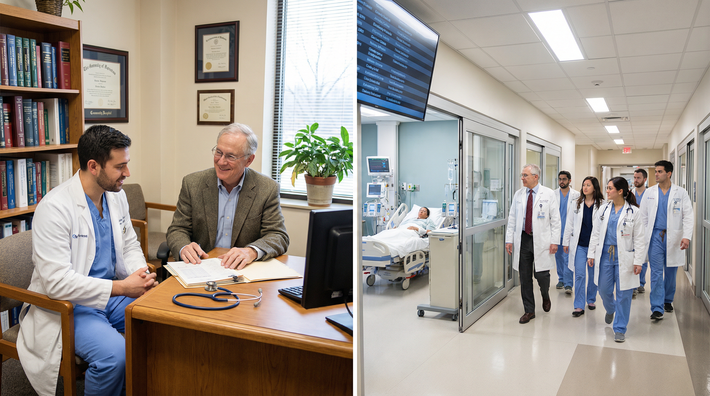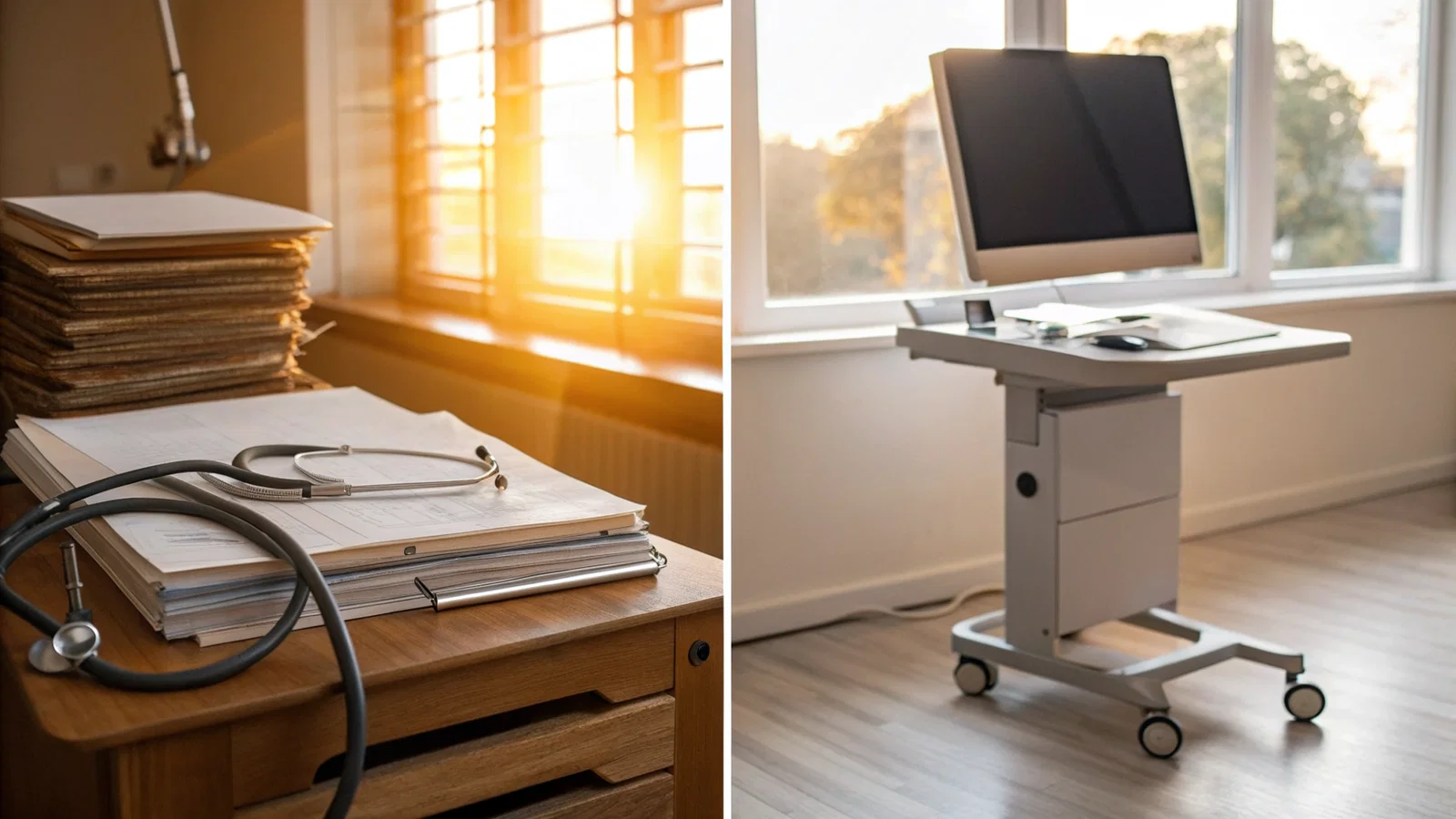
Let's kill a persistent myth: your outpatient clinic panel size as a resident is just a number floating on a spreadsheet. It's not. It's the engine that drives your continuity experience, and it varies wildly depending on whether you train in a community program or an academic medical center. If you're trying to compare programs, you need to understand what that panel number actually means. I'll walk you through the seven real differences that separate community and academic continuity clinics, and give you the right questions to ask on interview day so you don't mistake a big number for a good education.
Continuity clinic panel size: the basic difference applicants should know
First, plain language: your continuity clinic panel is the list of patients you personally follow over time, usually across all three years of residency. You're their identified primary care provider under supervision.
Here's the pattern that keeps showing up: community programs push residents to build and carry larger panels earlier. I'm talking 80-120 patients by PGY-2, sometimes more. Academic programs often start slower, maybe 40-60 patients by PGY-2, because they layer in more subspecialty rotations, research blocks, and heavier attending oversight. Neither is inherently better, but the experience feels very different when you're the one drowning in InBasket messages at 8 p.m. or the one who can't recall a patient's name because you only see them once a year.
This matters for three things: how much you're in clinic, how often you actually follow up with the same patients, and how squeezed you feel when you're juggling clinic responsibilities with inpatient duties. If you don't understand the drivers behind the number, you'll default to thinking bigger equals better. That's a mistake. Let's break down why.
1) Patient volume and access to a larger primary care base
Community residencies sit inside hospitals that are often the only game in town for primary care. The local population is wide, referral filtering is thin, and the health system depends on the resident clinic to absorb demand. Result: your panel grows fast because the patients keep coming. I've seen residents in community programs inherit 20 patients in a single intern year just from a departing senior, that's not unusual.
Academic residencies, on the other hand, sit inside tertiary centers with layers of subspecialty triage. A patient with vague chest pain might be shunted to cardiology before they ever land in your continuity clinic. That siphons off a chunk of what would be your bread-and-butter primary care. Yes, some academic centers run very high-volume clinics too, especially if they serve a safety-net population, but the structural tendency is toward slower panel growth.
Real life has more moving parts. No-show rates in a community clinic can be 20-30% in some neighborhoods; if you need to fill slots, you carry a bigger panel to compensate. Academic clinics might have lower no-shows (due to more reliable patient demographics or easier transportation) but still limit panel size because half your ambulatory block is taken up by a rheumatology elective. The upshot: larger panel size only means something good if continuity and supervision are solid. When you hear a program brag about having "large panels," ask how many of those patients you actually see more than once a quarter.
This chart isn't about precise metrics, it's about relative weight. Community programs get hit harder on volume and demand. Academic clinics feel the dampening effect of specialty filtering. Notice that no-show impact runs high in both, but for different reasons: community clinics might struggle with transportation barriers, academic clinics with patients who are too sick to show up.
2) Clinic staffing, support, and visit flow
The hidden variable no one talks about enough: who's actually doing the non-visit work? Community clinics often run lean, maybe one medical assistant covers three residents, and you're expected to handle your own refill requests and portal messages with limited nurse triage backup. That reality forces a trade-off: you can't manage a massive panel of complex patients with no support, so programs compensate by making the panel a little bigger and hoping volume covers access. It's not elegant, but it's real.
Academic clinics tend to have a deeper bench: care coordinators, clinical pharmacists, RNs handling prior authorizations, and fellows who absorb some of the more complicated patients. That support can buffer the workload of a smaller panel. But don't get comfortable: I've walked into academic continuity clinics where the resident panel was only 50 patients, but each one had six subspecialists and a social work flag, the inbox was a nightmare. Small panel, massive coordination burden.
When you're comparing, ask directly: who manages refills when you're on a ward month? Is there a nurse who triages patient calls or does that fall on you? The difference between a supported 90-patient panel and an unsupported 70-patient panel can be a full evening of charting every week.
3) Patient complexity and case mix
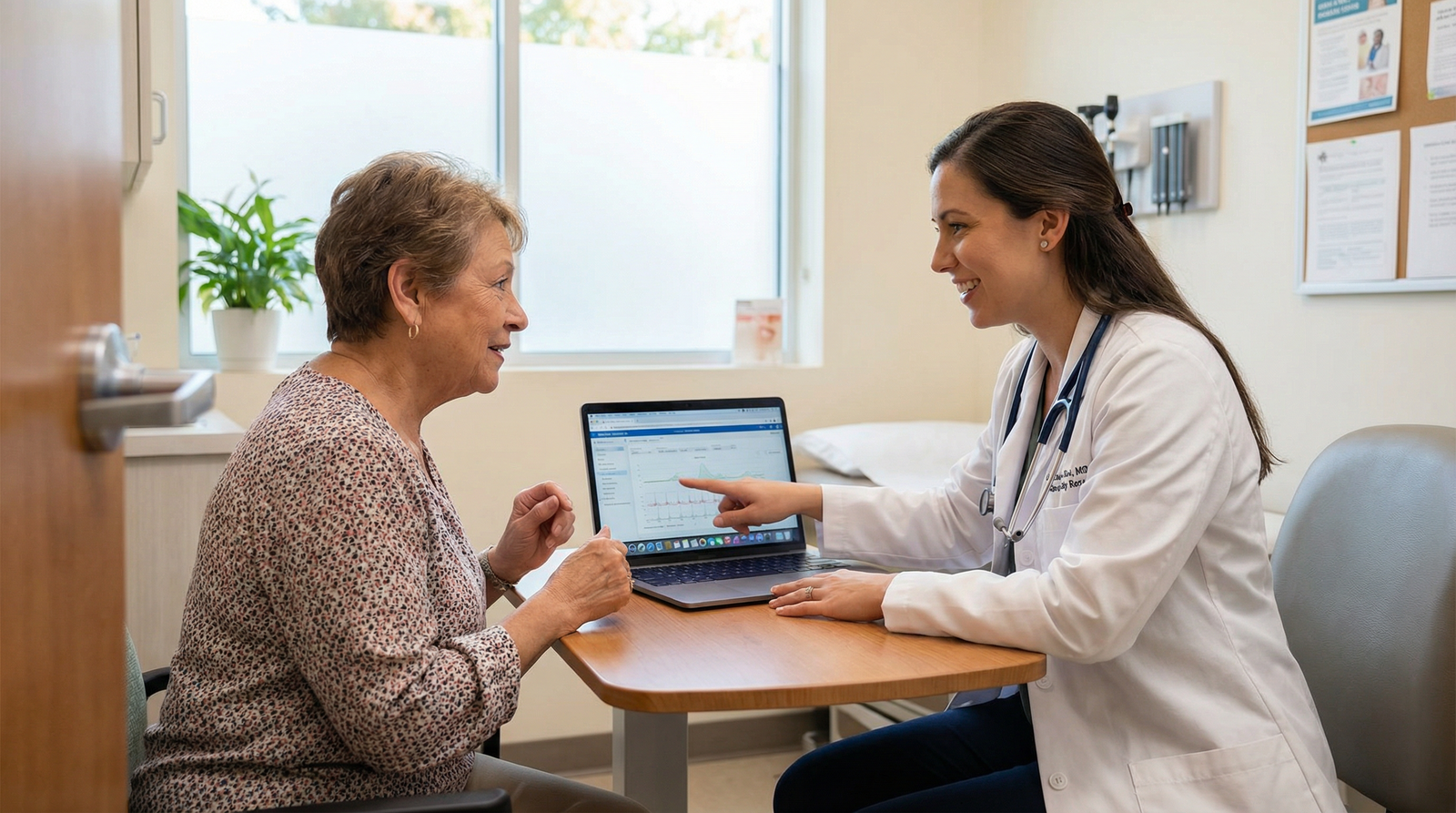
Now let's talk about what's actually inside those panels. An academic continuity clinic panel often looks like a internal medicine board exam: patients with three-organ transplant histories, brittle lupus, advanced heart failure managed on investigational drugs, and the occasional undifferentiated consult from genetics. That panel might only be 65 patients, but you're pre-charting for 45 minutes per visit because there are 14 active problems.
Community panels, especially in more homogenous suburban areas, may lean toward routine primary care: hypertension, diabetes, well-child checks, preventive screenings. But that's a generalization, some urban community programs face overwhelming medical complexity too. The real difference is the mix: academic programs tend to have a higher proportion of tertiary-referral complexity that requires more care coordination time per patient.
This is why raw panel size is useless without complexity context. I'll take a well-supported 90-patient community panel of straightforward patients over a 60-patient academic panel where half are awaiting lung transplant evaluations. Your workload doesn't come from the number on the schedule; it comes from the hidden work each patient generates.
The diagram makes the point visually: the pathway from panel size to resident workload runs directly through complexity and visit frequency. Two panels with the same size can land at wildly different workload points depending on those middle nodes. Ask programs whether they track complexity, maybe they use comorbidity indices or they'll just describe the patient mix. Either way, get an answer.
4) Continuity expectations, graduation requirements, and protected time
Community programs often treat continuity clinic as the backbone of the program's service obligation. That means they expect you to mature into a heavy panel by mid-PGY-2 because you're the clinic's workforce. There might be a formal panel cap, but I've seen community programs push right up against it, and sometimes past it, because the demand is relentless and the program relies on resident productivity.
Academic programs, in contrast, can afford to be gentler about panel growth. They pull residents out for research blocks, electives, subspecialty rotations, and half-day conferences. Protected clinic time might be only one half-day per week during certain rotations. That naturally suppresses panel size because you're not in clinic often enough to follow a huge cohort. But here's the catch: academic programs still have graduation benchmarks. They'll often define "sufficient outpatient exposure" by visit volume or competency assessments rather than a hard panel number. So you could graduate with a panel of 70, yet have seen more than enough ambulatory care because of the intensity of each visit.
I want you to get comfortable with the idea that a 100-patient panel in a program with 30-minute appointments, excellent nursing support, and minimal no-shows may feel easier than a 70-patient panel in a program with 15-minute appointments and no support. The number tells you nothing about visit dynamics.

5) Teaching model and supervision style
Here's the trade-off: community programs often operate on an apprenticeship model. You manage your panel, you make decisions, and the attending signs off at the end of the session after a brief discussion. That autonomy can speed up panel growth because you're expected to handle volume directly. Some residents thrive in that environment; you learn by doing, and you come out ready to run a busy primary care practice day one.
Academic programs, particularly at big teaching hospitals, lean into layered supervision. The attending may precept every patient in detail, there might be a fellow running the team room, and the culture can be more deliberative. That extra layer can slow throughput, which means the program doesn't push for a huge panel because the system can't accommodate that many patients with that much teaching. The education quality can be phenomenal, but you'll spend more time discussing than doing. For some learners, that's essential; for others, it feels stifling.
I care more about supervision quality than panel size. I've seen community programs with large panels where attendings barely read the note and I've seen academic clinics with tiny panels where the teaching was so paternalistic that the resident never learned independent decision-making. Ignore the labels and ask: how often do you get real-time feedback on your clinical reasoning? How much autonomy do you have with your own panel?

6) What applicants should ask before deciding a program
Stop asking "What's the average panel size?" That question gets you a number with zero context. I want you to go deeper. Here are the exact questions that will actually help you compare:
- "What's the average panel size by PGY year?", Not just the end of PGY-3, but the trajectory. A program that jumps from 20 to 110 patients in 12 months might be a panic attack waiting to happen. Gradual growth is healthier.
- "Is there a formal cap, and does it actually get enforced?", Some programs have a cap on paper that disappears the moment the clinic gets busy. Ask residents offline: "Does anyone ever go over the cap?"
- "How are no-shows handled? Do I absorb the loss or are slots overbooked?", This changes your panel workload dramatically. If no-shows are replaced by walk-ins, your effective panel size balloons.
- "Do I inherit patients from graduating residents, and what's that transition like?", Some programs make you take on a chunk of a senior's panel; that can inflate numbers without proper sign-out.
- "What kind of patients fill the panel? More bread-and-butter primary care or more tertiary complexity?"
- "Who helps with inbox messages, refills, prior auths?", If the answer is "It's mostly you," then even a modest panel can hurt.
Once you have those answers, you can line up two programs and actually compare education, not sound bites.
Bottom line: how to interpret panel size differences
Community programs give you a larger, faster-growing panel that prepares you to handle volume and autonomy. Academic programs give you a smaller, maybe more complex, highly supervised panel that teaches deep medicine with more safety nets. Neither is the "right" choice for everyone.
The decision framework I use with applicants is simple: ask about growth rate, patient complexity, support staff, and continuity quality. Then ask yourself: do I learn better by doing more independently with larger volume, or do I thrive when I have more time per patient and direct supervision? You're not picking a ranking; you're choosing the environment that shapes the doctor you'll become.
So: do you want to finish residency with the muscle memory of managing a full primary care panel yourself, or with the comfort of having dug deeper into fewer, messier patients under closer guidance? Because that's the real difference behind the number.