Only 18% of EM residency applicants can clearly explain how transfers and referrals actually work at the programs they rank.
That disconnect hurts people. I have watched strong applicants pick “big-name” academic centers that barely let residents touch transfer decisions, while others pick smaller community places that hand them the phone on July 2 and say, “You’re taking this STEMI from 90 minutes away—figure out the activation.”
If you care about autonomy, scope, and how ready you feel as an attending, how programs handle complex transfers and referrals is not a side detail. It is the whole game.
Let me break this down specifically.
1. The Core Difference: Who Owns the Phone?
At the simplest level, complex transfers and referrals hinge on one concrete thing: who answers the phone and who has the authority to say yes, no, and “send them somewhere else.”
In EM and many other hospital-based specialties:
- Community programs: the resident–attending dyad often is the transfer system.
- Academic programs: the system is the transfer system—transfer center, service chiefs, sub-subspecialty attendings, and hospital capacity committees.
That difference drives four things you need to care about as an applicant:
- Clinical exposure to very sick, complex “tertiary-care” patients
- Your decision-making autonomy and liability shield
- Workflow and how chaotic (or controlled) your shift feels
- How prepared you are for a first job in a non-ivory-tower setting
Let’s define what we are even talking about.
2. What Counts as “Complex” Transfers and Referrals?
Not all transfers are the same. Moving a straightforward appendicitis because there is no night OR is one thing. Taking a crashing post-LVAD patient from a critical access hospital is entirely different.
Complex transfers/referrals usually have at least one of these:
- High acuity – shock, respiratory failure, active MI, stroke, sepsis, trauma
- Subspecialty dependence – LVAD, transplant, ECMO, neuro-intervention, pediatric subspecialty
- Ethical/goal-of-care ambiguity – end-stage malignancy, poor prognosis, families requesting “everything”
- Resource mismatch – sending hospital cannot provide needed level of care, but no receiving site wants the risk
On the referral side (outpatient/inpatient specialty world):
- New advanced cancer that needs tertiary cancer center input
- Complex autoimmune disease needing a niche clinic
- Surgical cases that straddle specialties (e.g., recurrent paraesophageal hernia in morbidly obese, multiple comorbidities)
- Patients needing multidisciplinary clinics (cardio-onc, structural heart, etc.)
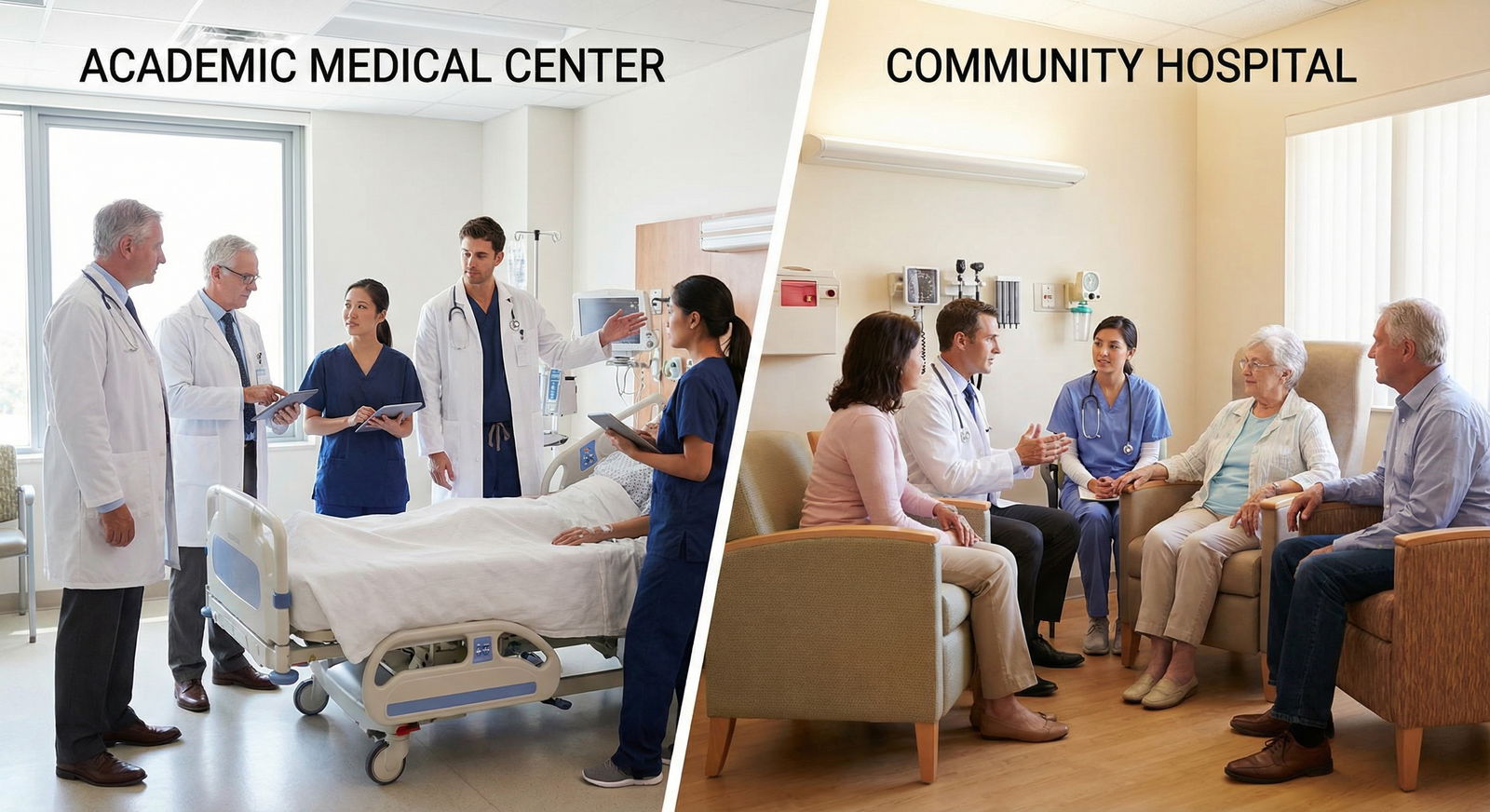
Community vs academic programs often handle each of these completely differently.
3. Transfers in Academic Programs: System First, Resident Second
I will start with academic centers because that is where most people imagine “complex transfers” live.
3.1 The Transfer Center Machine
At a large academic program, complex transfers are usually routed through a formal transfer center:
- Dedicated transfer hotline
- Non-clinical coordinators handling calls
- “On-call” lists for each service and subspecialty
- Bed control / capacity team
- Escalation pathways when services disagree (yes, they do)
You as a resident may experience this in three very different roles, depending on specialty and institution:
Minimal involvement – the patient arrives, you find out via a brief signout:
“Transfer from rural hospital, septic shock, cultures and vanc/zosyn started, norepi at 0.1.”
You did not hear the original story, you did not negotiate the acceptance, you do not know what the OSH is expecting.Token involvement – you answer a “warm handoff” call:
Transfer center connects outside provider → your attending, with you listening or occasionally asking questions. You might suggest immediate actions (“hang a second pressor before transport,” “intubate before flight”), but the final accept/decline is attending-level.Active but supervised involvement – some EM, ICU, or neurosurgery programs will let senior residents take the initial outside call, gather details, and present to the attending:
- You: collect story, vitals, labs, imaging description
- You: suggest level of care: floor vs stepdown vs ICU
- Attending: final yes/no, and where they land
The third model is frankly rare in very large systems unless the program is intentional about resident autonomy.
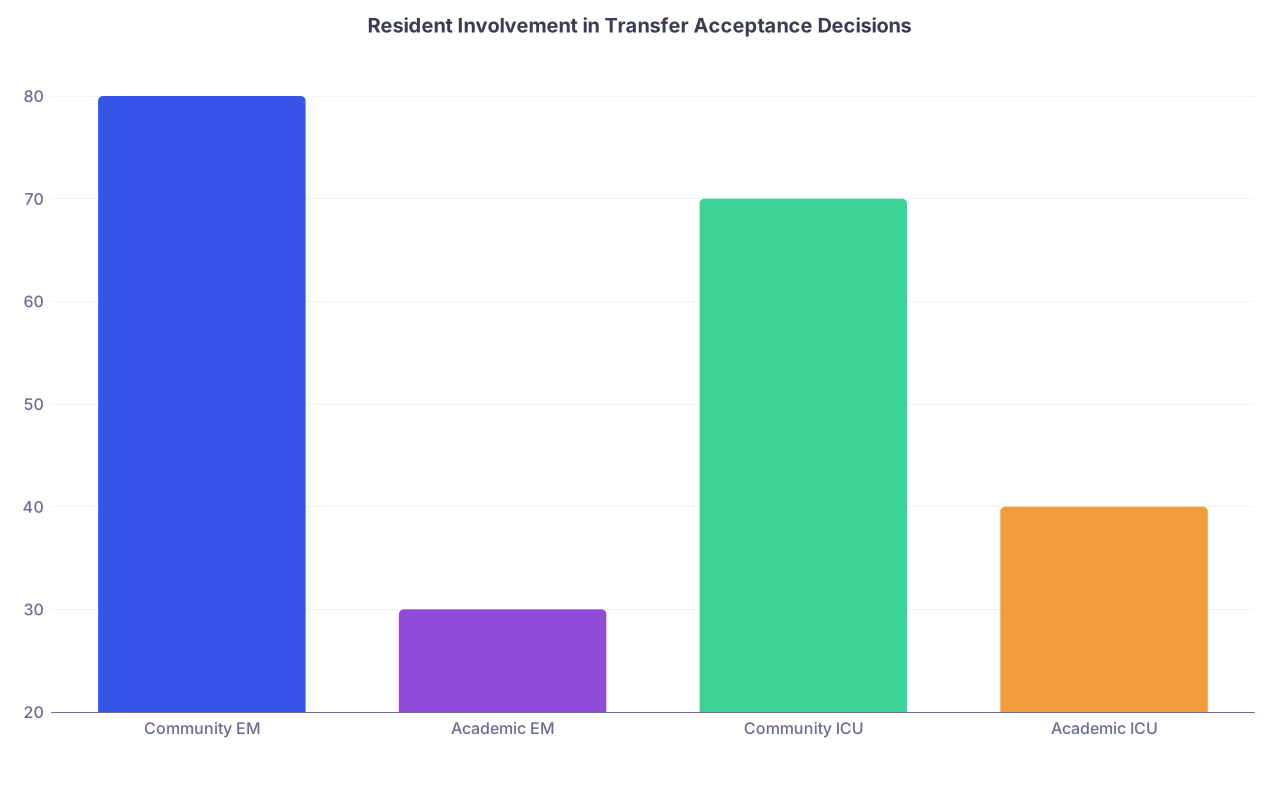
| Category | Value |
|---|---|
| Community EM | 80 |
| Academic EM | 30 |
| Community ICU | 70 |
| Academic ICU | 40 |
Those values are not from a registry. They are ballpark numbers from what residents tell me every year. Community-heavy programs let you run the phone a lot more.
3.2 Subspecialty Ownership and Fragmentation
At academic centers, ownership of a transfer is often service-based:
- Trauma or surgery owns multi-system trauma
- Neurosurgery owns ICH with mass effect
- Neuro-intervention owns LVO strokes
- CT surgery vs cardiology vs vascular argue about aortic pathology
- Oncology services gate-keep cancer-related admissions
You get exposed to very complex pathology, but your control over the disposition is diluted. The transfer center may say, “Neurosurgery will only take if intubated and with repeat CT.” Or, “CTICU has no beds, can downgrade to CV stepdown?” You are sitting in the ED, trying to make that make sense in real time, but the decision came from above.
Common scenario I have seen at academic EM programs:
- Rural ED calls for a subarachnoid hemorrhage with hydrocephalus, GCS 11
- Transfer center pages neurosurgery and neuro ICU
- Twenty minutes of back-and-forth later, neurosurgery agrees to accept, but only after repeat CT head because “the OSH scanner is unreliable”
- You, the EM resident, simply get: “Patient accepted; please alert CT and neuro ICU on arrival”
You are in the loop clinically, but not in the decision tree.
3.3 Legal, Risk, and Reputation Concerns
Academic centers live in fear of three things:
- Being “the dumping ground” for the region
- Taking transfers they “cannot safely manage” (bed or staff wise)
- Public reputation when a bad outcome hits the news with their logo front and center
Transfers that were once a quick attending-to-attending agreement now go through:
- Documented clinical criteria
- Bed availability algorithms
- “Is this in our catchment?” questions
- Complex EMTALA interpretations
Residents in these places learn a ton of medicine, but they often graduate never having directly navigated:
- “We are full; who can we suggest instead?”
- “This patient is too unstable for a 2-hour ground transfer. What then?”
- “This isn’t actually a transfer problem; it is a goals-of-care problem.”
The system shields you. Which is good for patient safety. Bad for raw independence.
4. Transfers in Community Programs: The Wild Phone
Now the other side.
At many community-based programs, especially in EM, ICU, general surgery, and hospital medicine, complex transfers are far less bureaucratic—and far more resident-facing.
4.1 You are the Gatekeeper (or the Doorman)
Common at medium-size community teaching hospitals:
- There is a “house officer” or senior resident covering ICU/medicine overnight.
- The hospital is the higher-level facility for several small outlying hospitals.
- There might be a transfer center, but it is lean—one nurse/paramedic coordinator, sometimes just the operator paging.
Call comes in from a critical access hospital:
- “We have a 52-year-old with NSTEMI on heparin, troponin 40, dynamic ST changes, no cath lab here.”
In many community programs, that call goes directly (or nearly directly) to:
- The ICU senior resident
- The EM senior on nights
- The in-house cardiology fellow if present (less common in true community)
You as the resident often:
- Take the clinical story
- Decide whether your hospital can realistically take the patient
- Negotiate what must be done before transport
- Work with nursing supervisor on bed status
- Call your attending to co-sign the decision (or, on scary nights, you just tell them what you already did)
This is messy. It is also the fastest crash course in systems medicine you will ever get.
I have seen PGY-3 EM residents at community sites handling:
- STEMI transfers while negotiating with the interventional cardiologist at home
- Septic shock transfers who need pressor titration and airway management instructions before the helicopter even lifts
- Trauma transfers to a regional level I center when their own hospital is on divert
You graduate from those programs knowing exactly how to:
- Say “yes, send them now” with conviction
- Say “no, we are on ICU hold; here is an alternative” without collapsing ethically
- Fix bad transfer arrangements on the fly when reality does not match the handoff story
4.2 Volume, Variety, and the “We Take What We Can” Reality
Community programs differ among themselves, but a pattern shows up:
- They see fewer extreme zebras (ECMO, LVAD, transplant) unless they are a regional referral center.
- They see a higher proportion of “too sick for small places, too common for big ivory towers” cases: complex sepsis, bad CHF, DKA with concurrent COPD, sick GI bleeds with multiple comorbidities.
| Case Type | Community Teaching Hospital | Academic Level I Center |
|---|---|---|
| Shock without ECMO indication | Very common | Common |
| ECMO candidate | Rare | Common |
| LVAD/Transplant complications | Rare | Common |
| Undifferentiated sepsis | Very common | Very common |
| Multi-trauma without neurosurg | Common | Less common |
The “gray-zone” cases—where you must decide if you are good enough and staffed enough—show up more often in community environments. That is exactly where transfer decision-making muscles grow.
5. Referrals: Outpatient and Inpatient Specialty Handoffs
Transfers are mostly about moving bodies between facilities. Referrals are about moving responsibility between teams and timepoints. Both systems handle these differently.
5.1 Academic Programs: Subspecialty Silos and Clinic Empires
At big academic centers, referrals tend to look like this:
- Oncology wants GI to scope a neutropenic patient
- General medicine wants rheumatology to weigh in on suspected vasculitis
- Outside PCP wants to send “all things weird” to your hospital’s brand-name clinic
Three defining features:
- Subspecialty silos. Each division has its own rules for who they see, when, and how “complex” a case must be to qualify.
- Referral criteria and triage nurses. “Please upload outside records, imaging, and labs; we will review and schedule if appropriate.”
- Residents as executors, not deciders. You place the referral in Epic. The triage system decides if the patient gets seen in 2 weeks or 6 months—or at all.
So what do you learn?
- How to identify which subspecialty is actually responsible (is this neurology or psychiatry? hepatology or ID?)
- How to correctly phrase “reason for referral” so the right person reads it
- How siloed care can become and how poor communication between teams harms patients
What you almost never touch:
- Clinic capacity negotiations
- Decisions on which referrals your department refuses
- How your outpatient system interfaces with community docs desperate to get their patient seen
Residents at academic centers can recite the number for “Transfer Center 24/7,” but often have no clue how an outside oncologist successfully gets a patient into their leukemia clinic for a second opinion. They just see them show up one day.
5.2 Community Programs: Referrals Are Relationships
In community settings, especially where outpatient clinics and inpatient services share staff, referrals are more like speed dating than paperwork.
Patterns you see:
- Hospitalist calls the cardiologist’s cell directly: “Can you see this guy in clinic this week?”
- ED doc texts the ortho on call: “This rotator cuff tear needs surgery; can they come to your office tomorrow?”
- A small primary care group down the street faxes (yes, still faxes) consult requests directly, and someone in the office triages.
Residents in community programs often:
- Hear the real-time negotiation: “I can squeeze them in Friday, but send a CBC and echo before then.”
- Learn which referrals will actually be accepted versus bounced back as “inappropriate.”
- Understand that access is currency. A clinic that truly sees complex referrals quickly is gold.
You also see the brutal side:
- “We do not take new uninsured neurology referrals.”
- “Our GI is booking out 5 months; send them to the larger center.”
Ethics, equity, and system limitations are not abstract—they are in your face.
6. Autonomy vs Support: Who Should You Train With?
Let me be blunt: neither model is “better” in isolation. They train different competencies.
6.1 What Academic Programs Usually Do Better
Exposure to edge-of-medicine cases.
ECMO cannulations, complex transplants, mechanical circulatory support, rare autoimmune phenomena, advanced oncology trials. You learn what is possible when resources are almost unlimited.Structured, risk-managed transfers.
Strong protocols, specialized transport teams, backup consult services. Less cowboy medicine, more reproducible systems.Formalized multidisciplinary referrals.
Tumor boards, heart team conferences, transplant committee meetings. You see how complex patients get discussed in rooms full of experts.Protection from the uglier sides of capacity and reimbursement politics.
Residents rarely hear the raw “we will not take that because of payer status” conversations, even though they absolutely happen.
For some people, especially those headed to academic careers or tertiary/quaternary centers, this is the right sandbox.
6.2 What Community Programs Often Do Better
Early, real decision-making.
Saying yes or no. Deciding ICU vs floor vs transfer out. Negotiating what must be done before a patient gets on an ambulance. You become functionally independent faster.System-level understanding.
You learn bed management, transport delays, how long it really takes for a helicopter at 3 a.m., and what happens when your only ICU nurse calls out sick.Direct communication with outside clinicians.
You regularly talk to the rural PA who stabilized the trauma, the PCP who has been struggling with this CHF patient, the surgeon two counties away who cannot operate tonight.Comfort with “good enough” resources.
You figure out when you can manage a case with your hospital’s limitations, versus when it truly must be shipped to the big center.
Graduates from strong community programs (think: large regional trauma centers or busy community EM programs) often hit their first job comfortable with exactly the stuff that terrifies new grads from ultra-bubbled university programs: being the final common pathway.
7. How This Actually Affects Your Training Experience
This is where I see applicants mess up. They read “high acuity” and “trauma center” and assume they will learn transfer/referral management everywhere. Not true.
Concrete training differences to look for:
7.1 Who Talks to the Outside Facility?
Ask current residents:
- Who answers transfer calls—attendings, fellows, or residents?
- Do you listen in? Do you speak directly with outside clinicians?
- On nights, is there a resident responsible for ICU or interfacility transfer triage?
Massive red flag: “Oh, the transfer center handles that; we just see them when they arrive.” That means you will graduate never having built that muscle.
7.2 Are You Allowed to Say “No”?
Some programs essentially never say no. Others must, because they have 18 ICU beds and the region is on fire every winter.
You want exposure to:
- Cases where the right answer is “we are not the right place; here is an alternative center that can take them”
- Situations where you must decide to transfer out of your hospital when patients outstrip your resources
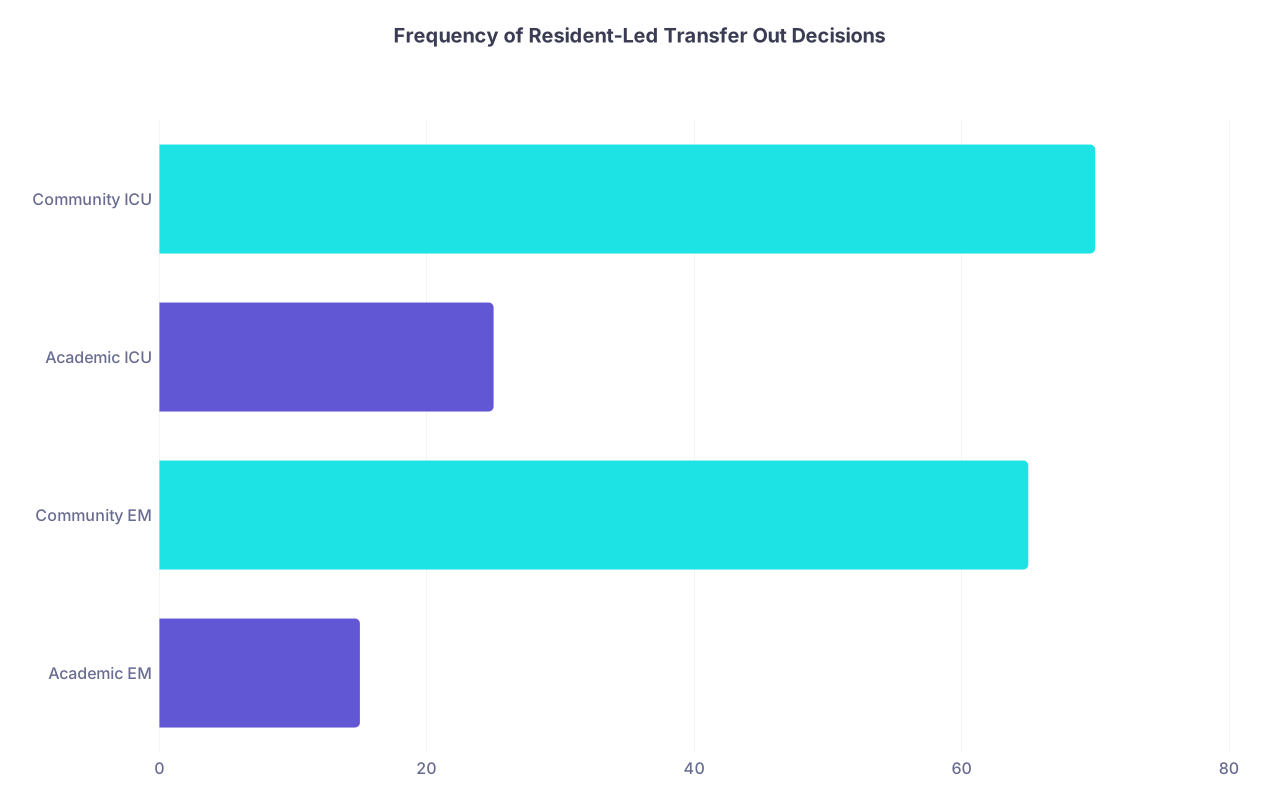
| Category | Value |
|---|---|
| Academic EM | 15 |
| Community EM | 65 |
| Academic ICU | 25 |
| Community ICU | 70 |
You will feel that difference in your bones after residency.
7.3 How Transparent Is Bed and Capacity Management?
At some academic places:
- Bed control is a black box. You are told “no ICU beds” but never see the board.
- Residents have little to no say in triaging the last available bed.
At stronger training environments (both academic and community):
- Seniors are looped into capacity discussions.
- You learn the tradeoffs: “If we accept this OSH ECMO candidate, who gets bumped?”
- You witness how transfer decisions ripple across the hospital.
8. Specialty-Specific Nuances You Should Not Ignore
This is underappreciated. The same hospital can feel very different depending on your specialty.
8.1 Emergency Medicine
- Community EM programs: usually the most direct exposure to transfer calls, both inbound and outbound. You will hear everything from “simple” OB transfers to crashing post-op surgical disasters.
- Academic EM programs: you see extreme pathology, but transfer mechanics are frequently stratified to attendings or fellows, especially for high-risk things like ECMO, transplant, and neurosurgical cases.
If your goal is to practice in a community ED, you absolutely want at least some training where you control the phone.
8.2 Internal Medicine / ICU
- Academic ICU: fellows and attendings often decide which transfers to take. Residents manage care after arrival.
- Community ICU: senior residents on nights (with an in-house intensivist or tele-ICU backup) may take the initial call, decide if the case fits your unit, and if not, help orchestrate transfer to an even higher level.
Train where you will actually practice if possible. If you think you will be the only intensivist covering a 12-bed unit with no fellow buffer, a purely academic model might leave you uncomfortably sheltered.
8.3 Surgery and Subspecialties
- Big-name surgical departments: transfer patterns are heavily gate-kept by senior fellows and attendings. Referral patterns are about “interesting” and high-revenue cases.
- Community surgery programs: you may see more real-world referral questions—borderline operative candidates, patients with comorbidities out of proportion to the problem.
For surgical subspecialties (ENT, ortho, urology), look carefully at:
- Who decides whether to accept an outside fracture, airway tumor, or obstructing stone?
- Does the resident speak to the outside provider? Or does the attending give you a “we accepted a transfer; here’s the OR time”?
9. How to Actually Evaluate This During Applications and Interviews
You are not going to see “resident role in transfers” on any website. You will have to ask.
Here is a very direct question set that works:
- “On a typical overnight call, who is responsible for accepting transfer patients from outside hospitals?”
- “How often do senior residents speak directly with the referring clinician?”
- “Can you walk me through a recent tricky transfer decision and what role the resident played?”
- “Do residents ever decide to transfer patients out of your hospital to a higher level of care?”
- “How are outpatient referrals to subspecialty clinics triaged, and do residents have any input?”
Watch for vague answers or obvious discomfort. That usually means the answer is: residents are not meaningfully involved.
You can also probe indirectly:
- Ask ED or ICU nurses: “Who usually talks to outside hospitals?” They will tell you who actually does the work.
- On a second look or visiting rotation, ask to sit in the transfer center for an hour. Few applicants do this. The programs that say yes and encourage it tend to be proud of how they involve trainees.

| Step | Description |
|---|---|
| Step 1 | On Interview Day |
| Step 2 | Low resident autonomy |
| Step 3 | Moderate educational value |
| Step 4 | High educational value |
| Step 5 | Consider ranking higher |
| Step 6 | Ask who takes transfer calls |
| Step 7 | Ask how often and how complex |
10. What This Means For You After Residency
Think forward five years. You are out. You are the one with your name on the transfer acceptance note.
If you trained:
At a traditional academic referral center, you will feel extremely comfortable managing rare diseases once they are in your building. You may feel surprisingly uneasy saying “We cannot take this; they need X” or troubleshooting a bad transport arrangement. You will adapt, but your first year in a smaller place will hurt.
At a robust community teaching hospital, you will be very comfortable saying “yes” and “no,” dealing with incomplete information from OSH providers, and managing the messy human factors of transfers. You might need a bit more ramp-up if you jump into a super-sub-specialized center, but your systems instincts will be strong.
The best hybrid:
Some programs truly are “community-academic hybrids”—busy community hospitals affiliated with a university, acting as true regional referral centers. Examples vary by region, but structurally they share:
- Resident-involved transfer decisions
- Real academic subspecialty back-up
- High but not insane bureaucracy
- Enough chaos to build resilience without total burnout
Those are gold mines for learning complex transfer and referral management.

11. Concrete Takeaways For Your Rank List
You are in Match season. You need this to translate into decisions, not just theory.
Three practical filters when comparing community vs academic programs:
Ask: “Where do the scariest patients come from?”
- If the answer is, “They just show up from the region; we do not hear from OSH much,” that is a pure community catchment.
- If the answer is, “We are the transfer hub for ECMO, LVAD, and transplant for five states,” that is a classic academic hub. You want to know if residents are in the command center or just on the receiving end.
Ask: “Who says no, and how often?”
- Programs that never say “no” are usually buffered by layers of administration.
- Programs that sometimes cannot accept (and are honest about it) will give you real experience in boundary-setting and alternative planning.
Ask: “How often do you feel out of your depth on transfer calls?”
- If seniors say, “Often, but we always have backup and it has made me comfortable now,” that is good stress.
- If they say, “We never touch transfers; that is all attendings,” you are losing a major growth opportunity.

12. Summary: What Actually Matters
Three points to keep in your head as you rank programs:
Complex transfers and referrals are where clinical medicine meets systems reality.
Academic programs give you more exposure to exotic pathology. Community programs more often hand you the phone and make you decide.Resident involvement is not automatic.
Two programs with the same trauma level and same bed count can be completely different if one lets residents take and negotiate transfer calls while the other keeps them behind a curtain.Train for the job you are actually going to do.
If you expect to work in a community hospital, you need hands-on transfer and referral experience during residency. If you aim for quaternary-level practice, you still benefit from understanding transfer mechanics—but you can accept more system shielding.
Do not be the person who discovers on their first attending shift that they have no idea how to accept (or decline) a crashing transfer at 3 a.m. Ask now. Choose accordingly.