
The mythology around resident case volume is wrong. It is not “academics = high volume, community = low volume.” The data show a far messier, specialty‑specific pattern where some community programs massively outperform academic centers on cases, and in other fields the reverse is true.
If you are applying to residency and not looking at procedure and case counts by program type, you are guessing. And guessing is a poor strategy in a system that already runs on razor‑thin margins.
What follows is a numbers‑first walkthrough of resident case volumes across major specialties, comparing community vs academic benchmarks, and what that should actually mean for your rank list.
1. How Case Volume Really Works: The Structural Differences
Before drilling down by specialty, you need the basic mechanics.
Academic programs tend to have:
- Higher overall hospital volume
- More complex and rare pathology
- More fellows competing with residents for advanced cases
- More subspecialized services (which can either concentrate or dilute resident experience)
Community programs tend to have:
- Fewer or no fellows
- More routine bread‑and‑butter cases
- Higher resident autonomy earlier, especially in procedural fields
- Less niche pathology and fewer ultra‑complex cases
The key variable is not just “number of cases,” but:
- total case volume,
- resident share of that volume, and
- breadth vs depth of experience.
To make this less abstract, let’s put some structure around it.
| Factor | Academic Programs | Community Programs |
|---|---|---|
| Total hospital volume | High | Moderate to high, variable |
| Case complexity | Higher | Moderate, more routine |
| Fellow presence | Common | Less common |
| Resident autonomy | Slower early, higher late | Earlier hands-on in many fields |
| Bread-and-butter volume | Can be diluted by subspecialists | Often concentrated to residents |
The short version: an “academic” label does not guarantee you more cases. In some procedural specialties, it can actually mean fewer hands‑on cases per resident because fellows and subspecialists soak up the work.
2. Surgical Specialties: Where Community Often Wins on Volume
Surgery is where the myths are most persistent and most wrong. I have seen residents walk away from phenomenal community surgery programs chasing academic brand names, only to discover they are third in line behind two fellows and a PA for the interesting cases.
General Surgery
Let us start with general surgery, where we have reasonably good aggregate data from case logs submitted to the ACGME.
Typical ACGME minimum (US benchmarks, rounded):
- Minimum major cases for general surgery graduation: ~850
- Many programs’ graduates actually finish with 1,000–1,300+ cases
In practice, the distribution often looks like this:
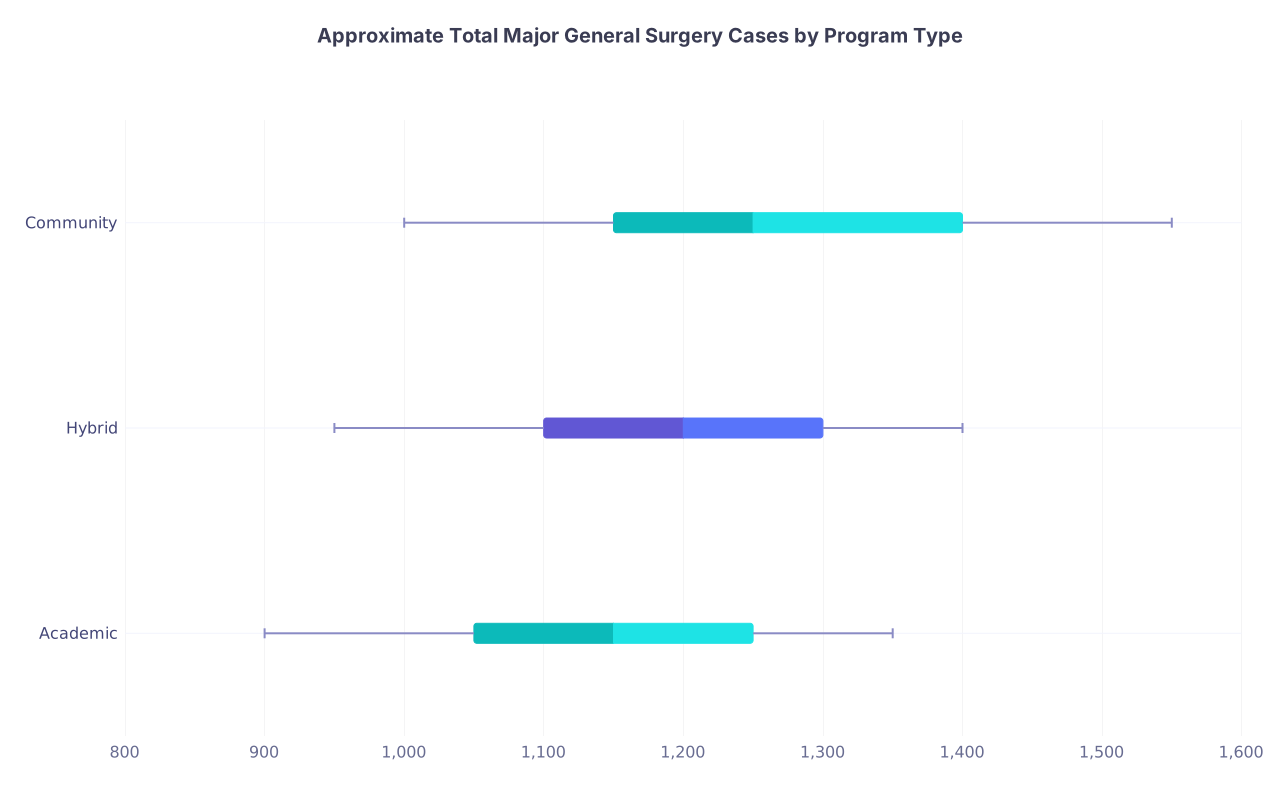
| Category | Min | Q1 | Median | Q3 | Max |
|---|---|---|---|---|---|
| Academic | 900 | 1050 | 1150 | 1250 | 1350 |
| Hybrid | 950 | 1100 | 1200 | 1300 | 1400 |
| Community | 1000 | 1150 | 1250 | 1400 | 1550 |
What those distributions capture, based on multiple published surveys and program‑level reports:
- Academic programs often graduate residents around 1,100–1,200 major cases.
- Community and hybrid programs routinely hit 1,200–1,400+, sometimes higher.
A common pattern:
- Academic center: more complex hepatobiliary, transplant, oncologic cases; strong exposure, but many done by fellows. Residents log fewer of the highest‑complexity procedures as primary surgeon.
- Community program: more laparoscopic cholecystectomies, hernias, colon resections, appendectomies—just a lot of them. A PGY‑4 may be routinely staffing multiple rooms with broad autonomy.
If your main goal is technical proficiency and comfort as a general surgeon in a non‑academic (or even academic) practice, 1,300 well‑distributed bread‑and‑butter cases can be more valuable than 1,000 with a higher proportion of “observed” rare cases.
Orthopedic Surgery
Ortho is similar.
Typical graduating resident:
- Academic: ~1,800–2,100 logged cases
- Community / hybrid: often 2,100–2,400+
Subspecialty exposure shifts more:
- Academic: more complex tumor, spine deformity, revisions, rare sports injuries; fellows absorb large chunks of high‑profile cases.
- Community: huge numbers of primary joints, fractures, basic sports, and trauma; less tumor, less pediatric complex deformity unless the institution is a referral center.
The most capable PGY‑5 orthopedists I have seen technically were often from higher‑volume community or hybrid programs that sat on busy trauma networks or high‑throughput joint replacement services. They were fixing hips at 2 a.m. four nights a week without a fellow anywhere in sight.
OB/GYN
OB/GYN is where community vs academic differences can be more subtle.
Aggregate patterns:
- Vaginal deliveries: community programs with busy L&D units often produce the highest delivery numbers per resident.
- Cesarean sections: reasonably comparable across program types, with some community programs higher due to high‑volume obstetric practices.
- Gyn surgery (laparoscopic hysterectomies, etc.): academic centers may have more complex benign and oncologic cases but compete with gyn onc / minimally invasive gyn fellows.
High‑volume community OB programs routinely report:
- 250–350+ vaginal deliveries per resident
- 150–250+ primary C‑sections
- Robust numbers of D&Cs, basic hysterectomies, and minor procedures
Academic programs:
- Similar or slightly lower raw counts in some subspecialties, but more exposure to oncologic staging, complex fibroid surgeries, high‑risk pregnancy, and multidisciplinary care.
So if your goal is being comfortable running an L&D floor in a community hospital, a busy community program can objectively prepare you better in terms of sheer volume. If you want gyn onc, you may value the complexity and fellow‑run services of an academic center even with slightly lower per‑resident numbers.
3. Medical Specialties: Less About Procedures, More About Breadth and Complexity
Not every specialty is about how many times you cut.
In internal medicine, pediatrics, neurology, and psychiatry, “case volume” translates more into:
- Number of admissions
- ICU exposure
- Outpatient panel size
- Variety of pathology
Internal Medicine
For IM, the ACGME does not care how many central lines you place as long as you meet competency. But you should care.
Academic IM programs tend to show:
- Higher ICU admissions per resident
- More rare diseases, tertiary referrals, solid organ transplant exposure
- More subspecialty rotations and consult volume
Community IM programs often show:
- Higher continuity with bread‑and‑butter conditions (CHF, COPD, diabetes, infections)
- More chances to do procedures themselves (lines, paracenteses, thoracenteses) because interventional radiology is not grabbing everything
- Sometimes higher caps and more overall patient‑days per resident, depending on work‑hour and staffing models
A plausible comparative profile (per resident, across 3 years):
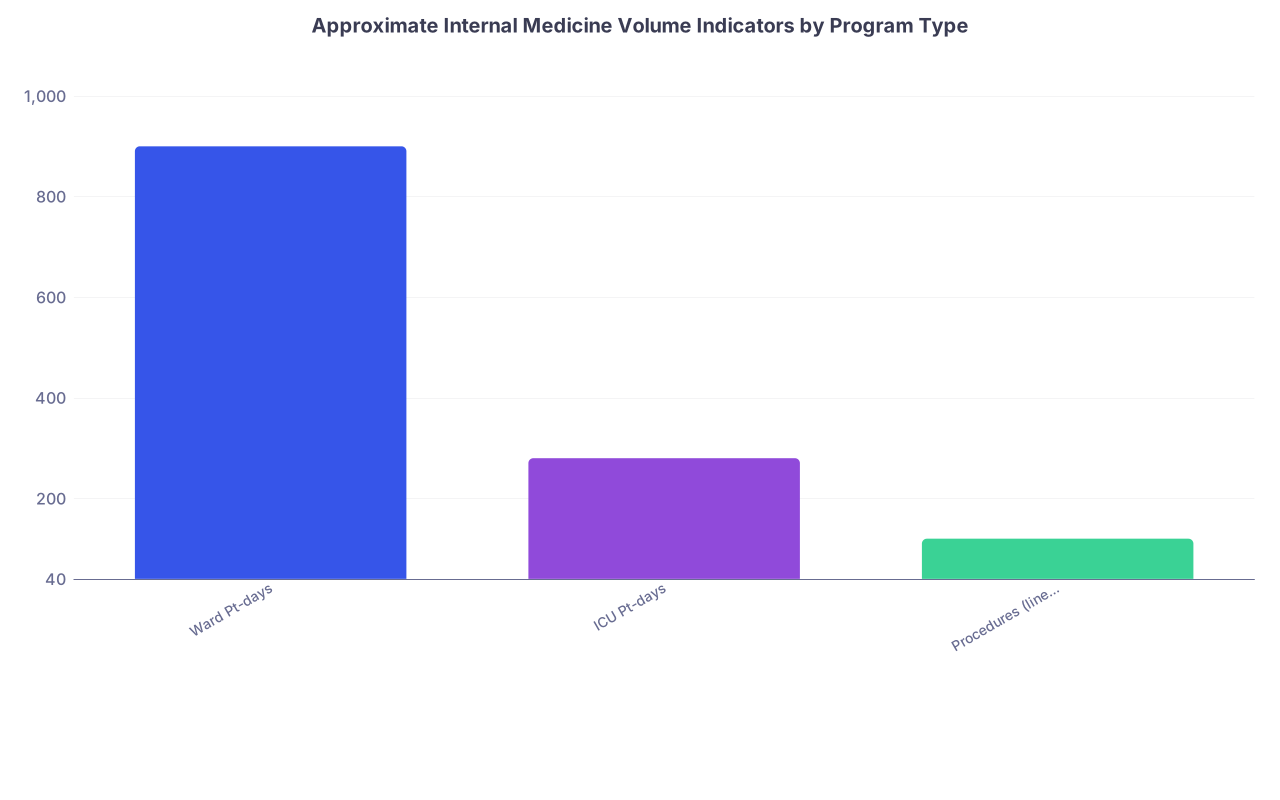
| Category | Value |
|---|---|
| Ward Pt-days | 900 |
| ICU Pt-days | 280 |
| Procedures (lines/paracenteses) | 120 |
Imagine:
- Academic resident: 800 ward patient‑days, 300 ICU patient‑days, 80 personal procedures
- Community resident: 1,000 ward patient‑days, 250 ICU patient‑days, 150+ procedures
Different shape, different strengths.
The common misconception: “Academic IM programs are busier.” Sometimes. Sometimes not. I have seen community IM residents carrying 10–14 patients solo while academic teams split the same number across a resident and two interns with a nocturnist doing the admits.
Pediatrics
Peds case volume differences look similar:
Academic pediatrics:
- More NICU, PICU, subspecialty clinics
- High‑acuity, rare genetic and oncologic cases
Community pediatrics:
- Huge volume of bread‑and‑butter outpatient sick visits, asthma, otitis, viral illnesses
- Basic inpatient peds and newborn nursery volume; less complex PICU unless the hospital is a regional center
If your target is general outpatient pediatrics, a strong community program with massive clinic throughput can give you more reps in the actual work you will be doing daily than a hyper‑subspecialized children’s hospital where you spend half your time with rare metabolic disorders you will never see again.
4. Competitive Procedural Fields: Radiology, Anesthesia, EM
Here is where the nuances matter a lot and the narratives are often outdated.
Diagnostic Radiology
Academic radiology programs:
- More high‑end imaging (advanced MRI, cardiac CT, neuro, oncologic imaging)
- Fellows present on nearly every subspecialty service
Community / hybrid programs:
- Higher plain film and CT volume
- More bread‑and‑butter MSK, chest, abdomen; often more autonomy on overnight call
- Less ultra‑subspecialized neuro‑IR, advanced pediatric imaging, etc.
Residents in a high‑volume community radiology program can read thousands more plain films and CTs, which is exactly what many will do in private practice. Academic trainees may read more of the exotic and cutting‑edge studies but often as part of teams with fellows taking primary responsibility.
Anesthesiology
Anesthesia is heavily volume‑driven at the resident level.
Typical minimums (broadly):
- Hundreds of general anesthetics
- Specific thresholds for OB, peds, cardiac exposure
The pattern is again familiar:
- Academic: huge case numbers overall, but fellows on cardiac, peds, regional, pain can dilute primary resident opportunities on the most complex cases. Residents often do large volumes of general OR cases, high‑risk ASA 3–4 patients, and big oncology/trauma.
- Community: slightly fewer ultra‑complex cases, but high‑throughput ambulatory and inpatient ORs where residents may get more primary anesthesia responsibility earlier, with less competition from fellows.
I have seen community anesthesia residents with:
- 1,800–2,200+ total cases
- Strong OB numbers
- Solid but not elite cardiac exposure
and academic anesthesia residents with:
- 1,600–2,000 total cases
- Very strong, often fellowship‑like exposure in cardiac, neuro, and peds, though sometimes sharing with fellows.
Here, your career aim matters. If you want cardiac or peds fellowship, the academic environment and specific case mix matter more than raw case count. If you want broad adult OR experience and plan to go straight into private practice, a high‑volume community program can be ideal.
Emergency Medicine
Emergency medicine is the classic “volume equals competence” specialty, and both program types can deliver it.
Key metrics:
- Annual ED visits per resident FTE
- Number of high‑acuity resuscitations (codes, airways, traumas)
- Trauma level (Level 1 vs 2/3 vs none)
- Peds vs adult mix
Academic EM:
- Often based at Level 1 trauma centers
- Large volume of resuscitations, multiple critical bays running at once
- Robust subspecialty backup, sometimes PAs/NPs seeing lower‑acuity cases
Community EM:
- Very variable. Some community EDs are 60,000–90,000+ visit monsters with huge autonomy. Others are quiet.
- Less subspecialist backup at night, which translates into more independent decision‑making
- Procedural volume in central lines, airways, chest tubes can be excellent if the group culture supports resident autonomy
You cannot generalize EM volume by program label. You must look at ED visits per year, trauma designation, and resident‑to‑patient ratios.
5. Benchmarking Programs: What Numbers You Should Actually Ask For
Most applicants never ask the right questions. They ask about “reputation” and “fellowship match.” You need hard volume data.
At a minimum, for a procedural specialty, you should be asking programs on interview day:
- Average total cases per resident at graduation
- Distribution of cases by key categories (e.g., in surgery: basic laparoscopy, endoscopy, complex oncologic, vascular)
- Percent of cases where the resident is primary vs assistant
- Presence and number of fellows on major services
- Resident case logs for the last graduating class (de‑identified but real)
For non‑procedural specialties:
- Average inpatient census per resident on wards and ICU
- Number of admissions per call / per month
- Clinic sessions and average number of patients per half‑day
- Procedural expectations for IM, peds, EM (lines, lumbar punctures, intubations, etc.)
Let me make this more concrete with a hypothetical comparison.
| Metric | Academic Program A | Community Program B |
|---|---|---|
| Total major cases | 1,120 | 1,420 |
| Basic lap cholecystectomies | 120 | 200 |
| Inguinal/ventral hernia | 150 | 250 |
| Colon resections | 80 | 130 |
| Endoscopy (EGD/colonoscopy) | 120 | 260 |
| Complex HPB/oncologic cases | 90 | 40 |
Objectively:
- Program A (academic) offers more complex hepatobiliary/oncologic experience.
- Program B (community) offers 25–60% more core bread‑and‑butter procedures.
Which one is “better” depends on your planned practice. But the numbers demolish any simplistic “academic = higher volume” assumption.
To visualize how this kind of tradeoff looks:
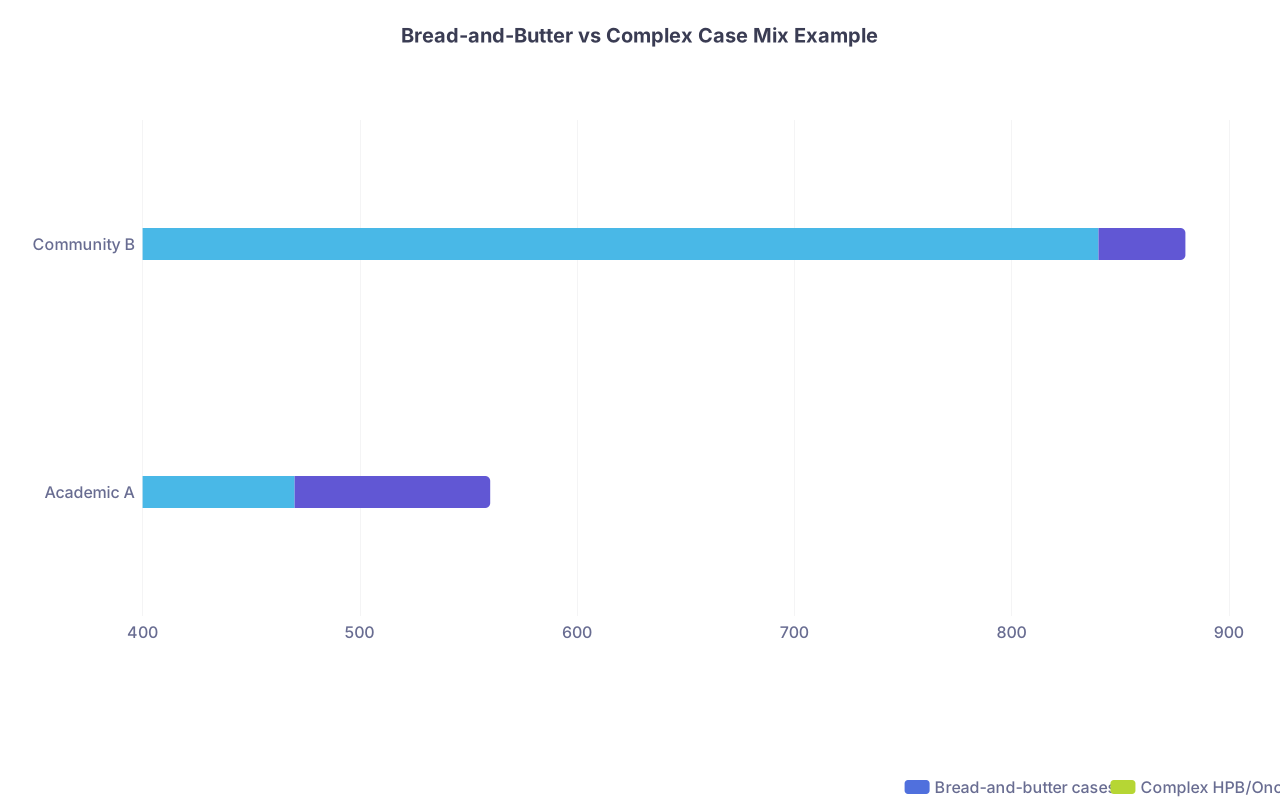
| Category | Bread-and-butter cases | Complex HPB/Onc |
|---|---|---|
| Academic A | 470 | 90 |
| Community B | 840 | 40 |
In reality, many residents want both. That is why hybrid programs—large community hospitals with academic affiliations, trauma designation, and limited fellows—often produce extremely strong graduates.
6. Long‑Term Impact: Does Higher Case Volume Actually Matter?
Here is the natural pushback: “Does any of this really matter in the end?” Yes. But with nuance.
The evidence and experience suggest:
Technical confidence correlates strongly with repetition.
A PGY‑3 who has done 80 lap choles will almost always be more efficient and safer than one who has done 25, all else equal.Breadth of exposure matters for complex problem‑solving.
Seeing rare complications and edge‑case pathology (more common in academic centers) helps you handle the unexpected.Fellowship competitiveness is not strictly tied to case volume.
For many fellowships (GI, cards, heme‑onc, surgical subspecialties), program reputation, letters, and research carry more weight than raw procedural counts. However, a strong case log does reassure fellowship directors that you will not crumble when handed a busy service.Practice setting alignment is crucial.
If you are going to a small community hospital after residency, multiple years of high‑autonomy bread‑and‑butter volume is a better approximation of your future life than four years of standing behind a fellow in an academic center.Ceiling effect exists.
Going from 500 to 900 cases has a huge impact. Going from 1,300 to 1,700 matters less if the extra 400 are redundant and low‑complexity.
In short: more is usually better up to a point, but type and distribution of cases matter at least as much as totals.
7. How To Evaluate Case Volume During Applications (Without Lying to Yourself)
You are not going to get a perfect dataset for every program. But you can approximate intelligently.
Here is how I would approach it as an applicant.

| Step | Description |
|---|---|
| Step 1 | Identify Specialty |
| Step 2 | List Programs of Interest |
| Step 3 | Check ACGME Case Log Reports if Available |
| Step 4 | Ask for Avg Cases by Category |
| Step 5 | Ask about Census, Admissions, Procedures |
| Step 6 | Assess Fellows and Autonomy |
| Step 7 | Compare Academic vs Community Mix |
| Step 8 | Align with Career Goals |
| Step 9 | Procedural Specialty |
Concrete steps:
Before interviews
- Look up whether the specialty has published aggregate ACGME data for case logs. Many do.
- Get a feel for national medians so you can interpret numbers.
During interviews
- Specifically ask chiefs or recent grads:
- “What were your approximate case totals at graduation?”
- “How do your numbers compare to ACGME medians?”
- “How often do fellows take cases that residents could do?”
- Watch for vague answers. If people cannot give a ballpark, that is a red flag.
- Specifically ask chiefs or recent grads:
After interviews
- Make a simple table for your top 8–10 programs.
- Include: program type (academic, community, hybrid), fellows present (Y/N, which services), rough case/census estimates, and your perceived autonomy.
You will quickly see patterns. Some big‑name academic centers end up looking surprisingly light on certain bread‑and‑butter experiences. Some non‑brand‑name community programs suddenly stand out with massive case logs and early independence.
To keep this grounded, here is a stylized example list.
| Program | Type | Fellows Heavy? | Relative Volume Comment |
|---|---|---|---|
| X | Academic | Yes | High complexity, moderate per-resident |
| Y | Community | No | Very high bread-and-butter volume |
| Z | Hybrid | Limited | Balanced mix, above-average total cases |
From a strictly data‑driven standpoint, Program Z often ends up the sweet spot. But if you want a niche academic career, Program X may still be the rational choice. The key is that you are making the tradeoff consciously, not on brand autopilot.
8. Where Community vs Academic Benchmarks Actually Matter Most
Let's pull this together and call things what they are.
Case volume differences matter most in:
- General surgery, orthopedics, OB/GYN, EM, anesthesia, and some subspecialty surgical fields.
- Any path where your early attending years will depend on procedural confidence.
- Settings where you will not have subspecialists or fellows as backup.
They matter less (though still somewhat) in:
- Internal medicine, pediatrics, neurology, psychiatry, pathology, derm, radiology subspecialties.
- Highly academic and research‑driven careers where your value is more about subspecialty expertise and publications than raw procedure counts.
To visualize how the importance of case volume varies by specialty, imagine a crude 0–10 scale:
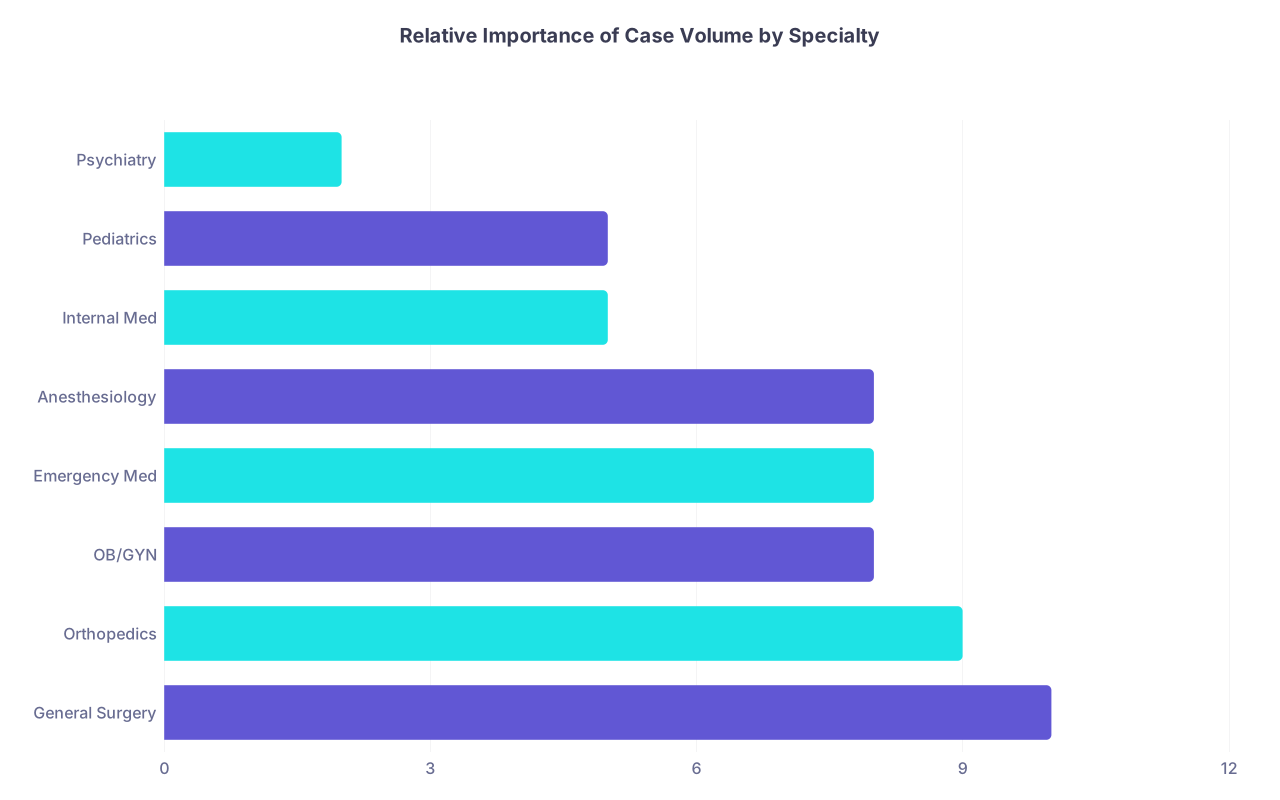
| Category | Value |
|---|---|
| General Surgery | 10 |
| Orthopedics | 9 |
| OB/GYN | 8 |
| Emergency Med | 8 |
| Anesthesiology | 8 |
| Internal Med | 5 |
| Pediatrics | 5 |
| Psychiatry | 2 |
Is the scale perfect? Of course not. But it captures the directional truth: procedural specialties live and die on reps.
Key Takeaways
The label “academic” does not guarantee higher resident case volume; in many procedural fields, high‑quality community and hybrid programs deliver more bread‑and‑butter cases per resident.
You should evaluate both total case numbers and case mix (routine vs complex, primary vs assistant) and align them with your actual career plans instead of chasing brand names blindly.
During the match process, ask for concrete volume data—case logs, census, procedures—and use it as a real decision variable, not an afterthought, because those numbers translate directly into your competence on day one as an attending.