Scenario Opening: Why Your "Support System" Can Differ by Program Type
Imagine it is 6:00 AM. You are sitting in a call room. You have three deliverables hanging over your head: an abstract submission for a national conference, a slide deck for a society talk (AANS, ASA, or similar), and a poster for next week's local departmental meeting. You also have a full clinical schedule and a stack of discharge summaries to finish. This is the reality of residency. The way you survive this gauntlet depends entirely on your program's support system.
Let me break this down specifically. Community programs generally provide practical throughput support. Academic programs provide structured research and protected academic time. But "support" is a heavily abused word in residency brochures. Support is not a vague promise of mentorship. Support means protected time. It means mentorship access. It means operational infrastructure and high-quality feedback.
If you do not understand how your specific program defines and operationalizes support, you will fail to convert your ideas into accepted abstracts and polished talks. You will burn out trying to force an academic workflow into a community environment, or you will drown in bureaucratic friction in an academic one. Recognizing the core contrast between practical throughput and structured research infrastructure is the first step to mastering resident productivity.
Define the Terms: "Resident Abstracts" vs "Society Talks" (What Applicants Misinterpret)
Applicants constantly conflate abstracts and society talks. They are entirely different deliverables requiring distinct skill sets.
An abstract is submission-driven. It is data packaging. You are taking a clinical question, running the numbers, and fitting the results into a rigid 250-word structure. Success here relies heavily on project tracking, methodology, and statistical literacy. You must know how to clean a dataset, run a regression, and format a p-value.
A society talk is oral and lecture-driven. It requires narrative synthesis and evidence integration. Success here relies on clinical credibility, storytelling, and slide discipline. You cannot use the same skill set for both. A brilliant statistician might deliver a society talk that puts the audience to sleep, while a charismatic speaker might submit an abstract that gets rejected for methodological flaws.
When you look at board-style or interview questions regarding resident productivity, they rarely test the final outcome. They test the mechanism of support. They want to know if you understand time-protection, mentorship bandwidth, and workflow logistics. Exam-facing framing focuses on how the environment enables the resident, not just the raw talent of the resident. Recognizing this distinction changes how you evaluate programs and how you plan your own academic year.
Community Programs: Typical Support Patterns (Strengths, Bottlenecks, and the Real Constraints)
Let us look at community programs. I have seen countless residents thrive here, but only when they understand the environment and adapt to its constraints.
Community programs are exceptionally strong in clinical exposure and operational mentorship. You learn by doing. The presentations you give are often case reports, quality improvement initiatives, or morbidity and mortality-style data reviews. The attending physicians know how to run a high-volume service, and they will teach you how to present clinical realities efficiently. You get immediate, practical feedback on patient management.
Here is where community programs bottleneck. You will have limited protected research time. You will likely lack resident-friendly biostatistical resources. The institutional abstract infrastructure is often minimal. You are not going to have a dedicated research coordinator walking you through the IRB process or a statistician waiting to clean your REDCap database.
How do you succeed then? You choose the right projects. Community pathways that succeed rely on outcomes from your own patient panel, QI projects, clinical pathway redesigns, and participation in community-led registries. Do not try to run a multi-center basic science trial. Lean into the high clinical volume. Use the sheer number of patients you see to power retrospective chart reviews or prospective observational cohorts.
Feedback in a community program arrives differently. It is usually high-level coaching rather than continuous draft iterations. An attending will look at your final draft and tell you if the conclusion makes sense. They will not rewrite your methodology section or fix your slide transitions. You must prepare your timeline accordingly. Build in extra weeks for self-editing and peer review before you hand it to your attending. If you wait until the week of the deadline to show them a rough draft, you will miss the submission window.
Academic Programs: Typical Support Patterns (Infrastructure, Mentorship Density, and Draft Iterations)
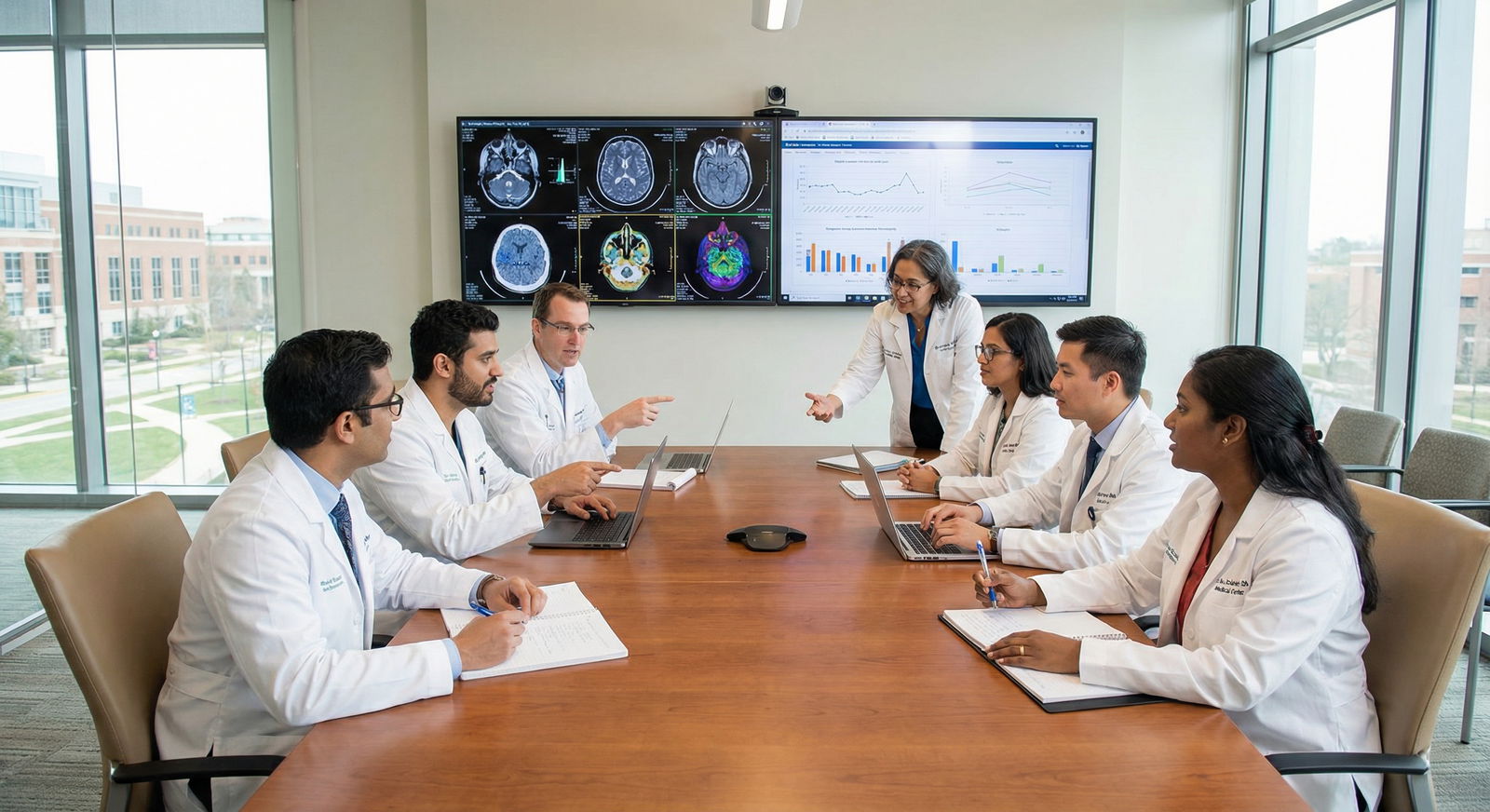
Now, let us dissect academic programs. The infrastructure here is dense. You have abundant mentorship, dedicated research coordinators, high institutional IRB literacy, and direct collaboration with biostatisticians. Feedback cycles are regular and structured.
But do not assume this is a utopia. There are hidden trade-offs. You face intense competition for faculty bandwidth. The requirements for data rigor are much higher, which means your analysis plan must be bulletproof. Approval lead times can actually be longer because the IRB and departmental review boards are heavily burdened. I have watched residents in top-tier academic programs miss abstract deadlines simply because their IRB amendment took three weeks to process. The machine is powerful, but it moves slowly.
What does academic support actually look like on a Tuesday afternoon? It looks like template-based abstract writing. It looks like journal clubs that double as abstract rehearsals, where you present your data and get torn apart by peers before submission. It looks like pre-submission mock reviews where a senior faculty member grills you on your limitations section.
When exam-style questions assess academic environments, they are testing a specific concept: institutional scaffolding reduces friction. It is not just about having talented residents. It is about having a system that removes operational roadblocks so the resident can focus on the science. The program provides the tracks; the resident drives the train.
The Middle Reality: Hybrids, Not Binaries, How to "Read" a Program During the Interview
The binary between "community" and "academic" is mostly a myth. The middle reality is full of hybrids. Many community programs have a specific pocket of research, a single faculty champion, access to a national registry, or a grant-linked QI initiative. Conversely, many academic programs have highly uneven resident support, where only the senior residents or the designated research-track residents get the good projects.
You need to read a program accurately during the interview. Do not ask, "Do you support research?" That is a useless question. Every program director will say yes. Ask about your year-specific outcomes. Ask about the exact pipeline from a clinical case or QI idea to an accepted abstract. Ask how feedback happens on a weekly basis.
For society talks, dig into the logistics. Who helps with slide engineering? What is the rehearsal cadence? How do they help you position the narrative for clinical relevance and data integrity? A great dataset means nothing if your slides are cluttered and your delivery is flat. You need to know if the program has a dedicated simulation center or presentation coach for these exact scenarios.
Demand practical evidence. Ask to see sample resident abstracts. Ask for faculty publication metrics broken down by trainee roles. Look at the meeting calendar and compare it to the rotation schedule. If the major abstract deadline falls during your busiest ICU or trauma month, that is a massive red flag. The schedule dictates the science, not the other way around.
Action-Planning: Build a Timeline That Matches Your Program's Support Model (Year 1-3)
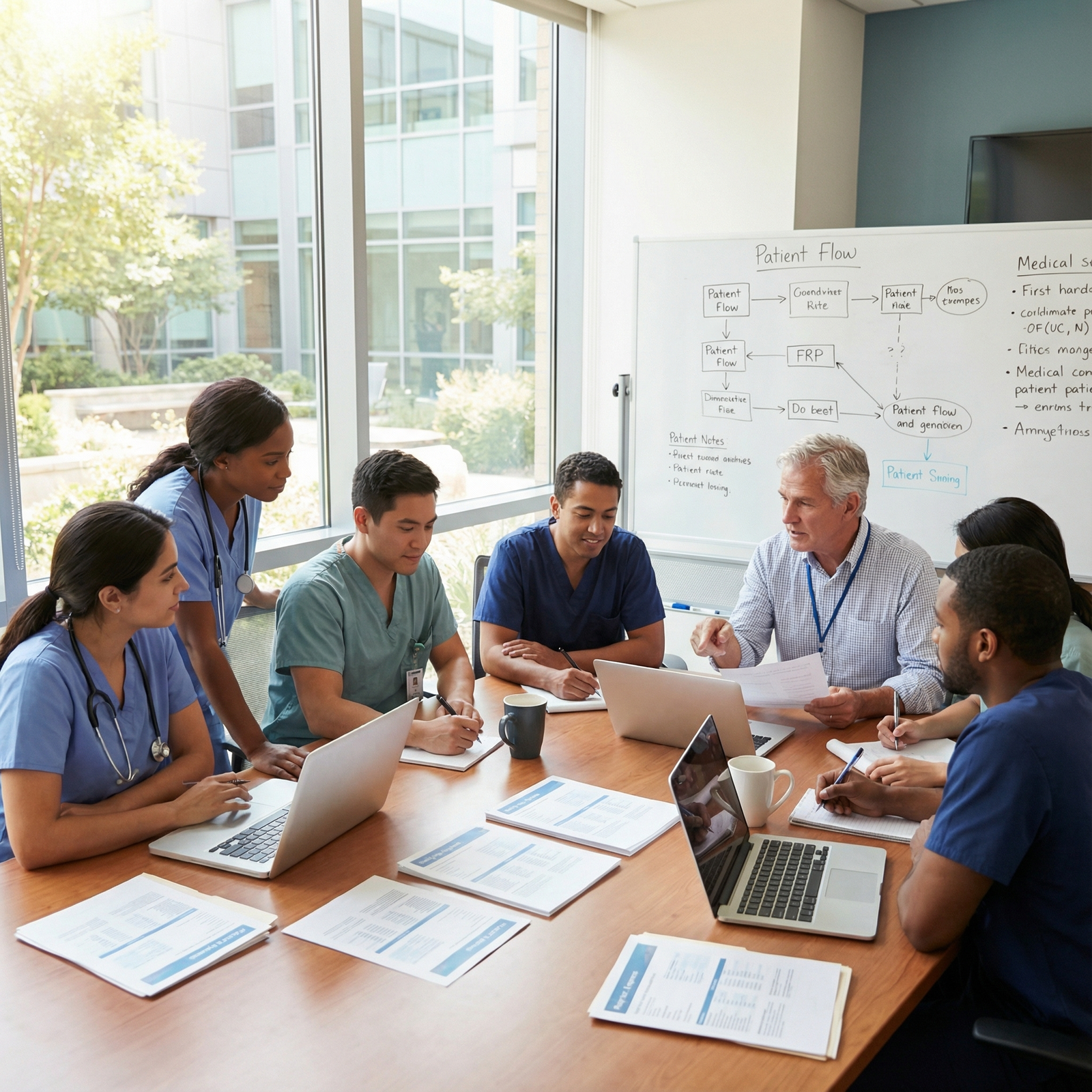
Let us build a timeline that actually works. The core strategy is to treat abstracts and society talks as separate deliverables with entirely different bottlenecks. Abstracts bottleneck on data and methodology. Society talks bottleneck on narrative and visual design. Do not mix the workflows.
Community-Leaning Timeline If you are in a community-leaning program, choose projects that minimize IRB friction. Leverage your patient population quickly. Pre-package your endpoints before you even start collecting data. Schedule structured, hard-stop feedback blocks with your attending. Do not rely on catching them in the hallway between cases. Block out two hours on a Thursday afternoon specifically for draft review.
Academic-Leaning Timeline If you are in an academic-leaning program, lock your mentorship early. Reserve protected time specifically for data extraction and analysis. Plan iterative draft reviews well ahead of the submission deadline. Assume the first draft will be rejected and rewritten. Build in a two-week buffer for the biostatistician to review your analysis plan before you write the results section.
Quality Checklist for Both For both environments, your quality checklist must be rigid.
- Endpoints must tie directly to the clinical question.
- Analysis plan must be defensible and pre-specified.
- Conflict-of-interest statements must be clear and accurate.
- Society talk must be tailored to the specific audience of that society (e.g., surgical technique vs. medical management).
Closing Action Steps Here are your immediate action steps. First, identify one data-grounded project for an abstract and one clinical narrative for a society talk this cycle. Second, ask your program director for the exact operational workflow for IRB and data extraction. Third, commit to a reverse-engineered timeline starting 12 weeks before the deadline. Stop waiting for the perfect project. Execute the feasible one.