

Can a DO still match into an ACGME residency after a board exam failure?
Yes. Absolutely. A failed COMLEX or USMLE attempt does not end your residency chances. But it does end the fantasy that you can apply casually and hope the process forgives you. It won't.
I've seen plenty of DO applicants match after a board failure. I've also seen applicants waste an entire cycle because they treated a red flag like a minor inconvenience. That's the mistake. A failure means you need a tighter plan, better execution, and stronger proof that the problem is behind you.
Here's the real issue: programs vary a lot. Some will review your whole file. Some will auto-screen any prior failure before a human ever sees your name. So your job isn't just to "apply broadly." Your job is to reduce automatic rejections and maximize interviews at programs willing to actually consider you.
For this article, a "board exam failure" means:
- a failed COMLEX level
- a failed USMLE step
- multiple attempts that show up on your transcript
This isn't a pep talk. It's a 7-step plan.
Step 1: Assess the damage honestly before you build your application list
Start with the truth. Not the truth you'd like to tell yourself. The actual truth.
A single failed exam followed by a strong pass is one problem. Multiple failures are a different problem entirely. Programs see that difference immediately.
Break your situation down clearly:
- COMLEX failure only
- USMLE failure only
- One failure, then pass
- More than one failure
- Failures across both exam tracks
Then inventory the rest of your application. All of it.
Risk factors:
- competitive specialty choice
- visa need
- limited geography
- low class rank
- weak clinical comments
- professionalism issues
- late application
- no meaningful letters
- no audition rotation strategy
Offsetting strengths:
- strong rebound score
- honors or excellent clerkship performance
- class standing better than your exam suggests
- strong Sub-I
- known work ethic
- solid research if your field values it
- geographic ties
- enthusiastic letters from people programs trust
This is where a lot of applicants get sloppy. They focus only on the failed exam and ignore the rest of the profile. Bad move. A board failure plus weak letters is much worse than a board failure plus a killer Sub-I and a program-specific champion.
Ask your dean's office, specialty advisor, or student affairs team a blunt question: How did prior graduates with my profile actually do? Not "students generally." Not "people sometimes match." People like you. Same specialty. Same exam issue. Same region if possible.
That's how you set your strategy. Realistic targeting starts with an accurate profile, not wishful thinking.
Step 2: Retake smart and prove the failure was an isolated event
A pass helps. A convincing rebound helps a lot more.
That's the standard. You don't just want to erase the failure. You want to show programs it was a one-time event, not a preview of future licensing trouble.
Here's what a good remediation plan looks like:
- a clear timeline
- protected study time
- question bank targets
- NBME or COMSAE benchmarks before you register
- tutoring if your first plan clearly didn't work
- a test date based on readiness, not panic
Don't rush a retake just because you're embarrassed. That's how people fail twice. And a second failure is where this gets much uglier.
At the same time, don't leave the failure unresolved if your timeline allows correction. An unresolved failure closes doors fast. Program directors don't like uncertainty, and an open testing problem reads as risk.
A few practical rules:
Diagnose the first failure honestly. Was it content? Endurance? Anxiety? Poor scheduling? Trying to study during a brutal rotation block? Family crisis? If you don't know why you failed, your retake plan is guesswork.
Set objective readiness thresholds. "I feel better this time" is useless. I want to hear, "I was consistently above my target on timed blocks for four weeks and hit my benchmark on practice exams."
Stop taking extra exams casually. This is a common DO applicant mistake. They pass COMLEX, take USMLE "just to keep options open," then post a failure they didn't need. That's not strategic. That's self-sabotage.
Understand how programs interpret the exam type. If you failed USMLE but passed COMLEX well, some ACGME programs will still care a lot about the USMLE failure. Others, especially those comfortable with DO applicants, may focus more on COMLEX. Either way, the failure is visible. Don't pretend it isn't.
The strongest recovery pattern is simple:
- fail once
- retake after real remediation
- pass solidly
- pair it with good clinical performance
That's the pattern that calms people down.
Step 3: Choose specialties and programs based on filters, not hope
This step matters more than applicants want to admit.
Many ACGME programs use hard filters for failed board attempts. Not all. But enough. Which means you can spend thousands applying to places that will never review your application. That's not broad strategy. That's donating money to ERAS.
Build your list using evidence:
- Residency Explorer
- program websites
- faculty advisors
- dean's office data
- recent graduates from your school
- direct outreach when appropriate
You're trying to answer one question: Will this program actually consider someone with my exam history?
Build a tiered list:
1) Realistic targets
Programs where:
- your specialty choice fits your profile
- prior failures may still be reviewed
- your geographic ties or school history help
- your audition or connections could matter
2) Reasonable reaches
Programs that are stronger or more selective, but:
- have interviewed imperfect applicants before
- value strong rotations
- have a track record with DOs
- may respond to a strong rebound score
3) Backups
Programs or specialties with:
- lower screening rigidity
- broader position numbers
- less geographic competition
- a better fit for an applicant rebuilding credibility
And yes, specialty competitiveness matters. A board failure is much harder to overcome in highly competitive fields. That's not cruelty. That's math. If a specialty has more qualified applicants than slots, red flags matter more.
I tell students this all the time: don't confuse "I love this specialty" with "this is a viable strategy this cycle." If your profile is fragile, your specialty list needs to reflect that.
Also, broad isn't enough if your broad list is dumb.
A smart list:
- includes programs with a reason to say yes
- balances geography
- accounts for community and university-affiliated programs
- avoids overloading with programs known to filter hard
- is reviewed by someone who's seen actual match outcomes

Step 4: Strengthen every part of the file that programs can still say yes to
You can't remove the failed attempt. Fine. Build a file that gives people better reasons to invite you anyway.
What still moves the needle:
- strong core clerkship evaluations
- a strong Sub-I or audition
- letters that actually say something specific
- clean professionalism record
- thoughtful personal statement
- relevant research, if your field cares
- no weird gaps, no sloppy errors, no late materials
This is where execution needs to be cleaner than average. A student with no red flags can survive a mediocre letter or a late document. You probably can't.
Audition rotations matter a lot in the right specialties. If a program is willing to consider you, a strong month in person can override a rough first impression on paper. I've seen this happen. The attending says, "Yes, there was a failure, but this student worked hard, took feedback well, showed up early, knew their patients, and functioned like an intern." That kind of advocacy is gold.
Ask for letters from people who can comment on:
- reliability
- teachability
- maturity
- work ethic
- clinical judgment
- readiness for residency
Not generic praise. Not "pleasant student." That's wallpaper.
And don't try to hide the failure. Programs will see it. Your goal is to surround it with evidence that you're prepared, stable, and worth the risk.
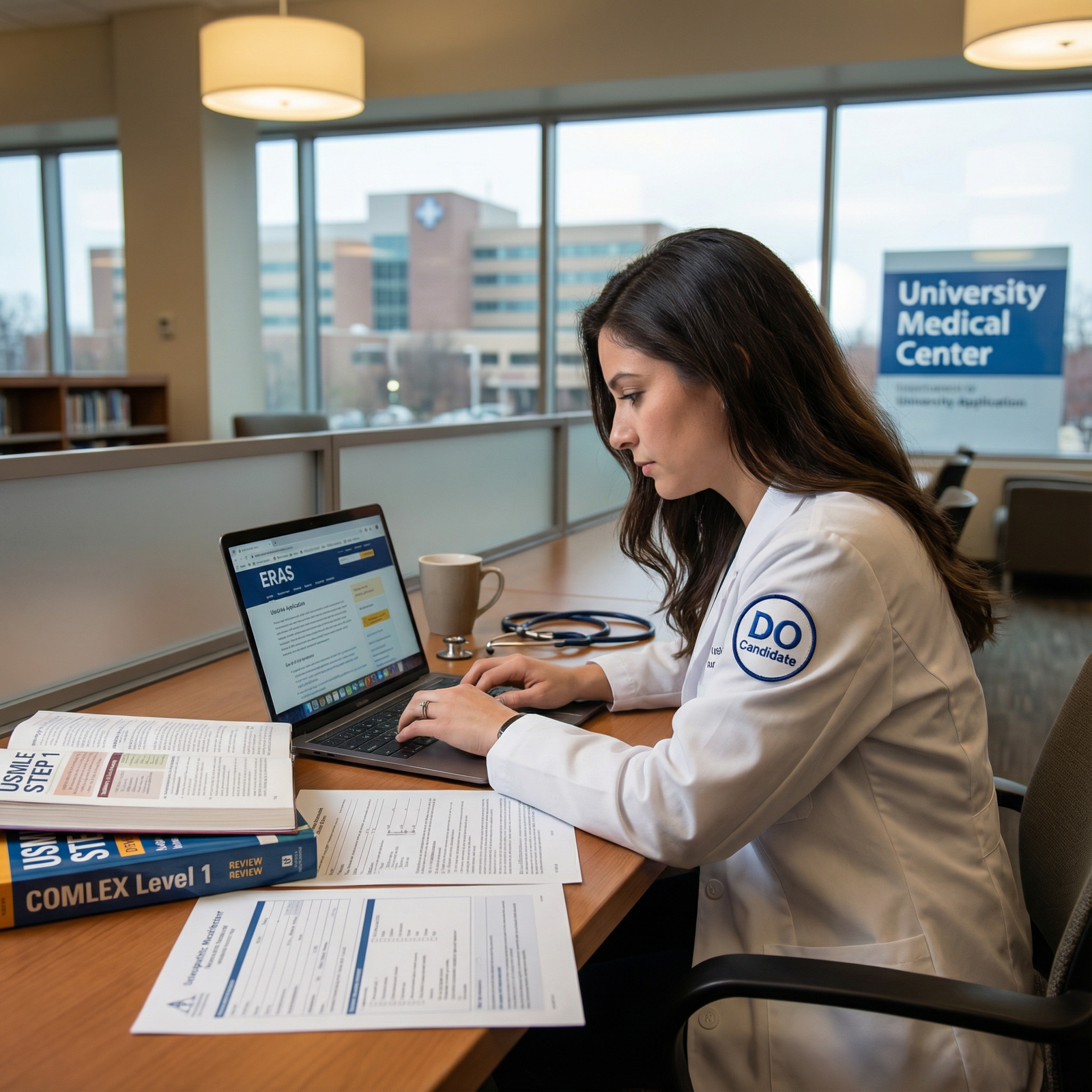
Step 5: Address the failure directly in your application materials and interviews
Here's the formula:
- say what happened
- take responsibility
- explain what changed
- show objective evidence of improvement
That's it. Short. Clean. Adult.
A bad explanation sounds defensive, dramatic, or evasive:
- blaming the exam
- blaming the school
- oversharing personal chaos
- acting like the failure was meaningless
- talking so long about it that it becomes your entire identity
A good explanation sounds like this:
"I failed Level 1 on my first attempt. I underestimated the transition from coursework to board-style preparation and didn't use objective benchmarks before sitting for the exam. I changed my study plan, used timed question blocks and practice assessments to confirm readiness, and passed on retake. Since then, I've also performed strongly in my clinical rotations, which better reflects how I function in patient care settings."
That's enough.
Prepare two versions:
- 30-second version for quick interview answers
- 2-minute version for deeper follow-up
If there were legitimate circumstances like illness, grief, or a family crisis, mention them briefly and factually. Don't ask for pity. Programs want accountability and recovery, not a courtroom defense.
Then pivot. Fast.
Your interview answer should end on:
- resilience
- improved systems
- stronger discipline
- better time management
- successful performance afterward
The failure is part of your story. It should not be the whole story.
For more on handling this topic well, see guidance on discussing setbacks in interviews.
Step 6: Apply early, communicate strategically, and use signal-like opportunities wisely
Operational discipline matters more when you have a red flag.
That means:
- submit ERAS on time
- don't leave documents incomplete
- make sure updated scores post as early as possible
- assign letters correctly
- avoid careless formatting and timeline errors
A board failure already gives programs a reason to hesitate. Don't add another.
Strategic communication can help if it's targeted and real. Good reasons to contact a program:
- you posted a strong retake score
- you completed a strong audition there
- you have a serious geographic tie
- a faculty mentor has a legitimate connection
- the program aligns clearly with your goals and background
Bad communication:
- mass emailing everyone
- sending vague "I'm very interested" notes
- sounding desperate
- writing messages no one reviewed
If your specialty uses preference signaling or similar interest tools, use them wisely. A red-flag applicant needs every credible indicator of fit. Programs are much more likely to give an imperfect applicant a closer look when the interest is specific and believable.
Have an advisor review your emails. Seriously. One overly long, awkward, needy message can do more harm than silence.
Step 7: Build parallel backup plans before interview season starts
Do this early. Not after interview invites come in light and panic sets in.
A backup plan isn't pessimism. It's what competent adults do when risk is obvious.
Your backup options might include:
- dual applying
- preparing for SOAP
- adding a less competitive specialty
- broadening geography
- considering preliminary positions where appropriate
- delaying application to strengthen the file if you're simply not ready
Set decision thresholds ahead of time. Example:
- If I have very few interviews by a certain date, I add programs.
- If I have almost no traction in my preferred field, I activate dual-apply plans.
- If my retake timeline is too late and the profile is weak, I consider waiting and rebuilding properly.
I've watched students resist backup planning because they think it shows weakness. That's backwards. Refusing a backup is what weak planning looks like.
If you may need to reapply, know now what you'd do:
- another audition rotation
- stronger letters
- more clinical experience
- focused research
- different specialty targeting
- improved advising support
The question isn't whether your application is perfect. It isn't. The question is simpler:
What is the best next step you can take today so programs see more than one failed exam?
Key takeaways
- A single board failure doesn't end a DO applicant's ACGME chances, but it does demand a more disciplined plan.
- The best recovery pattern is straightforward: honest assessment, solid retake performance, realistic specialty targeting, and a polished file everywhere else.
- Don't waste applications on programs that auto-screen failures.
- Your explanation should be brief, accountable, and backed by evidence.
- Build backup plans before the season starts, not after things go sideways.


