
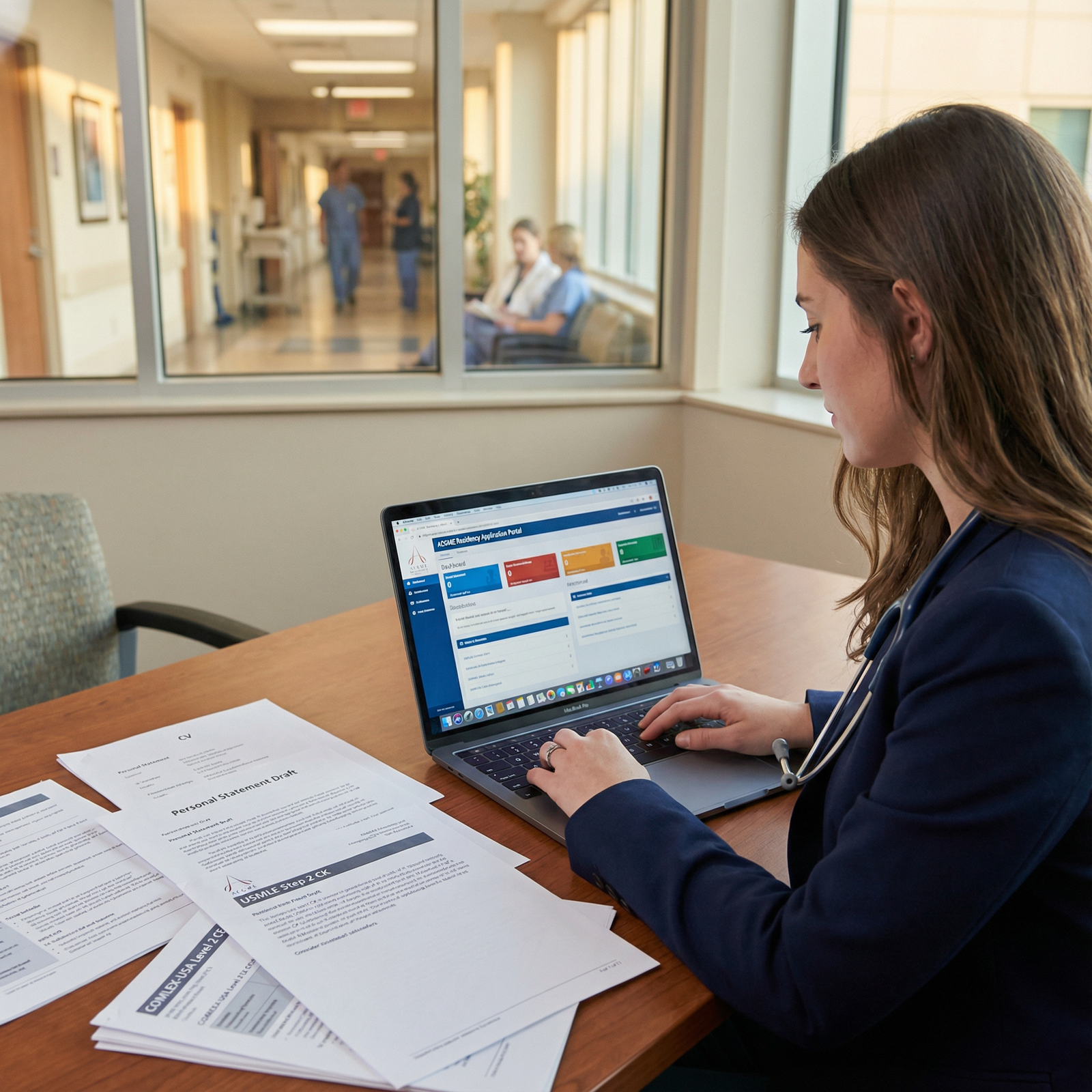
Cracking the Code: Advanced ACGME Application Strategies for DO Students
The transition to a single accreditation system under the Accreditation Council for Graduate Medical Education (ACGME) has fundamentally reshaped the residency landscape for osteopathic medical graduates. DO students now compete side-by-side with MD students for most residency positions in the United States, opening doors but also creating new challenges.
To stand out in competitive ACGME residency applications, DO students must understand the system’s expectations, highlight the strengths of osteopathic training, and make deliberate, data-informed decisions at every step. This guide expands on the core strategies for DO applicants and provides practical, modern, and specialty-relevant application strategies tailored to the current medical education environment.
Understanding the Modern ACGME Landscape for DOs
What Is the ACGME and Why It Matters for DOs
The ACGME is the primary accrediting body for graduate medical education in the United States. It:
- Sets program requirements for all ACGME-accredited residency and fellowship programs
- Monitors program quality and resident outcomes
- Defines competency milestones and evaluation standards
For DO students, this means:
- One main accreditation system: Most residencies, including those historically osteopathic, now function under ACGME oversight.
- Increasing DO representation: DOs now fill a substantial proportion of residency positions in several specialties, particularly in primary care and community-based programs.
- Standardized expectations: Whether you are a DO or MD, programs evaluate you against similar benchmarks: academic performance, board exams, clinical excellence, professionalism, and potential as a resident.
Understanding how ACGME programs think—what they value, how they assess applicants, and where DOs commonly match—helps you position your application strategically.
DO vs. MD Training: Clarifying the Differences and Your Unique Value
While DO and MD students share many core educational components—basic science foundations, clinical rotations, standardized testing, and professional development—osteopathic training offers distinct attributes you can leverage.
Key differences you can highlight in ACGME applications:
Philosophical Approach
- DOs are trained in a holistic, patient-centered model that emphasizes prevention, lifestyle, and the interrelationship of structure and function.
- This mindset aligns particularly well with primary care, sports medicine, physical medicine and rehabilitation (PM&R), and other longitudinal-care specialties.
Osteopathic Manipulative Treatment (OMT)
- DOs learn hands-on diagnostic and therapeutic techniques that can help manage musculoskeletal, somatic, and some systemic conditions.
- In residency applications, you can position OMT as:
- A tool to improve patient comfort and function
- A non-pharmacologic option during the opioid crisis
- A method to build trust and rapport with patients
Dual-Board Exam Experience (COMLEX and USMLE)
- Many DO students now take both COMLEX and USMLE. Having both scores:
- Increases program comparability
- May open doors in more competitive specialties or academic centers
- If you only take COMLEX, you’ll need to be more deliberate about which programs truly understand and accept COMLEX scores.
- Many DO students now take both COMLEX and USMLE. Having both scores:
Your goal: articulate how your osteopathic training makes you not just equivalent to MD applicants, but uniquely equipped to meet program and patient needs.
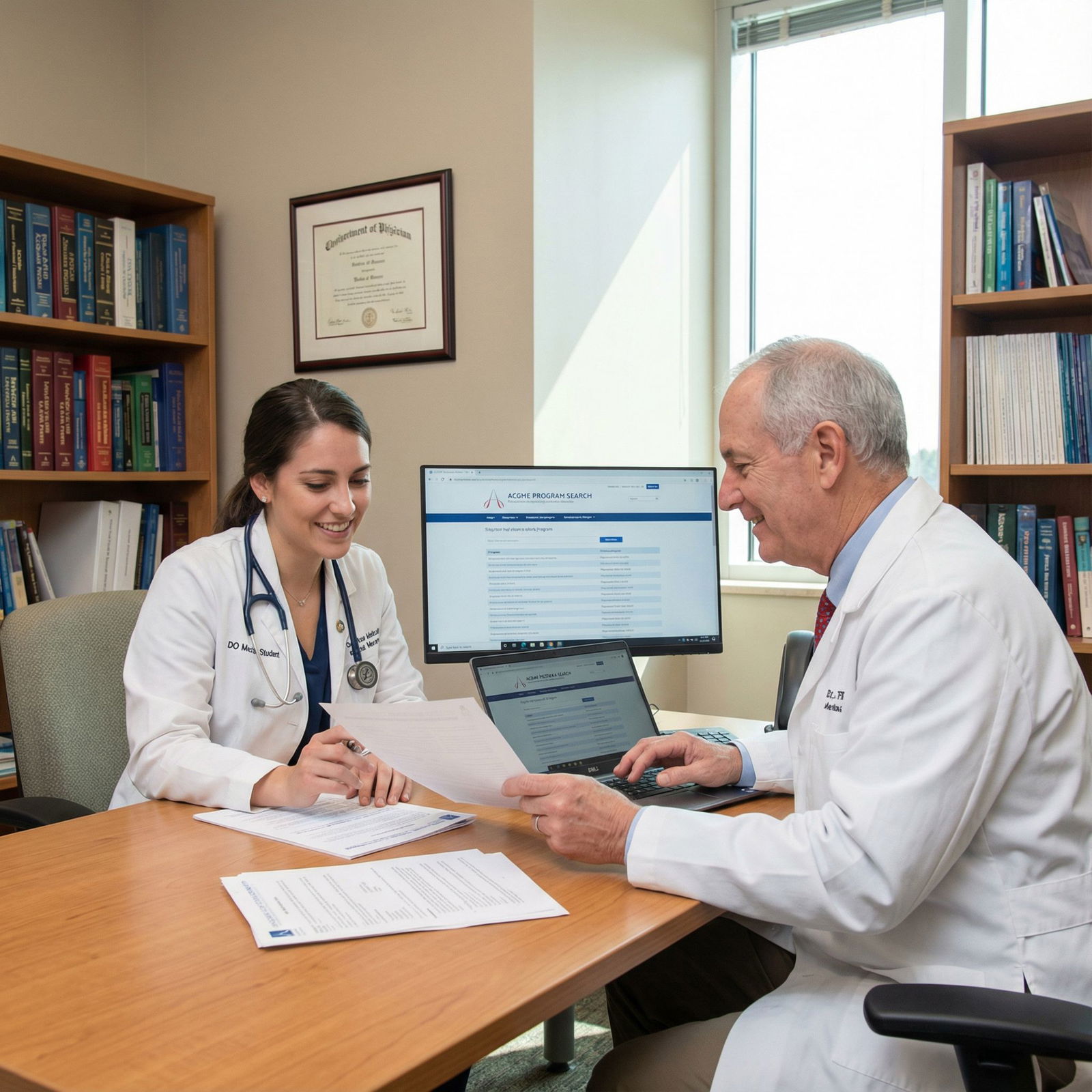
Mastering the Core Components of ACGME Residency Applications
1. Navigating ERAS and the NRMP Match as a DO Applicant
ERAS: Your Central Application Platform
The Electronic Residency Application Service (ERAS) is where you assemble and submit your residency applications. For DO students:
Key ERAS components to optimize:
Education and Experience Sections
- Clearly label osteopathic-related activities (OMT clinic, osteopathic organizations, OMM tutoring).
- Use active verbs and outcome-focused descriptions:
- “Led weekly OMT clinic serving 20+ underserved patients monthly; improved access to non-pharmacologic pain management.”
USMLE and/or COMLEX Scores
- Enter board scores accurately and consider including a short explanation in your personal statement or experiences if you:
- Took USMLE later than typical
- Have a large score discrepancy
- Improved significantly on later exams
- Enter board scores accurately and consider including a short explanation in your personal statement or experiences if you:
MSPE (Dean’s Letter)
- Ensure your medical school submits this on time.
- If your MSPE format is less known to ACGME programs (common for some osteopathic schools), use your personal statement and letters to contextualize your strengths.
NRMP: Understanding the Match Algorithm and Strategy
The National Resident Matching Program (NRMP) runs the Match, pairing applicants and residency programs based on rank lists.
For DO students, strategic use of the Match includes:
Applying Broadly but Intentionally
- Combine programs with a track record of DO friendliness (use NRMP data, FREIDA, program websites, and alumni insight) with a stretch list of more competitive programs.
- Consider geographic flexibility—many DOs match well in community and regional academic centers.
Knowing Specialty-Specific DO Trends
- Primary care specialties (family medicine, internal medicine, pediatrics) generally have robust DO representation.
- Some surgical and competitive specialties (dermatology, plastics, ENT, neurosurgery) may be more challenging but not impossible with strong metrics, research, and mentorship.
- Use recent NRMP Charting Outcomes (MD and DO) and specialty society data to understand realistic score ranges and match probabilities.
2. Crafting a High-Impact Personal Statement as a DO
Your personal statement is one of the most powerful tools to convey what numbers cannot. For DO students in ACGME applications, it serves two important functions:
- Show why you’re an excellent fit for your chosen specialty and individual programs.
- Subtly or explicitly explain how osteopathic training enriches your approach to patient care.
Core Elements of a Strong DO Personal Statement
A Clear, Specialty-Focused Narrative
- Demonstrate how your clinical experiences led you to this specialty.
- Use 1–2 specific patient or rotation stories that:
- Illustrate your clinical growth
- Showcase empathetic communication
- Highlight use of osteopathic principles when relevant
Thoughtful Integration of Osteopathic Identity
- Instead of repeating generic lines about “mind, body, spirit,” give concrete examples:
- Describing a case where your OMT skills reduced a patient’s pain and built trust.
- Explaining how your training in functional anatomy changed how you approach musculoskeletal complaints on inpatient services.
- Instead of repeating generic lines about “mind, body, spirit,” give concrete examples:
Evidence of Reflection and Resilience
- If you faced challenges (board scores, personal hardship, non-traditional background), frame them as:
- Insightful learning experiences
- Motivation for improvement
- Programs value self-awareness and growth, especially in applicants with diverse training backgrounds.
- If you faced challenges (board scores, personal hardship, non-traditional background), frame them as:
Tailoring Without Rewriting from Scratch
- Use a core statement for each specialty, then customize:
- The final paragraph to align with program characteristics (academic vs. community focus, underserved care, research emphasis).
- Specific mentions such as “I seek a program with robust osteopathic recognition and faculty who value OMT” when applicable.
- Use a core statement for each specialty, then customize:
3. Demonstrating Leadership, Service, and Professional Engagement
ACGME programs look beyond test scores; they want residents who will enrich their culture, mentor juniors, and serve communities. DO students often excel in these areas.
High-Value Leadership and Extracurricular Experiences
Osteopathic Organizations and Roles
- Campus chapter of SOMA or specialty interest groups with osteopathic tracks.
- OMM/OMT tutor or teaching assistant roles.
Community and Advocacy Work
- Free clinics, health fairs, school health education, opioid safety initiatives.
- Projects addressing social determinants of health—especially powerful in family medicine, pediatrics, and internal medicine.
Quality Improvement (QI) and Systems-Based Roles
- Participation in QI projects during rotations (e.g., improving hypertension follow-up, reducing readmissions).
- Presenting QI posters at regional or national meetings.
In your ERAS entries and interviews, connect these experiences to ACGME core competencies: patient care, medical knowledge, systems-based practice, practice-based learning, professionalism, and communication.
4. Securing Strong, Specialty-Relevant Letters of Recommendation (LORs)
Letters of recommendation carry significant weight in ACGME residency applications, particularly for DO students who may be unknown quantities to some programs.
Optimal LOR Strategy for DO Applicants
Prioritize Letters from ACGME-Affiliated or Well-Known Faculty
- At least one letter from a physician in your chosen specialty who:
- Supervised you directly in clinical settings
- Can speak to your medical decision-making, teamwork, and growth
- If possible, secure letters from faculty with experience training both DO and MD residents—they often understand how to “translate” your strengths.
- At least one letter from a physician in your chosen specialty who:
Balance Osteopathic and Allopathic Perspectives
- A letter from an osteopathic physician who knows you well can highlight:
- Your commitment to osteopathic principles
- Your OMT skill and holistic approach
- A letter from an MD attending may carry additional weight at historically MD-dominant academic centers.
- A letter from an osteopathic physician who knows you well can highlight:
Make It Easy for Recommenders to Advocate for You
- Provide each recommender with:
- Your CV
- A draft of your personal statement
- A short “brag sheet” with:
- Specific patients or moments you valued under their supervision
- Career goals and intended specialty
- Attributes you hope they can address (work ethic, compassion, clinical reasoning)
- Provide each recommender with:
Follow up professionally, give ample time (at least 4–6 weeks before deadlines), and send a thank-you note after submission.
Building a Competitive Profile: Research, Networking, and Specialty-Specific Strategies
5. Research and Scholarly Activity for DO Applicants
Research is not just for highly competitive specialties; it increasingly matters across the board, especially at academic ACGME programs.
Practical Research Options for DO Students
Retrospective Chart Reviews or QI Projects
- Often more accessible at community or osteopathic hospitals.
- Can result in posters, presentations, and sometimes publications.
Case Reports Linked to OMT or Unique Clinical Cases
- Highlight the intersection of osteopathic principles with specific disease presentations.
- Great stepping stone if you have limited prior research experience.
Multicenter or Virtual Collaborations
- Join national research collaboratives (e.g., through specialty societies).
- Participate in online research networks or initiatives led by academic centers.
When listing research in ERAS, focus on:
- Your specific role (data collection, analysis, writing)
- Skills gained (critical appraisal, statistics, patient recruitment)
- Tangible outputs (abstracts, posters, manuscripts under review or accepted)
6. Strategic Networking and Mentorship in the ACGME Environment
Mentorship and networking can be particularly impactful for DO students entering traditionally MD-dominated spaces.
Effective Networking Strategies for DO Students
Join National and Specialty Societies
- American Osteopathic Association (AOA)
- Specialty-specific groups with osteopathic sections (e.g., ACOFP, ACOI, ACOEP)
- MD-majority societies that welcome DO students (e.g., ACP, AAFP, ACC)
Attend Conferences (Virtual and In-Person)
- Present posters or cases whenever possible.
- Introduce yourself to program representatives at residency fairs.
- Ask focused questions: “How does your program support DO residents?” “What has helped DO applicants succeed in your Match?”
Leverage Alumni Networks
- Ask your school’s alumni office or career services for contact with DO graduates in your desired specialty or region.
- Request short, structured meetings (15–20 minutes) to ask about:
- Their match experience
- DO-friendly programs
- Pitfalls they see DO students encounter
Use Social Media Professionally
- LinkedIn and X (Twitter) can connect you with:
- Program directors
- Residents who share insights about their training
- Share professional content only—cases (appropriately anonymized), reflections, research, and advocacy.
- LinkedIn and X (Twitter) can connect you with:
Mentorship can significantly influence your letters, specialty choice, program list, and confidence going into interviews.
7. Interviewing as a DO in ACGME Programs
Interview day is your chance to humanize your application and clearly convey your osteopathic identity as an asset.
Preparation Focus Areas
Common Interview Themes
- Why this specialty and why this program?
- Discussing challenging clinical situations and your role.
- Times when you made a mistake or received constructive feedback.
- How you handle stress, workload, and conflict.
Special DO-Focused Questions to Anticipate
- “Why did you choose osteopathic medicine?”
- “How do you integrate OMT into patient care?”
- “How do you see your osteopathic background benefiting our program?”
Prepare concise, confident responses that:
Emphasize patient-centered outcomes and team-based care
Avoid defensiveness or DO-vs-MD comparisons
Frame OMT as an added tool—not something you “must” use with every patient
Mock Interviews
- Conduct with:
- Your school’s career office
- Faculty (ideally both DO and MD)
- Residents or recent graduates in your specialty
- Practice both behavioral and “tell me about yourself” style questions.
- Conduct with:
Professionalism and Virtual Etiquette
- For virtual interviews:
- Stable internet, neutral background, good lighting, and eye-level camera.
- Professional attire—even if interviewing from home.
- For virtual interviews:
8. Constructing and Ranking a Smart Program List
The Match algorithm favors your preferences, so your ranking strategy matters significantly.
Constructing Your Initial Application List
Use Multiple Data Sources
- NRMP’s Charting Outcomes for DO and MD graduates.
- FREIDA and program websites to confirm:
- COMLEX acceptance
- DO resident presence
- Program size and structure
- Alumni outcomes from your medical school.
Tier Your Programs
- “Reach” programs: Highly competitive or academic-heavy programs where your metrics may be below average but not disqualifying.
- “Target” programs: Programs where your scores and experiences align with or slightly exceed the average.
- “Safety” programs: DO-friendly institutions or regions, community-based programs, smaller centers.
Ranking Programs After Interviews
Rank by Fit, Not Ego
- Consider:
- How residents seemed (happy, supported, diverse, included DOs).
- Faculty mentorship and teaching culture.
- OMT and osteopathic recognition, if important to you.
- Geographic and personal life considerations.
- Consider:
Don’t Try to Game the Algorithm
- Rank in your genuine order of preference.
- Don’t downgrade highly desired programs just because you think they’re “too competitive”—if you interviewed there, you’re already in contention.
FAQs: ACGME Residency Applications for DO Students
1. Do ACGME programs view DO and MD applicants differently?
Many ACGME programs now consider DO and MD applicants on nearly equal footing, especially in primary care and community-based specialties. Differences can still exist in some highly competitive or historically MD-dominated fields, but:
- Strong board scores (COMLEX ± USMLE), solid clinical evaluations, and robust letters can minimize bias.
- Programs with existing DO residents or osteopathic recognition are more likely to be comfortable evaluating osteopathic applicants.
- Your job is to clearly communicate your training, skills, and strengths through your application, not to assume disadvantage.
2. Should I take the USMLE in addition to COMLEX as a DO student?
This is highly specialty- and program-dependent:
- More important if:
- You’re aiming for competitive specialties (e.g., dermatology, radiology, anesthesiology, emergency medicine, surgical subspecialties).
- You’re targeting academic centers with historically MD-heavy cohorts.
- Less critical if:
- You are focused on primary care or DO-friendly specialties.
- You apply largely to programs that explicitly state COMLEX-only is acceptable.
Discuss with advisors who know your specific scores, target specialties, and school’s match history.
3. How can I best highlight OMT in my ACGME residency application?
You can integrate OMT strategically by:
- Including an OMT-related leadership or clinical experience in ERAS (e.g., “OMM clinic leader,” “OMT tutor”).
- Using your personal statement to describe a patient encounter where OMT:
- Complemented standard care
- Strengthened rapport
- Reduced symptoms or opioid use
- Discussing how you might incorporate OMT in residency (e.g., continuity clinics, pain management, sports medicine).
Keep OMT framed as a flexible tool adaptable to program context, not a rigid requirement.
4. Are there certain specialties or programs that are more DO-friendly?
In general, DOs match well into:
- Family medicine, internal medicine, pediatrics
- Emergency medicine, psychiatry, PM&R (though competitiveness varies by region and program)
- Many community-based and regional academic programs
Programs that are often DO-friendly:
- Those with current DO residents or faculty.
- Institutions with osteopathic recognition.
- Hospitals that historically hosted osteopathic medical student rotations.
Use alumni data, FREIDA, and program websites to identify these patterns.
5. What if I have a red flag on my application (low board score, failure, or gap in training)?
Red flags don’t automatically end your chances, but they require a targeted strategy:
- Address it briefly and maturely in your personal statement or interviews:
- Take responsibility without excessive self-criticism.
- Emphasize steps you took to improve (tutoring, new study methods, wellness changes).
- Offset with strengths:
- Strong clinical evaluations
- Solid later exam scores (e.g., improved performance on Level 2/Step 2)
- Exceptional letters of recommendation
- Apply more broadly and strategically:
- Avoid programs that list strict cutoff scores you don’t meet.
- Prioritize DO-friendly and holistic-review programs.
By combining a clear understanding of the ACGME system with deliberate application strategies tailored to your strengths as a DO, you can navigate the residency application process with confidence. Use your osteopathic training as a differentiator, seek informed mentorship early, and approach each component—ERAS, letters, research, interviews, and ranking—with purpose. This is the pathway to not just “cracking the code,” but thriving in the ACGME residency environment as an osteopathic physician.


