If You’re a DO Without USMLE Scores: How to Target ACGME Programs Wisely
What happens when you are a DO who never took Step 1 or Step 2 CK… and ERAS season hits, and every ACGME program’s page looks like it “prefers” or “requires” USMLE?
You are not doomed. But you cannot afford a sloppy, spray‑and‑pray strategy. If you are a DO without USMLE, you need to be ruthless and strategic about where you apply and how you present yourself.
Let’s walk through, step by step, what to do if this is you.
Step 1: Get Real About What “No USMLE” Means for You
If you are a DO with no USMLE scores, programs will instantly place you in one of three mental buckets:
- “We love DOs and we accept COMLEX only. No problem.”
- “We’ll consider COMLEX only if the rest of the app is strong and the numbers translate.”
- “No USMLE = not serious / too risky. Auto-screen or near-auto-reject.”
Your entire job is to avoid bucket 3.
Here’s how it typically plays out in real life:
- At a mid‑tier IM program: coordinator sorting apps says, “Filter by Step score > 220,” and suddenly every COMLEX‑only DO disappears. Unless someone on faculty says, “Wait, where are the DOs?” you are gone.
- At a community FM program: PD: “We’ll take COMLEX, we’ve had good DOs.” They eyeball COMLEX scores, never demand USMLE, and care more about fit and work ethic.
- At a competitive specialty (derm, ortho, neurosurgery, etc.): No USMLE basically means “you’re applying with a handicap” unless you have insane research or direct connections. That is just the reality.
So the first honest filter:
- If you’re going for primary care, EM at less competitive sites, psych, peds, IM – this is manageable with the right targeting.
- If you’re going for highly competitive surgical or lifestyle specialties, no USMLE is a major liability. Not impossible, but you need a hyper‑narrow, connection‑driven plan. Different game.
If you’re already in the application year and the exams are not happening, then we work with what you have. If you’re earlier (M2/M3 and just reading ahead), the blunt truth: taking at least Step 2 CK will significantly expand your options.
Step 2: Build Your “DO‑Friendly and COMLEX‑Friendly” Filter
You cannot trust a single line on a program website. You need multiple data points.
Your goal is to build a personal list of programs that:
- Explicitly accept COMLEX alone, or
- Historically match DOs (especially COMLEX‑only DOs), and
- Are within your competitiveness range based on your COMLEX, clinical performance, and CV.
You’re going to do some actual digging here.
A. Start With Hard Filters
On ERAS/VSLO/whatever list you’re using, first pass:
- Filter out: programs that literally state “USMLE required” on their own website FAQs or application instructions.
- Keep for now:
- Programs that state “USMLE or COMLEX accepted”
- Programs that say “DOs welcome” or “we accept COMLEX”
- Programs with a history of DO residents
This is where a quick spreadsheet becomes your best friend.
| Column | Example Entry |
|---|---|
| Program Name | University Hospital Internal Med |
| Specialty | IM |
| State | OH |
| USMLE Required? | No (COMLEX accepted) |
| DOs in Current Residents? | Yes (3/12) |
| COMLEX-Only DOs? | Yes (confirmed by email) |
| Website Language | 'USMLE or COMLEX' |
| My COMLEX vs Their Avg | Slightly below / similar / above |
You do not need a perfect database. You just need enough structure so you’re not guessing.
B. Check Actual Resident Rosters
This is where most applicants are lazy. Do not be.
- Go to the program website → “Current Residents” or “Our People”
- Look for:
- DO degrees in their residents
- Patterns: 1 DO every few years vs consistent multiple DOs per class
- If you can, cross‑reference LinkedIn or institutional bios:
- Many DOs list COMLEX only
- Some list both COMLEX and USMLE – you’re looking for signs of COMLEX‑only DOs
If a program has 0 DOs in the last 3–5 years? It is almost never where a COMLEX‑only DO should be throwing limited application money.
If a program has 25–50% DOs and a couple clearly COMLEX‑only? That goes into your priority pile.
Step 3: Use Data and Tools (But Don’t Worship Them)
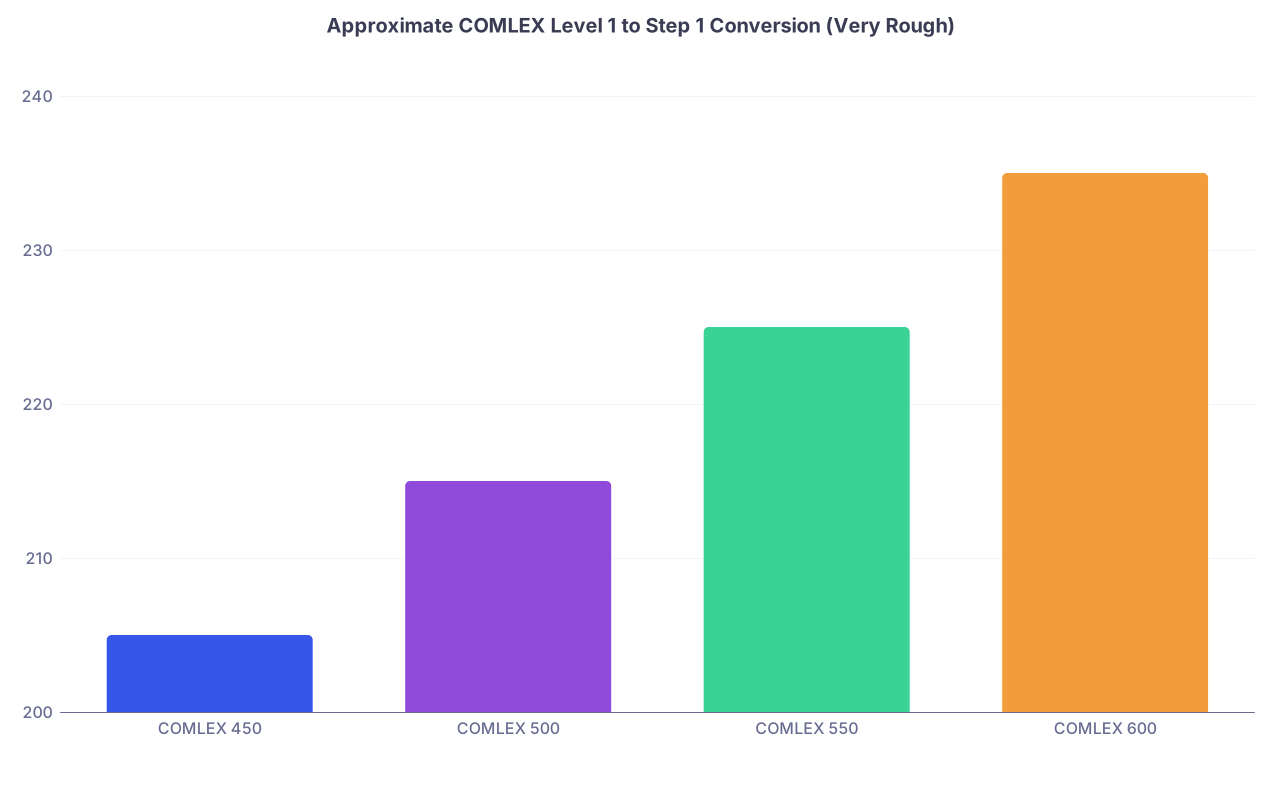
There are a few tools that can help you roughly map COMLEX to USMLE for your own understanding.
| Category | Value |
|---|---|
| COMLEX 450 | 205 |
| COMLEX 500 | 215 |
| COMLEX 550 | 225 |
| COMLEX 600 | 235 |
This isn’t gospel. It varies by cohort, preparation, and which “conversion” someone is using. But programs sometimes mentally map your COMLEX to an equivalent Step score whether they tell you or not.
Here’s how I’d categorize COMLEX scores for ACGME targeting (very broad strokes):
- Level 1 < 450 or Level 2 < 450: You will need heavy DO‑friendly programs, strong letters, and probably community or smaller university‑affiliated sites.
- Level 1/2 in the 450–550 range: You can target a wide array of community and some mid‑tier university programs that are DO‑friendly.
- Level 1/2 > 550: You’re competitive at many places that genuinely accept COMLEX, even some more academic sites, if the rest of the app is good.
Do not paste these “equivalents” into your ERAS application. Just use them internally to decide which tier of programs to realistically target.
Step 4: Read Program Language Like a Lawyer, Not a Tourist
How programs phrase things matters. And yes, there’s code.
Here’s what different lines actually mean most of the time if you’re a DO without USMLE:
| Wording on Website | What It Usually Means for You |
|---|---|
| “We accept COMLEX or USMLE.” | You’re fine if your COMLEX is solid. |
| “USMLE required.” | Do not waste an application. |
| “USMLE strongly preferred; COMLEX considered.” | Possible, but you need a stronger profile. |
| “We prefer USMLE but accept COMLEX.” | They’ll look if COMLEX is strong/you fit. |
| “DO applicants welcome; COMLEX accepted.” | Good sign, especially if DOs on roster. |
If anything says “must submit USMLE scores” → hard no for a COMLEX‑only applicant.
If it says “USMLE required for IMG applicants” but you are a DO from a US school, that may not apply to you. Still, if the tone is USMLE‑heavy and the roster is all MD… this is low yield.
Step 5: Program Tiers Where COMLEX‑Only DOs Actually Have Traction
You’re trying to maximize interviews per application dollar. That means understanding where COMLEX-only DOs commonly match.
Rough generalization across many specialties:
Highest yield:
- Community programs
- Smaller community‑university hybrids
- Regional systems outside big coastal cities
- Former AOA (osteopathic) programs now ACGME
Medium yield:
- Mid‑tier university programs in the Midwest, South, and some Northeast regions that have a track record of DOs
- “Safety” university affiliates in non‑destination cities
Lower yield:
- Big‑name academic centers in NYC/Boston/California
- Prestigious university hospitals with highly competitive fellowship pipelines
- Programs that take 1 token DO every 5 years
That does not mean “don’t try for any reach programs.” It means if you’re COMLEX‑only, 60–80% of your list should be genuinely DO‑friendly, not fantasy land.
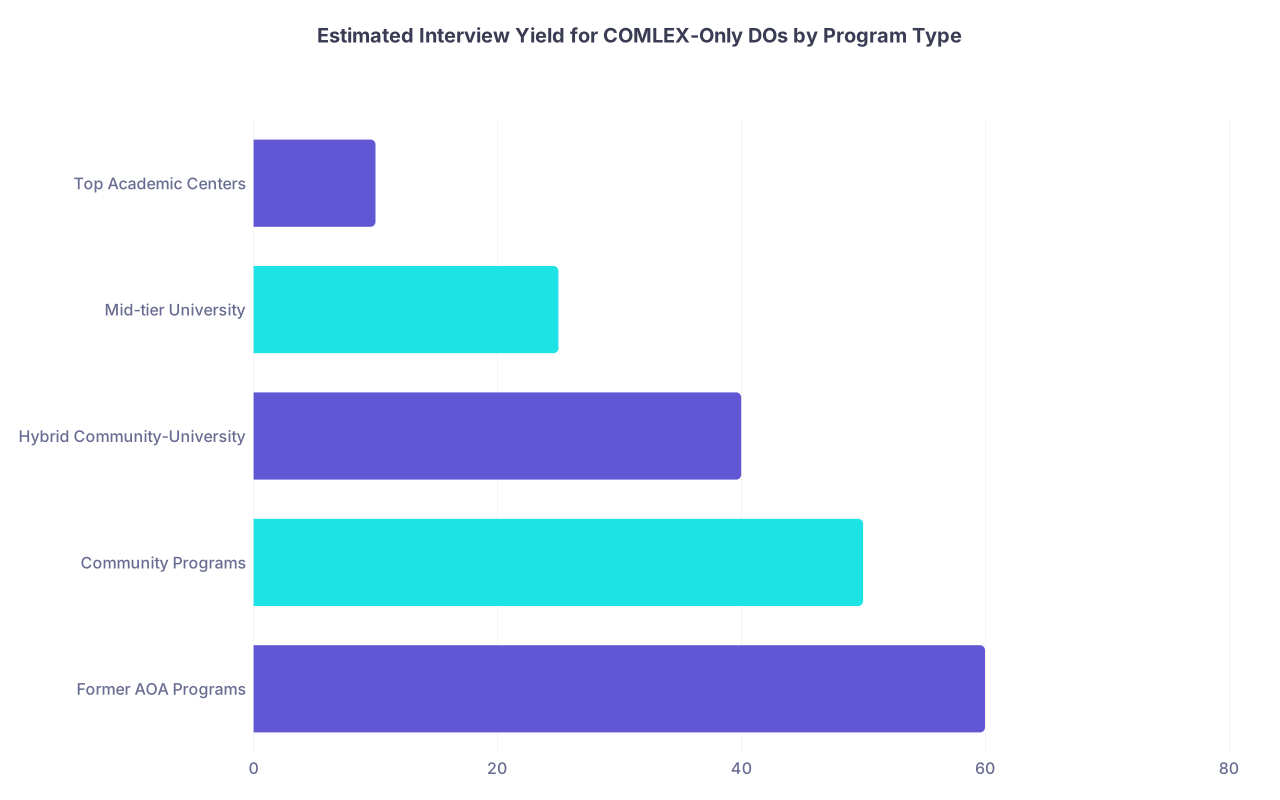
To get a feel for where DOs are getting interviews and matches, you can also use match outcome visualizations if your school provides them, or national specialty match reports.
| Category | Value |
|---|---|
| Former AOA Programs | 60 |
| Community Programs | 50 |
| Hybrid Community-University | 40 |
| Mid-tier University | 25 |
| Top Academic Centers | 10 |
Numbers are illustrative, but the pattern is real.
Step 6: Direct Communication – When and How to Ask About COMLEX-Only
Sometimes a program’s website is vague or outdated. You will be tempted to email every single program.
Do not.
You email strategically, and you do it right.
Use email when:
- Website is unclear (e.g., “USMLE scores required from applicants” but doesn’t mention DOs or COMLEX).
- You see DOs on the current roster, but the FAQ only references USMLE.
- You’re really interested in the program (geographic/family reasons) and want to confirm if you’re wasting an app.
Your email should be short and specific:
Subject: Question about COMLEX scores – [Your Name], DO Applicant
Dear [Program Coordinator/Program Director],
I am a 4th‑year osteopathic medical student at [School], planning to apply to your [Specialty] residency this cycle. I have taken COMLEX Level 1 and Level 2 but did not take the USMLE exams.
I wanted to confirm whether your program considers applicants with COMLEX scores only, or if USMLE scores are required for DO students.
Thank you for your time and clarification.
Sincerely,
[Name], OMS‑IV
[School]
If they say “USMLE required,” you’re done. Do not argue. Move on.
If they say “COMLEX is fine” or “we accept COMLEX,” that program moves higher on your list. Screenshot and file that away.
Step 7: Make Your Application COMLEX‑Savvy
You cannot change that you do not have USMLE scores. But you can control how clearly and confidently you present COMLEX and the rest of your profile.
Here’s what to do inside your actual application:
Report COMLEX cleanly and early.
Do not make programs dig. Make sure your scores are in ERAS and easy to see.If you failed a COMLEX attempt, own it.
Use the additional information section (or sometimes personal statement) to very briefly address:- What happened (one sentence, no drama)
- What you changed
- How your later performance improved (later scores, clinical grades).
Leverage clinical grades and narrative evaluations.
If your school provides clerkship comments, strong evaluations can blunt some anxiety about not having USMLE. Especially in medicine, surgery, EM, psych.Use letters from people programs respect.
A glowing letter from an academic internist or surgeon at an ACGME site you rotated at can overshadow the lack of USMLE, especially if that writer has contacts.Personal statement: don’t apologize, but do explain if needed.
If you’re asked about absence of USMLE in interviews or secondary forms:- Be concise: “My school emphasized COMLEX, and I focused my time and resources on those exams. With my performance on Level 2 and my strong clinical evaluations, I feel my competency is well represented.”
- Do not sound defensive or ashamed.
Step 8: Build a Smart, Layered Application List
Now you put all this together into an actual list. Not vibes. Not “I’ve heard Boston is nice.”
Rough structure (adjust by specialty and competitiveness):
50–70%: High‑probability DO‑friendly / COMLEX‑friendly programs
- Multiple DOs on roster
- Clear “COMLEX accepted” language
- Non‑hyper‑competitive region
20–30%: Moderate‑probability programs
- Some DOs on roster
- “USMLE preferred; COMLEX accepted”
- Reasonable geographic/fit for you
10–20%: Reach programs
- Fewer DOs or more academic
- Strong personal/geographic reasons or connection
- Only if they have not explicitly required USMLE
If you’re in a moderately competitive specialty and you’re COMLEX‑only, err on the side of more applications than your MD/USMLE peers in the same specialty. Not 200 mindless applications, but a deeper list of honestly researched programs.
Step 9: Use Rotations and Networking to Offset No USMLE
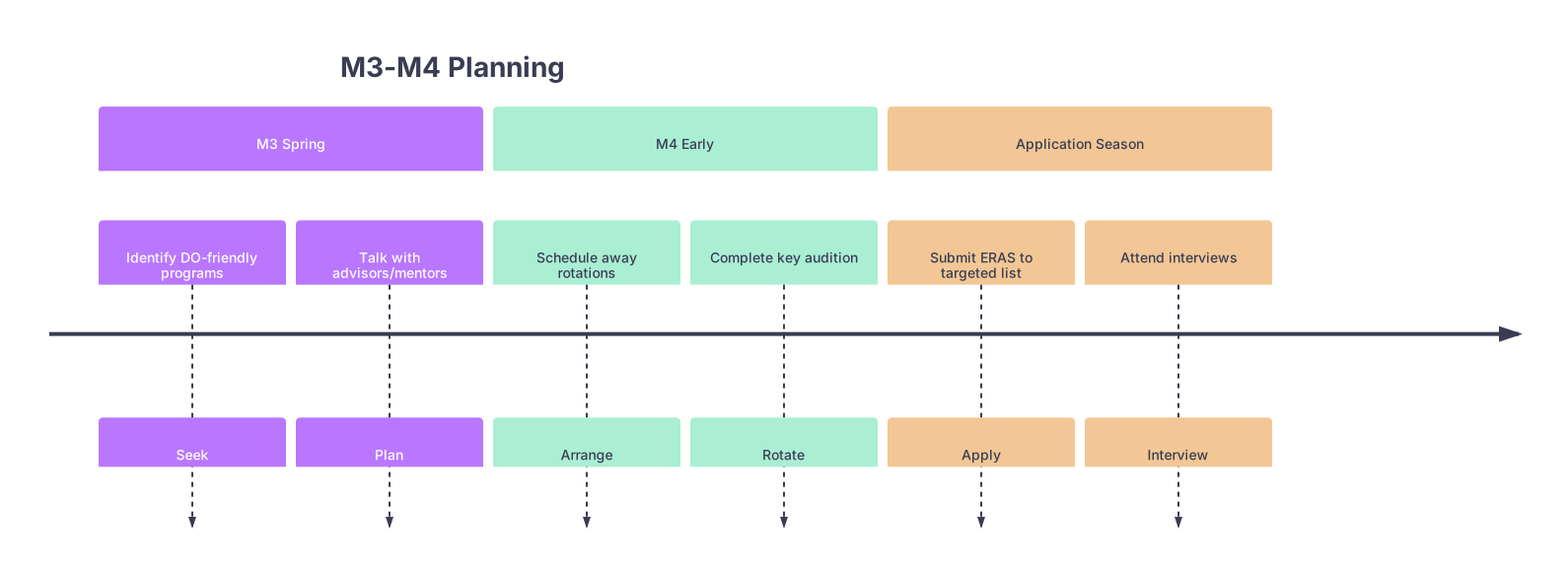
If you’re still in M3 or early M4 and have time:
Audition rotations / away rotations can do a lot of work for a COMLEX‑only DO. I’ve seen this several times:
- DO student with only COMLEX, 520–540 range, does an away at a mid‑tier university program.
- Works hard, shows up early, presents clearly, is normal to be around.
- PD meets them as a human, likes them, and the “no USMLE” thing shrinks in importance.
If you cannot get an away at a dream program, then:
- Rotate at affiliated hospitals that send people to that program.
- Get letters from faculty who know that PD personally.
- Present research/posters at that institution’s conference or the specialty’s national meeting.
| Period | Event |
|---|---|
| M3 Spring - Identify DO-friendly programs | Seek |
| M3 Spring - Talk with advisors/mentors | Plan |
| M4 Early - Schedule away rotations | Arrange |
| M4 Early - Complete key audition | Rotate |
| Application Season - Submit ERAS to targeted list | Apply |
| Application Season - Attend interviews | Interview |
The more you can get real humans to know you, the less your file is just “DO, no USMLE, COMLEX 5xx.”
Step 10: Prepare for the Interview Question: “Why No USMLE?”
If you’re COMLEX‑only, people will ask. Some bluntly. Some indirectly.
You need a 15–20 second answer that:
- Doesn’t insult USMLE
- Doesn’t sound like an excuse
- Doesn’t spiral into a life story
Something like:
“My school’s curriculum and advising emphasized COMLEX, and with a demanding clinical schedule, I chose to focus my effort on doing well on Level 2 and my clerkships rather than splitting time with USMLE. I’m confident my COMLEX performance and my clinical evaluations reflect my readiness for residency.”
If there were other factors (illness, family, financial constraints):
“I had some personal and financial constraints around the time I would have scheduled USMLE, and I made a strategic choice to focus on COMLEX and my rotations. I recognize many applicants take both, but I’m proud of how I performed on COMLEX and on the wards.”
Short. Direct. No groveling.
Step 11: Regions and Specialties Where COMLEX-Only DOs Traditionally Do Better
This isn’t politically correct, but you are not here for fluff.
In general, COMLEX‑only DOs have an easier time in:
- Midwestern states (Ohio, Michigan, Indiana, Missouri, etc.)
- Certain Southern states and regions with DO schools or big community systems
- Program types:
- Family Medicine
- Internal Medicine (especially community and hybrid sites)
- Psychiatry
- Pediatrics
- Transitional Year / Preliminary medicine at DO‑friendly hospitals
You’re going to have a tougher road in:
- Major coastal cities with highly brand‑conscious programs (NYC, Boston, SF, LA)
- Ultra‑competitive specialties if you don’t have heavy research or connections
You do not have to abandon your preferred geography or specialty, but you should absolutely pad your list with programs and regions that historically take COMLEX‑only DOs.
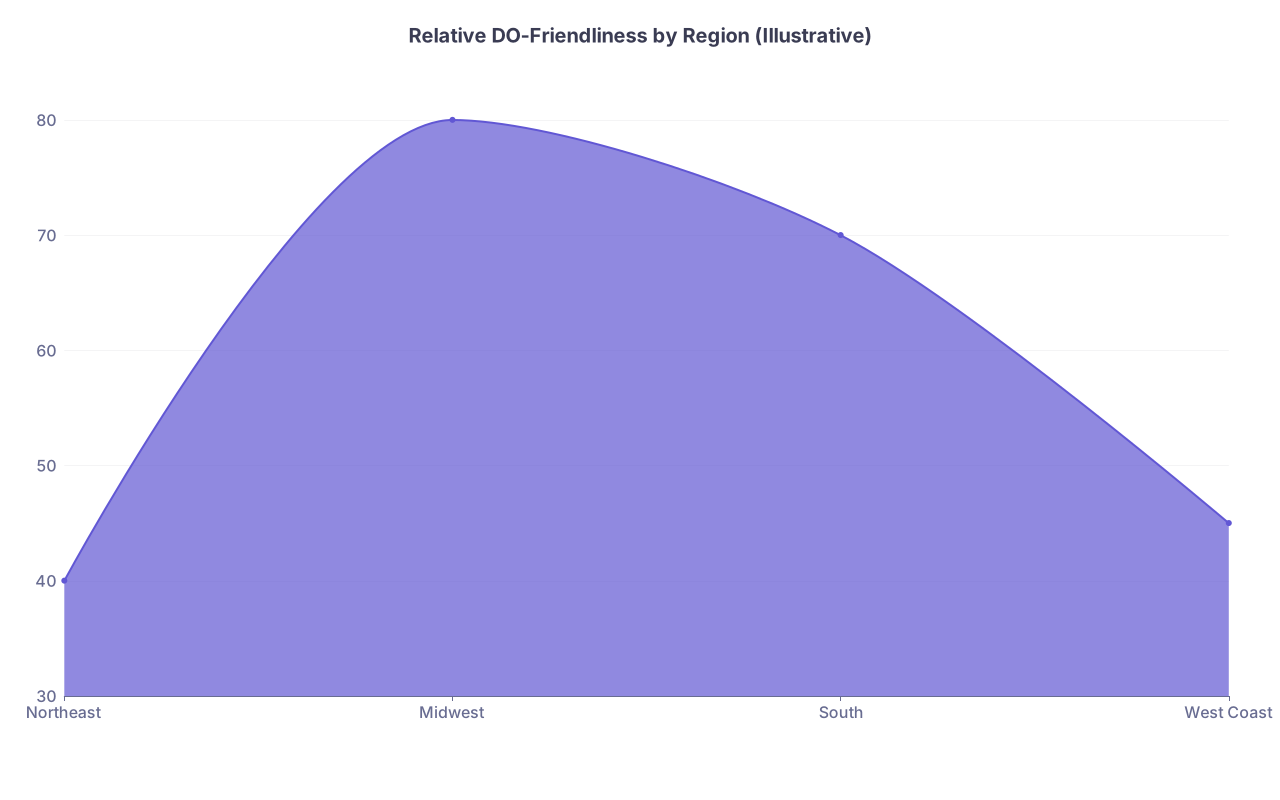
| Category | Value |
|---|---|
| Northeast | 40 |
| Midwest | 80 |
| South | 70 |
| West Coast | 45 |
Again, not exact numbers. But the pattern tracks with many match lists.
Step 12: Contingency Planning if You Don’t Match
You’re thinking about this now because you’re smart, not pessimistic.
If you’re a DO without USMLE and you’re targeting ACGME programs, your contingency options if things go sideways:
- SOAP into DO‑friendly community programs in FM, IM, psych, peds, prelim year
- Research year with a PI in your specialty of interest, ideally at a DO‑friendly academic center, then reapply
- Consider taking USMLE Step 2 CK during a gap year if your COMLEX and knowledge base are strong enough to justify the risk and effort
I have seen COMLEX‑only DOs fail to match once, do a strong prelim year or a research year, then land in solid categorical positions. It’s painful, but it’s not the end.
Pulling It Together: Your Next Moves, This Week
If you’re in this situation right now, here’s what you do over the next 7–10 days:
- Build or refine your spreadsheet of programs.
- Go through 30–50 programs per day:
- Check website language
- Scan rosters for DOs
- Mark “USMLE required” programs as hard no.
- Send a small batch of targeted emails (5–10) to clarify COMLEX‑only acceptance at your top questionable programs.
- Adjust your application list so that the majority of programs are truly DO‑/COMLEX‑friendly.
- Tighten your response to the “Why no USMLE?” question and practice saying it out loud.
- Confirm that your COMLEX scores are properly uploaded and visible in ERAS.
You are not competing against a theoretical perfect MD with 260+ USMLE scores. You are competing as yourself, with a specific profile in a real system. The more precisely you match yourself to the right programs, the more interviews you will get.
With a targeted list, honest self‑assessment, and some hustle in how you present your COMLEX and your clinical work, a DO without USMLE can still land a solid ACGME spot. Once you have those interviews lined up, the game shifts to a different question: how you perform in the room and on the trail. But that is a situation for another day.