
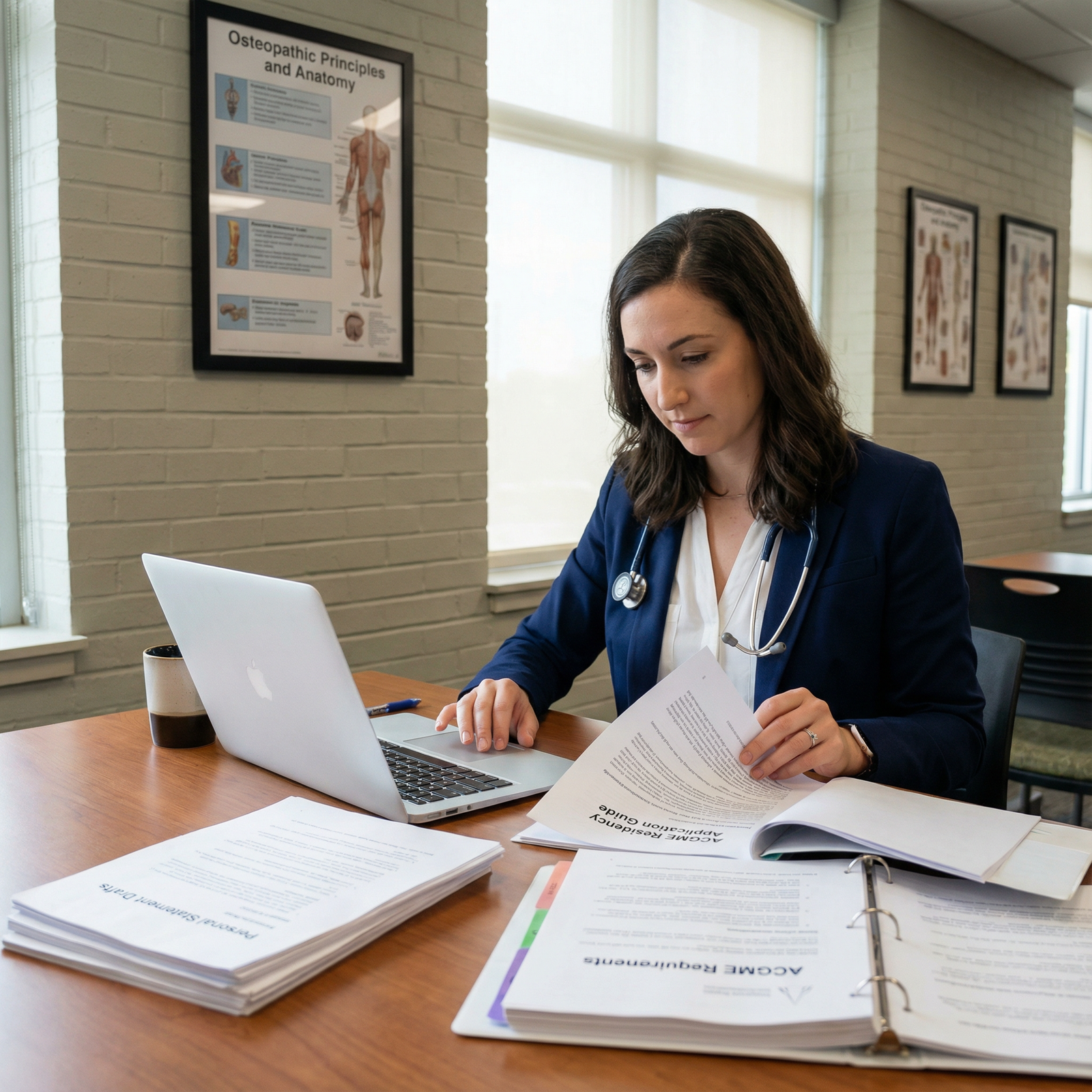
Avoiding Common Pitfalls: DOs in the ACGME Residency Application Process
In today’s rapidly evolving world of medical education, the path from osteopathic medical school to residency can feel both exciting and overwhelming. With the single accreditation system and most programs now under the Accreditation Council for Graduate Medical Education (ACGME), Doctor of Osteopathic Medicine (DO) graduates are competing side-by-side with MD applicants for the same spots.
This brings tremendous opportunity—but also unique challenges. Misconceptions about osteopathic training, uncertainty around board exams (COMLEX vs USMLE), and confusion about how best to “market” your DO background can all affect your Residency Application success.
This guide breaks down common pitfalls DO students face in the ACGME residency application process and offers concrete, actionable strategies to avoid them. The focus is on helping you present your osteopathic training as a strength, not a limitation, in a highly competitive match environment.
Understanding the ACGME Residency Application Landscape as a DO
Before you can optimize your application, you need a clear grasp of how the ACGME and the application system work—especially where DO applicants can run into trouble.
The ACGME and ERAS: Core Components of the Residency Application
The ACGME sets and oversees standards for residency and fellowship programs in the United States. Almost all residency positions now fall under ACGME accreditation after the single accreditation system unified osteopathic (AOA) and allopathic programs.
Your primary application is submitted through the Electronic Residency Application Service (ERAS). Through ERAS, you will upload and send:
- Curriculum vitae-style experience section (education, work, volunteer, research)
- Personal Statement(s) (often specialty-specific)
- Letters of Recommendation (LoRs)
- Medical school transcript and MSPE (Dean’s letter)
- Board scores (COMLEX-USA, and USMLE if taken)
- Other documents (e.g., photo, ECFMG status if international)
ERAS then transmits this information to ACGME-accredited residency programs, which decide whom to invite for interviews and ultimately rank for the Match.
Timing, Strategy, and the ACGME Match Timeline
In the ACGME framework, timing is not a minor detail—it’s a critical component of your strategy. Many DO applicants lose ground not because of their qualifications, but because they misunderstand the process timeline.
Key timing principles:
- Know the ERAS opening and submission dates:
- ERAS typically opens for applicant entry in late spring.
- Programs can begin reviewing applications in early fall (dates vary slightly each year).
- Aim to be complete early:
Submitting a polished, complete Residency Application within the first 1–2 weeks of programs opening your application can significantly increase your chance of being reviewed and offered interviews. - Plan backward from deadlines:
Secure letters, finalize your Personal Statement, and schedule any additional exams (e.g., USMLE Step 2 CK) with enough time for score release before programs start screening.
For DO students, aligning COMLEX timelines—and possibly USMLE timelines—with ERAS and the ACGME Match requires early planning and honest conversations with advisors.
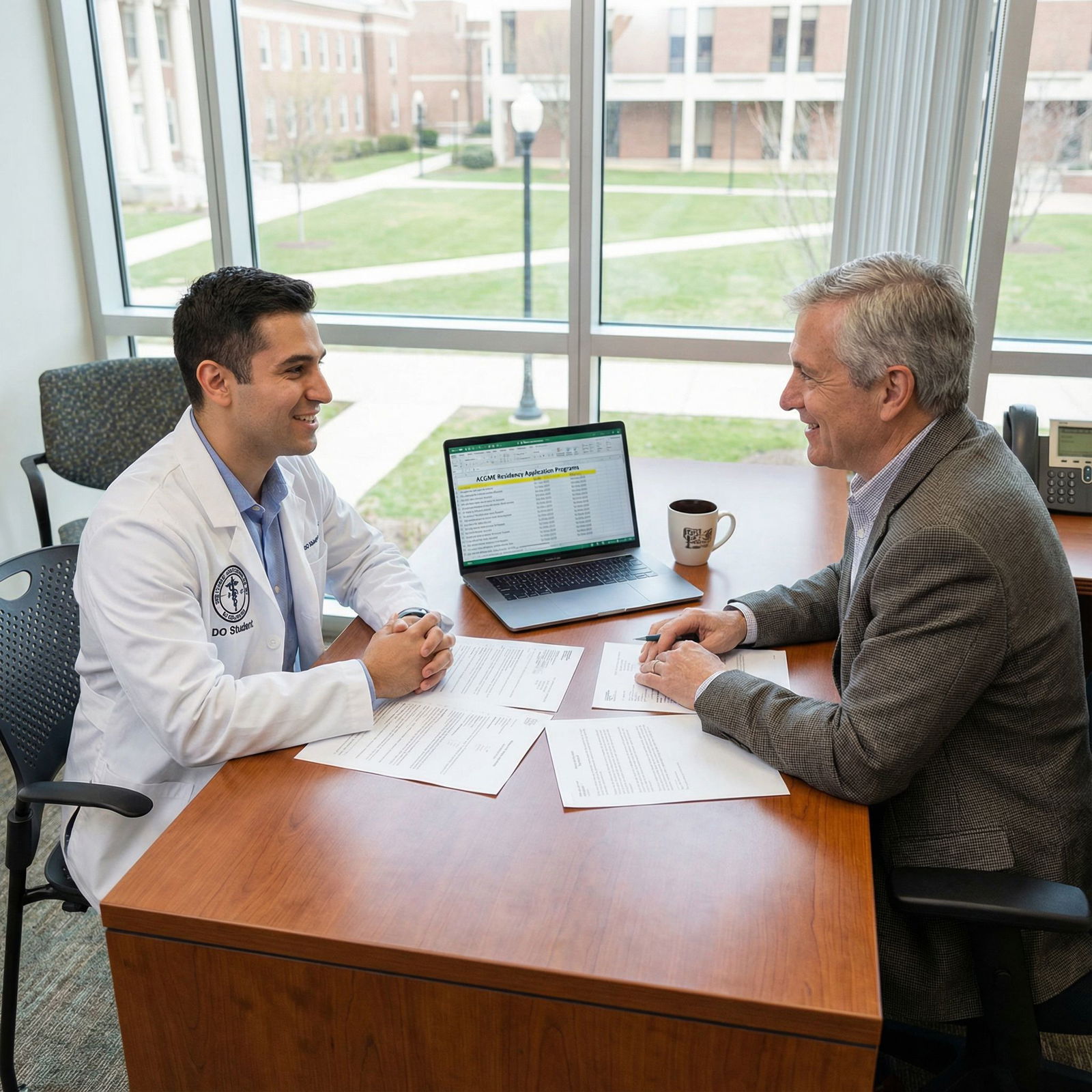
Common Pitfalls for DOs in the ACGME Residency Application Process
The following pitfalls are especially common among DO applicants but are all manageable—and often preventable—with the right approach.
Pitfall #1: Underestimating the Power of a Strong Personal Statement
The Personal Statement is often the only narrative that programs read in your voice. For DO applicants, it is a prime opportunity to showcase the distinct value of osteopathic medicine and your professional identity.
Many applicants treat it as a generic autobiography or rehash of their CV. That is a critical mistake.
How DO Applicants Can Turn the Personal Statement into a Strength
1. Be Authentic and Specific
Avoid vague generalities like “I want to help people” or “I enjoy lifelong learning.” Instead:
- Describe a specific clinical encounter where your osteopathic perspective made a difference.
- Reflect on how your DO training shaped your approach to that situation (holistic assessment, attention to biomechanics, preventive care, or patient-centered communication).
Example:
Instead of “I value holistic care,” write about a patient whose chronic back pain improved when you recognized biomechanical strain and integrated OMT alongside lifestyle counseling—explaining what that taught you about the DO approach.
2. Integrate Osteopathic Medicine Without Overdoing It
You don’t need to define Osteopathic Medicine for program directors. They already know what a DO is. Your task is to:
- Show how osteopathic principles are embedded in your everyday clinical reasoning.
- Highlight your training in OMT, holistic assessment, and prevention as natural components of your practice, not as a separate add-on.
Tie your osteopathic identity to the specialty you’re applying for:
- For internal medicine: Emphasize longitudinal, whole-person care and prevention.
- For emergency medicine: Describe rapidly integrating structural, psychosocial, and medical factors.
- For surgery: Highlight your appreciation of anatomy, function, and recovery optimization.
3. Align with ACGME Program Values
Residency programs often publicly share their:
- Mission statement
- Educational philosophy
- Population served (rural, urban, underserved)
- Strengths (procedures, research, community outreach)
Strengthen your Personal Statement by:
- Mentioning how your background and osteopathic training align with those values.
- Showing you understand the ACGME competency framework (e.g., patient care, medical knowledge, professionalism, systems-based practice) and where you already demonstrate these.
4. Edit Ruthlessly and Seek Targeted Feedback
A polished Personal Statement signals professionalism.
- Ask two to three reviewers: a faculty member, a resident, and ideally someone with writing experience.
- Ask for content feedback first, then grammar and flow.
- Avoid over-editing by too many people, which can make your voice sound generic.
Pitfall #2: Ignoring the Strategic Importance of Letters of Recommendation
Letters of Recommendation (LoRs) often carry tremendous weight—sometimes more than you realize. For DOs in ACGME programs, they can:
- Validate the rigor of your training to allopathic faculty.
- Highlight strengths that may not appear on a transcript or score report.
- Demonstrate support from respected clinicians in your specialty of interest.
A common pitfall is treating LoRs as an afterthought or focusing only on “big names” who barely know you.
How to Secure Strong, High-Impact LoRs as a DO
1. Choose Letter Writers Who Truly Know You
Select faculty who can speak in detail about:
- Your clinical reasoning and bedside manner
- Professionalism, work ethic, and teachability
- Specific patients or cases where you stood out
Ideal writers might include:
- Core clinical rotation preceptors in your specialty of interest
- Program directors or clerkship directors who observed you closely
- Research mentors (especially if applying to an academic or research-heavy ACGME program)
A detailed letter from a mid-level attending who knows you very well is often more powerful than a generic note from a department chair who barely remembers you.
2. Be Thoughtful and Organized in Your Request
When asking for a letter:
- Ask in person or via video when possible, and phrase it as:
“Would you feel comfortable writing a strong, supportive letter of recommendation for my residency application in [specialty]?” - Provide:
- Your CV
- Draft Personal Statement
- A brief “brag sheet” of key cases or moments from that rotation
- A list of programs you’re targeting and why
This helps the writer craft a letter tailored to your ACGME Residency Application goals.
3. Mind the Mix of Letters
For most specialties, aim for:
- 3–4 total letters, with:
- 2–3 in your chosen specialty
- 1 in a core field (e.g., internal medicine, surgery, pediatrics) or from a research mentor
Check each program’s specific LoR requirements in ERAS or on the program’s website, and adjust accordingly.
4. Track Submissions and Express Gratitude
- Use a simple spreadsheet or task manager to track:
- Who you asked
- When you asked
- Whether the LoR is uploaded
- Send polite reminders 2–3 weeks before your internal deadline.
- Follow up with personal thank-you messages and update your letter writers after Match Day—they are invested in your success.
Pitfall #3: Overlooking Deep Program Research and Fit
Applying broadly without strategy can waste time and money. For DO applicants in particular, it is crucial to identify programs that:
- Have a history of interviewing or matching DOs
- Are DO-friendly or DO-neutral, even if previously allopathic
- Align with your academic record and career goals
How to Research and Target the Right ACGME Programs as a DO
1. Start with Data and DO-Friendliness
Use tools and strategies such as:
- Program websites (look for current residents’ profiles—how many DOs?)
- NRMP and specialty-specific match data (DO match rates, score ranges)
- Alumni match lists from your COM
- Word-of-mouth from recent DO graduates and residents
If none of a program’s residents are DOs and your metrics are average for that specialty, consider whether that program is realistically worth an application.
2. Go Beyond the Surface
For each program you’re seriously considering, investigate:
- Mission and patient population: Are they urban, rural, underserved, academic, community?
- Osteopathic recognition or history: Some ACGME programs retain osteopathic recognition or OMT clinics.
- Curriculum and strengths: Procedural exposure? Research focus? Outpatient vs inpatient balance?
- Geography and lifestyle: Cost of living, support systems, partner/family needs.
Use this information to:
- Tailor your Personal Statement (if program-specific statements are used).
- Prepare thoughtful interview questions.
- Prioritize which interviews to accept, if you must choose.
3. Network Intentionally
For DOs, networking can open doors and clarify perceptions.
- Attend virtual open houses and specialty organization events.
- Reach out politely to:
- DO alumni at target programs
- Residents who share similar interests or backgrounds
- Ask high-yield questions:
- “How DO-friendly has your program been historically?”
- “What types of DO applicants tend to be successful here?”
Respect people’s time—keep messages concise and specific.
Pitfall #4: Underpreparing for Residency Interviews as a DO
Residency interviews are where programs decide whether they can imagine working with you for the next 3–7 years. For DO applicants, interviews are also a chance to:
- Address any unspoken biases or misconceptions about osteopathic training.
- Show how well you understand the ACGME expectations for residents.
- Demonstrate maturity, professionalism, and fit.
Strategies to Excel in Residency Interviews
1. Master the Standard Questions—and the DO-Specific Ones
Practice concise, structured responses for:
- “Tell me about yourself.”
- “Why this specialty?”
- “Why this program?”
- “Tell me about a challenging patient and what you learned.”
- “Tell me about a time you made a mistake.”
As a DO, also be prepared for:
- “Why did you choose Osteopathic Medicine?”
- “How do you incorporate osteopathic principles into your daily practice?”
- “Have you used OMT in the clinical setting? When and how?”
Keep your answers positive, grounded in real examples, and not defensive. Your goal is to show confidence in your path, not to compare yourself to MDs.
2. Practice with Mock Interviews
Use:
- Your school’s career or advising office
- Specialty interest groups (e.g., ACOFP, ACEP DO sections)
- Trusted faculty or residents
Record yourself (audio or video) to evaluate:
- Clarity and pacing
- Filler words (“um,” “like”)
- Eye contact and body language (for virtual interviews, camera presence)
3. Prepare High-Quality Questions for Programs
Insightful questions show genuine interest and maturity. Examples:
- “How does your program support residents interested in osteopathic approaches or holistic care?”
- “How do you incorporate ACGME core competencies into feedback and evaluation?”
- “What distinguishes your residency graduates 5 years out from training?”
Avoid questions easily answered on the website or those focused only on salary and vacation early in the conversation.
4. Be Ready to Address Red Flags or Gaps
If you have:
- A leave of absence
- A failed exam attempt
- A gap in training
Prepare a brief, honest, owning-but-not-dwelling explanation:
- State the issue clearly.
- Provide context without making excuses.
- Emphasize what you learned, changes you made, and evidence of improvement since.
This applies in interviews and, when appropriate, in your Personal Statement.
Pitfall #5: Neglecting to Strategically Address Gaps or Weaknesses
Every applicant has some perceived weakness: a lower board score, fewer research experiences, or a non-linear path. DO applicants sometimes worry their degree alone is a weakness—which it is not. But avoiding real gaps can hurt you more than the gap itself.
How to Proactively Address Gaps as a DO Applicant
1. Use Your Personal Statement and MSPE Wisely
Where appropriate:
- Briefly acknowledge major issues (e.g., repeating a year, a failed board exam).
- Highlight what you learned and the concrete steps you took to succeed moving forward (new study strategies, wellness changes, remediation plans).
Coordinate with your Dean’s office about the MSPE (Dean’s Letter) to ensure factual, contextual documentation is accurate.
2. Reframe Challenges as Evidence of Resilience
Programs want residents who can:
- Handle pressure
- Learn from setbacks
- Seek help when needed
If you took time off for health, family, or other reasons:
- Explain how that experience matured you.
- Emphasize any relevant activities (work, volunteer, research) during that time.
- Connect the resilience and perspective you gained to your future as a resident.
3. Build Compensatory Strengths
For example:
- Lower board scores?
- Emphasize strong clinical evaluations and enthusiastic LoRs.
- Highlight honors in clerkships or sub-internships.
- Limited research?
- Focus on robust clinical experiences, teaching, community service, or quality improvement projects.
You are more than any single metric.
Pitfall #6: Overlooking the Strategic Role of Board Scores and Exam Choices
Board scores remain an important screening tool for many ACGME programs. For DOs, the key questions are:
- COMLEX only, or COMLEX + USMLE?
- How do your scores compare for your target specialty?
- How can you mitigate lower scores?
Navigating COMLEX, USMLE, and Score Strategy as a DO
1. Decide Early on USMLE
Many ACGME programs accept COMLEX exclusively, but some still prefer or more easily interpret USMLE scores—especially in more competitive specialties (e.g., dermatology, orthopedics, radiology).
- Talk with advisors and recent DO graduates in your specialty of interest.
- If you’re aiming for highly competitive fields or very academic centers, USMLE Step 2 CK often remains advantageous.
- If you are later in training and have strong COMLEX scores but no USMLE, focus on applying to COMLEX-friendly programs and highlight other strengths.
2. Plan and Study Intentionally
For all board exams:
- Start early with a structured study schedule.
- Use question banks (e.g., COMBANK, UWorld) and timed practice tests.
- Build in self-assessment exams and adjust your plan based on performance.
Your board scores are one piece of your Medical Education record, but they can influence how many interviews you receive.
3. Interpret and Use Score Data
Research:
- Specialty-specific score expectations (from NRMP data, specialty organizations, and your advisors).
- How your scores compare to matched DOs in that field.
If your scores are below the average for your specialty:
- Apply more broadly (geographically and across program types).
- Strengthen other parts of your application (letters, experiences, Personal Statement).
- Consider including a thoughtful explanation of any major score discrepancies if there was a clear, time-limited issue (illness, family emergency).
Leveraging the Unique Strengths of Osteopathic Training
Your DO degree is not an obstacle—it is a differentiator. Many ACGME programs actively value the osteopathic approach.
Highlighting Osteopathic Principles in the Context of ACGME Expectations
1. Holistic, Patient-Centered Care
Your DO education consistently emphasizes:
- Whole-person assessment (biopsychosocial-spiritual model)
- Longitudinal relationships with patients
- Shared decision-making and health promotion
Connect this explicitly to ACGME competencies, such as:
- Patient Care: Comprehensive, compassionate, and coordinated.
- Interpersonal and Communication Skills: Building trust and therapeutic alliances.
2. Osteopathic Manipulative Treatment (OMT) as an Added Skill Set
You don’t need to use OMT daily in every specialty—but your OMT training can:
- Demonstrate your advanced understanding of anatomy and biomechanics.
- Provide additional options for managing musculoskeletal complaints.
- Enhance your physical exam skills and palpatory sensitivity.
When relevant, include concrete examples of how OMT or manual assessment changed your management of a patient.
3. Preventive and Community-Oriented Perspective
Osteopathic Medicine traditionally emphasizes:
- Preventive care
- Lifestyle counseling
- Population health awareness
These are exactly the directions modern healthcare is moving in—and many ACGME programs value learners who think beyond the chief complaint to long-term outcomes and system-level factors.
4. Strong Doctor–Patient Relationships
Many DO schools and clinics prioritize continuity and communication. Use patient stories (de-identified, of course) to illustrate:
- How you built rapport with patients in complex situations.
- Your comfort handling psychosocial as well as biomedical issues.
- Your commitment to advocacy and equity in care.
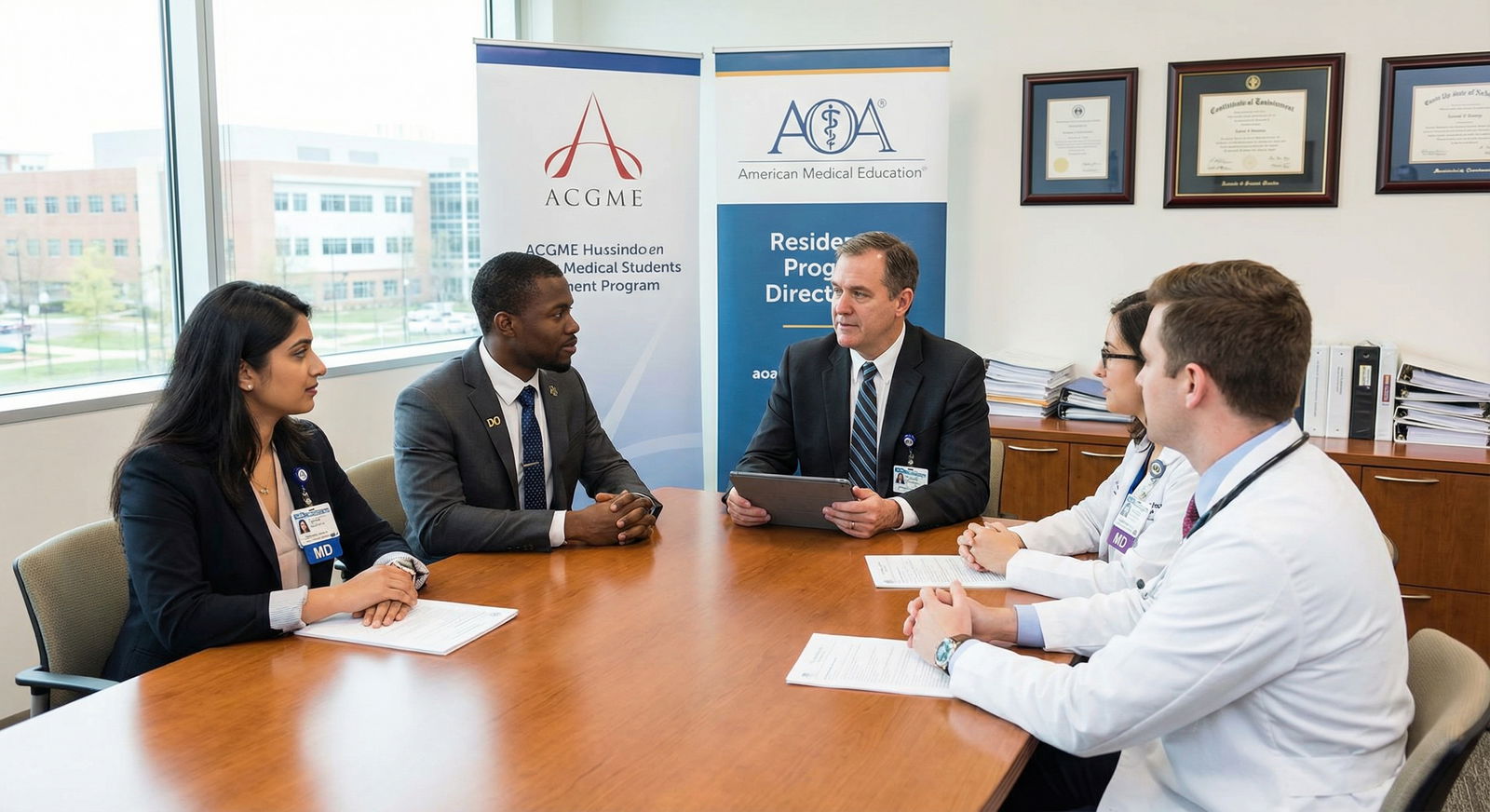
FAQs: DOs and the ACGME Residency Application Process
1. How important is it for DO applicants to highlight their osteopathic training?
It is very important—but it should be done thoughtfully. You don’t need to give a lecture on Osteopathic Medicine. Instead:
- Show how osteopathic principles concretely shape your clinical reasoning, patient interactions, and long-term goals.
- Use specific patient stories or clinical experiences to illustrate those principles in action.
- Tie your osteopathic background to the mission and patient population of ACGME programs you’re targeting.
Programs generally value applicants who understand and can articulate what makes their training distinctive.
2. What can I do if my board scores are below average for my desired specialty?
Lower scores do not automatically end your chances, but they should inform your strategy:
- Apply to a wider range of programs, including community-based and DO-friendly sites.
- Strengthen other components of your Residency Application:
- Outstanding, detailed LoRs
- Strong clinical evaluations
- A compelling Personal Statement
- Seek meaningful experiences (sub-internships, away rotations, research, or quality improvement projects) that demonstrate your dedication and growth.
- Consider working closely with advisors to refine your program list and discuss whether taking or emphasizing Step 2/Level 2 scores may help.
3. How can I effectively research residency programs as a DO student?
Combine multiple sources:
- Official program websites (curriculum, resident list, DO representation).
- Virtual open houses, webinars, and social media.
- Alumni from your COM who have matched at those programs.
- National and specialty-specific organizations and forums.
Focus on identifying programs that align with your metrics, values, and long-term goals—and that have a positive track record with DO applicants.
4. Is networking with other DOs and residents really beneficial during the application process?
Yes. Networking can:
- Provide candid, up-to-date insights on program culture and DO-friendliness.
- Help you understand how different ACGME programs interpret COMLEX vs USMLE.
- Connect you with mentors who can guide your specialty choice, program selection, and interview preparation.
Be respectful and professional in all networking interactions, and remember to maintain boundaries—mentorship is about guidance, not guarantees.
5. How should I prepare for residency interviews specifically as a DO?
Prepare like any strong applicant—and then add a DO-focused layer:
- Practice standard interview questions and behavioral scenarios.
- Develop concise, confident answers to:
- “Why Osteopathic Medicine?”
- “How do you use osteopathic principles in your practice?”
- Be ready to discuss your understanding of ACGME competencies and how you’ve already started developing them.
- Conduct mock interviews, ideally with someone familiar with both osteopathic and ACGME expectations.
- Research each program in advance so you can ask thoughtful, specific questions and demonstrate genuine interest.
By anticipating these common pitfalls and approaching your ACGME Residency Application strategically, you can transform your status as a DO graduate into a distinct advantage. Thoughtful preparation, honest self-assessment, and clear communication of your osteopathic strengths will position you to not only match—but to thrive—in residency and beyond.


