
Student organization leadership titles are overrated currency in the ACGME residency game. That's the blunt truth most DO applicants don't want to hear while they're stacking SOMA chapter president, AMSA vice chair, and "wellness committee lead" onto their ERAS like armor.
You're told these roles signal leadership, initiative, and "fit." Advisors push them. Classmates race for them. The result? A generation of DO students burning nights on club logistics instead of the things program directors actually rank when they build their rank lists. I've watched strong clinical performers get passed over because they treated titles as a substitute for substance, and I've watched quieter applicants with zero fancy leadership lines match into competitive ACGME programs because their scores, letters, and interview presence did the real work.
This matters to your medical career because the single accreditation system didn't erase the DO-specific pressure. You're still competing in a pool where many ACGME PDs have limited historical exposure to osteopathic grads, and every hour you spend on low-yield resume padding is an hour not spent closing that gap. Leadership can help. Generic titles almost never do. The data, and the behavior of actual selection committees, draw a hard line between the two.
The Core Challenge
The biggest pitfall is confusing activity with signal. Students treat "President of X" as a checkbox that automatically boosts their application. It doesn't. NRMP Program Director Survey data year after year puts leadership and extracurriculars well below USMLE/COMLEX performance, clerkship grades, letters of recommendation, and audition/rotation evaluations. When PDs are forced to rank factors, "leadership qualities" appear, but they mean demonstrated leadership under pressure in clinical or research settings, not who booked the pizza for the lunch talk.
I've sat with enough former PDs and residents on selection committees to know the pattern. A DO applicant lists three student org presidencies. The committee glances, maybe smiles, then immediately digs for: Did this person crush their sub-I? Are the letters specific and glowing from people who watched them manage real patients? Is there research with actual output? Does the personal statement show self-awareness instead of a list of clubs? If those answers are weak, the titles become noise. Sometimes they even backfire, looks like padding when the rest of the file is thin.
For additional perspective on navigating the match as an osteopathic candidate, you can review how dos should present osteopathic research and qi to better position your application components.
Another common failure mode: mistaking volume for depth. Holding five mid-level roles across four years signals poor prioritization more than ambition. PDs can smell the difference between someone who drove a meaningful project (started a free clinic initiative that actually saw patients, led a research consortium that produced abstracts, restructured a tutoring program with measurable Step score improvements) and someone who just rotated through officer slots. The first is evidence. The second is decoration.
DO-specific trap: over-indexing on osteopathic organizations because they feel "safe" and familiar. SOMA, state osteopathic societies, specialty clubs, these can build community and give you talking points. They rarely move the needle with allopathic PDs who don't know the alphabet soup. An ACGME PD in orthopedics or dermatology is not losing sleep over whether you were SGA treasurer. They care whether you can handle their service, whether faculty will vouch for you, and whether your board scores clear their filters.
How do you navigate this without becoming cynical or dropping every extracurricular? Ruthless prioritization. Treat leadership like research: only pursue it if you can produce a concrete outcome you can defend in an interview. If the role is mostly meetings and email chains, walk away. If it lets you own a project with results, improved student wellness metrics, a published curriculum, a funded community screen, keep it and document the hell out of the impact. One strong, owned initiative beats a CV full of "member of" and "vice president of."
Also stop treating leadership as a separate bucket from clinical excellence. The highest-yield "leadership" most applicants ever show is stepping up on a tough rotation, teaching juniors effectively, or handling a conflict on the wards without drama. Those moments live in your MSPE and LORs. That's the leadership PDs actually trust because it's been stress-tested in the environment they care about.
To ensure your entire application package stands out, explore essential tips for dos to excel in acgme residency applications before submitting your ERAS.
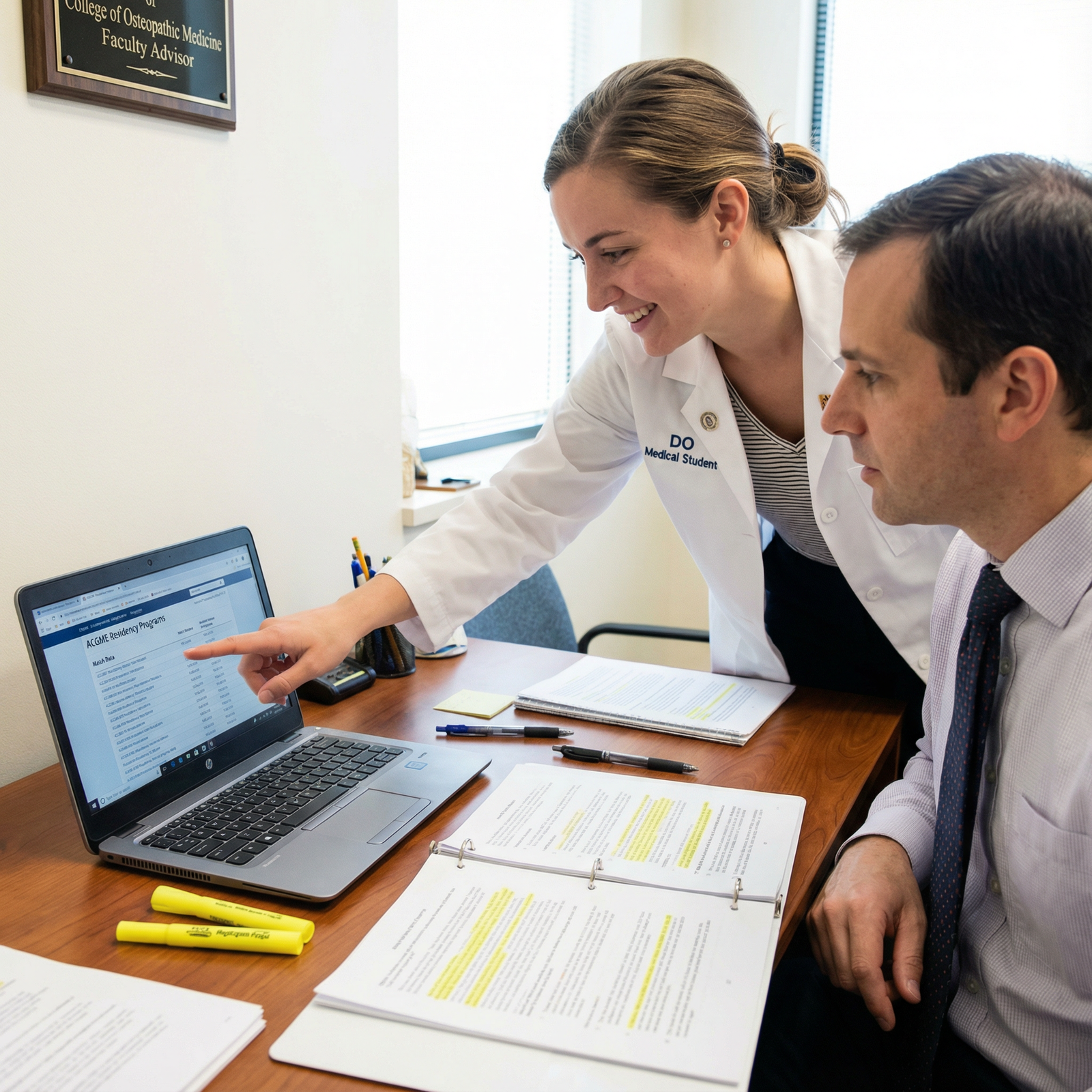
Here's what the selection reality looks like in practice. A PD has 200 applications for 8 spots. Filters hit scores and grades first. Then they read letters and the MSPE narrative. Research and meaningful experiences get a look. Only then does the "other" section get scanned for red flags or genuine standouts. Your student org presidency lives in that last pass. Make it count or don't bother listing it as a centerpiece.
The myth persists because it's comfortable. Collecting titles feels productive and controllable when Step/COMLEX studying and sub-I performance feel terrifying. But comfort is not strategy. I've seen applicants match categorical surgery with almost no formal leadership titles because their audition rotation evaluations were exceptional and their letters read like recruitment pitches. I've also seen applicants with perfect club résumés scramble in the SOAP because they neglected the high-yield zones.
Actionable Next Steps
Stop auditing your CV for missing titles. Start auditing it for missing proof.
First, pull the latest NRMP Program Director Survey for your target specialties and read the factor rankings yourself. Don't rely on secondhand advice from people who matched five years ago under different rules. Note exactly where "leadership" and "extracurriculars" sit relative to scores, grades, LORs, and research. That document is your reality check.
Second, inventory every leadership role you already hold or are considering. For each one, write a single sentence answering: What measurable outcome did I (or will I) own? If you can't write that sentence without fluff, resign or don't run. Convert surviving roles into impact bullets for ERAS, numbers, changes made, people affected. "President of Internal Medicine Club" is weak. "Rebuilt IM Club mentorship program; 40 M2s paired with residents, 85% reported improved specialty clarity on post-survey" is usable.
Third, redirect time. Cap formal student org involvement at one meaningful role unless a second has clear specialty alignment and output. Use the freed hours on audition rotation prep, targeted research that can finish before ERAS opens, and deliberate practice for interviews. If you're a DO aiming at competitive ACGME spots, an extra 100 hours of clinical excellence or a finished poster almost always outperforms another officer title.
Fourth, weaponize whatever leadership you keep during interviews and second looks. PDs who ask about it are testing for reflection and real behavior, not the title. Prepare two tight stories: one about a concrete problem you solved in the role, one about a failure or conflict and what you changed. Keep them under 90 seconds. Tie them back to how you'll show up as an intern.
Resources that actually help: the NRMP PD Survey PDFs (free, updated regularly), your school's recent match lists cross-referenced with who had heavy leadership vs. who had strong clinical/research profiles, and honest conversations with residents in your target programs, ask them what their PD actually commented on during rank meetings. Skip generic "leadership in medicine" webinars. They're usually selling the myth.
Be prepared to defend every line on your application with evidence, not just the leadership ones. Focus on high-yield areas, boards, clinical performance, letters, and specialty-specific proof, because those are what actually separate matched from unmatched when ACGME PDs make final decisions. The rest is optional decoration. Treat it that way and you'll stop wasting motion on myths that feel good but don't move rank lists.