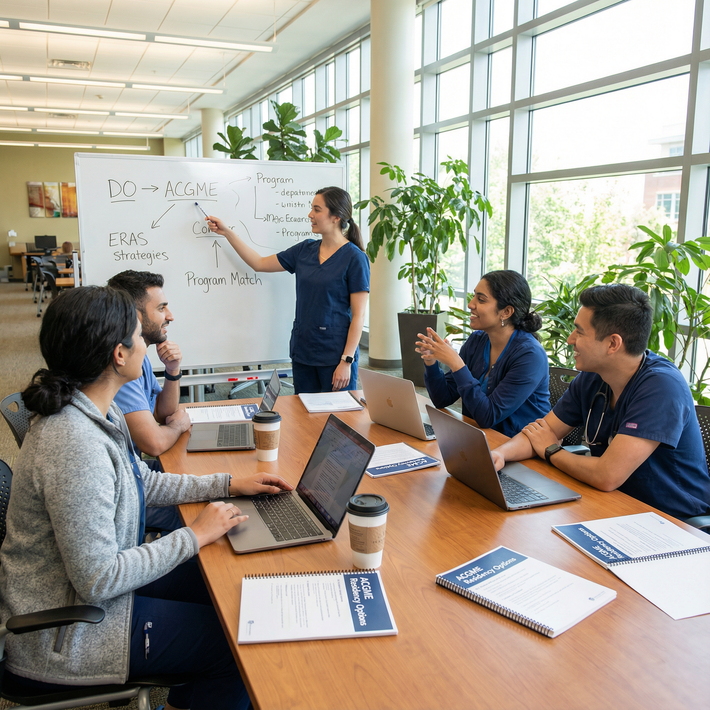
It’s August. Your classmates are bragging about how many university ACGME programs they’re applying to. Your mentors are tossing out lines like, “You’ll be fine, programs love DOs now.” And you’re staring at your ERAS cart wondering:
“If I’m aiming mostly at ACGME residencies… do I still need to apply to osteopathic programs? Or is that a waste of money and interviews?”
Here’s the answer:
Most DO students should keep osteopathic programs (former AOA) in their list. But not blindly, and not in the same way for every specialty or applicant.
Let’s break it down like an adult, not like a brochure.
The Core Answer in Plain English
You want the blunt version:
If you’re in a competitive specialty (ortho, derm, ENT, neurosurgery, urology, EM in some regions, anesthesia in some markets):
Yes, you almost certainly should include osteopathic programs as part of your plan, unless you’re a top-tier candidate with strong advising and backup IM/FM lists.If you’re in a broadly less competitive specialty (FM, psych, peds, IM, neurology, pathology):
You might not need osteopathic programs if your app is solid and you’re geographically flexible. But it’s still a smart hedge for many DOs.If you have any significant red flags (repeated exams, leaves, low COMLEX/USMLE, limited audition rotations, poor geography flexibility):
Not applying to osteopathic programs is usually a mistake.
The unified ACGME system did not magically erase bias, history, or numbers. Former AOA (now ACGME) osteopathic programs are still an important part of the match safety net for DOs—especially in certain specialties.
ACGME vs “Osteopathic” Programs: What That Actually Means Now
After the single accreditation merger:
- All programs are technically ACGME.
- Some are historically AOA/osteopathic. Think: previously DO-only, now ACGME accredited, often with “Osteopathic recognition,” heavily DO faculty, and a strong DO culture.
- Some are historically ACGME/allopathic. Traditionally MD-heavy, now increasingly DO-friendly but not uniformly so.
So when people say “osteopathic programs” now, they usually mean:
- Former AOA programs
- Programs with Osteopathic Recognition
- Programs that are still heavily DO in leadership / residents
Those are the spots where being a DO is often an advantage, not something you have to “prove around.”
When DOs Absolutely Should Keep Osteopathic Programs on the List
Let me be very direct. If any of these sound like you, you should be keeping osteopathic programs on your ERAS list.
1. You’re Aiming at a Historically Tough Specialty for DOs
If your target specialty is:
- Orthopedic surgery
- Dermatology
- ENT (otolaryngology)
- Neurosurgery
- Urology
- Some surgical subs (plastics, integrated vascular, etc.)
- EM or anesthesia in certain saturated markets
You want every door that’s reasonably plausible. That includes:
- Historically DO-heavy ACGME programs
- Osteopathic recognition programs
- Former AOA strongholds that now look “ACGME” on paper
Why? Because competitive specialties are brutally numbers-driven and network-driven. Former AOA programs often:
- Have long histories of training DOs in that field
- Actually answer your emails and take your rotations seriously
- Don’t treat COMLEX like a weird side exam
- Know what a 550 or 600 COMLEX actually represents in real performance
If you skip them because you’re “targeting mostly ACGME university programs,” you’re basically throwing away a big chunk of realistic interviews.
2. You Have Average or Below-Average Scores for MD-heavy Programs
If you’re around these ballparks:
- COMLEX 1/Level 2: < 540–560
- USMLE Step 2 CK: < ~230–240
- Minimal or no USMLE and relying only on COMLEX for ACGME programs
Then high-end university and MD-heavy community programs may treat you as a marginal candidate, especially in stronger markets (Northeast, West Coast, big cities).
Former osteopathic programs are more likely to:
- Accept COMLEX-only without hesitation
- Have DO faculty who know how to read your performance
- See your DO school as “normal,” not “unknown”
Skipping those programs and betting everything on ACGME university lists is how people end up unmatched with “okay” applications.
3. You’re Geographically Constrained
If you tell me:
- “My partner’s job is locked in this one metro area.”
- “I have kids in school and can’t move far.”
- “I absolutely must stay in the Midwest / Northeast / Southeast for family reasons.”
Then you should use every flavor of program within that geography:
- University ACGME
- Community ACGME
- Former AOA / DO-heavy ACGME
- Osteopathic recognition tracks when available
A lot of DO students who stay close to home quietly match into what used to be AOA programs, and they’re perfectly happy. They get solid training and graduate board-eligible in the same specialty as everyone else.
4. You Have Red Flags or a “Non-Smooth” Path
Think:
- Failed or repeated COMLEX/USMLE
- LOA, extra year, or remediation
- Weak clinical eval comments
- Very late Step 2 / Level 2 scores
Former osteopathic programs often give more weight to:
- Your improvement trend
- How you performed on audition rotations
- Personal recommendations from DO faculty
Is that always true? No. But I’ve watched borderline applicants who got radio silence from big-name ACGME programs yet got multiple interviews and matched at DO-heavy programs because they showed up, worked hard on an audition, and had faculty go to bat for them.
When You Might Not Need Osteopathic Programs (But Still Might Use Them Strategically)
If all or most of these are true, your need for osteopathic programs drops:
- You’re going into FM, IM, peds, psych, neuro, path, or prelim/transitional year
- You have:
- Strong COMLEX (≥600) and/or
- Strong Step 2 CK (≥245–250)
- No major red flags
- You’re open to moving essentially anywhere in the country
- You’re applying to a reasonable number of programs (not under-applying)
In that case, you could:
- Build a robust list of ACGME programs (university + community)
- Sprinkle in a small number of osteopathic programs as safety or geographic anchors
- Focus audition rotations on ACGME sites you actually want, and maybe one DO-heavy place as a backup anchor
But I wouldn’t reflexively rule osteopathic programs out. Some of them are:
- In better locations
- Less malignant cultures
- More DO-supportive faculty
- Strong for specific niches (sports, rural, certain procedures)
How Many Osteopathic Programs Should You Apply To?
Here’s a rough framework, not gospel:
| Applicant Type | Competitiveness of Specialty | Suggested # of Osteopathic Programs |
|---|---|---|
| Strong DO, competitive specialty | High | 5–10 |
| Average DO, competitive specialty | High | 10–20 |
| Strong DO, less competitive specialty | Moderate/Low | 0–5 |
| Average DO, less competitive specialty | Moderate/Low | 5–10 |
| DO with red flags (any specialty) | Any | 10–25 |
These are ranges, not rules. The real question is: how many realistic interviews do you think your profile can earn? Most DOs should be aiming for at least:
- 10–12 solid interview offers for less competitive specialties
- 12–15+ for competitive ones
Former AOA / osteopathic programs often make up a crucial chunk of those numbers.
Strategy: How to Integrate Osteopathic Programs Without Wasting Time or Money
You don’t need to shotgun every program with Osteopathic Recognition. Be deliberate.
Step 1: Build Your ACGME-Heavy Core List First
Start with:
- Your realistic ACGME targets (not just big-name brands)
- Mix of university and community
- Programs that explicitly list “DOs welcome” and show DO residents on their website
Then ask: If this were my only list, would I be nervous about going unmatched?
If yes → that’s where osteopathic programs come in.
Step 2: Add Osteopathic Programs That Actually Match Your Needs
Choose programs that:
- Historically took a lot of DOs (especially from your region or school)
- Have leadership you or your school knows
- You can realistically rotate at, if time allows
- Are in cities/regions you’d actually live in
This isn’t charity. These are real residency spots where you could train and be board-certified in your specialty.
Step 3: If You Rotate, Make It Count
On an osteopathic audition or sub-I:
- Show you’re serious about the specialty, not just “using them as backup”
- Learn the culture and play like part of the team
- Let them see you as a resident they’d want to work with for 3–7 years
Programs can smell it when you’re just “checking the box” because someone told you to apply there as fallback. That won’t help you.
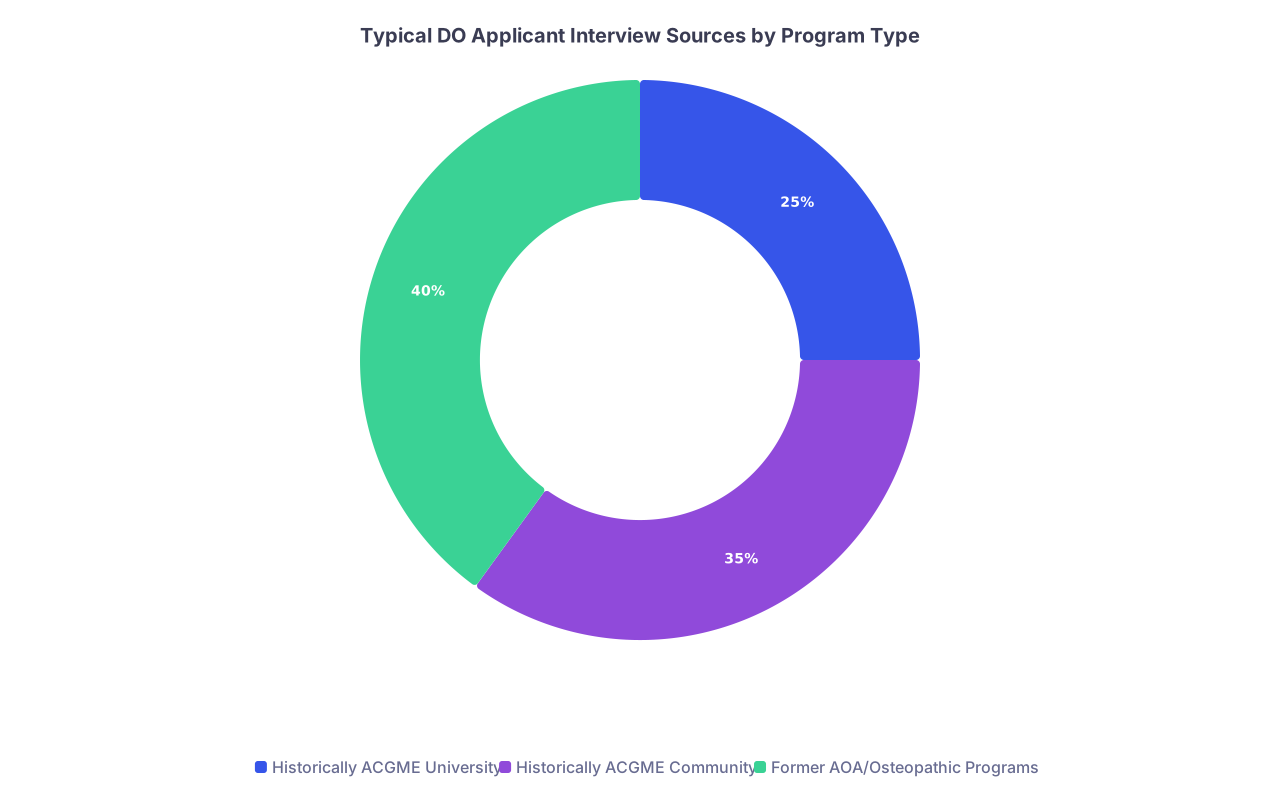
| Category | Value |
|---|---|
| Historically ACGME University | 25 |
| Historically ACGME Community | 35 |
| Former AOA/Osteopathic Programs | 40 |
This isn’t official data; it’s roughly what I see in many DO match stories: a big chunk of interviews still come from former osteopathic programs.
Common Misconceptions That Get DOs in Trouble
“The Merger Means DOs Are Equal Everywhere Now”
Wrong. The single accreditation system standardized accreditation, not culture.
You’ll still find:
- Programs that never interview DOs
- Programs that interview DOs but rarely rank them high
- Programs that are incredibly DO-friendly and would rather have you than an average MD
You’re playing in that reality, not an idealized policy document.
“Applying to Osteopathic Programs Makes Me Look Less Competitive”
No program sees your whole application list. They don’t know where else you applied.
You do not look “worse” to a university ACGME program because you also applied to three former AOA programs in another state. That paranoia is made up.
What does make you look less competitive is going unmatched because you refused to build a safety net.
“I’ll Just SOAP If Things Don’t Work Out”
Dangerous thinking.
- SOAP is unpredictable and demoralizing.
- Competitive specialties have few SOAP spots, and they’re bloodbaths.
- You may end up in a specialty or location you really don’t want.
Using SOAP as your de facto backup instead of including osteopathic programs and safer ACGME options is a high-risk strategy.

| Step | Description |
|---|---|
| Step 1 | Choose Specialty |
| Step 2 | Build Aggressive ACGME List |
| Step 3 | Build Balanced ACGME List |
| Step 4 | Add 10-20 Osteopathic Programs |
| Step 5 | Add 10-25 Osteopathic Programs |
| Step 6 | Add 0-10 Osteopathic Programs as Safety |
| Step 7 | Plan Auditions Strategically |
| Step 8 | Competitive? |
| Step 9 | Any Red Flags? |
How to Decide For You in 10 Minutes
Grab a piece of paper (or spreadsheet) and answer these:
Specialty:
- High, moderate, or low competitiveness for DOs?
Stats:
- Are your COMLEX/USMLE scores above average, average, or below average for that specialty?
Geography:
- Can you go anywhere, or are you tightly restricted?
Red flags:
- Any repeats, LOAs, or big concerns?
Then:
- If specialty is highly competitive or you have any weakness → plan osteopathic programs into your strategy on purpose.
- If specialty is less competitive, your stats are solid, and you’re flexible → you can lean heavily ACGME, but I’d still keep a few osteopathic programs that genuinely appeal to you.
FAQ: Exactly 7 Questions
1. If I only want to match at a university ACGME program, should I still apply to osteopathic programs?
If your only goal is “university name or bust,” then no, you don’t need osteopathic programs—just understand that you’re trading match security for prestige. If your real goal is to become a competent, board-certified specialist and have a career, then yes, you should include osteopathic or community programs as part of a realistic safety net.
2. Do osteopathic programs look down on DOs who also apply broadly to ACGME?
No. They assume you’re applying broadly. They often do the same when they were residents. What they dislike is when you show zero genuine interest on an audition or in your interview and it’s obvious they’re just your Plan Z. Show basic respect and interest and you’re fine.
3. If I didn’t take USMLE, can I still be competitive at ACGME programs and skip osteopathic ones?
In some specialties (FM, IM, psych, peds), yes, you can still be competitive at many ACGME programs with COMLEX-only, especially community programs and DO-friendly institutions. But your universe shrinks. In competitive specialties or university-heavy lists, skipping USMLE and skipping osteopathic programs is a bad combination.
4. How can I quickly identify former AOA / osteopathic programs in my specialty?
Look for: Osteopathic Recognition status, a high proportion of DO residents and faculty on the website, your school’s match list sending people there historically, older program documents mentioning AOA, and locations heavily tied to osteopathic schools (e.g., many programs in Ohio, Michigan, Pennsylvania, Oklahoma, etc.). Your dean’s office usually has a list.
5. Are former osteopathic programs lower quality than “big-name” ACGME programs?
Some are weaker, some are excellent, like everything else. Training quality varies wildly across both former AOA and long-standing ACGME programs. Look at case logs, fellowship placement (if relevant), board pass rates, and resident happiness—not just whether they were historically DO or MD.
6. If I do an audition at a former AOA program, will that hurt me with ACGME programs?
No. ACGME programs don’t care where else you rotated unless you vanish from your home institution for months. A strong LOR from a respected DO or MD at a former AOA program is still a strong LOR. If anything, it shows you were proactive about getting specialty-specific experience.
7. How many total programs should I apply to as a DO if I’m using both ACGME and osteopathic options?
Depends on specialty, but rough ranges:
- Less competitive (FM, psych, peds, IM): 25–40 total is common for average applicants.
- More competitive (EM, anesthesia, neuro, some IM subs): 40–60+.
- Very competitive (ortho, derm, ENT, neurosurg, uro): 60+ is normal for most DOs.
Within that total, let osteopathic programs fill the gap between “where I ideally want to be” and “how many interviews I realistically need.”
Key Takeaways
- The merger didn’t erase reality. Former osteopathic programs are still one of the most reliable match safeties for DOs, especially in competitive fields.
- Most DOs should apply to some osteopathic programs unless they’re very strong, very flexible, and in a less competitive specialty.
- Don’t let pride or fantasy ruin your match. Build a list that gets you enough interviews, not just a list that looks impressive on paper.