Post-match privileging is not one event. It's a gauntlet. A slow, bureaucratic, occasionally absurd gauntlet that starts the moment you match and does not care how excited you are, how strong your evaluations were, or whether you're a DO or an MD. I've watched applicants assume they were "done" because they signed a contract, only to learn three weeks before start that they still weren't cleared to touch a patient, place an order, or even get a badge that opened the right doors.
Here's the mistake that burns time: people use *credentialing* and privileging like they mean the same thing. They don't. And when you don't know which step you're actually stuck in, you email the wrong person, ask the wrong question, and lose another week.
For DO vs MD, the real-world difference usually isn't clinical credibility. It's paperwork physics. Routing. Verification habits. Legacy systems. Committees that move faster when the file is cleaner.
This article is for educational purposes only, not legal or regulatory advice. Institutional rules, state licensing processes, and committee standards vary, and if your status affects employment or clinical duties, you need answers from your program, hospital, or qualified counsel.
The Insider Map: Credentialing vs Privileging (and why your timeline depends on which is which)
Let me tell you what really happens behind the curtain. Programs speak in one big blurry term, "onboarding", because that's easier for them. Operationally, though, you are moving through at least two parallel pipelines, and sometimes four.
First comes appointment and contracting. That's your offer letter, employment agreement, payroll setup, HR intake, and all the dull but necessary machinery that makes you an employee or trainee on paper. This step fools people into feeling safe. Bad assumption.
Then comes institutional credentialing. That's the part where the hospital or training site verifies who you are, where you trained, whether your license status checks out, whether your background screen clears, whether your immunizations meet policy, and whether every line in your file matches every other line. If your middle name appears on one record and disappears on another, somebody may kick it back. Petty? Yes. Real? Also yes.
Clinical privileging is different. Credentialing says, "This person is who they claim to be, and the file is compliant." Privileging says, "This person is allowed to perform these clinical duties here." That often means a department review, committee review, and a final approval workflow. Not glamorous. Very powerful.
Then there's onboarding clearance, which is where occupational health, IT access, drug screen results, modules, badge activation, and orientation logistics collide. You can be fully credentialed and still not clinically usable because one clearance lane is stuck.
The decision points that stall applicants are painfully predictable: background checks that land in "needs review," license verification delays, malpractice coverage confirmation that doesn't line up with the anticipated start window, training verification letters that are missing dates, and immunization records that satisfy your school but not the hospital. Programs don't always explain which of these is the blocker. They just say your file is "pending." That word hides a lot.
DO vs MD Credentialing Timelines: What's Similar, What's Different, and Where It Matters
Most of the process is institution-driven and state-driven, not degree-driven. That's the first truth. Hospitals don't usually sit around saying, "Slow this one down because they're a DO." What they do have are systems built on habits, templates, and old verification pathways. That's where the friction shows up.
The similar part is straightforward. Both DO and MD graduates go through identity verification, license review, background screening, immunization compliance, training verification, and committee processing. The hospital's standards are the hospital's standards. If they require a clean occupational health file and completed attestations, everyone does it.
The difference in practice is more subtle and more annoying. MD documentation often passes through highly familiar lanes because staff handle it constantly in the exact same format. DO documentation can be just as valid and just as complete, but in some offices it triggers extra review because the coordinator is less familiar with the source format, the transcript naming, or the licensure artifacts attached to osteopathic pathways. Legacy habits die hard in credentialing offices. Nobody advertises this. It still happens.
I've seen DO applicants get delayed not because anything was wrong, but because the packet was assembled in a way that forced an admin to think. That's the secret. You never want your file to make an overworked coordinator think harder than necessary. If a training verification letter uses slightly different date conventions than the portal expects, or if an osteopathic licensure document is uploaded under the wrong category, your file drifts into the "manual review" pile. That pile is where speed goes to die.
There are also degree review nuances. Some hospitals have old checklists originally built around allopathic formatting. A DO who has dual transcript routes, COMLEX plus optional USMLE records, or a less standardized set of school-generated documents can face more back-and-forth if the packet isn't pristine. Not fair. Very common.
That said, clean packaging shrinks the difference dramatically. A well-labeled PDF, consistent name formatting, full training dates, and easy-to-read verifications can make a DO file move just as smoothly as an MD file. Sloppy packets hurt everyone, but they punish the less familiar pathway more.
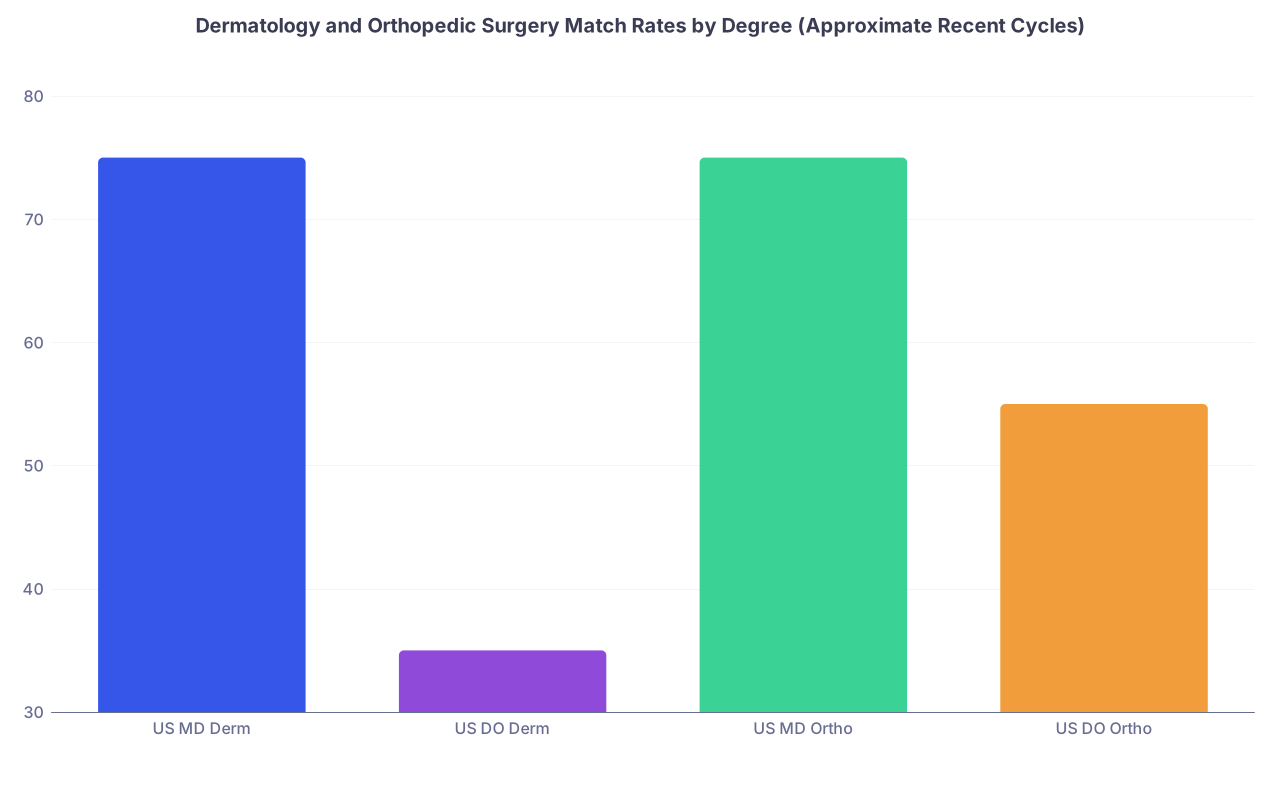
Read that chart the right way: as workflow reality, not destiny. Institutional variation is enormous. One coordinator can make the same hospital feel efficient one year and dysfunctional the next.
The Real Timeline From Match Day to First Shift: Month-by-Month What Programs Do (and what you can control)
This is the part nobody maps clearly, so I will.
Match Day to early April is triage season. Programs send giant onboarding packets, portal invitations, HR forms, maybe a background authorization, maybe an occupational health checklist, maybe six separate emails from six different offices that do not appear to know each other exist. Your job is not to admire the chaos. Your job is to submit fast, completely, and in a format that can survive bad software and distracted staff.
The first internal sort is brutal and simple: complete file versus incomplete file. Complete files move. Incomplete files wait for the next review cycle. That's why two residents in the same program can have wildly different experiences.
April into May is document staging and verification. This is when your school graduation documentation, training confirmations, exam records, state license pathway steps, and identity documents start getting cross-checked. If there is going to be a name mismatch problem, this is when it appears. If your school registrar is slow, this is when that hurts you. If you assumed your vaccine history from college would be enough, this is when occupational health disagrees.
For July starts, May is often the danger month. Programs begin pushing files toward hard clearance deadlines because committee schedules and orientation blocks are already set. Here's the truth applicants miss: committees do not reorganize themselves around your missing titer. They meet when they meet. If your file misses the packet deadline for review, you may lose an entire approval cycle.
June is the convergence month for many July starters. Credentialing is trying to finish primary source verification. Occupational health is chasing immunizations, TB testing, or serology updates. HR is making sure your background check and employment steps are done. IT wants module completion. Departmental leadership may be reviewing privilege requests. Everyone is busy, and everyone assumes someone else told you the deadline.
This is also where malpractice coverage timing can matter. For trainees, coverage is usually handled by the institution, but the effective date still needs to align with start and committee review mechanics. If the coverage confirmation isn't loaded or isn't visible to the right reviewer, the file can sit in an absurd limbo where everyone thinks someone else owns the problem.
July is not a magic door that opens automatically. If you are not fully cleared, you may start in a limited capacity. Orientation? Maybe. EMR training? Usually. Shadowing or non-independent activities? Sometimes. Full clinical duties? Only if the institution says yes. I've seen incoming residents show up physically present but functionally unusable for several days because one final approval didn't hit.
For August or September starts, the rhythm is similar but slightly less compressed. That can help, but don't get comfortable. Extra time tempts applicants to delay. Bad move. The longer runway often gets eaten by slow verifications, vacation schedules, and committee gaps. Summer is notorious for administrative bottlenecks because key staff take leave while hundreds of new clinicians hit the pipeline.
Rolling starts are their own beast. People think rolling means flexible. It often means less predictable. Instead of one giant annual orientation machine, you're at the mercy of whatever the institution's next committee, HR, badge, and occupational health windows happen to be. Sometimes that's smooth. Sometimes it's ridiculous.
What can you control? More than you think. You can control speed of submission. File naming. Whether every document includes matching legal identity. Whether your immunization records are complete before anyone asks. Whether you confirm portal receipt instead of trusting the upload spinner. Whether you keep screenshots. Whether you ask for the exact missing item instead of sending vague "just checking in" messages that nobody likes and nobody acts on.
The highest-stakes dates are not your personal deadlines. They are the institution's invisible deadlines: packet cutoff for committee review, occupational health clearance cutoff for orientation, badge creation cutoff, and license verification cutoff. Miss those, and nobody says, "No problem, just start." They say, "We'll see what can be limited until clearance is complete." That is not where you want to be.
Hidden Traps (Where Applicants Get Stuck): The 10-Point Checklist That Avoids Delays
Most delays are stupid. I say that with affection and irritation, because I've seen excellent future physicians get kneecapped by embarrassingly preventable details.
First, identity mismatches. Middle names, suffixes, hyphens, maiden names, inconsistent initials. One record says Jonathan. Another says Jon. One includes III. Another doesn't. That alone can trigger verification failure.
Second, unclear license history or delayed state account activation. If a system can't find you because your account was never fully activated or your name doesn't exactly match, the file stalls.
Third, malpractice effective dates that don't align with committee timing. If coverage exists but isn't active or visible for the review period, some offices won't advance the packet.
Fourth, weak immunization records. "I had the vaccine" is meaningless. They want documentation, dates, and sometimes serology that matches institution policy exactly. A lot of people learn this too late.
Fifth, transcript confusion. For applicants with mixed documentation pathways, COMLEX, USMLE, diploma, school letters, ECFMG in certain contexts, the wrong file can get misfiled under the wrong category. Then someone marks it missing even though you uploaded it.
Sixth, training verification gaps. Programs don't always ask for every document upfront. That does not mean those documents won't be needed. Smart applicants proactively gather rotation summaries, final verifications, transcripts if requested, and dated letters.
Seventh, bad portal uploads. Blurry scans, sideways PDFs, giant combined files, weird filenames, phone photos with shadows. Credentialing software and OCR tools are unforgiving. Upload like a professional, not like you're submitting a coupon rebate.
Eighth, missing institution-specific forms. Drug screens, HR attestations, conflict disclosures, mask fit, code of conduct acknowledgments. Tiny forms. Big consequences.
Ninth, background checks in "needs review." This does not always mean disaster. It can mean address history mismatch, county search lag, or an identity clarification. The mistake is ignoring it or assuming no news means fine.
Tenth, asking the wrong person. Do not email committee members, department chiefs, or random faculty because you're anxious. That often backfires. Credentialing staff hate being bypassed, and faculty usually can't solve the problem anyway. Ask the workflow owner for the exact blocker and next step. Clean and direct.

If You're Delayed: What "Provisional," "Limited Privileges," and "Hold" Really Mean
These words sound technical because institutions prefer soft language over blunt truth.
Provisional or limited privileges usually mean the program is trying to keep you moving while protecting compliance. You may be allowed to attend orientation, complete modules, observe, document in limited settings, or participate under direct supervision depending on policy. You may not be allowed to independently enter orders, perform procedures, bill, or function in the role you thought you were starting.
A hold is more serious. It means a blocker is active enough that the institution will not let you do clinical work yet. Usually it's something concrete: immunization clearance, unresolved background review, missing license verification, missing attestation, pending committee action.
The smartest move when you're stuck is not to vent. It's to get operational. Ask for three things: your current status, the exact missing requirement, and the person or department that owns resolution. If possible, ask for it in writing. "Pending" is useless. "Occupational health hold due to missing varicella titer; submit lab result by Friday for next clearance batch" is actionable.
DO vs MD: Practical Communication Scripts That Get You Unstuck Fast (Without Burning Bridges)
The insider strategy is simple: don't argue policy. Don't perform frustration. Ask for status and the next required item.
If you're writing the credentialing coordinator, say this: "Hi [Name], I'm confirming my file status for start date readiness. Could you tell me the exact missing requirement, if any, and whether my file is waiting on applicant action, third-party verification, or committee review? I'm ready to resubmit any item today if needed." That works because it invites a useful answer.
If the issue smells like occupational health or background review, message the program coordinator like this: "Hi [Name], I've completed all items visible in my portal, but I understand one clearance step may still be pending. If appropriate, could you direct me to the owning contact in HR or occupational health, or help escalate for identification of the exact outstanding item?" Professional. Calm. Effective.
If you already uploaded something and the system failed to read it, don't get defensive. Say: "I believe this item may not have rendered clearly in the portal. I've attached a clean PDF version labeled with my full legal name and document type. Please let me know if you'd like it re-uploaded in a specific format." That tells them you understand the game.
Your posture matters. "I'm ready; I need the missing piece" gets traction. "Why is this taking so long?" gets ignored.
Forward-Looking Checklist: Your 30-Day Pre-Start Plan (Even After You Think You're Done)
Thirty days before start, assume nothing. I mean that literally. Assume the portal can lose a file, assume occupational health can reinterpret a vaccine record, assume a committee meeting can get pushed, assume your "completed" status means less than you want it to.
Re-check file completeness. Confirm portal receipt, not just upload. Make sure every major document is saved locally as a clean PDF. If any immunization or serology item is borderline, repeat it early instead of fighting over policy language. Bureaucracies love fresh lab values.
Build a backup credentialing packet. One folder. Clearly labeled. Diploma, transcripts if requested, license screenshots, exam records if relevant, immunization records, serologies, background check confirmations, training verifications, and every email showing receipt or approval. Add a one-page summary with your full legal name, date of birth, AAMC or other ID if applicable, program, start date, and a dated list of what was submitted. That single page is gold when your file needs re-triage.
Here's the forward-looking truth: privileging is not a one-time upload. It's a living project until your first real clinical shift is done and your access actually works. Treat it that way, and the DO vs MD differences become background noise. Ignore it, and paperwork, not medicine, will decide your first month.